
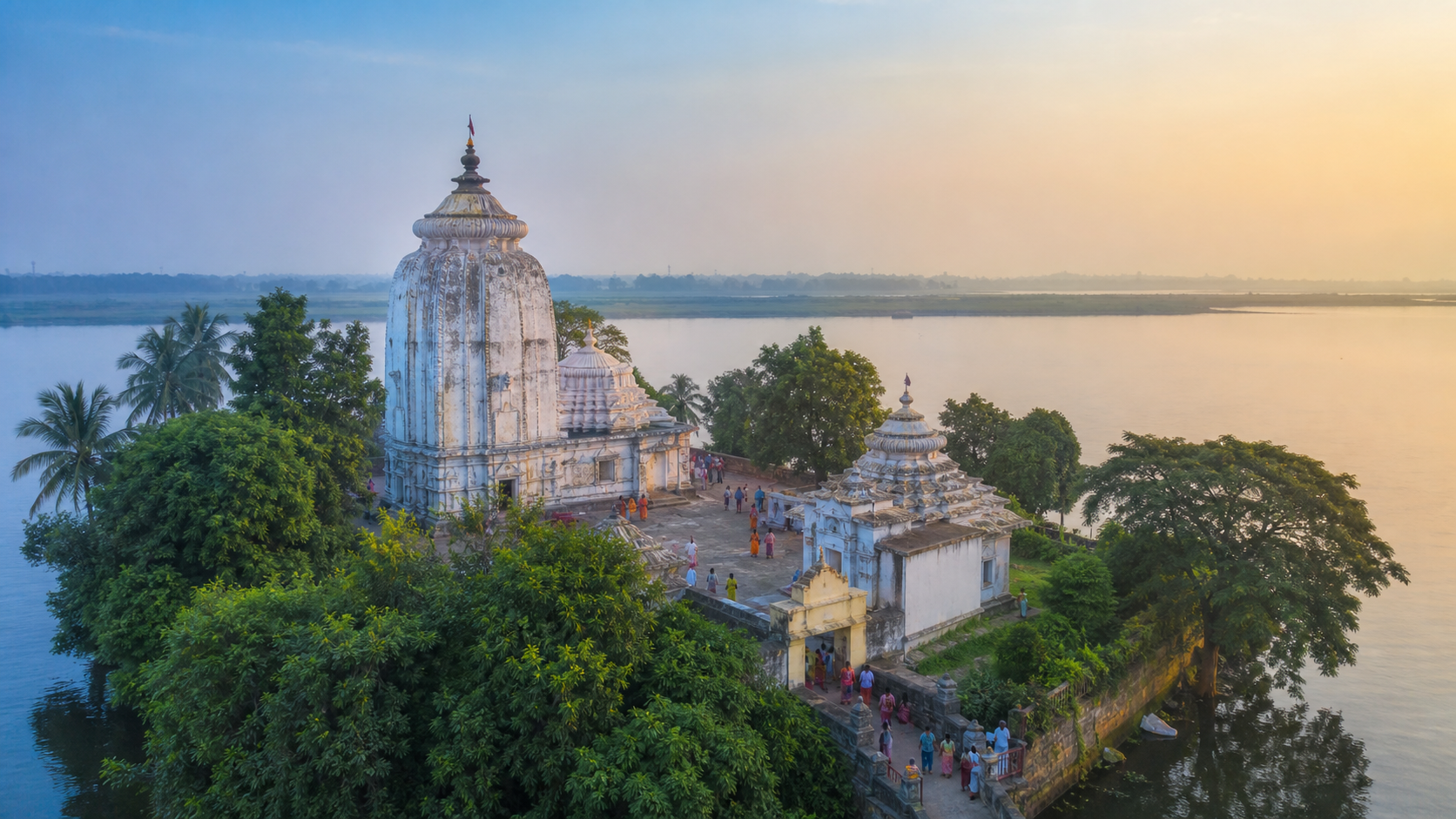
If you are deciding whether Dhabaleswar is simply a beautiful stop near Cuttack or a place where you can meaningfully encounter Odisha’s Kartika devotion, begin with the setting. This is a living Shiva shrine on an island in the Mahanadi. The river crossing, temple architecture, daily worship, and festival gatherings belong to one experience.
Your choice of day and manner of arrival will shape that experience. Visit during Bada Osha or Kartika Purnima to witness collective devotion at its most visible. Choose a quieter period if you want more room for unhurried darshan and contemplation. Neither is the superior visit; each reveals a different dimension of Dhabaleswar.
The island approach is part of the pilgrimage
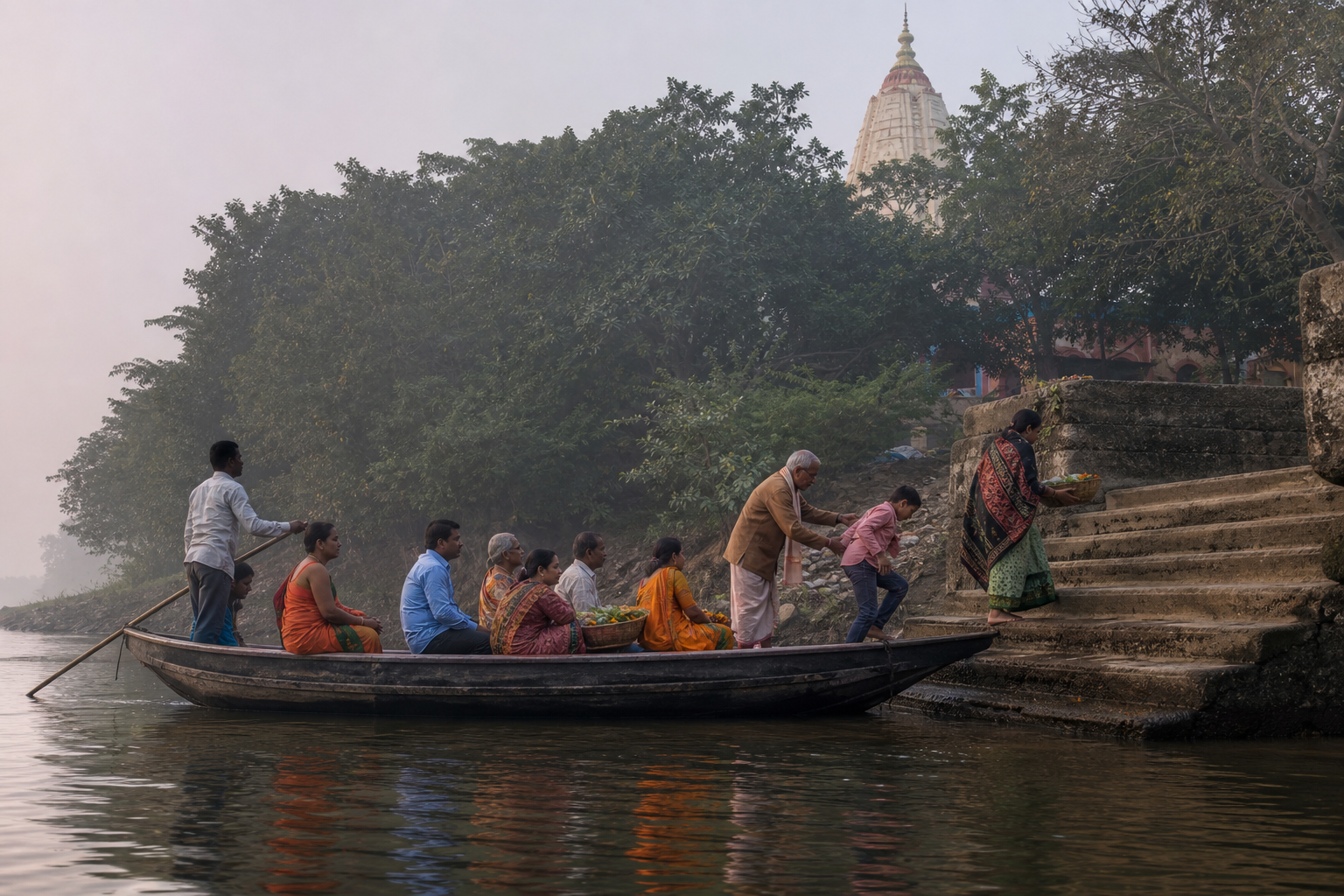
Dhabaleswar stands on a Mahanadi island within easy reach of Cuttack. That geography creates a natural threshold. The city recedes, the river comes into view, and the temple is approached across water rather than encountered directly from an urban street.
Do not rush through that transition as though worship begins only at the sanctum door. Let the crossing settle your attention. Notice the breeze, the movement of the water, and the changing soundscape as temple bells become audible. The practical journey can prepare the mind for darshan if you allow it to do so.
This also explains why the river should not be treated merely as a scenic background for photographs. Sacred geography works by changing how you approach a place. At Dhabaleswar, moving from the bank to the island gives physical form to an inward movement: away from ordinary distraction and toward deliberate attention.
The crossing is not completely predictable. Access may involve a bridge, seasonal road links, or local boats, and river conditions can affect the available route. Confirm the current arrangement locally before leaving Cuttack. A route that worked on an earlier visit may not be the appropriate one on the day you travel.
What Kartika changes at Dhabaleswar
Daily worship already gives Dhabaleswar its rhythm. Devotees approach Shiva with offerings and chants, and the movement between the sanctum, mandapa, and circumambulatory spaces turns devotion into a bodily practice. Kartika intensifies that existing life rather than creating a separate religious identity for the temple.
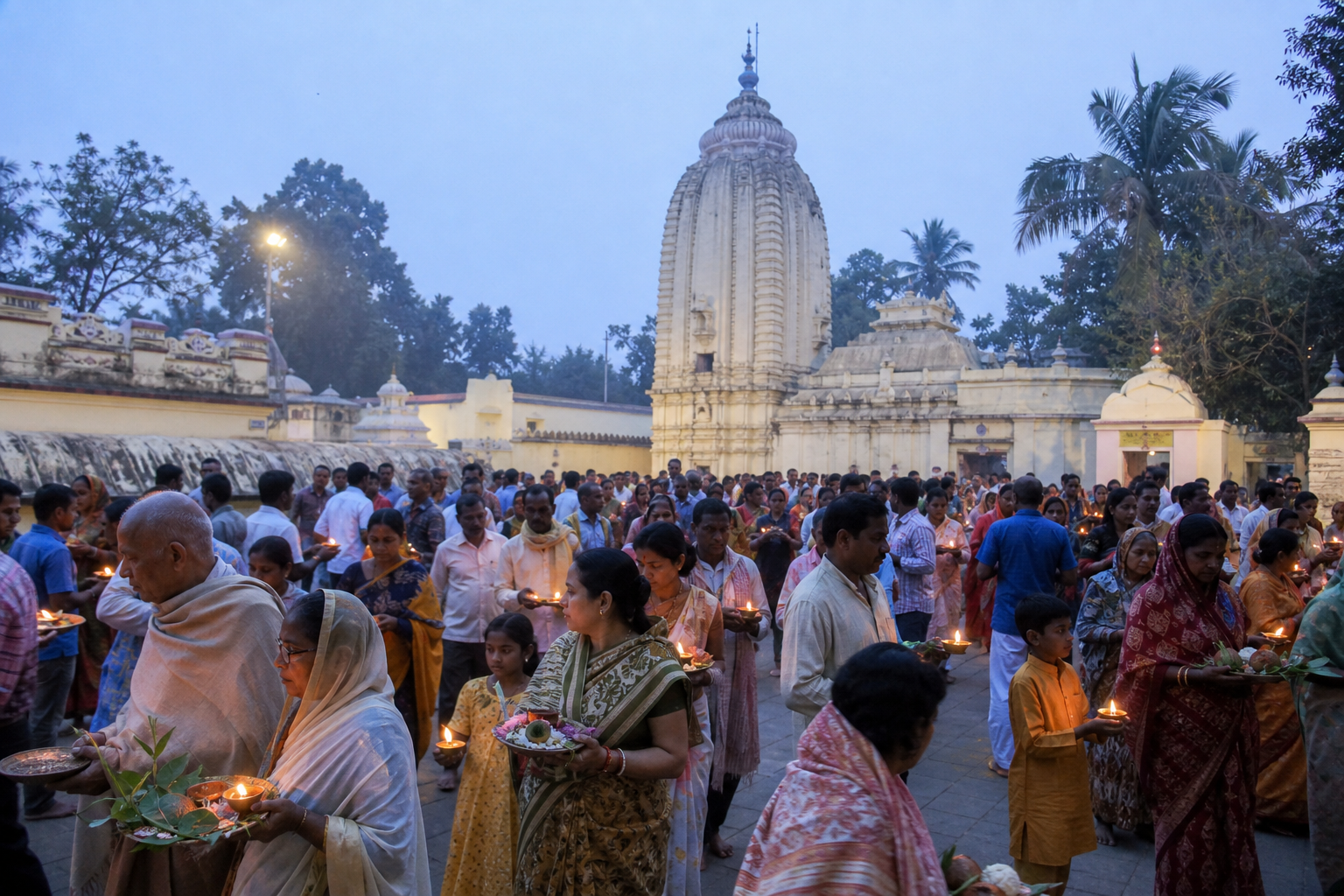
Bada Osha and Kartika Purnima are the major Kartika occasions associated with the shrine. Large gatherings of pilgrims, collective prayer, and lamps illuminating the river landscape make devotion publicly visible. A practice that may feel quiet and personal on an ordinary day becomes communal, luminous, and shared.
If you attend during one of these observances, expect the gathering itself to be part of what you have come to see. Do not plan a festival visit while expecting the silence of an ordinary morning. Crowds may reduce your control over pace, but they reveal something equally important: the shrine is sustained not only by old stone but by living participation.
If your purpose is contemplation, an ordinary day may serve you better. Early morning and late afternoon are favored for darshan and reflection because the island’s atmosphere can be experienced more fully then. These periods are sensible preferences, not guarantees of solitude, so leave enough time to adjust to conditions rather than building the visit around a rigid schedule.
The distinction is simple. Festival days show how a community carries devotion together. Quieter days let you attend more closely to space, sound, ritual movement, and your own state of mind. Decide which encounter you need before choosing when to go.
Plan a visit that leaves room for worship
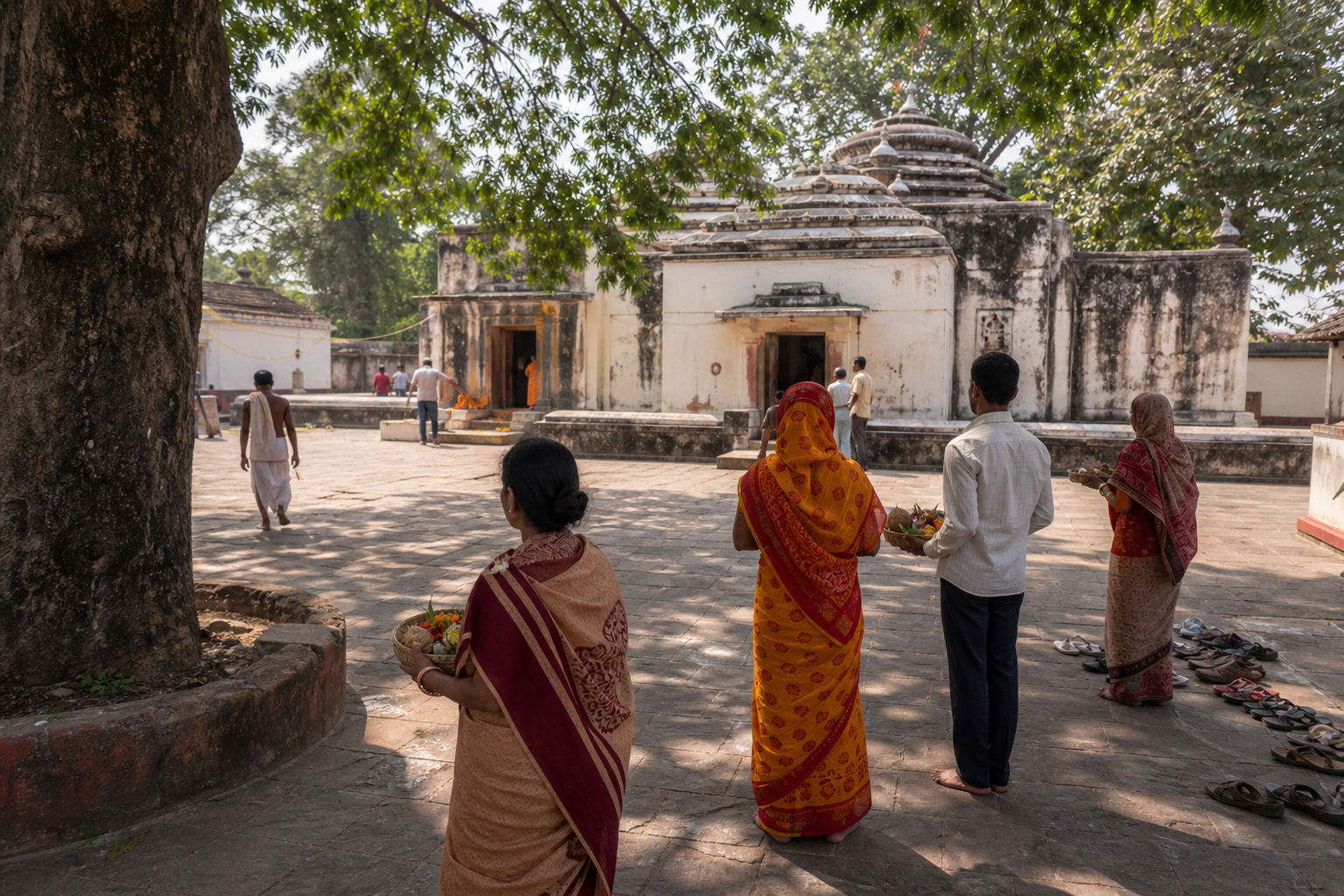
A useful plan for Dhabaleswar is less about filling an itinerary and more about protecting the purpose of the journey. Use these steps to keep practical uncertainty from consuming the visit.
- Choose the kind of encounter first. Select Bada Osha or Kartika Purnima if collective Kartika devotion is your priority. Choose a non-festival day if you chiefly want quiet darshan, architecture, and reflection.
- Verify access on the day of travel. Check whether the island is being approached by the currently available road, bridge, or boat connection. River conditions matter, so do not rely entirely on an old account of the route.
- Allow time for the crossing. The approach is part of the pilgrimage, not dead time between Cuttack and the temple. A tightly packed schedule encourages you to hurry through the feature that makes Dhabaleswar distinctive.
- Follow the shrine’s living rhythm. Observe how worshippers move through the mandapa, approach the sanctum, and undertake circumambulation. Follow current on-site directions rather than assuming that practices at another temple apply unchanged here.
- Keep observation from becoming obstruction. During crowded observances, give priority to worshippers and ritual movement. Pause for photographs only where doing so does not interrupt prayer, circulation, or another person’s darshan.
- Carry one intention into the temple. It may be a prayer, a vow to practise greater restraint, or a period of silent attention. A clear intention prevents the visit from dissolving into sightseeing alone.
Dhabaleswar can welcome a cultural visitor without ceasing to be a Shaiva shrine. Respectful participation begins by recognizing that distinction. You do not need to imitate every act around you, but you should make space for those who have come to perform it as worship.
This is also the soundest way to approach the wider dharmic significance of the place. Hinduism, Buddhism, Jainism, and Sikhism should not be flattened into identical paths. Values such as ethical conduct, compassion, non-violence, truthfulness, and disciplined attention can resonate across the dharmic family while the particular form of Dhabaleswar remains devotion to Shiva.
Read the temple as a record of continuing devotion
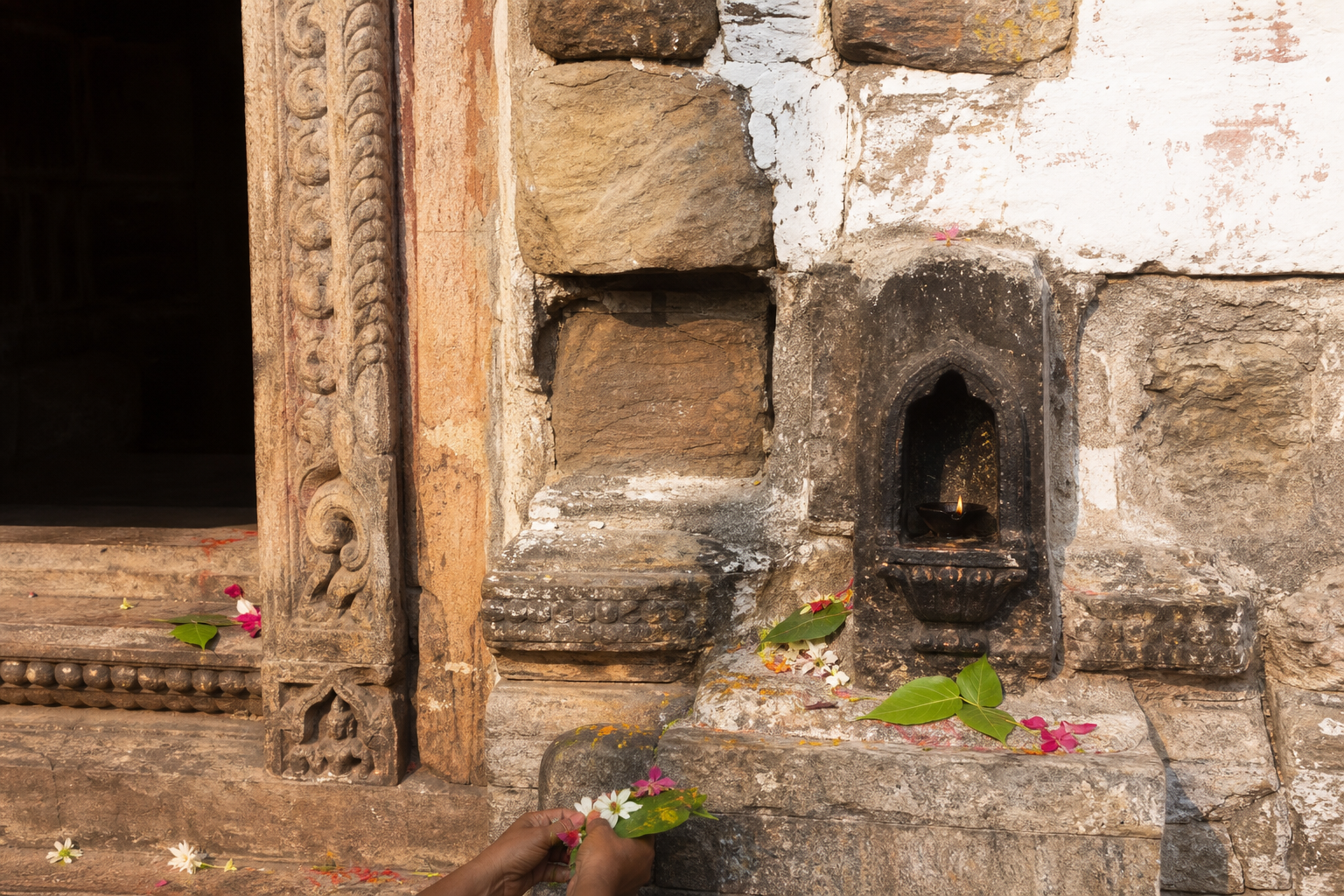
The temple’s age is not conveyed by atmosphere alone. Stone inscriptions preserved in the precincts point to patronage and devotion sustained across centuries. They matter because they connect the shrine’s present ritual life with a longer history of care, support, and remembrance.
When you encounter an inscription, resist treating it as decorative texture. Look at its relationship to the surrounding structure and notice how script, stone, sculpture, and worship occupy the same sacred space. Unless you can read and contextualize it reliably, do not assign it a date or story from appearance alone. Its presence establishes continuity; it does not automatically explain every stage of the building’s history.
The sculpted surfaces and measured architectural proportions also place Dhabaleswar within Odisha’s regional temple-building inheritance. Attend to the progression of spaces rather than isolating a single ornament: approach, mandapa, sanctum, and circumambulatory path. Architecture here directs attention and movement. It is not merely a shell around ritual.
That relationship between continuity and change is the temple’s most important historical lesson. Stone can preserve memory, but worship keeps memory active. The Kartika pilgrim lighting a lamp, the devotee offering prayer, and the visitor pausing before an inscription all enter a place shaped by generations before them.
Key takeaways
- Dhabaleswar is a living Shiva temple on an island in the Mahanadi near Cuttack; the river approach is integral to its sacred character.
- Bada Osha and Kartika Purnima are the principal occasions for witnessing the shrine’s Kartika devotion through large gatherings, lamps, and collective prayer.
- A festival visit offers communal intensity, while an ordinary early-morning or late-afternoon visit is better suited to an unhurried contemplative purpose.
- Access can vary with river conditions, so confirm the current bridge, road, or boat arrangement locally before setting out.
- The inscriptions, sculpted stone, sanctum, mandapa, and circumambulatory spaces should be understood as parts of a continuing ritual and historical landscape.
- Respect means allowing worship to set the pace: follow current directions, avoid obstructing ritual movement, and approach the shrine with a clear intention.
Before you leave for Dhabaleswar, make two decisions: whether you seek the collective light of Kartika or the quieter rhythm of an ordinary day, and what intention you will carry across the Mahanadi. Confirm the day’s access, leave margin in your schedule, and let the crossing begin the pilgrimage before you reach the sanctum.
References
