
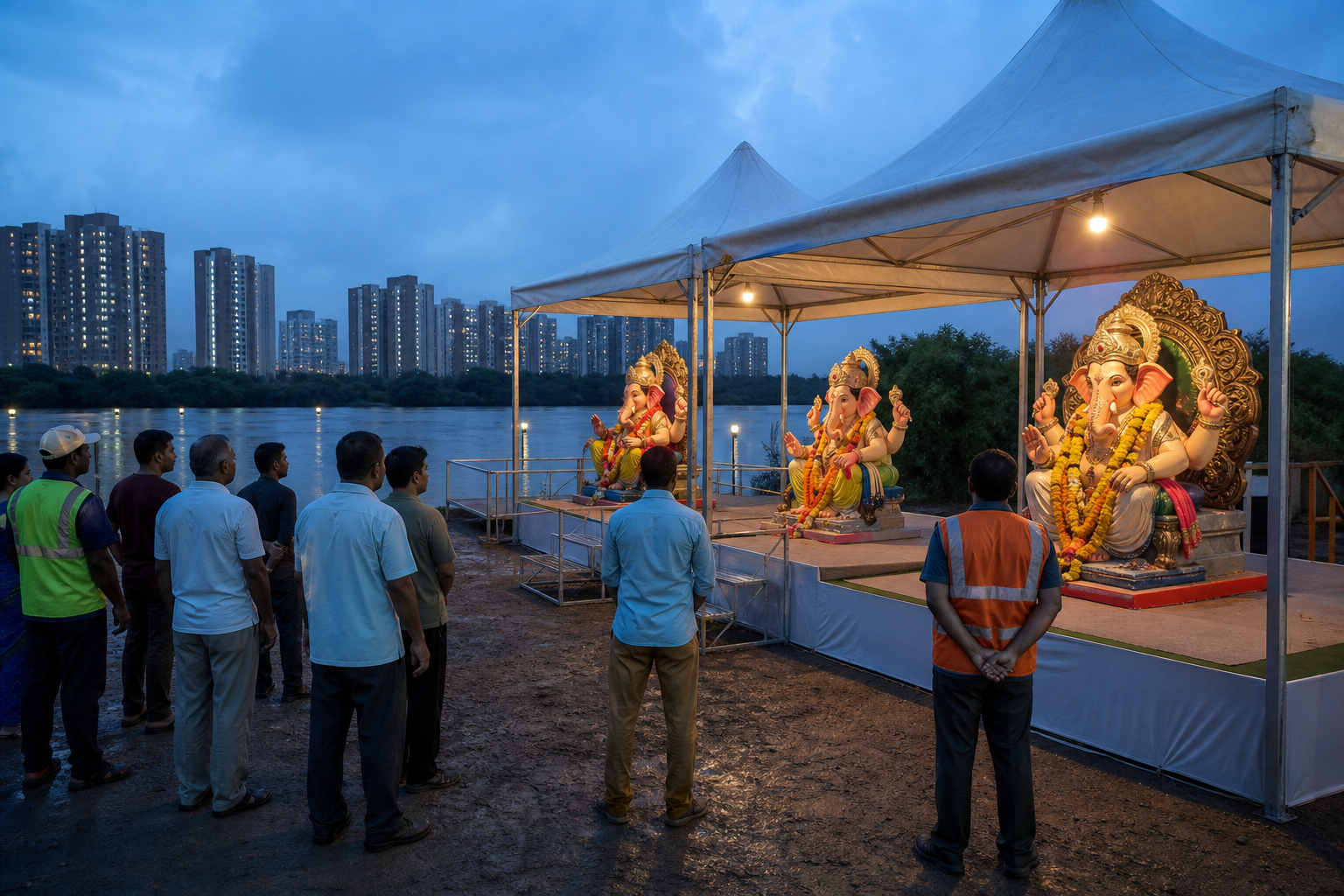
If you entrusted a Shree Ganesh murti for Visarjan in Navi Mumbai, you need more than an assurance that the matter is being handled. You need to know where the murti is, who is responsible for it, when the sacred rite will be completed, and how that completion will protect both religious dignity and the environment.
The public claim is serious but still needs a full municipal accounting. Three months after Ganeshotsav, thousands of Shree Ganesh idols reportedly remained unimmersed within the Navi Mumbai Municipal Corporation’s jurisdiction. Hindu Janajagruti Samiti urged immediate action that is both scripturally aligned and ecologically safe. Until the civic administration publishes a dated inventory and completion record, residents cannot independently verify the size or present status of the backlog.
Why delayed Visarjan is not merely a disposal problem
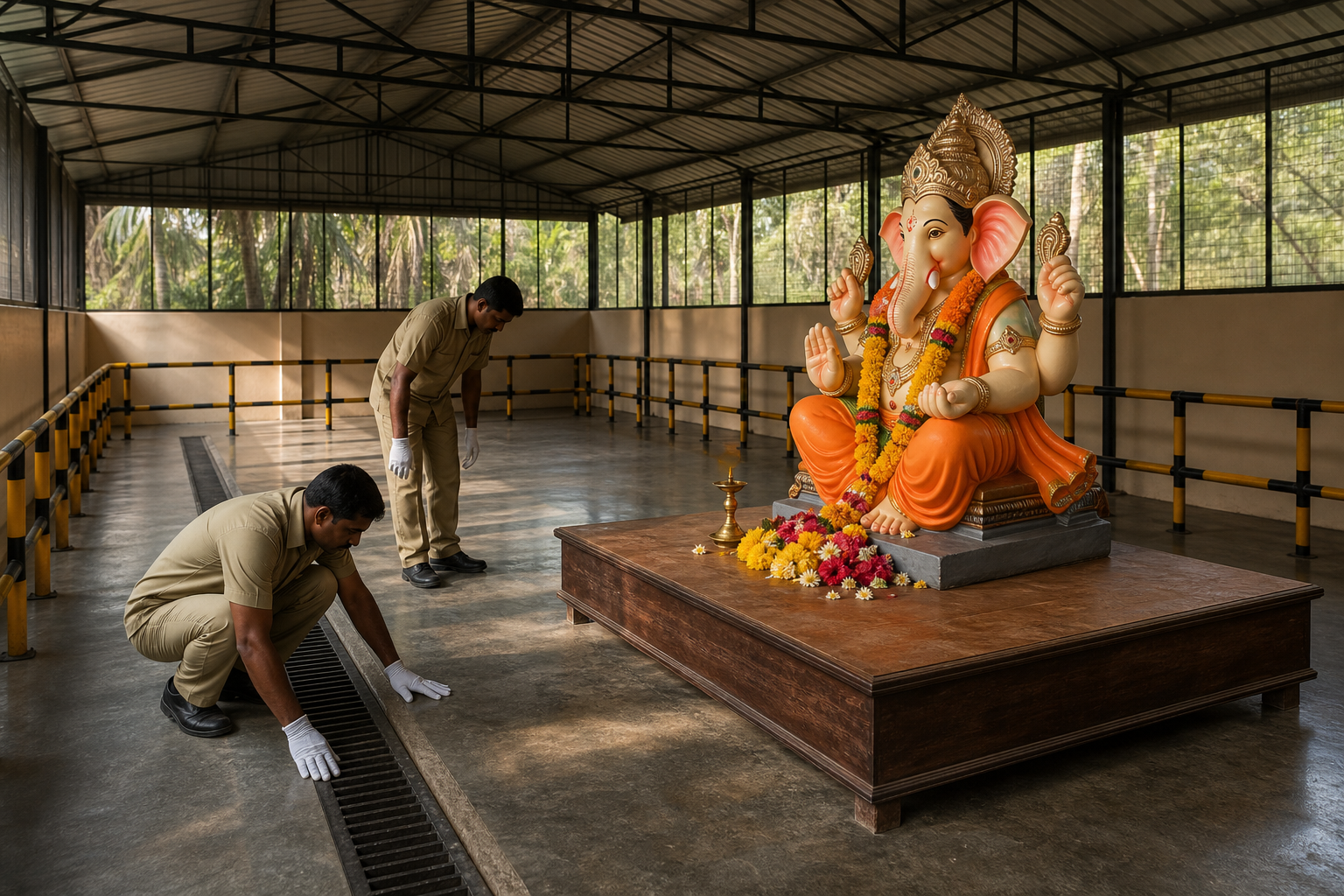
Visarjan is the intended conclusion of a period of worship. It expresses gratitude, cyclical renewal, and the respectful return of Shree Ganesh after the devotee has offered puja and hospitality. When immersion remains unfinished, the problem is not comparable to a delayed waste collection. A sacred commitment has been left administratively incomplete.
That distinction should determine how authorities speak and act. A murti awaiting Visarjan cannot be treated as unwanted material to be moved out of public view. Its custody, handling and final immersion require religious sensitivity. Families and mandals may also need clear confirmation that the responsibility they entrusted to a public system has actually been discharged.
Environmental care does not weaken this dharmic obligation. Ahimsa and responsibility toward nature require authorities to protect water bodies, distinguish between different idol materials, use designated immersion facilities, and manage the remains transparently. The real choice is not between an authentic Visarjan and an eco-safe one. Navi Mumbai needs a religiously informed process whose environmental safeguards are visible and verifiable.
A designated pond by itself is not a complete answer. Residents should also be told how murtis will be transported, how different materials will be handled, what happens after immersion, and which agency supervises each stage. Likewise, hurried or unauthorized immersion is not a sound remedy for administrative delay. It can expose volunteers to danger, harm a water body, and subject sacred murtis to another round of careless handling.
Exact ritual practice can vary among households, mandals and traditions. If you remain personally responsible for a murti, seek guidance from the priest or temple associated with your worship before improvising an interim or substitute rite. Municipal authorities should also obtain competent dharmic guidance instead of presenting one invented civic procedure as a universal shastric rule.
What Navi Mumbai residents should ask officials to publish
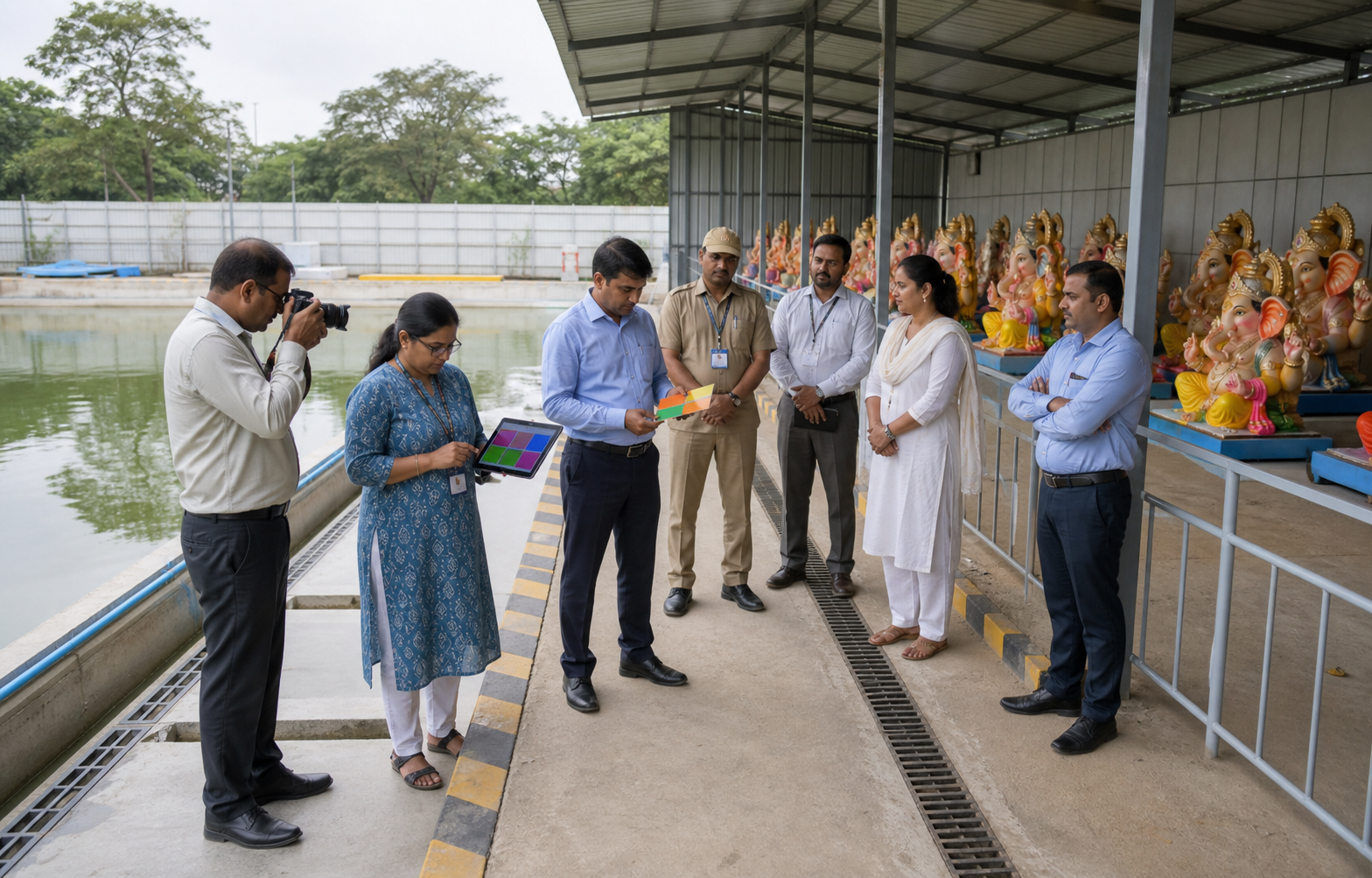
A promise to resolve the matter is not yet a plan. Ask the Navi Mumbai Municipal Corporation for one dated public status notice containing the information below. Each item answers a different question that devotees need settled.
- The current pending count: the total number of unimmersed murtis as of the date of publication, not an undated estimate.
- The custody record: every location at which the murtis are being held and the authority or contractor responsible at each location.
- The material categories: how the administration has classified eco-friendly and non-biodegradable murtis, along with the handling method for each category.
- The immersion schedule: calendar dates, designated sites and the number of murtis planned for each site. Words such as “soon” or “at the earliest” do not create accountability.
- The ritual protocol: how respectful handling and Visarjan will be maintained, including the role of qualified religious guidance.
- The environmental protocol: how water bodies, immersion facilities, recovered material and post-immersion residue will be managed.
- The responsible contact: the municipal officer or department authorized to answer questions, correct discrepancies and issue the next update.
- The completion record: the starting count, number immersed, balance remaining and explanation for any difference between those figures.
A useful written request can be brief: Please publish, as of the date of reply, the number and locations of all Shree Ganesh murtis awaiting Visarjan, the responsible custodians, the site-wise immersion schedule, the ritual and environmental safeguards, and the process for confirming completion. Submit it through the official civic channel available to you and retain the acknowledgment or reference number.
If an update gives only a total, ask for the remaining pieces. A number without a date can become stale; a schedule without sites cannot be monitored; and a claim of completion without an opening count cannot be reconciled. Public confidence will return when the record is complete enough for an ordinary resident to follow from custody to Visarjan.
How devotees and mandals can help without creating more risk
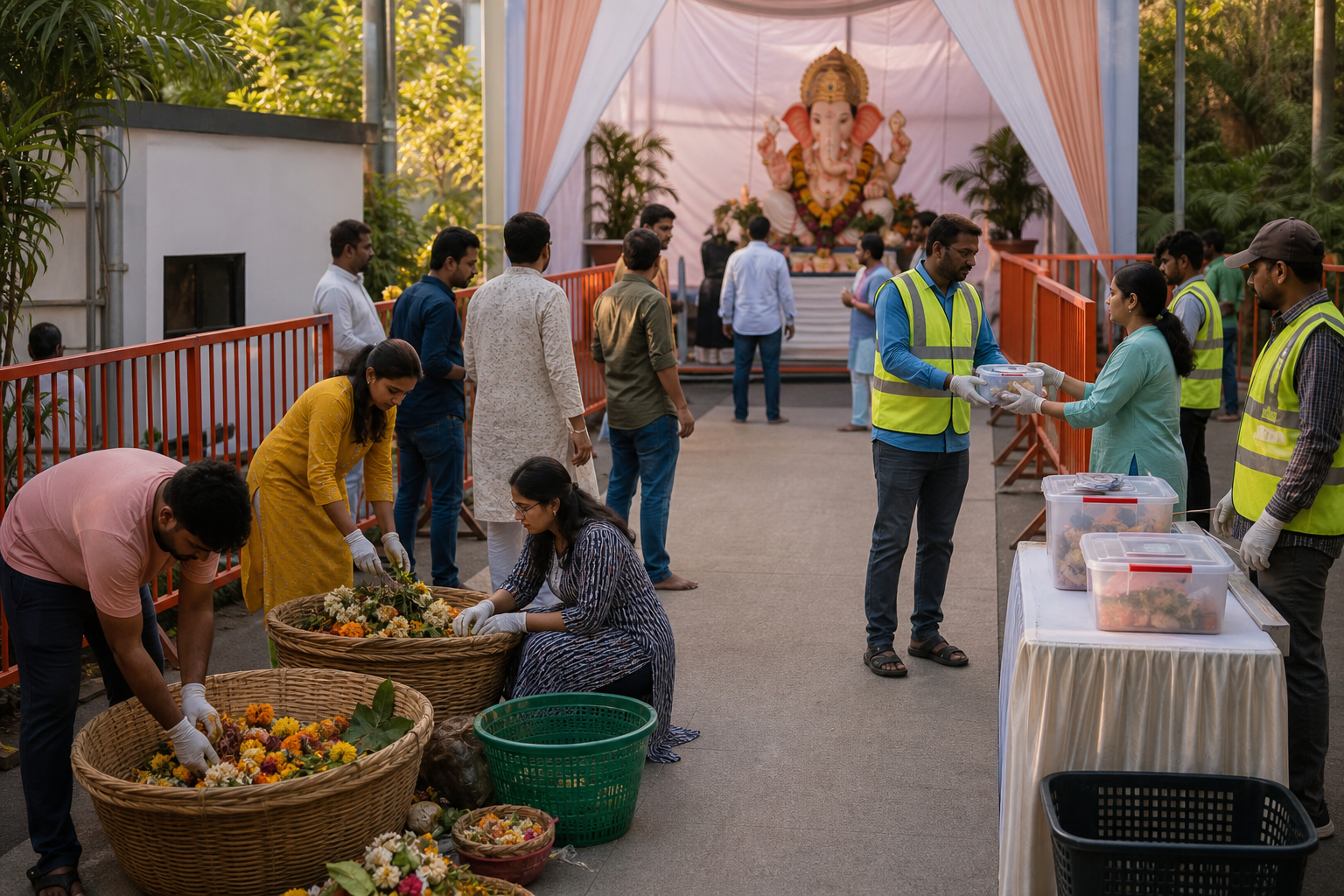
Community participation can accelerate a respectful resolution, but volunteers should strengthen the official process rather than replace it. If you belong to a household, mandal, temple committee or residents’ association affected by the delay, use this sequence.
- Verify your own case first. Record only what you personally know: when and where the murti was handed over, any acknowledgment you received, and the identifying details available to you. If you do not know whether your murti is part of the pending group, do not assume that it is.
- Consolidate questions. Nominate one coordinator for a mandal or residents’ group and combine verified cases into a single record. Repeated, contradictory requests make it harder to identify genuine gaps.
- Separate ritual questions from logistical ones. Seek tradition-appropriate religious guidance from a priest or temple. Ask the municipality about custody, transport, sites, dates and environmental handling. Neither side should be expected to invent the other’s expertise.
- Offer volunteers for defined roles. Community members can help with verified counting, communications, orderly queues and public updates when the responsible authority has approved those roles. A volunteer should know who is supervising the work and what task has been assigned.
- Do not move or immerse murtis independently. Wait for an authorized plan that identifies the destination, handlers and method. Stored murtis may be heavy, and immersion areas can present physical hazards. Devotional urgency does not justify entering water or attempting transport without suitable people, equipment and permission.
- Document closure, not spectacle. The useful record is the date, site, number completed and authority responsible. Avoid circulating images, counts or accusations whose location and date you cannot establish.
Public pressure is most effective when it is precise. “Complete the remaining murtis and publish the balance” gives officials a measurable demand. An unverified number forwarded across social media may attract attention, but it can also weaken the case for accountability if the figure cannot be traced to a dated record.
What a credible municipal closure plan should look like
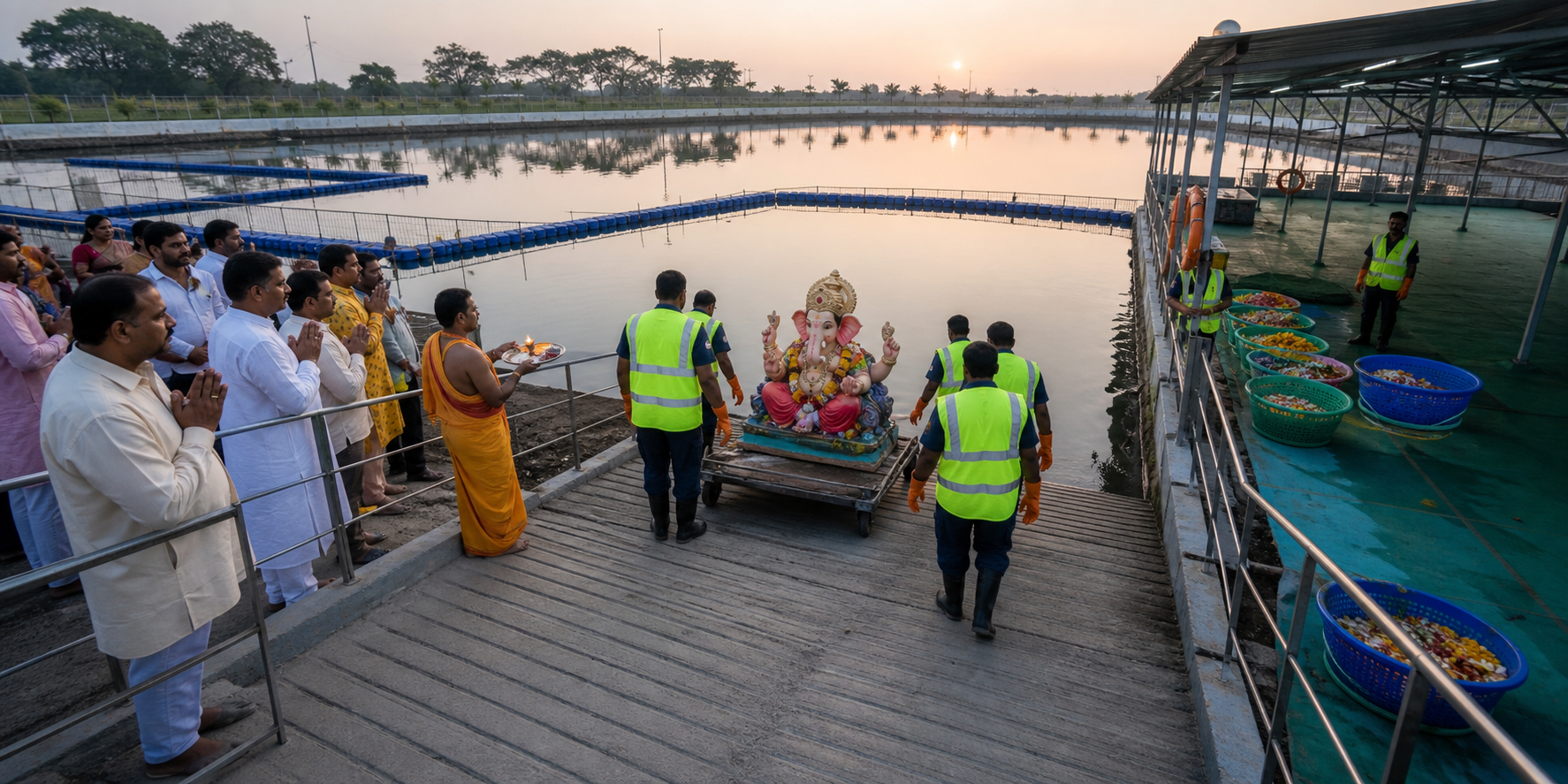
Navi Mumbai does not need an elaborate new bureaucracy to resolve the backlog. It needs a visible chain of responsibility. A workable closure plan has four stages.
- Reconcile the inventory. Count the murtis at every holding location, record their custodians and material categories, and publish one opening balance. Any mismatch among site records should be resolved before completion is announced.
- Approve the combined protocol. Municipal officers, religious advisers, environmental agencies and responsible organizers should agree on respectful handling, designated facilities and material-specific environmental measures.
- Publish and execute the schedule. Assign calendar dates and sites, identify the responsible teams, define any volunteer roles, and issue periodic updates showing how many murtis have been completed and how many remain.
- Close the record. Publish a final statement listing the opening count, completed count, remaining exceptions, sites used and eco-management steps. If the two counts do not reconcile, explain the difference rather than declaring the matter finished.
The format can be simple. A municipal notice or regularly updated bulletin is enough if its figures are dated and consistent. What matters is that devotees can see progress, environmental agencies can verify the handling method, and officials cannot quietly substitute relocation or storage for Visarjan.
The same record can prevent another backlog. Before a future Ganeshotsav, the administration can designate immersion sites, establish an intake and custody log, separate material categories at collection, assign responsible officers, and define what happens when capacity is exceeded. A crisis becomes a useful precedent only when its operational lessons are preserved.
Key takeaways
- Delayed Visarjan concerns the completion of a sacred rite and the custody of sacred murtis, not sanitation alone.
- Residents should ask for a dated count, holding locations, custodians, immersion schedule, handling protocols and final reconciliation.
- Scriptural respect and ecological care belong in the same plan; neither should be used to dismiss the other.
- Devotees and mandals can organize verified records and authorized volunteers, but should not attempt unsupervised transport or immersion.
- The matter is complete only when the Visarjan has occurred and a public record accounts for the full opening balance.
Your most useful next step is to send one precise written request for the dated status record and share the official response with your mandal or residents’ group. If you remain directly responsible for a murti, obtain appropriate religious guidance and coordinate only with the designated immersion process. The goal is not merely to clear a backlog, but to complete every Visarjan with the dignity owed to Shree Ganesh and the care owed to the natural world.
References
