
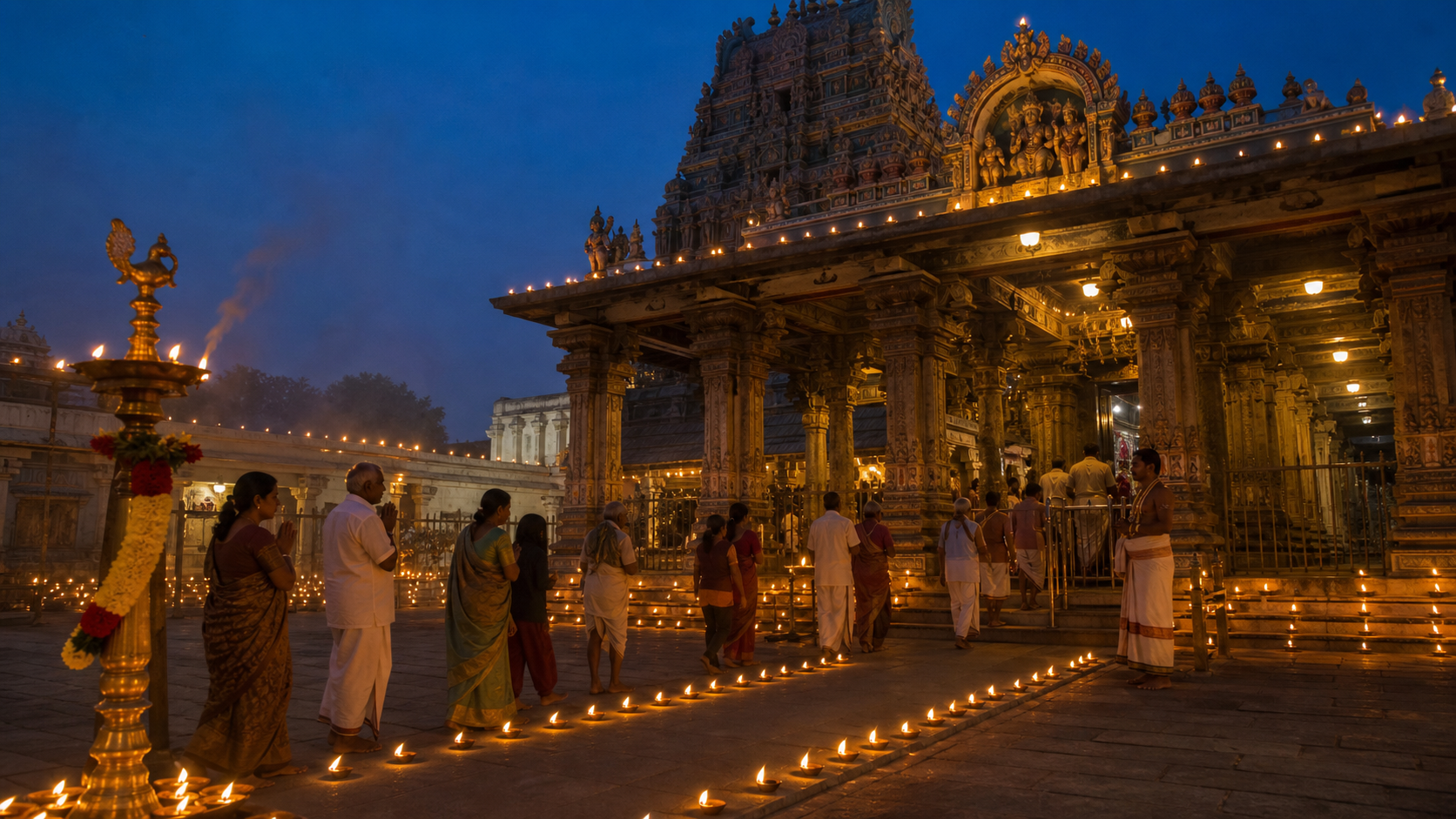
You are probably trying to answer two questions before arranging your Deepavali evening in Tirupati: what actually happens during the Asthanam, and how should you plan around it? Begin with the venue. This observance takes place at Sri Kodandarama Swamy Temple in Tirupati.
The firm timing discussed here is historical and year-specific. The 2025 Asthanam was scheduled for 20 October, with its principal rituals beginning at 7:00 PM. If you are planning for another year, use that schedule to understand the shape of the observance, not as a current timetable.
Key takeaways
- The Deepavali Asthanam discussed here belongs to Sri Kodandarama Swamy Temple in Tirupati.
- Its central acts include the presentation of new vastrams, lamps, and other offerings brought from Sri Govindaraja Swamy Temple.
- For 2025, the principal rituals were scheduled to begin at 7:00 PM on 20 October.
- Sahasra Kalasabhishekam Seva and Hanumantha Vahana Seva were cancelled for that date, making festival-specific seva checks essential.
- Arrive early, keep your evening flexible, and follow the temple’s current rules for dress, queues, offerings, and photography.
What the Asthanam asks you to notice
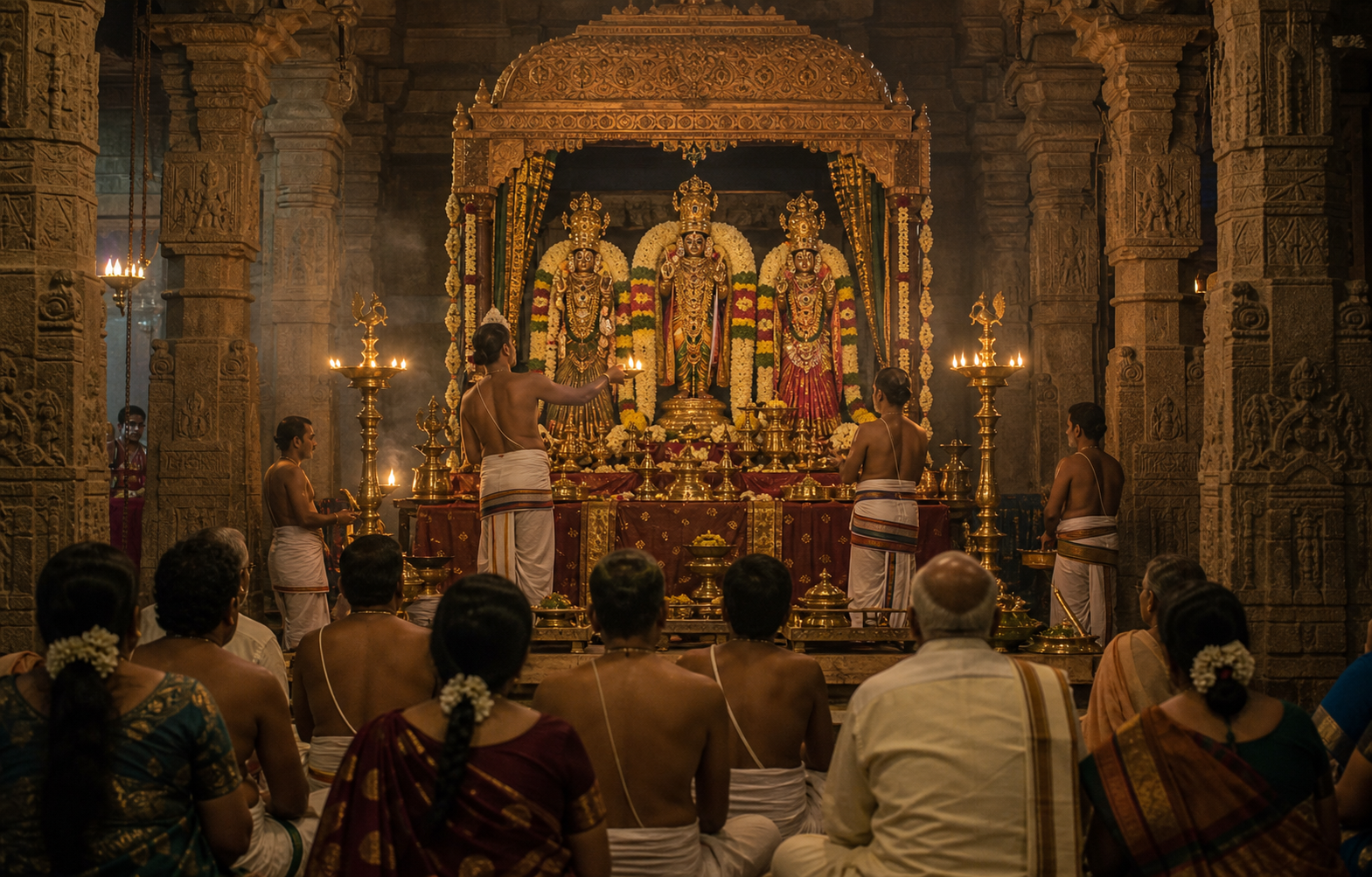
Asthanam is best understood here as a formal temple darbar. It is not merely an evening in which festive lamps happen to be visible. Sri Kodandarama Swamy is ceremonially honoured through an ordered presentation of objects associated with Deepavali.
The defining elements are new clothes, lamps, and offerings brought from Sri Govindaraja Swamy Temple and presented to Sri Kodandarama Swamy. Their movement from one historic temple to another is part of the event, not incidental preparation hidden behind it.
If crowds or your position in the queue prevent you from seeing every gesture, follow a simple three-part map. First, remember where the ceremonial articles have come from. Second, attend to their presentation as offerings rather than as decorations. Third, receive darshan of the deity in festive vastrams amid the light of the lamps. That sequence of attention will help you understand what you are witnessing even when your view is partial.
The vastrams signify festive honour because they are offered to the deity. The lamps make Deepavali’s language of light visible within the temple. The other offerings complete the act of devotion. Looking only for a photograph of the final adornment can cause you to miss the relationship expressed through their ceremonial arrival.
Why the exchange between two Tirupati temples matters
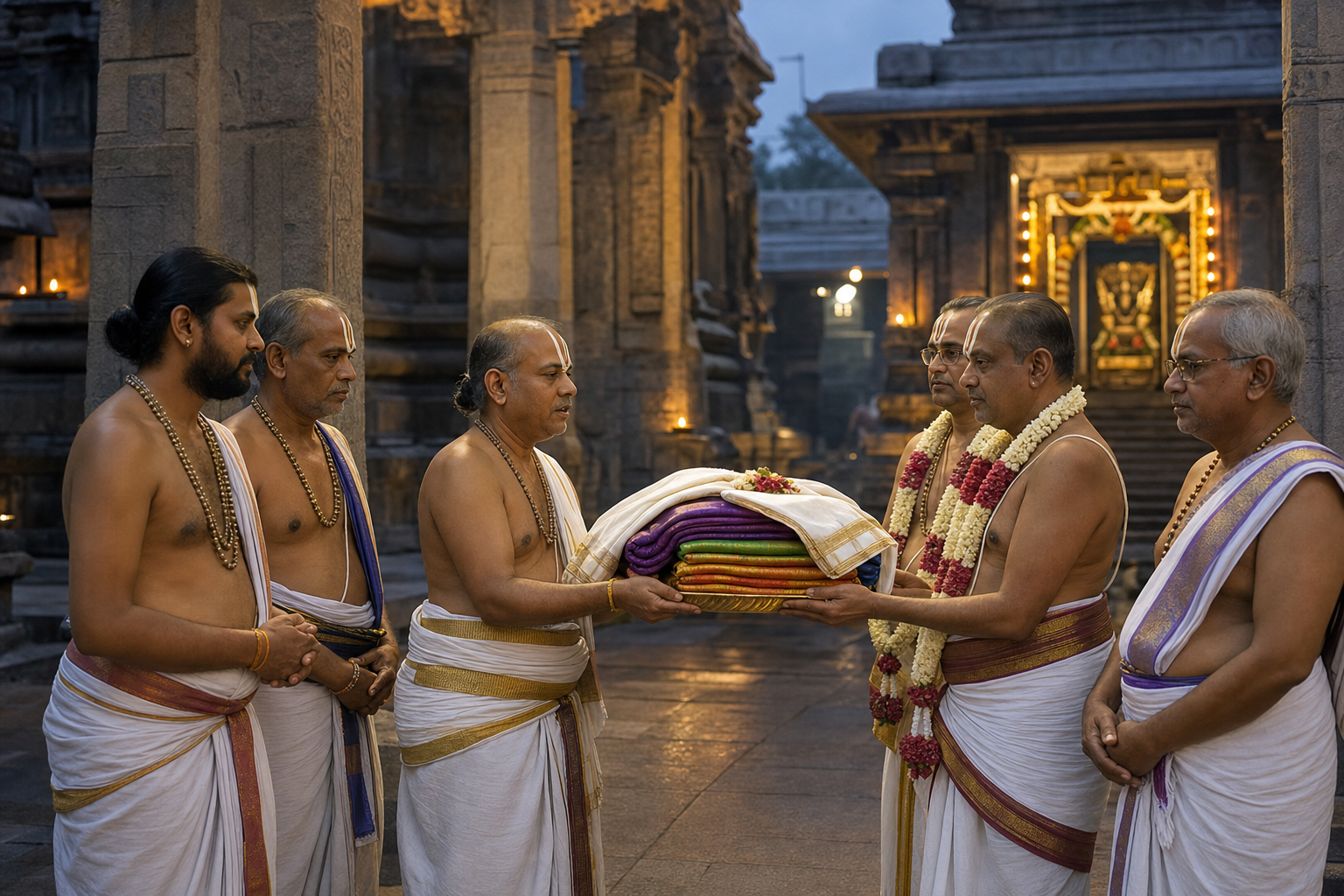
Most visitors naturally concentrate on the shrine immediately before them. Deepavali Asthanam invites a wider view of Tirupati’s sacred geography. Sri Govindaraja Swamy Temple is not mentioned merely as the place where supplies were assembled; it is the named temple from which the festive honours are brought.
This gives the ceremony a communal and institutional dimension. The honour offered to Sri Kodandarama Swamy is carried through an active relationship between two temples. Cultural heritage survives here through repeated acts: articles are prepared, borne from one temple, respectfully received, and offered to the deity. The tradition is therefore something done, not simply something remembered.
If you are attending with children or relatives who do not know the observance, give them one concrete point to watch for: the lamps and new clothes do not simply appear at the shrine; they come as festive offerings from Sri Govindaraja Swamy Temple. That explanation is short enough to remember and specific enough to make the ceremony intelligible.
Plan your visit from the current festival arrangements
The 2025 arrangements provide a useful planning model, but each detail carrying a date must remain attached to that year. Do not copy the time or seva status into a later itinerary without checking the current arrangements.
| Planning item | Announced detail for 2025 |
|---|---|
| Temple | Sri Kodandarama Swamy Temple, Tirupati |
| Date | 20 October 2025 |
| Start of principal rituals | 7:00 PM |
| Festive articles | New vastrams, lamps, and offerings from Sri Govindaraja Swamy Temple |
| Seva changes | Sahasra Kalasabhishekam Seva and Hanumantha Vahana Seva cancelled that day |
The cancellation of Sahasra Kalasabhishekam Seva and Hanumantha Vahana Seva on the Asthanam date is more than a minor scheduling note. A devotee relying on the temple’s ordinary pattern could otherwise arrive expecting a seva that will not take place. During a major festival, establish the special schedule first and build the rest of your visit around it.
- Confirm the correct year. Check the current date, ritual start time, temple, and seva changes before committing to travel around a particular service.
- Make the Asthanam your anchor. If it is your main reason for visiting, do not treat it as a brief addition between two tightly timed plans.
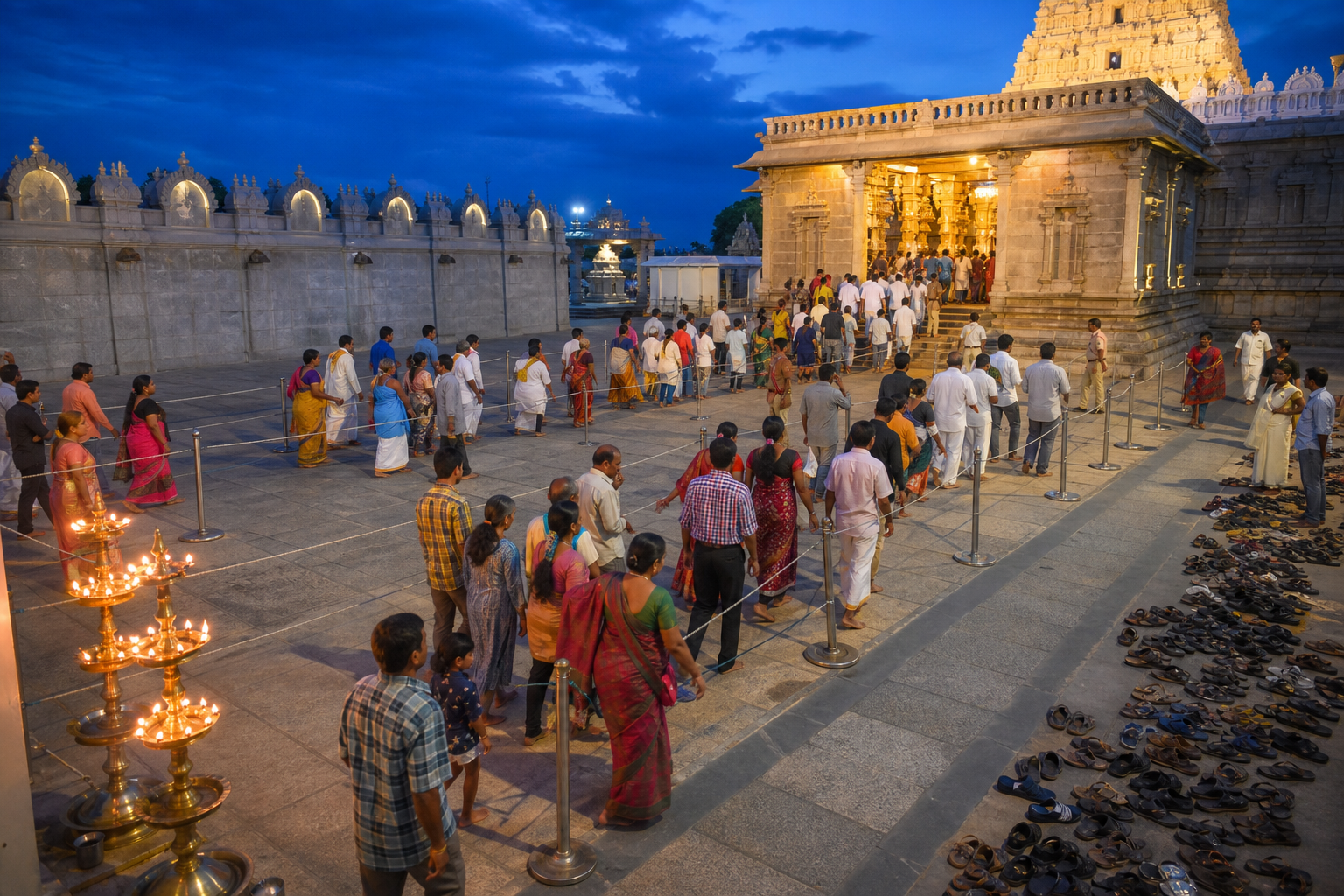
- Arrive early. Festival crowds add uncertainty before the ritual begins, so the announced start should be the time by which you are settled, not the time you first approach the temple.
- Keep the end of the evening flexible. A 7:00 PM start was specified for 2025, but no corresponding end time was given. Avoid an onward commitment that depends on a quick exit.
- Respect temple protocol. Follow the current queue and dress requirements, bring only permitted offerings, and do not assume that a festive setting makes photography acceptable.
Receive the shared Dharmic meaning without flattening the ritual
The lamps offer an immediate way to contemplate Deepavali as the movement from darkness toward light. That image has a wider resonance across Dharmic traditions, as do ethical commitments such as compassion and collective well-being. It can help a family or a mixed group of visitors enter the evening with a shared disposition of reverence.
Shared resonance does not make every Dharmic observance interchangeable. This Asthanam remains a particular Hindu temple ceremony centred on Sri Kodandarama Swamy, with honours arriving from Sri Govindaraja Swamy Temple. Respecting that specificity is itself part of respectful participation. You do not need to force a universal explanation onto every ritual in order to recognise its broader moral light.
When a future Deepavali Asthanam falls within your travel dates, make your decision after four checks: the current date, the starting time, the precise temple, and any cancelled or rescheduled sevas. Then arrive early enough to notice the movement of the vastrams, lamps, and offerings. That is the difference between merely passing through a crowded festival evening and understanding the devotional act unfolding before you.
References
