
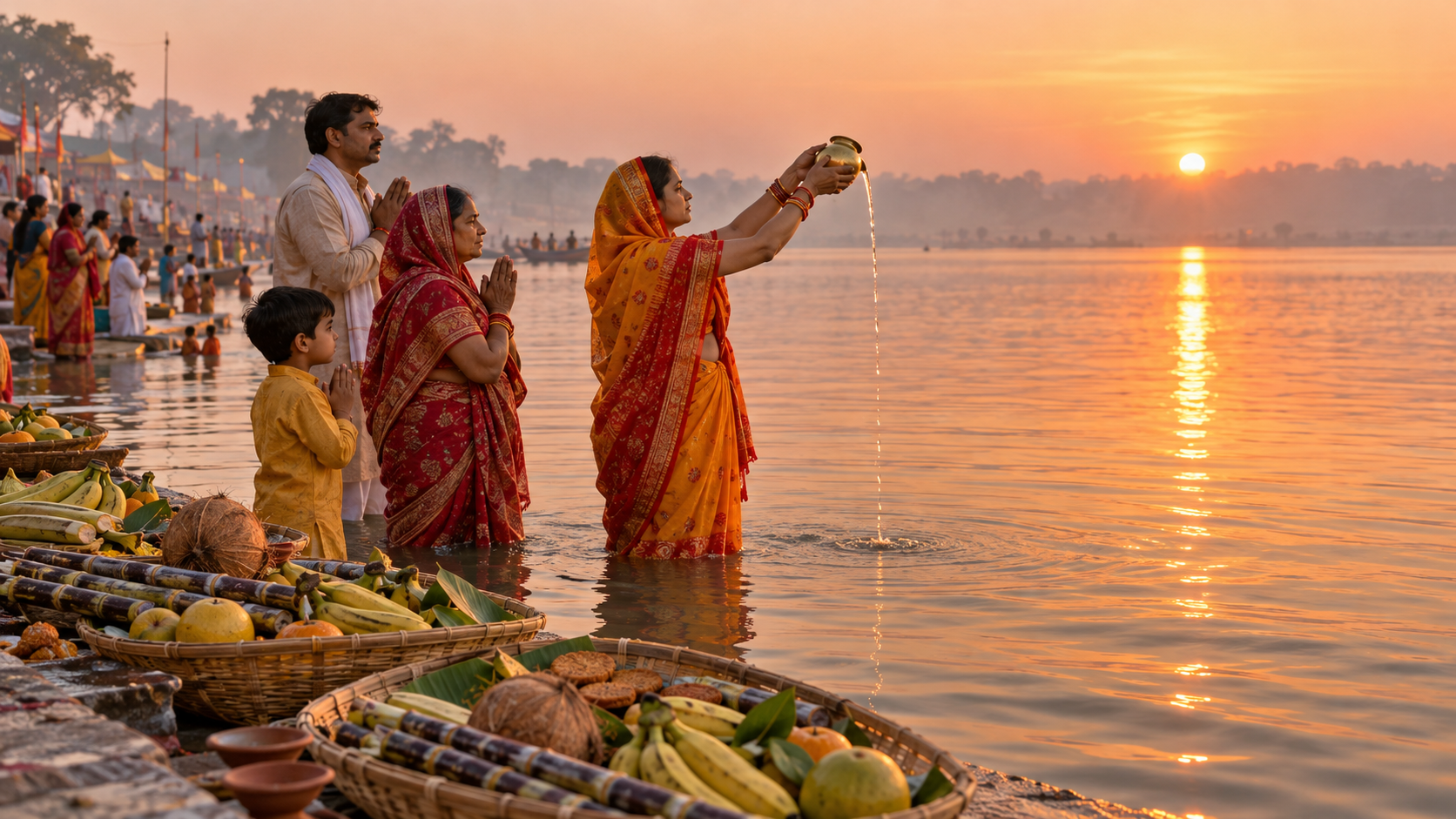
If you are arranging leave, travel or a family visit to the ghat, put the essential dates in your calendar now: Nahai Khai is on 13 November, Sandhya Arghya is on 15 November and Usha Arghya is on 16 November 2026.
The crucial timing rule is just as important as the dates. Evening arghya follows your location’s sunset on 15 November, while morning arghya follows your location’s sunrise on 16 November. Do not copy a clock time from another city without checking it against your local panchang, temple or ghat organiser.
The four-day Chhath Puja 2026 calendar
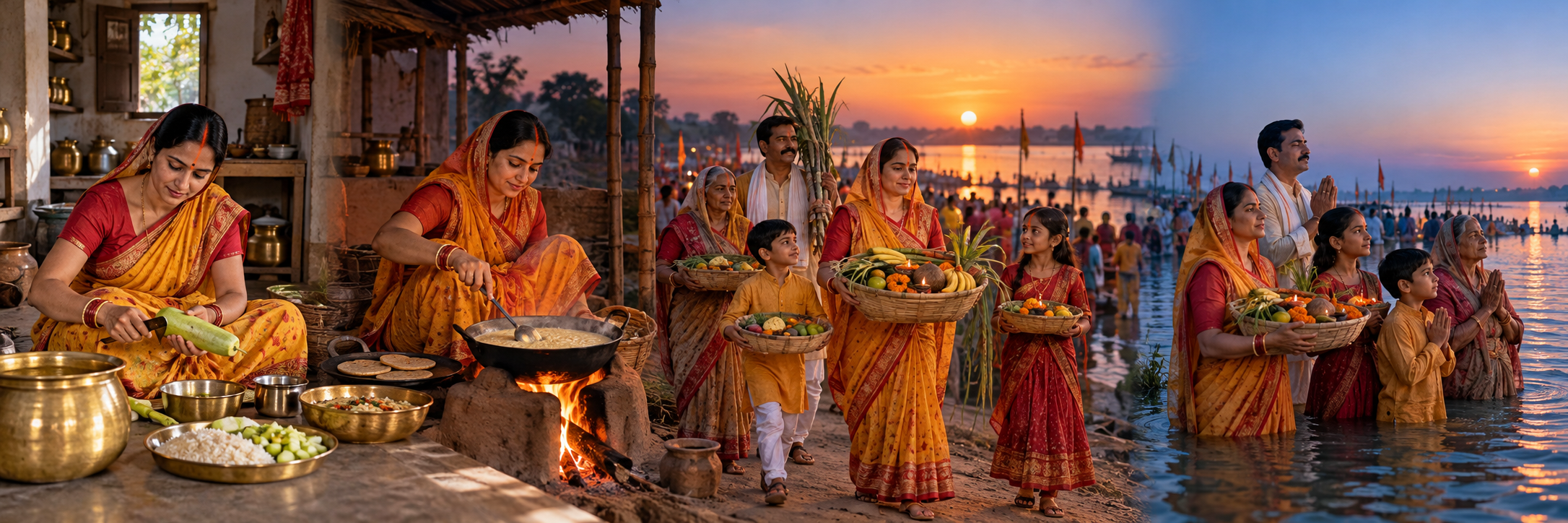
The observance begins with Nahai Khai on 13 November 2026. In the customary four-day sequence, that places Kharna on 14 November. The two public arghya observances then fall on 15 and 16 November.
| Date | Observance | Timing anchor | What you should plan |
|---|---|---|---|
| 13 November 2026 | Nahai Khai | Purification bath before sunrise | Clean the cooking and worship areas, complete the ritual bath and prepare the customary sattvic meal. |
| 14 November 2026 | Kharna | Follow your household’s evening observance | Keep the day available for fasting, prasad preparation and the transition into the stricter phase of the vrat. |
| 15 November 2026 | Sandhya Arghya | Local sunset | Confirm your ghat’s assembly arrangements and arrive before the solar offering begins. |
| 16 November 2026 | Usha Arghya | Local sunrise | Return before dawn, complete the offering to the rising Sun and conclude the vrat according to family tradition. |
This table separates the ritual’s solar time from your arrival time. If a community notice gives an earlier reporting time, that is usually meant for access, preparation and crowd movement; it does not change the sunrise or sunset anchor of the arghya.
Why there is no single arghya clock time for everyone
Sandhya Arghya and Usha Arghya are tied to visible transitions in the solar day, not to one clock setting that can be applied across Bharat or across the diaspora. Sunset on 15 November will occur at different local times in Patna, Ranchi, Varanasi and Kolkata, and their sunrise times on 16 November will differ as well. That is why city-specific Chhath timings are aligned with local sunset and sunrise.
Use this short verification process before sharing a time with relatives:
- Confirm the city or locality where the arghya will actually be offered. Use the ghat’s location, not the home address of the person organising the family group.
- Find the local sunset for 15 November and local sunrise for 16 November in a trusted panchang or temple notice.
- Check that the listed time uses the correct local time zone. This matters especially when you are observing Chhath outside Bharat.
- Ask whether the organiser’s message gives the ritual time or the expected arrival time. Record both separately.
- If two listings differ, use the convention followed by the priest, temple or ghat committee conducting your observance.
A city name without a date is not enough, and a date without a city is not enough. Your final calendar entries should read, in effect, “15 November – local sunset” and “16 November – local sunrise,” with the verified clock times written beside them.
What to do on each day of the vrat
13 November: Nahai Khai
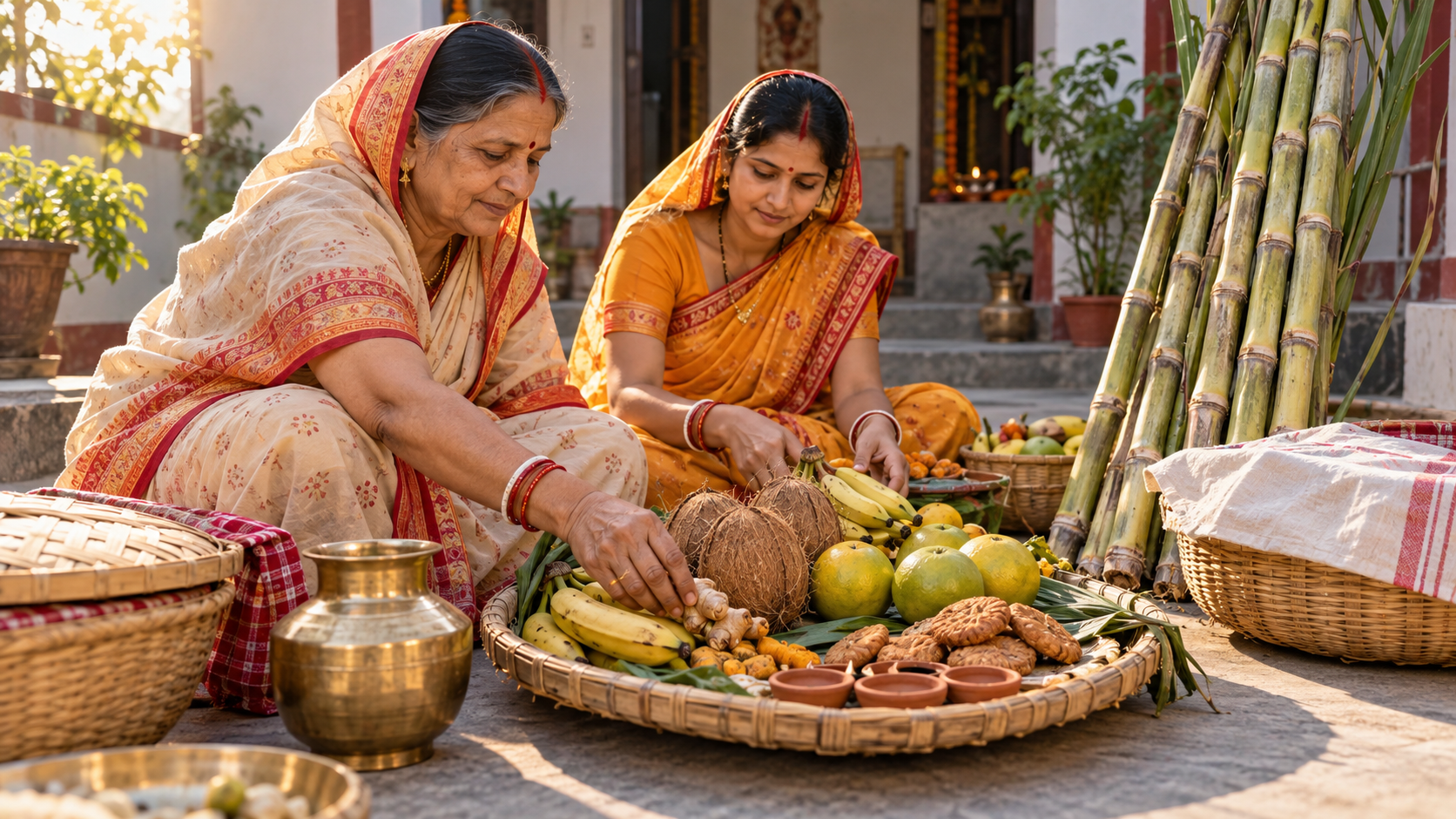
Nahai Khai means, in practical terms, that the observance opens through bathing, purification and food prepared under ritual discipline. The traditional bath is undertaken before sunrise, with the Ganga holding particular sacred importance. Where a Ganga bath is not possible, follow the established practice of your family or local Chhath community rather than inventing an elaborate substitute.
Lauki-bhat is closely associated with the day’s simple meal. The practical priority is ritual cleanliness: settle the kitchen arrangements, ingredients and utensils before the day begins. If several people share a kitchen, tell them in advance which utensils and preparation space have been set aside for the vrat.
14 November: Kharna
Kharna is the bridge between the opening purification and the two arghya days. Keep the schedule light enough for fasting, worship and prasad preparation. The precise recipes, mantras and sequence may differ by family tradition, so settle those details with the vrati before buying or preparing anything.
If fasting could be medically unsafe because of a health condition or medication, do not improvise in silence. A qualified clinician can advise on physical safety, while a knowledgeable family elder or priest can help decide how the observance should be adapted.
15 November: Sandhya Arghya
Sandhya Arghya honours Surya at sunset. Prepare the offerings and ritual vessels according to your lineage, then organise transport around the local ghat’s access rules. The time printed for sunset is the ritual anchor, not the time to begin looking for parking, joining the queue or distributing baskets.
At the water, keep the vrati’s path clear and avoid crowding the offering space for photographs. Enter the water only where organisers permit it, and do not move into deep, fast or unprotected water for the sake of recreating a customary posture. The arghya can be conducted with reverence while following the safety arrangements at the site.
16 November: Usha Arghya
Usha Arghya is offered to the rising Sun. Because sunrise is the anchor, all travel, assembly and preparation must happen beforehand. Pack and organise the required items after returning from Sandhya Arghya so the household is not searching for them in the pre-dawn hours.
After the morning worship is complete, the vrati concludes the fast in the manner received through family or community tradition. Do not rush that transition merely because the public portion at the ghat has ended; the household’s closing rites remain part of the observance.
A practical plan for the two arghya visits
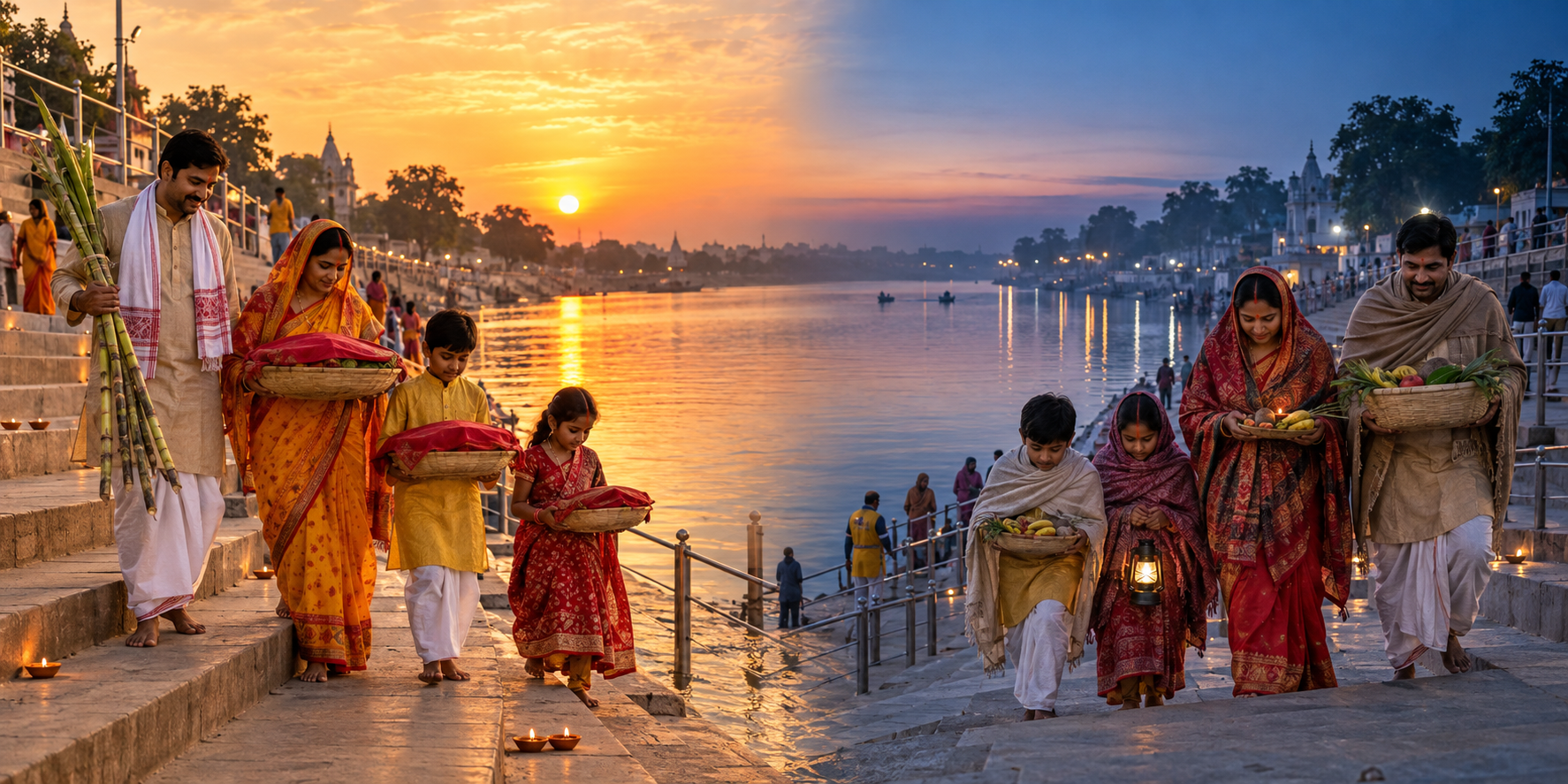
The most common scheduling mistake is treating sunset or sunrise as the departure time. Work backward from the locally verified solar time and account for the actual conditions at your chosen ghat.
- Choose one meeting point. A precise entrance, landmark or community enclosure is more useful than telling relatives to meet “at the ghat.”
- Separate offerings by visit. Keep the morning materials distinct from the items needed for the evening, so nothing essential is left wet, misplaced or unavailable overnight.
- Check access instructions. Temporary traffic controls, pedestrian routes and restrictions on vehicles may change how long it takes to reach the water.
- Assign practical roles. Decide who stays with the vrati, who carries the offerings, who accompanies children or elders and who handles transport.
- Protect the ritual space. Carry only what your tradition and the site permit, and take packaging or waste away from the ghat.
- Keep a local fallback. If weather, crowd controls or mobility make the planned water access unsafe, follow the alternative approved by your temple, priest or community organiser.
If family members are observing from different cities, share the dates and ritual sequence with everyone, but send a separate clock time for each location. The same principle applies internationally: preserve the 15 November sunset and 16 November sunrise sequence while using local solar timings and local community guidance.
Chhath Puja 2026 timing FAQ
When is Sandhya Arghya in 2026?
Sandhya Arghya is on 15 November 2026. Offer it at sunset in the city or locality where you are performing the ritual. Verify the exact clock time locally.
When is Usha Arghya in 2026?
Usha Arghya is on 16 November 2026. Its timing is the local sunrise, so the household should reach the place of worship and complete preparations before that time.
Why do online clock times sometimes differ?
The listed city, exact locality, time zone and calculation convention may not be the same. A community may also announce an assembly time earlier than the actual sunset or sunrise. Match the listing to your location and distinguish the reporting time from the arghya time.
Must every household use identical offerings and mantras?
No. The progression from Nahai Khai to Kharna, Sandhya Arghya and Usha Arghya provides the common structure, while recipes, offerings, songs, mantras and household procedures can reflect regional and family traditions. Follow the tradition under which your vrati has undertaken the observance.
Before you close this page, record the local sunset for 15 November and local sunrise for 16 November beside the four-day family plan. Send that completed schedule to everyone involved, including the meeting point and the organiser’s earlier arrival time.
References
- Hindu Pad – Chhath Puja Muhurat 2026: Sandhya Arghya, Usha Arghya Timings on 15|16 November 2026
- Hindu Pad – Chhat Nahai Khai 2026, Lauki Bhat during Chhath Puja

Leave a Reply
You must be logged in to post a comment.