
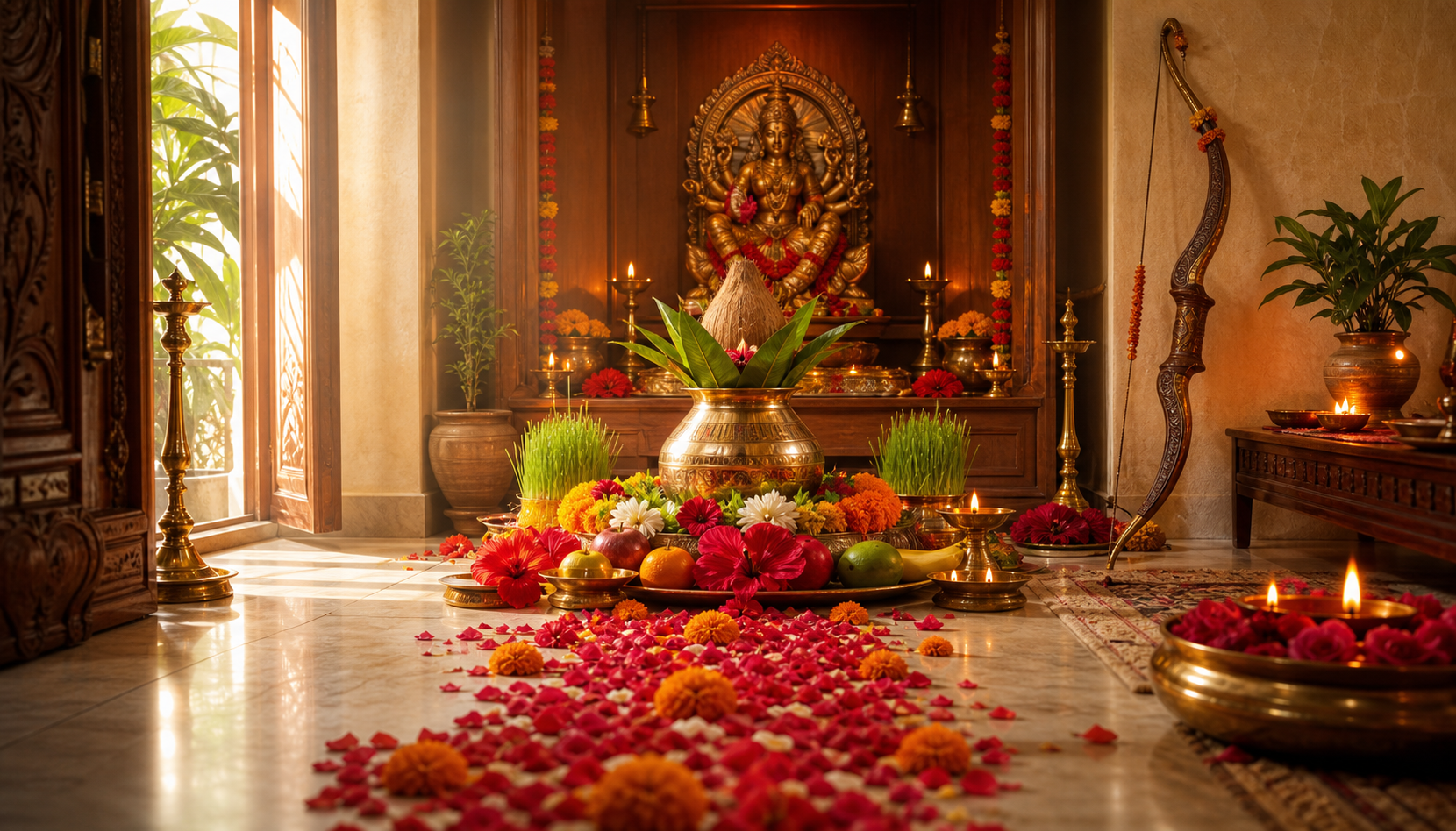
If your household welcomes the new year, begins a Navaratri vrata, worships Devi, and then celebrates Sri Rama within the same bright fortnight, Chaitra can feel like several sacred occasions competing for attention. The practical question is not how to perform every possible ritual. It is how to carry one clear sankalpa through the whole cycle.
The simplest answer is to treat Chaitra as a progression. You establish intention on Shukla Pratipada, discipline body and mind through the nine nights, place awakened power in the service of dharma on Ram Navami, and carry that discipline into seva. Once you see that arc, Shakti worship becomes a way of reorganizing daily life rather than an annual burst of ceremony.
Read Chaitra as one arc, not a stack of festivals
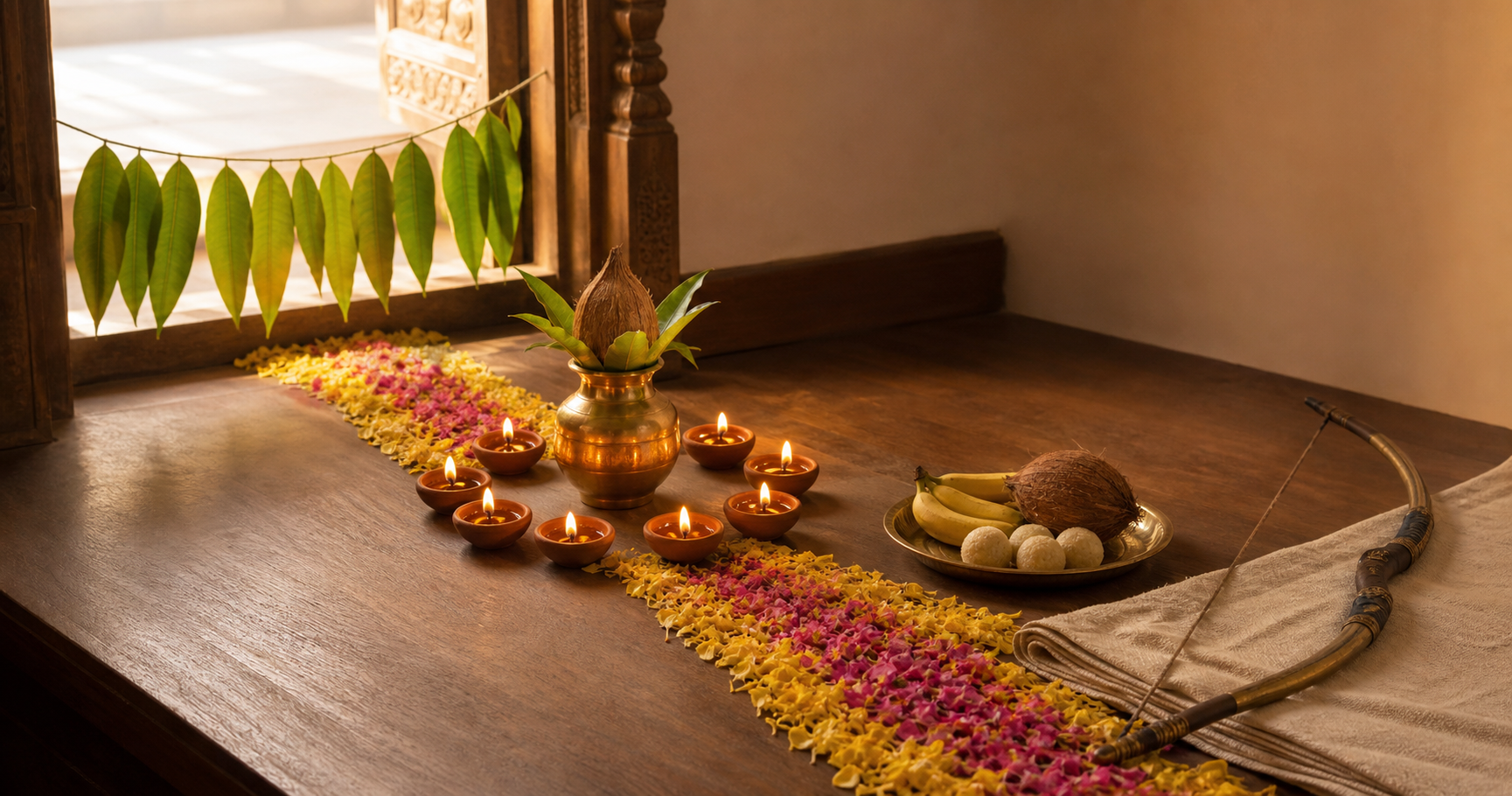
Chaitra Shukla Pratipada opens the ritual year in many Hindu calendars. It is celebrated through observances such as Ugadi, Gudi Padwa, and Navreh, while also beginning Vasant or Chaitra Navaratri. This convergence matters: the year does not begin merely by changing a date. It begins by establishing the inner conditions under which you intend to live.
Chaitra is one of four Navaratri periods in the lunar year, alongside Ashadha, Ashwin, and Magha. Chaitra and Ashwin are the two most widely observed. Chaitra carries the character of spring renewal, while its placement near regional new-year celebrations makes it especially suited to beginning a vrata, a course of study, or a disciplined household practice.
| Point in the cycle | Ritual anchor | Practical focus |
|---|---|---|
| Chaitra Shukla Pratipada | New-year observance and Ghatasthapana | State one sankalpa and establish the conditions needed to keep it. |
| Shukla Pratipada through Navami | Vasant Navaratri and daily Devi worship | Train attention through japa, restraint, reading, simple offerings, and regulated food. |
| Ashtami or Navami | Kanya Puja in many traditions | Turn reverence for Devi into respect for the dignity, safety, and learning of girls. |
| Shukla Navami | Sri Ram Navami | Join Shakti, the capacity to act, with maryada, the discipline that directs action toward dharma. |
| Chaitra Purnima in several traditions | Hanuman Jayanti | Carry strength into bhakti, loyalty, humility, and seva. |
| Krishna Paksha Navami, where observed | Chandika Navami | Undertake a focused Chandi observance for courage, protection, and decisive clarity. |
Not every household observes every point in this table, and you do not need to manufacture a uniform practice. Family parampara, region, temple tradition, and the local panchanga all matter. Chandika Navami, for example, is distinct from the Maha Navami of Sharad Navaratri; it should not be treated as an extra tenth day of Vasant Navaratri.
Your first practical task is therefore calendrical. Use a panchanga calculated for your location and consistent with your family’s amanta or purnimanta convention. Mark the local spans of Pratipada, Ashtami, Navami, and the appropriate parana period. For Ram Navami worship, also note madhyahna kala. A tithi is a lunar division and may begin or end in the middle of a civil day, so copying another city’s Gregorian date or clock time can place the central rite outside the intended tithi.
Choose one ritual backbone and make it sustainable
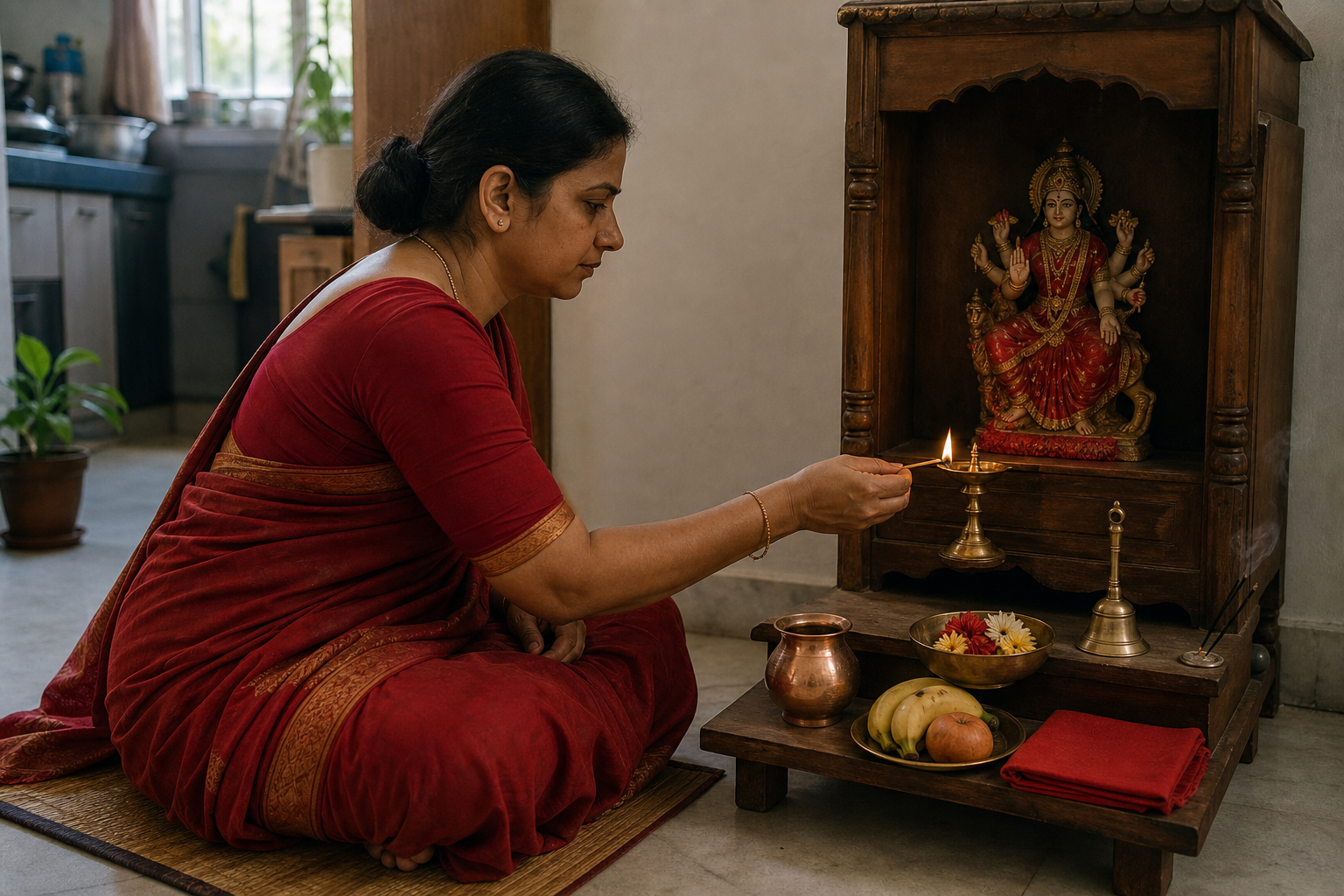
A crowded altar and an ambitious reading schedule can create the appearance of intensity while making steady worship less likely. Decide what will carry your observance before gathering materials. The best household plan is the one you can maintain with attention on an ordinary working day.
- Begin with parampara. If your family or guru has a received Chaitra procedure, use that as the governing form. Additions should support it, not obscure it.
- Write one sankalpa. Name the quality you want Devi worship to awaken, the habit you will restrain, and the act of service through which you will express the result. A workable form is: “During these nine days, I will cultivate courage, limit angry speech, and offer food or assistance where it is needed.”
- Select one liturgical map. You may follow the nine NavaDurga forms day by day; the three-part movement through Durga, Lakshmi, and Saraswati; or a Devi Mahatmya-centered reading discipline. These maps can illuminate one another, but you do not need to perform every associated rite.
- Set a daily minimum. A lamp, a water or flower offering, 108 repetitions of a mantra already used in your practice, a short reading, arati, and a quiet review of the sankalpa form a coherent core.
- Decide your vrata before the first day. Choose a food discipline and daily schedule that you can keep without damaging health, neglecting work, or becoming irritable with the people around you.
The widely followed NavaDurga sequence is Shailaputri, Brahmacharini, Chandraghanta, Kushmanda, Skandamata, Katyayani, Kalaratri, Mahagauri, and Siddhidatri. If this is your chosen map, invoke the appropriate form each day with the simple salutation “Om Devi [name]yai Namah” as transmitted in your tradition. Do not let a search for daily colors, elaborate menus, or decorative themes displace the central work of japa, restraint, and recollection.
Another widely used framework divides the festival into three triads: Durga for transformative strength, Lakshmi for sustaining and harmonizing abundance, and Saraswati for knowledge and clarity. A practical application is to use days one through three to remove one obstacle, days four through six to bring order and generosity to what you possess, and days seven through nine to improve study, speech, and judgment. These are reflective applications, not rigid scriptural assignments for every lineage.
Your altar can remain modest. A clean place, an image or murti of Devi, a lamp, water, flowers, and simple naivedya are sufficient for a basic household practice. If you perform Ghatasthapana, establish the kalasha with sanctified water, leaves, and a coconut according to family custom. Barley or wheat may be sown nearby as a sign of the sankalpa’s growth. Maintain an akhand jyot only when the flame can be tended safely; otherwise, light a supervised lamp during morning and evening worship.
Keep the nine days steady: a householder’s daily rhythm
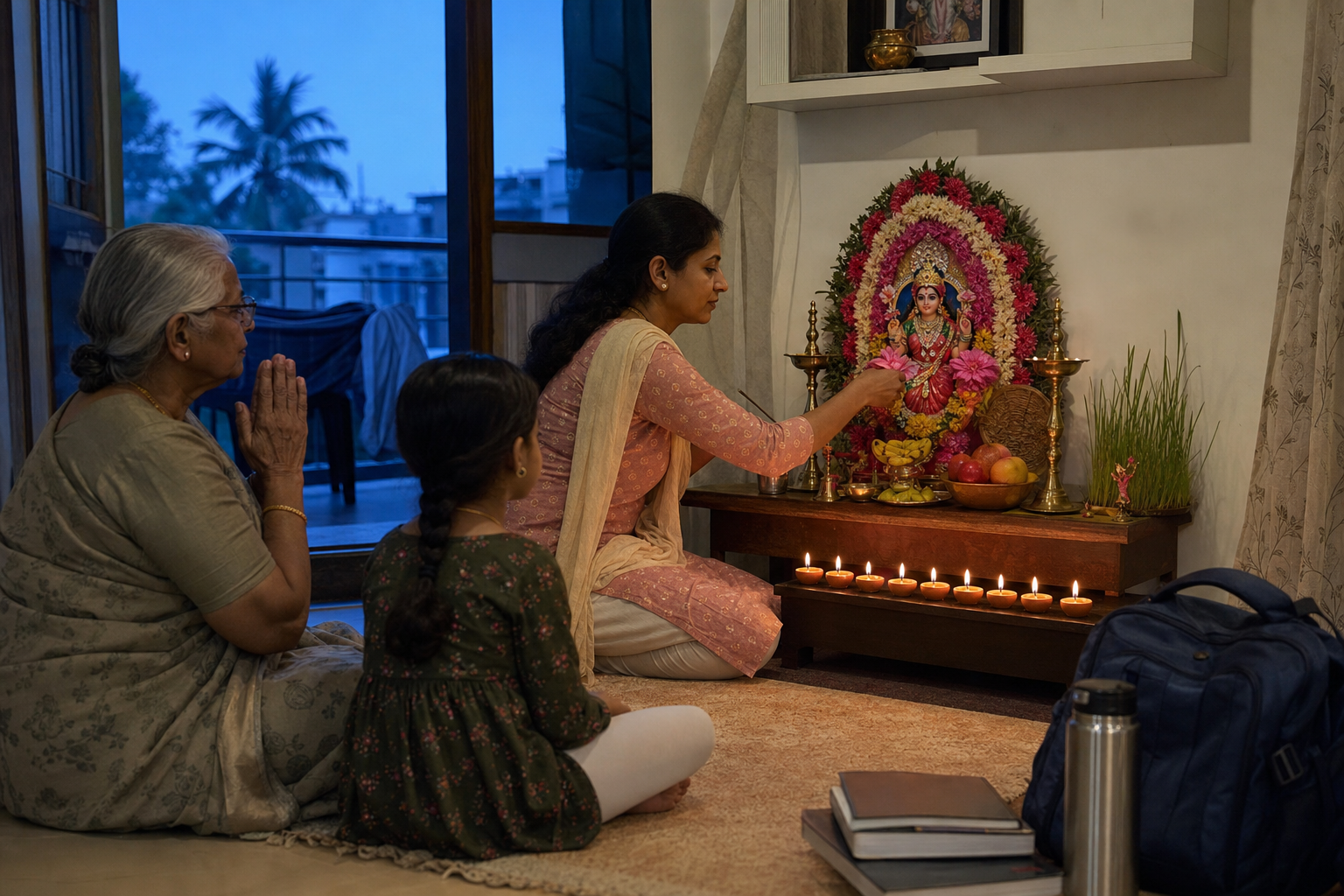
Ghatasthapana is generally performed on Pratipada in an appropriate morning window, traditionally within the first third of the day while the tithi prevails. Precise conditions can involve local calculations, including whether Pratipada reaches sunrise and whether an alternative such as Abhijit Muhurta is appropriate. Use your regional panchanga or temple direction rather than trying to reconstruct the muhurta from a generic calendar.
After the first day’s installation, repetition becomes a strength. Keep the structure stable and change only the day’s Devi invocation or selected reading.
- Morning: Bathe, settle the worship space, remember Ganapati and the guru parampara as customary, repeat the sankalpa, invoke the day’s form of Devi, perform japa, and read the assigned passage.
- During the day: Keep the chosen food discipline, watch speech, reduce unnecessary sensory input, and complete one action consistent with the sankalpa. If your vow concerns patience, the real observance begins when someone interrupts you.
- Evening: Light the lamp safely, offer flowers or simple naivedya, perform arati, and review one question: “Did the Shakti I invoked change how I acted today?” Make a correction for the next day without abandoning the vrata because of one lapse.
The Devi Mahatmya provides a strong textual backbone because its three major movements carry the aspirant from confusion and inertia through confrontation to restored order. A complete Chandi Path is substantial: the customary sequence can include Kavacha, Argala, and Keelaka along with the text’s 13 chapters and 700 verses. If you already know the complete procedure and have the time to maintain it attentively, plan the portions before Pratipada. If you do not, read a manageable section with concentration or use a stotra established in your household. Rushing through a formal recital merely to finish a count defeats the discipline of attention.
The Navarna Mantra, “Om Aim Hrim Klim Chamundayai Vicche,” is central to many Chandi practices and is commonly repeated in counts such as 108. Use it as taught within your practice. A formal Chandi Homa involves precise ritual sequencing and open flame; undertake it with competent guidance or join a properly conducted temple or community observance. A home fire ritual should not be improvised from fragments of instructions.
Fasting should support this rhythm, not consume it. Navaratri vrata traditionally combines food restraint with disciplined speech, action, prayer, and reduced sensory disturbance. Depending on capacity and custom, food practice may range from phalahara to light sattvic meals using fruit, milk, nuts, sabudana, kuttu, or singhada preparations. Some households avoid onion, garlic, and other foods treated as rajasic or tamasic in their vrata discipline.
Do not use nirjala fasting as a measure of devotion. Children, elders, expectant mothers, people with ongoing health conditions, and anyone whose medication or health needs require regular food or fluids should use a gentler discipline. Maintain hydration, follow appropriate medical advice, and choose regular sattvic meals when fasting would be unsafe. You can still observe restraint through simplicity, moderated portions, mindful speech, reduced screen use, and japa.
Let Navami transfer worship into dharmic conduct
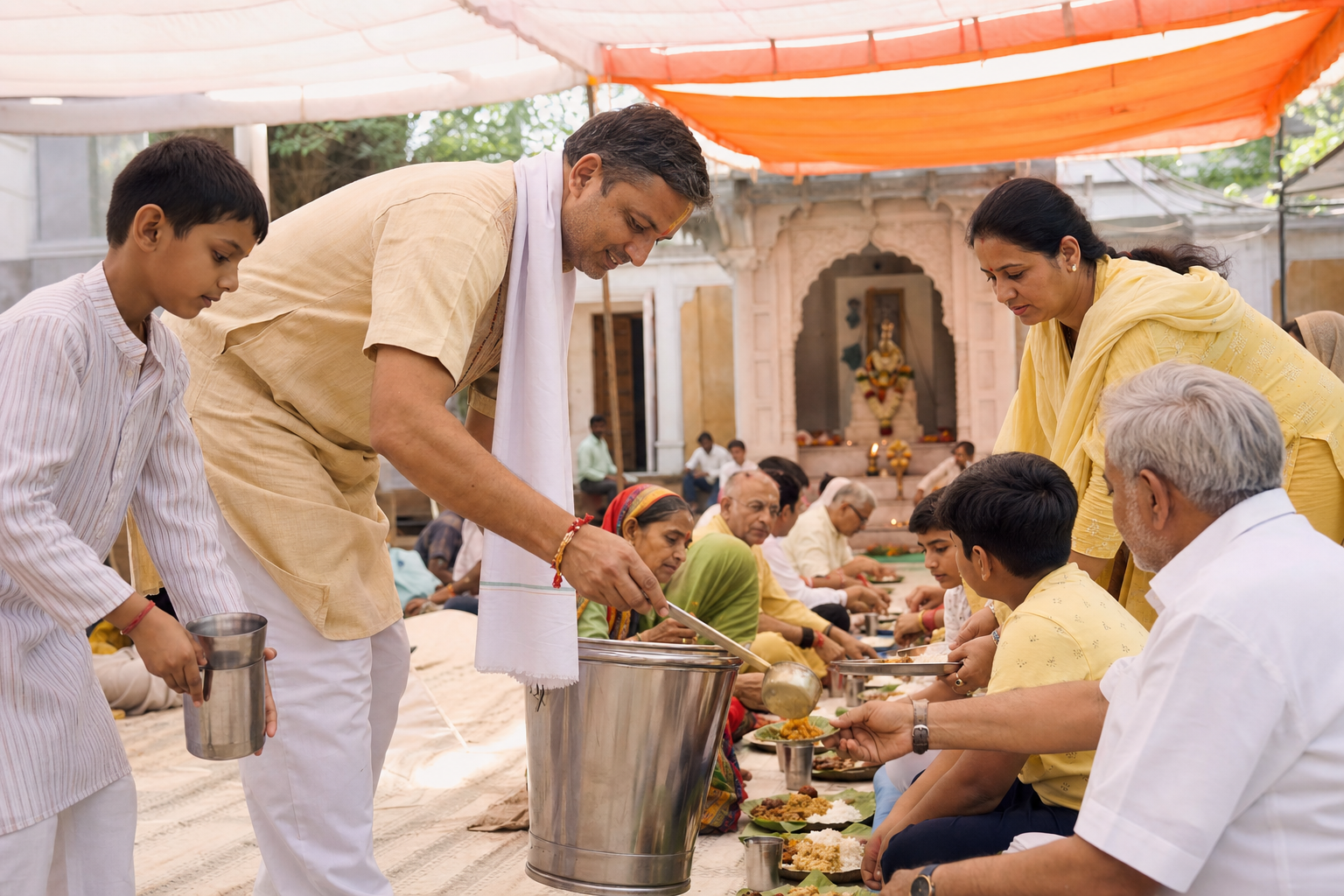
Navami should not feel like the moment when nine days of discipline can finally be discarded. It is the point at which inner worship becomes visible conduct. Kanya Puja, performed on Ashtami or Navami in many communities, honors living manifestations of Devi. Its ethical demand is larger than the ceremonial meal: girls must be treated with dignity, protection, access to learning, and respect after the festival as well as during it.
If your household performs Kanya Puja, keep the rite considerate and consistent with family tradition. Welcome the participants respectfully, offer suitable food and prasad, and avoid turning children into props for display. Pair the worship with a concrete commitment such as supporting girls’ education, contributing to health needs, or helping a family in the community. That is how symbolic reverence acquires social substance.
Sri Ram Navami forms the sacred culmination of Vasant Navaratri. Where the full Rama Janmotsava is observed, madhyahna is the important period for worship, with local timing confirmed through the panchanga. Households may perform archana or abhishekam for Rama, Sita, Lakshmana, and Hanuman, recite from the Ramayana, or undertake Rama nama-japa.
This conjunction gives the Chaitra cycle its moral clarity. Shakti without discipline can become force governed by appetite or anger. Dharma without the capacity to act can remain a noble intention. Devi worship cultivates courage, abundance, and discernment; contemplation of Sri Rama asks that those capacities be placed under satya, seva, responsibility, and maryada.
Conclude through the parana and visarjana procedure followed in your tradition. Offer gratitude, distribute prasad, compost biodegradable nirmalya where practical, and use kalasha water respectfully, including for plants when appropriate. If barley or wheat was grown, do not reduce its appearance to fortune-telling. Let it remind you to ask whether the sankalpa itself produced visible growth.
The month need not become spiritually empty after Navami. In several traditions, Hanuman Jayanti on Chaitra Purnima extends the cycle through devoted strength and seva. Where the local calendar and family tradition mark Chandika Navami in Krishna Paksha, treat it as a distinct, focused Chandi observance. You might attend collective Chandi Path, perform a simple Devi archana, or support annadanam rather than attempting an elaborate home rite without guidance.
Key takeaways
- Begin with a location-specific panchanga and your family parampara; tithis, muhurta, and parana cannot be transferred reliably from another city.
- Treat Chaitra as one progression from sankalpa to Shakti sadhana, dharmic action, and seva rather than as unrelated festival dates.
- Choose one primary ritual backbone: the NavaDurga sequence, the Durga-Lakshmi-Saraswati triads, or a Devi Mahatmya reading plan.
- Make the daily minimum repeatable: a lamp, a simple offering, japa, a short reading, attention to speech, and review of the sankalpa.
- Adapt fasting to health and capacity. Food austerity that makes worship unsafe or household conduct harsh has missed its purpose.
- Complete the cycle outwardly through Kanya Puja conducted with dignity, annadana, educational or health support, and another concrete form of seva.
Before the next Chaitra begins, write your one-sentence sankalpa and place three items beside it: the panchanga dates for your location, the text you will actually read, and the service you will complete by Navami. That small preparation is enough to turn nine festival days into a coherent practice of Shakti.
References
- DharmaRenaissance Blog – Navaratri Vrata Mahatmyam: Scriptural Roots and Seasonal Science Behind Chaitra & Ashwin Fasts
- DharmaRenaissance Blog – Chaitra Masam Unveiled: Sacred New Year Significance, Comprehensive Puja Guide, and Spring Festivals
- DharmaRenaissance Blog – Chandika Navami 2026: Powerful Chandi Puja on Krishna Paksha Navami – Meaning, Vidhi, Benefits
- DharmaRenaissance Blog – Vasant Navratri 2026: Dates, Puja Vidhi, Fasting, NavaDurga & Ram Navami’s Sacred Finale
