
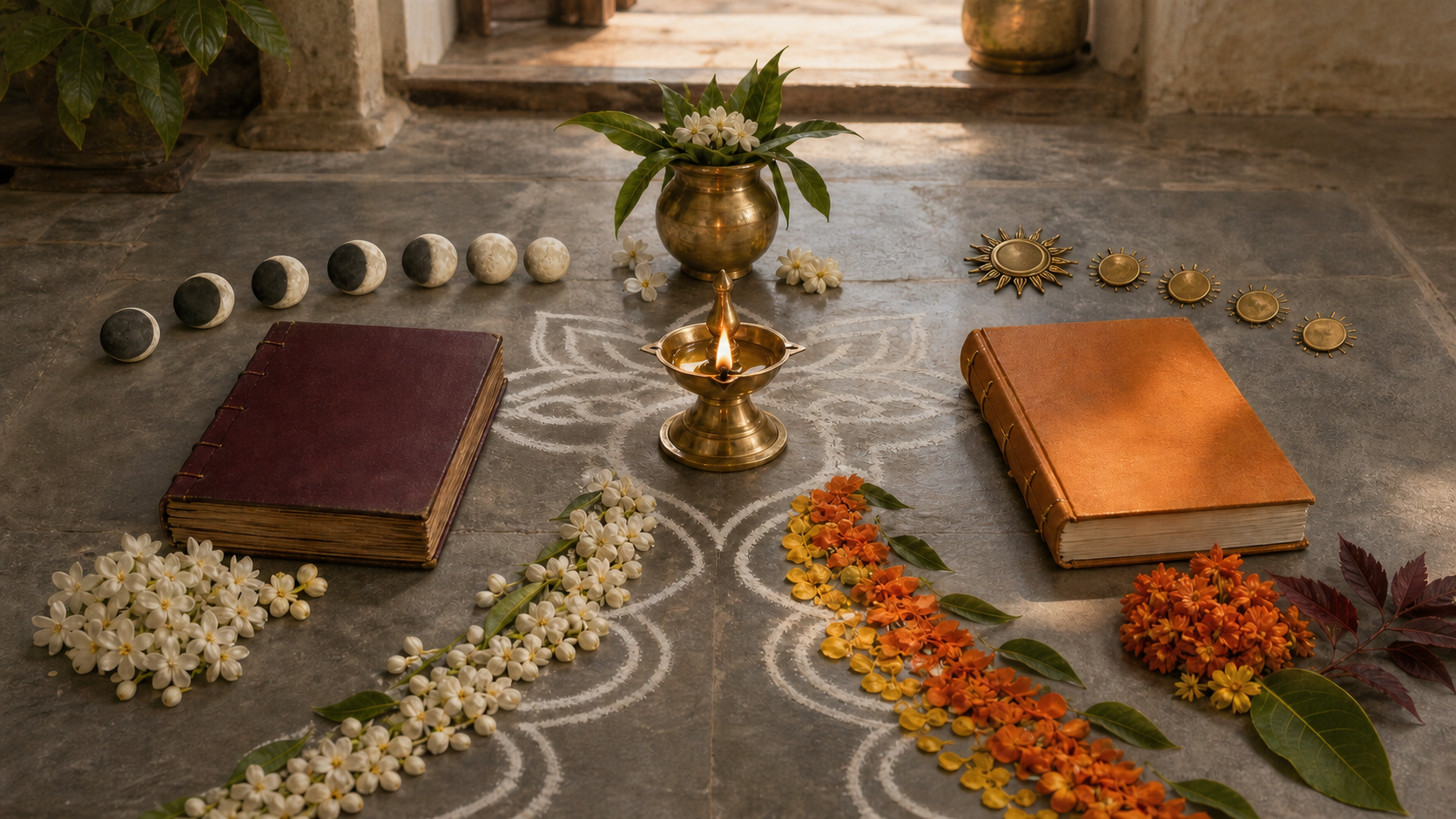
If your family follows both a lunar panchanga and the Tamil calendar, September 18 can look confusing in 2026. It is both the date of Santan Saptami and the first day of Purattasi. Those are two calendar entries with distinct meanings, not one merged observance.
The practical answer is to mark the shared civil date twice, preserve the name used by each tradition, and let your local panchanga, temple and family practice supply the ritual details. Here is how to plan the period without confusing a one-day vrata with a month-long Tamil calendar observance.
The 2026 dates at a glance
| Observance | Calendar position | 2026 date | What to put in your calendar |
|---|---|---|---|
| Santan Saptami | Shukla Paksha Saptami, the seventh tithi of the bright fortnight of Bhadrapada | September 18 | A separate one-day vrata entry, followed by a reminder to verify local tithi timing |
| Purattasi Masam | An auspicious month in the traditional Tamil calendar used in Tamil Nadu and Puducherry | September 18 through October 17, a span of 30 days | A month-long calendar span within which you can add the practices confirmed by your family or temple |
Treat these civil dates as planning anchors, not as complete instructions for when a fast or puja begins. A tithi is not identical to a midnight-to-midnight date and may cross a civil-day boundary. Confirm the applicable timing in a panchanga calculated for your location, especially if you live outside India or will travel during the observance.
Why Bhadrapada and Purattasi can appear on the same day

Bhadrapada and Purattasi belong to different regional modes of calendar reckoning. In Santan Saptami, Bhadrapada names the lunar month, Shukla Paksha names its bright fortnight, and Saptami identifies the seventh tithi. Purattasi names a Tamil calendar month whose civil-date boundary is being given for Tamil Nadu and Puducherry.
For cross-regional orientation, Purattasi corresponds with Ashwin in North Indian Hindi usage and Ashwayuja in Telugu usage. That correspondence helps relatives recognise the season, but it does not make the regional calendars interchangeable day by day.
You therefore do not have to choose whether September 18 is a Bhadrapada date or a Purattasi date. It can carry both labels because each answers a different calendar question. The mistake to avoid is translating one name into the other and then assuming that the associated household practices are also identical.
For every observance you enter, record four fields: the Gregorian date, the regional calendar name, the vrata or festival name, and the person or institution confirming the timing. This small distinction is particularly useful in families whose members consult Tamil, Hindi, Telugu or diaspora temple calendars.
Plan Santan Saptami around your Kula Devata tradition

Santan Saptami is traditionally observed by women who fast for the health and well-being of their children. The worship centres on the family’s Kula Devata, with special food prepared as an offering according to household custom. Those details make this a lineage-shaped vrata rather than a ritual that should be reconstructed from a generic checklist.
- First confirm that your household observes Santan Saptami and identify the family member who knows its established procedure. Do not infer the procedure merely from the name of the tithi.
- Ask which Kula Devata is worshipped in your family and which offering is customary. If that knowledge is unclear, consult a trusted family elder or the priest connected with the family tradition before buying ingredients.
- Check the local panchanga for the Saptami timing applicable to your location. Keep September 18 as the planning date, but use the local tithi calculation when deciding the ritual window.
- Clarify the form of fasting before the day arrives. If fasting would interfere with essential medicine or a known health need, ask a qualified clinician what is safe and ask your priest how the vrata may be adapted. Medical safety and ritual accommodation are separate questions, and neither should be improvised.
- Keep the sankalpa and worship focused on the children’s well-being, while following the inherited Kula Devata practice for the offering rather than substituting an unverified universal menu.
If two family lineages are represented in one household, establish in advance which custom the person undertaking the vrata will follow. Combining instructions from both sides without guidance can obscure the very kula relationship that distinguishes this observance.
Treat Purattasi as a 30-day planning window
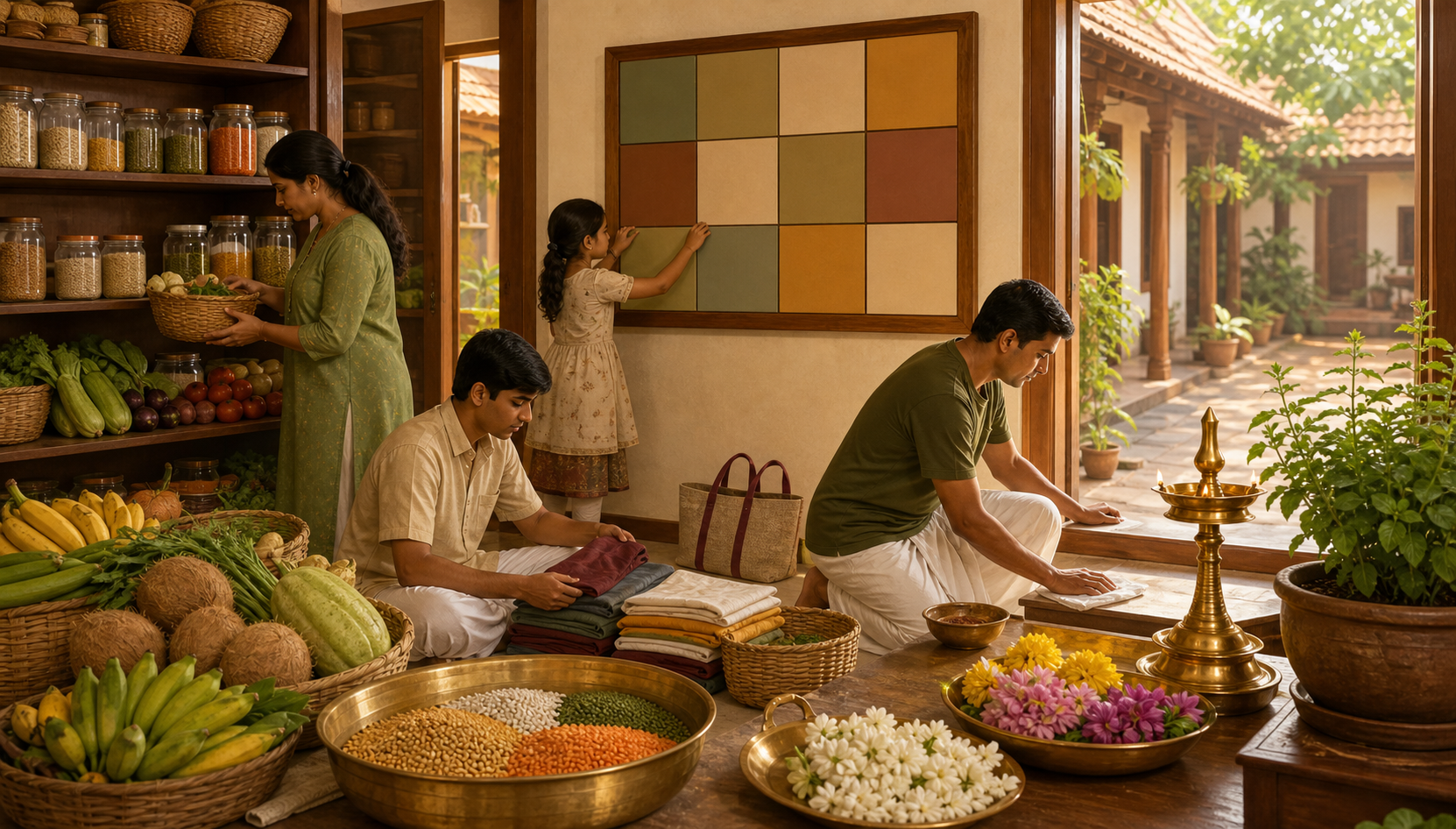
Purattasi runs from September 18 to October 17 in 2026. The beginning and ending dates define the month; they do not, by themselves, establish one universal program of rites for every Tamil household. Family custom, sampradaya and temple practice determine what you actually undertake within that span.
- Block the complete September 18-October 17 period in your calendar under the name Purattasi Masam. This prevents the month from being reduced to its opening day.
- Add only the practices that your household or temple has confirmed. Give each one its own date, location and preparation note instead of relying on a vague month-long reminder.
- Check the published schedule of the temple you intend to visit before arranging travel. A temple’s operational calendar is the practical authority for its own events.
- Use Ashwin or Ashwayuja as a regional orientation when speaking with relatives, not as a replacement for the Tamil calendar you are following.
- Mark October 17 as the end of Purattasi, but do not invent a closing rite merely because it is the final civil date. Follow an ending observance only when it belongs to your established practice.
This approach gives you enough structure to prepare while leaving room for legitimate regional and household variation. It also prevents an online calendar entry from quietly becoming a ritual prescription.
Key takeaways for your 2026 calendar
- Santan Saptami falls on September 18, 2026, during Bhadrapada Shukla Paksha.
- Purattasi begins on September 18 and ends on October 17, covering 30 days in the traditional Tamil calendar followed in Tamil Nadu and Puducherry.
- The shared September 18 date does not merge the Santan Saptami vrata with the beginning of Purattasi.
- Use a location-specific panchanga for tithi timing, your family tradition for Kula Devata worship, and the relevant temple for its event schedule.
- Do not let fasting override medicines or known health needs; obtain clinical guidance and request an appropriate ritual adaptation.
Put two separate entries on September 18 now. Under Santan Saptami, add the elder or priest you need to consult and fill in the offering only after confirmation. Under Purattasi, extend the entry through October 17 and add individual commitments as your family or temple confirms them. That simple separation lets you honour both calendars without turning calendar correspondence into ritual improvisation.
References
- Hindu Pad — Santan Saptami Vrat | Bhadrapad Sapthami
- Hindu Pad — Purattasi 2026 | Purattasi Masam 2026 (Purattasi Month) dates
