
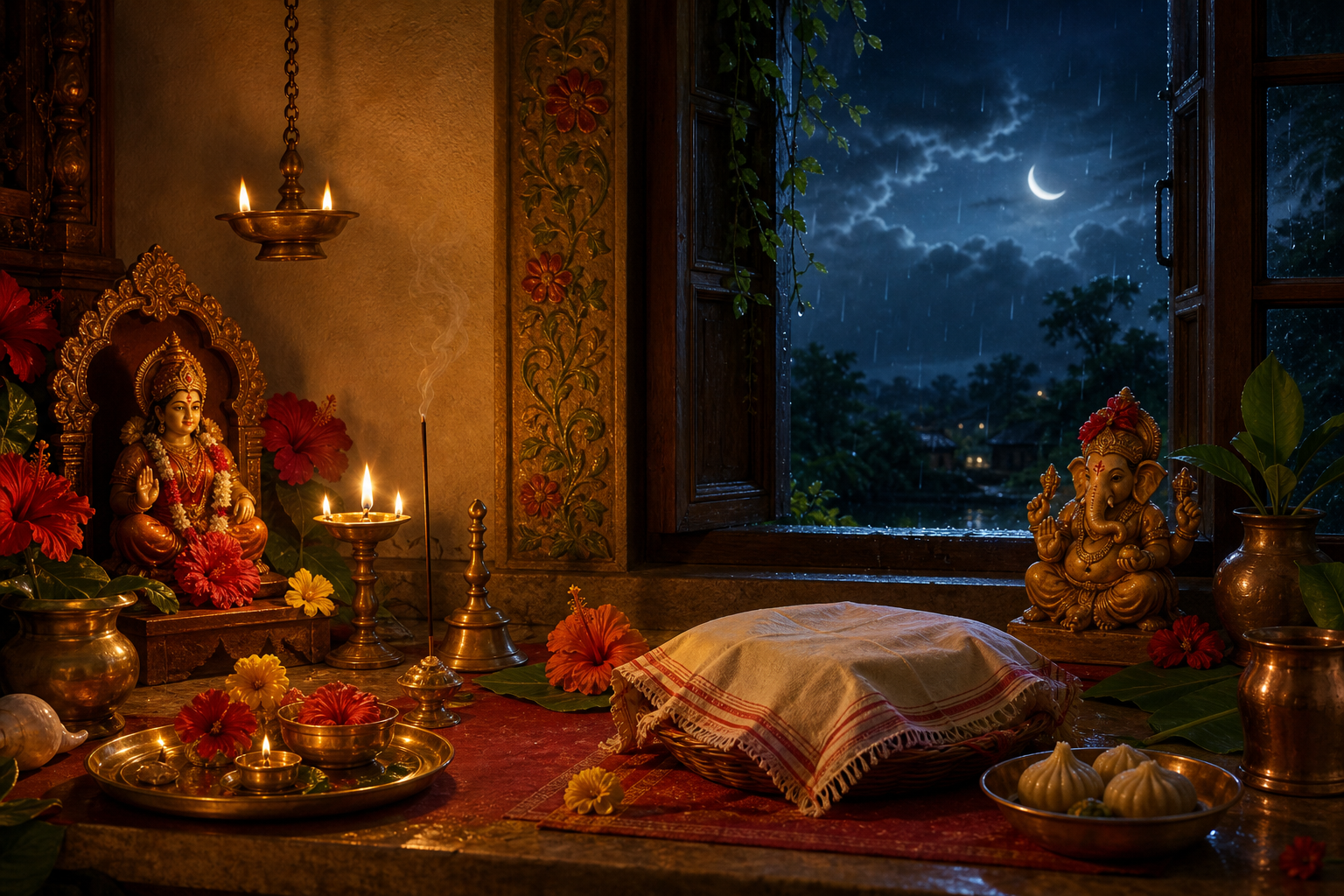
If you are arranging work, meals, temple visits, and family participation around August 2026, reserve two dates first. In India Standard Time, Jaya Parvati Vrat Jagran falls on August 1, while Ganesh-Sankashti Chaturthi falls on August 2.
The dates are straightforward, but the timing is not identical everywhere. Jaya Parvati requires advance planning for the night vigil. Sankashti requires the Chandrodaya, or moonrise, for your own city before you can decide when to break the fast. This focused calendar shows you what to prepare, which differences matter, and which apparent calendar conflicts you can safely ignore.
August 2026 vrat dates at a glance
| Date in IST | Observance | Decisive timing or rule | What to arrange |
|---|---|---|---|
| August 1, 2026 | Jaya Parvati Vrat Jagran | Follow the vrata-niyamas, night vigil, and concluding practice maintained by your family or sampradaya. | Prepare a clean altar, Shiva-Parvati murti or image or a Shiva linga, diya, incense, water, flowers, and naivedya. Choose bhajans, stotras, or vrata stories before the vigil begins. |
| August 2, 2026, Sunday | Ganesh-Sankashti Chaturthi Vrat | The fast continues until local Chandrodaya, followed by Moon darshan and the prescribed worship. | Record your city’s moonrise from a location-aware Panchang. Arrange durva, flowers, water for arghya, Ganesha worship materials, and prasad such as modak. |
Do not put one common Sankashti breaking time into a family message sent across India. Everyone may share IST and still have a different local moonrise. Send the date nationally, but send Chandrodaya only after checking each devotee’s city.
Why regional calendars may use different month names
A different lunar-month label does not automatically mean that someone has chosen the wrong vrat date. North Indian Purnimanta calendars place the major August observances across Shravana and the transition into Bhadrapada. Amanta calendars, used widely in western and southern India, relate this period mainly to Shravana.
Solar calendars add another layer of vocabulary. The August span crosses Aadi into Aavani in Tamil usage and Karkidakam into Chingam in Malayalam usage. Gujarati and Marathi calendars may show Shravan moving into Bhadra. An earlier Adhik month cycle in 2026 can also affect how month boundaries appear in regional listings, even though the two dates in this focused calendar remain within the mainstream alignment.
When two calendars appear to disagree, compare these four things before changing your plans:
- The observance name, not merely the month printed above it.
- The relevant paksha and tithi.
- Whether the calendar follows Purnimanta, Amanta, or a regional solar system.
- The city or coordinates selected for local astronomical events.
This check usually reveals whether you are seeing a genuine dating question or simply two traditional names for overlapping parts of the same period. If uncertainty remains, use the convention followed by your family, sampradaya, or local temple rather than combining rules from unrelated calendars.
Plan Jaya Parvati Vrat Jagran for August 1
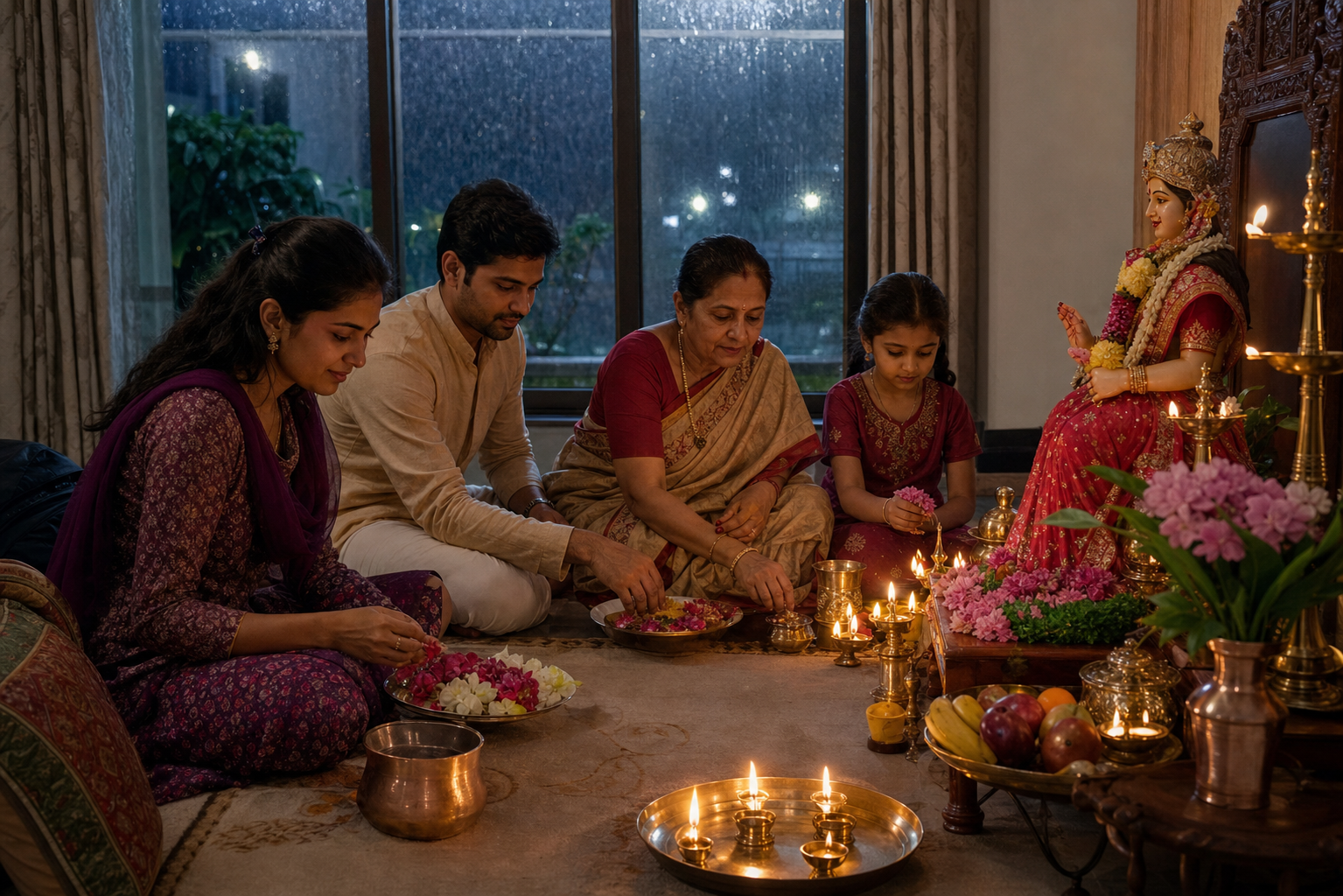
Jaya Parvati Vrat Jagran venerates Shiva and Parvati. Its devotional intentions include marital harmony, household well-being, and inner steadiness. The observance is especially prominent in Gujarat, where many families maintain an inherited sequence of sankalpa, puja, vrata-niyamas, Jagran, and udyapana.
The most useful preparation is to decide the shape of the observance before August 1. A night vigil becomes scattered when the family waits until late evening to choose readings, divide responsibilities, or settle the fasting rule.
- Confirm your family practice. Ask whether the vrata has a particular food rule, puja sequence, story, or concluding udyapana. Do not treat a generic online checklist as a replacement for an inherited niyama.
- Prepare a simple sacred space. Clean the altar and place a Shiva-Parvati murti or image, or a Shiva linga, with a diya, incense, water, flowers, and naivedya.
- Make the sankalpa deliberately. Keep the intention connected to dharmic steadiness, gratitude, and the well-being of the household rather than treating the fast as a feat of endurance.
- Plan the Jagran in blocks. Choose bhajans, Shiva-Parvati stotras, and vrata stories in advance. Give elders and children a defined portion so participation does not depend on remaining awake for every part of the night.
- Complete the observance according to your tradition. If your family maintains a formal udyapana, arrange the required guidance and materials beforehand instead of improvising it at the end.
Keep dietary discipline sattvic and moderate. If fasting or an all-night vigil conflicts with your health needs, choose a safer form of participation, use balanced sattvic food and adequate hydration where your observance permits them, and seek qualified medical guidance when needed. The purpose of vrata is devotional self-regulation, not avoidable harm.
Observe Sankashti on August 2 without mistiming parana
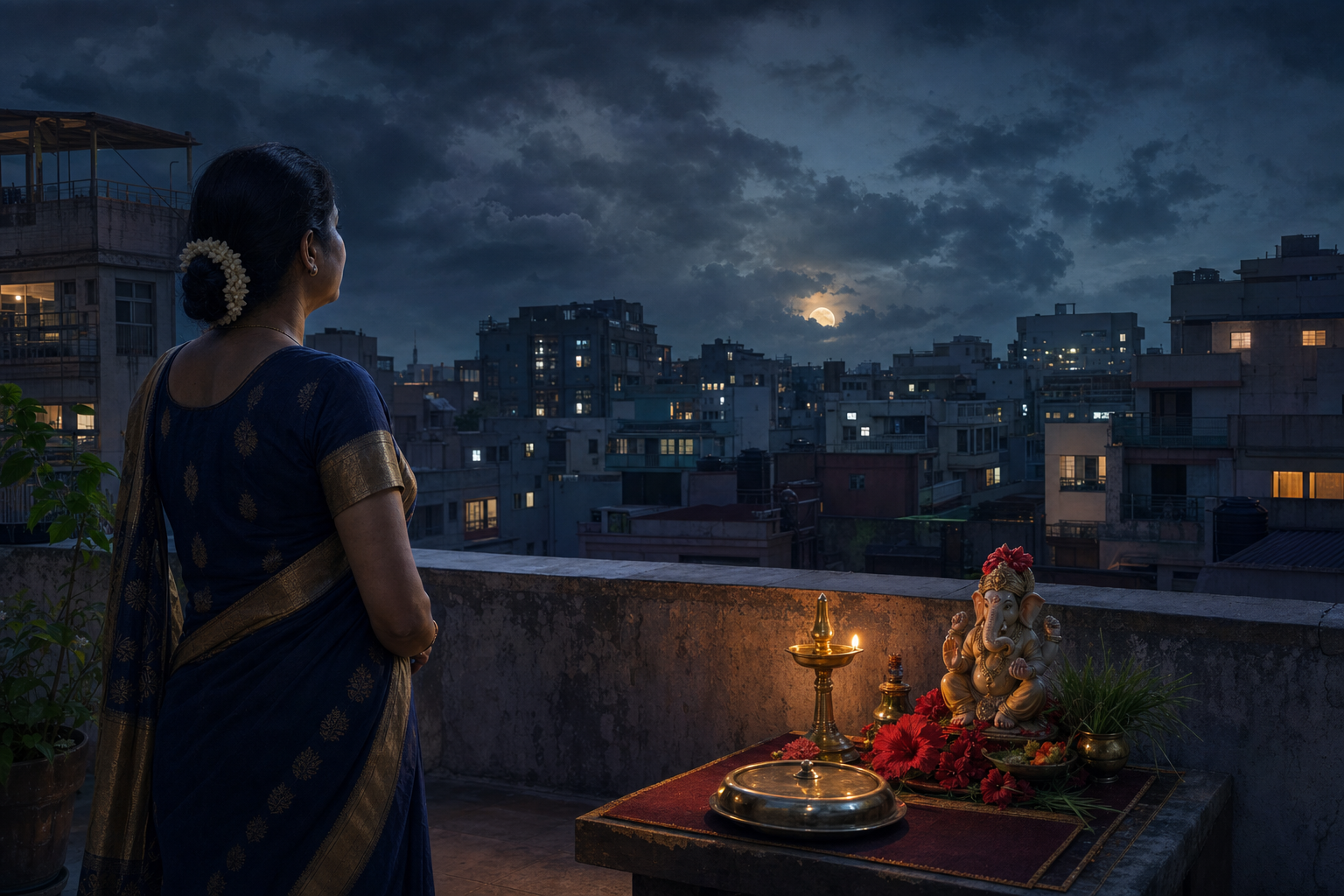
Ganesh-Sankashti Chaturthi is kept on Krishna Paksha Chaturthi after Purnima and is dedicated to Ganesha as the remover of obstacles. The August 2026 observance falls on a Sunday in IST. It is therefore not Angaraki Chaturthi, the name used when Sankashti falls on a Tuesday.
A tithi is based on the angular relationship between the Sun and Moon; it is not simply a midnight-to-midnight civil date. Moonrise is a separate local astronomical event. Panchang calculations use the Moon’s apparent position for a particular location and account for factors including parallax, atmospheric refraction, and the lunar semidiameter. Latitude, longitude, elevation, and the visible horizon all affect the result. Consequently, legitimate Chandrodaya times can differ by dozens of minutes between cities.
Use this sequence to avoid the most common planning error:
- Select your actual city in a credible Panchang or astronomical almanac. A value labelled only for India or IST is not precise enough for Sankashti parana.
- Compare that value with the notice from your local temple, especially if you intend to join congregational worship. Confirm that both timings refer to the same date and location before treating a difference as an error.
- Plan a medically appropriate daytime fast. Decide the permitted food and hydration according to your tradition and health needs before the day begins.
- For the evening puja, begin with sankalpa and Ganesha dhyana. Offer durva and flowers, recite an established Ganesha stotra or the Ganapati Atharvashirsha if it belongs to your practice, and perform the customary worship.
- Reach a place with a clear horizon before the listed Chandrodaya. A wall, tree line, building, or local horizon condition can delay when you personally see the Moon even after the calculated rise has occurred.
- After Moon darshan, offer arghya to Chandra, complete the Ganesha aarti, and then break the fast with prasad. Modak is a customary choice where it is part of household practice.
If you live outside India, do not merely convert an Indian moonrise time into your time zone. Use a Panchang calculated for your current location because the local tithi and Moon’s appearance depend on place as well as clock time. A family may retain an IST-based sankalpa by tradition, but the actual Moon darshan should still be coordinated with local astronomical conditions and local temple practice.
Key takeaways for your household
- Reserve August 1 for Jaya Parvati Vrat Jagran and August 2 for Ganesh-Sankashti Chaturthi.
- Prepare the August 1 vigil in advance: decide the family niyama, altar materials, readings, participation, and any required udyapana.
- Do not use a single all-India moonrise time for Sankashti. Record the August 2 Chandrodaya for your exact city.
- When calendars use different month names, compare the tithi, paksha, calendar system, and location before assuming that the vrat dates conflict.
- For devotees outside India, use a local Panchang rather than converting an IST moonrise mechanically.
- Adapt fasting and the night vigil to genuine health needs. Devotion is not measured by unsafe austerity.
Before August begins, put the altar list beside August 1 and leave a blank beside August 2 for your city’s verified Chandrodaya. Once the local Panchang or temple schedule supplies that time, add it to the household calendar and tell everyone where the Moon will be viewed. Those two small actions turn a date list into a calm, workable vrata plan.