
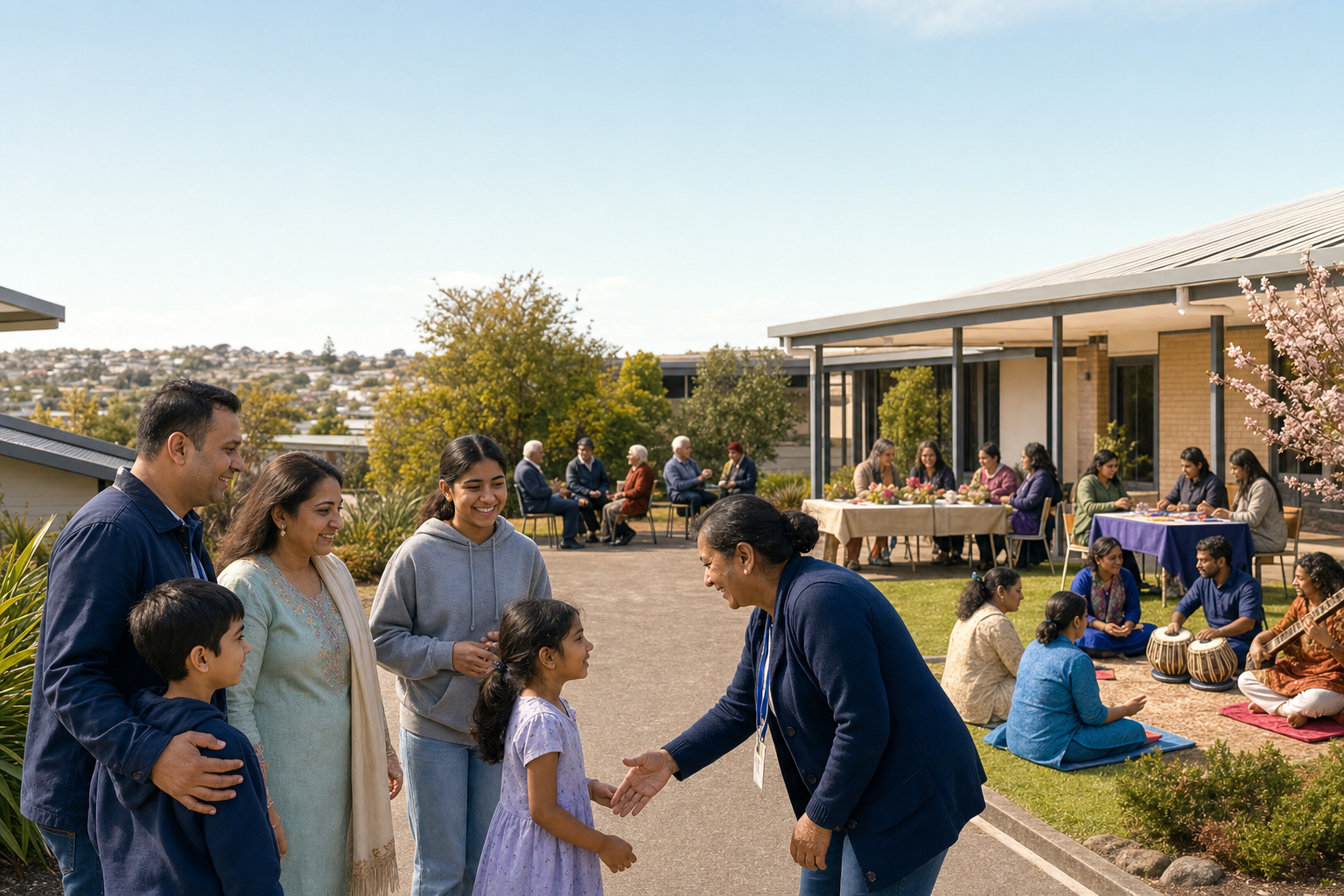
If you are deciding whether Auckland’s 12 September gathering is meant for a temple regular, a curious neighbour, a teenager exploring Dharma or a family with young children, the practical answer is all four. DharmaFest 2026 and the HOTA Raksha Bandhan Celebration are free, open to people of every cultural and ethnic background, and held at the same Papatoetoe complex.
The two gatherings are complementary, not interchangeable. The morning and early afternoon invite you to explore several Dharma traditions through activities, learning and performance. The later celebration uses Raksha Bandhan to bring family affection, mutual responsibility and public service into one community space. You will get more from the day if you decide beforehand which of those experiences your household needs.
Key takeaways for planning your visit
- Date and venue: Saturday, 12 September 2026, at the Swaminarayan Complex in Papatoetoe, Auckland.
- DharmaFest: 10.00am to 2.30pm, with yoga and wellbeing workshops, cultural performances, art and craft activities, spiritual sessions, Ayurveda and health stalls, food stalls and family activities.
- Raksha Bandhan celebration: 4.00pm to 7.00pm, with a rakhi-tying ceremony, music, classical and folk dance, community activities, food and children’s activities.
- The interval matters: There are 90 minutes between the advertised programmes. If you attend both, plan a rest, a meal or quiet time for children and elders rather than treating the schedule as one continuous session.
- Admission and registration: Both gatherings are free and open to everyone. Use the separate pages to register for DharmaFest 2026 and the HOTA Raksha Bandhan Celebration 2026.
If your family can attend only one part, choose by purpose. Pick DharmaFest when you want children or friends to encounter a range of traditions in an exploratory setting. Pick Raksha Bandhan when your priority is a shared ceremony, cultural programme and a direct conversation about care, protection and responsibility. Attend both if you want to see how inner values become community relationships.
Use DharmaFest to let children encounter living traditions
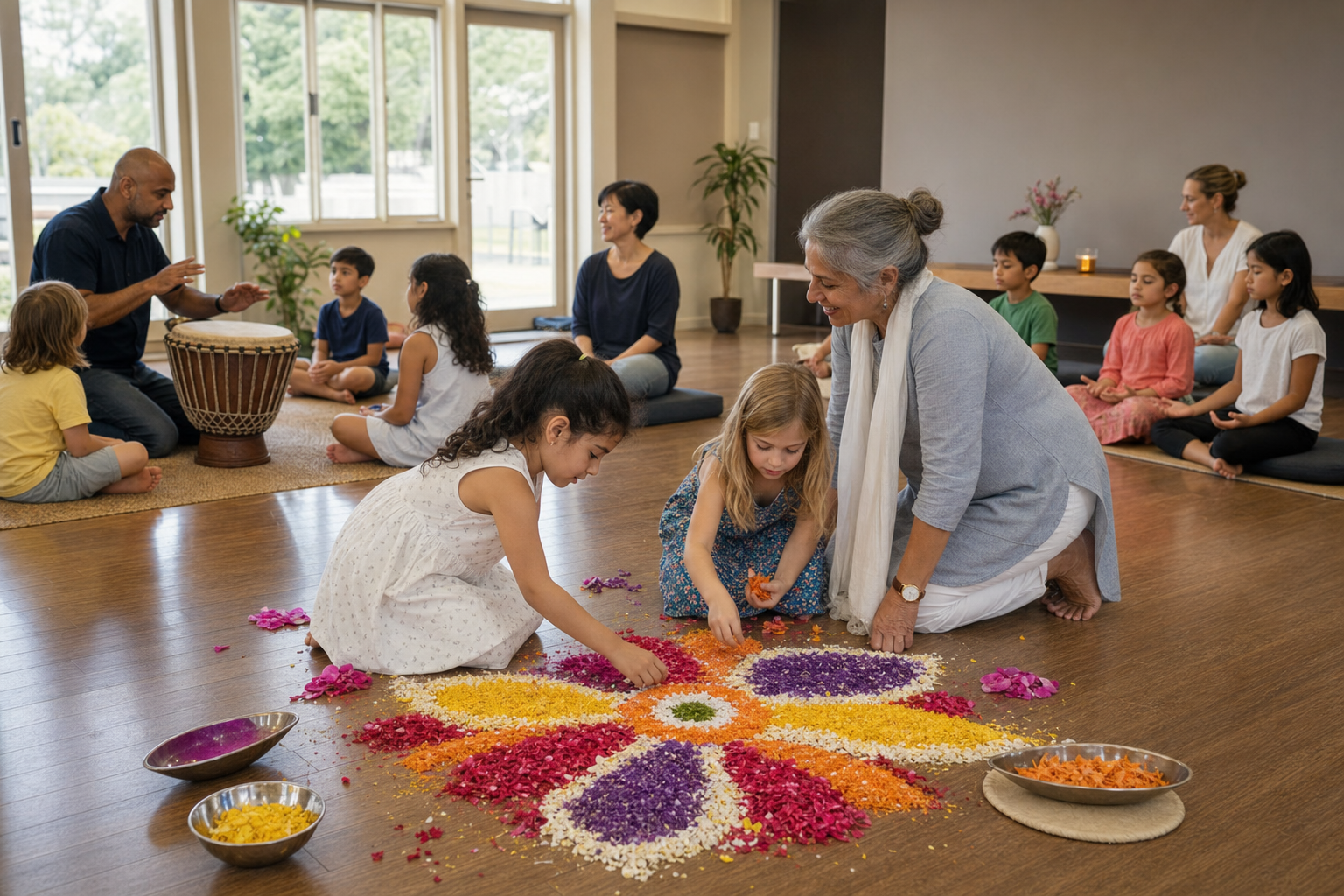
Children often meet Dharma in fragments: a home prayer they cannot yet explain, a festival meal, a story from a grandparent or an occasional visit to a mandir, gurdwara or another place of worship. DharmaFest offers a different kind of learning. Hindu, Buddhist, Jain, Sikh and other Dharma communities will be present within one programme, with physical, creative, cultural and spiritual activities rather than lectures alone.
Give a child three small missions instead of asking them to absorb the whole festival. Let them take part in one activity, watch one performance or spiritual session, and ask one person at a stall a genuine question. A younger child might ask what an object, image or movement means. An older child might ask how a practice shapes an ordinary school or working day. That simple sequence turns a crowded programme into something they can remember and discuss later.
Do not use the afternoon as a test of how much your child already knows. Let unfamiliar words create questions. If several traditions describe a familiar value in different ways, ask your child what changed and what remained recognisable. This teaches discernment without making inherited identity feel like an examination.
Teenagers need room to make choices of their own. DharmaFest is presented by Hindu Youth New Zealand, so invite a young person to select the workshop, performance or conversation your family follows. Giving them one real decision is more useful than moving them passively through every stall.
Read Raksha Bandhan as a promise of reciprocal care
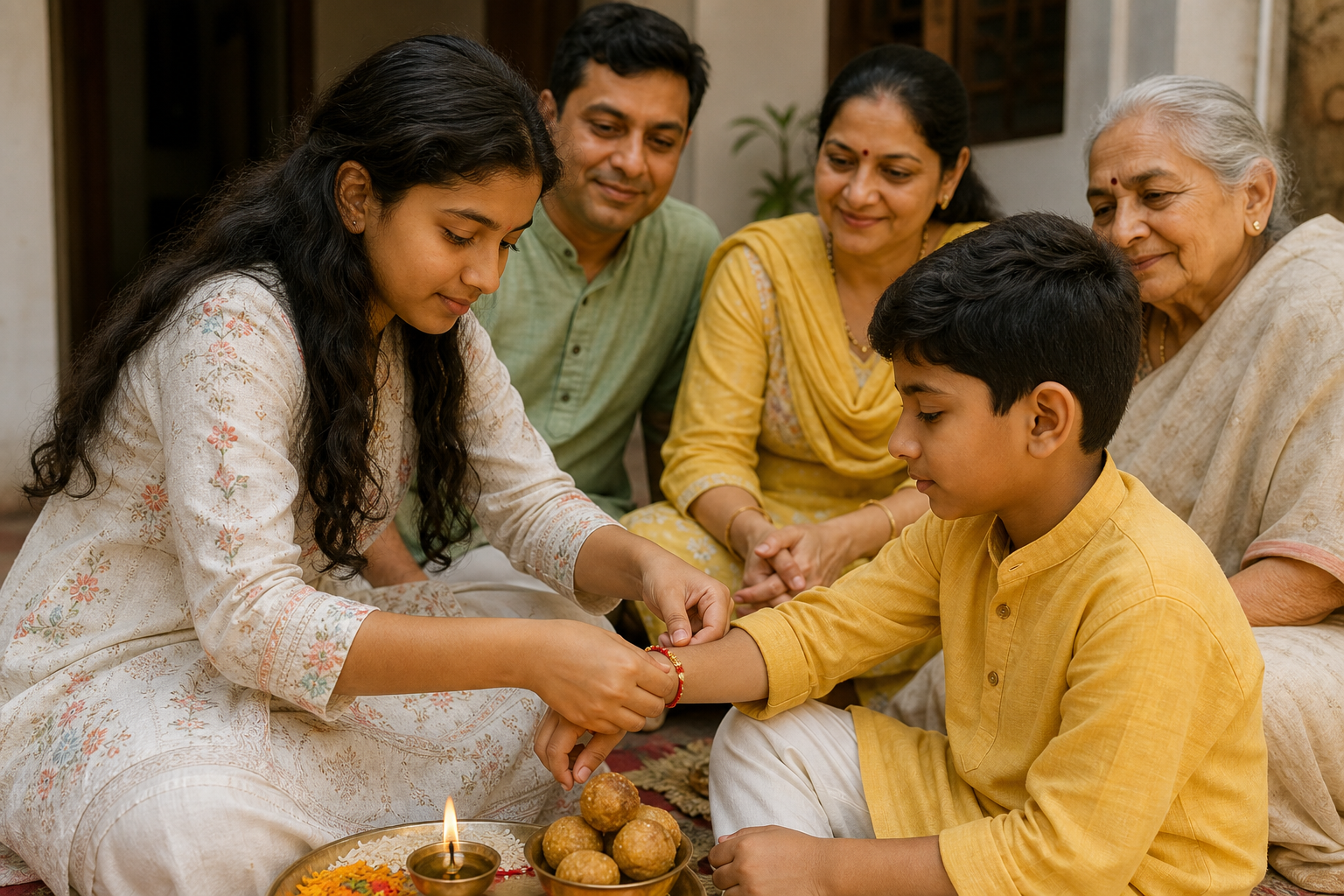
Raksha Bandhan is traditionally associated with the bond between brothers and sisters. In Auckland’s community setting, its meaning is being expressed more broadly through love, protection, friendship, respect, responsibility and social harmony. That broader frame does not discard the family relationship. It asks what the relationship teaches us about living with others.
This matters if you are attending without a brother or sister, or bringing someone who has never participated in the festival. They are not outside its moral meaning. Before the ceremony, offer one clear explanation: a bond of protection is not a claim of power over another person; it carries a duty to respect their dignity and accept responsibility for their wellbeing.
The programme makes that public dimension visible by recognising New Zealand Police, Fire and Emergency New Zealand, and St John Ambulance for protecting and supporting communities. Their inclusion gives parents a concrete way to discuss seva and civic duty. Ask children whom the community depends on, who depends on them, and what protection they can offer at their present age. Listening to someone who feels alone, helping a younger child, checking on an elder and acting responsibly in an emergency are different expressions of the same underlying obligation.
Keep the reciprocity visible. Raksha should not be reduced to the strong protecting the weak while expecting obedience in return. Families and communities are sustained by mutual care: each person gives something, receives something and remains accountable for how they use trust.
Welcome plurality without pretending every path is identical
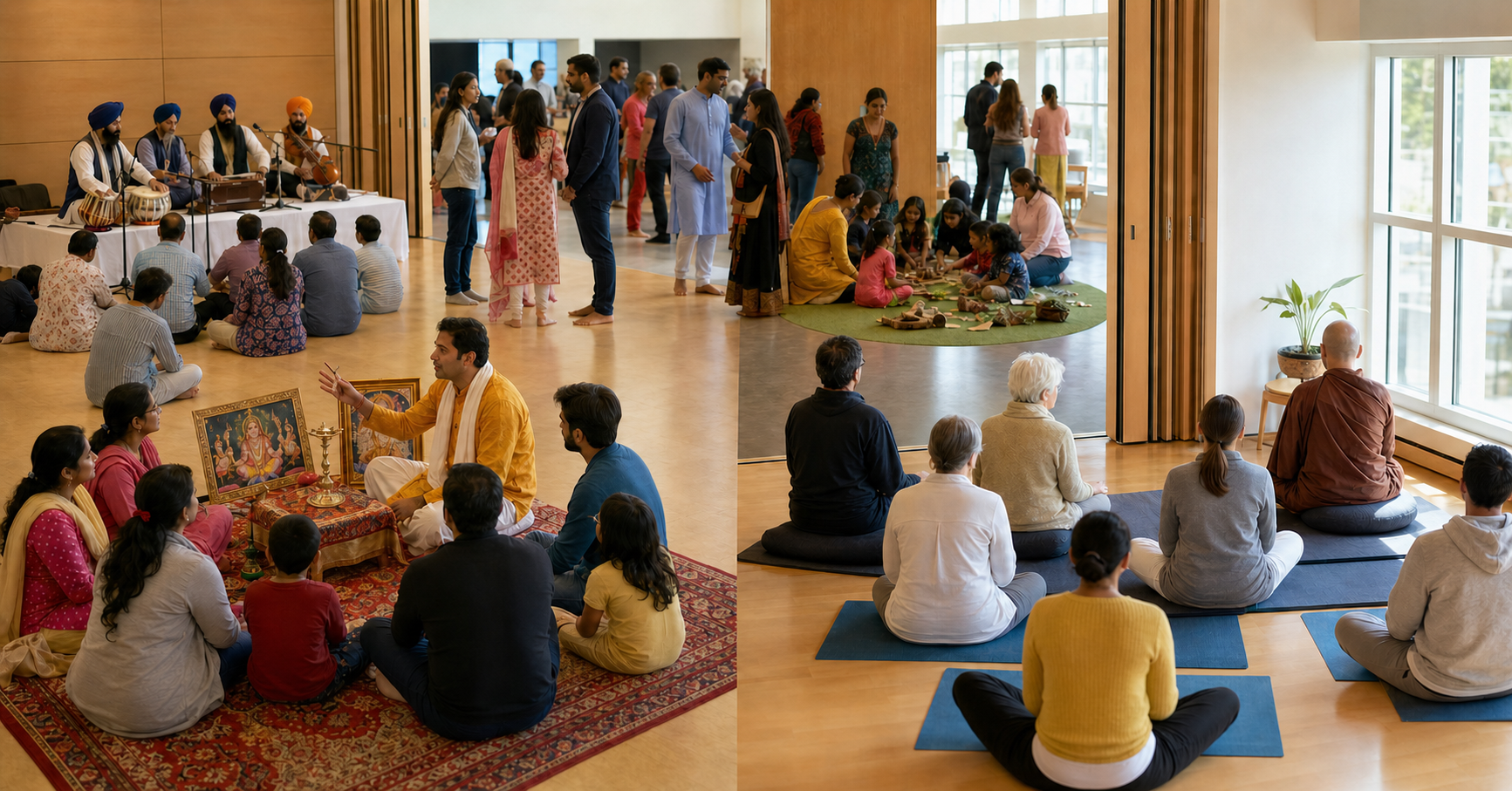
A multi-tradition festival can make one of two mistakes. It can emphasise difference so heavily that no common life seems possible, or celebrate unity so loosely that every tradition loses its name and integrity. DharmaFest offers you a better opportunity: notice shared ethical concerns while allowing Hindu, Buddhist, Jain, Sikh and other communities to speak in their own voices.
Use the name of a tradition before offering a general label. Ask practitioners how they understand their own customs. Do not tell a Buddhist, Jain or Sikh participant that all Dharma traditions are simply versions of one another, and do not assume that cooperation requires agreement on scripture, ritual or theology. Unity becomes credible when it can accommodate real distinctions.
The later programme widens the cultural frame further through Dharma-based presentations from Chinese, Thai, Korean and Japanese communities. The annual Raksha Bandhan gathering has also sought connection among Hindu families, other ethnic communities, Māori whānau and fellow New Zealanders. This is where the HOTA Forum’s guiding idea, Vasudhaiva Kutumbakam – the world is one family – becomes a practical standard rather than a decorative phrase.
A family does not become healthy by making every member indistinguishable. It becomes healthy when difference is held within affection, truthfulness and responsibility. Bring that standard to your conversations. Look for what another tradition can teach you, but resist collecting sacred practices as interchangeable cultural curiosities.
If you invite a friend who is unfamiliar with Dharma traditions, give them the schedule and the purpose, not a long theological briefing. Tell them that the gatherings are public and open to every background. Once there, introduce them to people by name, explain only what you understand accurately, and make space for practitioners to answer the rest.
Turn the festival into a relationship that lasts
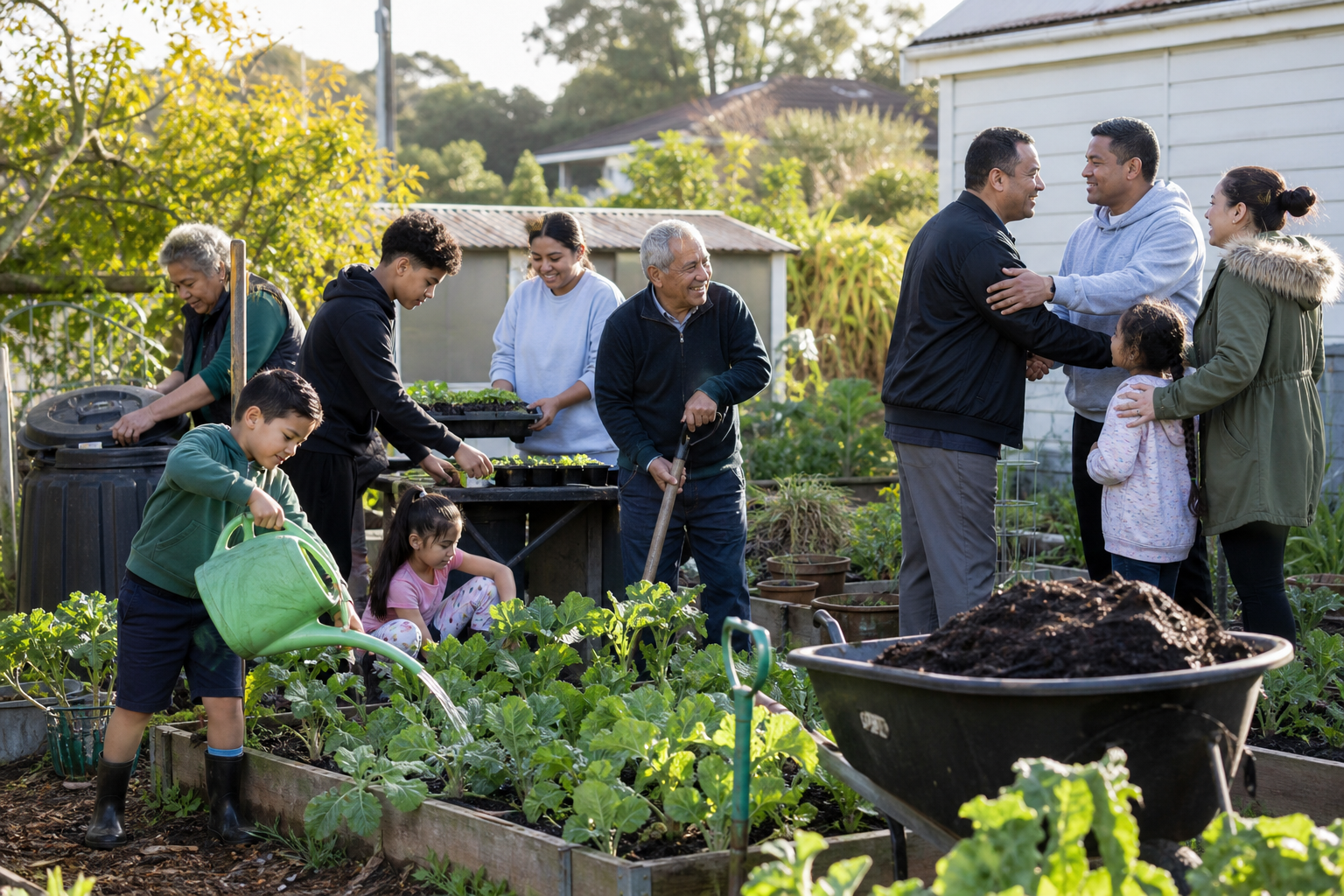
Auckland’s Dharma communities do not need only larger audiences for annual events. They need relationships that continue after the performances finish. The HOTA Raksha Bandhan celebration has already moved among community hosts: BAPS Shri Swaminarayan Mandir in Avondale hosted in 2024, the Hindu Council of New Zealand hosted at Shri Ram Mandir in 2025, and ISSO will host the 2026 gathering at the Swaminarayan Complex. That rotation shows how a shared platform can preserve institutional variety while building habits of cooperation.
Arrive with one question that can lead beyond the day. Ask an organisation when it next welcomes families, what young people can contribute, or which form of community service currently needs volunteers. Exchange contact details only when you genuinely intend to follow up, then send the message within the following week while the conversation is still recognisable.
If you belong to a temple, association or cultural group, pay attention to one practice another organisation handles well: welcoming first-time visitors, involving teenagers, explaining ritual, giving elders a role or making children’s participation meaningful. Take the transferable lesson home without copying what depends on another tradition’s authority or worship.
Choose your level of participation now: DharmaFest, Raksha Bandhan or both with a planned break. For DharmaFest questions, contact Komal Sahani on 021 0890 5854 or at info@youth.hcnz.org. For Raksha Bandhan questions, contact Lakshmi Prasad on 021 054 1153 or at info@hota.hcnz.org. Register, then invite one household beyond your immediate circle. That small act is how a festival about the world as one family begins to shape the city in which you actually live.
References
