
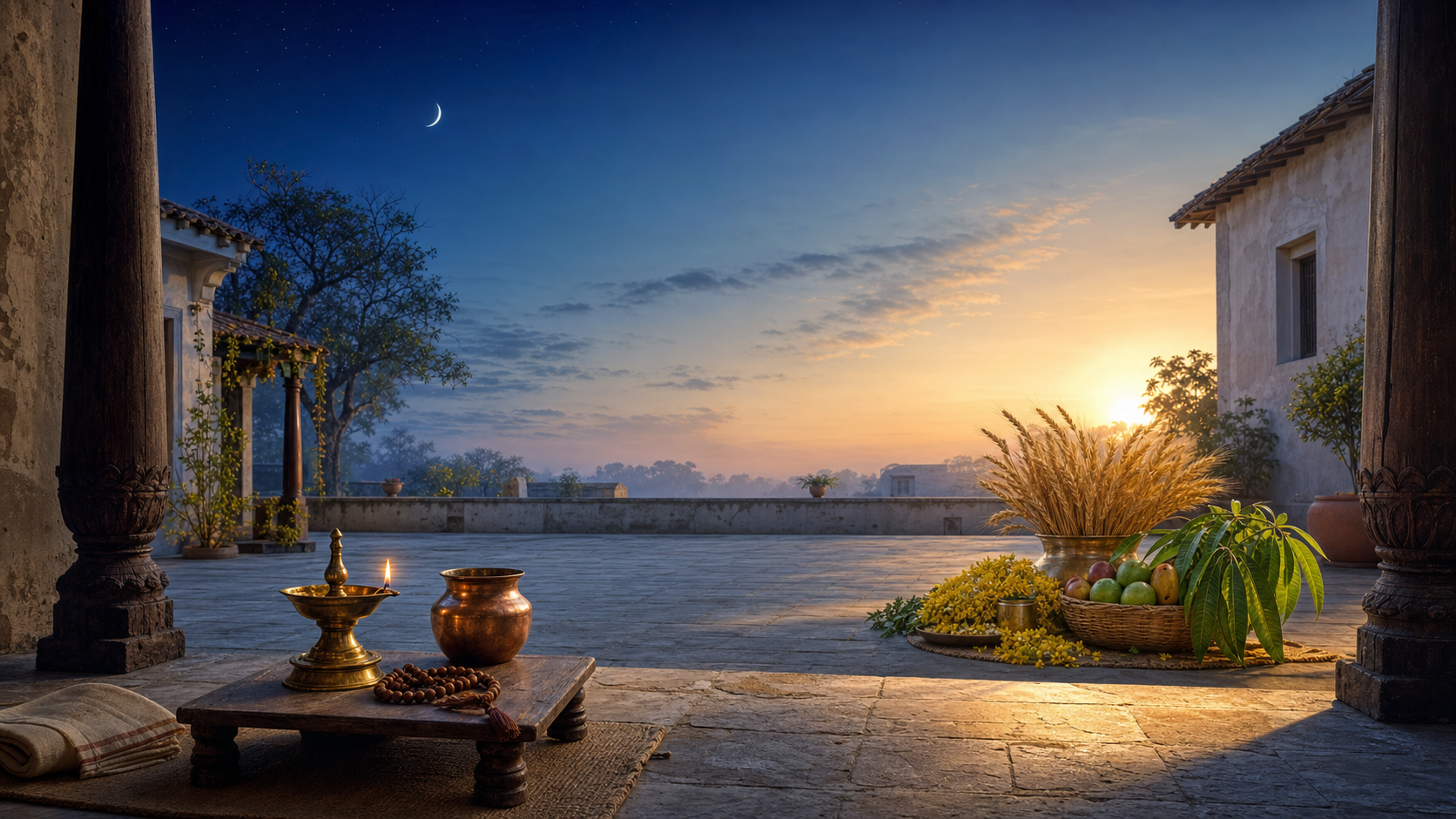
Your calendar may mark Ekadashi on Monday, April 13, while a temple notice, family almanac or gurdwara program points to April 14 for another observance. That is not necessarily a mistake. A lunar Tithi, a solar ingress and a community’s published festival schedule answer different calendrical questions.
For most regions of India, the practical outline is clear: Krishna Paksha Ekadashi continues until approximately 9:30 PM IST on April 13, 2026, followed by Dwadashi and Parana on April 14. The same two-day threshold also carries Vaisakhi and a wider family of solar-calendar observances, although the exact civil date and public program can depend on location, calendar convention and local sunrise.
Why April 13 and April 14 can both be correct
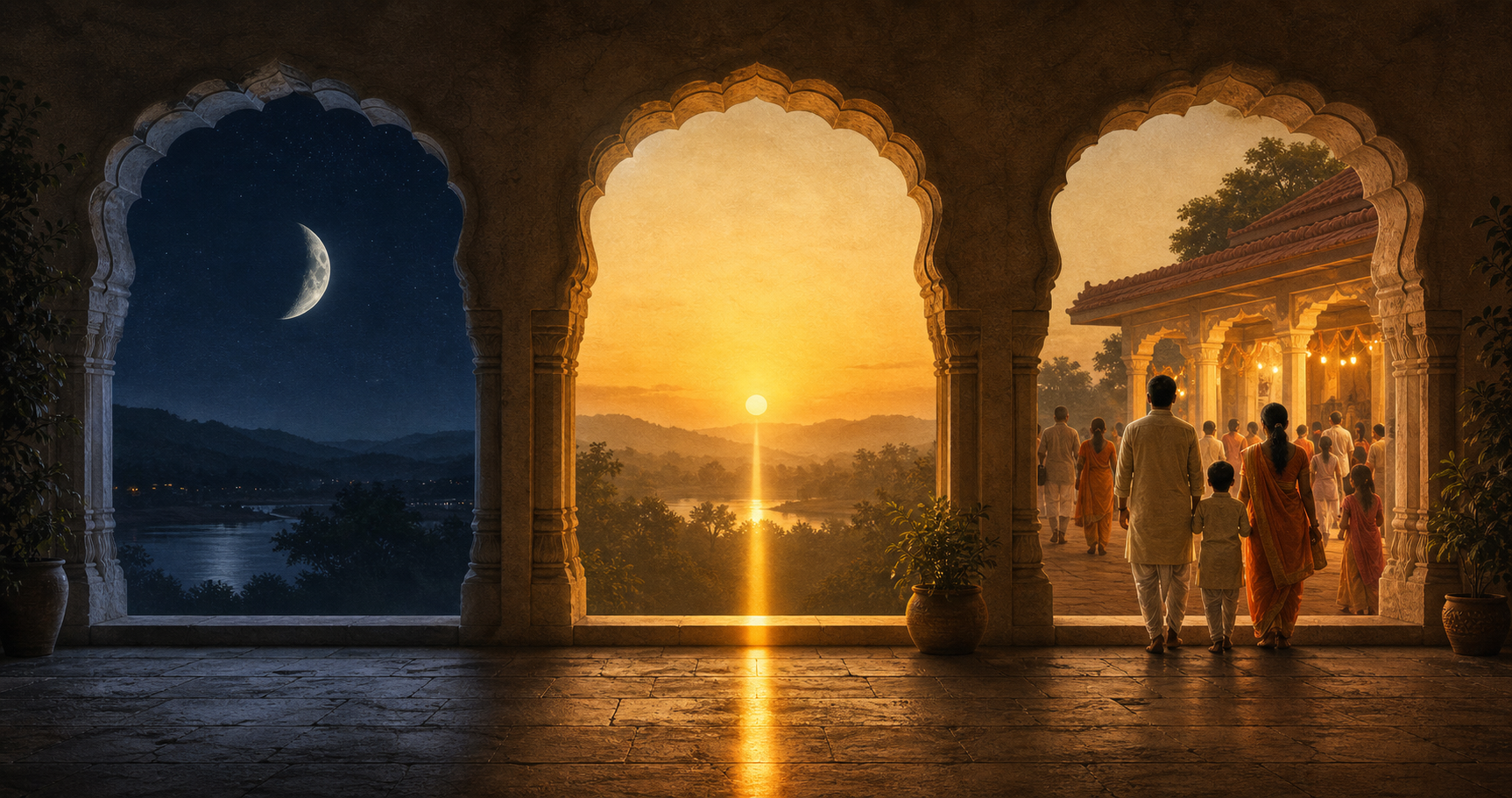
A civil date begins at midnight. A Tithi does not. It is determined by the changing longitudinal separation of the Sun and Moon, with each Tithi covering a 12-degree interval. Its boundary can therefore arrive in the morning, afternoon or night rather than at 12:00 AM.
That distinction resolves the first common misunderstanding. Ekadashi ending around 9:30 PM IST does not mean that you should break the fast at 9:31 PM. The change of Tithi establishes that Dwadashi has begun; the rules for Parana still direct the devotee to an appropriate period after sunrise on April 14, outside the opening Hari Vasara portion of Dwadashi.
Vaisakhi is governed by a different marker. Its calendrical setting is associated with the Sun’s entry into sidereal Aries, or Mesha Sankranti. Local sunrise rules, time zones and the use of Bikrami or Nanakshahi calendars can place community observances on April 13 or April 14. The Khalsa meaning of Vaisakhi does not change when two communities publish programs on different civil dates.
| What you are deciding | Controlling marker | What to verify |
|---|---|---|
| Ekadashi vrata | Ekadashi Tithi and the rule followed by your sampradaya | City-specific Tithi at sunrise and its ending time |
| Dwadashi Parana | Dwadashi after sunrise, with Hari Vasara avoided | The local Parana opening and closing times |
| Vaisakhi | Solar ingress, calendar convention and community practice | Your gurdwara’s announced date and program |
| Mesha Sankranti or a regional solar new year | The regional solar-calendar convention | The almanac used by that linguistic or regional tradition |
| Muhurta for another activity | Local sunrise, sunset and the relevant Panchang factors | A calculated local window, not a copied national timetable |
The name of the lunar month can also vary between the Purnimanta system used in much of northern and western India and the Amanta system used in southern India and parts of the west. This can make two calendars look different even when they agree about the operative Tithi. For a vrata, compare the Tithi and its sunrise relationship before treating a different month label as a contradiction.
Make a five-minute local calendar check before planning
A Panchang is not fully local unless it knows where you are. Tithi, Vara, Nakshatra, Yoga and Karana form its five limbs, while sunrise, sunset and time-zone handling turn astronomical calculations into usable observance times. This matters especially outside India, where converting an IST boundary is not a substitute for consulting a calendar calculated for your city.
- Set the Panchang location to the city where you will observe, not your family hometown or the city hosting an online broadcast.
- Confirm the displayed time zone and daylight-saving setting. A correct astronomical calculation shown in the wrong civil time is still unusable.
- Record four items: the end of Ekadashi, whether Dwadashi is present after sunrise, the end of Hari Vasara, and the stated Parana window.
- Check whether the calendar is applying Smarta, Vaishnava or another sampradaya-specific rule. These traditions can differ in their sunrise and Madhyahna criteria, so a generic festival label is not enough for a timing-sensitive vrata.
- For Vaisakhi or a regional solar observance, record the solar ingress time and then check the date actually adopted by your gurdwara, temple or regional calendar.
For a ceremony, initiation or contractual undertaking, verify Nakshatra, Yoga, Karana and the Moon’s Rashi separately. The Ekadashi label alone is not a complete muhurta. A reliable regional almanac or ephemeris should use the observer’s location, the correct time zone and a stated sidereal framework.
A workable Ekadashi plan for Monday, April 13

Ekadashi is most useful when the restraint creates room for practice. Decide the form of your vrata before the day becomes busy: a customary grain-free sattvika diet, a more limited fast followed in your household, or another disciplined observance appropriate to your health and responsibilities. Many traditions avoid grains and certain legumes while giving more time to nama-japa, dhyana, sacred reading, daana and seva.
Nirjala fasting should not be improvised as a test of will. Keep it only under appropriate guidance, and plan rest and hydration before and after the fast. If abstaining from food or water conflicts with a health need, choose a safer form of restraint and obtain appropriate medical guidance rather than turning a vrata into avoidable harm.
- Before sunrise: If your circumstances permit, use Brahma Muhurta for japa, pranayama or quiet meditation. Its approximate span is 96 to 48 minutes before local sunrise, so calculate it from your city’s sunrise rather than copying a fixed clock time.
- At the start of practice: Make a simple sankalpa that names the vrata you are actually capable of keeping. A modest commitment completed with attention is more coherent than an extreme rule abandoned midway.
- During the day: Reduce avoidable consumption and distraction. Bhagavad-Gita or Srimad-Bhagavata reading, temple darshana, home puja, charity and practical service all fit the day’s emphasis on sattva and self-command.
- For a mixed devotional household: Monday’s Shiva upasana and Ekadashi’s Vaishnava discipline need not compete. A family can maintain its established puja while giving the day a common centre in nama-japa, simplicity and seva.
- Before bed: Recheck the April 14 Parana time. Do not use the approximately 9:30 PM IST Tithi change as permission to break the fast that night.
If you must begin an ordinary practical task on April 13, use muhurta carefully. Monday’s Rahu Kaal normally occupies the second eighth of local daylight. It would run from 7:30 AM to 9:00 AM only in the illustrative case of a day lasting exactly from 6:00 AM to 6:00 PM; those clock times should not be copied into a real calendar without calculation. Abhijit Muhurta is centred on local solar noon and extends roughly 24 minutes to either side, but it remains a fallback window rather than a replacement for a full Panchang assessment.
April 14 brings Parana and a solar-calendar threshold
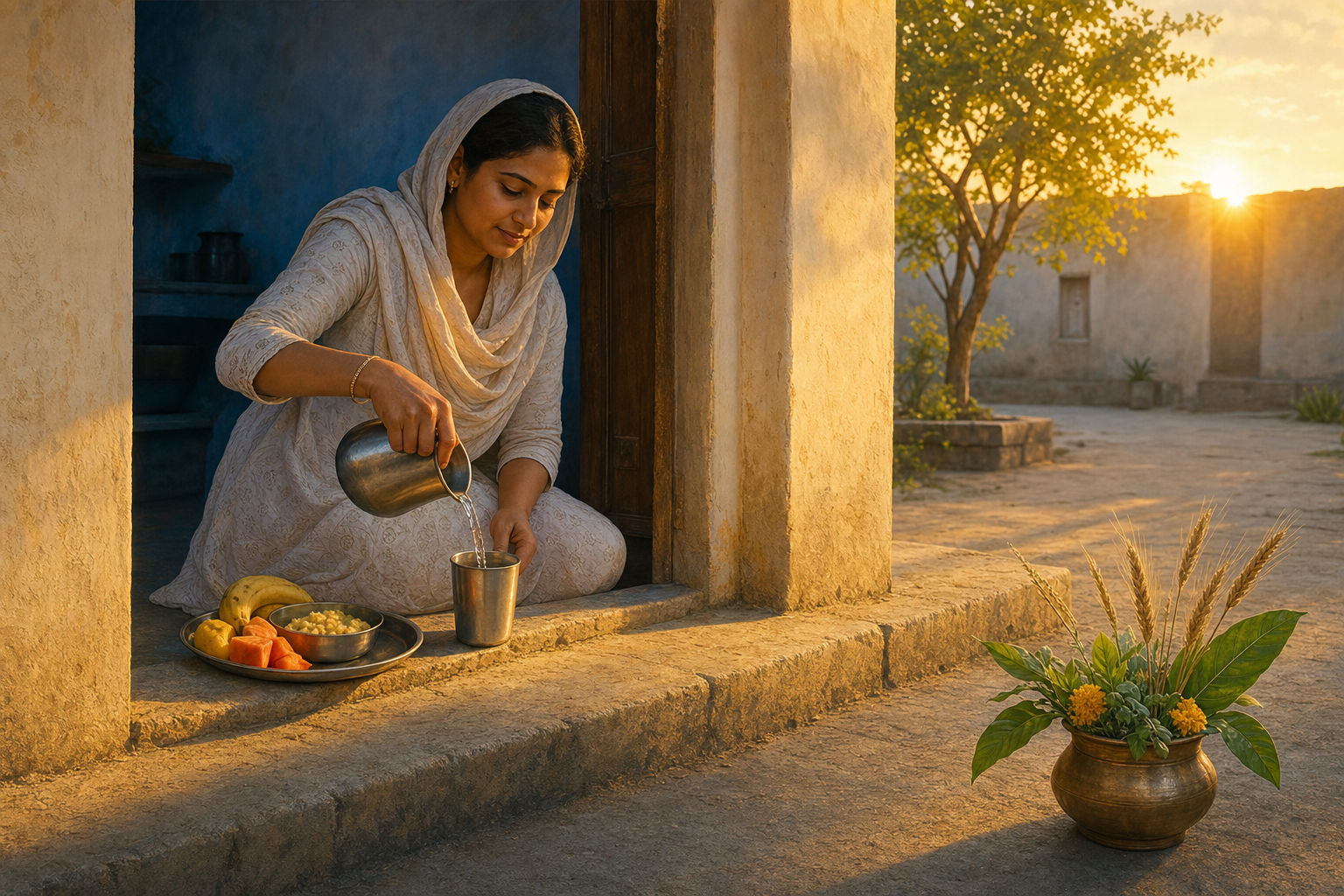
On Tuesday morning, handle Parana as its own observance. First confirm that your local calendar places Dwadashi after sunrise. Then wait until Hari Vasara has ended and complete the fast within the locally stated Parana period. If your family follows a particular Vaishnava, Smarta or temple calendar, use that lineage’s published window consistently instead of combining the opening time from one calendar with the closing time from another.
April 13-14 also marks a solar transition celebrated through distinct regional and religious traditions. Mesha Sankranti, Vishu in Kerala, Puthandu in Tamil tradition, Pohela Boishakh in Bengal and Rongali Bihu in Assam belong to this wider seasonal constellation. They should not be treated as interchangeable names for one ceremony. The shared solar neighbourhood explains the calendrical proximity; each community supplies its own liturgy, memory, food, language and social meaning.
For Sikhs, Vaisakhi joins Punjab’s agrarian renewal to the formation of the Khalsa at Anandpur Sahib in 1699. Guru Gobind Singh’s call and the courage of the Panj Pyare give the day its uniquely formative place in Sikh history. Amrit Sanchar, kirtan, Ardas, Hukamnama, Akhand Path, Nagar Kirtan and langar express that inheritance through disciplined devotion and public service.
If you are attending a gurdwara, let its published schedule settle the civil date. Arrive with your head covered, remove your footwear, wash your hands and sit respectfully in the darbar. Receive kara prasad with both hands. In langar, sit alongside the sangat, take only what you can eat and make room for seva if volunteers need help. These are not decorative customs; they enact equality, gratitude and community order.
If you are observing from home, anchor the day in simran, Gurbani and an outward act of service. You might listen to the scheduled kirtan, receive the Hukamnama from a trusted gurdwara and support a community kitchen or neighbour. The point is not to reproduce a large public celebration in miniature. It is to connect remembrance of the Khalsa with truthful conduct, chardi kala and sarbat da bhala.
Honour Dharmic kinship without flattening the traditions
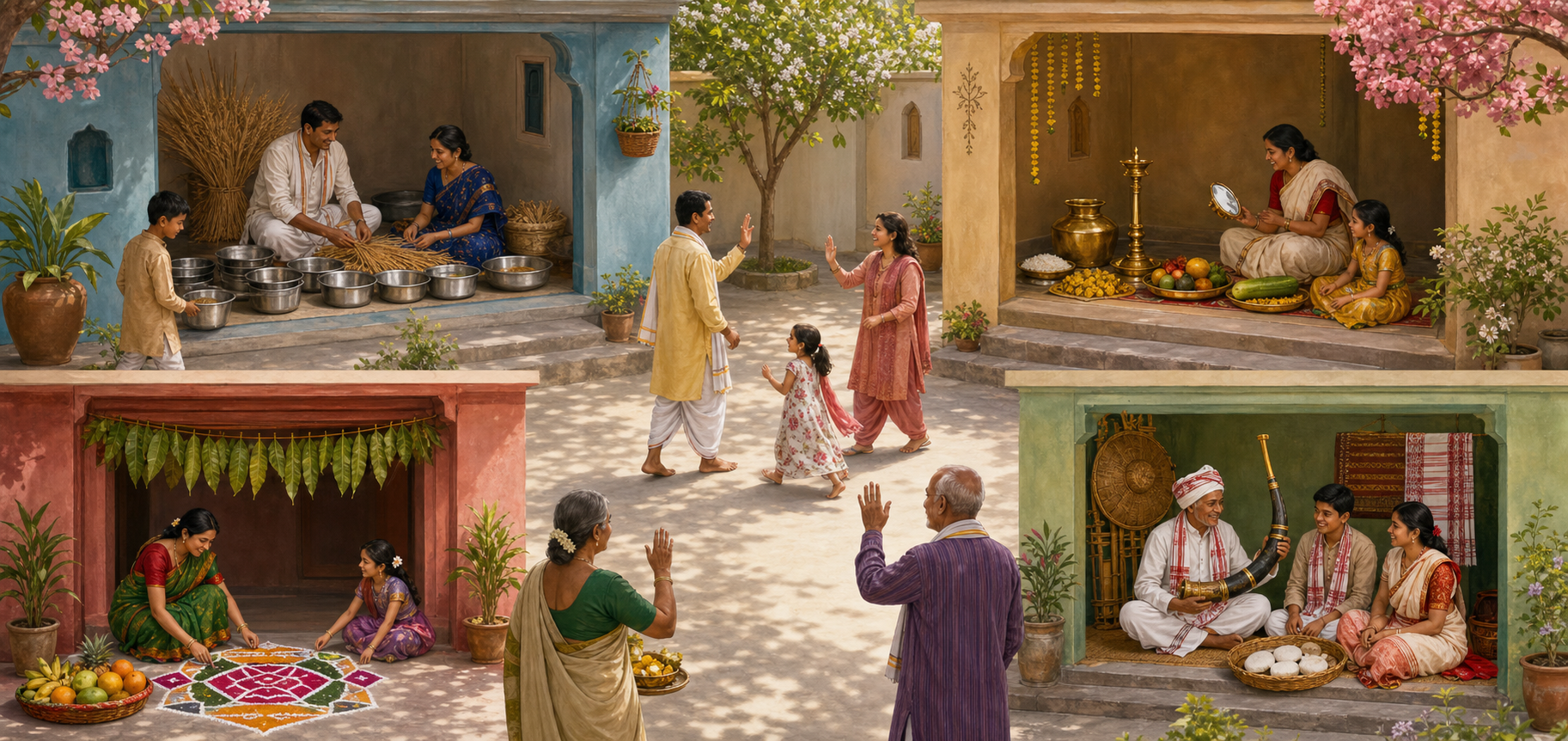
The closeness of these observances makes April 13-14 a useful lesson in Dharmic plurality. A Hindu household may undertake Ekadashi upavasa; some Jain communities recognize Agyaras as a discipline of restraint and aparigraha; a Theravada Buddhist community may organize Uposatha around the lunar cycle; and Sikh practice brings simran, kirtan and seva to the Vaisakhi gathering. Restraint, compassion, truthful living and service resonate across these paths, but shared values do not erase distinct authorities or rites.
- Name each observance accurately. Say “Ekadashi vrata” and “Vaisakhi” rather than using a vague label such as “the Dharmic new year.”
- Let the appropriate community determine its own date. A Hindu Panchang cannot replace a gurdwara announcement, and a public Vaisakhi program cannot determine your family’s Parana window.
- Share ethical action where it is natural. Food service, charity, environmental care and hospitality can unite neighbours without merging their worship.
- Teach children why the dates cluster. One event follows a lunar Tithi, another a solar ingress, and another a community calendar. That explanation preserves both civilizational kinship and religious precision.
Key takeaways
- In most regions of India, Krishna Paksha Ekadashi lasts until approximately 9:30 PM IST on April 13, 2026; Dwadashi follows.
- Do not break the Ekadashi fast merely because Dwadashi begins at night. Parana belongs after local sunrise on April 14, outside Hari Vasara and within the applicable local window.
- Use a city-specific Panchang with the correct time zone, daylight-saving status and sampradaya setting.
- Vaisakhi dates can differ between April 13 and 14 because solar ingress, sunrise conventions, calendar systems and local programs are not identical everywhere.
- Regional solar observances share a calendrical threshold but retain their own names, meanings and practices.
- When observances meet in one household or community, unite around service while keeping each tradition’s calendar and discipline intact.
Before April 13, enter your actual city into the calendar you trust, write down the Ekadashi ending and Parana window, and confirm the Vaisakhi or regional new-year program directly with the community hosting it. Those three checks turn a crowded festival listing into a coherent two-day practice.
References
- DharmaRenaissance Blog – In-Depth April 13, 2026 Panchang: Precise Ekadashi Tithi, Muhurta, Nakshatra & Rashi Guide
- SikhNet – Vaisakhi 2026 Explained: Timeless Khalsa Legacy, Sacred Rituals, and Dharmic Unity