
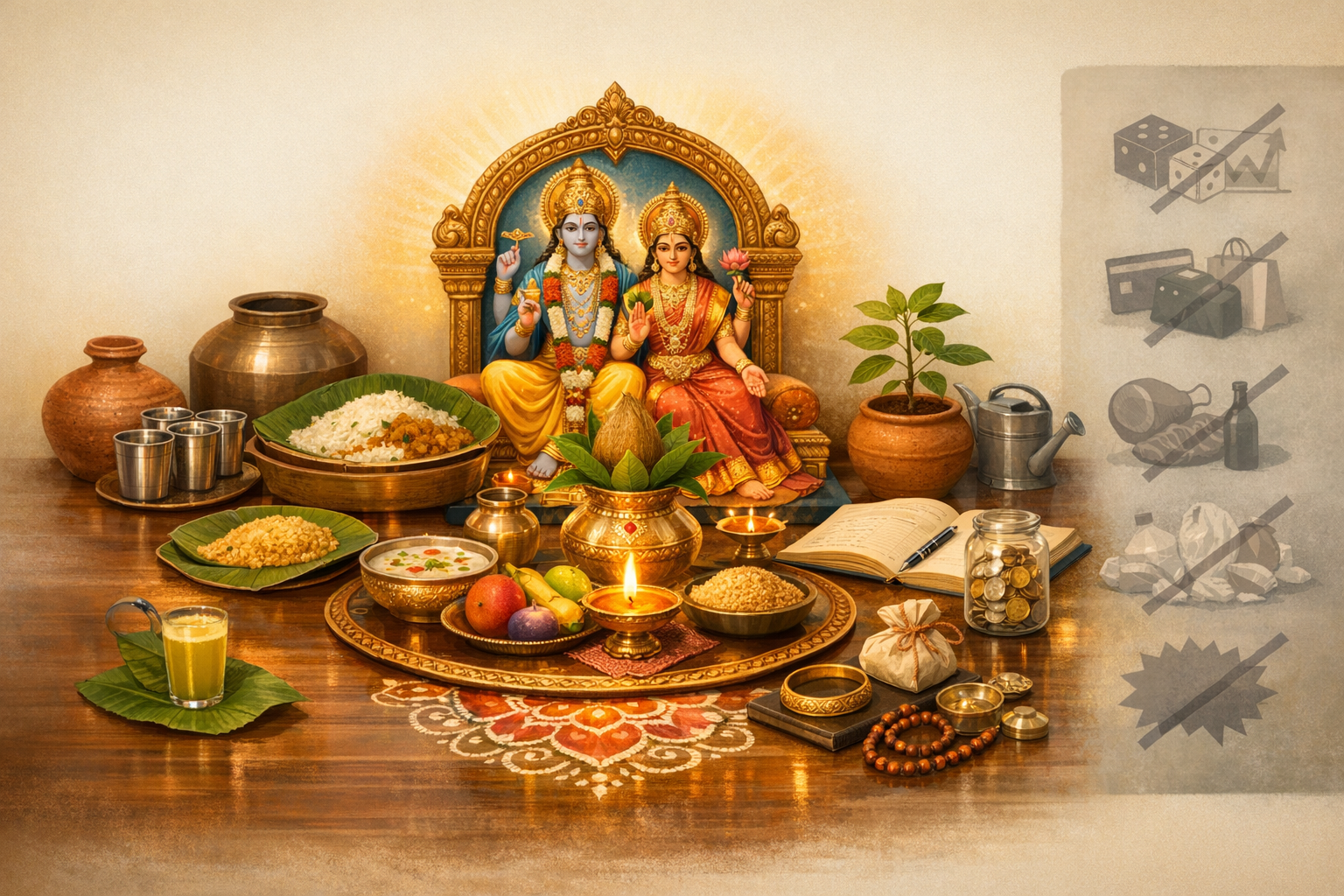
Akshaya Tritiya, also known as Akha Teej, falls on the Shukla Paksha Tritiya (third lunar day of the bright fortnight) in the Vaishakha month. The term “Akshaya” signifies that which is inexhaustible. In living tradition, this day is revered for actions that generate enduring merit (puṇya), prosperity, and inner stability. Guidance on what to do and what to avoid on Akshay Tritiya helps align personal observances with time-tested dharmic principles.
Across regions, customs emphasize Lord Vishnu Puja, fasting (vrata), and charity (dāna). In many households, Lakshmi-Kubera Puja is added to invite wise stewardship of wealth. Jain communities mark the day with deep reverence for Tirthankara R̥ṣabhadeva, highlighting fasting and the symbolism of offering sugarcane juice. Buddhist and Sikh traditions resonate with the same core ethic of compassion, dāna, and seva, underscoring shared dharmic values of non-harm and generosity.
Akshaya Tritiya is traditionally counted among the Sade-Teen Muhuratrarely occurring auspicious periods considered intrinsically favorable for new beginnings. While this day is widely treated as an all-day muhurat, many families still prefer to initiate key activities when Tritiya prevails at local sunrise and to avoid blocks like Rahu Kalam if it supports their peace of mind. Local panchang consultation provides precise tithi start and end times in each time zone.
Recommended works on Akshaya Tritiya begin with a simple but focused morning routine. A purifying bath (snāna), home sanctification, and a clear intention (saṅkalpa) prepare the mind. If Ganga-jal is available, sprinkling a few drops in the home and at the altar is considered auspicious. This foundational practice enhances concentration for puja and vrata through the day.
Lord Vishnu Puja is central. Devotees may worship Shri Hari with Tulasi leaves, light a ghee lamp, chant portions of the Vishnu Sahasranama, or recite the Shri Sukta. Where a Salagrama-shila is present, simple abhishekam with water or panchamrita may be offered respectfully. Offering sattvic naivedya such as ksheer (kheer), fruits, sattu (barley preparation), or seasonal grains aligns the ritual with the agricultural rhythm of Vaishakha.
Fasting on Akshay Tritiya is traditionally observed as a means of clarity and discipline rather than a test of endurance. Individuals may adopt full, partial, or fruit-only fasting, depending on age, health, and responsibilities. Breaking the fast (parāṇa) after evening worship with light sattvic food is consistent with most local traditions. The spirit of vrata is mindful restraint and gratitude, not austerity for its own sake.
Charity (dāna) is a defining hallmark of the day. Anna-dāna (offering of food), jala-dāna (drinking water distribution), vastra-dāna (clothes), til-dāna (sesame), and gau-seva (support to cow shelters) are widely practiced. In urban settings, clean water stations, thoughtfully prepared community meals, and support for ethical education or healthcare map ancient ideals onto modern needs. The guiding principle is humble giving without ostentation.
Many households inaugurate new studies, businesses, or investments today, trusting the day’s promise of “akshaya” growth when coupled with right intention and effort. Beginning a ledger, launching a small venture, or setting a disciplined savings goal are common practices. Ethical alignmentpaying dues, avoiding exploitative contracts, and prioritizing fair wagesanchors prosperity in dharma.
Buying gold on Akshaya Tritiya is a popular convention symbolizing lasting value. For those choosing to purchase, due diligence is essential: verify BIS hallmarking, karatage, invoice transparency, and making charges. Measured decisions grounded in affordability and long-term purpose are consistent with the day’s ethic; avoid debt-fueled or impulsive purchases. Silver, brass, copper puja vessels, or even small grains for future seed-sowing can serve as equally meaningful acquisitions.
Weddings, griha-pravesh, bhoomi-puja, and education initiations (vidyārambha) are often scheduled on Akha Teej due to its high auspiciousness. Families that observe Rahu Kalam avoidance may still consult a local priest or panchang to select a comfortable window. The unifying spirit is to pair good timing with goodwill among families, neighbors, and community.
Recommended recitations and contemplations include the Vishnu Sahasranama, Shri Sukta, Purusha Sukta, or a few verses of the Bhagavad-Gita. Quiet japa of the chosen mantra (ishta-mantra) supports one-pointedness. In many regions, distributing saplings or watering trees is encouraged, aligning spiritual observance with environmental stewardship.
In Jain practice, Akshaya Tritiya recalls the first āhāra of R̥ṣabhadeva after prolonged austerities, offered as ikṣu-rasa (sugarcane juice). This inspires observances centered on ahimsa, fasting, and nourishing others with simple, non-harmful offerings. The symbolism of sweetness underscores inner purity and compassionate service.
Buddhist communities emphasize dāna, śīla (ethical conduct), and meditation for merit generation. Reading the Dhamma, practicing mettā (loving-kindness), and supporting community kitchens mirror the festival’s spirit. Sikh communities express the same ideal through seva and langaropen, dignified nourishment for allaffirming the shared dharmic heartbeat of generosity.
With the same care applied to the dos, attention to avoidable works on Akshay Tritiya preserves the day’s sanctity. Foremost is ahimsa: avoid harming living beings, including abstaining from meat, alcohol, and any form of violence or harshness in speech. Many households consciously refrain from anger, gossip, and wasteful consumption to protect the mind’s clarity.
Avoid performative charity. Giving that humiliates recipients, is done for display, or fuels dependency contradicts the spirit of dāna. Instead, prioritize dignity-centered initiativesclean water, nutritious meals, education, and skill supportdelivered with humility and accountability.
Avoid speculative behavior, gambling, and high-risk financial moves driven by “festival euphoria.” The day is auspicious, not a license for imprudence. Equally, avoid debt-backed purchases that may burden future wellbeing. Sustainable, transparent, and patient choices better reflect Akshaya Tritiya’s promise of lasting value.
Wastefulness is discouraged. Avoid single-use plastics in community feeding, and ensure safe food handling when conducting anna-dāna. Where crowding occurs, prioritize safety, orderly queues, and hygienic service. Responsible practice is an extension of compassion.
Some regions advise avoiding haircuts, shaving, or undertaking repairs not aligned to auspicious intent on this tithi, though customs vary. When in doubt, local tradition and family elders’ guidance provide context-sensitive clarity without dogmatism.
Puja timing follows a practical logic: if Tritiya is active at sunrise, the day is fully observed as Akshaya Tritiya. When the tithi spans two sunrises, the sunrise on which it is prevalent typically defines the observance day. While Sade-Teen Muhurat relaxes the need for elaborate selection, many still prefer to avoid Rahu Kalam and Yamaganda for key initiations, especially if it soothes collective sentiment in the family.
A simple home puja sequence may include altar cleansing, placement of Vishnu-Lakshmi image or murti, ghee-lamp lighting, Tulasi offering, fragrance (dhupa), water offering (arghya), and naivedya. Concluding with aarti and quiet contemplation integrates ritual with reflective awareness. Where possible, sharing prasad with neighbors extends the grace of the altar into the community.
Diet on fasting days is tailored to individual capacity. Light fruits, nuts, and milk preparations are widely used where health permits. Individuals managing health conditions should consult professionals and adopt a compassionate, flexible vrata that protects wellbeing. The essence is mindfulness, not hardship.
Families often share that beginning a savings ledger, planting a sapling, or setting a study routine for children on Akshay Tritiya establishes a memorable anchor for discipline through the year. These relatable, small actions echo the “akshaya” idealincremental, compounding benefit grounded in consistency.
Common misconceptions deserve correction. Akshaya Tritiya is not a guarantee of wealth detached from ethics and effort. Prosperity in dharmic thought arises from right means (samyak ācāra), not merely right timing. Likewise, while gold purchases are popular, the day’s merit is equally accessible through dāna, sādhanā, and service.
In contemporary settings, digital donations and online puja participation have become more common. Apply the same discernment online: support transparent, accountable initiatives; protect personal data; and favor community programs with measurable impact. Technology should amplify, not distract from, the day’s core intent.
For those leading community efforts, simple governance safeguardsvolunteer training, food safety standards, and crowd managementensure that good intentions translate into safe, dignified outcomes. This practical diligence is dharma in action.
At its heart, Akshaya Tritiya is a shared dharmic celebration across Hindu, Buddhist, Jain, and Sikh traditions, converging on ahimsa, dāna, and inner discipline. Whether through Vishnu Puja, meditation, fasting, seva, or ethical livelihood, the day invites practices that do not deplete but replenish: character, community trust, and quiet joy.
In summary, recommended works include Lord Vishnu Puja, mindful fasting, and dignified charity; initiating studies, savings, or ventures ethically; purchasing metals prudently; and engaging in environmental stewardship. Avoidable works include harm to beings, ostentation, speculative risk, and wastefulness. Grounded in these dos and don’ts, Akshay Tritiya becomes both auspicious and responsibleuniting dharmic values with everyday life.
Inspired by this post on Hindu Pad.
