You may reach Alagarkoil expecting one chariot procession, only to encounter a festival landscape centred on both Sundararaja Perumal and Pathinettam Padi Karuppasamy. Knowing which observance belongs where will help you follow the day with attention instead of moving through it as a spectator.
The practical key is simple: learn the two sacred names, confirm the current year’s timings separately, and treat the eighteen steps as a place of worship rather than merely an approach to a shrine.
Read the festival’s name in three parts
Start by separating the words that are often compressed into the phrase “Aadi Ther at Alagarkoil.” Each tells you something different:
- Aadi is a month in the Tamil calendar and an important season for temple observances.
- Ther is the Tamil term for a temple car or chariot and, by extension, the festival in which it is drawn.
- Alagarkoil, near Madurai, is the sacred setting in which the Perumal temple and the Karuppasamy shrine belong to the same festival landscape.
At Alagarkoil, the Aadi Ther festival is associated with Sundararaja Perumal Temple, while distinctive observances also take place at the Pathinettam Padi Karuppasamy shrine. That distinction matters. If you ask only for “the Aadi festival,” you may not learn when each part occurs.
When checking the programme, use both names: “Sundararaja Perumal Aadi Ther” and “Pathinettam Padi Karuppasamy observance.” This gives temple staff or local devotees a precise question to answer.
Two sacred centres shape the experience
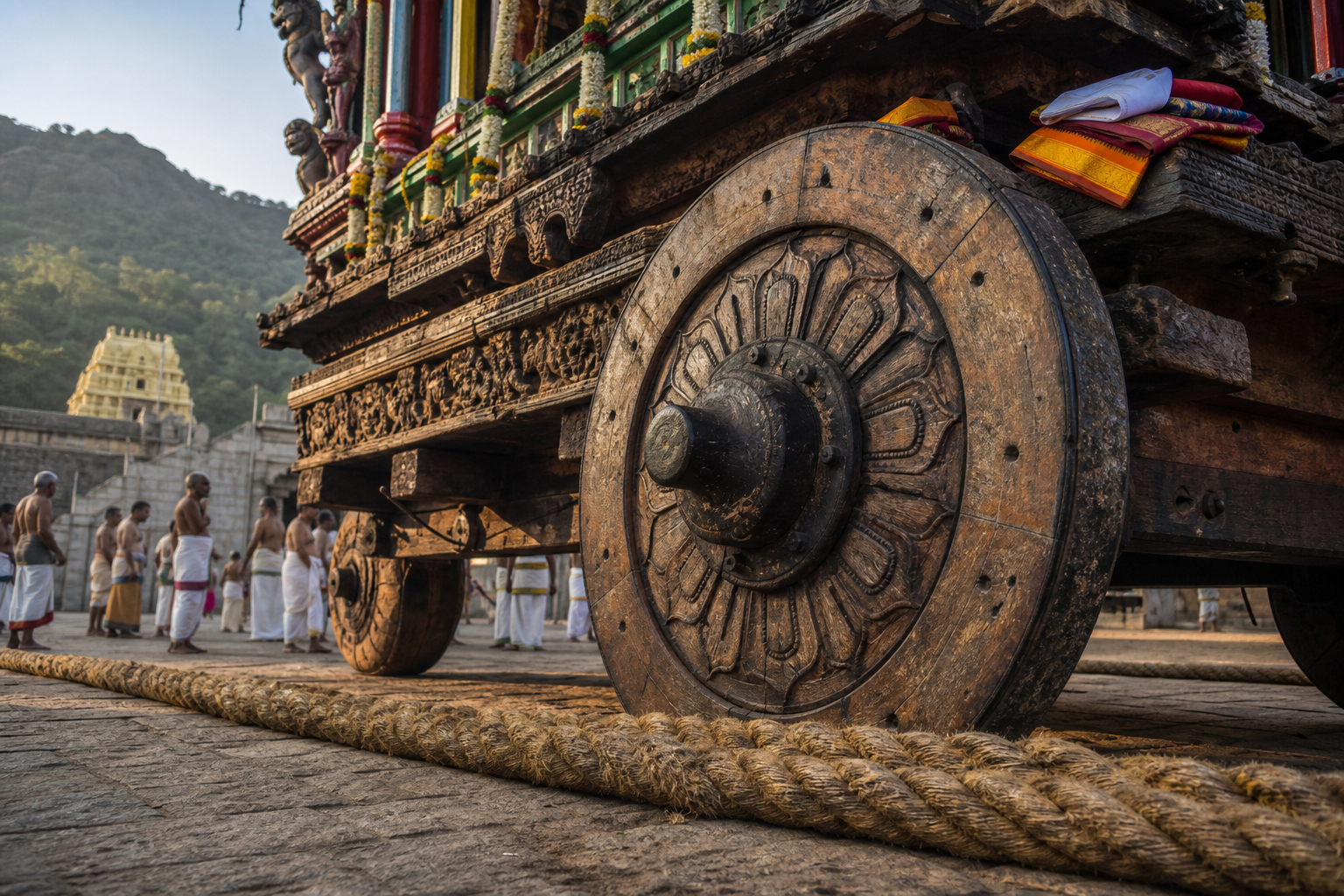
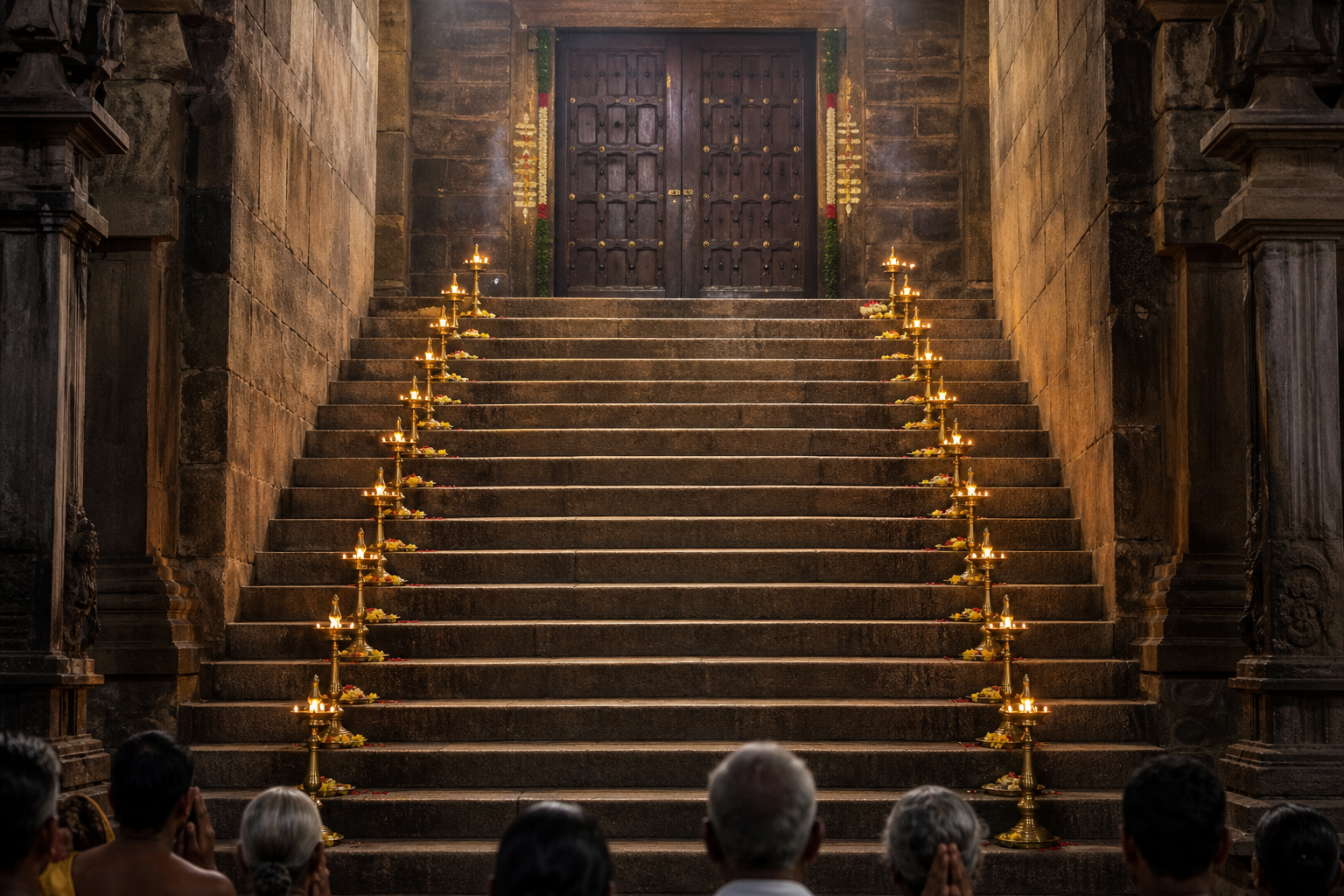
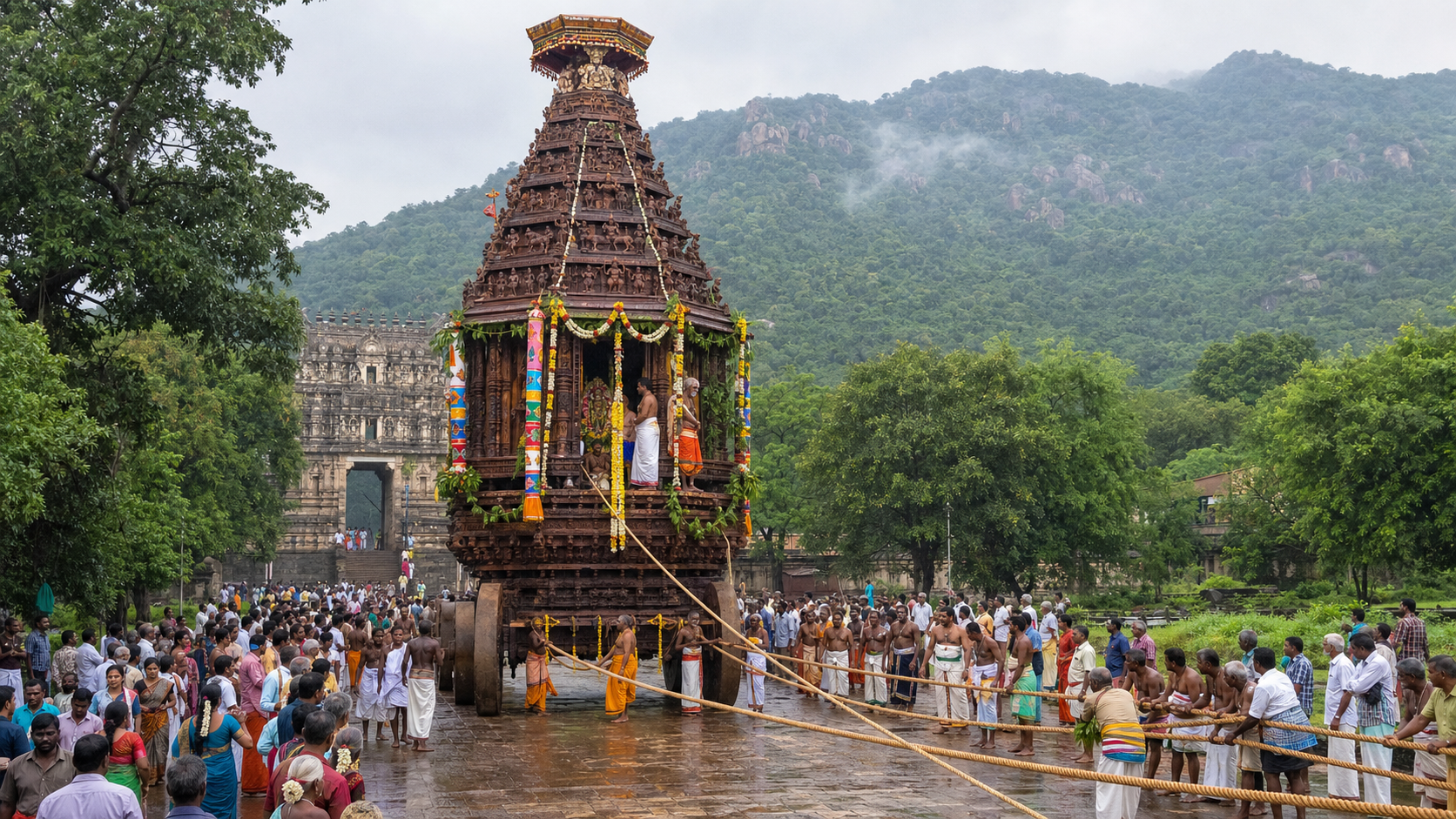
The Ther draws your attention outward. A temple car brings divine presence into processional space, allowing a larger community to participate. The Karuppasamy observance directs your attention toward a threshold: closed doors, sandal, eighteen steps and eighteen lights.
These are not interchangeable rituals, and you needn’t flatten them into a single ceremony. Sundararaja Perumal remains the centre of the chariot festival. Pathinettam Padi Karuppasamy has a connected but recognisably different ritual focus. Their proximity shows how a Dharmic temple landscape can hold processional Vaishnava worship and a powerful local threshold tradition without requiring one to erase the other.
For a first visit, give both settings their due. Follow the Perumal procession as a procession, with attention to the deity and the gathered community. At the Karuppasamy shrine, slow down. Notice how the doorway and steps themselves organise the act of worship.
Why the eighteen steps should change how you approach
“Pathinettam Padi” identifies the shrine through its eighteen steps. During the Aadi observance, sandal is associated with the closed doors and lamps are lit on all eighteen steps. The repeated light makes the entire approach ritually significant; the sacred focus is not confined to an image behind a doorway.
Resist the temptation to assign a convenient numerological explanation to the number eighteen. The observable fact is precise: the shrine is identified by eighteen steps, and every one of those steps receives a lamp. A symbolic meaning should be presented as established only when it comes from the living temple tradition or an authoritative account of that tradition.
This also changes your conduct. Do not treat the steps as spare seating, a place for bags or an elevated position for photographs. Keep the approach open, follow the movement directed by temple attendants, and do not touch, move or light ritual lamps unless you are invited to do so. The best view is not worth interrupting another devotee’s darshan.
Plan your visit around rituals, not assumptions
The full-moon day in Aadi is relevant to this observance, but that does not give you a permanent Gregorian date or a complete timetable. Calendar dates, procession times, access arrangements and the order of ceremonies must be checked for the particular year in which you intend to visit.
- Confirm both events by name. Ask for the date and time of the Sundararaja Perumal Aadi Ther and, separately, the Pathinettam Padi Karuppasamy ritual.
- Ask whether the timings overlap. Their connection does not guarantee that the chariot movement and the shrine observance occur in one uninterrupted sequence.
- Allow time to move respectfully. Do not build a plan that requires rushing from the Ther to the eighteen steps at the final minute.
- Check access before bringing someone with limited mobility. Because the shrine is defined by its steps, ask what viewing or worship arrangements are available rather than assuming every point is easily accessible.
- Carry only what the temple permits. Do not bring sandal, lamps or other offerings with the expectation of applying or lighting them yourself. Follow the instructions given at the shrine.
- Set a meeting point before entering a crowd. If you are travelling with children or elders, agree on a recognisable place outside the ritual flow rather than relying on a phone connection near the procession.
If you have limited time, decide what you most want to witness before leaving home. For the temple car, obtain the Ther procession time. For the row of lamps and the Karuppasamy observance, obtain the shrine’s ritual time. A vague arrival time may leave you present at Alagarkoil but absent from the ceremony that brought you there.
Questions first-time visitors commonly need answered
What does “Aadi Ther” mean?
It means a temple-car festival held during the Tamil month of Aadi. At Alagarkoil, the Ther is associated with Sundararaja Perumal Temple.
Is Pathinettam Padi Karuppasamy the deity of the Ther?
The clearest distinction is that the chariot festival belongs to the Sundararaja Perumal temple calendar, while the Karuppasamy shrine has its own connected Aadi observance. Do not use the two names as though they identify the same ritual.
Why are eighteen lamps lit?
The known ritual detail is that lamps are lit on every one of the shrine’s eighteen named steps. The number’s deeper meaning should not be invented from general symbolism. Listen for an explanation grounded in Alagarkoil’s own temple tradition.
When should you arrive?
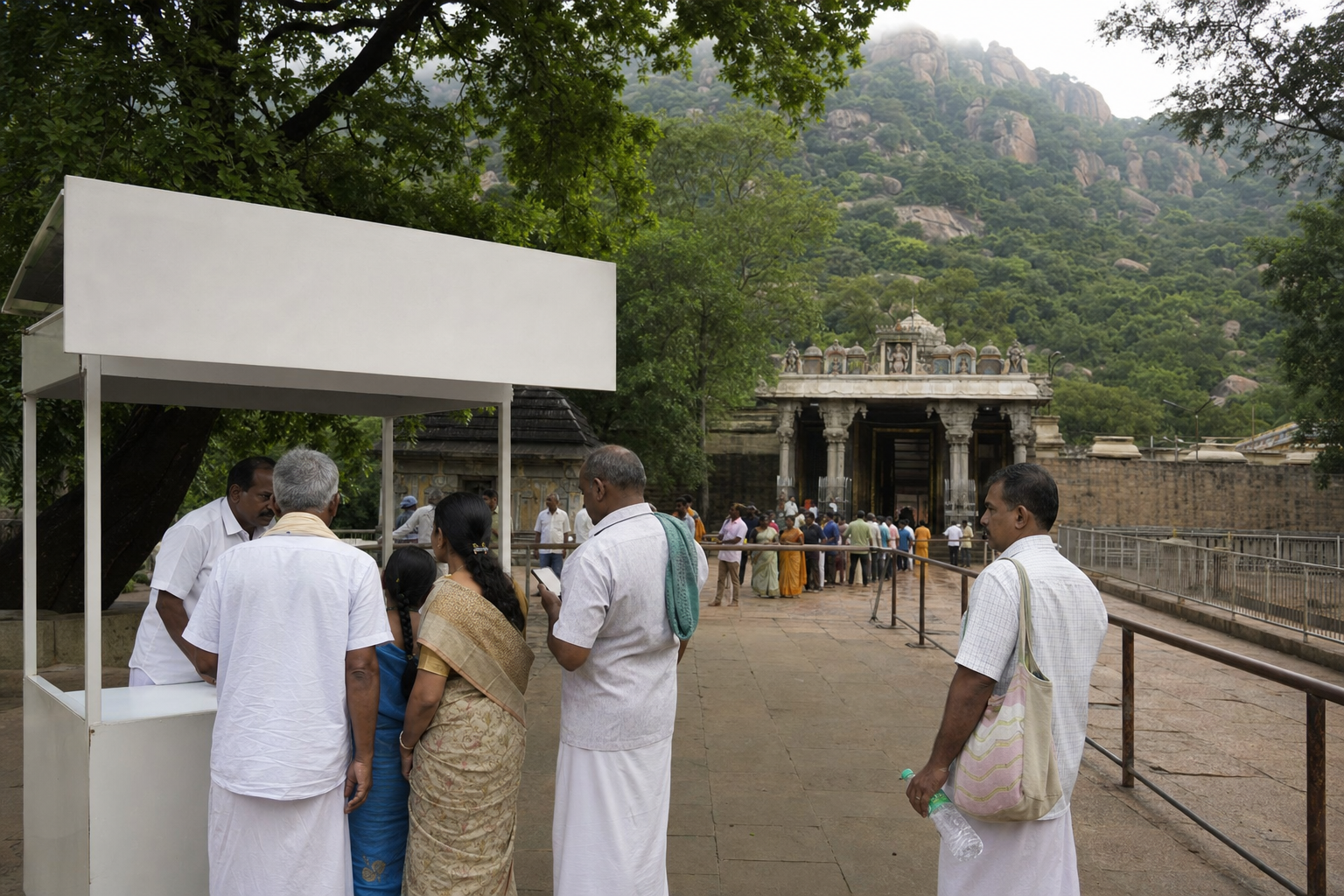
Use the current year’s temple programme, not a previous year’s calendar entry. Confirm the procession and shrine timings separately, then arrive with enough margin to pass through security, footwear arrangements and devotee queues without pushing ahead.
Before you travel, write the two ritual names in your phone and obtain a current timetable for each. Once you reach Alagarkoil, put the timetable away long enough to notice the movement of Perumal’s Ther, the stillness of the closed doorway and the deliberate line of light across all eighteen steps.