
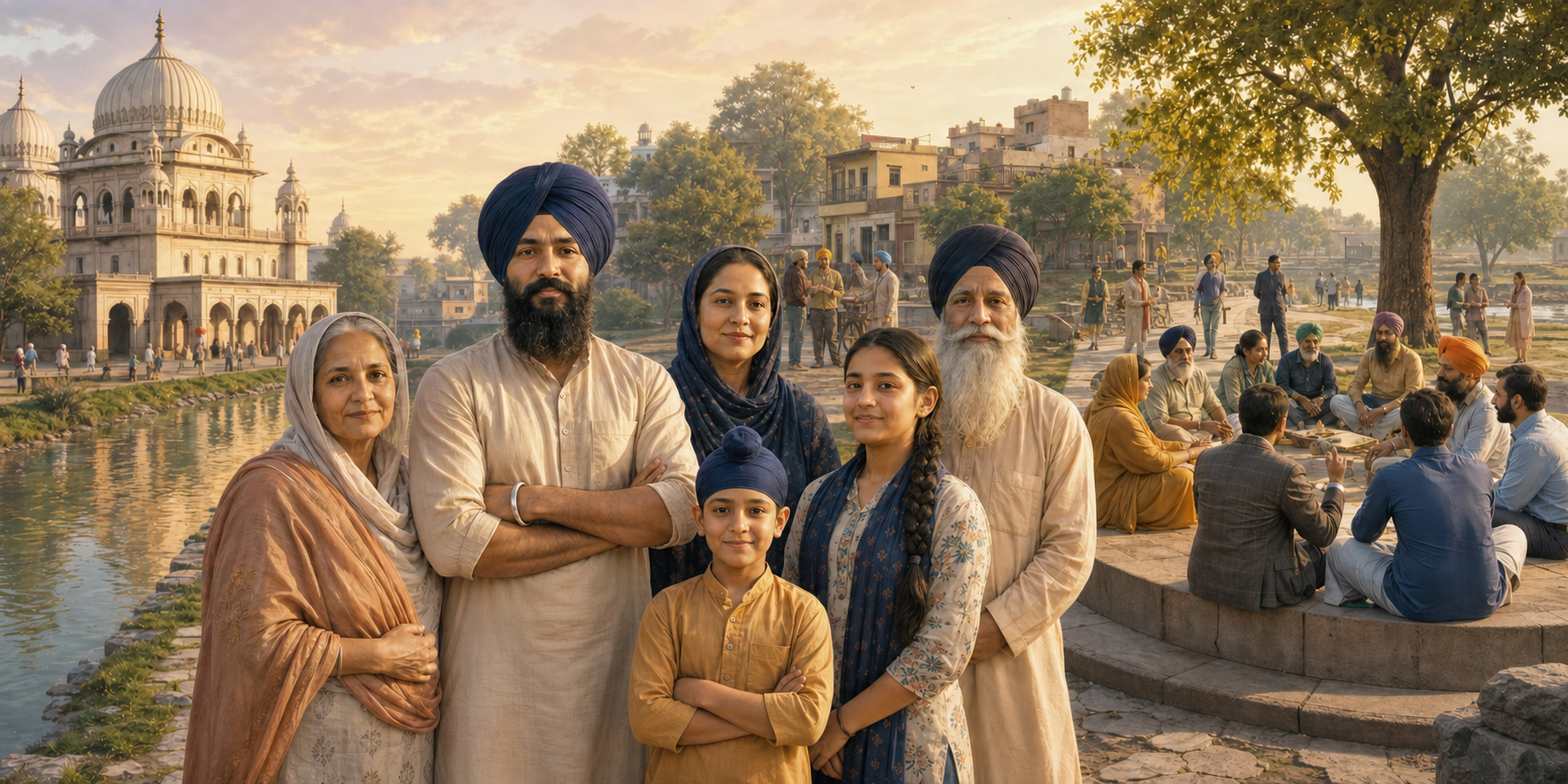
If you are trying to decide whether the Sikh contrast between Pakistan and Bharat is rhetoric or reality, do not begin with slogans. Begin with two practical questions: can a Sikh family remain visibly Sikh without fear, and can Sikh citizens shape public life as equals?
Those questions separate three things that are often blurred together: possession of Sikh sacred sites, survival of a living Sikh community, and empowerment through equal citizenship. Once you keep them separate, you can judge claims more carefully and direct your support where it can protect people rather than merely produce attention.
Partition put Sikh sacred geography and population on opposite sides
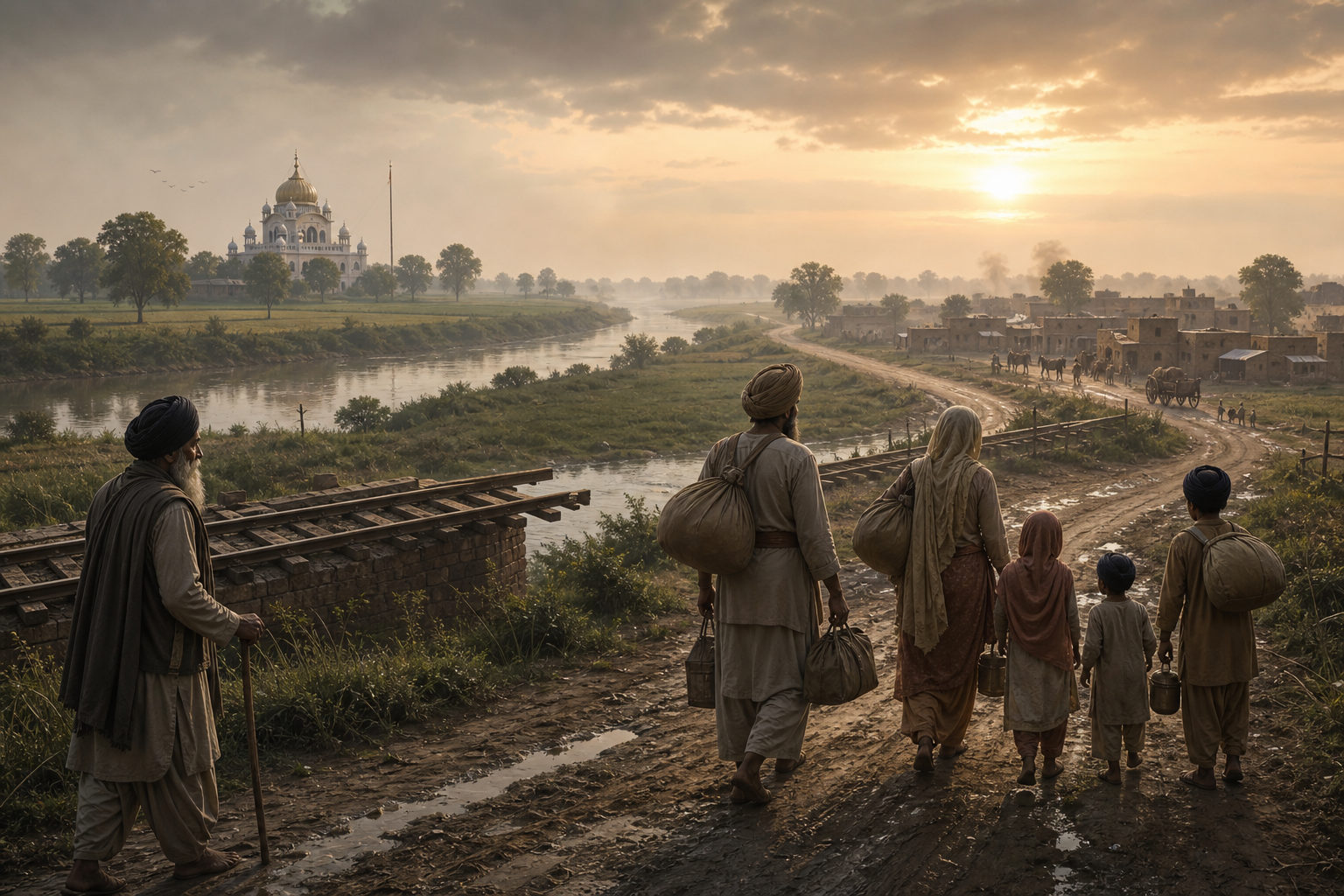
The Sikh predicament cannot be understood from present-day population figures alone. The division of the subcontinent in 1947 placed Nankana Sahib, Kartarpur and Lahore on the western side of the new border. Nankana Sahib is associated with the birth of Guru Nanak Dev Ji, Kartarpur with his final years and passing, and Lahore with the rule of Maharaja Ranjit Singh.
This was not simply a transfer of monuments between states. The Radcliffe Line cut through the historical heartland of Sikh life. Millions of Sikhs were uprooted from West Punjab amid one of the largest and most violent migrations in history. A sacred map remained in the west while much of the surviving Sikh population rebuilt its future in Bharat.
That distinction matters whenever you see a restored gurdwara, a pilgrimage gathering or a government ceremony presented as proof of Sikh well-being in Pakistan. A shrine can be maintained while the community around it contracts. Pilgrims can be welcomed while local families remain insecure. Heritage access is valuable, but it is not a substitute for the safety and freedom of the people whose tradition created that heritage.
When you assess a claim about Sikh flourishing, therefore, ask two questions separately: what is happening to the site, and what is happening to the resident Sikh community? If the answer describes buildings but not families, employment, worship, security and civic participation, it is an incomplete answer.
In Pakistan, survival has four distinct tests
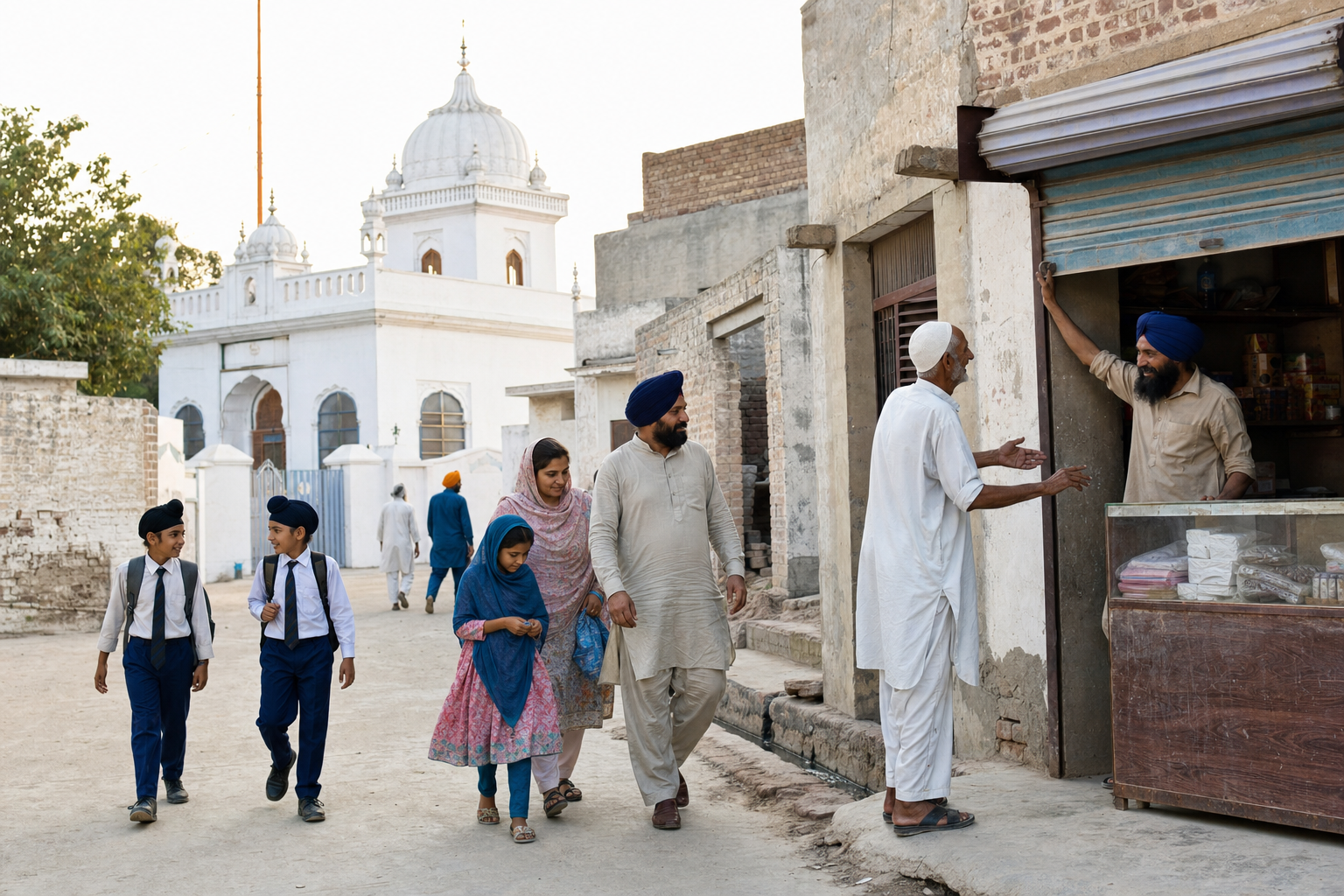
The demographic baseline is imprecise and should be presented honestly. At Partition, hundreds of thousands of Sikhs lived across West Punjab and the North-West Frontier. The present population is described by rights groups and community estimates as only a few thousand. That is an estimate, not an official count that should be repeated with false precision. Even with uncertainty over the exact number, the reported contraction is severe.
- Continuity: Can Sikh families reasonably plan to remain? Population survival is not demonstrated by an occasional religious event. Look for whether families can educate their children, earn a livelihood, sustain congregations and imagine a future without treating emigration as the safest option.
- Physical security: Sikh traders, doctors and community leaders have faced repeated targeted killings in Peshawar and other parts of Khyber Pakhtunkhwa. The meaningful test is not whether officials condemn an attack. It is whether threats are prevented, victims receive protection, cases are investigated and perpetrators face consequences.
- Family autonomy: The reported danger to young Sikh women from abduction and forced conversion goes to the heart of communal survival. Discussion of any individual case must distinguish a verified fact from an allegation and a voluntary religious decision from coercion. Protection requires accuracy, consent and safeguards for the person involved, not the circulation of her identity for political effect.
- Institutional continuity: A functioning gurdwara is simultaneously a place of worship, memory, community organisation and seva. Historic gurdwaras have reportedly faced disrepair, encroachment and mob violence, including the 2020 attack on Gurdwara Nankana Sahib. Count more than the number of buildings. Ask who controls them, whether local Sikhs can use them safely, whether land is protected and whether a congregation exists to carry their purpose forward.
These tests reinforce one another. Targeted violence can make visible professionals withdraw from public life. Fear surrounding daughters can persuade an entire family to leave. A shrinking congregation then has less capacity to maintain a gurdwara, challenge an encroachment or support vulnerable households. The resulting decline may look gradual from outside even when each family is making an urgent decision.
This is why asylum and emigration cannot be treated only as evidence that individuals found opportunities elsewhere. Fear has pushed remaining Sikh families toward asylum abroad. When departure becomes the rational safety strategy, a community may survive in diaspora while disappearing from its ancestral landscape.
In Bharat, empowerment means agency rather than mere safety
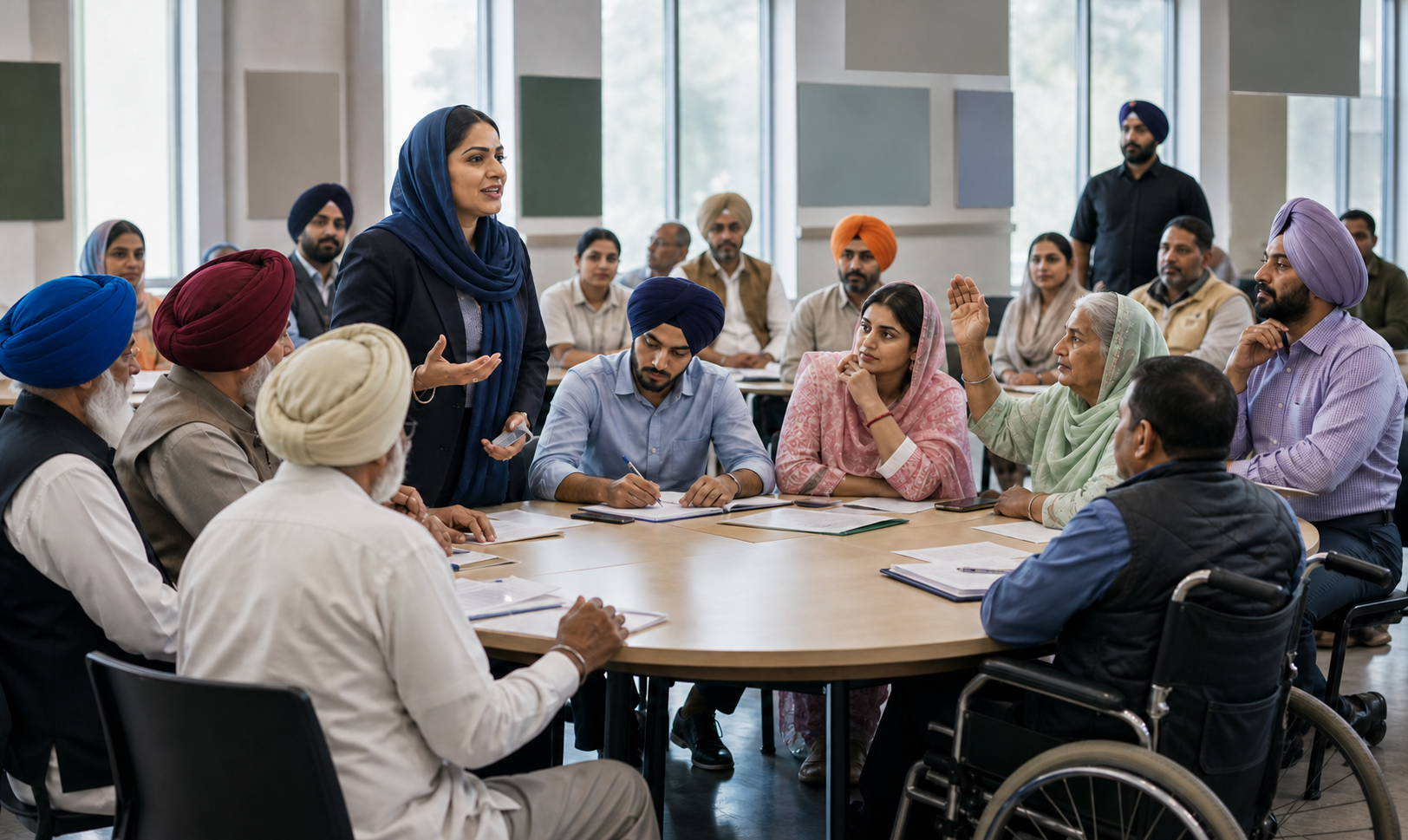
The post-Partition trajectory in Bharat developed in the opposite direction: uprooted Sikhs rebuilt communal life and attained resilience and extraordinary national achievement. The contrast with demographic fragility in Pakistan is meaningful. It shows what becomes possible when a community has the scale and civic room to rebuild.
But empowerment should remain a standard to be tested, not an applause line. It is more demanding than survival and more durable than symbolic representation. You can look for it in five forms:
- Religious confidence: Sikh families can practise, teach and transmit their faith openly.
- Institutional capacity: The community can build, govern and sustain gurdwaras, educational bodies, charitable networks and other institutions.
- Economic mobility: Sikh identity does not bar a person from a livelihood, profession or enterprise.
- Public agency: Sikh citizens can organise, vote, lead, disagree and seek redress without their loyalty being judged through a communal stereotype.
- Cultural continuity: Sikh memory, language, discipline and historical consciousness can pass to the next generation rather than surviving only as ceremonial display.
None of this requires pretending that every Sikh grievance in Bharat is mistaken or that every institution always delivers justice. Equal citizenship is not a debt that Sikhs owe in exchange for protection. It includes the freedom to criticise policy, defend communal interests and argue about the nation without having the entire community treated as suspect.
For a Dharmic readership, the discipline is especially important. You can recognise deep civilisational kinship while respecting Sikh self-definition. Solidarity becomes weaker when it tries to absorb another community’s identity, demand political conformity or use suffering in Pakistan to silence Sikh concerns in Bharat. It becomes stronger when it defends the Sikh right to live, worship and participate with dignity on both sides of the border.
Turn solidarity into careful, measurable support

Concern helps only when it changes an outcome. Because vulnerable minorities can face additional danger when names, images or locations spread online, responsible action begins with restraint as well as conviction.
Before you share a case
- Preserve the original context. Record the date, place, original wording and identity of the organisation making the claim. A cropped image or caption detached from its origin is not enough.
- Label the level of certainty. Use words such as reported, alleged, confirmed or disputed deliberately. Do not convert a family’s appeal into a settled legal conclusion before the facts are established.
- Protect the vulnerable person. Do not republish a minor’s name, a survivor’s address, a family’s travel plan or an identifiable image merely to make the appeal more emotionally compelling. Explicit, informed consent matters.
- Seek independent corroboration. Check whether a Sikh community body, rights organisation, legal representative or official record supports the essential facts. Repetition across accounts that copy one another is not independent confirmation.
- State the requested remedy. A useful appeal asks for something concrete: immediate protection, an investigation, recovery of property, safe access to worship or review of a specific official action. Outrage without a remedy is easy to exploit and difficult to evaluate.
Before you donate or advocate
Do not choose a campaign solely because it uses images of a famous gurdwara. Ask whether the work serves resident Sikh families, preserves a heritage site, assists pilgrims or conducts political advocacy. Each may be legitimate, but they are different purposes and should not be advertised as though they produce the same result.
- Check Sikh participation: Are affected Sikhs involved in setting priorities, or are they being represented entirely by outsiders?
- Check safeguarding: Does the organisation obtain consent and restrict sensitive personal information, especially in cases involving women, children or threatened families?
- Check the deliverable: Is the funding tied to a defined activity such as repairs, education, emergency relocation, documentation or legal support?
- Check accountability: Can the organisation explain who controls the funds, what was completed and how it protects local partners from retaliation?
- Check continuity: Will the intervention strengthen local capacity, or will it end after a single ceremony, visit or burst of publicity?
Public advocacy should be equally exact. Instead of asking a government whether it supports minorities, ask when the Sikh population was last counted and how the count was conducted. Ask for the status of investigations into named attacks. Ask who holds title to an encroached gurdwara property, which office can order restoration and whether local Sikhs have safe access. Ask what confidential complaint mechanism exists for a family reporting coercion or abduction. A measurable question is harder to answer with a slogan.
Heritage work also needs a living-community test. Repairing masonry, cataloguing records and protecting land can be worthwhile even where the local congregation is small. But the project should say plainly whether it is preserving a historical asset or strengthening a resident community. You should expect evidence appropriate to the stated goal: conservation records for the first, and safe local access, participation and continuity for the second.
Finally, resist using Pakistani Sikh suffering as ammunition against Sikh neighbours in Bharat. A person is not obliged to surrender a distinct political or religious opinion because co-religionists face danger elsewhere. The principled position is consistent: oppose the coercion of Sikhs in Pakistan, defend their sacred heritage, and preserve the full civic agency of Sikhs in Bharat.
Key takeaways for readers and institutions
- Do not mistake possession or restoration of Sikh shrines for the security of a living Sikh population.
- Treat the present Pakistani Sikh population as an estimate, while recognising the severe reported decline from the Partition-era community.
- Judge survival through continuity, physical security, family autonomy and functioning institutions.
- Judge empowerment in Bharat through religious confidence, institutional capacity, mobility and the freedom to exercise public agency.
- Verify claims, protect identities and attach advocacy to a specific remedy before amplifying a vulnerable person’s case.
- Support Sikh-led, accountable work whose purpose and measurable outcome are clear.
Your next step does not have to be grand. Choose one useful lane: verify and responsibly share one documented case, examine one organisation before supporting it, ask one public body a measurable question, or help preserve one threatened Sikh institution with the participation of its community.
Keep the standard human and consistent. In Pakistan, the immediate objective is to make remaining Sikh families safer, freer and less compelled to leave. In Bharat, it is to keep Sikh citizenship substantive enough that security grows into agency. That is how remembrance becomes responsibility rather than rhetoric.
References
