
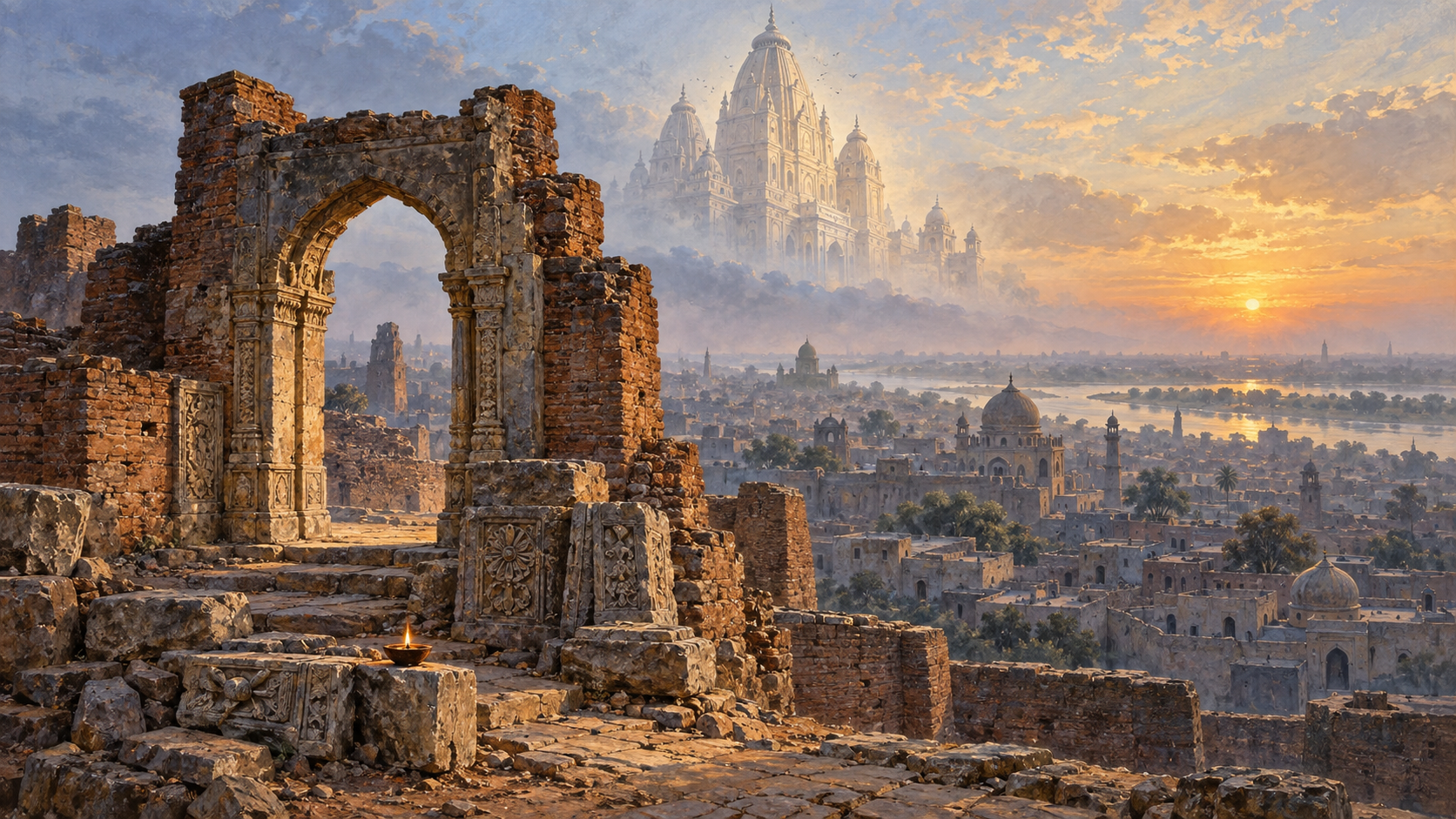
If you came here asking whether Multan’s Hindu past is merely a civilisational claim or a history with identifiable places and turning points, Prahladpuri Temple gives you a disciplined answer. Its story can be followed through sacred continuity, armed protection, government takeover and physical destruction.
That sequence matters. Heritage becomes vulnerable twice: first when a sacred place is damaged or appropriated, and again when its history is reduced to a single act of destruction. To remember Prahladpuri properly, you need to recover the city around it, preserve the chronology and distinguish established facts from claims that still need verification.
Begin with Multan’s sacred geography, not its present border
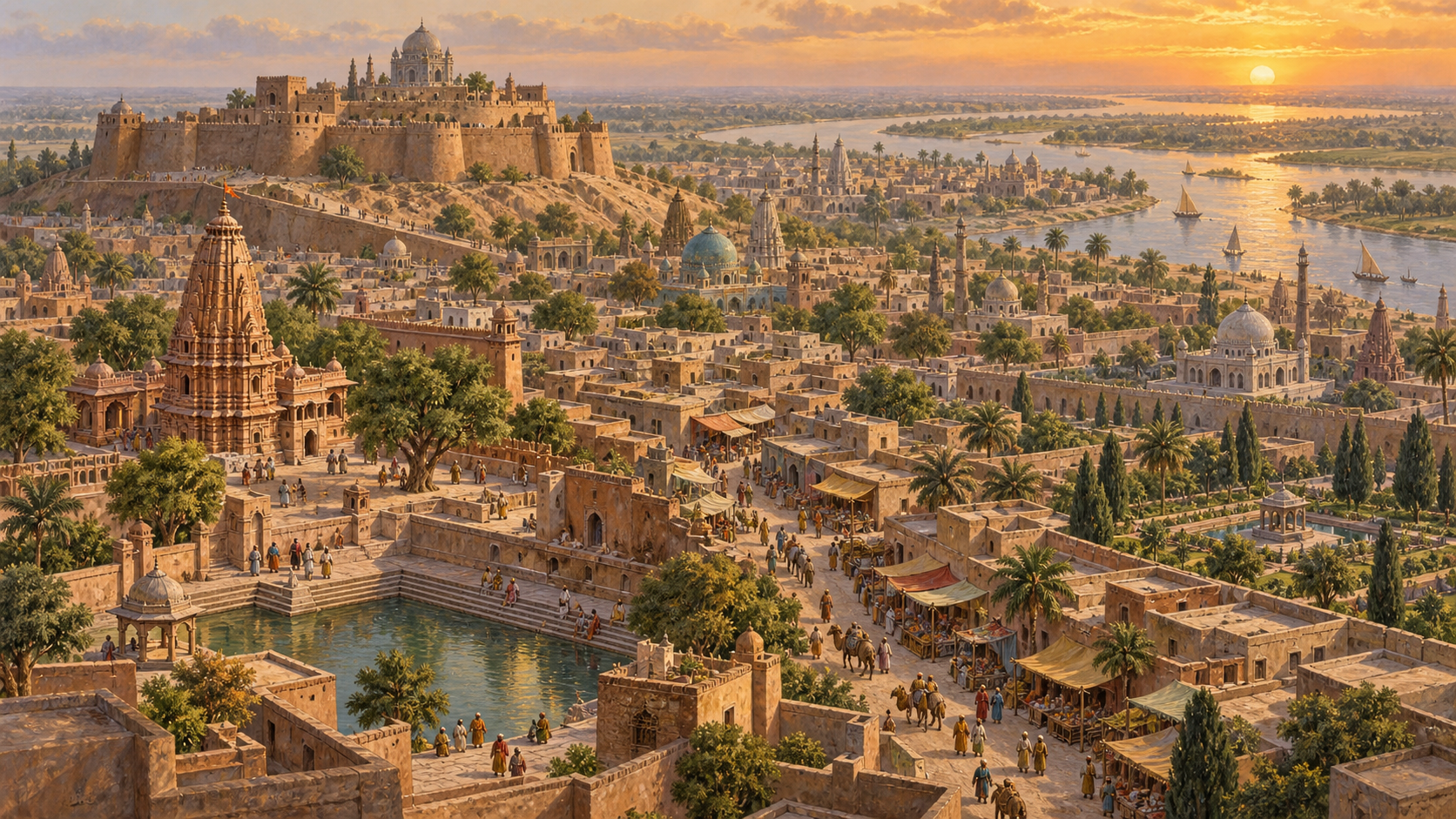
Multan is now in Pakistan and is widely associated with its extraordinary concentration of Sufi shrines. That familiar identity is real, but it is not the city’s whole religious history. Older names associated with Multan include Moolasthana, Kashyapura and Kaspatryus; the ancient Greek historian Herodotus is connected with this early record of the city.
For Hindus, Multan was an ancient tirthakshetra: a sacred destination, not merely a commercial or administrative settlement. The city contained a grand Aditya temple dedicated to the solar deity. Muhammad bin Qasim’s assault on Multan included the desecration of that temple, making the city an early major tirthakshetra to suffer conquest and religious destruction.
Prahladpuri supplied another centre of sacred meaning. Its name carried the memory of Prahlada, the Vishnu devotee whose fidelity to dharma survived persecution. The temple therefore belonged to a living devotional geography, not an isolated archaeological layer. After Multan had been extensively Islamicised, Prahladpuri endured as the city’s only place of Hindu worship.
When you explain Hindu Multan, do not begin with the modern border or with the temple’s ruins. Begin with the tirtha, identify the Aditya and Prahladpuri temples separately, and then follow what happened to each. That order restores the civilisation before describing its losses.
A short chronology prevents the history from becoming a slogan
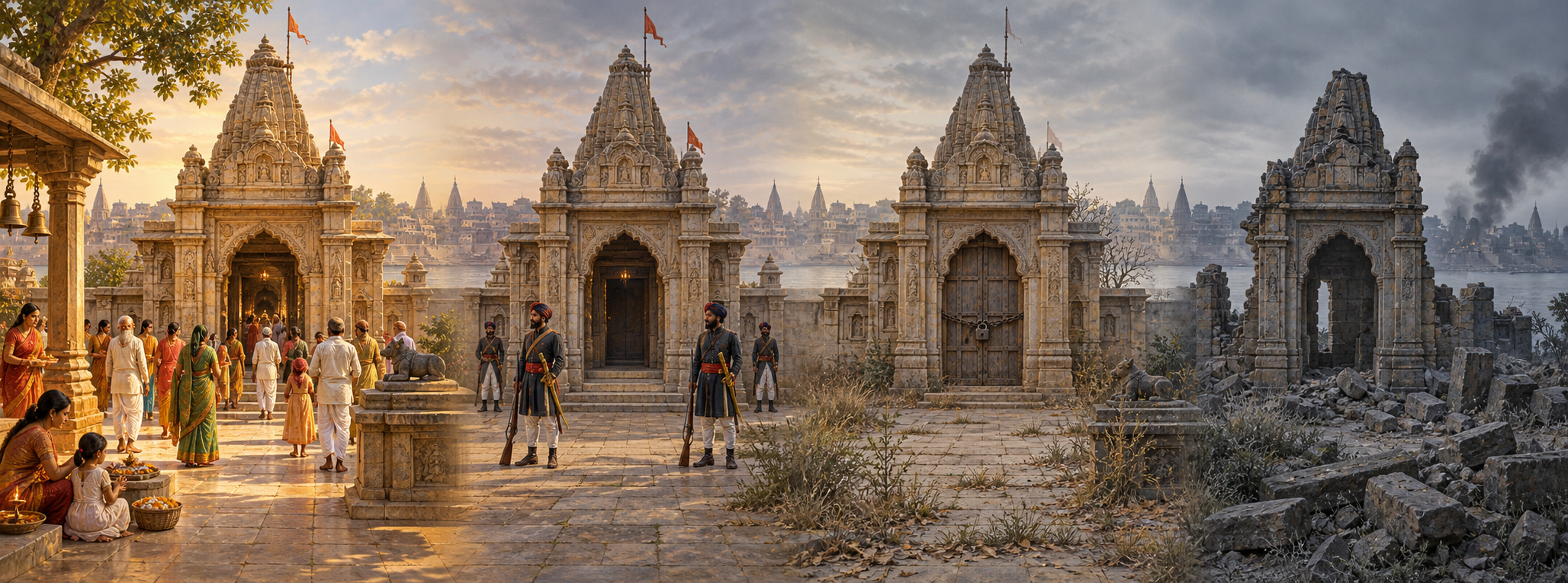
Prahladpuri’s history is most useful when its events remain in sequence. Keep these anchors together:
- After Multan’s Islamicisation, Prahladpuri remained the city’s sole place of Hindu worship.
- In 1831, a small Sikh garrison protected the temple despite severe pressure.
- The shrine then survived in a precarious condition for nearly another 150 years.
- During the 1970s, the Pakistan Government took control of the temple and established a madrassa within its premises.
- In 1992, a mob driven by religious fanaticism completely demolished the temple.
This chronology corrects two common misreadings. The destruction was not one sudden event without a prehistory: loss of control over the premises preceded the final demolition. Yet survival should not be romanticised as security. A sacred place can remain standing while its community, access and institutional independence steadily weaken.
The Sikh role in 1831 also deserves to remain visible. A small garrison’s protection materially extended the life of a Hindu shrine. For a Dharmic audience, this is not a decorative tale of harmony. It is a concrete example of custodianship crossing community labels when a sacred inheritance was endangered.
Notice the three stages of heritage loss
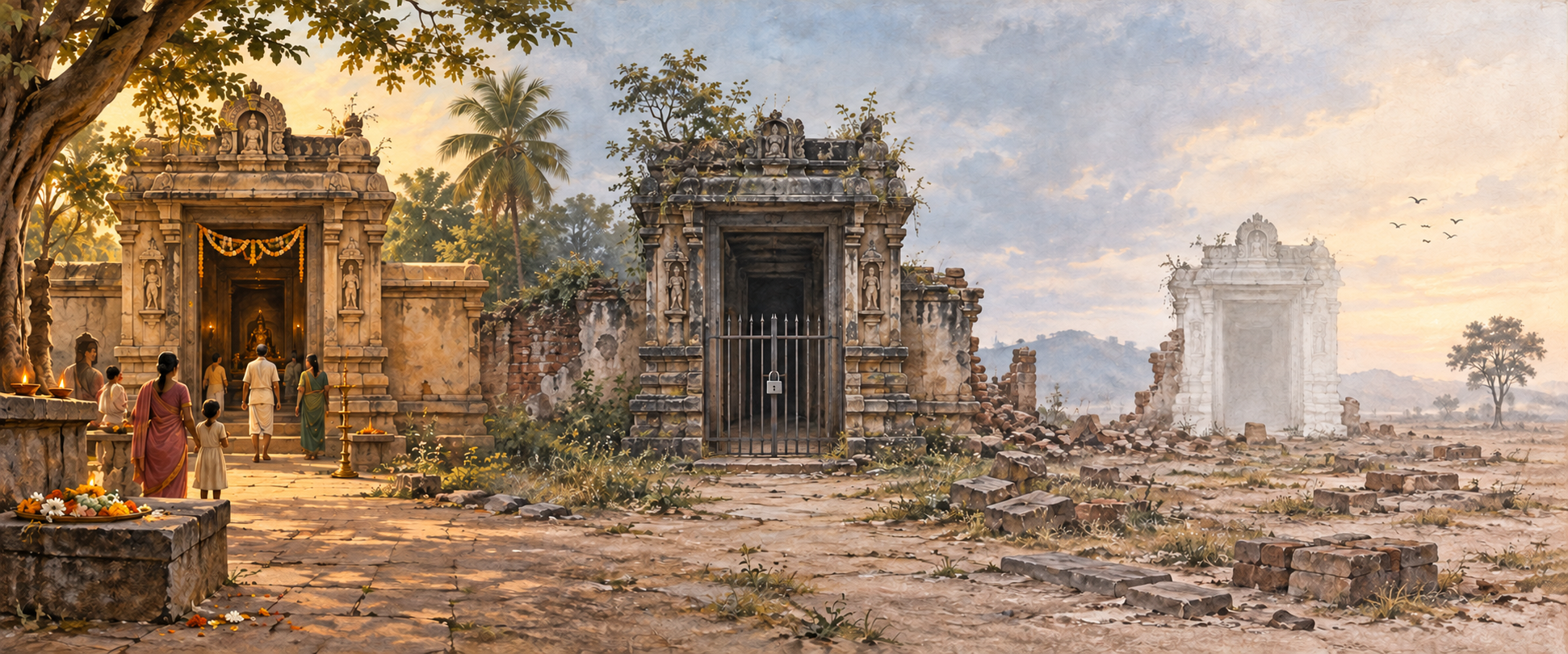
Prahladpuri shows why demolition is only the most visible stage of cultural erasure. The temple passed through three distinct conditions: vulnerable survival, institutional dispossession and physical destruction. Each calls for a different kind of response.
- Protection concerns whether worshippers and custodians can keep a sacred place functioning. The 1831 defence demonstrates how immediate security can alter a site’s fate.
- Control concerns who possesses the premises and decides how they are used. The government takeover and construction of a madrassa changed the temple’s institutional position before its fabric was destroyed.
- Physical survival concerns the structure itself. The 1992 demolition ended the temple building described in this chronology, but it did not erase the historical identity of the site.
This gives you a practical way to assess any threatened heritage site. Ask three separate questions: Who controls it? Is its traditional sacred use still possible? What remains of its physical fabric? A building can appear intact while failing the first two tests. Conversely, a demolished structure can remain historically recoverable through maps, photographs, inscriptions, administrative records and carefully labelled testimony.
Do not infer present site conditions from the 1992 endpoint alone. Claims about surviving fragments, current access, reconstruction or present administration require evidence beyond this chronology. Stating that limit strengthens the established case because it keeps documented history separate from hopeful reconstruction or circulating rumour.
Preserve the memory without weakening it through overstatement
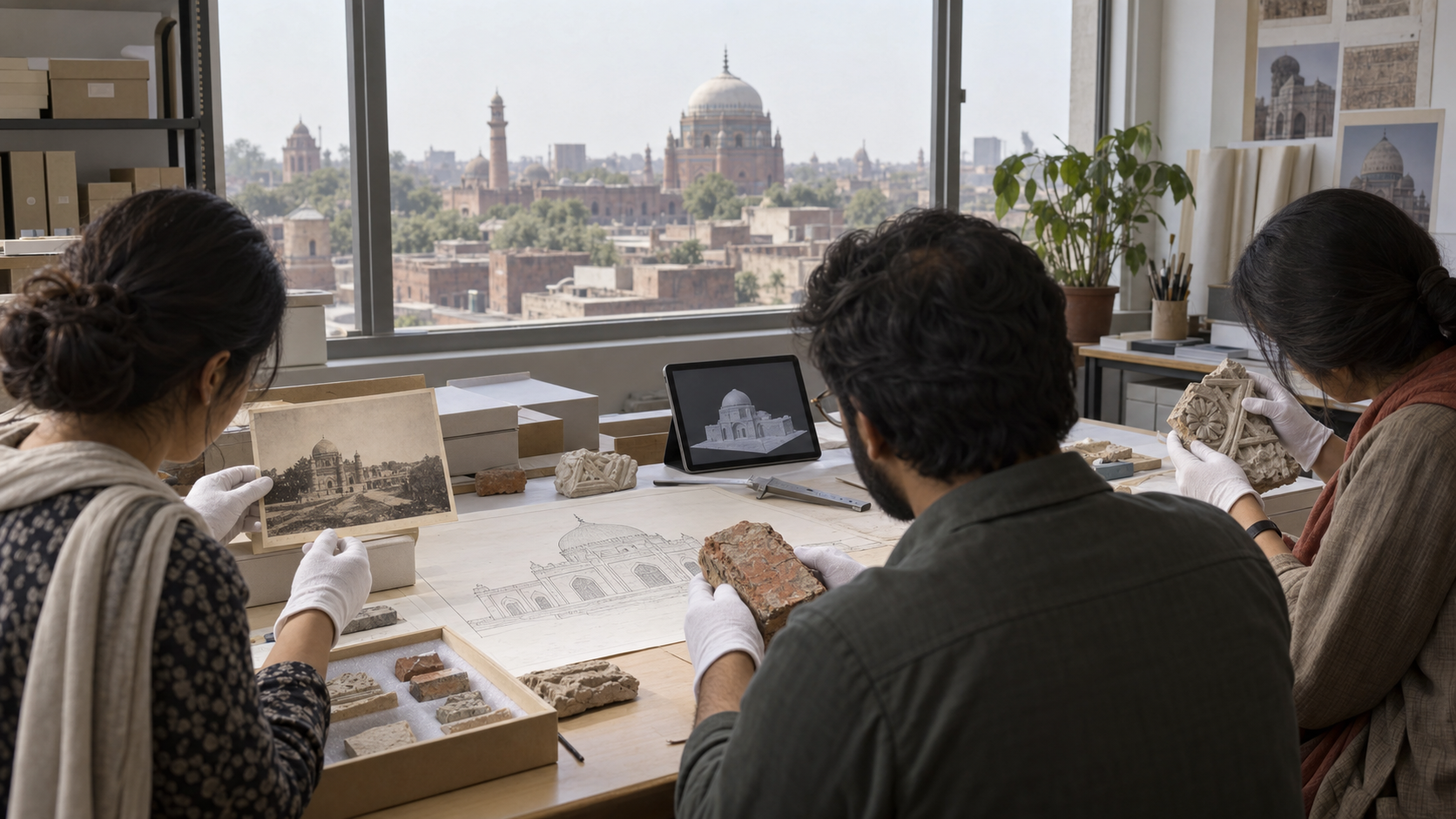
You do not need embellished claims to establish the importance of Hindu Multan. The known sequence is already powerful. Use the following practices when teaching it, discussing it online or adding material to a community archive:
<!– wp:list {