

If you or someone in your community is considering ghar wapsi, do not begin by choosing a ceremony or announcing a date. Begin with a harder question: can the person say no, delay the decision, choose a different Dharmic path, or withdraw without losing family support, material help, or social standing?
That question protects both Dharma and constitutional freedom. A sincere homecoming can restore worship, memory, language, festival life, and community belonging. But the return remains defensible only when it is the person’s own informed choice, carried out under the law and without coercion disguised as care.
Start with the person, not the label
Ghar wapsi is most coherently understood as a voluntary reconnection with ancestral Dharmic heritage and community life. It may involve Hindu traditions, while the larger civilizational setting also includes Buddhism, Jainism, and Sikhism. That shared setting does not erase the distinctions among these traditions, nor does it give an organization the right to select a path on someone’s behalf.
The word “return” can carry emotional weight. For one person, it may mean resuming a family deity’s worship. For another, it may mean recovering songs, customs, or samskaras known in childhood. Someone else may be drawn to a Dharmic tradition through study rather than family memory. These motives should be heard in the person’s own words instead of being supplied by an organizer.
A valid choice does not require anger toward another religion. It does not require the person to denigrate a former community, produce a dramatic testimony, or accept every local custom without question. Dharmic belonging is broad enough to include different disciplines and temperaments: bhakti, jnana, karma, meditation, household ritual, ethical vows, and seva. Cultural continuity becomes stronger when it leaves room for such differences.
Before treating an expression of interest as consent, test the situation:
- Can the person explain what they want, and why, without being coached?
- Can they postpone or cancel the decision without humiliation, family punishment, or exclusion from community services?
- Are food, health assistance, education, work, housing, or financial help completely independent of the religious choice?
- Have they been allowed to consider more than one form of Dharmic practice, including participation without a formal change of religious identity?
- Can they refuse photographs, public testimony, social-media exposure, or disclosure of their name?
- Are questions and doubts welcomed rather than treated as evidence of disloyalty?
If any answer is no, pause. A rite performed after pressure does not become voluntary merely because the person eventually says yes in public.
Constitutional freedom protects choice in both directions

India’s constitutional setting begins with freedom of conscience. Article 25 protects the right freely to profess, practise, and propagate religion, subject to public order, morality, and health; Articles 26 to 28 form part of the wider framework governing religious freedom and institutions. These constitutional guarantees and their stated limits provide space for a genuine return to faith. They do not create an entitlement to manage another person’s conscience.
Freedom therefore works in both directions. A person may return to an ancestral tradition. The same person may decline, take more time, adopt only cultural practices, choose another Dharmic path, or change their mind. Respecting only the answer an organizer prefers is not respect for conscience.
Family participation also has limits. Relatives may share history, answer questions, and offer emotional support, but family approval cannot replace an adult’s personal decision. Nor does one adult’s choice automatically decide the religious identity of a spouse or any other adult in the household.
Constitutional protection is not the only legal layer. Several states have Freedom of Religion laws addressing force, fraud, inducement, and procedural transparency. Applicable requirements are not necessarily identical from one state to another. Depending on the jurisdiction and circumstances, notices, declarations, or other records may be required.
| Layer | Question to resolve | Safe action |
|---|---|---|
| Constitutional freedom | Is the decision an exercise of the person’s own conscience? | Stop if pressure, deception, threats, or conditional benefits are present. |
| State procedure | Does the applicable state law require a notice, declaration, verification, or other step? | Have a lawyer familiar with the current law in that state confirm the process before setting the ceremony date. |
| Ethical consent | Does the person understand the choice and retain a real ability to withdraw? | Use private consent checks, time for reflection, and an independent channel for concerns. |
| Privacy | Who actually needs the person’s religious and identifying information? | Collect only what the law requires, restrict access, and do not publish it without separate permission. |
Ask the local lawyer to confirm, in writing where practical, which law applies, who is responsible for compliance, what must be filed, when it must be filed, which authority receives it, and how sensitive records should be protected. Do not assume that a form used in another state, or at an earlier time, remains valid. This is a planning framework, not a substitute for advice on an individual’s legal situation.
Cases involving minors or adults whose ability to understand and refuse is uncertain require a stricter response. Do not simply reuse an adult consent form or assume that a guardian’s preference resolves every issue. Pause the religious process and obtain state-specific legal advice together with independent child or vulnerable-adult safeguarding support. The cost of caution is delay; the cost of proceeding wrongly may be harm to the person and serious legal exposure.
Use a consent-first pathway before any rite
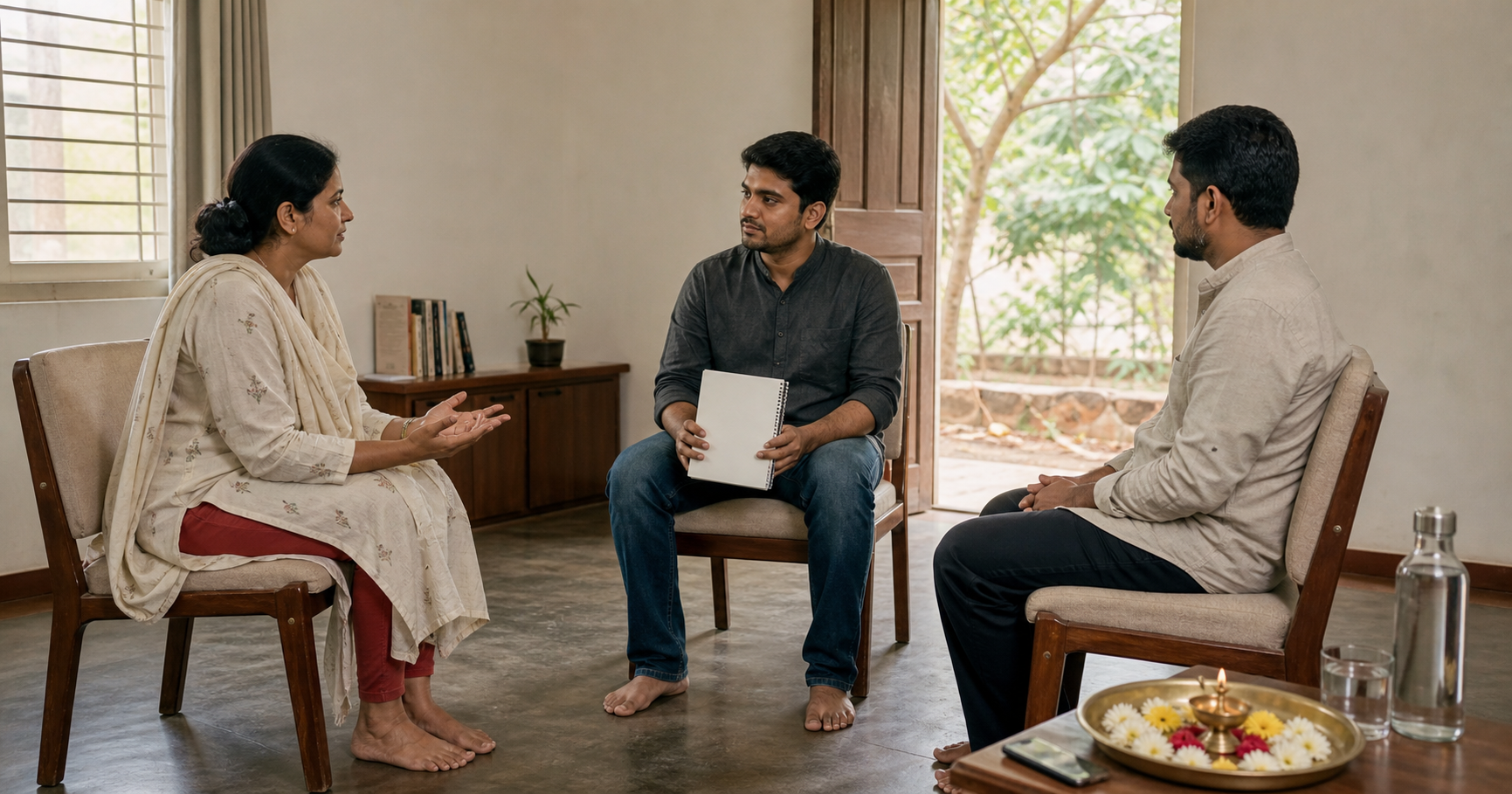
A ceremony should complete a careful process, not manufacture a decision. The following pathway gives a family, saint, temple committee, or community organization concrete points at which to detect pressure and correct it.
- Begin with a confidential listening conversation. Ask what the person is seeking, which practices matter to them, what worries them, and whether anyone expects a particular answer. Record conclusions only if there is a legitimate need.
- Separate seva from religious choice. Medical help, meals, education support, environmental programs, skill development, and other community services must not improve, disappear, or become conditional because of the person’s answer.
- Explain the actual choice in a language the person understands well. Cover the meaning of the proposed rite, the tradition involved, any community expectations, available alternatives, and the option of taking no formal step. Translation should aid understanding, not steer the response.
- Allow time for reflection. Do not turn attendance at a satsang, kirtan, pravachan, counseling session, or festival into presumed consent. Family consultation may be offered if the person wants it, but relatives should not dominate the private decision.
- Confirm consent away from the main social pressure. Where feasible, let the person speak privately with someone who is not rewarded for obtaining a yes. Provide a named channel through which they can ask questions, report pressure, or withdraw.
- Complete the state-specific legal check. Resolve notices, declarations, responsible parties, timing, and record retention before conducting the rite. Compliance should be built into the plan rather than repaired afterward.
- Agree on privacy separately. Consent to a religious rite is not consent to photography, a public stage appearance, a press interaction, a testimonial, or publication of personal history. Each use requires its own freely given permission.
- Plan accompaniment after the decision. Offer a mentor, accessible study, introductions to local worship and festivals, and opportunities for seva. Support should remain invitational; a person who participates less than expected should not be shamed or treated as suspect.
Documentation should be sufficient but minimal. A consent record may help establish that the person received an explanation, had an opportunity to ask questions, understood withdrawal rights, and was not offered a conditional benefit. It should not become a dossier containing family conflicts, past religious associations, or personal testimony unrelated to legal compliance.
Keep consent records confidential, limit access to responsible people, and establish a retention policy rather than storing them indefinitely by habit. Publicity requires particular restraint. Names, images, and conversion narratives can expose a family to conflict long after an event has ended. If publicity is not necessary, the safer course is not to create it.
Community leaders should widen belonging, not narrow choice
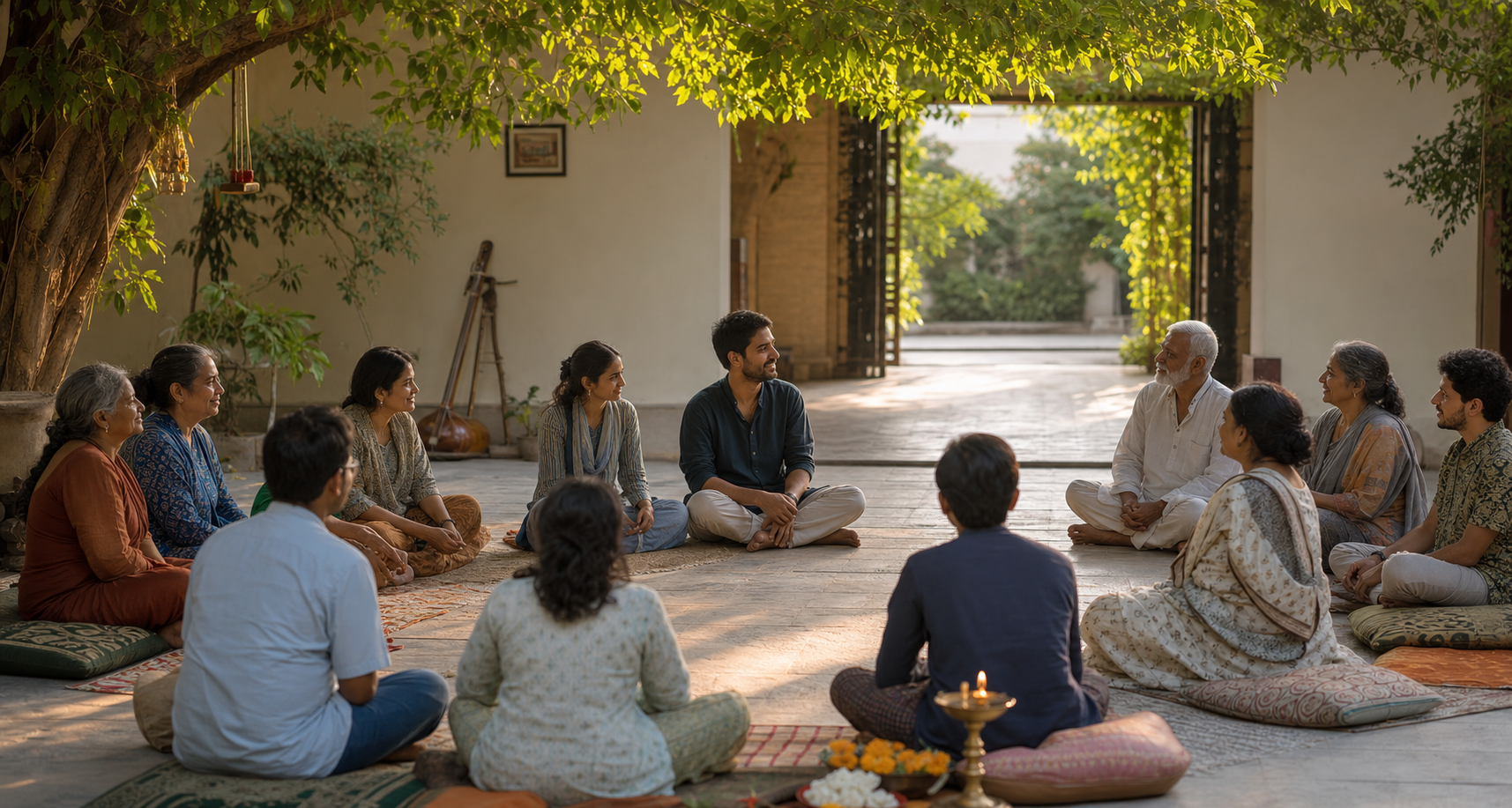
Saints and local spiritual leaders often possess trust that distant institutions cannot reproduce. Through satsangs, kirtans, pravachans, counseling, samskaras, and service, they can make Dharmic life intelligible and accessible to households that have lost contact with inherited practice. The same trust, however, can make a suggestion feel like a command. Moral authority therefore needs visible boundaries.
A responsible leader explains without humiliating, invites without cornering, and accepts a refusal without retaliation. They do not disparage another faith to make Dharma attractive. They do not count a person’s attendance as commitment. They do not let a crowd, family elder, or camera replace a private act of conscience.
Pluralism should be practical rather than ceremonial language. A Hindu household may reconnect through its local deity, home puja, temple arts, bhajan, or philosophical study. Jain anuvrat brings attention to ethical self-restraint. Sikh langar demonstrates equality through shared service. Buddhist karuna and mindfulness cultivate compassionate attention. These examples can deepen mutual learning without pretending that the traditions are interchangeable.
Inclusion must also be visible across caste, gender, age, language, and region. If a return brings someone into a community but leaves them outside leadership, shared meals, education, or ritual access, the promised belonging is incomplete. Give women real authority in listening, teaching, safeguarding, and program design. Provide young people with mentors, vernacular explanations, music, arts, study circles, and service opportunities that connect spiritual identity with daily conduct.
Aftercare is where a symbolic homecoming either becomes a living practice or fades into an event. Useful support includes household-ritual guidance, festival orientation, scripture or ethics study, youth groups, women’s circles, devotional music, and local seva. None of these should become a loyalty test. The person’s pace remains their own.
Measure the health of the effort accordingly. Ceremony totals reveal little about freedom, understanding, or continuity. More meaningful questions include whether consent checks were completed, whether concerns could be raised safely, whether anyone lost services after declining, whether personal data remained protected, and whether people later joined worship, study, festivals, or seva by choice. Process safeguards and sustained community participation tell more than a headline count.
Key takeaways for an ethical and lawful homecoming
- Treat the ability to say no, wait, or withdraw as the first test of voluntariness.
- Keep seva and material assistance completely separate from the religious decision.
- Explain the proposed rite, tradition, alternatives, and consequences in a language the person understands.
- Verify the currently applicable state procedure with qualified local counsel before fixing a date.
- Use private consent checks and an independent grievance channel rather than relying on public declarations.
- Collect the minimum required information, secure it, and obtain separate permission for every public use of a name, image, or story.
- Apply additional legal and safeguarding scrutiny whenever a minor or vulnerable adult is involved.
- Build belonging through study, festivals, household practice, and seva after the rite, without turning participation into an obligation.
- Judge success by freedom, dignity, lawful process, and voluntary continuity rather than ceremony totals.
If you are helping to plan a ghar wapsi, write the consent and privacy protocol first, obtain the state-specific legal check second, and discuss the ceremony only after both are settled. A homecoming worthy of Dharma should leave the person more capable of living by conscience, not less.