
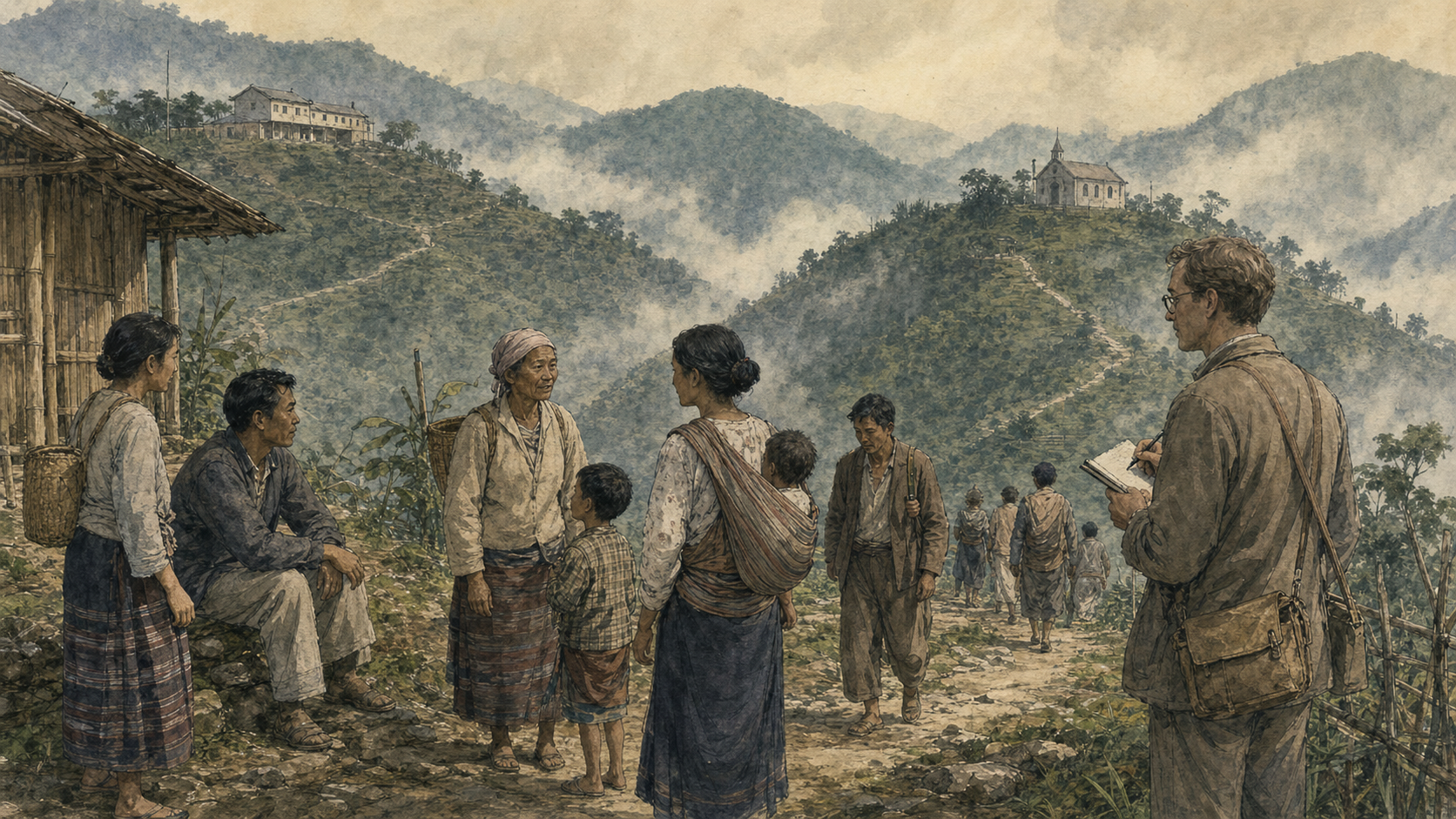
If you came here asking whether Verrier Elwin helped open Northeast India to Christian missionary influence, do not settle for a one-word verdict. You need to know which facts concern his personal conduct, which concern the authority given to him by the Indian state, and which are meant to prove a long-term religious consequence.
That separation does not excuse misconduct or minimise cultural damage. It gives you a stronger way to judge the case, discuss it honestly, and recognise what still needs documentary proof.
State the case involving Kosi without euphemism or exaggeration
Dharma Dispatch alleges that in 1940, when Elwin was 37, he married Kosi, a 13-year-old Raj Gond student at his school in Madhya Pradesh. It further alleges that he turned their sexual life into anthropological field notes and later abandoned her.
Those are grave particulars. The ages, the teacher-student relationship, the institutional setting and the alleged use of intimacy as research material are more informative than any inflammatory label. They direct attention to power: an adult educator exercised authority over a child who was also a student and then allegedly converted the relationship into professional material.
If you discuss this episode, preserve that precision. Say what is alleged, identify the people and ages, and link the claim. Do not silently turn an accusation into a judicial finding, a clinical diagnosis or a fact broader than the material establishes. Precision is not timidity. It prevents a serious moral charge from being dismissed because someone overstated it.
You should also resist the opposite evasion: marriage does not by itself answer the ethical question. The relevant issue is the enormous imbalance of age, educational authority and control. Historical distance does not make that imbalance disappear.
Do not collapse personal conduct, state power and conversion into one claim
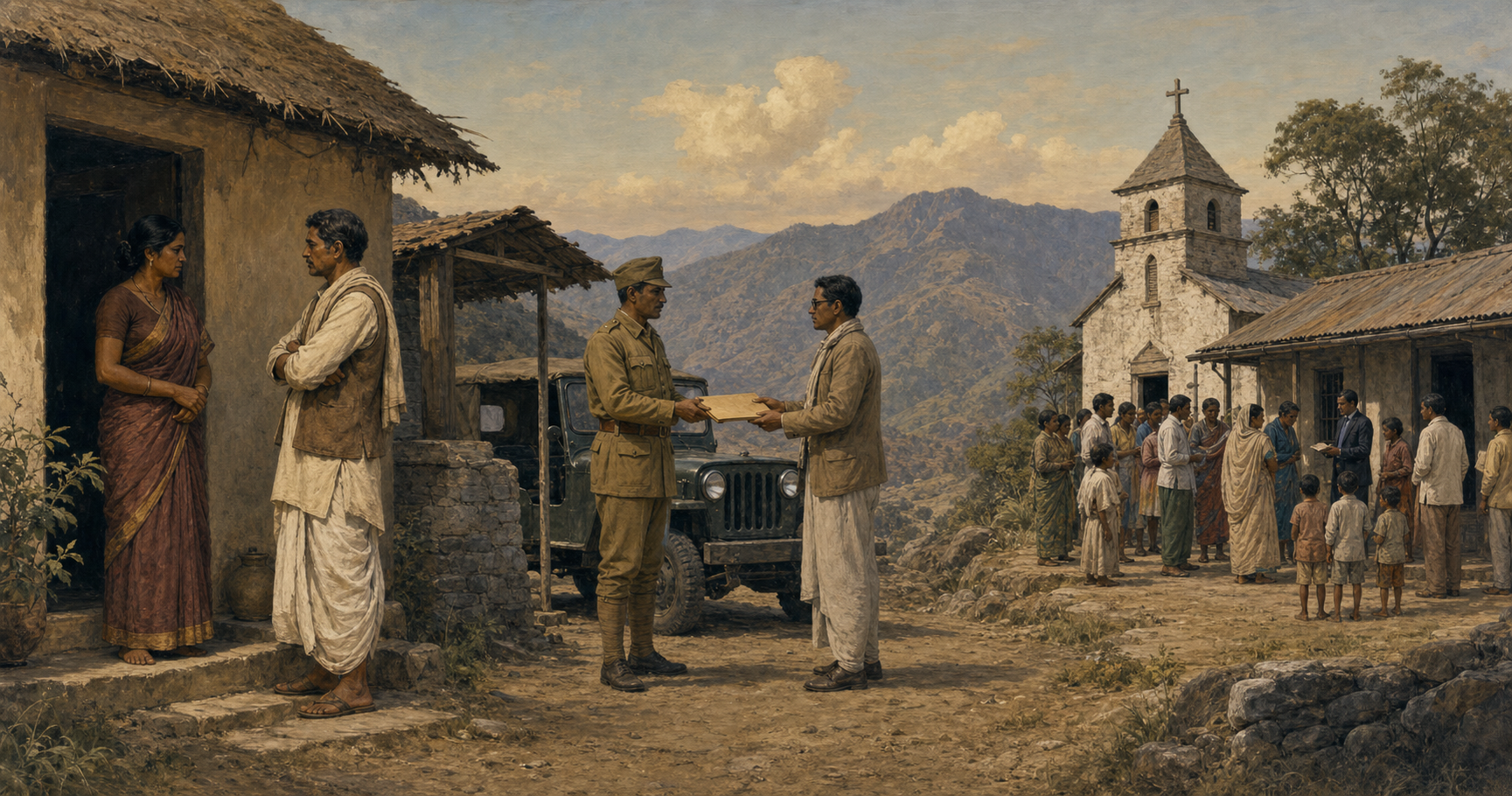
The argument about Elwin usually contains four different propositions. Each one must be evaluated on its own evidence:
- Personal conduct: the allegations concerning Kosi raise questions about exploitation, consent and abuse of educational authority.
- Anthropological practice: the alleged transformation of sexual intimacy into field notes raises a separate question about how vulnerable communities were observed, represented and used to build professional authority.
- Government influence: Nehru later made Elwin Anthropological Adviser for the North-East Frontier. That appointment placed an anthropologist with a missionary background close to state policy.
- Religious consequence: the broad historical charge is that a policy associated with Elwin created conditions that enabled the Christianisation of the Northeast.
Proof of the first proposition does not automatically prove the fourth. A compromised personal record can justify closer scrutiny of a public official, but it cannot substitute for records showing what policy he proposed, what the government adopted, how administrators implemented it, and how missionary institutions benefited.
The appointment itself is important, but its meaning also has limits. It establishes access to power. It does not establish that every later policy was Elwin’s work, that every recommendation was accepted, or that one adviser caused every subsequent religious change.
This distinction gives you a useful test whenever a historical personality is credited or blamed for a vast outcome: move from biography to authority, from authority to a named policy, from policy to an operating mechanism, and only then from mechanism to consequence. If one link is missing, identify it as missing rather than covering the gap with rhetoric.
Test the missionary-influence thesis as a chain of causation
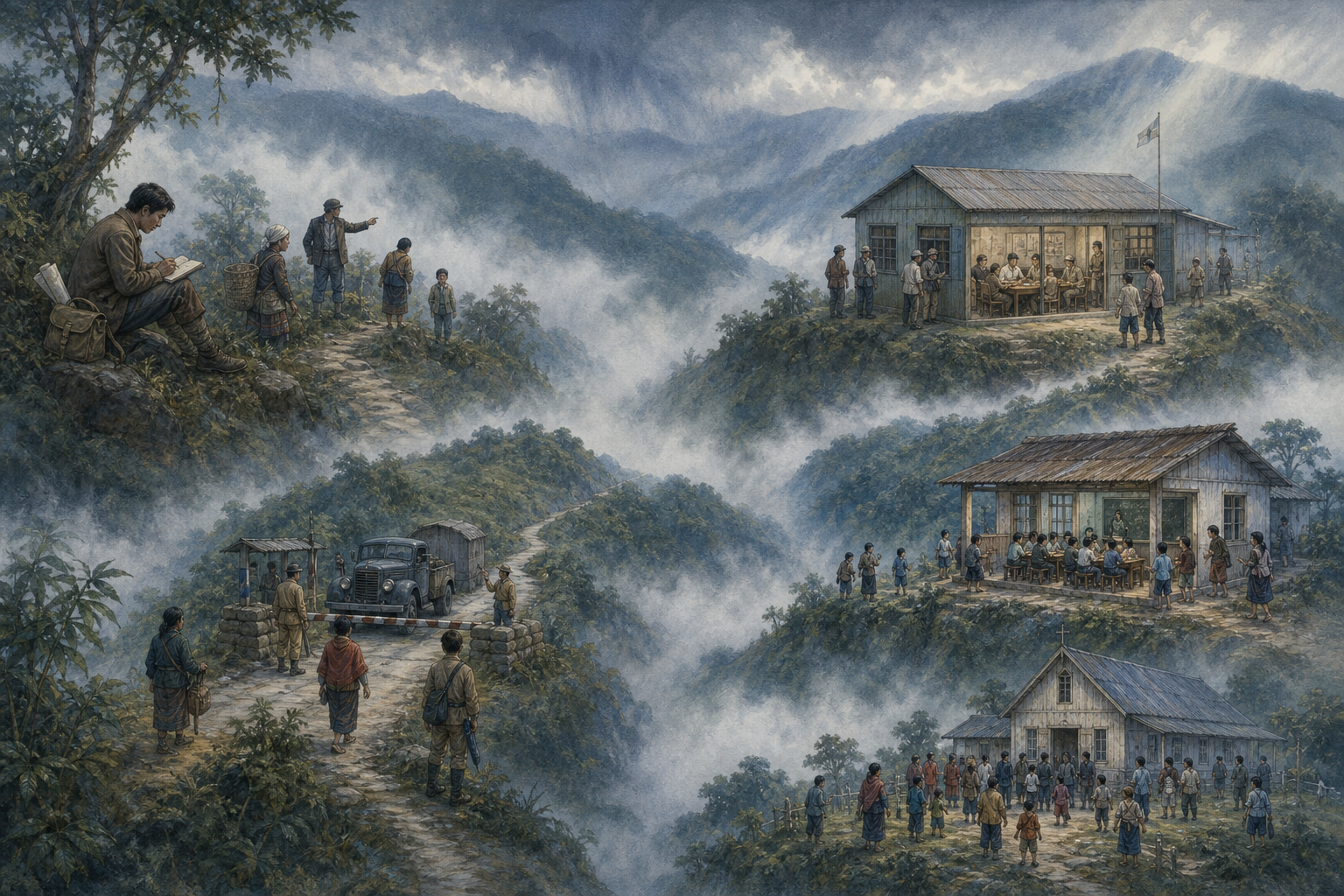
The central allegation can be expressed as a chain: Elwin received state authority; he shaped policy for the frontier; that policy created advantages for missionary expansion; and those advantages contributed to Christianisation. The chain is historically significant only if its links can be demonstrated.
| Claim to test | Evidence that would support it | What does not prove it by itself |
|---|---|---|
| Elwin shaped government policy | His formal remit, dated recommendations, policy drafts, official correspondence and records showing acceptance | His reputation, proximity to Nehru or the advisory title alone |
| A policy changed access to Northeast communities | The exact rule, its date and territorial scope, implementation instructions and administrative records | A general description of the region as isolated |
| The change advantaged missionary institutions | Comparative access records, institutional correspondence, education or welfare arrangements, and evidence of unequal permissions | The presence of missionaries before or after the policy |
| The advantage contributed to Christianisation | A chronology connecting the policy mechanism to religious change in the same places, while considering other causes | A later increase in Christian affiliation without evidence of the intervening mechanism |
This framework tells you what to look for in an archive, a biography, a government file or a public debate. Words such as “influence,” “isolation” and “enabled” are not self-explanatory. Ask what changed, who received permission, who was excluded, which institution gained capacity, and when the measurable religious effect appeared.
Also distinguish intention from effect. A policy could advantage a missionary network without containing an explicit instruction to convert anyone. Conversely, an adviser’s missionary background does not prove that every recommendation concealed a conversion programme. Intention requires evidence of purpose; effect requires evidence of mechanism and outcome. A rigorous case may establish one without establishing the other.
Keep the people of the Northeast at the centre of the history
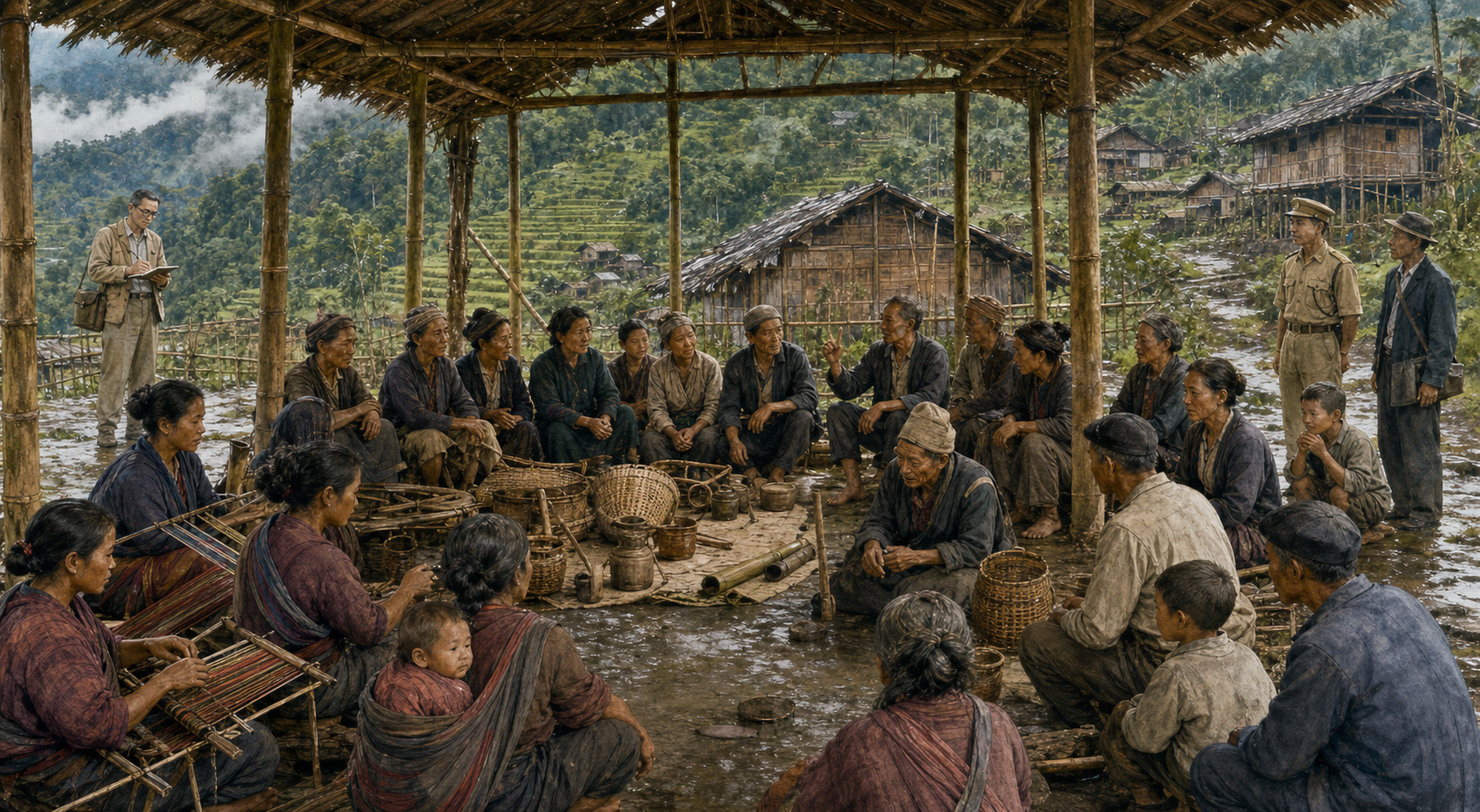
A debate framed only around Elwin, Nehru and missionary organisations can repeat the very problem it seeks to expose: outsiders remain the actors, while indigenous communities become passive objects. You should ask how local people understood the policies, what they accepted or resisted, and how they preserved, adapted or changed their own traditions.
Five distinctions help prevent the discussion from becoming indiscriminate:
- A Christian individual is not the same thing as a missionary institution. A person’s present faith does not prove institutional coercion in the past.
- An indigenous custom is not merely raw material for an outsider’s anthropology. The community that sustains it has its own memory, authority and interpretation.
- Cultural protection is not the same as administrative isolation. A policy must be judged by who controlled contact and who benefited from restricted access.
- Service is not automatically neutral. Where education or welfare is tied to religious expansion, the institutional relationship deserves examination; the connection must still be demonstrated rather than assumed.
- Local choice and unequal power can coexist. Recognising indigenous agency does not require ignoring the influence of schools, officials, patrons or mission organisations.
A Dharmic response should therefore do more than condemn missionaries. It should support community-controlled documentation of oral histories, rituals, languages and sacred geographies; preserve the names and voices of people such as Kosi; and ask who owns the records produced from intimate access to a community. Cultural recovery becomes durable when people are participants and custodians, not exhibits in someone else’s argument.
Key takeaways
- The allegation involving Kosi should be stated through its exact particulars: her age, Elwin’s age, the teacher-student relationship, the marriage, the alleged field notes and the alleged abandonment.
- Elwin’s personal conduct, anthropological practice, government appointment and alleged contribution to Christianisation are connected questions, but they are not interchangeable claims.
- Nehru’s appointment of Elwin as Anthropological Adviser establishes formal access to state power; it does not by itself prove the authorship or effects of a particular policy.
- A persuasive missionary-influence case needs a complete chain from recommendation to adopted policy, implementation, institutional advantage and religious consequence.
- Criticism should distinguish Christian citizens from mission institutions and keep Northeast communities at the centre of their own history.
- When sharing a claim, label allegations honestly, link the supporting material and do not present a disputed causal interpretation as an uncontested fact.
Before you repeat a sweeping verdict on Verrier Elwin, write the causal chain down and test every link. Preserve the moral clarity of the Kosi allegations, scrutinise the authority Nehru gave Elwin, and demand documentary evidence for the policy consequences attributed to him. That is how a necessary debate about missionary influence becomes a defensible history rather than another contest of slogans.
References
