
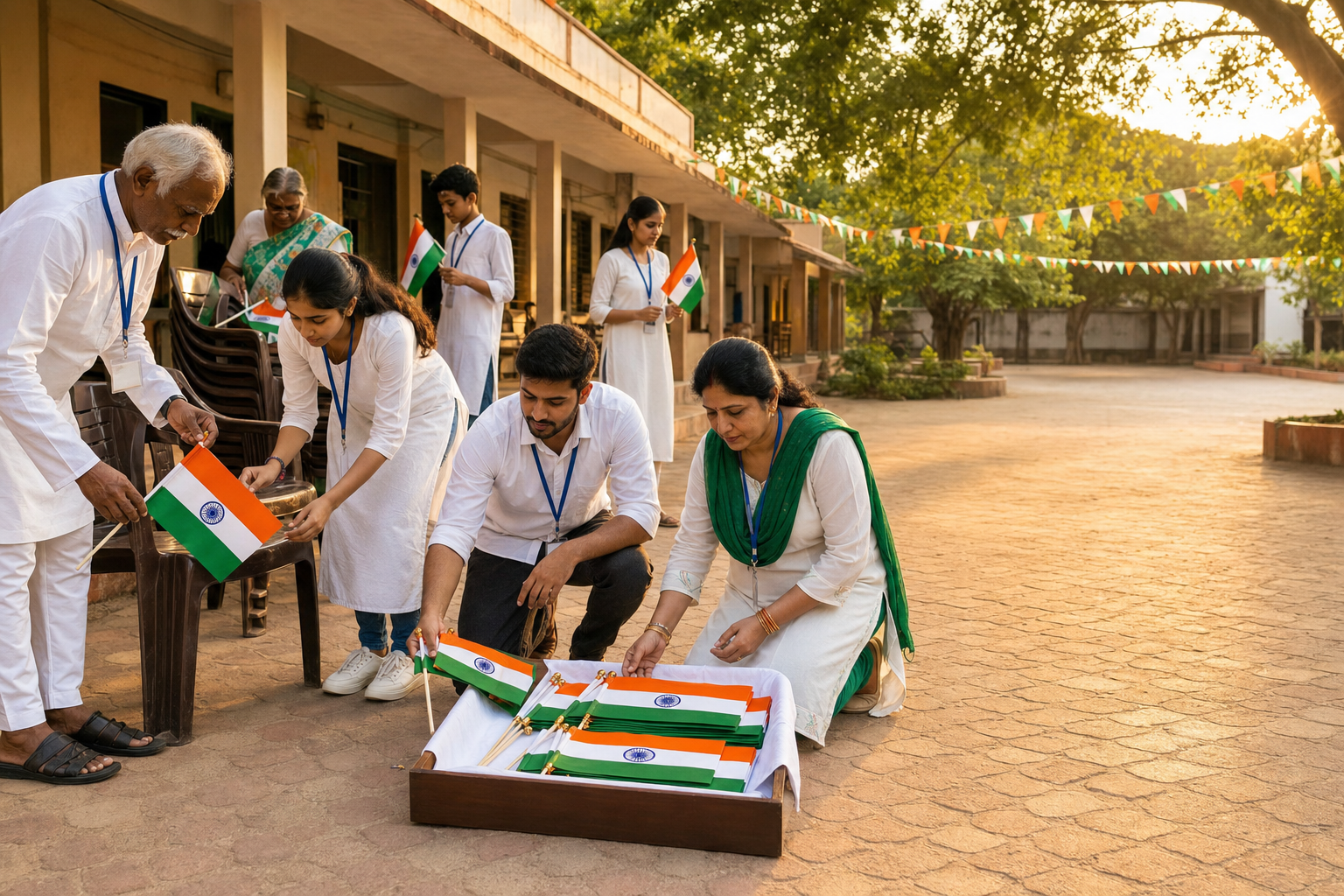
You are organising a national-festival programme at a school, housing society, workplace, market, or Dharmic institution. The ceremony is planned, the flags are ready, and volunteers know where to stand. But who will recover the flags after the crowd leaves? Unless that question has a named answer, respect may end with the photographs.
A nationwide Respect National Flag campaign has been launched to prevent the Tricolour’s insult and improper disposal during national festivals, including through representations to administrative bodies across India. You can support that purpose locally by treating flag care as an organised civic duty rather than a ceremonial sentiment.
Plan for the flag before you plan the ceremony
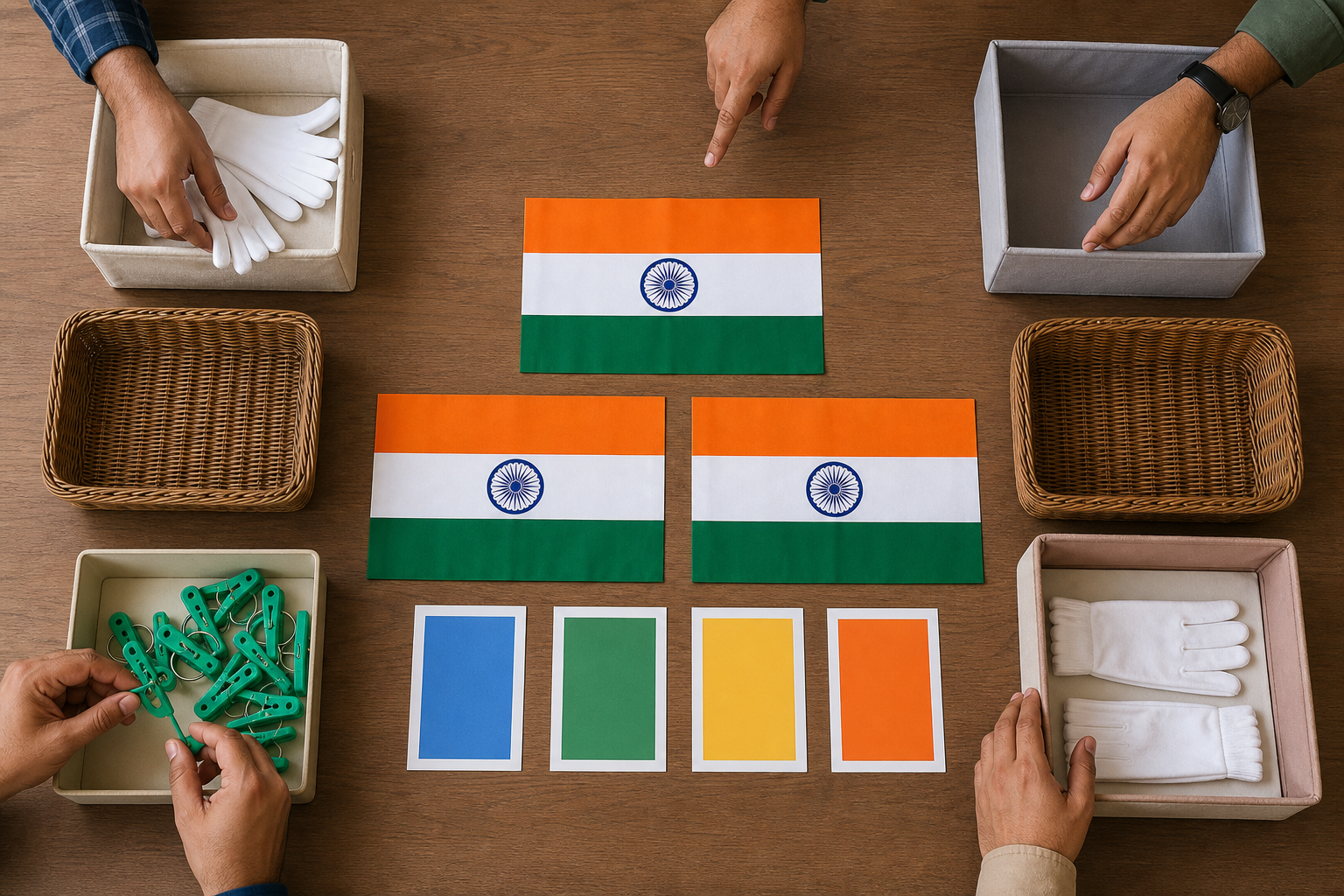
A flag-respect plan begins before anything is distributed or displayed. The ceremony and the cleanup are one responsibility. If the plan covers only the salute, speeches, and photographs, it leaves the most vulnerable part of the event unmanaged.
Call the responsible role a flag steward, coordinator, or volunteer lead. The title is not important; ownership is. That person should know how flags will enter the venue, where they will be used, who will collect them, and where recovered flags will be kept while official disposal guidance is obtained.
- Review every proposed use. Remove any plan that treats the Tricolour as disposable decoration or places it where trampling, soiling, or careless abandonment is foreseeable.
- Match distribution to recovery capacity. Do not hand out more flags than your volunteers can reasonably collect after the programme.
- Brief participants before distribution. Tell them that the flag must not be thrown away or left on seats, roads, or the ground. Point out the return location.
- Place visible collection points near exits. Set them up before the event begins, not after people have started leaving.
- Assign the final sweep. Include the stage, seating area, parking area, surrounding roads, and any route used by a procession.
- Keep recovered flags separate from ordinary waste. Do not improvise a disposal method. Ask the appropriate local administrative body for the current official procedure.
This approach changes the event’s practical design. A small flag handed to a participant is no longer an untracked object; it comes with a clear return path. A large display is no longer somebody else’s problem after the programme; its removal and storage are assigned in advance.
Correct mishandling without creating a public spectacle
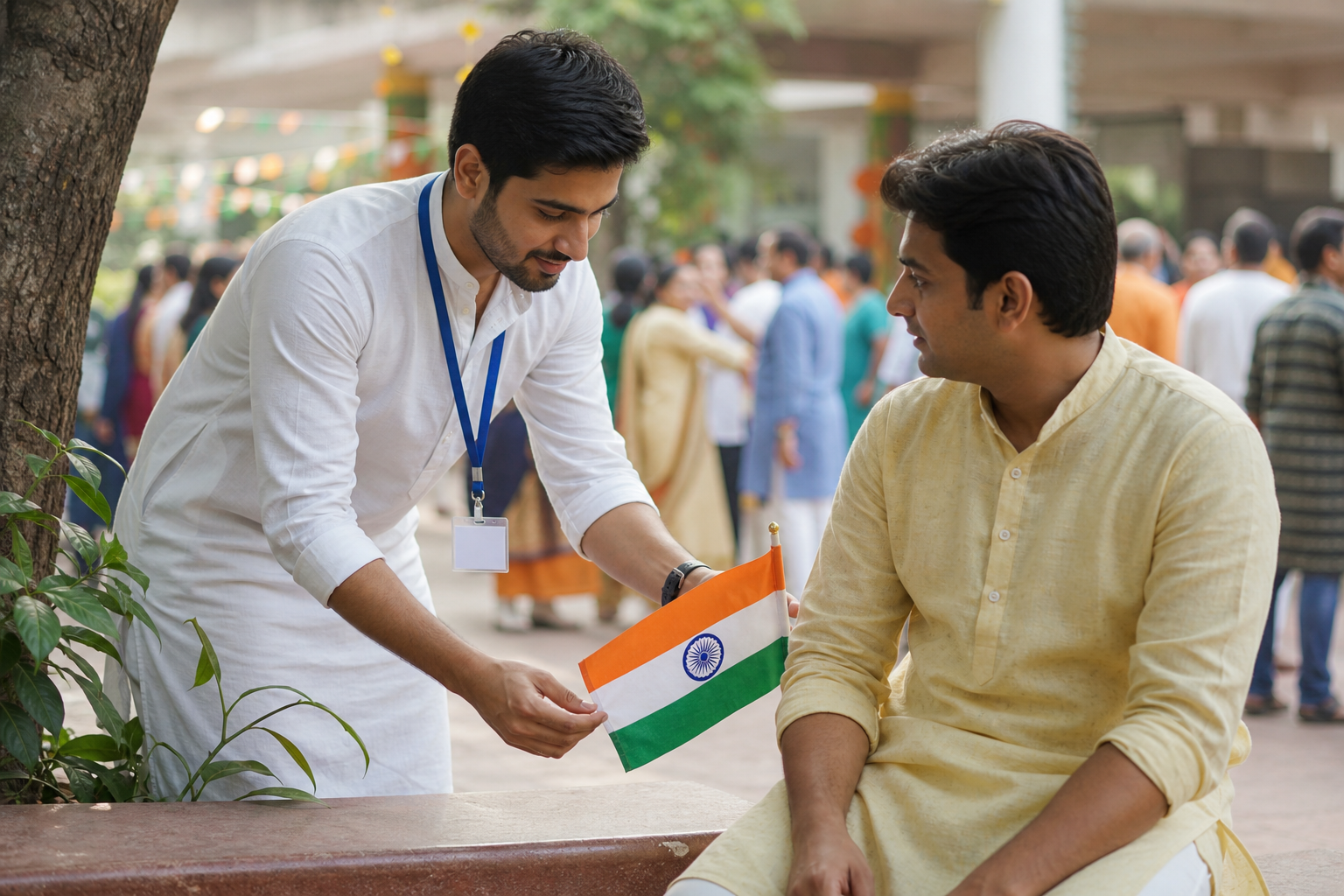
If you see a flag on the ground or mixed with litter, protect it from further disrespect first. Pick it up carefully when it is safe to do so and place it with the other recovered flags. The immediate duty is restoration, not performance.
Then address the behaviour in proportion to what happened. A child who dropped a flag, a participant who did not notice it, and an organiser who repeatedly leaves flags behind do not call for the same response. A calm explanation usually teaches more than a public accusation. Correct the act without humiliating the person.
- For an accidental lapse: recover the flag, explain the expected conduct, and show the person where it should be returned.
- For an event-management failure: contact the organiser with the location, the condition in which flags were found, and the corrective action you are requesting.
- For a recurring problem: keep a factual record of the place, occasion, responsible institution if known, and response received. Send that record to the relevant administrative body.
- For a potentially hostile situation: do not provoke a confrontation or place volunteers at risk. Preserve the facts and approach the responsible authorities.
A photograph may help document a repeated institutional problem, but it should not become an excuse to shame identifiable children or bystanders online. Record what is necessary to obtain a remedy. Do not stage the scene, circulate degrading images for attention, or let the person become more important than the flag-care failure.
Turn a representation into a request that can be acted on
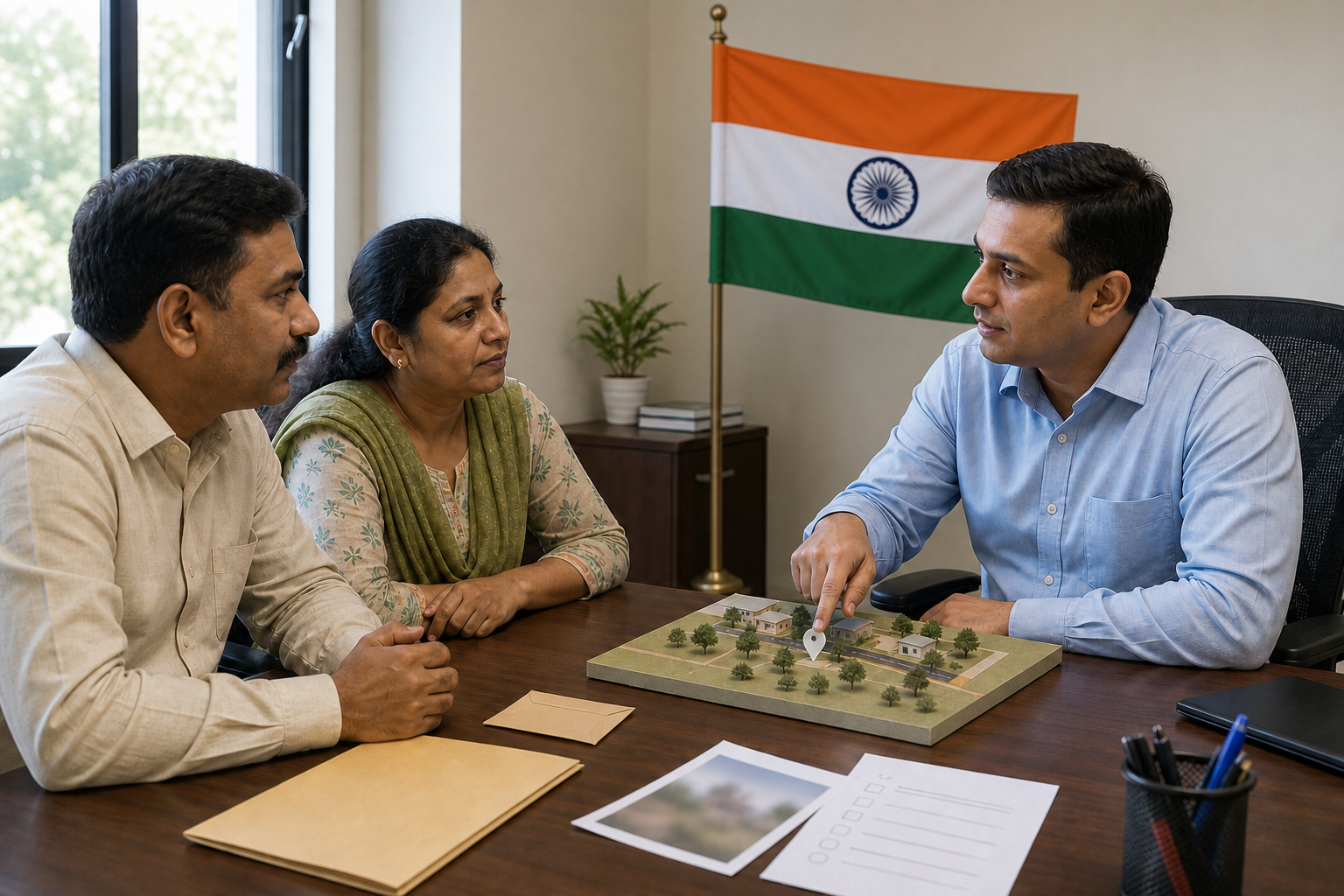
A representation is useful when it asks an institution to do something concrete. General appeals to patriotism are easy to acknowledge and easy to forget. A written request should identify the preventable failure, the responsible office, and the operational remedy.
You can adapt the following language for a municipal office, district administration, educational institution, market association, event organiser, or other body responsible for the setting:
Subject: Measures to protect the dignity of the National Flag during national-festival programmes
We request advance instructions and practical arrangements to prevent National Flags from being abandoned, trampled, mixed with waste, or disposed of improperly during and after programmes in the area. Please identify the responsible staff, provide visible collection arrangements where flags are distributed, include post-event recovery in cleanup duties, and communicate the official procedure for handling recovered or damaged flags. We also request written acknowledgement of the measures that will be taken.
Before sending it, replace general language with the actual setting. Name the venue or locality, describe how flags are likely to be distributed, identify where abandonment has occurred or could occur, and state the remedy you want. Attach documentation only when it adds factual clarity.
- Ask which office or official owns the response.
- Request public instructions before the programme, not merely cleanup after the damage.
- Ask for collection points wherever flags will be distributed in volume.
- Request an official handling procedure instead of prescribing an unverified disposal method.
- Retain the acknowledgement, reference number, or written reply so that follow-up is based on a record.
If the first office is not responsible, ask it to identify the correct authority. That is more productive than sending the same undirected complaint repeatedly. The objective is an accountable handoff and a visible local procedure.
Bring a Dharmic ethic to civic responsibility
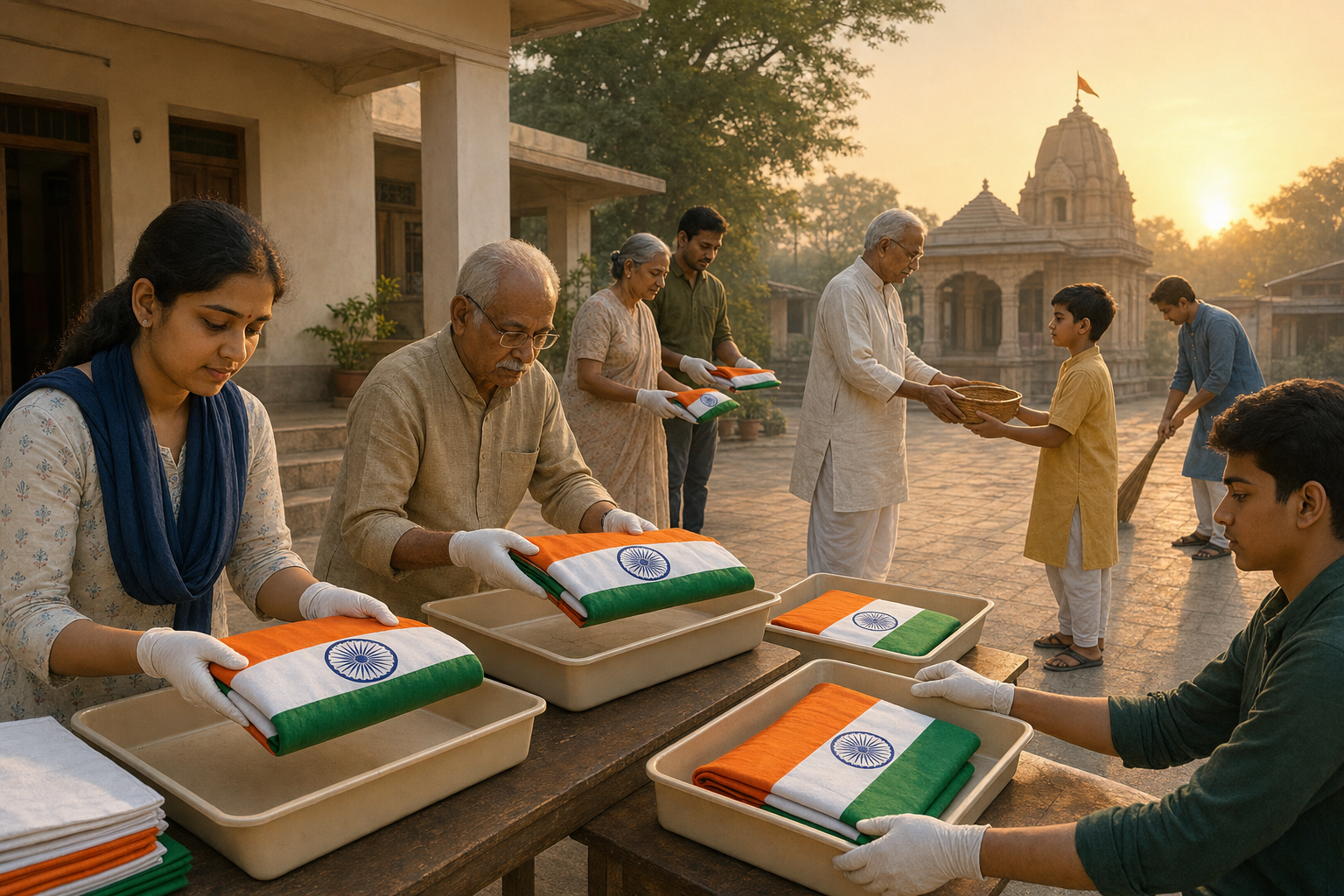
You do not have to turn a civic symbol into a religious object to bring Dharmic values to its care. Maryada asks for conduct within rightful bounds. Seva includes the quiet work that remains after the crowd, speeches, and applause have gone. Both ideas direct attention from displayed emotion to disciplined responsibility.
This distinction matters. Respect for the National Flag should not become a test of religious identity, a partisan slogan, or permission to intimidate fellow citizens. The Tricolour belongs to the nation. A Dharmic contribution is strongest when it produces self-restraint, careful stewardship, truthful reporting, and service without humiliation.
A community programme can put that ethic into practice with a brief conduct announcement, a trained volunteer team, a clearly marked return point, and a post-event report to organisers. The report does not need inflated language. It should state what was distributed, what was recovered, where problems occurred, and what must change at the next observance.
Teach children and first-time participants the reason for the process. Returning a flag is not an inconvenient cleanup rule. It is part of the same respect expressed during the salute. When adults model that continuity, civic education becomes something visible rather than something recited.
Key takeaways
- Treat flag distribution, display, recovery, storage, and official disposal guidance as one continuous duty.
- Assign a named coordinator before the event and give every distributed flag a clear return path.
- Correct accidental mishandling calmly; document recurring institutional failures factually.
- Keep recovered flags apart from ordinary waste and obtain the current official handling procedure from the responsible authority.
- Send representations that request accountable staff, collection arrangements, post-event recovery, public instructions, and a written response.
- Let Dharmic values appear through maryada, seva, self-restraint, and careful civic conduct rather than anger or public shaming.
Before your next national observance, put a coordinator’s name beside the cleanup duty and send a written request to the responsible institution. When the final flag has a safe return path before the first one is distributed, respect has moved from intention into practice.
References
