
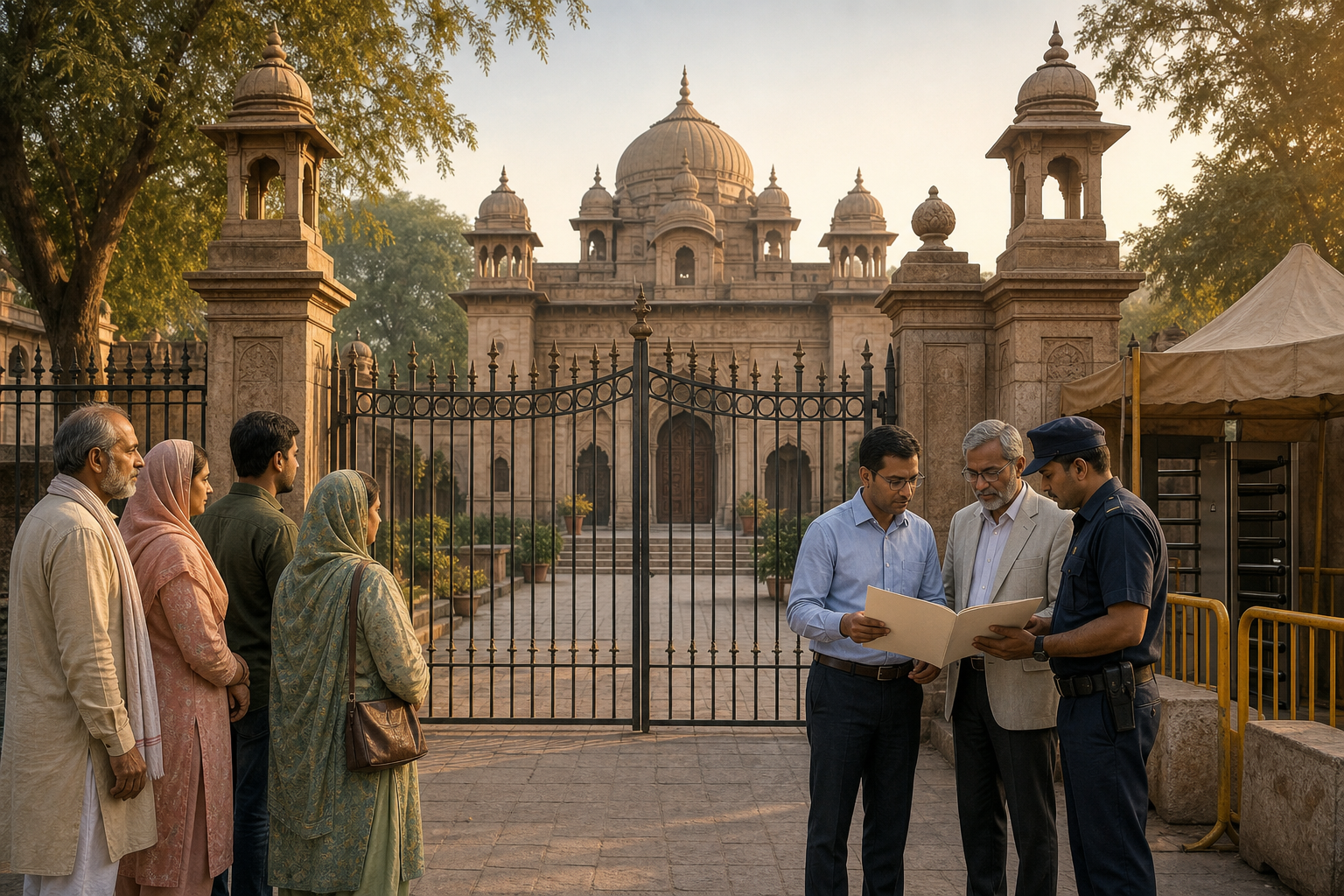
You see a locked gate, a disputed structure, or a message claiming that worshippers are being denied their rights. Before you join a protest or forward the claim, ask one question: is the dispute about religious freedom, ownership, construction permission, public access, or security? Those are different questions, and each requires different evidence.
You do not have to choose between defending a religious community and defending the rule of law. The durable position is to demand accurate records, equal standards, a written decision, and a lawful remedy. That protects Hindu interests when a mandir is affected, and it prevents religious sentiment from becoming an exemption available to anyone else.
Separate the five questions hidden inside an access dispute
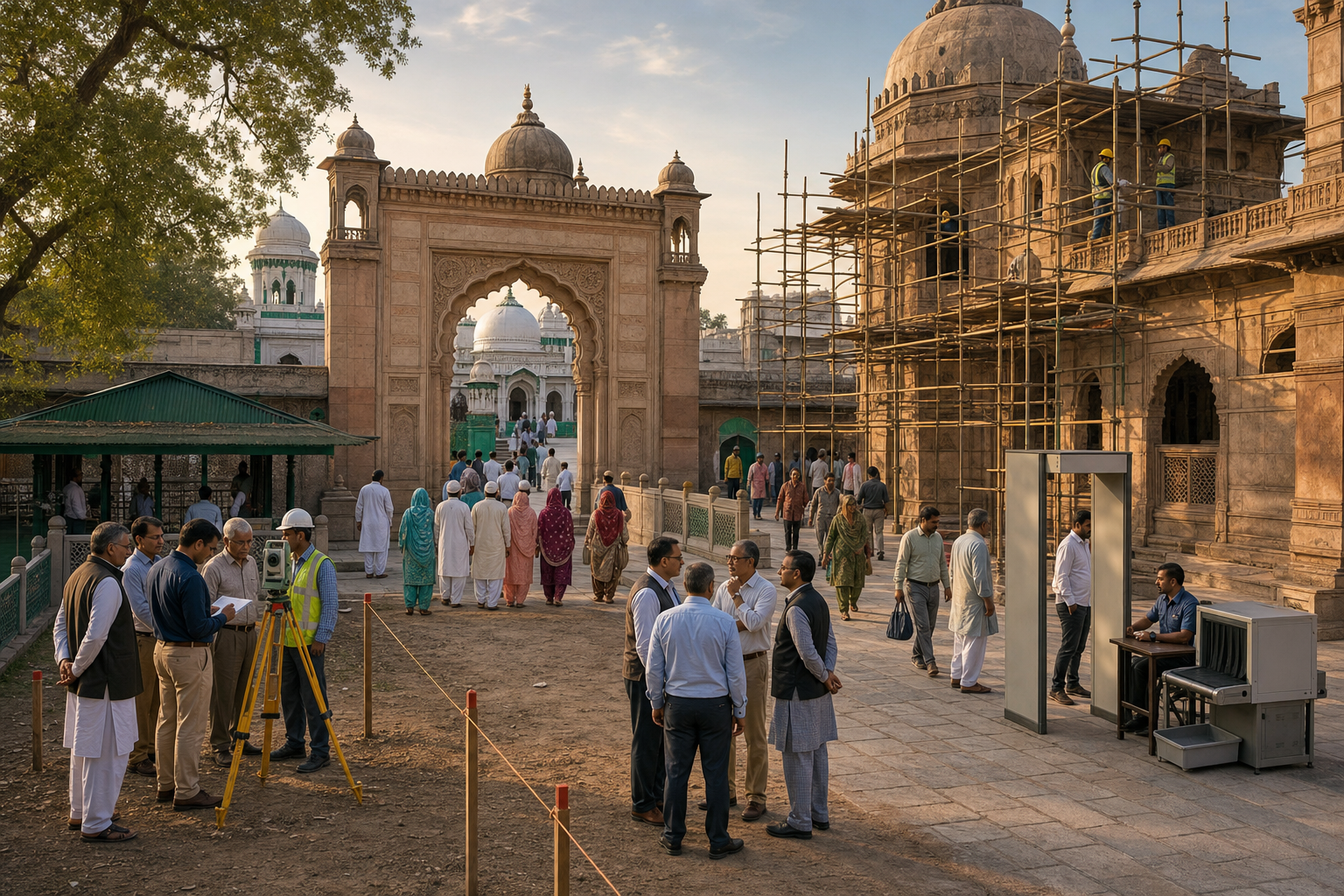
The phrase “access to a religious site” sounds like one issue. It usually contains at least five. If you combine them, a strong grievance can be weakened by a claim that the available records do not support.
- Who owns or lawfully controls the land? A religious structure’s presence does not, by itself, settle ownership, possession, dedication, or the existence of a public right of way.
- Was the structure, or the disputed addition to it, lawfully authorised? The original building and a later expansion may have different legal histories. Ask for the sanctioned plan, relevant permissions, and any planning or heritage restrictions.
- Is the building safe and compliant? Structural safety, occupancy limits, emergency access, and planning compliance are distinct from theology and title.
- What kind of access has actually been established? Ownership of a place of worship does not necessarily create unrestricted passage across surrounding property. Conversely, a recognised access route may matter even when someone else controls adjacent land.
- Does a valid security restriction govern the entire location? A site inside a military or similarly restricted perimeter cannot be analysed as though it were a building on an ordinary public street.
The last distinction is especially important. The Supreme Court of India dismissed a request for civilian prayers at a mosque inside a military establishment, treating security controls within the restricted zone as decisive. The practical principle is not that worship lacks protection. It is that religious freedom does not automatically confer entry through a controlled defence perimeter.
That distinction should be applied without religious favour. A mandir, mosque, gurdwara, vihara, or Jain derasar within the same restricted perimeter remains subject to the security rules governing that perimeter. Where access would compromise those rules, administrators should help identify a safe and publicly accessible place for worship outside the controlled zone rather than create a faith-specific exception.
Before taking a position, rewrite the dispute as a single testable sentence: “The contested claim is that this named authority has denied this defined form of access under this written rule.” If you cannot identify the authority, the form of access, and the rule, you do not yet know what is being challenged.
Build a record before you mobilise people
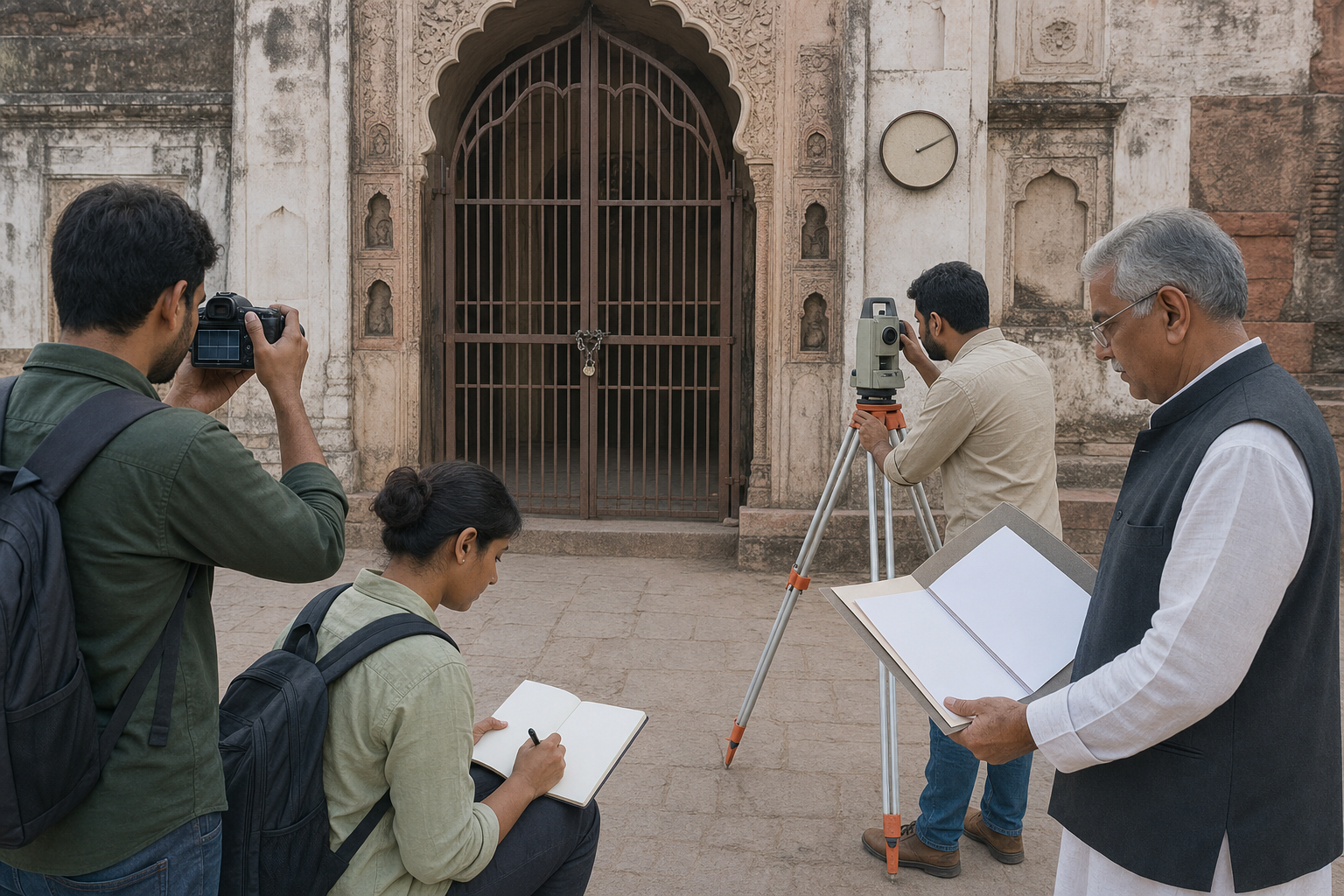
A video of a crowd can show that feelings are intense. It cannot establish title, planning permission, or the scope of a security order. A photograph can document the condition of a gate or building, but it cannot tell you whether an access route is public, private, licensed, restricted, or disputed.
| Question | Record to request | What the record can clarify |
|---|---|---|
| Who controls the land? | Parcel identification, land record, deed, lease, dedication record, or relevant order | Ownership, possession, granted use, and any conditions attached to that use |
| Was construction authorised? | Sanctioned plan, building permission, notices, and planning or heritage decisions | Whether the whole structure or a particular addition is disputed |
| Is the structure safe? | Inspection findings and any structural or safety direction | Whether access is limited because of a documented physical risk |
| What access is recognised? | Site plan, right-of-way record, access agreement, opening rules, or administrative order | Who may enter, by which route, at what times, and under what conditions |
| Is the area restricted? | Written security classification, perimeter rule, entry protocol, or competent authority’s order | Whether the restriction concerns religion or applies to civilian entry generally |
Keep three labels in your notes: confirmed, contested, and unverified. A statement does not become confirmed because it has been repeated by your own community. Nor does an official assertion become conclusive merely because it came from an office. Ask for the underlying record and the authority responsible for interpreting it.
For every important item, record the date, issuing authority, file or reference number, exact land parcel or site description, and whether the document is final, interim, stayed, appealed, or under review. This prevents an old notice, a partial plan, or an order concerning another portion of the property from being presented as the final answer to the entire dispute.
Do not enter a sealed or restricted site, break a barrier, obstruct an access route, or attempt to alter a disputed structure. Those acts can endanger people, create legal exposure, and replace an evidence-based case with a public-order case. If you plan to file proceedings, challenge an order, or act on disputed property rights, take the actual documents to a qualified local lawyer; general principles cannot determine the status of a particular parcel or order.
Demand a process that can produce an answer
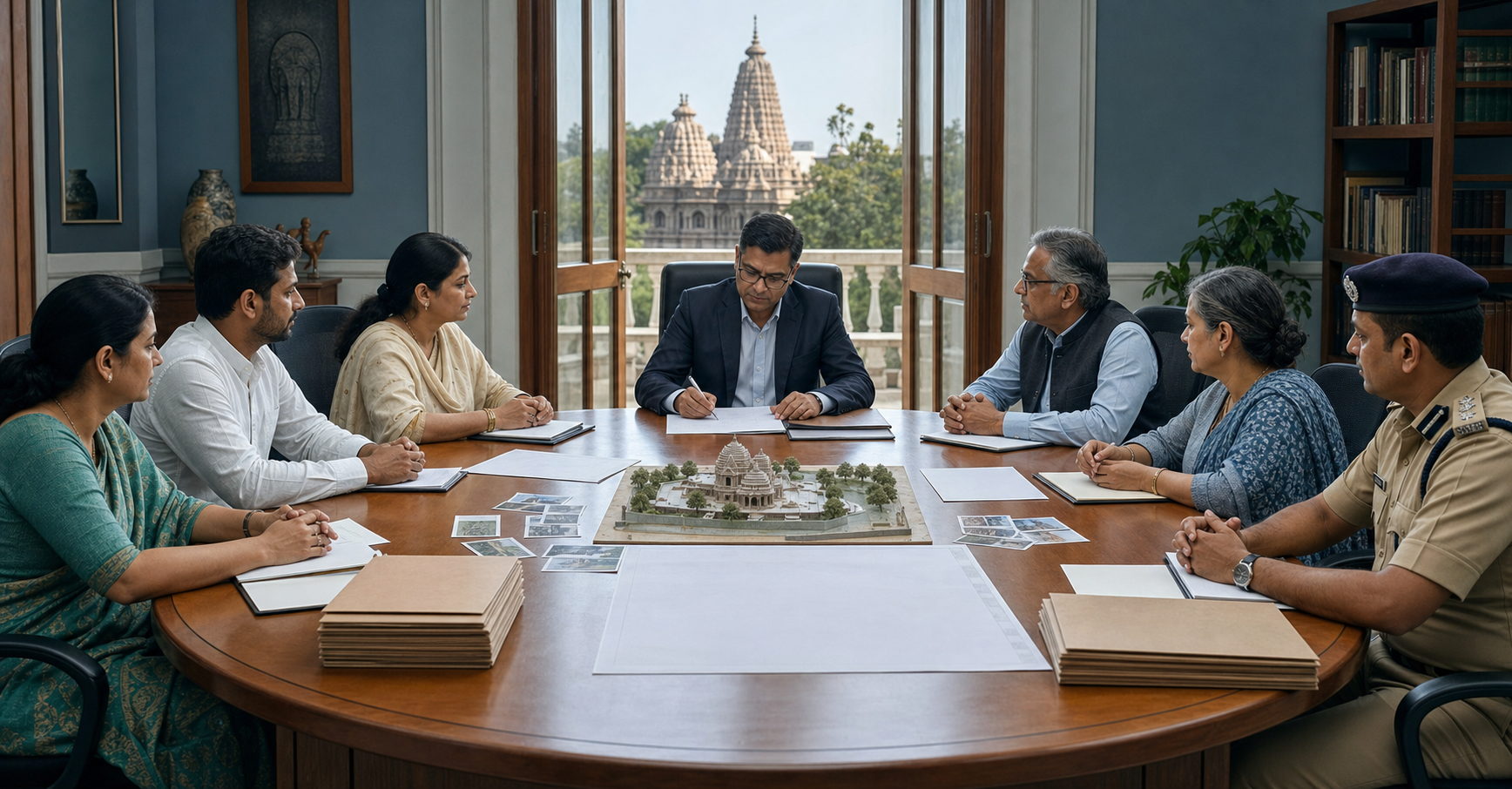
“Look into the matter” is not an administrative plan. Residents should ask for a written scope of review, a named responsible authority, identifiable milestones, a method for submitting records, periodic public updates, and a route to judicial oversight if the disagreement remains unresolved.
A credible review should answer which land and structures are included, which records are being verified, which planning or heritage provisions are relevant, whether a safety assessment is required, and what interim arrangements will operate while the review continues. The timetable need not prejudge the result, but it should make delay visible.
In Shimla, local Hindu groups reportedly suspended their protest and hunger strike after the administration committed to a lawful, time-bound review involving land records, regulatory compliance, consultation, and public updates. The suspension was not a verdict on the disputed Sanjauli structure. It was a shift from pressure in the street to a process in which evidence and official accountability could be tested.
That is the right way to judge any similar pause. Do not ask only whether protesters “won” or “backed down.” Ask whether the new process identifies the decision-maker, secures the relevant records, sets review points, and preserves a lawful remedy if the administration does not deliver.
Dialogue also needs a defined job. A consultative group can gather residents’ questions, correct rumours, reduce intimidation, protect ordinary movement, and communicate developments across communities. It cannot decide land title by consensus, legalise unauthorised construction, cancel a security order, or substitute for a competent authority or court.
For a dharmic civic culture, ahimsa, satya, and samvada are practical disciplines. Ahimsa keeps physical coercion and collective punishment out of the dispute. Satya requires us to distinguish a verified record from a useful rumour. Samvada brings affected people into a structured exchange without pretending that every legal question can be negotiated away. Restraint under these conditions is not surrender; it keeps the grievance focused on the issue that institutions must answer.
Apply equal rules without pretending every site is identical
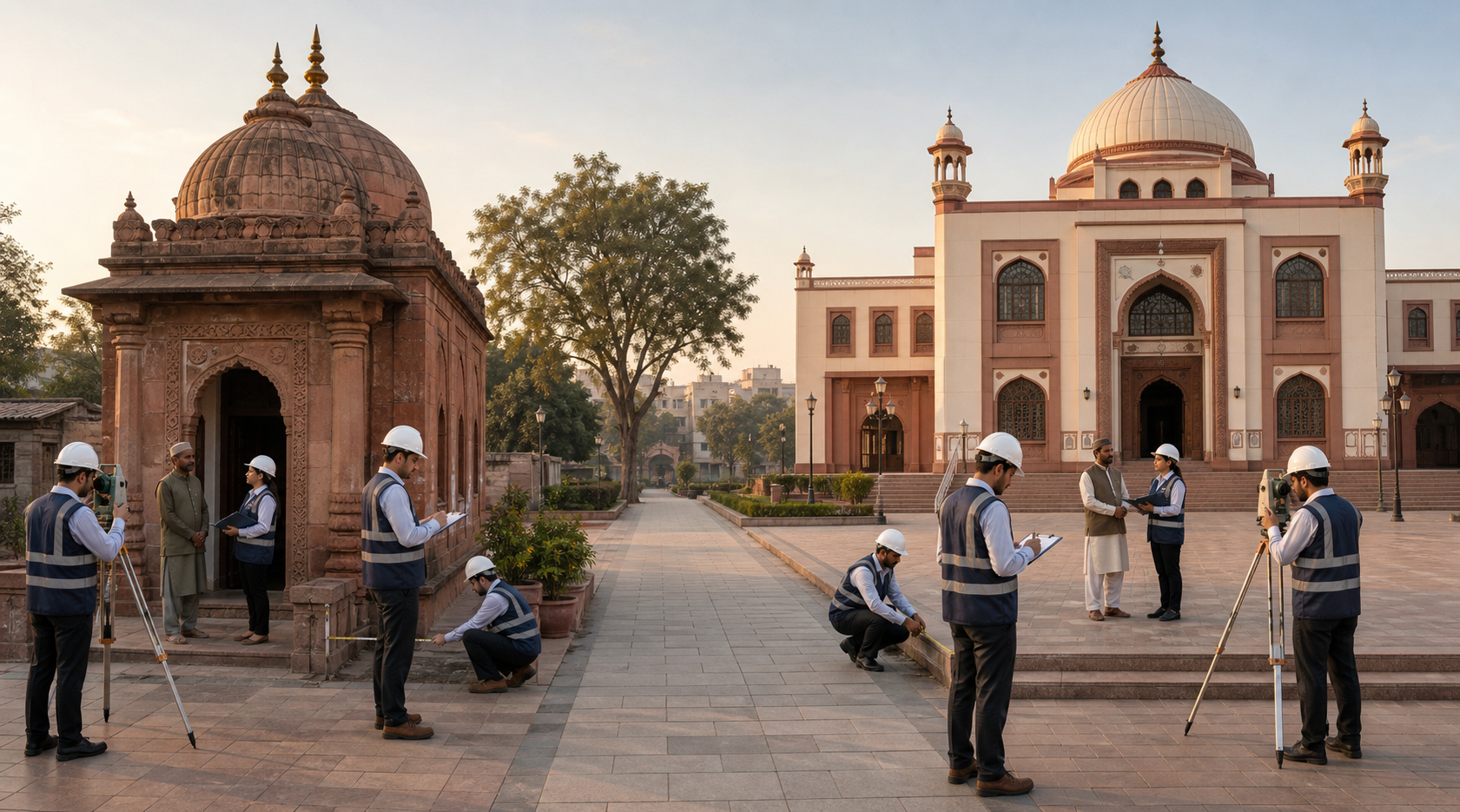
Equal treatment means that the same relevant rule applies to comparable cases. It does not mean that every religious structure receives the same outcome regardless of its location, legal history, physical condition, or security context.
A site inside a defence perimeter is not comparable to one on an unrestricted public road. An authorised historic structure is not automatically comparable to an unapproved later addition. A temporary safety closure is not the same as a permanent prohibition on worship. A private invitation to use land is not necessarily a public right of entry. These distinctions should control the analysis before anyone compares outcomes across faiths.
Use five checks when an authority restricts access:
- Identify the written rule and the body legally responsible for applying it.
- Identify the actual purpose: security, safety, planning compliance, protection of property, or public order.
- Check whether the rule covers comparable religious and non-religious activity in the same zone.
- Ask whether a narrower arrangement, such as controlled timing, vetted entry, or an accessible alternative venue, is compatible with the stated purpose.
- Confirm how the decision can be reviewed, corrected, or challenged.
The fourth check is a question, not a demand for an exception. Inside a military establishment, even controlled civilian worship may remain incompatible with the security architecture. In an ordinary civic setting, however, an authority should explain why a less restrictive arrangement would not address the documented problem.
Religious parity must not become a barter system in which one community’s disputed site is used to excuse another community’s violation. If a planning rule is valid, enforce it uniformly. If an access restriction is unjustified, correct it on its own facts. If a security perimeter is genuine, protect it regardless of the shrine inside it. That standard is especially important for Hindu advocates: reliable land records and uniform enforcement are safeguards for mandirs as well as obligations imposed on them.
Key takeaways for your next access dispute
- Do not treat ownership, construction approval, structural safety, public access, and perimeter security as one question.
- Ask for the controlling record, not merely a statement from an official, activist, cleric, or viral account.
- Mark every major claim as confirmed, contested, or unverified before sharing it.
- Support the same planning and security rules for mandirs, mosques, gurdwaras, viharas, derasars, and non-religious premises in comparable circumstances.
- Use consultation to exchange evidence and lower tension, while leaving legal determinations to competent authorities and courts.
- Demand a named decision-maker, defined scope, visible milestones, public updates, and a review path.
- Never force entry or alter disputed property; preserve safety and take the records to a qualified local lawyer when legal action is contemplated.
The next time an access claim reaches you, open a page with four headings: claim, record, authority, remedy. Fill them before you mobilise others. If an immediate safety or security risk is alleged, notify the responsible authority and remain outside the controlled area. A dharmic defence of sacred places becomes stronger when truth is documented, restraint is deliberate, and the law is required to speak clearly.
References
- DharmaRenaissance Blog — Shimla Sanjauli Mosque Row: Protests Paused as Administration Pledges Lawful Review and Dialogue
- DharmaRenaissance Blog — Supreme Court Puts Security First: No Civilian Prayers in Mosques Inside Military Bases
