
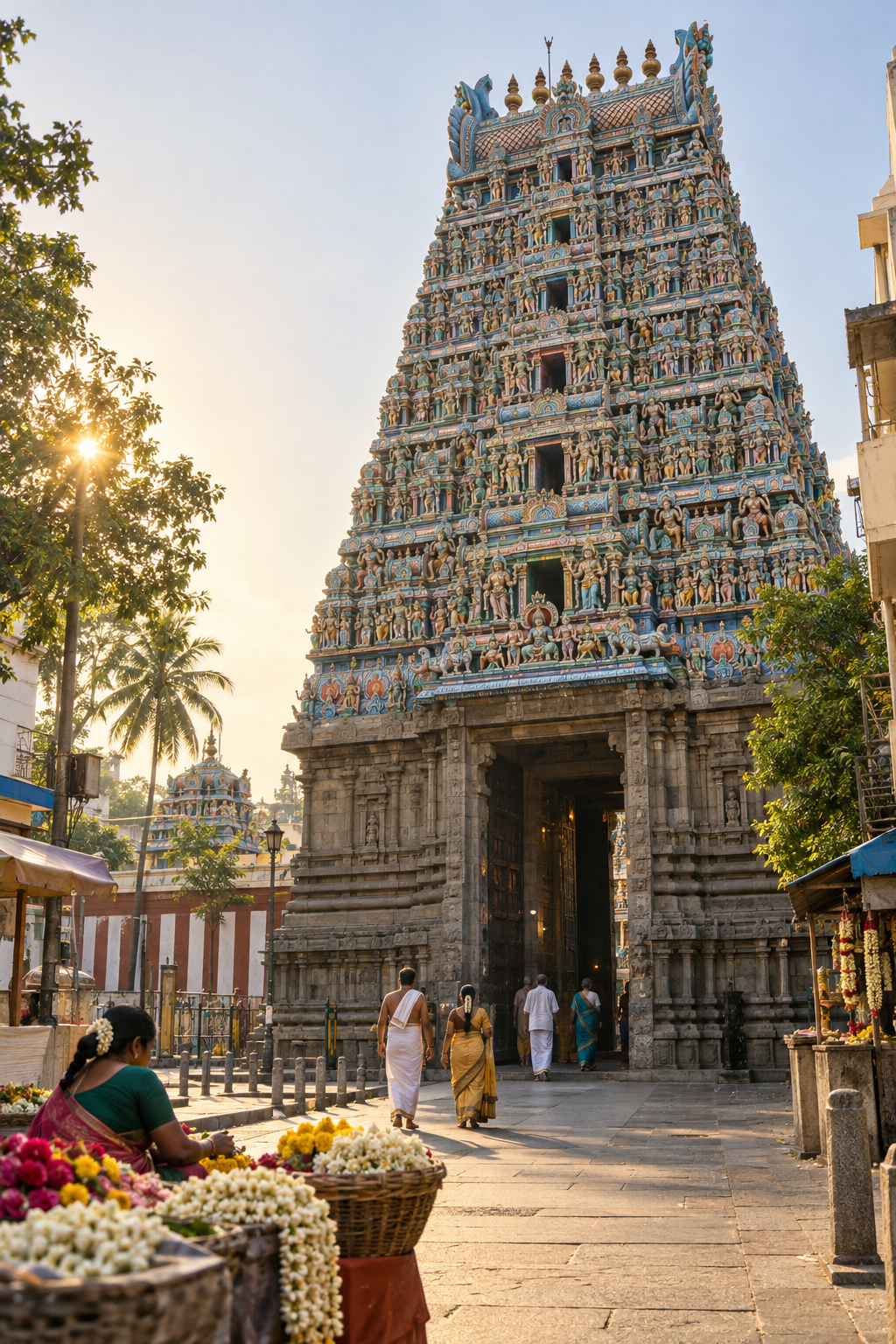
If you have only a day or two in Chennai, a long list of temples can turn a pilgrimage into a race between addresses. Choose one temple as the spiritual centre of your visit, give it unhurried time, and add another stop only when you know what it contributes.
Kapaleeshwarar Temple in Mylapore is a strong place to begin. It gives you a clear devotional focus, a significant example of Dravidian temple architecture, and a practical anchor around which to arrange the rest of your day.
Key takeaways
- Make Kapaleeshwarar Temple your anchor if you want a major Shaiva temple in Chennai rather than a hurried collection of unrelated stops.
- Decide whether your priority is darshan, architecture, festival worship, or quiet contemplation before building the itinerary.
- Confirm current opening times, ritual schedules, entry conditions, and photography rules locally; these operational details can change.
- Leave room for queues, worship, and stillness. A temple visit loses much of its purpose when every minute is assigned to transport.
- Dress modestly, follow posted instructions, keep your phone quiet, and ask before photographing sacred spaces or ceremonies.
Begin with Kapaleeshwarar Temple in Mylapore
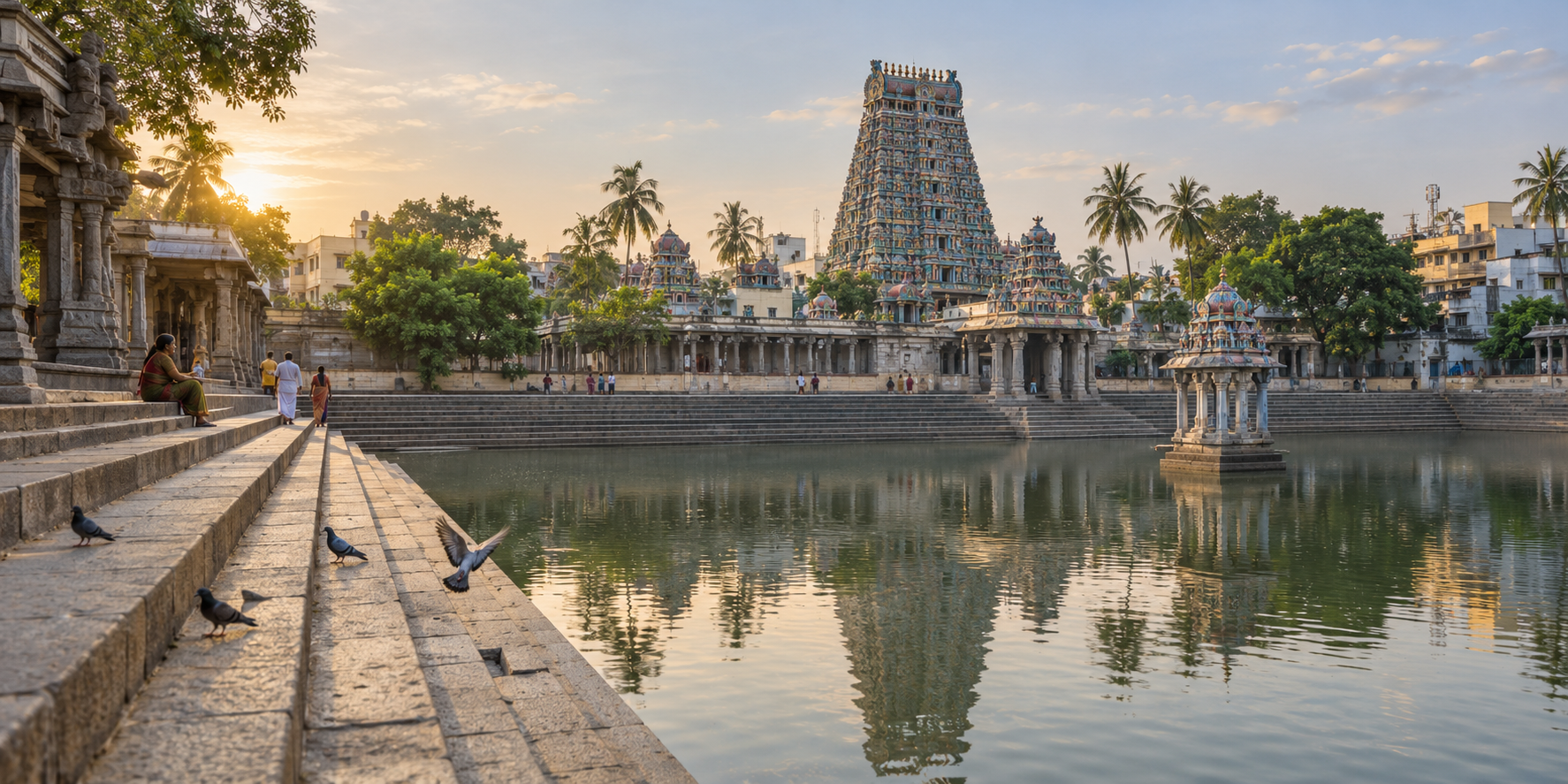
Kapaleeshwarar Temple is a historic temple dedicated to Shiva and Parvati. That makes it an especially meaningful choice for a devotee seeking a Shaiva centre rather than simply the most photographed landmark.
Keep both Shiva and Parvati in mind as you approach the visit. Do not reduce the temple to a single image, a quick darshan, or an architectural backdrop. The relationship between deity, sacred space, ritual, and the assembled community is part of what you have come to encounter.
The temple is known for Dravidian architecture and vibrant festivals. Give the architecture attention before reaching for your phone. Notice how your movement from the street into sacred space changes your pace and attention. Look for recurring divine forms and visual relationships, but do not invent meanings when you cannot identify an image. A respectful question is better than a confident guess.
You will find the temple at 234 Ramakrishna Mutt Road, Vinayaka Nagar Colony, Mylapore, Chennai, Tamil Nadu 600004. Save the complete address rather than relying only on the temple name. That small step makes it easier to communicate the destination accurately and avoids beginning a devotional visit with unnecessary confusion.
Build the day around your reason for going
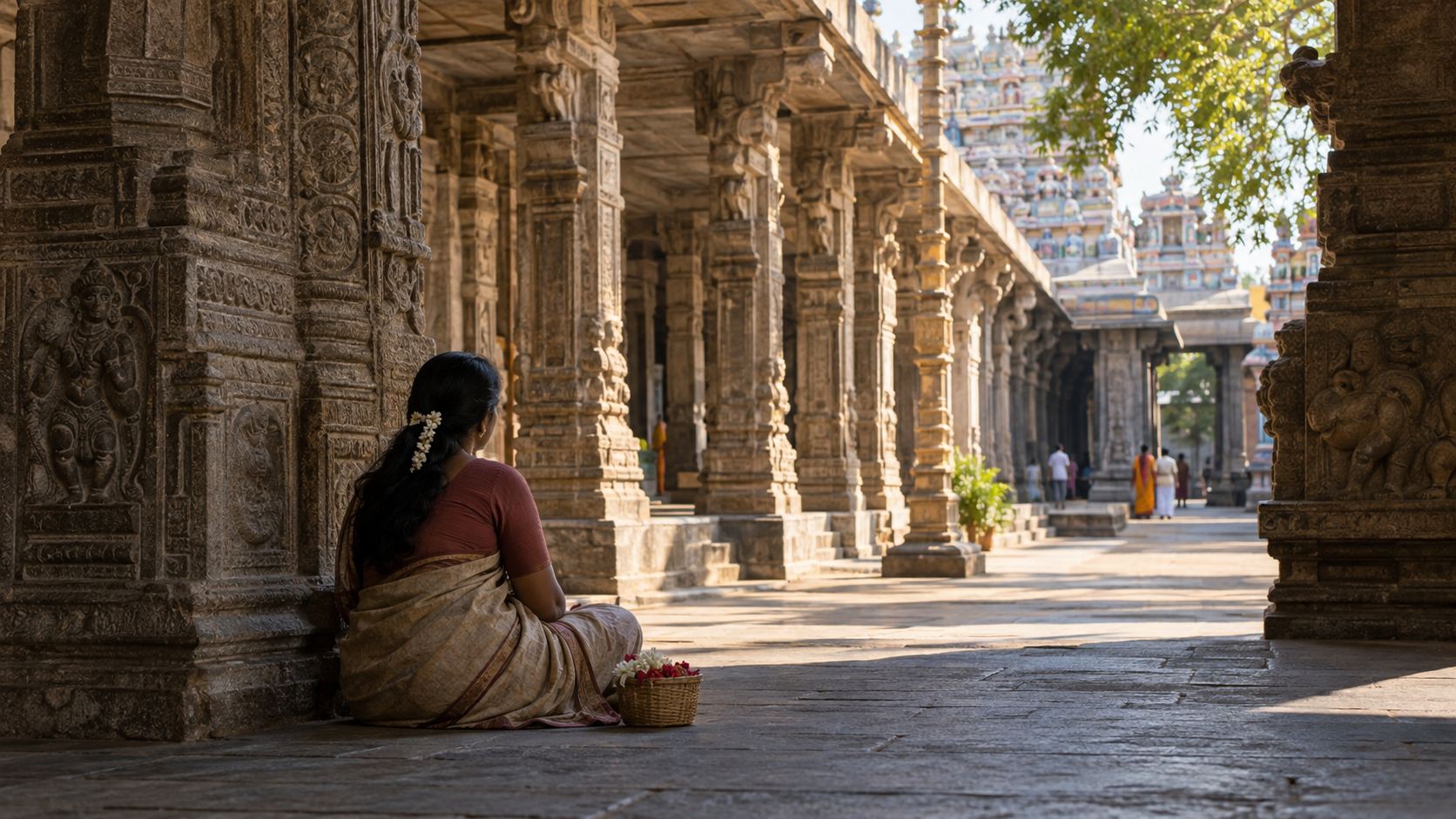
The right Chennai temple itinerary depends less on how many famous names you collect than on what you are seeking. A devotee attending for darshan has different priorities from a visitor studying sacred architecture. A family participating in festival worship needs a different pace from someone hoping for a quiet period of reflection.
- Name your primary purpose. Choose darshan, festival participation, architectural attention, or contemplative time as the centre of the day. You may value all four, but one should determine the schedule.
- Select one anchor temple. If Shiva and Parvati are your devotional focus, Kapaleeshwarar Temple is the natural starting point supported by the available details.
- Verify every additional stop. Before adding another temple, confirm its presiding deity, exact location, current visiting hours, and any entry conditions. A famous name alone is not enough to plan a meaningful visit.
- Group stops by location. Do not alternate between distant parts of the city merely to lengthen the list. Travel and queues consume the same time you hoped to give to worship.
- Protect an unassigned interval. Leave space after darshan to sit, observe, pray, or absorb what you have seen. If the schedule cannot accommodate that pause, remove a stop.
A useful test is simple: can you explain in one sentence why each temple belongs in your itinerary? If the answer is only that it is famous, the stop may be optional. If it introduces a deity, tradition, ritual occasion, or architectural experience central to your purpose, keep it.
Let temple etiquette shape your conduct
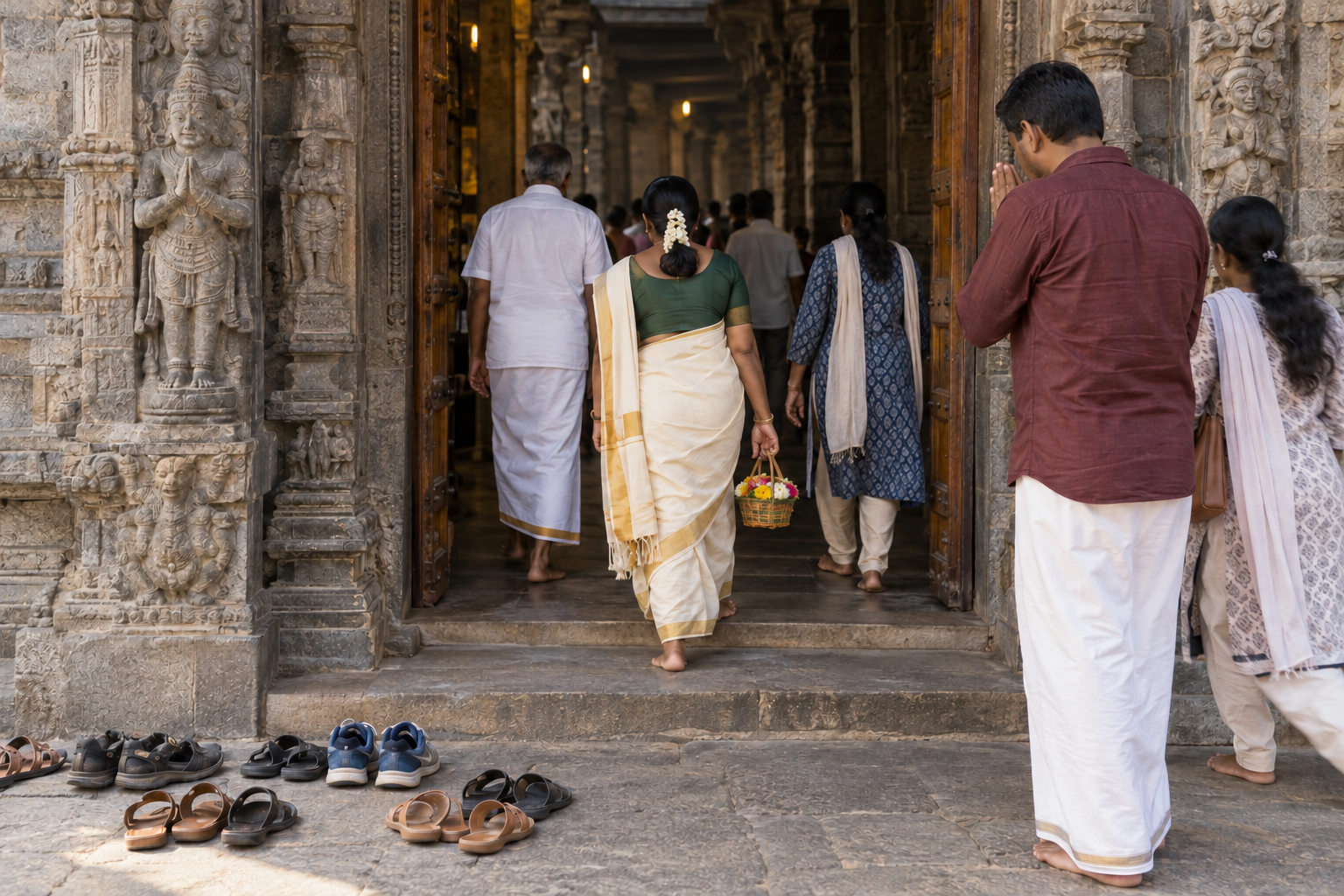
A functioning Hindu temple is not merely a historic building. People around you may be praying, fulfilling a vrata, bringing children for blessings, or participating in a family observance. Your conduct should preserve their ability to worship without interruption.
- Wear clean, modest clothing. Follow any dress instructions displayed at the entrance rather than assuming that every temple applies identical rules.
- Leave footwear where directed. Identify the designated place before joining the entrance flow, and avoid blocking the path while reorganising belongings.
- Silence your phone. A ringing phone changes the atmosphere for everyone, even when photography is permitted.
- Ask before taking photographs. Exterior photography, interior photography, and photography during ritual activity may be treated differently. Signs and temple instructions take precedence over what another visitor is doing.
- Follow the established queue. Do not push forward, linger where others must pass, or treat the briefness of darshan as permission to obstruct the next devotee.
- Check before carrying offerings inside. If you are uncertain about what is accepted or where it should be presented, ask temple personnel before purchasing or opening anything.
- Receive without creating a bottleneck. After darshan or receiving prasada, move to an appropriate side area before stopping to organise possessions or speak with companions.
If you are visiting with children, explain the sequence before entering: footwear comes off, voices become quieter, the queue must be followed, and sacred objects are not touched casually. Clear expectations outside are more respectful than repeated corrections inside.
Choose between festival energy and a quieter visit
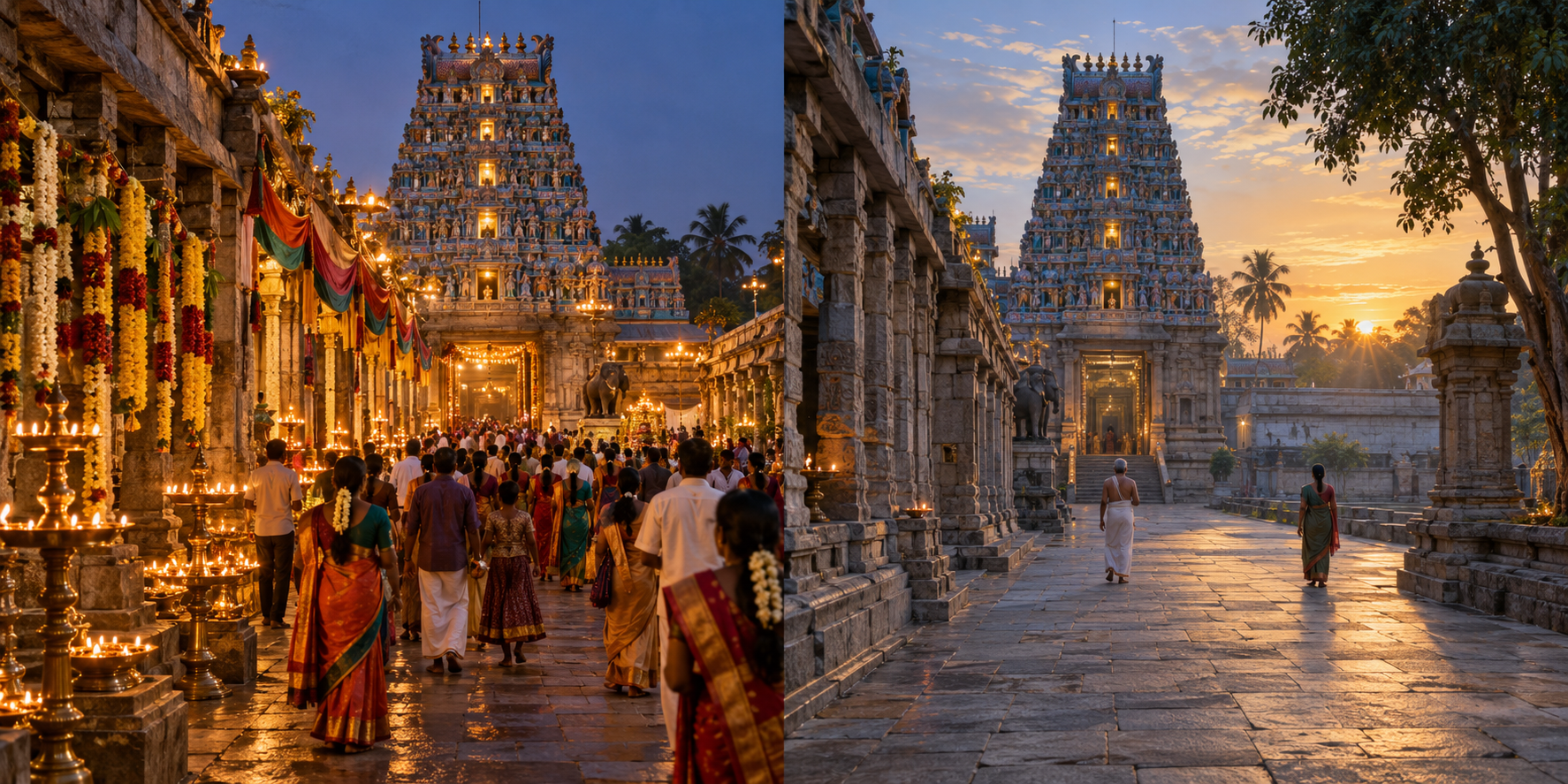
Kapaleeshwarar Temple’s festival life is part of its cultural and spiritual importance. A festival visit can place you within collective worship rather than beside it, but it also changes the practical character of the day. Movement may be slower, quiet observation may be harder, and the ritual occasion rather than your private schedule will set the pace.
Choose a festival occasion when participation, ceremony, and community are your main reasons for going. Choose a less eventful period when you want to study the architecture, orient yourself carefully, or spend more time in personal prayer. Neither is the universally superior experience; the mistake is arriving with expectations suited to the other.
Do not rely on an undated list for a current festival schedule or daily opening window. Confirm the date, access arrangements, and ritual timing close to your visit. If a particular ceremony matters to you, build the day around that verified time and treat every other stop as secondary.
Start by deciding what you want the visit to change in your attention. Then save the Mylapore address, verify the current temple arrangements, and remove enough from your schedule to arrive without haste.
References

Leave a Reply
You must be logged in to post a comment.