
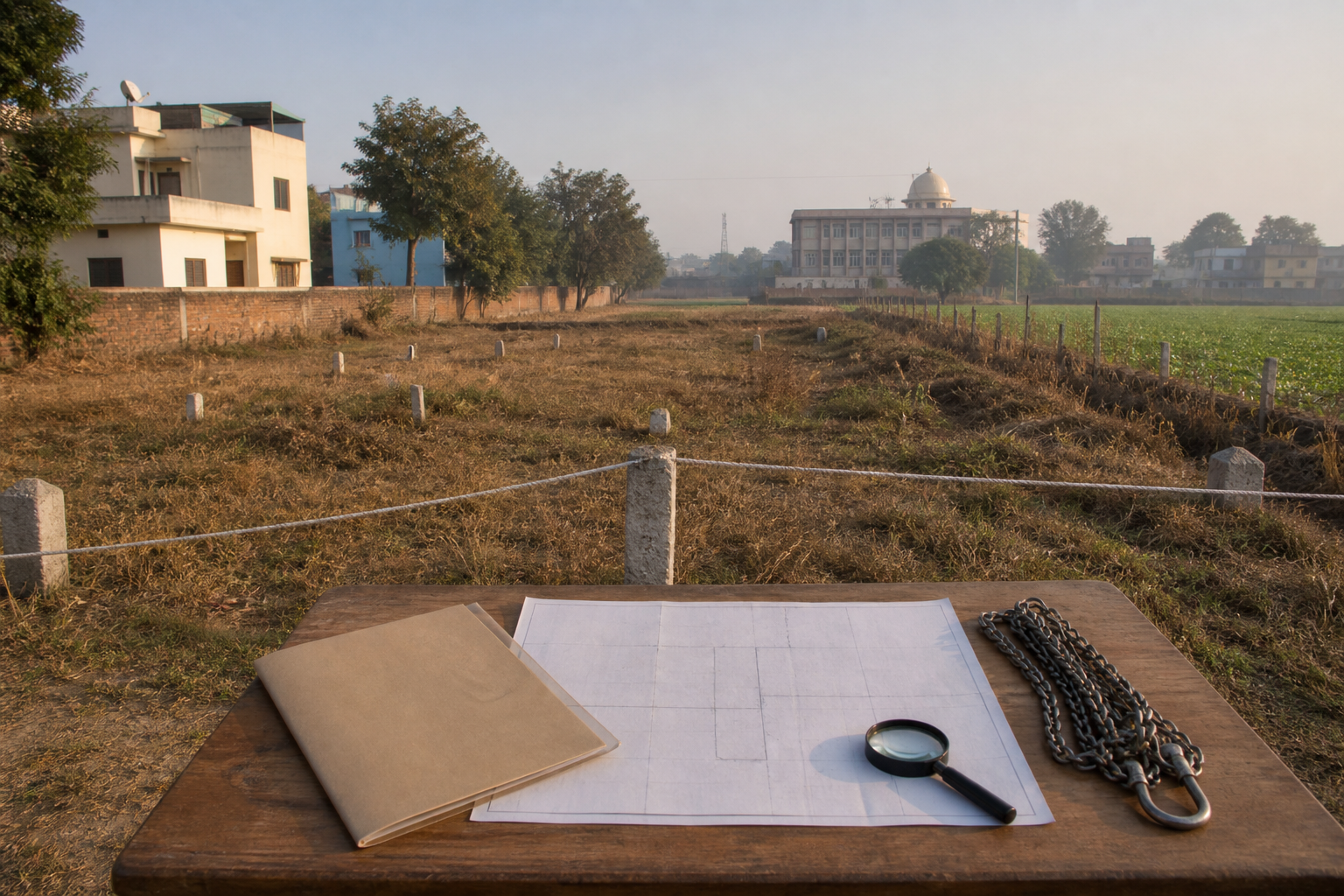
If you reached the Islamapur dispute through the phrase "land jihad," pause before either accepting the label or dismissing the underlying complaint. An alleged sale of government land is serious. So is an accusation that turns one disputed transaction into a communal theory before the records have been tested.
You need three things to judge this case responsibly: the precise allegation, the documents that could prove or disprove it, and a dated account of what the revenue and police authorities have done. Everything else is noise until those foundations are visible.
What has actually been alleged in Islamapur
The verified core is narrow. In Uttar Pradesh’s Bijnor district, a revenue department employee reportedly initiated FIR number 538/26 at Kotwali Nagar police station on 11 July 2026. Ishrat Ahmad was named as the accused. The complaint alleges that he represented government land as his own and sold it. Five serious legal provisions were reportedly invoked, although the specific provisions have not been identified in the facts presently available.
That is an allegation recorded in an FIR, not a judicial finding. An FIR starts a criminal inquiry; it does not establish ownership, fraudulent intent, the validity of a transfer, or the guilt of the named person. Readers have not yet been shown the parcel number, its area and boundaries, the instrument allegedly used for the transfer, the relevant land-record entries, the buyer’s account, a charge-sheet, or a court ruling.
Those missing details matter more than the accused person’s religion or the locality’s name. Islamapur is where the dispute is said to have arisen. Its name does not prove how the parcel was classified, who controlled it, or whether an organised network existed.
The disciplined position is therefore clear: treat the government-land allegation as serious enough to investigate promptly, but keep every broader conclusion provisional until the property and transaction records support it.
Five questions that would turn accusation into a testable case

Land controversies become vulnerable to propaganda when the disputed parcel remains vague. Anyone seeking accountability should ask for answers organised around these five questions:
- Which land is in dispute? The plot, gata or khasra identifier, area, boundaries and village record must point to one identifiable parcel. A place name alone is not enough.
- What establishes the government’s claim? The relevant revenue entry, map, classification, mutation history and any order affecting the land should be placed in chronological order. The important question is what the official record showed when the alleged transfer occurred, not merely what an entry shows now.
- What transaction is alleged? Authorities should identify whether the accusation concerns a registered sale deed, an agreement, a power of attorney, possession given without a registered transfer, or some other instrument. Each leaves a different documentary trail.
- Who knew and did what? Investigators must distinguish the alleged seller’s representations from the buyer’s knowledge, the conduct of witnesses or intermediaries, and the actions of registration and revenue personnel. A disputed entry, an administrative mistake and an intentional deception are not interchangeable.
- What is the present procedural status? Citizens need to know whether records have been obtained, relevant people have been questioned, the site has been inspected, documents are being verified, and a final police report or charge-sheet has been filed. A bare statement that an investigation continues does not reveal whether it is progressing.
This checklist also protects the public from a common error: confusing a revenue classification dispute with proof of a criminal conspiracy. The first may be evidence for the second, but only when the record, transaction and state of mind are connected. If one link is missing, officials should say what remains unresolved instead of filling the gap with rhetoric.
The police-revenue coordination question is the real administrative test
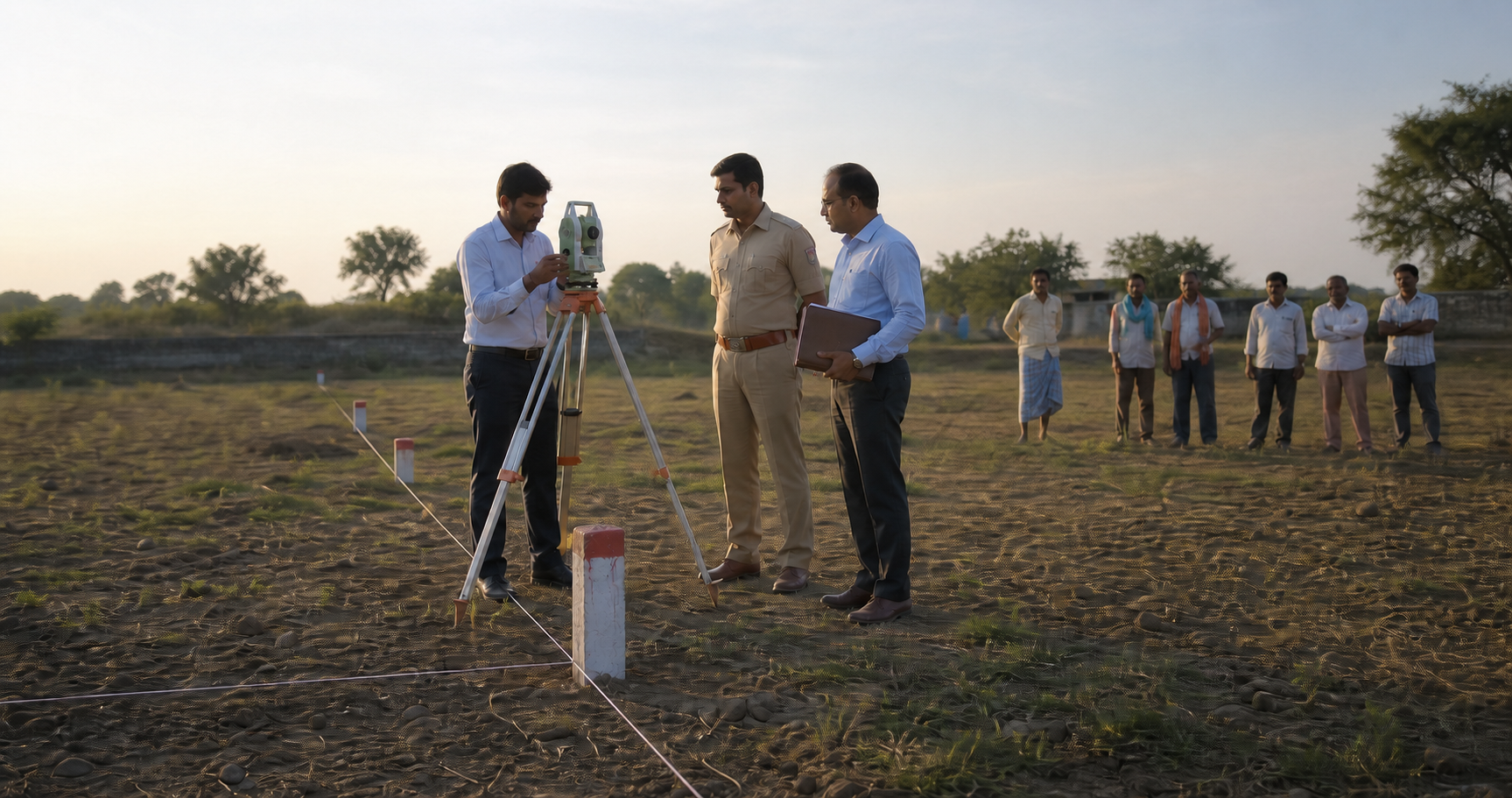
The controversy has grown because questions have been raised about coordination between the revenue and police administrations. The revenue side reportedly considered the matter serious enough for one of its employees to lodge the complaint, while doubts persist about what the police investigation has produced.
Different institutional roles can explain some apparent delay. Revenue officials identify and interpret land records. Police officers must examine whether the available facts establish a criminal offence and must collect evidence in a form that can withstand legal scrutiny. A revenue discrepancy may trigger an FIR without automatically proving deliberate fraud.
That distinction does not excuse inaction. It tells you what accountability should look like. The revenue administration should be able to state when the suspected discrepancy was detected, who verified the parcel’s status, which records accompanied the complaint, and whether later changes were made to those records. The police should be able to state when it received each record request, what was supplied, what remains pending and which investigative steps have been completed, subject to lawful limits needed to protect an active investigation.
A dated interdepartmental chronology would resolve much of the speculation. It should begin with detection of the alleged irregularity, include internal verification and the 11 July FIR, and then list every formal request and response between the two administrations. This would show whether the delay arose from a deficient complaint, slow police action, missing records, a genuine title contest, or some combination of them.
Citizens and local representatives can ask for that chronology in writing. A narrowly framed Right to Information request can seek dates, file movement, the offices responsible and non-exempt administrative records. An active investigation may lawfully restrict disclosure of evidence, witness information or investigative strategy, so the useful demand is for process accountability rather than unrestricted access to the case file.
Communal language must not lower the standard of proof

The expression "land jihad" communicates a claim that a land transaction forms part of an organised religious project. That is far broader than alleging that one named person misrepresented one parcel. To cross that evidentiary distance, investigators would need facts showing coordination, repetition, shared planning or an institutional pattern. A Muslim name, the name Islamapur and an unresolved allegation cannot do that work.
This distinction should matter especially to a pro-Hindu readership. Protecting public land, temple land, community property and the rights of lawful owners requires reliable records and officials who act without fear or favour. Weak evidence wrapped in strong communal language makes that task harder. It gives negligent officials a slogan behind which to hide and gives any guilty participant an opportunity to argue that the inquiry was prejudged.
Dharma is not served by choosing between vigilance and truth. Satya disciplines vigilance. If the records establish deliberate appropriation or fraudulent sale, authorities should proceed firmly against everyone involved, regardless of position or religion. If the evidence establishes only a mistaken entry or a genuine title dispute, the public deserves that conclusion too. Institutional credibility grows when the same evidentiary standard applies in both directions.
You can therefore reject two premature claims at once: that nothing serious happened because guilt has not yet been proved, and that an organised communal operation has been proved merely because an FIR names a Muslim accused. Neither follows from the known facts.
Key takeaways and practical steps for citizens

- FIR 538/26 records an allegation; it is not a finding of guilt or a final determination of title.
- The specific accusation is that government land was represented as privately owned and sold in Islamapur, Bijnor.
- The decisive evidence begins with an identifiable parcel, dated revenue records and the exact transfer instrument.
- The central administrative question is whether the revenue and police departments exchanged complete records and acted on them without avoidable delay.
- No organised religious conspiracy can responsibly be inferred from the accused person’s name or the locality’s name.
- Citizens should seek a dated procedural chronology while respecting lawful restrictions on an active investigation.
If your own land, purchase or inheritance may be affected, obtain certified copies of the relevant deed, current and historical revenue entries, mutation orders, maps and tax or payment records. Preserve the originals and keep a written log of every submission to an office. Ask for a receipt or diary number rather than relying on an oral assurance.
Do not enter disputed land forcibly, attempt to change possession, threaten another party, circulate private personal information, or sign a cancellation or settlement merely because the case is being discussed publicly. Those acts can create safety risks and alter legal rights. A property lawyer familiar with Uttar Pradesh land and revenue procedure should review the documents before you take an irreversible step.
If you are following the case as a citizen or community advocate, record claims in three columns: alleged, documented and adjudicated. Move a claim from one column to the next only when the corresponding document or legal decision appears. This simple discipline prevents both official delay and communal speculation from disappearing into the same fog.
The next credible milestone is not a louder label. It is a parcel-specific evidence trail and a dated explanation of administrative action. Ask for those two things, and judge every official and every public claim by whether they help produce them.
References
