
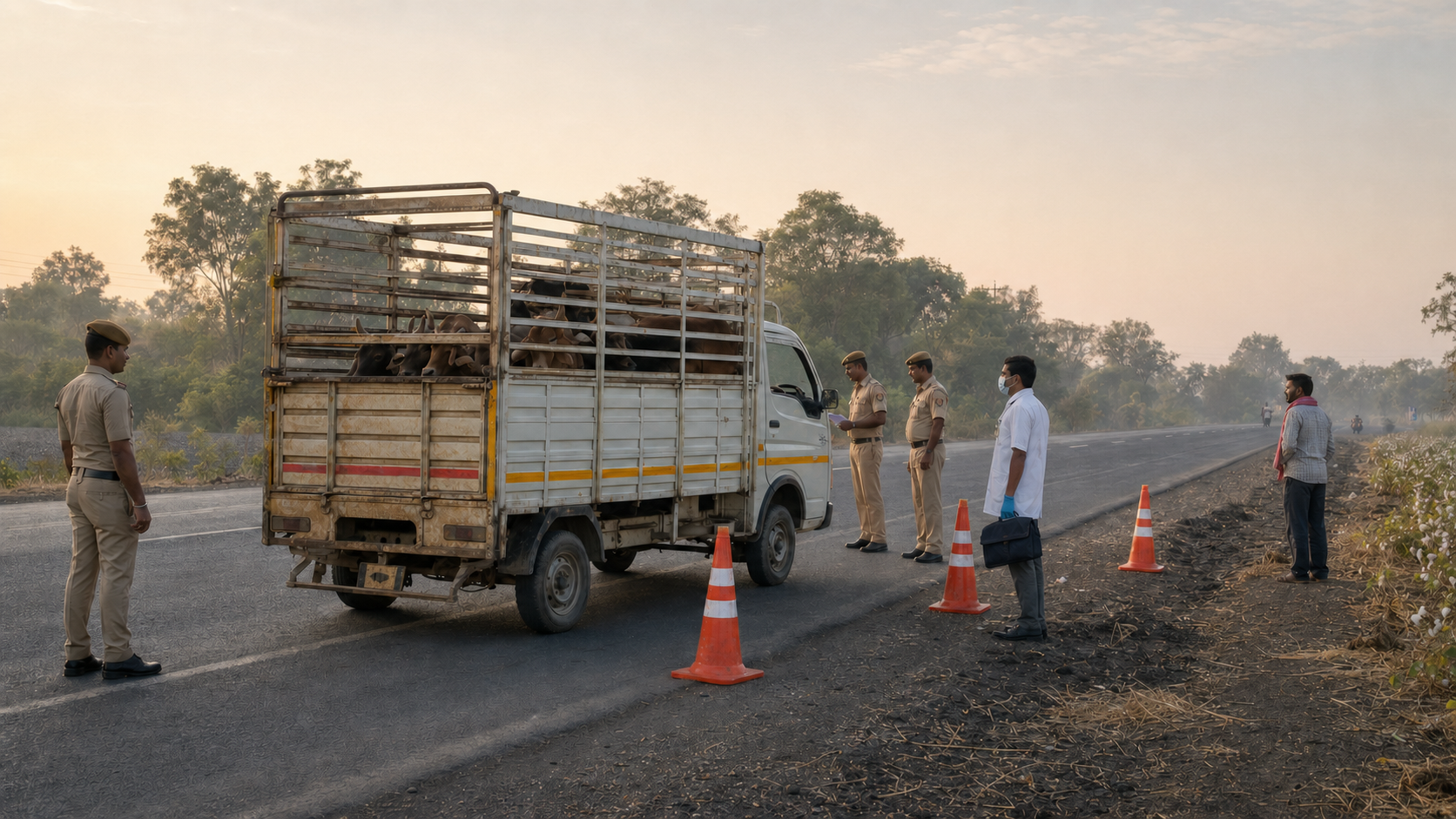
You see a cattle vehicle on an Akola road. The animals appear crowded, a cow may be down, or the vehicle seems to be moving under suspicious conditions. You want the animals protected, but stopping the vehicle yourself could endanger people, distress the cattle further, destroy evidence, and turn an uncertain observation into a communal confrontation.
The effective response is disciplined: observe from safety, report facts rather than accusations, and require the administration to investigate promptly. That approach answers the call for firm but humane enforcement in Akola while preserving the distinction between civic vigilance and vigilantism.
Key takeaways for Akola residents
- Do not chase, block, surround, search, or attempt to seize a cattle vehicle. Note what you can see safely and contact the police.
- Report the time, exact location, direction of travel, vehicle description, registration number if visible, and observable signs of animal distress.
- Describe facts such as overcrowding or a fallen animal. Do not present an assumed destination or purpose as something you know.
- Ask for police and veterinary attendance when animals appear injured, unable to stand, or in immediate distress.
- Expect the authorities to verify animal category, transport purpose, veterinary fitness, permissions, welfare conditions, and destination documents separately.
- Do not circulate unverified allegations, names, faces, or registration numbers on social media. Preserve original evidence for investigators.
Know what the authorities must actually verify
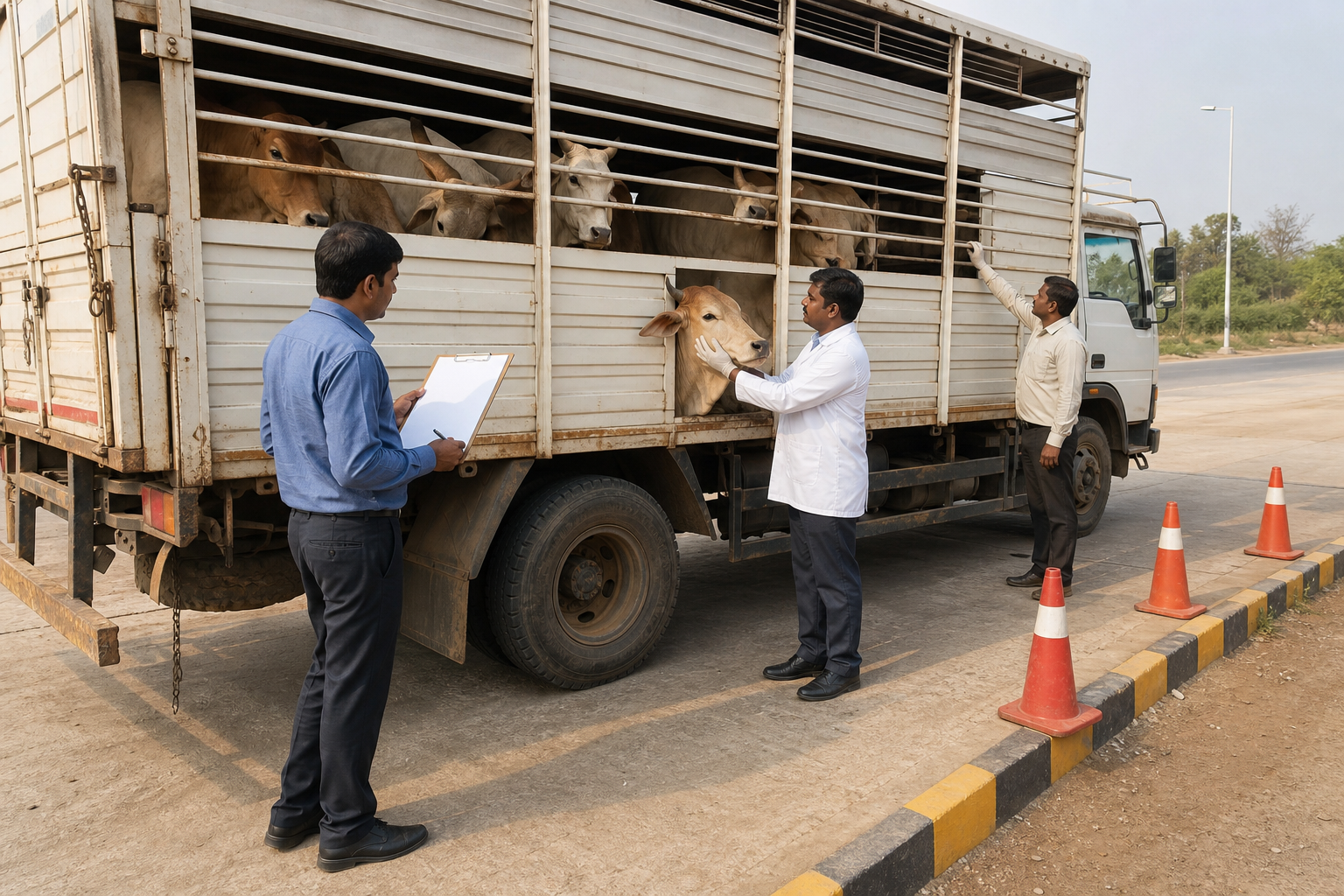
“Illegal cattle transport” is not one single offence. A vehicle may raise questions about the protected category of an animal, the purpose of movement, missing permissions, poor transport conditions, or an unlawful destination. Several violations can occur together, but one should not be treated as automatic proof of another. Investigators need evidence for each applicable offence.
The animal category and purpose of transport
The Maharashtra Animal Preservation (Amendment) Act, 2015 strengthened restrictions concerning the slaughter of cows, bulls, and bullocks. It also permits enforcement when the movement of protected cattle creates a reasonable presumption that the animals are intended for prohibited slaughter. The crucial words are “reasonable presumption”: an officer must establish the relevant facts rather than rely on a crowd’s suspicion.
Lawful movement can have different purposes, so officials should examine ownership and transport documents, the stated origin and destination, veterinary certification, and any permission required for that journey. Inter-state and intra-state movements may not have identical documentary requirements. If you own, trade, or transport cattle, obtain the requirements for your specific route and purpose from the competent authority before loading the vehicle; a general checklist cannot replace advice on an individual consignment.
The condition of the animals in transit
The Prevention of Cruelty to Animals Act, 1960 and the Transport of Animals Rules, 1978, as amended, make welfare part of legal compliance. Relevant safeguards include veterinary fitness checks, adequate ventilation and space, water and rest, separation of incompatible animals, and measures that reduce injury inside the vehicle. Overcrowding is prohibited, and vehicles carrying live animals must carry the required indication.
This matters even when no prohibited slaughter can be established. An injured animal, dangerous crowding, or transport without the required fitness certification can call for intervention on animal-welfare grounds. Report the condition you observed and let a veterinarian assess its legal and medical significance.
The destination and its licences
Where slaughter is legally permitted for an animal category, it must still occur in a lawful facility. The Prevention of Cruelty to Animals (Slaughter House) Rules, 2001, municipal and state requirements, and the Food Safety and Standards (Licensing and Registration of Food Businesses) Regulations, 2011 establish sanitary, structural, licensing, and accountability requirements. A claimed destination should therefore be verified rather than accepted at face value, but a licensed destination should not be denounced merely because it is part of the meat trade.
If you witness a suspicious vehicle, report it safely
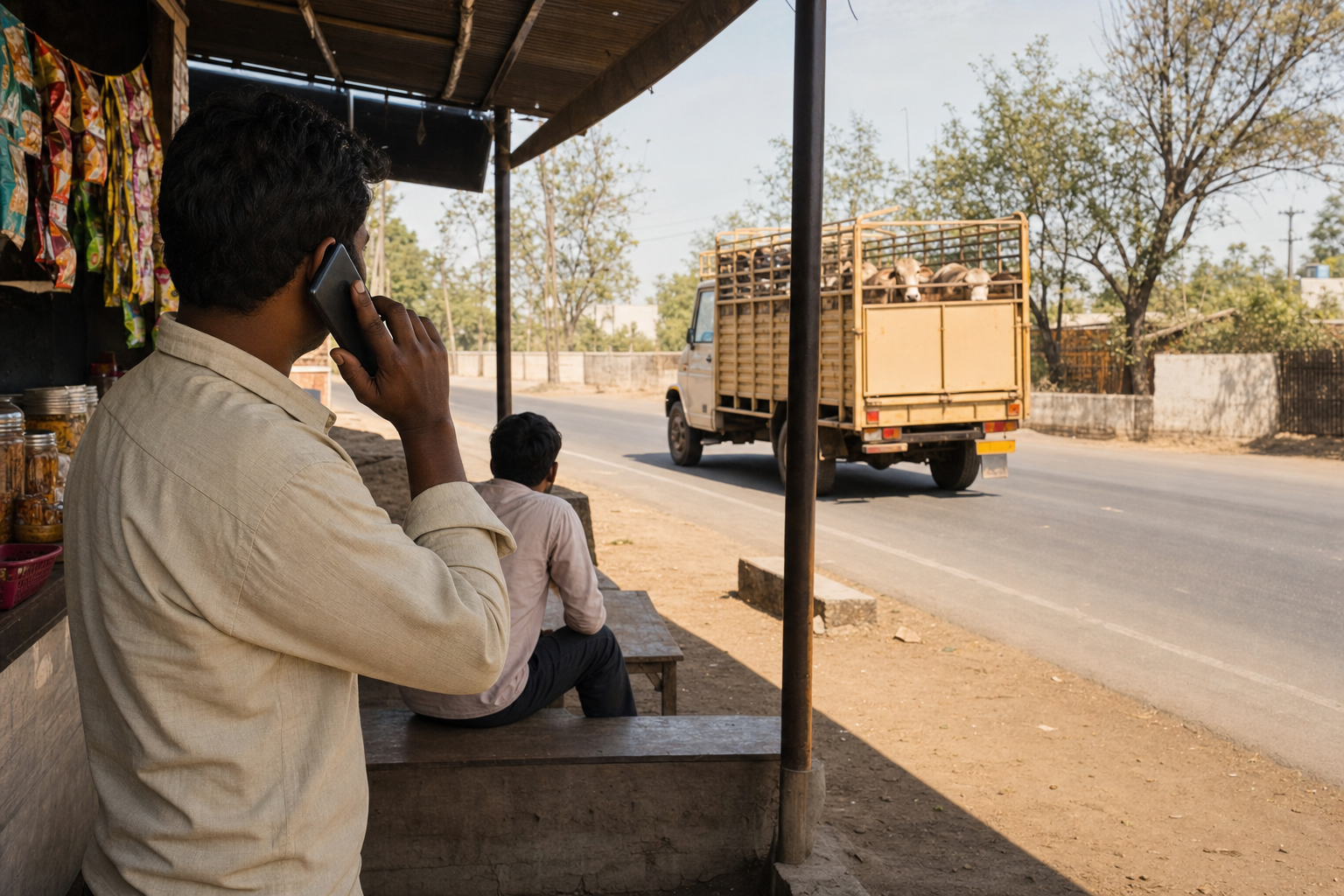
Your first report is most useful when it lets the authorities locate the vehicle and understand the immediate risk. It does not need a legal conclusion. Follow this sequence:
- Move to a safe position. Do not stand in the road, approach the driver, climb onto the vehicle, open its doors, or follow it at unsafe speed.
- Note the time, road or landmark, direction of travel, vehicle type and colour, and registration number if you can read it without putting yourself at risk.
- Record only visible conditions: approximate type of animals, severe crowding, animals fallen or trapped, visible injuries, lack of ventilation, or unsafe driving. Do not invent an animal count when you cannot see the full compartment.
- Contact the police through an official channel. Use a dedicated district control room or cattle-transport helpline only if the administration has publicly confirmed it; do not trust an unverified number forwarded on social media.
- State immediately if an animal appears critically injured or unable to stand, and ask the dispatcher to arrange veterinary attendance alongside police action.
- If it is lawful and safe to do so, preserve an original photograph or video. Keep the unedited file with its timestamp, and give it to the investigating authority instead of publishing an accusation online.
- Ask for a complaint, diary, or reference number if the receiving official provides one. Note when and where you reported the incident so that you can follow up accurately.
A concise report can follow this form: suspected cattle-transport violation; time; precise location; direction of travel; vehicle and registration details; conditions visibly affecting the animals; and whether photographs or video are available. Add that you have not approached or intercepted the vehicle. This gives the dispatcher usable information without turning your suspicion into a declaration of guilt.
If officers stop the vehicle, keep your distance unless they ask you for a statement. The police must control the scene, inspect documents, preserve evidence, and protect everyone present. Citizens should not question the occupants, demand access to their telephones or papers, or decide where seized animals will be taken.
What effective district enforcement should look like
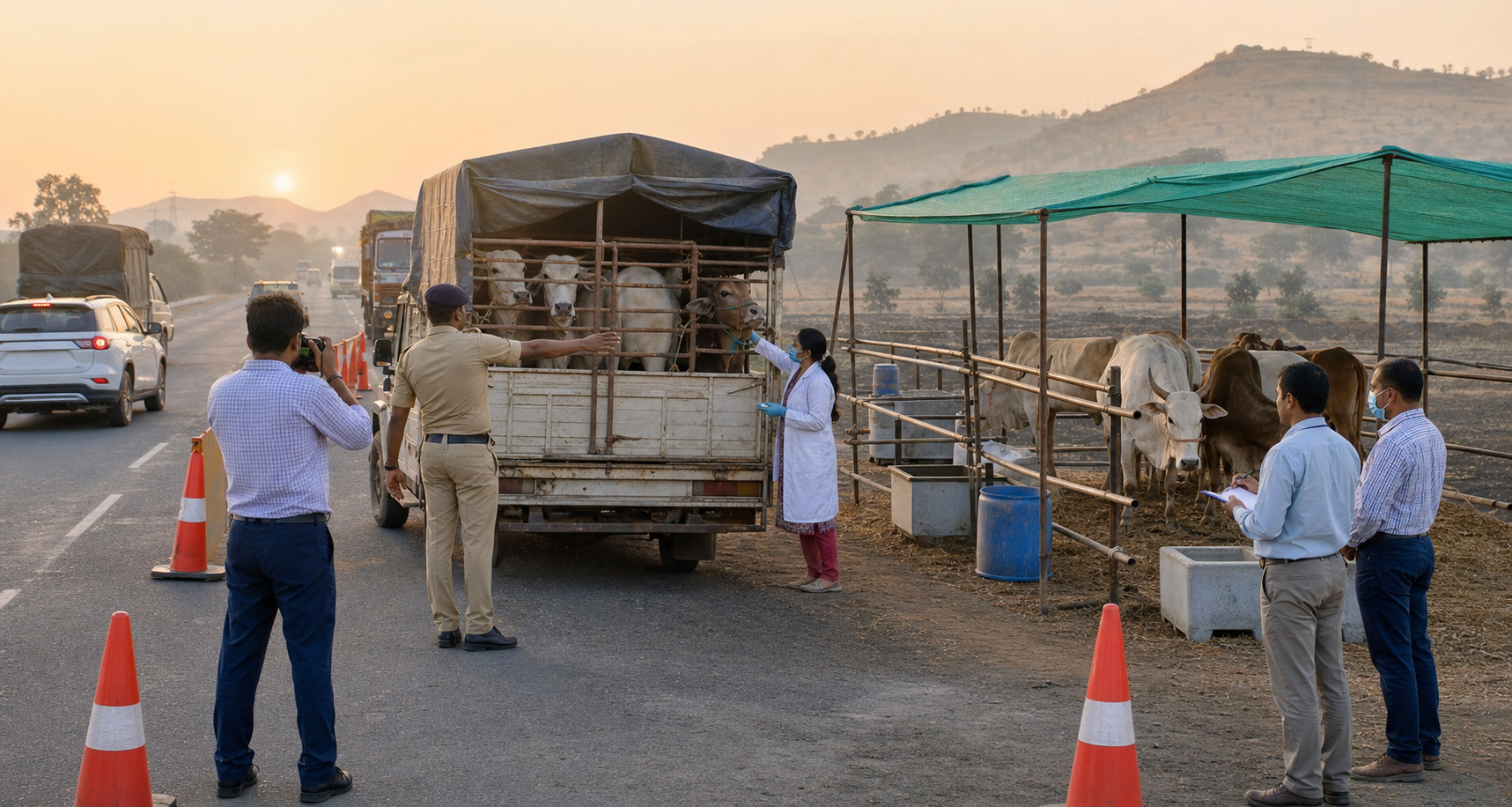
Akola needs more than occasional roadblocks. A checkpoint can detect a suspicious load, but the case may fail—and animals may suffer—if no veterinarian is available, documents are handled carelessly, or interim shelter has no capacity. Enforcement must work as one connected process from the initial report to the animals’ placement and the final legal decision.
- Risk-based checkpoints: Deploy trained teams on identified transport corridors and during periods of increased movement, while avoiding arbitrary stops based on a driver’s identity or community.
- Real-time document verification: Give officers a reliable way to verify veterinary certificates, transport permissions, ownership information, and destination documents rather than judging a load by appearance alone.
- A single coordination point: A district control room should connect police, revenue officials, veterinary services, transport authorities, and approved shelters. Citizens and lawful operators should not have to search for the right department during an urgent incident.
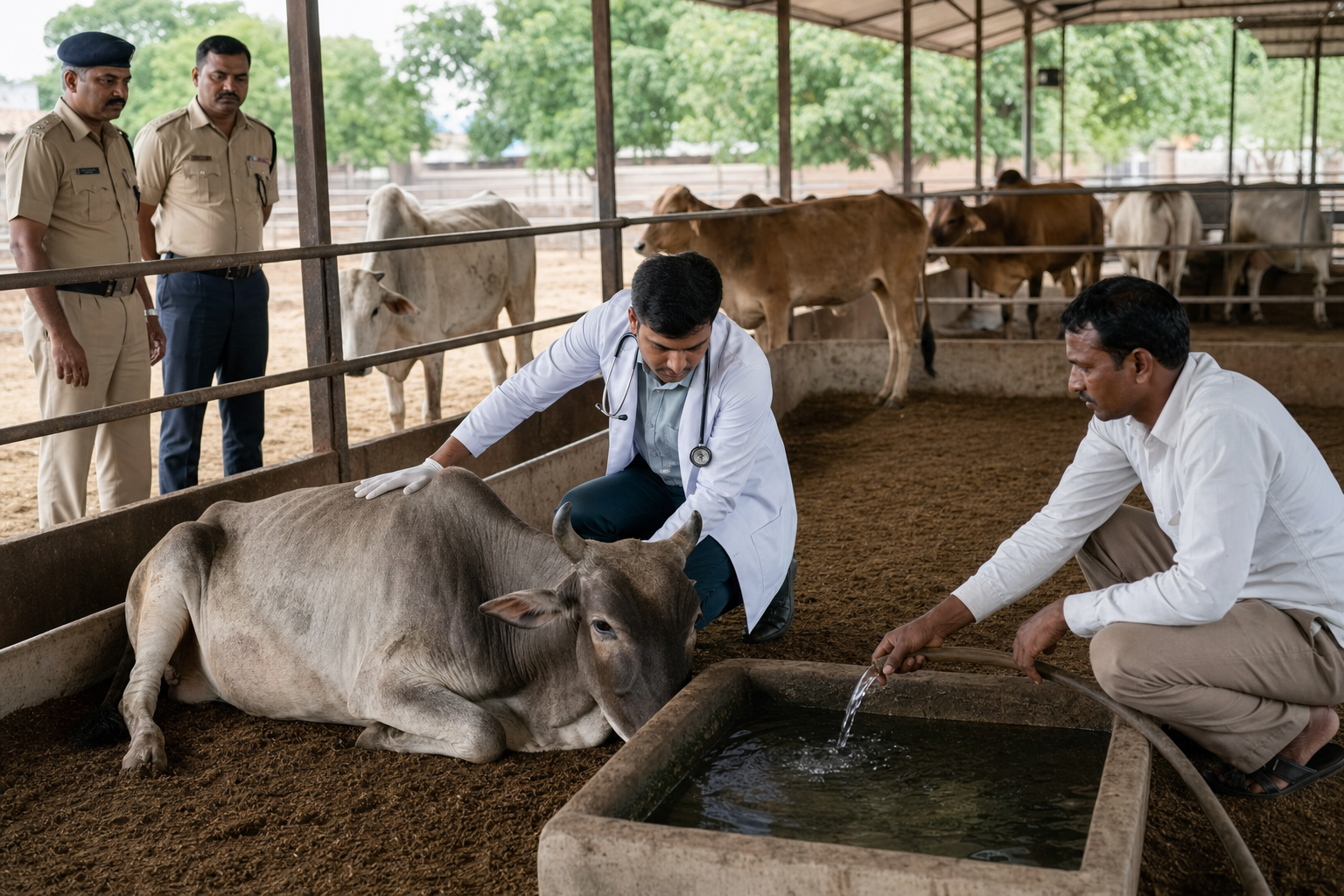
- Veterinary triage at the scene: A qualified professional should assess fitness, injuries, immediate treatment needs, and whether an animal can be moved safely. Seizure must not become a second episode of cruelty.
- A written seizure procedure: Officers should record the reason for intervention, animal condition and count, vehicle details, documents recovered, photographs, veterinary findings, and every transfer of custody. A clear chain of custody protects both prosecution and due process.
- Pre-arranged shelter capacity: Akola should formalise arrangements with vetted goshalas before enforcement peaks. Capacity, transport, water, feed, veterinary access, record-keeping, and responsibility for costs need to be settled before animals arrive.
- Prompt clearance for compliant vehicles: Licensed operators with valid documents and welfare-compliant loads deserve predictable inspections and time-bound decisions. Holding animals unnecessarily can harm their welfare and disrupt lawful livelihoods.
The district should also publish a short compliance checklist for transporters. It can identify the documents commonly examined, veterinary-fitness requirements, animal-space and vehicle conditions, and the destination information expected for the applicable journey. Because requirements can vary by animal category, route, and purpose, the checklist should identify the office that answers case-specific questions.
Accountability should continue after the vehicle leaves the checkpoint. A monthly public dashboard can report aggregate numbers of transports checked and cleared, violations booked, animals receiving welfare intervention, and complaints resolved. Personal information and allegations that have not been adjudicated should remain protected. The point is to show whether the system responds consistently, not to conduct trials through publicity.
Firm enforcement must remain humane and even-handed
Ramzan and other festival periods can compress supply chains, increase movement, and amplify rumours. That is a reason for more administrative capacity and clearer public communication—not for collective suspicion toward Muslims, transport workers, traders, or any other community. Illegal conduct should be investigated decisively; lawful activity should receive the same protection from harassment.
The Supreme Court’s directions in Tehseen S. Poonawalla v. Union of India (2018) require states to use preventive, remedial, and punitive measures against mob violence and vigilantism, including the use of nodal officers. For Akola, the operational principle is simple: citizens may document and report, but the state must intercept, investigate, seize, and prosecute. A genuine concern for gau raksha does not confer police powers on a private group.
A district peace and compassion committee can help contain rumours before they become confrontations. Hindu, Muslim, Sikh, Buddhist, and Jain representatives, animal-welfare specialists, and civil-society participants can identify recurring misunderstandings, circulate verified official information, and raise implementation failures. Such a forum should support enforcement and dialogue; it must never decide guilt or replace the police and courts.
Ahimsa and daya demand consistency. Dharma is not served when an animal remains trapped in a stationary vehicle, when an innocent person is assaulted, or when an unverified message becomes an accusation against a whole community. Compassion for cattle, safety for human beings, due process for the accused, and protection for lawful livelihoods belong to the same standard.
If you are petitioning the Akola administration, ask for measurable commitments: one verified reporting number, a named nodal officer, a public transporter checklist, veterinary response arrangements, documented shelter capacity, a written seizure protocol, and periodic aggregate results. If you witness a suspected violation, use the factual reporting sequence above. That combination—prepared administration and restrained civic action—is how concern for cattle becomes durable protection under law.