
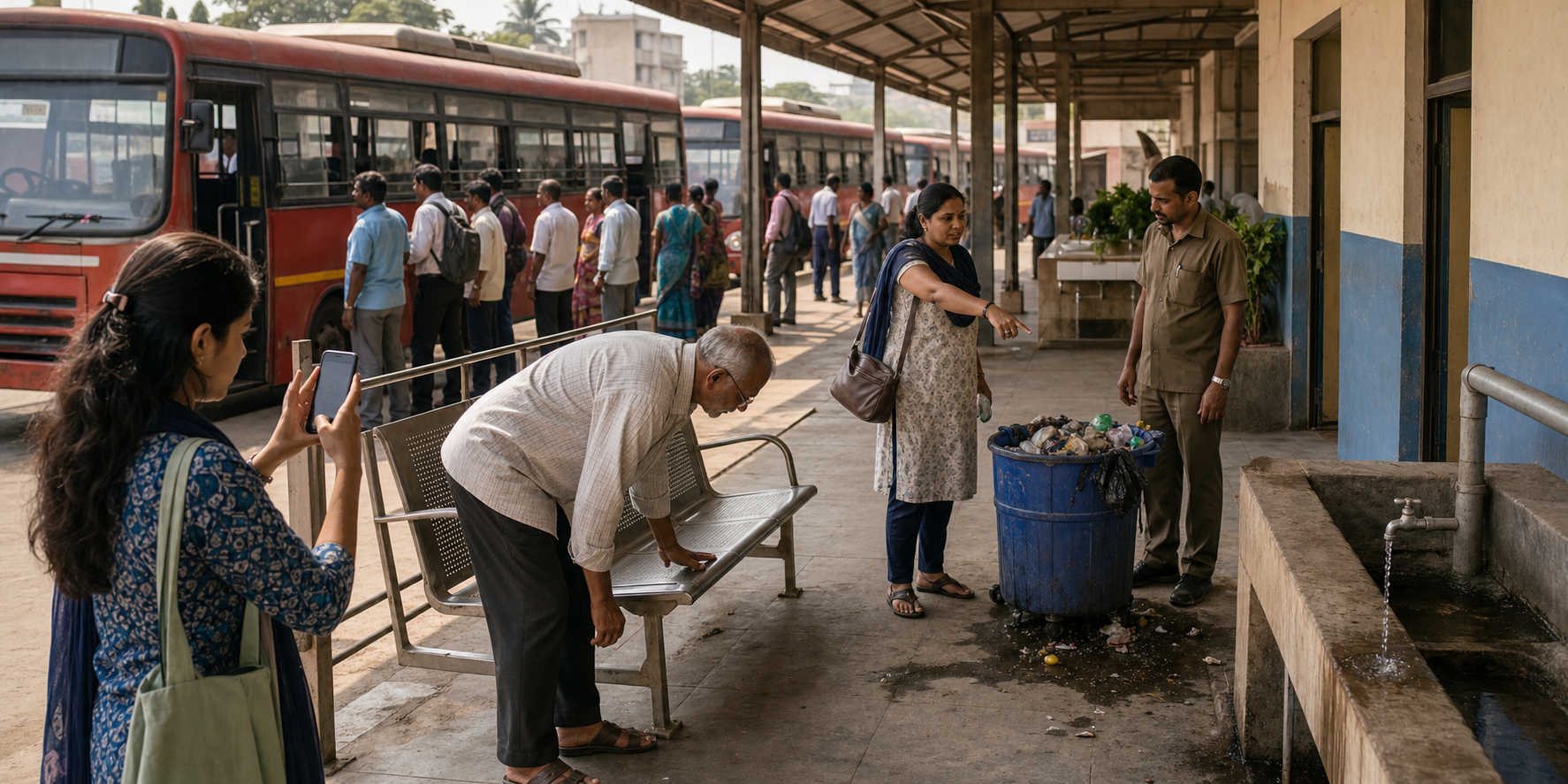
If your local Maharashtra ST depot becomes clean during a special drive and then slips back into neglect, the problem is no longer how to organise one more clean-up. The real question is how you turn a temporary improvement into an ordinary, enforceable standard.
You do not need to inspect an entire transport network to help answer that question. A small commuter group can document one depot carefully, submit defects in a form that officials can act on, track whether they are resolved, and press for a public system that outlasts the campaign.
The opening is real, but the reform is unfinished
Maharashtra has already shown that organised civic pressure can move the administration. The State Government began the Swachh Sundar Bus Sthaanak Abhiyan following engagement by Surajya Abhiyan, extending depot cleaning across the state transport network.
Early results at several locations included cleaner platforms, sanitised waiting areas and better-organised waste handling. That is meaningful progress, especially for elderly passengers, students, families and pilgrims who may spend substantial parts of a journey waiting at a depot. But these results remain early and location-specific. A statewide campaign does not, by itself, prove that every depot has reached the same standard or that improvements will last.
A deep clean removes accumulated dirt. It does not automatically assign responsibility for tomorrow’s overflowing bin, unusable toilet or blocked passage. The difference between a campaign and a reform is a maintenance loop: a defect is noticed, reported, assigned, corrected, checked and publicly closed.
Communication is part of that loop. Surajya Abhiyan has also called for the revival of non-functional ST helplines. A clean waiting room cannot compensate for a passenger being unable to report a hazard, seek assistance or learn whether anyone has received a complaint. Cleaning and grievance redressal are therefore not separate causes. One improves the physical depot; the other helps keep it improved.
Inspect the passenger journey, not just the platform
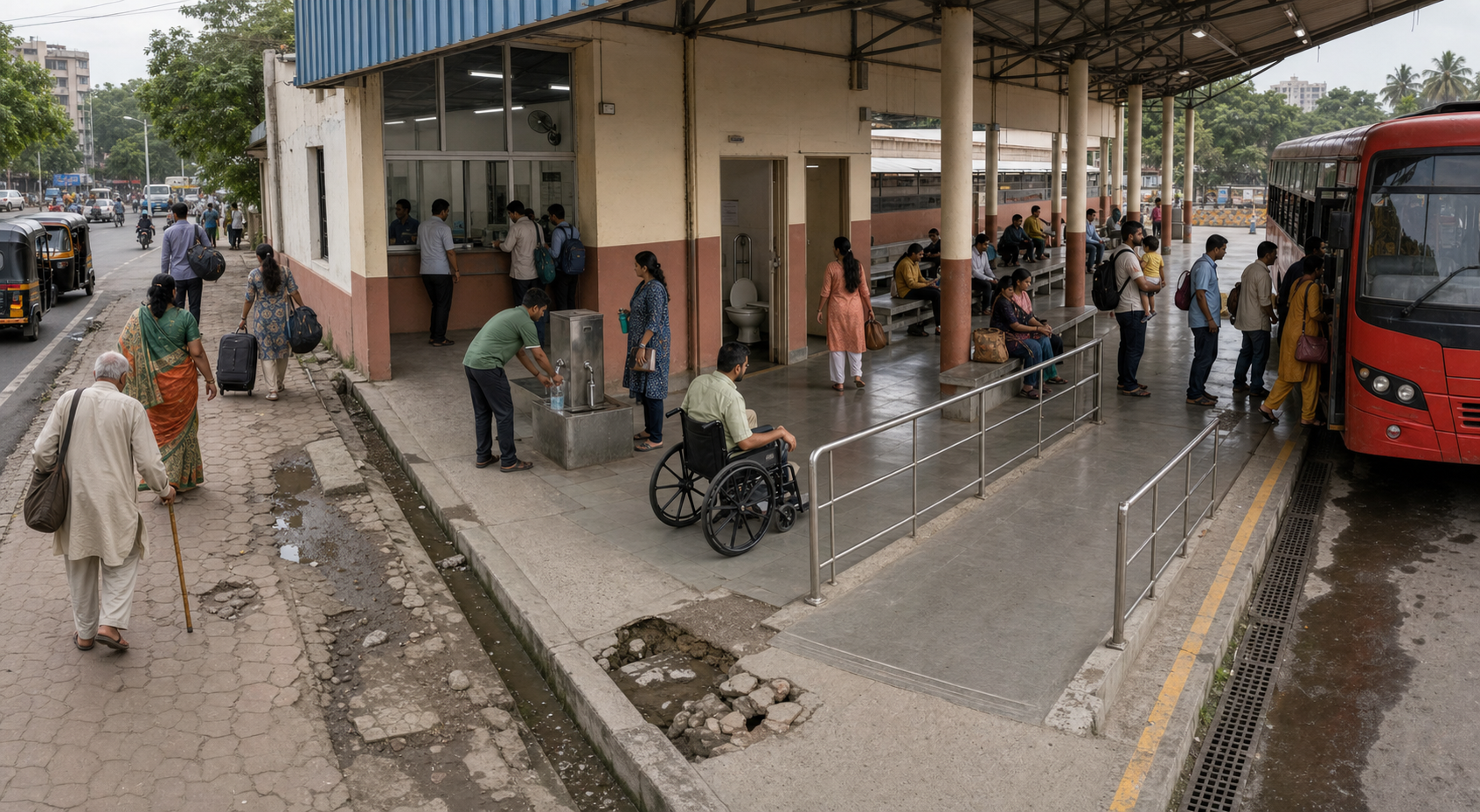
The most useful local audit follows the path a passenger actually takes. Looking only for litter can miss the conditions that make a depot difficult to use: an obstructed entrance, an unclear sign, nowhere suitable to sit, an inaccessible service point or waste accumulating beside a waiting area.
Walk through the depot in the order below. Record each defect as a separate entry so that it can be assigned and closed without ambiguity.
- Approach and entrance: Check whether the route into the depot is clear and whether accumulated waste or parked objects force passengers into an unsafe or inconvenient path.
- Information and ticketing area: Note damaged, obscured or confusing signs, as well as any condition that prevents passengers from reaching the counter or information point comfortably.
- Platforms and boarding paths: Look for litter, pooled water, broken surfaces, blocked passages and waste close to boarding areas.
- Waiting spaces: Check the cleanliness and usability of seats, floors and sheltered areas. Record whether the problem affects an entire space or one identifiable location.
- Toilets and washing facilities: Where these facilities exist, record whether they are open, usable and being maintained. Distinguish a cleaning problem from a closure, water problem or damaged fixture.
- Bins and waste movement: Note whether bins are available where passengers gather, whether they are overflowing and whether loose waste is being transferred away from public areas.
- Accessible movement: Follow the route a passenger with limited mobility would need to use. Record obstructions, unusable passages and service points that cannot be approached without assistance.
For every observation, capture the depot name, exact location, date, time, visible condition, effect on passengers and requested correction. A statement such as “the depot is filthy” expresses frustration but gives the responsible office little to close. “Loose waste beside the main waiting area is reducing usable seating; please remove it and confirm how the location will be monitored” identifies both the defect and the required outcome.
Photographs can help establish location and condition, but use them carefully. Avoid identifiable faces, vehicle registration details and restricted operational areas when they are not necessary to prove the defect. If photography is prohibited or would intrude on someone’s privacy, a precise written observation is better than a confrontational image. Keep the original file and its timestamp rather than circulating an edited copy without context.
Repeat the same route at comparable times on different days. A single observation can establish that a defect existed; repeated observations help distinguish an isolated spill from a maintenance failure. If staff are already correcting the problem, record that too. Credibility grows when the log shows improvements as readily as failures.
Build a complaint that can be verified and closed
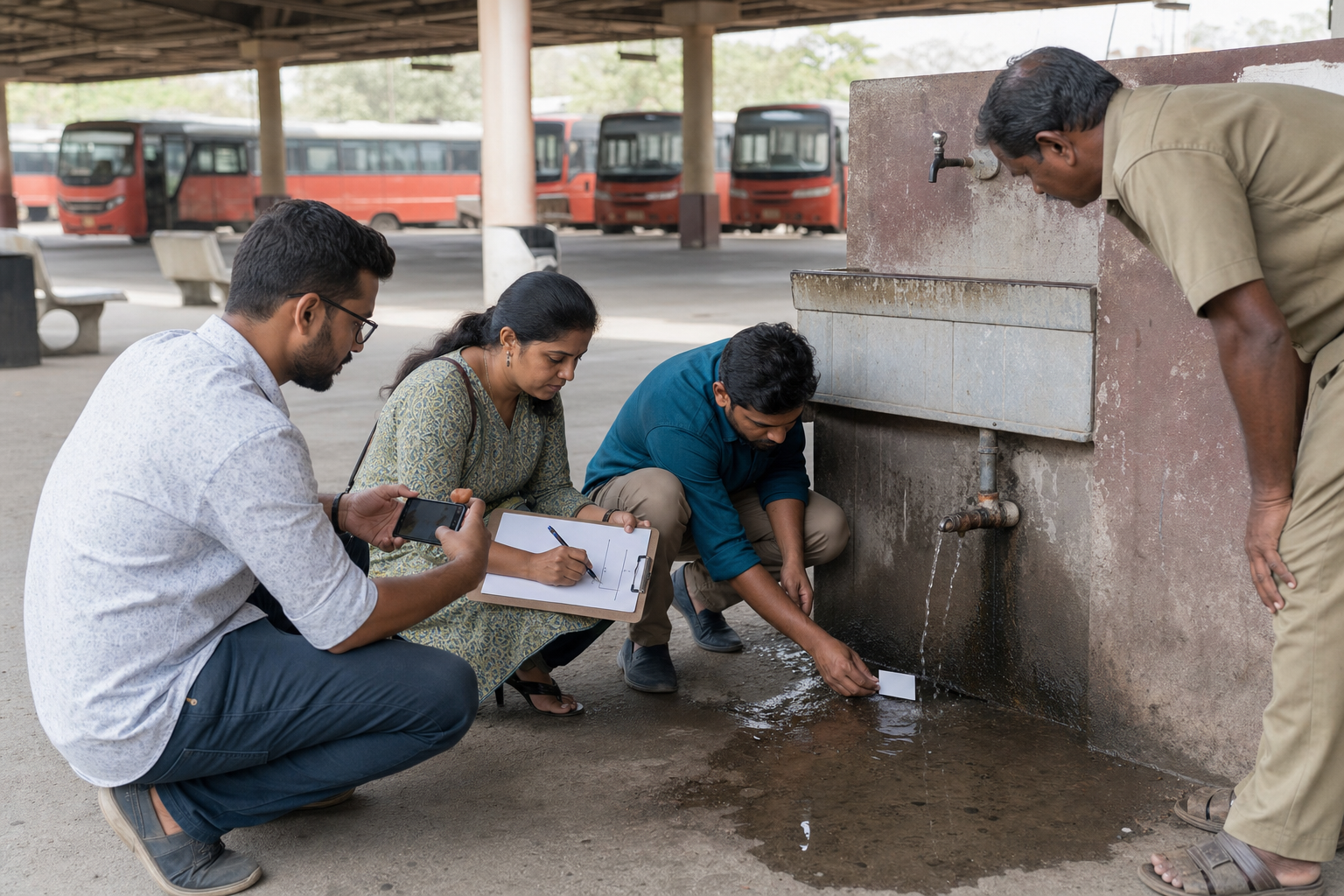
A complaint becomes actionable when it answers five questions: What is wrong? Where is it? When was it observed? How does it affect passengers? What correction is being requested? Keep demands within the control of the office receiving them. Asking for a blocked passage to be cleared is easier to assign than asking officials to “fix the entire depot.”
Use a consistent record for every defect:
- Location: Depot name and the precise area inside or outside it.
- Condition: One observable problem, described without exaggeration.
- Passenger consequence: The specific obstruction, hygiene concern or loss of access caused by that condition.
- Evidence: Date, time and a photograph or written observation where appropriate.
- Requested action: The concrete result needed, not a general expression of dissatisfaction.
- Status: Submitted, acknowledged, assigned, corrected or verified closed.
Submit the record to the responsible depot office or any functioning ST grievance channel that is publicly available. Ask for an acknowledgement or reference that connects the response to the reported defect. Preserve the original submission and any reply. If a helpline does not connect, record the date, time and outcome, then report that failure as a separate service defect. A broken reporting channel should not make the original cleanliness problem disappear from the log.
Do not mark an item closed merely because someone says it has been handled. Recheck the location. If the immediate mess is gone but the same defect repeatedly returns, change the request from one-time removal to a maintenance response: who owns the location, how often it is checked and how recurring failure will be recorded.
A community group can make this process stronger by combining duplicate complaints. Assign one person to maintain the log, one to communicate with the depot and another to verify completed work. This prevents officials from receiving several inconsistent versions of the same problem and helps the group focus on closure instead of social-media volume.
Key takeaways for a local commuter group

- Audit one depot consistently before trying to monitor a whole district.
- Follow the complete passenger journey: entrance, information area, platforms, seating, facilities, waste points and accessible routes.
- Record one observable defect per entry, with its exact location, passenger consequence and requested correction.
- Treat a failed helpline or unanswered grievance as a second accountability problem, not as a reason to abandon the first complaint.
- Count a defect as closed only after someone verifies the location and updates the public record.
- Credit staff and officials when conditions improve; a trustworthy monitor records results, not just failures.
Ask for a system that survives the campaign
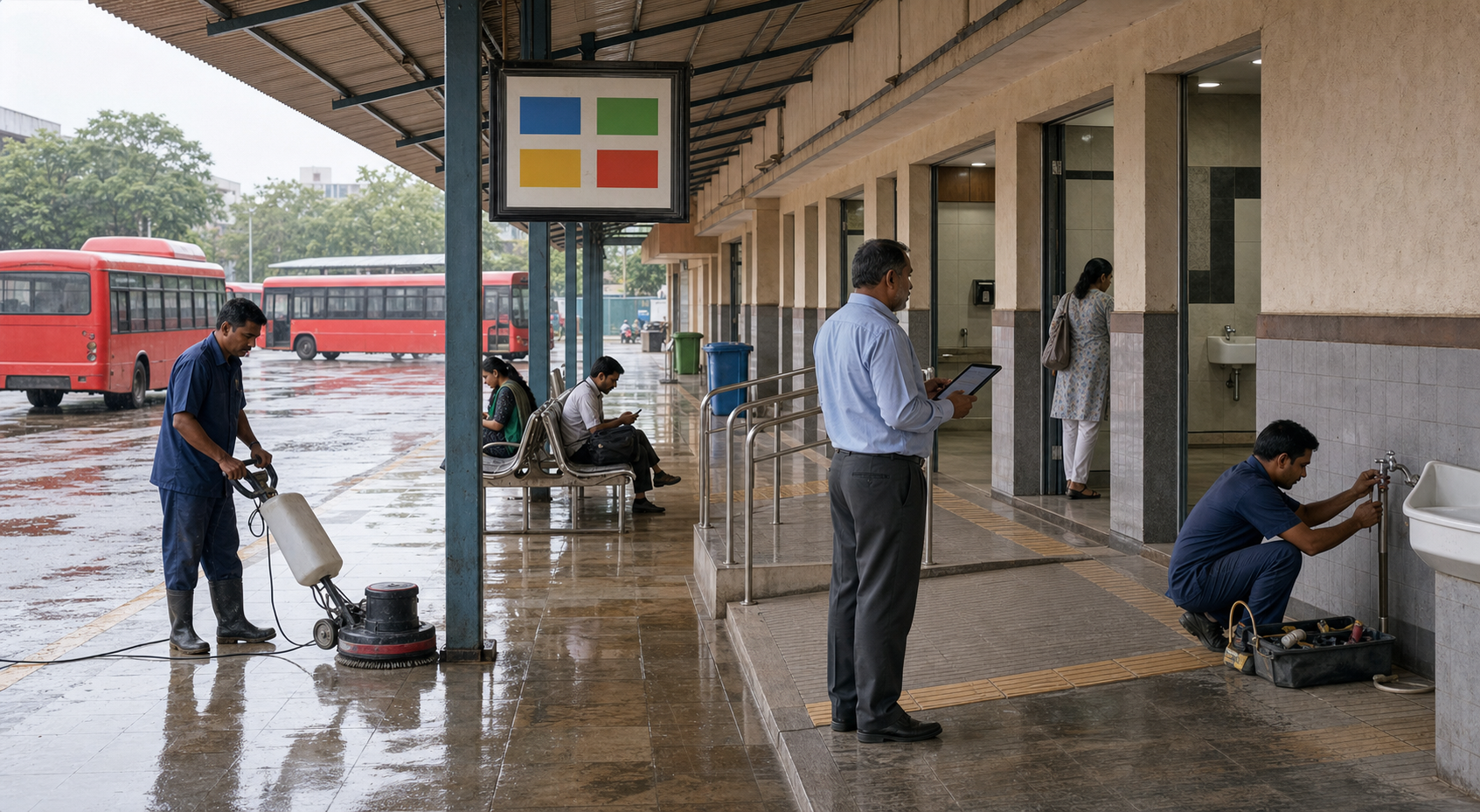
Citizen monitoring should not become unpaid substitution for routine administration. Its purpose is to reveal where the service loop works and where it breaks. The long-term demand should therefore be an institutional standard that passengers can see and officials can manage.
A practical request to Maharashtra ST would include:
- A published depot standard: Define the expected condition of platforms, waiting areas, toilets, waste points and passenger routes.
- Named operational responsibility: Show which office owns each category of defect and where a passenger should report it.
- A visible inspection record: Display when a location was checked and whether unresolved defects remain.
- A public cleanliness dashboard: List depot-level issues, their status and the date on which completed work was verified.
- Restored grievance channels: Make the helpline dependable and connect it to a system that acknowledges, assigns and closes reports.
- Inclusive communication: Add multilingual IVR, digital chat and accessibility features so that assistance does not depend on one language, one device or one mode of interaction.
The dashboard need not become a league table that rewards cosmetic work. Its useful measures are simpler: whether inspections occurred, whether reported defects were acknowledged, whether corrective action was completed and whether passengers could verify the result. Publishing unresolved items is especially important because a system that displays only successes cannot reveal where responsibility has stalled.
Community organisations, commuter groups and staff unions should all have a place in the feedback loop. Passengers see the daily experience. Depot employees understand operational constraints. Civic groups can preserve continuity when individual complainants move on. Bringing those perspectives together makes it easier to separate a staff-capacity problem from poor supervision, unclear ownership or a broken communication channel.
In a Dharmic public culture, seva is not limited to personally sweeping a floor for a day. It also means protecting the dignity of the elderly traveller, the student, the family and the pilgrim who must use a shared institution after the volunteers have left. That requires restraint as well as persistence: document conditions accurately, avoid humiliating workers, acknowledge improvement and keep asking who is responsible for the next inspection.
Start with one complete walk through your local depot. File the clearest defect you find, preserve the acknowledgement and return to verify the result. When that cycle works, make it visible. When it fails, record exactly where it failed. That evidence is how a clean-up drive becomes citizen-led reform.
References
