
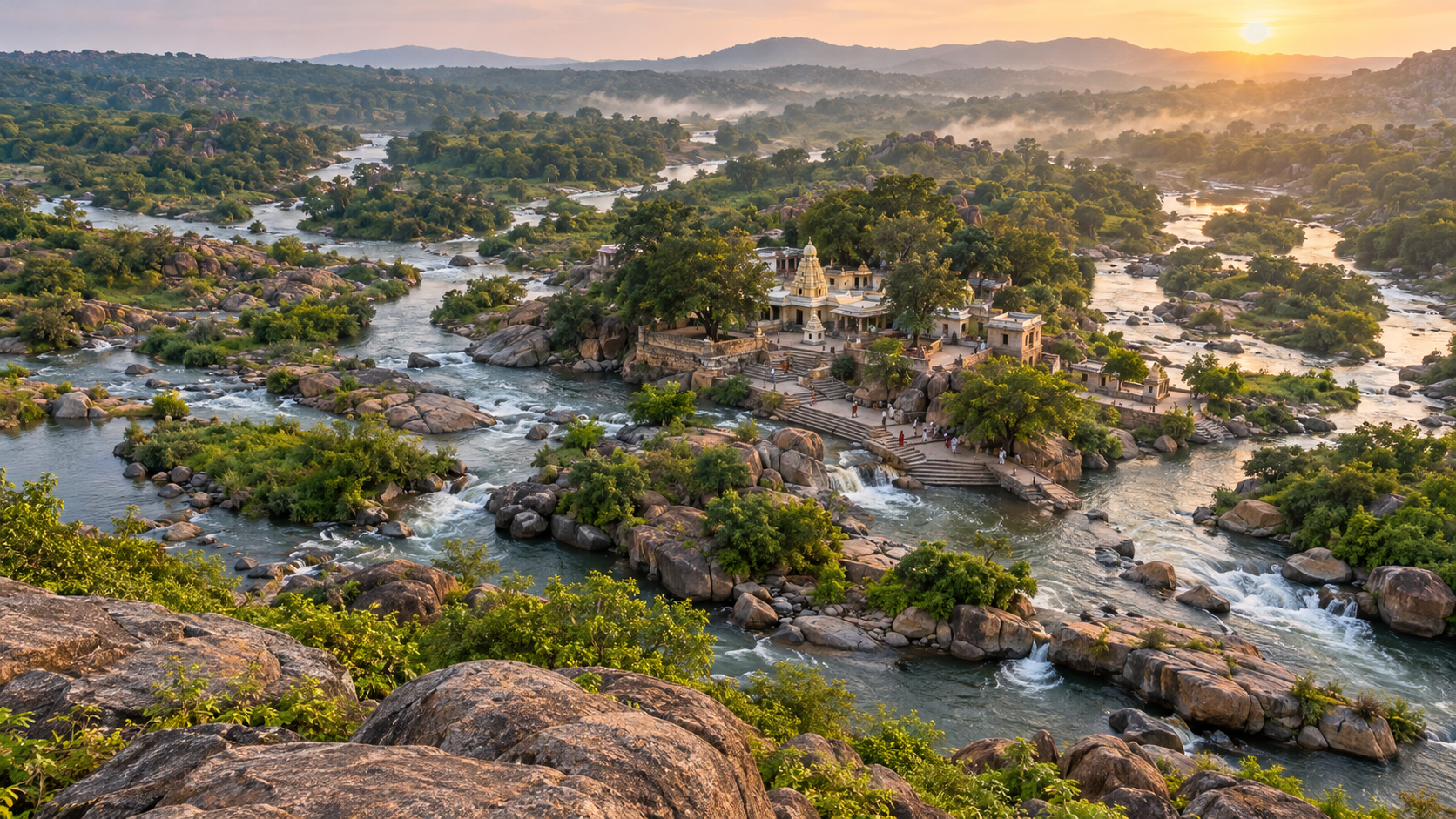
If Edupayala is on your pilgrimage list, the first mistake to avoid is treating it as just another stop in Medak town. The shrine is near Nagasanpally, and its identity is inseparable from the meeting of seven streams.
A good visit therefore needs two kinds of preparation: a precise route to the temple and enough unhurried time to encounter the sacred landscape around Vana Durga Bhavani.
Why the seven streams matter
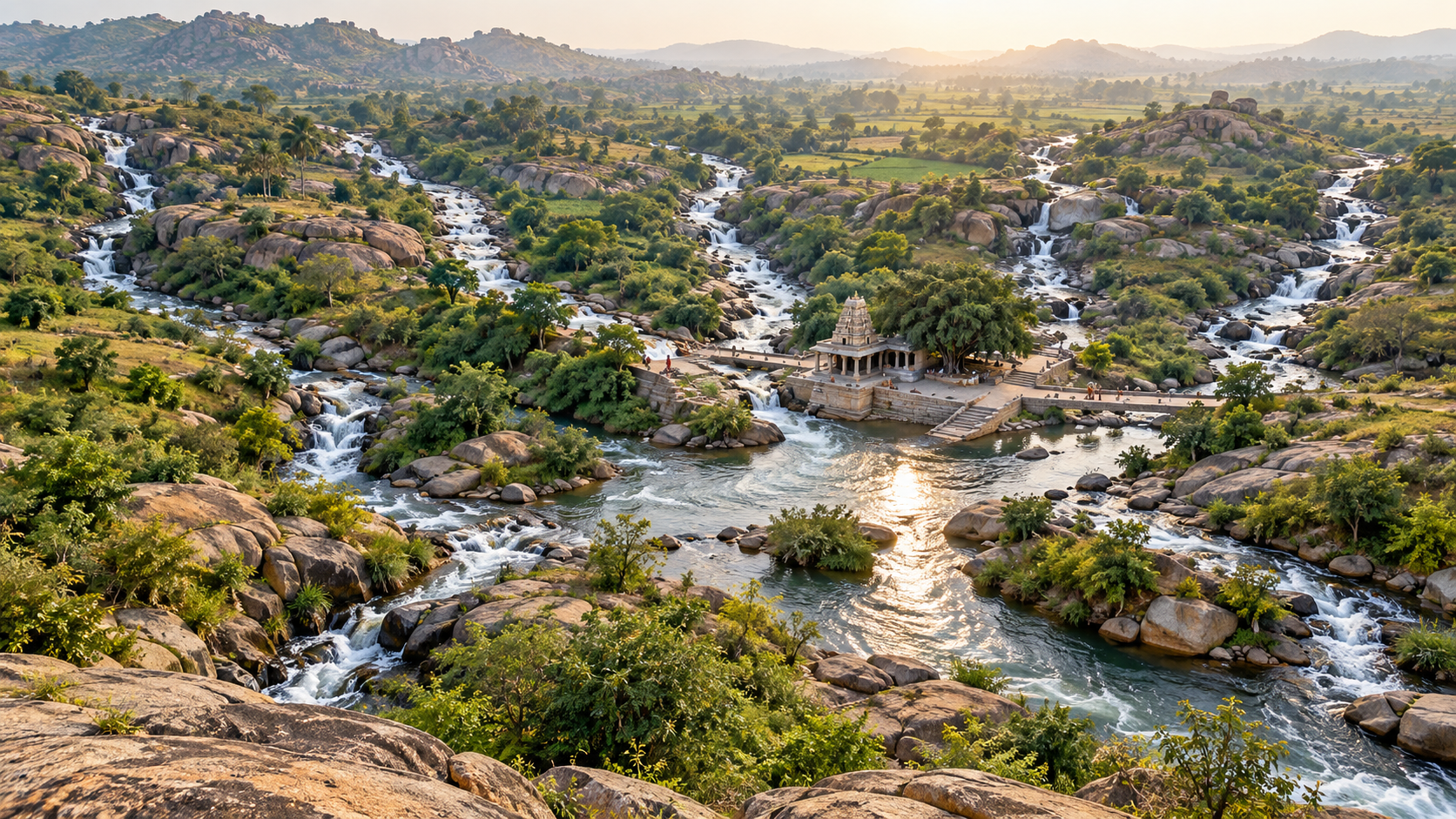
Edupayala is a revered Shakti shrine dedicated to Goddess Vana Durga Bhavani. It stands at the confluence of seven streams associated with the Manjeera River. Its name comes from the Telugu expression for “Seven Streams.” The geography is not an incidental feature added to an otherwise ordinary temple address; it is the feature by which the sacred place is known.
That distinction changes how you should approach the pilgrimage. If you plan only for a quick darshan and immediate departure, you may see the sanctum but miss the relationship between Devi, water and place that gives Edupayala its character. Allow time to notice the setting without assuming that every part of the confluence is open or safe to enter.
Do not make the worth of your visit depend on being able to count seven clearly separated channels from one viewpoint. “Seven Streams” is the sacred identity of Edupayala, not a promise of a labelled panorama. Water levels, visibility and access can affect what a visitor can physically observe.
Plan for Nagasanpally, not merely Medak
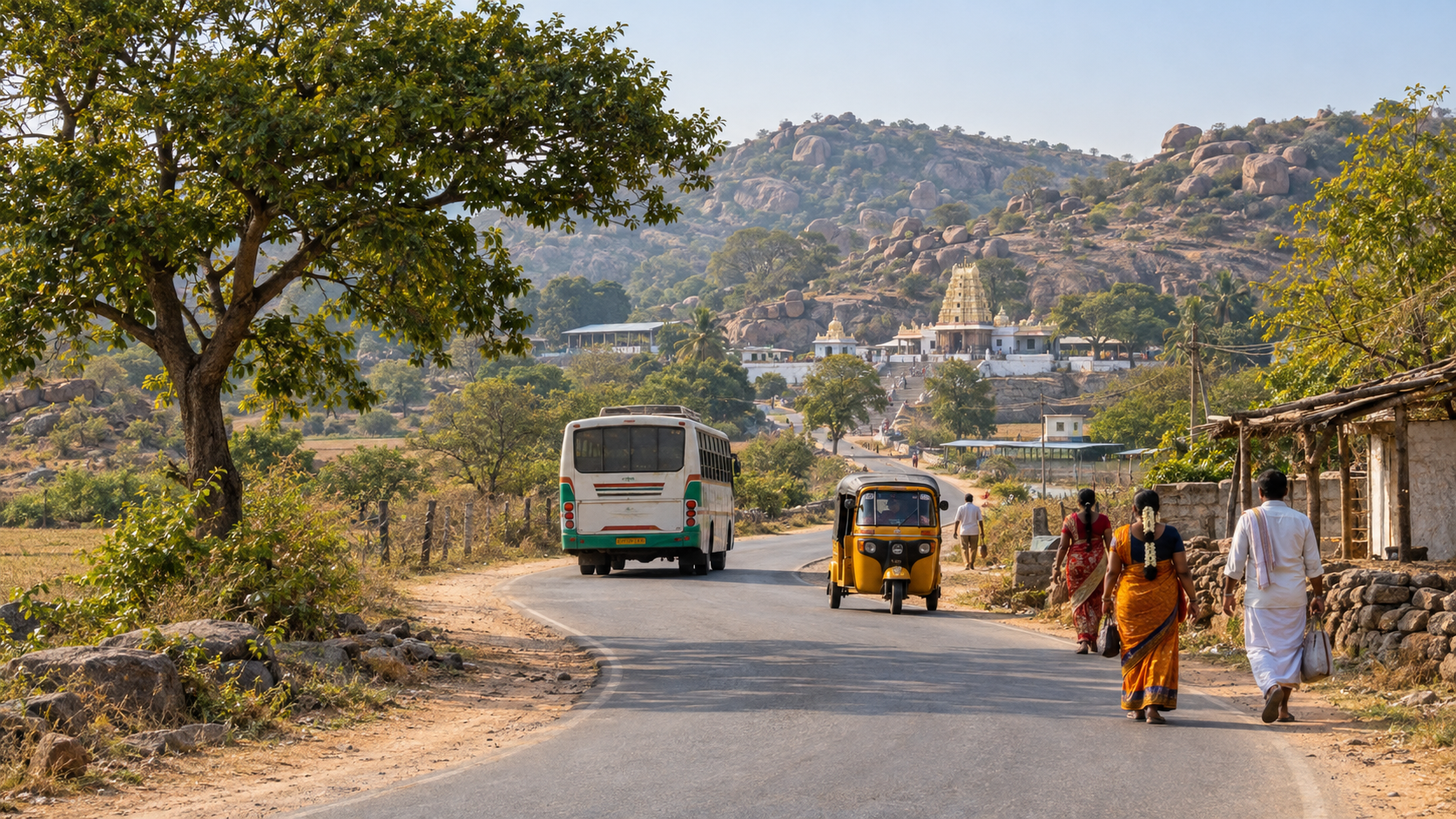
The temple is near Nagasanpally village, approximately 19 kilometres from Medak town and 110 kilometres from Hyderabad. These figures are useful for choosing a starting point, but they are not travel-time estimates. Road conditions, stops, traffic and the final approach can all change the duration of a journey.
- Use the complete destination name, “Sri Edupayala Vana Durga Bhavani Temple,” together with “Nagasanpally, Medak, Telangana.” A search for Medak alone can leave you short of the actual shrine.
- Choose your base deliberately. Medak is the closer reference point at about 19 kilometres; Hyderabad requires a substantially longer journey of about 110 kilometres.
- Confirm the final route on the day with a temple contact, a local host or a driver who knows the Nagasanpally approach. A map pin can identify the destination without telling you whether the expected access road is presently suitable.
- If you depend on hired transport, settle the return arrangement before reaching the temple. Do not build your day around the unverified assumption that a vehicle will be waiting nearby when you finish.
- Keep a daylight margin for the arrival and departure. It gives you time to correct a navigation error, understand local directions and assess the waterside setting before approaching it.
If you are travelling from Hyderabad, resist the urge to calculate an exact departure time from distance alone. First establish the current opening period and your intended arrival window; then add the road-time estimate supplied by someone familiar with that day’s route.
Verify the details that can change
A fixed location description cannot serve as a live temple timetable. Before leaving, confirm the details that could turn a long pilgrimage into a rushed or incomplete visit.
Questions to settle before departure
- What are the current opening and closing times on your chosen day?
- Is there a specific period for darshan, puja or any planned observance you hope to attend?
- Are recent rain or water conditions affecting the approach to the confluence?
- Are any areas near the streams closed, restricted or accessible only under local supervision?
- Is unusual crowding expected, and will that alter vehicle access or the time required?
- Are the offerings you intend to bring accepted at this shrine?
- Does the temple currently impose any rules concerning footwear, bags, photography or entry?
What to carry without overpacking
Wear modest clothing suitable for a Hindu temple and footwear that you can remove and manage easily. Carry drinking water, necessary personal medication, weather protection appropriate to the day and enough flexibility for a delayed return. If you have not confirmed a temple-specific offering, wait until you understand the local practice rather than arriving with an elaborate ritual plan borrowed from another shrine.
The presence of several streams also calls for ordinary water safety. A sacred confluence is not automatically a safe bathing place. Do not enter moving water, cross a barrier or follow someone onto a wet or uncertain surface merely because other visitors are doing so. Follow temple and local instructions, especially when the water level or current is difficult to judge.
Let the landscape deepen the darshan
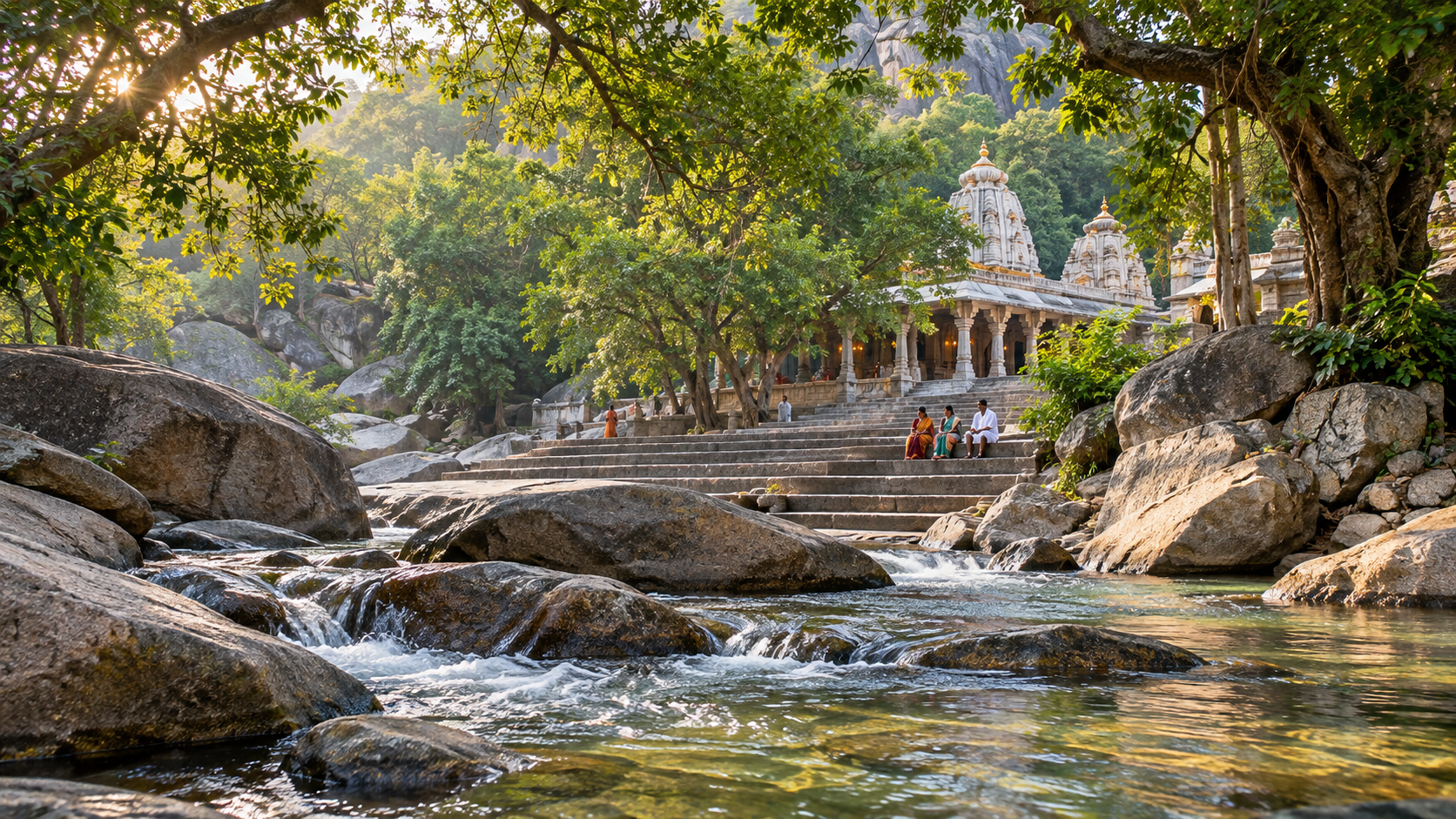
Your central purpose is darshan of Vana Durga Bhavani. The surrounding waters can help you approach that darshan attentively, but they should not become a distraction or a background for hurried photography.
If conditions and local rules permit, pause where you can safely observe the confluence before entering the temple. Let the name Edupayala register as more than a label. Several flows meet without ceasing to be flows; the image naturally invites reflection on convergence, surrender and the movement from many paths toward one sacred centre. Treat that as a prompt for contemplation, not as a claim that replaces the shrine’s own transmitted traditions.
Inside the temple, follow the order indicated by priests and local devotees. Ask before photographing a sacred area or performing anything near the water. Temple customs are local: familiarity with worship elsewhere does not entitle a visitor to assume that the same procedure applies here.
If you are bringing children or older relatives, decide in advance which part of the visit matters most. Prioritise a calm darshan and a safe view of the setting over an ambitious circuit of every accessible area. A pilgrimage becomes more meaningful when the pace respects the people travelling with you.
Key takeaways for your Edupayala visit
- Navigate to Nagasanpally rather than using Medak town as the final destination.
- Use the approximate distances of 19 kilometres from Medak and 110 kilometres from Hyderabad for orientation, not as promises of journey time.
- Confirm current darshan hours, final-road access, crowd conditions and the status of areas near the streams before departure.
- Allow time for both Vana Durga Bhavani’s darshan and the seven-stream setting that gives Edupayala its name.
- Never assume that visible water is open or safe for bathing; obey barriers and local instructions.
- Learn temple-specific practices at the shrine instead of importing an unverified ritual from somewhere else.
Begin with one practical step: save the full Nagasanpally destination and obtain a same-day local confirmation before fixing your departure. Once those details are secure, you can arrive with the attention that a Shakti kshetra deserves rather than spending the pilgrimage correcting avoidable logistics.
References

Leave a Reply
You must be logged in to post a comment.