

If you are angry because a remark about Lord Vishnu seemed disrespectful, the first question is not whether that anger is real. It is whether your response protects dharma or turns a legitimate grievance into intimidation.
The CJI Gavai controversy calls for a disciplined answer. You can insist that sacred references be handled respectfully, scrutinize a judge’s words, and reject physical aggression at the same time. None of those commitments cancels another.
Key takeaways
- The allegation is that a shoe was thrown toward Chief Justice B.R. Gavai during court proceedings; the exact wording and full context of the earlier Lord Vishnu remark are not established here.
- Whether a remark was disrespectful and whether physical disruption was justified are separate questions. A serious answer to the first does not change the answer to the second.
- An action-reaction slogan erases personal agency and gives every faction a ready excuse for retaliation.
- The strongest response names the exact words, explains the objection, asks for a defined remedy, and uses a lawful channel.
- Respect for Lord Vishnu and protection of judicial independence are compatible duties, not rival causes.
Start with the facts that are actually established

The core allegation dated October 6, 2025, is that a 71-year-old advocate threw a shoe toward Chief Justice of India B.R. Gavai during court proceedings, amid controversy over remarks referring to Lord Vishnu. The act should still be described as alleged unless and until the relevant official process establishes the facts.
Advocate Rakesh Kishore, subsequently described as a suspended lawyer, publicly defended the shoe-hurling and presented it as a reaction to perceived mockery of Sanatan Dharma. That is his allegation and justification. It is not, by itself, proof that the Chief Justice mocked Sanatan Dharma or that the judiciary is biased against it.
An exact transcript of the original remark, its surrounding courtroom exchange, and any final finding about intent or institutional bias are not established here. Nor should you assume a final legal or disciplinary outcome that has not been supplied. That factual boundary matters because outrage often converts three different claims into one: words were spoken, listeners experienced them as disrespectful, and the speaker intended to insult a faith. Only the first can be settled by an accurate transcript. Context and evidence are required for the other two.
Before repeating the claim that Sanatan Dharma was mocked, ask for four things: the exact words, the proceeding in which they were spoken, the sentences immediately around them, and any later clarification. If those elements are unavailable, say that the meaning is disputed. Do not upgrade an interpretation into a quotation.
The same discipline applies to dramatic historical labels. Claims that the episode was unprecedented in independent India require verification against the historical record. The incident is serious without attaching an unverified superlative to it.
Do not collapse religious hurt and courtroom aggression

Two questions sit at the center of this controversy. Was the reference to Lord Vishnu careless, dismissive, or reasonably understood in some other way? Was throwing a shoe toward the Chief Justice an acceptable method of protest? Treating those as one question is the central mistake.
The first question deserves factual examination. Lord Vishnu is not a casual cultural prop for devotees. A public institution should understand that sacred names carry theological, devotional, and civilizational meaning. If the words were needlessly disparaging, citizens have every right to formulate a precise criticism, seek clarification, and argue that greater care is required.
The second question concerns conduct. A physical act directed toward a judge inside a courtroom crosses from argument into coercive spectacle. It does not supply missing context, establish hostile intent, or rebut a proposition. It changes the subject from the alleged disrespect to the aggressor’s behavior and makes intimidation, rather than reason, the public face of the grievance.
Rejecting that act does not require you to endorse every judicial remark. Defending the judiciary’s physical security does not make judges infallible. Conversely, criticizing a judge does not authorize an attempt to humiliate or frighten the person. A court must be open to reasoned scrutiny and protected from intimidation because independent adjudication depends on both conditions.
Physical disruption in a courtroom can raise questions involving court security, contempt powers, professional discipline, public-order law, or other legal provisions. The applicable consequences depend on proven facts and due process. Anyone directly involved should rely on qualified Indian legal counsel and official orders, not legal conclusions circulating on social media.
Why the action-reaction defence fails a Dharmic test

Kishore’s defence framed the alleged mockery as the action and the shoe-hurling as its reaction, while he reportedly expressed no remorse. The formula sounds decisive because it compresses grievance, judgment, and punishment into a single line. Its simplicity is precisely the danger.
- It erases agency. A provocation may explain anger, but it does not choose the response. The person responding still decides whether to verify, speak, petition, organize, disrupt, or attack.
- It replaces evidence with symbolism. A thrown shoe cannot establish what was said, what was meant, or whether a wider pattern of bias exists. It supplies humiliation where proof is needed.
- It creates a rule that cannot be contained. If perceived insult licenses aggression, every religious, political, caste, and ideological faction can claim the same privilege. The result is not protection of the sacred but competitive retaliation.
- It weakens the underlying grievance. Public attention shifts from the contested words to security, misconduct, and punishment. Those seeking an answer about the Lord Vishnu reference are left with less clarity than before.
- It confuses intensity with righteousness. A display of fury may prove that someone is angry. It does not prove that the factual claim is accurate, the moral judgment is sound, or the chosen means are Dharmic.
Ahimsa is not an instruction to ignore disrespect. It disciplines the means used to confront it. Satya requires accurate words and honest context. Viveka requires separating an injurious effect from an unproven claim about intent. Samvada keeps a path open for correction. Karuna and maitri prevent a dispute from becoming permission to degrade a person. Seva asks whether the response actually helps the community or merely rewards the actor with attention.
Hindu, Buddhist, Jain, and Sikh traditions are not interchangeable, and their teachings about conflict are not identical. Yet each provides moral resources for self-command, truthful speech, compassion, and disciplined service. Dharmic unity becomes meaningful when those resources govern conduct at the moment of provocation, not only when they decorate speeches made afterward.
You therefore do not have to choose between devotion and constitutional order. A response can be firm without being physical, public without being abusive, and unapologetically Hindu without abandoning restraint.
Use an evidence-first protocol for lawful dissent
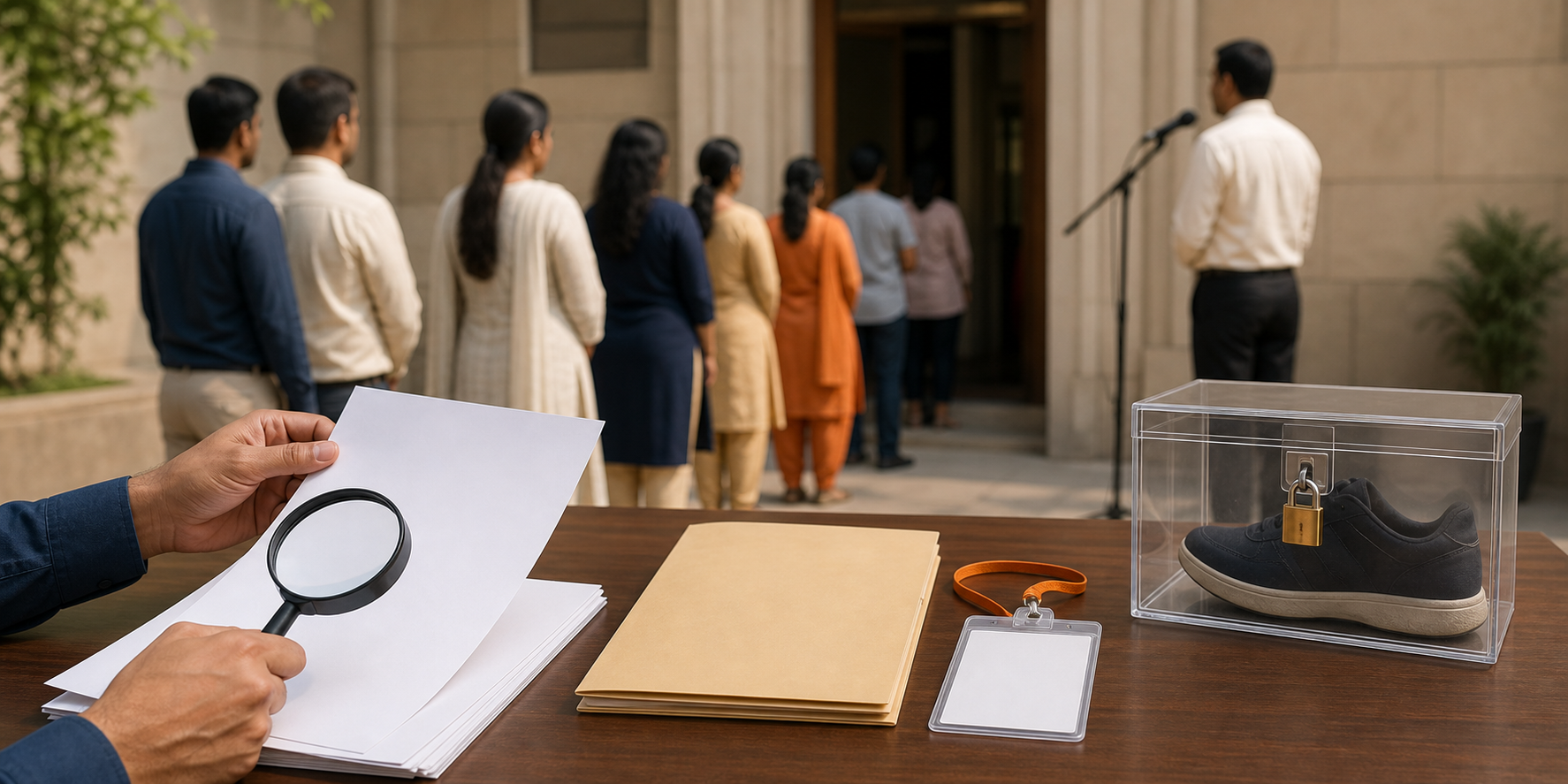
If you believe a public official has treated Sanatan Dharma disrespectfully, use a process that makes the concern harder to dismiss. The following sequence works for a personal statement, an organizational resolution, a bar-association representation, a public discussion, or a longer analysis.
- Preserve the exact language. Locate the most authoritative transcript or recording available. Record the date, forum, case context, complete sentence, and nearby exchange. A viral caption is a lead to investigate, not a record on which to pass judgment.
- Separate observation from inference. Write, “These were the words” before writing, “This was their effect” or “This appears to show bias.” Do not silently convert perceived effect into proven intention.
- Name the precise objection. Explain whether the problem is factual inaccuracy, a dismissive analogy, unequal treatment, an inappropriate tone, or the use of a sacred figure in an unsuitable context. “Anti-Hindu” is a conclusion; your evidence and reasoning must come first.
- Ask for a defined remedy. Depending on the verified facts, that could be a clarification, acknowledgment of the concern, correction of an inaccurate characterization, institutional guidance on references to sacred traditions, or use of an applicable legal review process by those entitled to invoke it. A grievance without a requested remedy easily becomes an indefinite outrage campaign.
- Choose a channel suited to your role. Litigants and counsel should use applicable court procedures and professional advice. Bar bodies can use ethical and disciplinary mechanisms. Citizens and civil-society groups can issue documented representations, hold moderated forums, and publish precise criticism. Do not contact or target an individual judge in a threatening, harassing, or personally intrusive manner.
- Set conduct limits in advance. State that threats, thrown objects, identity-based abuse, doxxing, and disruption of proceedings are unacceptable. Setting the boundary before emotions peak prevents opportunists from presenting aggression as the community’s mandate.
- Correct your own side when necessary. If a fuller transcript changes the meaning of a viral fragment, update or withdraw the claim. Satya does not become optional when a correction feels politically inconvenient.
A useful public statement can follow this structure: “In the identified proceeding, the verified words were [exact language]. In their full context, we object because [specific reason]. We request [defined remedy]. We reject threats, physical disruption, and personal degradation, and we will pursue the concern through [lawful channel].”
That formulation does more than sound civil. It forces the speaker to supply evidence, distinguish impact from intent, and accept responsibility for the chosen method. It also allows people who disagree about the remark to support a fair process.
Apply one standard to institutions, advocates, and media
A unity-first response does not mean directing every demand at the public while exempting powerful institutions. Responsibility should follow the role each participant occupies.
- Judges and courts: Sacred references should be handled with care, especially when they are unnecessary to the legal issue. Ambiguous language can be clarified without surrendering judicial independence. Security should protect deliberation, not be confused with immunity from documented criticism.
- Lawyers and bar bodies: Professional status carries duties that ordinary political theatre does not. Complaints should be record-based, de-escalatory, and handled through applicable procedures. Discipline, where considered, must also follow due process rather than public vengeance.
- Hindu organizations: Condemn the physical act without abandoning a substantiated objection to the underlying words. Obtain the complete context, appoint people capable of legal and theological analysis, identify the remedy sought, and keep spokespersons from escalating beyond the evidence.
- Inter-Dharmic forums: Bring Hindu, Buddhist, Jain, and Sikh participants together around practical norms for non-harm, truthful representation, mutual respect, and institutional accountability. The purpose should be a usable protocol, not a ceremonial photograph.
- News and social-media publishers: Label an allegation as an allegation. Do not put “mockery” in the voice of fact unless the words and context support that judgment. Avoid repeating claims such as “the first incident since Independence” until they have been checked.
- Individual readers: Do not share a clipped quotation merely because it confirms an existing suspicion. Ask what is missing, who benefits from the most inflammatory interpretation, and whether the message identifies a lawful remedy.
A claim of institutional bias requires more than one contested remark. Look for a demonstrable pattern: comparable situations treated differently, repeated language, relevant decisions, or procedures applied inconsistently. Even then, present the evidence and allow competing explanations to be tested. If the only proof is that a statement caused offence, the claim may establish hurt but not systemic bias.
Keep a simple rule for the next viral message: exact words, exact objection, exact remedy, lawful channel. If a message cannot supply the first three but demands immediate rage, do not forward it. If the grievance is sound, discipline will strengthen it. That is how you defend reverence for Lord Vishnu without helping intimidation become a normal instrument of public life.
References
- DharmaRenaissance Blog – Essential Analysis: Shoe at CJI Gavai Over ‘Lord Vishnu’ Sparks a Dharmic Unity Dialogue
- DharmaRenaissance Blog – Complete Analysis: CJI Gavai Shoe-Hurling Furor, Sanatan Dharma Claims Discover a Unity Path
