

You may have arrived here after seeing confident claims about the Bopdeo Ghat incident: that an Iftar gathering was an encroachment, that a lawful objection was treated as communal, or that the FIR has already established who was at fault. None of those conclusions has been judicially settled.
What is presently known is narrower. On March 15, 2026, a small Iftar gathering near Pune’s Bopdeo Ghat reportedly intersected with competing claims about land use and access. An altercation followed, police registered an FIR, and an investigation began. If you want to understand what happens next, keep two files separate: the criminal process must determine who did what, while the revenue and civil process must determine title, boundaries, possession, and access.
Key takeaways: what you can safely conclude
- An FIR records allegations and begins an investigation. It is not a finding of guilt, a judgment on land ownership, or proof that every person named acted unlawfully.
- An Iftar gathering on contested land does not, by itself, prove either lawful occupation or encroachment. The answer depends on records, boundaries, permissions, possession, and any applicable court orders.
- A Hindu resident’s objection to use of land is not automatically a communal offence. Equally, a property claim cannot justify assault, threats, wrongful restraint, damage, or forcible self-help.
- Group identity is not evidence. Liability must rest on individual conduct or on a legally proved common object, supported by witness accounts, medical records, video, physical evidence, and other admissible material.
- The most useful immediate actions are to preserve original evidence, obtain the actual FIR, assemble the land record, and request official demarcation. Forwarding edited clips or unverified accusations can damage both public peace and the eventual case.
An FIR starts fact-finding; it does not finish the case

A First Information Report is the formal starting point for investigating an alleged cognizable offence. Its registration means that police have recorded information requiring investigation. It does not mean that the complainant’s version has been accepted as proven.
Two Supreme Court principles help prevent a common misunderstanding. Lalita Kumari v. Government of Uttar Pradesh requires registration when information discloses a cognizable offence. Arnesh Kumar v. State of Bihar makes a different point: registration of a case does not make arrest automatic. The necessity and proportionality of arrest must be considered, and a notice to appear may be appropriate in place of immediate custody.
The usual investigative path in an altercation of this kind has several stages:
- The complainant obtains a copy of the FIR and checks that the material allegations have been recorded accurately. A complainant is entitled to a free copy. If territorial jurisdiction is used as a reason to delay recording an alleged cognizable offence, the Zero FIR mechanism permits initial registration at another police station before transfer to the appropriate station.
- Police document the location, inspect possible damage, collect relevant objects, identify cameras, and preserve available digital material.
- Where injury is alleged, contemporaneous medical records become important. A later verbal description is less reliable than a prompt examination and properly retained documents.
- Witnesses give statements about what they personally saw or heard. Rumour, inference, and information received from somebody else should be identified as such rather than presented as direct observation.
- Investigators assess the alleged roles of particular people. Depending on the evidence, possible issues may include unlawful assembly, hurt, restraint, assault, property damage, trespass, or intimidation. A religious setting alone does not establish an offence involving communal enmity or injury to religious feelings; those allegations require their own specific facts and legally relevant intention.
- After investigation, police submit the appropriate final report or charge-sheet. A charge-sheet is still an accusation placed before a court, not a conviction.
Do not treat a list of familiar penal sections circulating on social media as the case itself. For a 2026 incident, the provisions actually invoked must be read from the FIR and subsequent case papers under the law applicable on the incident date. Section numbers copied from an older explainer may not match the operative criminal codes, and charges can also change as evidence develops.
If you are named in the FIR, receive a police notice, or reasonably face arrest, speak promptly with a Maharashtra criminal lawyer. Do not ignore the notice, delete messages, edit recordings, ask witnesses to coordinate their versions, or make a public admission in the hope of calming the dispute. Each of those choices can create a problem that did not previously exist. Bail, legal representation, and fair treatment remain part of due process; bail is not an acquittal, just as an accusation is not guilt.
The criminal case and the land case have different jobs
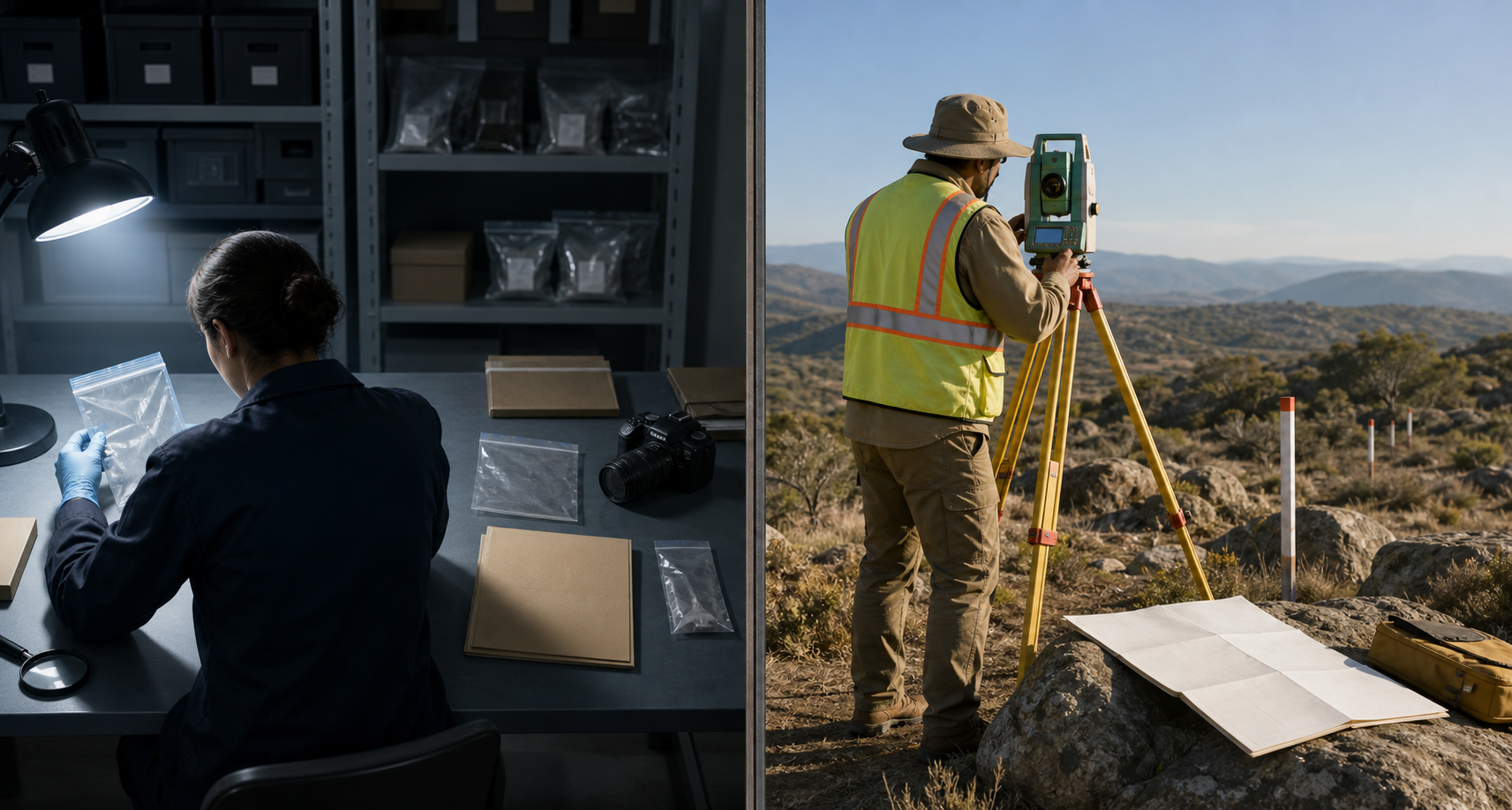
The central practical mistake is to ask the police investigation to settle every question. Police can investigate violence, threats, restraint, damage, trespass allegations, and public-order risks. A disputed title, uncertain boundary, customary approach road, or competing claim of possession normally requires revenue records, an official survey, and sometimes a civil court.
The criminal file asks who did what
Suppose one side has the stronger land claim. That may matter to an allegation of trespass, but it does not create a licence to assault, intimidate, damage property, or physically expel people through private force. Conversely, proof that somebody was assaulted does not establish that the gathering had a lawful right to use the parcel. Each proposition needs separate evidence.
This distinction also protects innocent people from collective accusation. The conduct of one participant should not be transferred to every Muslim attending Iftar, every Hindu who objected, or either community as a whole. Investigators must identify acts, words, intention, presence, and any alleged common object with evidence rather than assume them from religious identity.
The land file asks where the right comes from
For the property side, begin with the parcel rather than the quarrel. Identify the land through the applicable survey or gat details and collect the current 7/12 extract, the 8A record, the mutation or ferfar chronology, registered instruments in your possession, relevant maps, and any earlier administrative or court orders. The current revenue extracts can be obtained through MahaBhulekh, but an entry should not be treated as the final word when title itself is contested.
Next, seek official demarcation through the appropriate revenue or land-record authority, which may involve the Talathi, Tehsildar, or the DILR/TILR office. Ask for a joint exercise with notice to both sides. Preserve the application receipt, attendance record, measurements, map or geo-referenced sketch where available, photographs, and written objections. A boundary pointed out informally at the scene is far easier to dispute than a documented official measurement.
Three land questions must also be kept distinct:
- Title asks who legally owns the land.
- Possession asks who actually controls or occupies it and on what basis.
- Access asks whether a path, rasta, common ingress, permission, or other right allows somebody to pass through or use a limited portion.
A disagreement over an approach path cannot safely be resolved by blocking it with a crowd or reopening it by force. If access is urgent, a lawyer can consider a temporary, court-endorsed arrangement while the underlying claim is decided. Civil remedies may include a declaration of rights or an injunction. That route is slower than an argument at the site, but it produces an enforceable answer instead of another confrontation.
If you are directly affected, follow this sequence

Whether you are a complainant, an accused person, an injured witness, a landholder, or a neighbour, the order of your next steps matters. Evidence can disappear quickly, while an impulsive public statement can remain available indefinitely.
- Deal with immediate safety first. If anyone is injured, obtain appropriate medical care and retain the records, bills, photographs, and discharge documents. Do not delay care merely to continue recording the dispute.
- Preserve original digital evidence. Keep the unedited file, device metadata where available, date and time, the identity of the person who recorded it, and a backup. Do not add captions, music, cuts, or arrows to the only copy.
- Write a private chronology. Record what you personally saw, the sequence of events, the approximate location of each participant, exact words you can reliably remember, and what happened before and after the visible clip. Mark second-hand information as second-hand.
- Obtain and read the actual FIR. Check the date, location, named persons, unidentified persons, alleged acts, and provisions recorded. A screenshot containing one page or a translated social-media caption is not a substitute for the complete document.
- Create a separate land folder. Put the 7/12, 8A, mutation history, registered documents, maps, tax or revenue records, permissions, notices, and court orders in chronological order. Do not mix ownership documents with criminal witness material.
- Submit a written demarcation or record-correction request to the competent authority and retain acknowledgment. If an access route is disputed, describe it precisely instead of asking for a general declaration that the entire opposing claim is false.
- Choose the lawyer suited to the problem. A criminal lawyer should handle arrest risk, notices, bail, and the FIR. A property lawyer should examine title, possession, demarcation, access, declarations, and injunctions. One dispute can require both.
- Use mediation for future conduct, not for rewriting facts. A neutral process can establish temporary access, event coordination, parking, communication, or compensation where legally permissible. It should not pressure an injured person to conceal evidence, require a party to surrender land without informed advice, or purport to erase an offence that the law does not permit the parties to compound.
- Stop public escalation. Do not publish witness addresses, medical papers, children’s identities, unverified religious allegations, or calls for a crowd to assemble. Give necessary material to your lawyer and investigating officer in its original form.
If you are only following the case from outside, your responsibility is simpler: distinguish allegation from proof. Look for the FIR, official police updates, land demarcation, final police report, and court orders. A viral video may show an act; it rarely establishes title, intention, the events outside the frame, or the legal role of everyone present.
Dharma requires firmness without collective blame

A pro-Dharma response does not require silence about unlawful conduct, abandonment of Hindu interests, or sentimental claims that every conflict is a misunderstanding. It requires satya in describing the facts, ahimsa in conduct, and disciplined insistence that the same law protect every person.
That standard protects a Hindu landholder’s right to seek demarcation and an injunction. It also protects Muslims breaking their Ramzan fast from violence or intimidation. Article 25 protects peaceful religious practice subject to public order, while Articles 14 and 21 require equal and fair treatment. Religious freedom is not a title deed, but a title claim is not permission to disrupt worship through unlawful force.
The practical test is easy to apply. We should want the same advance notice, safe access, and restraint around an Iftar that we would expect around temple aarti, a Sikh langar, or a Jain or Buddhist observance. We should also expect every organiser, regardless of faith, to avoid a disputed parcel until its status or temporary use has been clarified.
Neighbourhoods on Pune’s urban-rural edge can lower the risk before the next religious gathering by taking concrete measures:
- Notify local police in advance about the time, expected attendance, location, parking, and access plan for a gathering in a sensitive area.
- Do not use a disputed parcel as an event venue while demarcation remains unresolved. Obtain written permission when the organiser does not control the site.
- Name one contact for the organiser, one for affected neighbours, and one liaison with the beat constable. This prevents ten competing messages from becoming ten versions of the plan.
- Mark the agreed access lane and parking area, and provide lighting where an evening event makes boundaries or paths hard to see.
- Use a station-level peace or mohalla committee to record temporary arrangements in writing. A handshake may reduce tension for one evening; minutes make the arrangement usable the next time.
- Apply the rule “verify first, forward last.” Preserve provocative material as evidence where necessary, but do not turn it into entertainment or communal mobilisation.
If you are involved at Bopdeo Ghat, the next useful move is not another accusatory post. Secure the complete FIR, preserve the original evidence, assemble the land record, and request joint demarcation. Let the criminal process answer who committed an unlawful act, and let the revenue or civil process answer who has the right to the land. Keeping those questions separate is how you defend both justice and social peace.
References
