
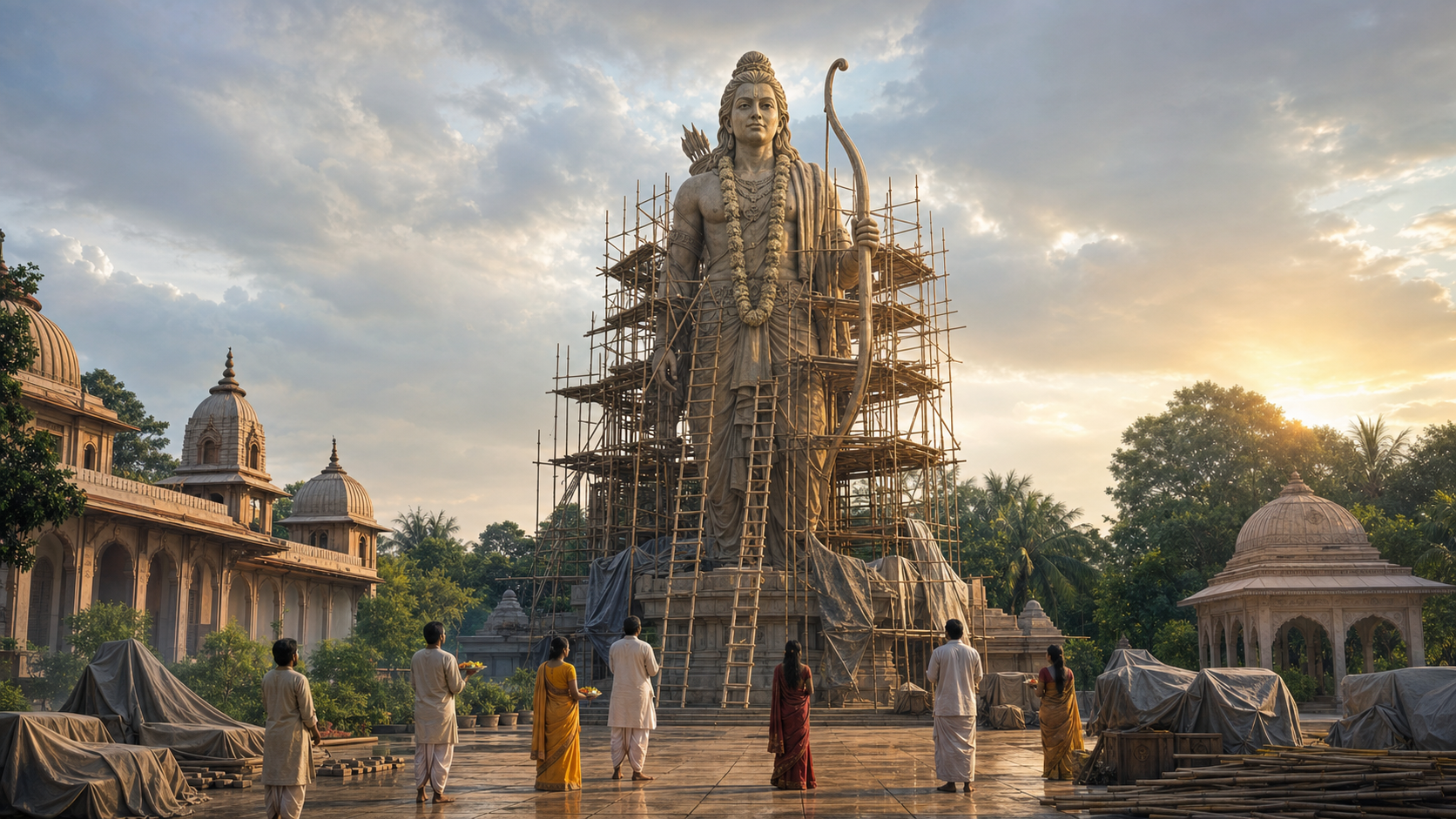
If the first thing you saw was the threat to use bulldozers against a Lord Rama statue, you may be asking why Bangladesh’s Hindu community should have to retreat from a lawful act of worship. That is the right question. But the answer cannot be another threat. It must be a documented test of whether constitutional rights still hold when a minority is intimidated.
At the Sri Radha Govinda Temple in Gaibandha, an 81-foot statue of Lord Rama was halted at roughly 80% completion after an online preacher reportedly threatened its destruction and the temple committee paused work to maintain peace. The project, reportedly budgeted at around 220 million Bangladeshi taka, was intended to become the country’s tallest depiction of Lord Rama. The practical task now is to turn understandable outrage into protection, accountability and a lawful route to completion.
A threat must not become a permit to veto worship
A religious-freedom dispute can become confused when several questions are treated as one. People may disagree about the size, location or aesthetics of a religious monument. Administrators may need to check planning permissions, structural requirements or land documents. Those matters belong in a written regulatory process. A threat to destroy a sacred image with bulldozers belongs in a security and criminal-law process.
Keeping those tracks separate matters. If a required permit is missing, the temple committee should be told exactly which document or condition is outstanding. If the project complies with the applicable rules, an opponent’s threat does not acquire the status of a planning objection. Otherwise, intimidation becomes an unofficial veto that is unavailable through law.
A short pause may protect workers when authorities believe violence is imminent. An indefinite pause with no written review date does something very different: it transfers control from the lawful owner of the site to whoever can make the most frightening threat. That consequence reaches beyond one statue. Bangladesh’s Hindus, who make up roughly 8% of the population, will reasonably read the outcome as a measure of whether their religious presence can remain visible in public life.
If you are trying to assess the case rather than merely react to it, ask five concrete questions:
- Was construction stopped voluntarily by the temple committee, through an oral request from officials, or under a written administrative order?
- Are any permits, inspections or compliance conditions outstanding, and has the relevant authority identified them in writing?
- Was a formal complaint made about the threat, and does the complainant have a receipt, reference number or case number?
- Which police or administrative office is responsible for protecting the site, its workers and its devotees?
- What objective conditions, review date and named decision-maker will determine when construction can resume?
Not every answer should be broadcast while a security operation is active. The temple committee can preserve sensitive details with its lawyer and police liaison. But the existence of a process, the legal status of the project and the conditions for resumption should not remain vague. Vagueness is where a temporary safety measure turns into permanent surrender.
The legal question has two tracks, not one
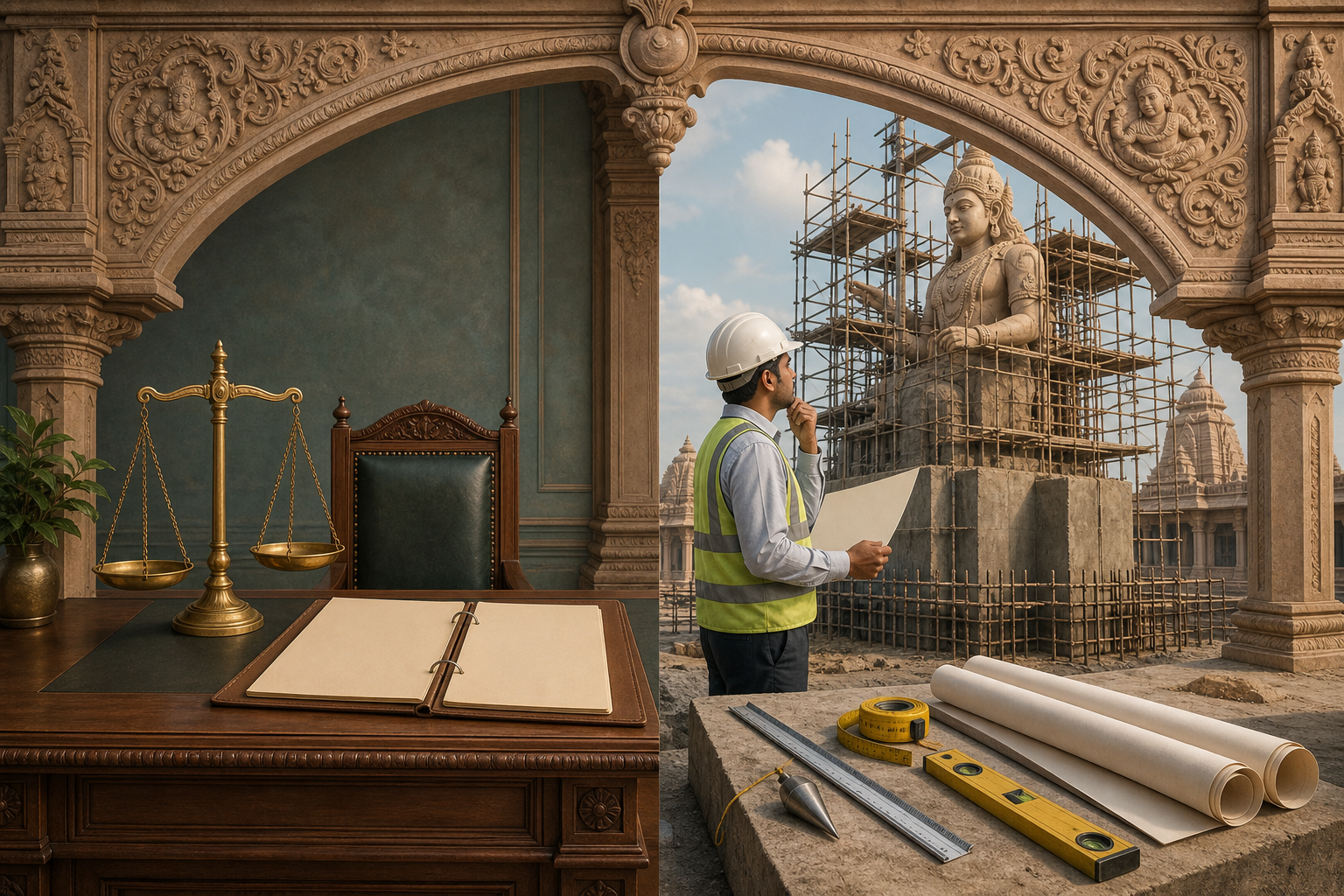
Bangladesh already has a constitutional basis for protecting the temple’s religious activity. Article 41 guarantees the right to profess, practise and propagate religion. Article 2A, despite Islam’s position as the state religion, affirms equal status and equal rights in the practice of other religions. The constitutional promise is therefore not merely that Hindu worship may occur in private. Equal religious practice must have meaning when a Hindu institution faces public intimidation.
Sections 295-298 of the Penal Code contain offences concerning acts intended to insult religion or outrage religious feelings. Cyber and public-order provisions can also become relevant when online speech crosses into incitement or a credible threat of violence. The exact charge, if any, depends on the full recording, the speaker’s words, intent, reach and surrounding facts. Activists should preserve those facts and let qualified Bangladeshi counsel map them to the applicable law.
The second legal track is the construction itself. Ownership records, approvals, engineering documents and any conditions imposed by local authorities should be assembled independently of the threat complaint. This prevents officials or opponents from blurring a regulatory question with the state’s duty to investigate intimidation.
Build a file that can survive scrutiny
A viral clip may create attention, but a legal and administrative record creates leverage. The temple committee and its counsel should maintain one controlled case file containing:
- A dated chronology of construction, threats, communications with officials and the decision to pause work.
- The original threat video or audio where lawfully available, together with the URL, account name, capture date, visible timestamp and surrounding context. Screenshots are useful for quick reference but should not replace the original file.
- Unedited copies of relevant posts, translations and transcripts. The translator’s identity and method should be recorded when disputed wording could affect the case.
- Land, ownership, planning, engineering, financial and contractor records connected to the statue project.
- Copies of complaints, protection requests, official replies and proof of delivery. Oral conversations should be followed by a short written note recording the date, participants and agreed next step.
- An incident log covering suspicious visits, additional threats, worker disruption, damage, security deployments and rumours that required correction.
Do not trim an original recording, add a provocative caption and then treat the edited version as evidence. Do not publish witnesses’ addresses, workers’ schedules or weaknesses in the site’s security. Those actions can endanger people and damage the credibility of a complaint. A Bangladeshi lawyer should review any filing and any decision to identify an alleged offender publicly.
A peacekeeping pause needs a dated route to resumption
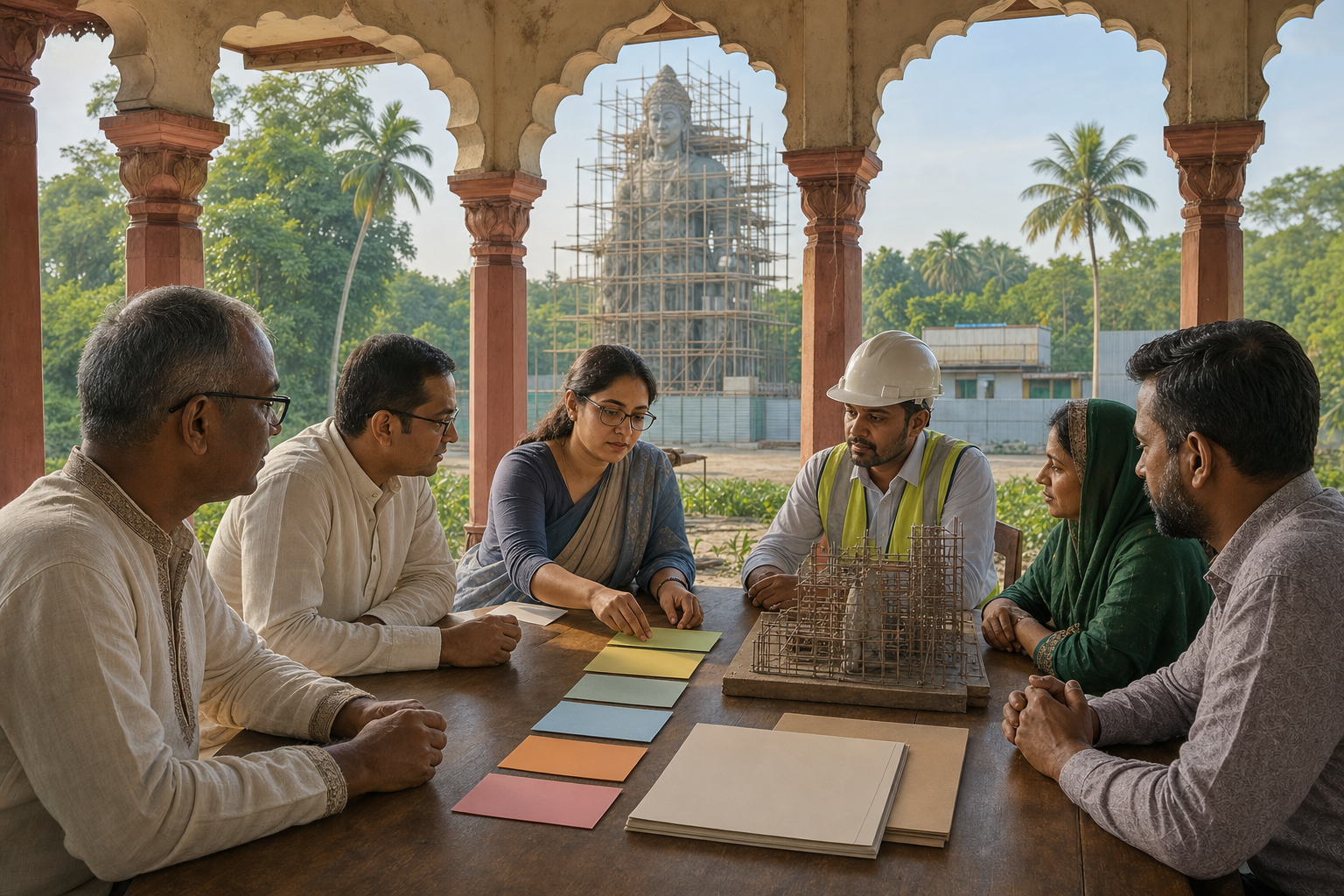
“Maintaining peace” is not a complete policy. It describes an immediate aim but does not identify who must act, what protection is required or when the lawful activity will restart. A credible pause should therefore be temporary, reviewable and tied to security milestones.
The local administration and police can make that structure visible without disclosing tactical details. At minimum, the plan should identify:
- The legal status of construction and the stated reason for the pause.
- A named police-community liaison through whom the temple committee can report new threats and receive updates.
- A site-specific risk assessment covering workers, devotees, construction access, large gatherings and periods when rumours are spreading.
- Proportionate safeguards such as police presence, controlled access, CCTV consistent with local rules and an escalation contact for urgent incidents.
- A rapid correction process for false claims about the statue, the temple or the project’s permissions before those claims mobilise a crowd.
- A fixed review date, the official responsible for the decision and the conditions that will permit construction to resume.
Public communication should be equally disciplined. Officials can state that threats are being examined, that no person has permission to damage a place of worship and that lawful construction questions will be handled through the proper administrative channel. They should also give the date of the next status review. Silence leaves the temple guessing and lets extremists portray the pause as their victory.
Progress should be measured by outcomes rather than reassuring meetings. Useful indicators include the resumption of construction, actual protective deployment, documented movement in the investigation, any prosecution supported by evidence, public cross-faith endorsements of equal worship and fewer incidents triggered by rumours. A committee can update this record without exposing operational details.
The temple should not be expected to create a private militia or stage a show of force. Security is a state responsibility. The committee’s role is to comply with lawful requirements, report risks, protect records and insist on a decision that can be reviewed rather than an indefinite verbal instruction.
Defend the temple without feeding communal escalation
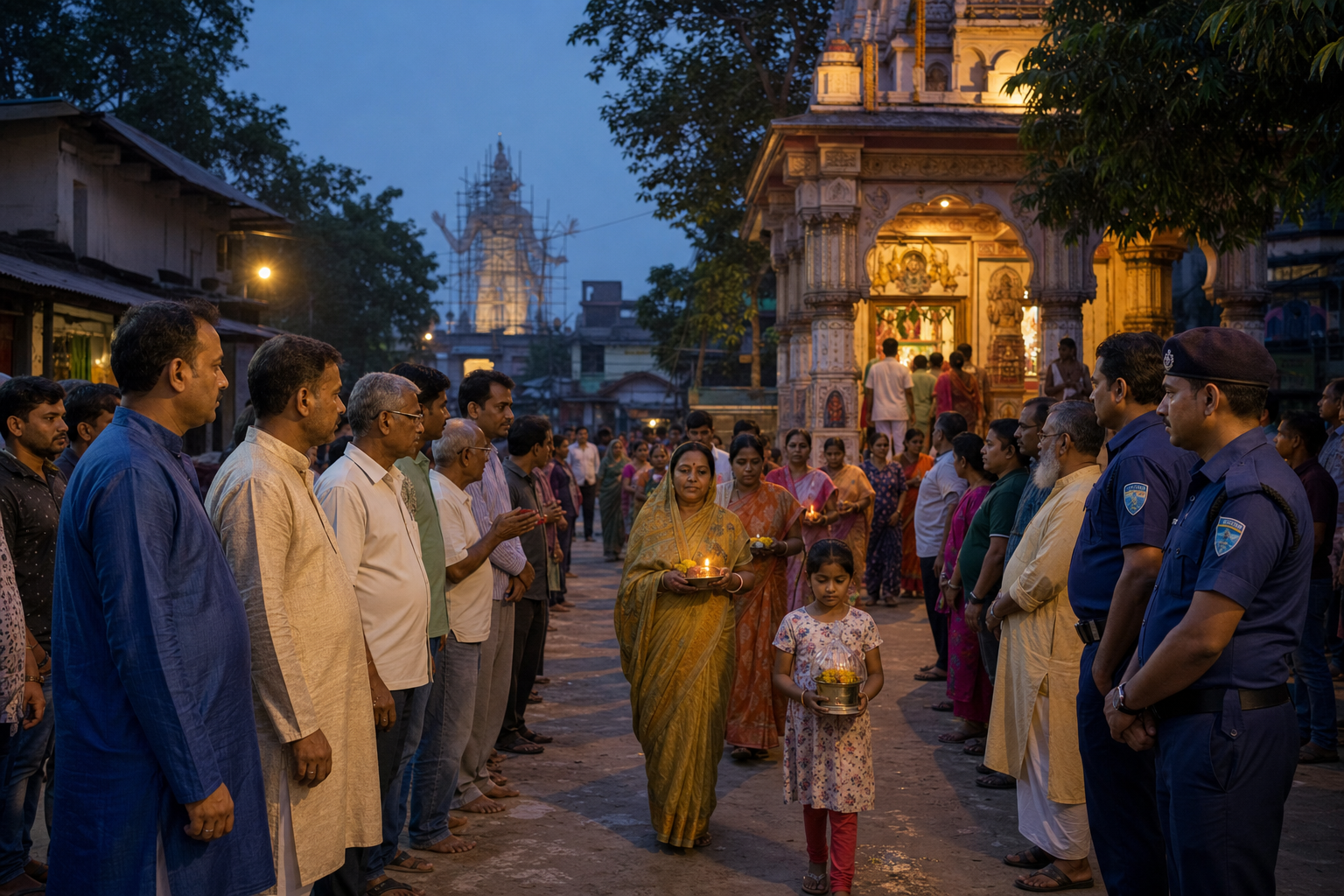
The threat can properly be described as Hinduphobic when hostility is directed at a Hindu sacred image and the community’s right to maintain it. That judgement does not justify treating Bangladesh’s Muslim population as collectively responsible. The line must remain clear: oppose the preacher’s alleged threat, any network supporting violence and any official failure to respond; do not assign guilt by religious identity.
Warnings about answering “mob culture” with another mob may express real fear and accumulated frustration, but they weaken the case for equal protection. They frighten potential allies, expose vulnerable people to greater risk and allow extremists to recast a rights claim as a contest between communities. Firmness and restraint are not opposites. For devotees of Lord Rama as Maryada Purushottama, disciplined conduct, justice and respect for rightful limits are part of the answer.
Ahimsa does not require passivity. Satya does not permit an unverified clip to become a convenient fact. Dharma does not turn revenge into justice. A strong response combines truthful documentation, lawful pressure, protection of vulnerable people and refusal to imitate the conduct being condemned.
Use four demands that officials can answer
Whether you are writing to a district official, a human-rights body, a parliamentarian or a media organisation, keep the request narrow enough to track. Ask for:
- Immediate and proportionate protection for the temple, workers and devotees.
- Preservation and investigation of the alleged threat, followed by prosecution if admissible evidence supports an offence.
- A written statement separating any construction-compliance issue from the security response, with a review date and route to resumption.
- Equal protection for every place of worship, so the request cannot be misrepresented as a demand for privilege over another community.
Avoid claims that cannot yet be proved. State that a person “reportedly threatened” the statue until the full material and identity have been authenticated. Do not claim that an arrest, prosecution or official order exists unless you can produce the relevant record. Precision makes it harder for authorities to dismiss the central demand.
Give each participant a useful role
| Participant | Useful action | What to avoid |
|---|---|---|
| Temple committee | Appoint one liaison, preserve approvals and evidence, maintain an incident log, and seek written security and resumption conditions. | Conflicting public accounts or disclosure of workers’ movements and security gaps. |
| Local Hindu advocates | Use formal complaints, peaceful delegations and verified updates; refer immediate danger to police. | Personal confrontation, doxxing, vigilantism or pressure on the temple to ignore a credible safety risk. |
| Hindu, Buddhist, Jain and Sikh organisations | Issue a joint equal-rights statement, coordinate legal aid and use a common incident-documentation standard. | Competitive branding, unsupported numbers or rhetoric that turns protection into collective retaliation. |
| Pluralist Muslim partners | Condemn threats against Hindu worship and affirm that equal citizenship protects every religious community. | Reducing the dispute to a permanent Hindu-versus-Muslim confrontation. |
| Diaspora groups and online publishers | Send evidence-led briefs, correct false claims and direct support through transparent legal or protective channels. | Rewarding inflammatory clips, circulating uncertain translations or demanding risky action from people on the ground. |
If you share a video, first identify the speaker, date, location, full context and origin of the translation. Separate what can be seen or heard from what a commentator claims it means. If any element remains uncertain, label it. The speed of a repost is far less valuable than a record that police, lawyers and responsible public officials can use.
Financial support needs the same discipline. Use a named, transparent channel that states whether funds are for legal representation, security improvements, construction or recovery. Ask who controls the account and how spending will be reported. Anger makes opaque fundraising easier; it does not make it safer.
Key takeaways
- The central religious-freedom question is whether an alleged threat can indefinitely stop otherwise lawful Hindu expression.
- Construction compliance and investigation of the threat are separate tracks. Neither should be used to obscure the other.
- Articles 41 and 2A of Bangladesh’s Constitution establish a basis for equal religious practice, while criminal and public-order provisions may apply to threats or incitement depending on the evidence.
- A defensible safety pause needs a written reason, responsible official, protection plan, review date and objective conditions for resuming work.
- The strongest civic response combines preserved evidence, qualified legal help, measurable demands and solidarity among Dharmic communities and pluralist Muslims.
- Retaliatory communal rhetoric does not protect the temple. It increases danger and weakens the demand for equal treatment under law.
If you take one step, make it a written request for the project’s exact legal status, the reference for the threat complaint or protection request, and the date of the next review. Those are answerable questions, and the answers can be tracked.
The decisive moment will not be the loudest invocation of Lord Rama online. It will be the moment workers can safely return, devotees can worship without intimidation and officials can show that a threat did not acquire more authority than the law. That is the standard Bangladesh’s promise of religious freedom must now meet.