
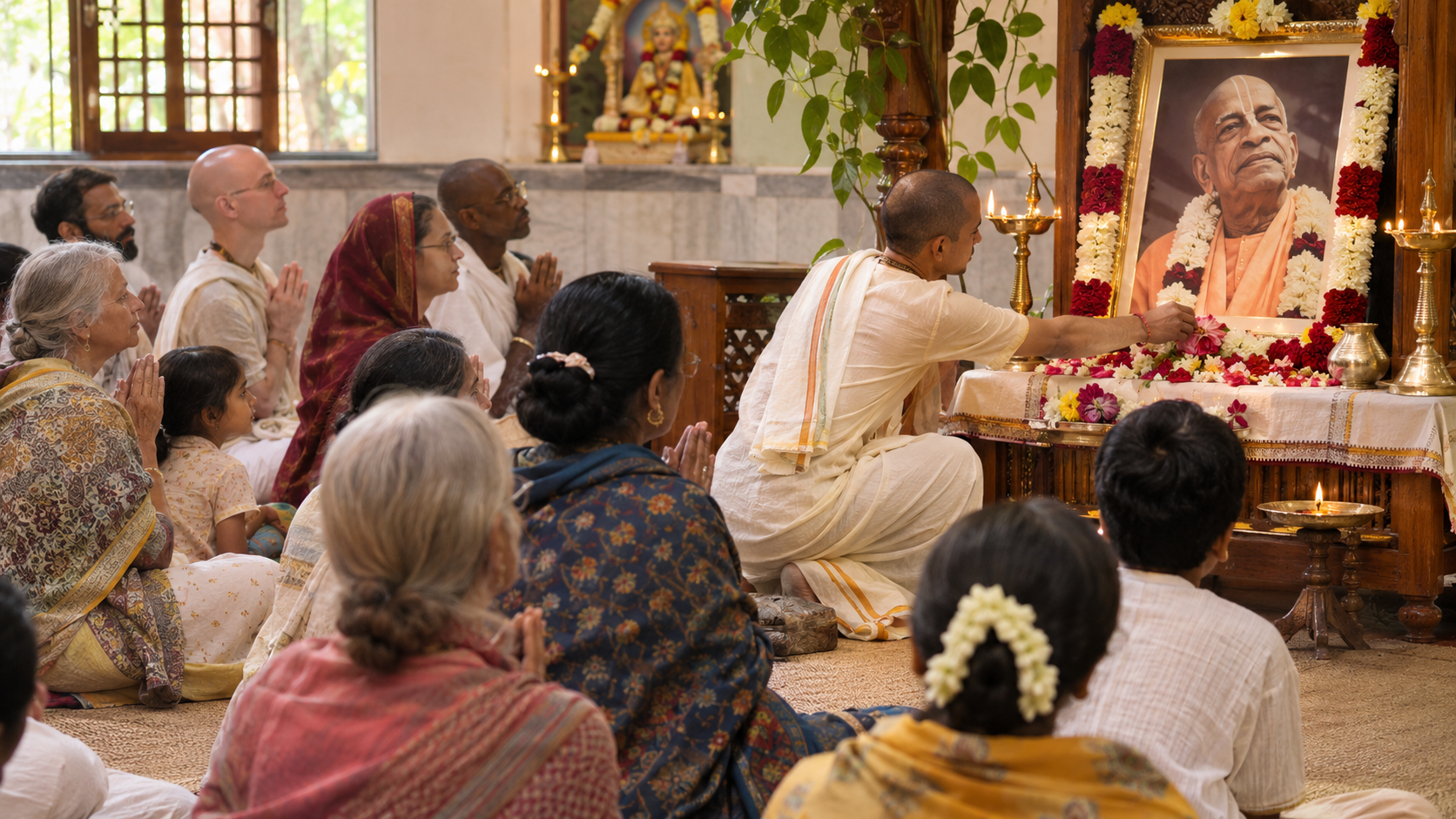
If you have come looking for the right way to observe Srila Prabhupada’s 49th disappearance, begin with a more demanding question: what will be different in your practice after the observance ends?
A worthy tribute does more than create a solemn atmosphere. It helps you hear carefully, examine your response honestly, and turn gratitude into definite service. Whether you are observing at home or helping with a temple gathering, that movement from remembrance to responsibility gives the day its practical force.
What a disappearance observance asks of you
In Vaishnava devotional usage, the word “disappearance” carries a deliberate meaning. The spiritual teacher is no longer available through physical presence, but instruction, example, and the disciple’s responsibility to serve do not end. The observance is therefore neither an ordinary anniversary nor an exercise in nostalgia.
Approach the day through three connected movements:
- Receive: hear glorification without multitasking or rushing to form your own response.
- Examine: notice which quality or instruction exposes a gap in your present conduct.
- Serve: convert that recognition into an action with a place in your actual schedule.
Before planning decorations, speakers, or a programme, write this question at the top of your notes: “Which instruction am I prepared to carry beyond this observance?” It will keep every other element in its proper place.
Hear glorification as a call to attention
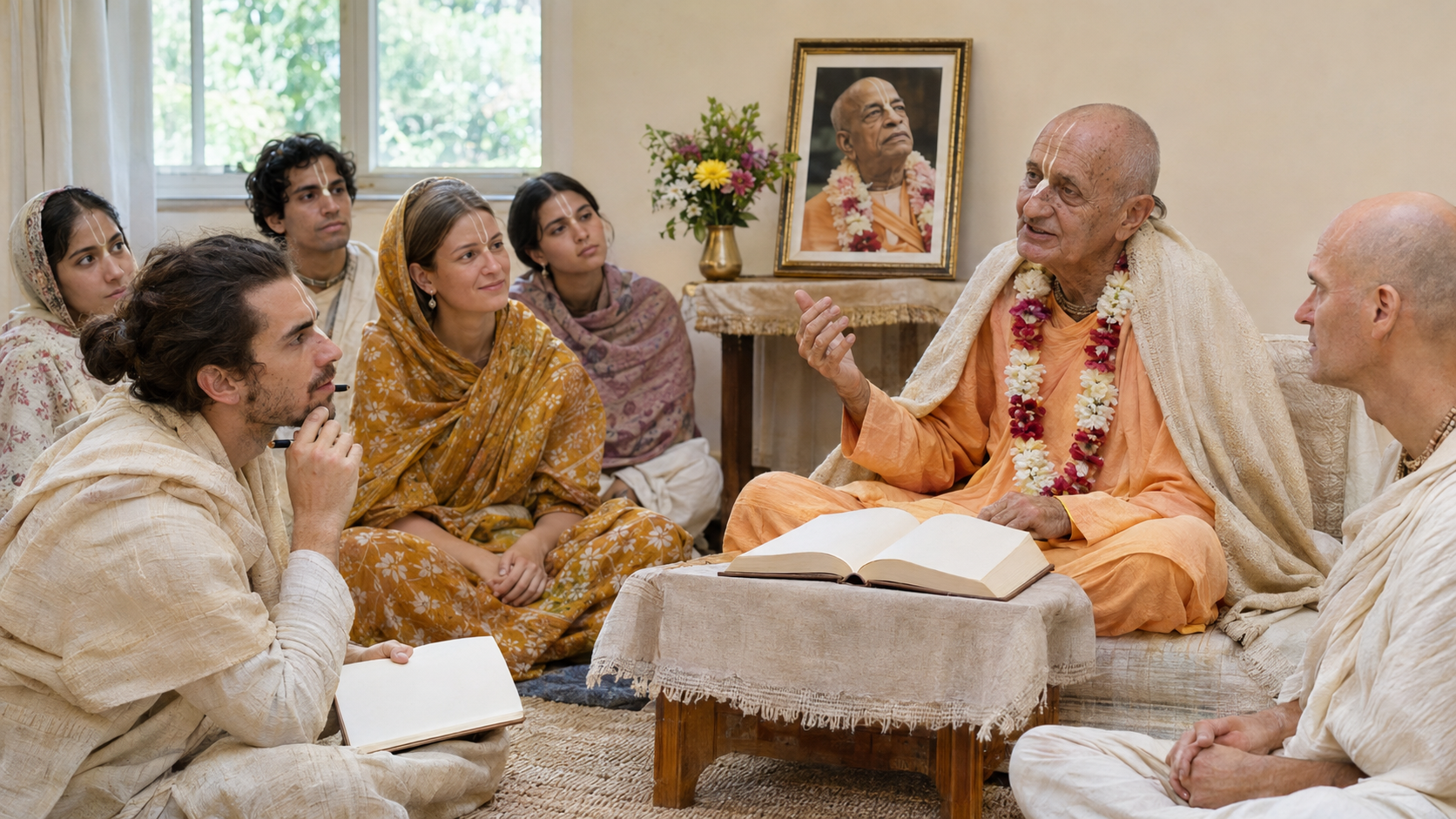
For this observance, make space for Narayani Mataji’s glorification and Bhurijana Prabhu’s glorification. Do not treat them as background material playing while you complete another task. Glorification bears fruit when you listen for what should be remembered, protected, and continued.
Use a simple listening method:
- Divide a page under the headings “quality,” “instruction,” and “service.”
- Record only what you actually hear. Keep the speaker’s name beside any recollection or emphasis so that memory does not turn paraphrase into a quotation.
- After each glorification, complete this sentence in your own words: “This remembrance asks me to…”
- Compare your responses without ranking the speakers. Different acts of glorification can direct your attention toward different dimensions of the same devotional responsibility.
- Return to the passages that made you uncomfortable or unusually attentive. They may reveal where admiration has not yet become practice.
This discipline also prevents a common mistake: collecting moving impressions while leaving every existing habit untouched. The test is not how much you wrote down. It is whether your notes identify something you can now do.
Shape the programme around hearing, reflection, and seva
If you are observing privately
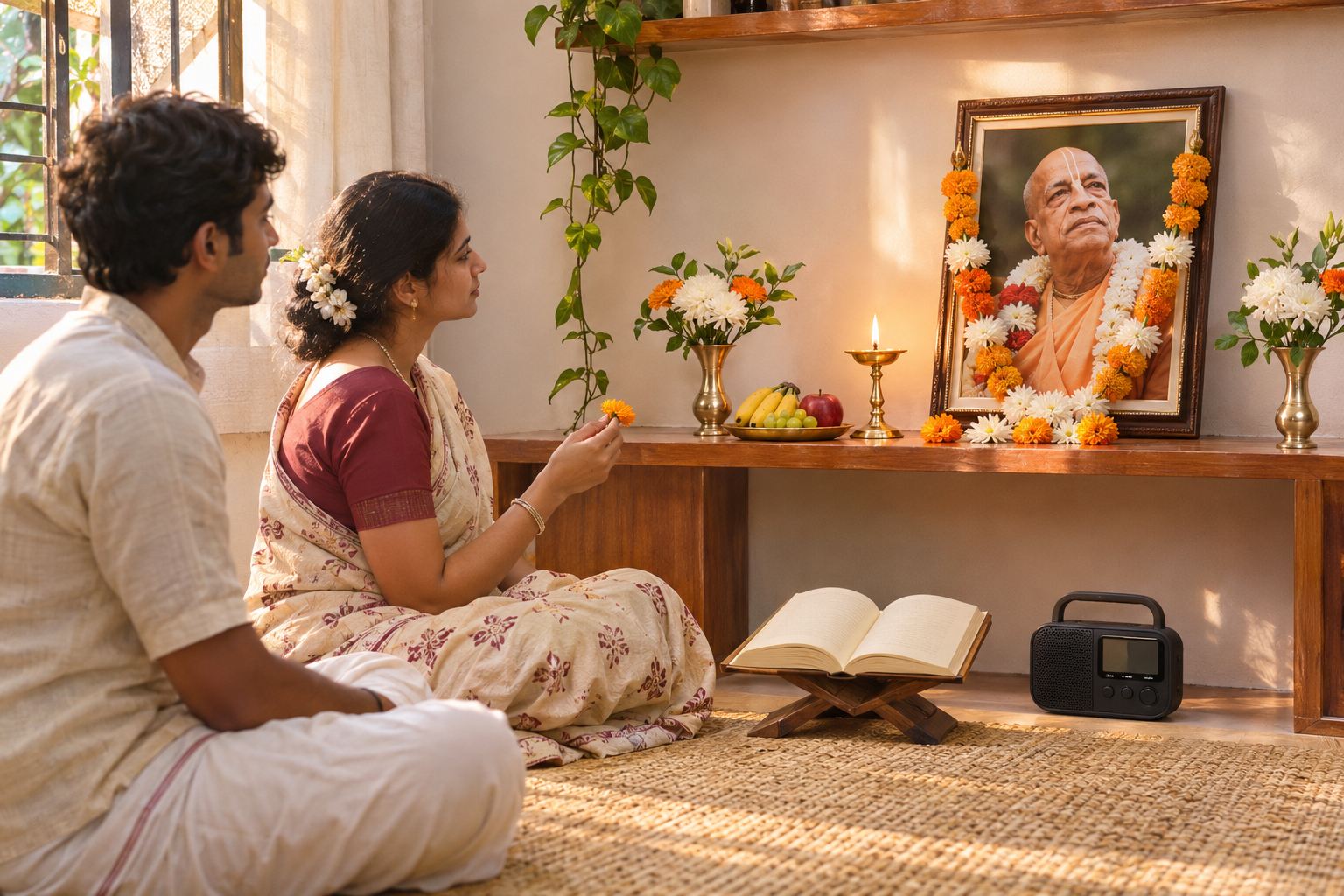
Prepare the setting before you begin. Silence notifications, place the material you need within reach, and keep a notebook open. Start with the prayer, kirtan, or worship already established in your practice rather than inventing a new ritual for the occasion.
- Hear a chosen glorification with your full attention.
- Allow a period of silence before writing. Immediate commentary can crowd out honest reflection.
- Write a personal offering that names gratitude and responsibility, not praise alone.
- Identify a service you can begin or repair, then take the first practical step before returning to routine.
The final step might be contacting a service coordinator, placing regular study in your calendar, apologising for a neglected duty, or preparing what you need for the next act of service. The point is to cross the boundary between intention and arrangement.
If you are helping with a community observance
State the purpose clearly at the beginning: the gathering is meant to deepen remembrance and renew service. That sentence helps speakers and participants resist the pull toward an overfilled programme.
- Give each reading, glorification, or reflection a clear role. Remove an item if it merely repeats what another contribution already does.
- Ask speakers to connect a remembered quality or instruction with the responsibility it creates for devotees now.
- Leave genuine room for hearing. A procession of hurried speakers can honour the timetable while defeating the purpose.
- Invite commitments without forcing public disclosure. A private, sincere decision is more valuable than a promise made under social pressure.
- Close according to the community’s established devotional practice, and confirm any service arrangements before participants disperse.
If your temple has an established order for the day, follow it and work within the guidance of local spiritual authorities. Practical structure should support the tradition you have received, not compete with it.
Choose a commitment that can survive ordinary life
Emotion during a sacred observance can be sincere and still be temporary. Your commitment is tested when the calendar, inbox, household, and old habits return. Make the action modest enough to sustain but definite enough to verify.
Use this sentence as a planning frame: “Because I have received this instruction, when this situation arises, I will take this action, and I will review whether I did it.” Each part matters. The instruction gives the action meaning; the situation gives it a trigger; the action makes it visible; the review prevents quiet abandonment.
Do not fill the instruction into that sentence from uncertain memory. Check the teaching or ask a trusted senior devotee when you are unsure. Devotion does not require careless attribution.
A workable commitment might protect regular time for hearing before leisure, restore attention to a neglected service, improve how you speak to fellow devotees, or establish a dependable role in a community project. Avoid promises that depend on continuous inspiration. Put the necessary time, place, material, or conversation in order while the purpose is still clear.
Keep a short record after the observance. Note what you intended, what actually happened, and what obstacle appeared. If the commitment failed, revise the arrangement before questioning the sincerity of the original offering. Often the weakness lies in an undefined trigger or an unscheduled responsibility.
Key takeaways
- Treat the 49th disappearance observance as a renewal of responsibility, not only an occasion for remembrance.
- Hear the glorifications attentively and keep each speaker’s recollections and emphases properly attributed.
- Listen for a quality, identify the instruction connected with it, and name the service it now requires from you.
- Build a private or community observance around hearing, reflection, and seva rather than the number of programme items.
- Leave with a scheduled, observable action that can continue when the emotional intensity of the day has passed.
Before you move on, open your notebook and finish the sentence, “This remembrance asks me to…” Then arrange the first action. That quiet act of follow-through is where your tribute begins to live.

References
- Dandavats — Srila Prabhupada’s 49th Disappearance Day | Glorification by H.G. Narayani Mataji
- Dandavats — Srila Prabhupada’s 49th Disappearance Day | Glorification by H.G. Bhurijana Prabhu

Leave a Reply
You must be logged in to post a comment.