

If you have seen the CCTV clip from Meerut, do not let a few seconds of footage become the whole case. The immediate task is to distinguish documented details from allegations that still require investigation, while keeping the woman’s safety and agency at the centre.
That discipline does not minimise the alleged violence. It directs public pressure towards the decisions that matter now: finding the accused, preserving evidence, examining the hotel’s conduct and preventing the survivor’s identity from becoming social-media material.
What is known, and what remains to be established
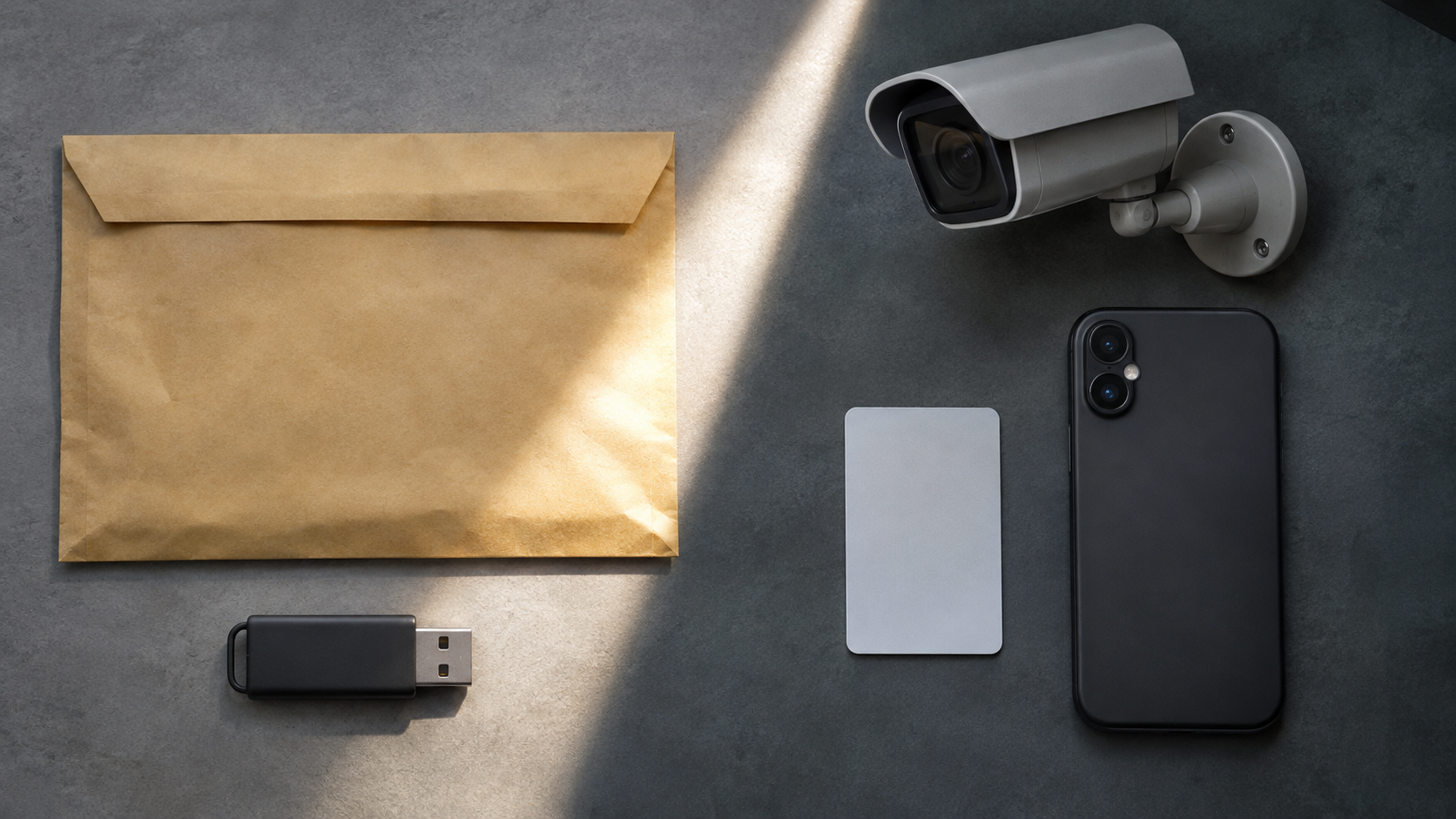
A Hindu woman from Vasundhara in Ghaziabad had reportedly known Salman, a resident of Jainpur village in Rohta, for some time. Her family had recently arranged her marriage to someone else. She was reportedly taken from a friend’s home in Mohkampur to Hotel Square on Abu Lane in Meerut, where Salman allegedly seized her telephone, confined her overnight and assaulted her. On 24 November 2026, she escaped from the hotel, but he allegedly pursued her and attacked her on the road in view of a CCTV camera.
Police reportedly registered an FIR concerning hurt, wrongful confinement and intimidation. SWAT teams were deployed to search for Salman, while Hotel Square was sealed after it allegedly provided rooms to three couples without checking identity documents. These are serious developments, but an FIR is the beginning of a criminal investigation, not a judicial finding of guilt.
Several questions therefore remain open. Has the accused been arrested? Has the complete CCTV sequence been secured rather than only the viral excerpt? What do the hotel register, payment trail and staff accounts show? Were the woman’s injuries documented? Did anyone witness her arrival, confinement, escape or the subsequent road attack? A responsible public response should keep asking those questions without inventing answers.
The reported fact that the woman’s family had arranged another marriage may help investigators examine a possible sequence of events. It does not, by itself, prove motive. Nor does a prior relationship or acquaintance diminish her right to leave, end contact or refuse a meeting. Familiarity is not consent, and consent to meet someone is not consent to surrender a telephone, remain inside a room or endure violence.
Recognise confinement before it is dismissed as a relationship dispute
Cases involving people who previously knew each other are often softened by the language of a quarrel, breakup or private matter. That framing can hide the decisive acts. Taking someone’s telephone restricts her ability to summon help. Blocking an exit removes her freedom to leave. Threats and physical force turn personal access into coercive control.
If this pattern appears in your own life or family, judge the conduct rather than the label attached to the relationship. A boyfriend, former partner, friend or prospective spouse has no greater right to confine or assault a woman than a stranger does. A clear refusal does not become negotiable because the other person feels rejected, angry or entitled to an explanation.
Treat the removal of a telephone, obstruction of an exit, threats against relatives or pursuit after an attempted escape as danger signals. The safer response is to move towards a staffed public place, contact police and alert trusted people. Do not arrange a private confrontation or send the woman back to settle the matter face to face. That can restore the alleged aggressor’s access at the moment when control is already escalating.
Families also need to resist victim-blaming. Questions about why she met him, how long she knew him or whether she concealed the relationship may be relevant to reconstructing events, but they do not transfer responsibility for confinement or assault to her. Ask first what she needs to be safe, who still has access to her and whether the accused knows where she is staying.
What you should preserve if a similar incident reaches your family
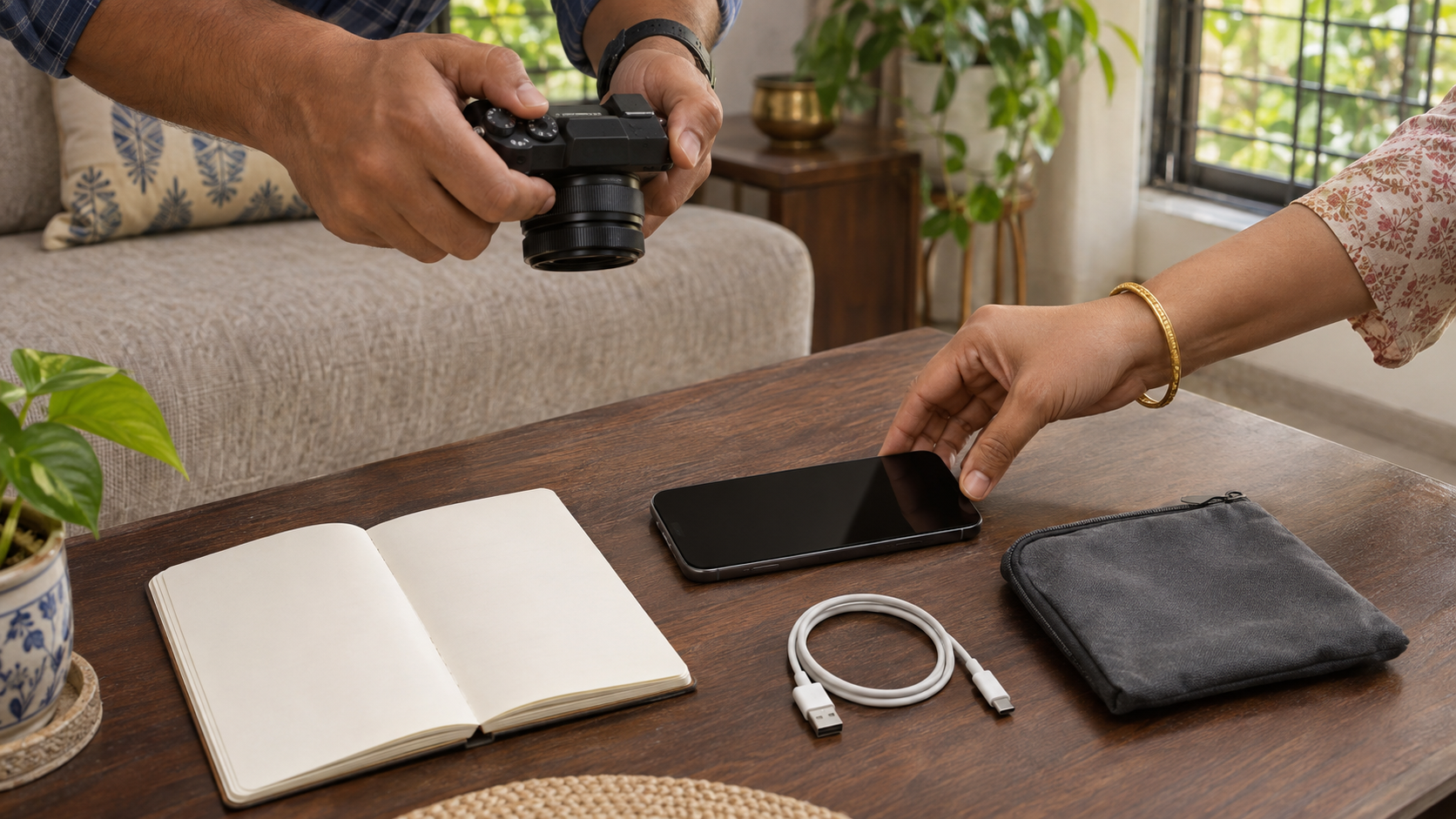
Evidence is often scattered across telephones, cameras, payment systems and human memory. Preserve it early, but never delay urgent medical care or immediate safety in order to collect it. For case-specific legal decisions, speak with a qualified lawyer and the investigating authorities.
- Separate the woman from the alleged aggressor. Use a location he cannot freely enter, tell trusted people who may provide access and avoid disclosing her whereabouts in public messages.
- Write a chronology in her own words. Record the sequence of locations, approximate times, calls, messages, threats, removal of the telephone, attempts to leave, the escape and any later pursuit. Do not pressure her to fill gaps or make the account sound more dramatic.
- Keep original digital material. Preserve messages, call logs, photographs, payment records and complete video files. Save links and screenshots showing when a circulating clip appeared, but do not crop, annotate or repeatedly recompress the only copy.
- Identify evidence held by others. Note the hotel entrance, reception area, nearby businesses, road cameras, staff members, drivers and bystanders who may have records or observations. Investigators or a lawyer can pursue formal preservation through the proper process.
- Document injuries and damaged property. Seek appropriate medical attention and retain the records produced during that care. Keep damaged clothing or belongings separate rather than washing, repairing or discarding them before receiving professional guidance.
- Protect the woman’s identity. Do not publish her face, name, telephone number, address, marriage details or unblurred footage. Viral circulation can expose her to harassment, distort witness memories and turn evidence into entertainment.
Do not coach the woman or circulate a jointly edited version of events among relatives. Her account should remain hers. Small inconsistencies caused by stress, uncertainty or the passage of time should be clarified through a proper investigation, not repaired by family consensus.
Demand institutional accountability without replacing evidence with rumour
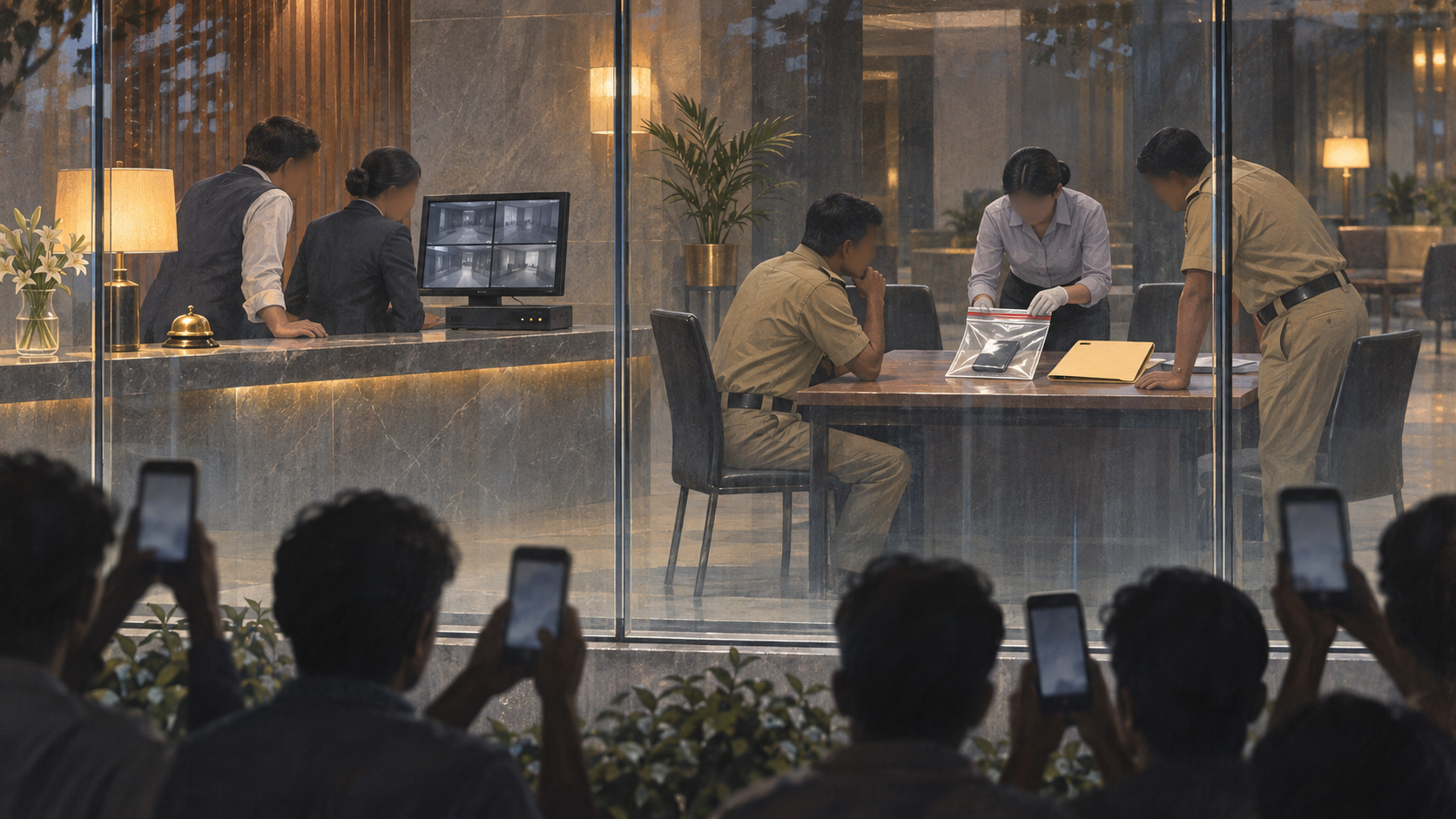
The hotel’s records may matter as much as the viral clip
The reported failure to check identification deserves scrutiny because a functioning check-in record can help establish who entered, when they arrived, how the room was paid for and which employees were present. In this case, the hotel was sealed after reportedly accommodating three couples without identity checks.
An identification check is not a guarantee against assault. A person can provide genuine documents and still commit violence. Its practical value is traceability, and it works only when records are accurate, retained and available to investigators. Public officials should therefore establish what the hotel recorded, whether staff followed applicable rules, when the CCTV was preserved and whether anyone sought help inside the premises. The precise legal consequences should depend on the rules actually in force and the evidence recovered, not assumptions made online.
Police action must be followed beyond the FIR
Registration of an FIR and deployment of a search team are necessary first steps, but they do not finish the work. You can judge institutional seriousness by what follows: preservation of complete footage, collection of hotel records, examination of witnesses, protection of the complainant, apprehension of the accused and a legally sustainable case based on admissible evidence.
Public attention should stay on those milestones. Avoid publishing unverified sightings or addresses. They can expose uninvolved people, interfere with police work and create opportunities for vigilante violence. If you possess relevant material, give the original to investigators or a lawyer rather than releasing it through a social-media account.
A pro-Hindu response should be firm and factually exact
The complainant’s Hindu identity and the accused’s Muslim identity are part of the reported facts. They should not be concealed. But those identities alone do not establish a religious motive, an organised conspiracy or collective guilt. No such conclusion is demonstrated by the known details of this case.
Protecting Hindu women requires more than attaching a communal slogan to every crime. It requires taking a woman’s refusal seriously, refusing to romanticise obsessive conduct, enforcing rules consistently and pursuing the individual accused through law. Unsupported claims make it easier for critics to dismiss legitimate safety concerns and can reduce the woman herself to a symbol in someone else’s argument.
If investigators uncover evidence of religious targeting, coordinated conduct or assistance from others, that evidence should be reported plainly. Until then, the defensible demand is already strong: investigate the alleged confinement and assault thoroughly, locate the accused, examine the hotel’s failures and protect the complainant from retaliation and public exposure.
Key takeaways
- The Meerut case concerns allegations that a Hindu woman was deprived of her telephone, confined overnight in a hotel and assaulted before and after her escape.
- A prior acquaintance never cancels a woman’s right to refuse contact, leave a room or end a relationship.
- If a similar incident affects your family, prioritise separation from the alleged aggressor, medical care, an uncoached chronology and preservation of original records.
- Do not circulate the woman’s identity or unblurred footage. Publicity can create new risks without strengthening the investigation.
- The hotel inquiry should examine identification practices, guest and payment records, staff conduct and preservation of the complete CCTV sequence.
- Report religious identities accurately, but do not claim a religious motive or collective conspiracy unless evidence establishes one.
The most useful thing you can do now is keep attention on verifiable progress rather than the velocity of the clip. Look for a confirmed arrest, preserved evidence, a transparent hotel investigation and protection for the woman. Those outcomes will tell you far more about justice in this case than another round of speculation.
References

Leave a Reply
You must be logged in to post a comment.