
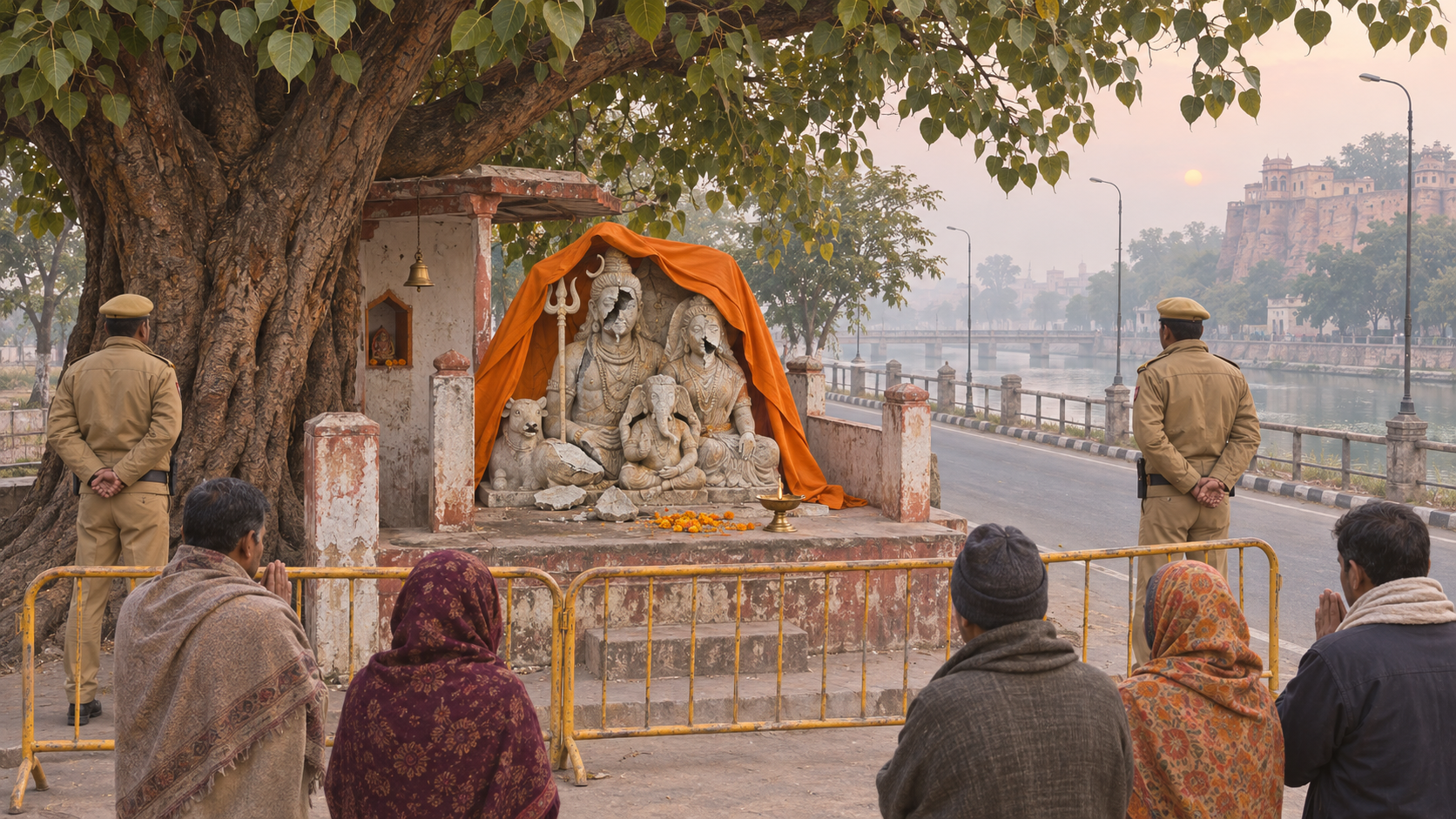
If you came here after seeing the Kota protest, you may be asking three immediate questions: What actually happened, has anyone been arrested, and what can devotees do now that will help secure justice? The facts are serious enough without embellishment. The most useful response is disciplined: establish the evidence, press for accountable police action, protect the place of worship and refuse to let rumours decide the case.
A Shiv Parivar murti was found damaged at a small religious site beneath a peepal tree near a canal on Thekda Road, within the Udyog Nagar police station limits. Hindu organisations and residents protested, a police case was registered against unidentified persons, and no arrest had been announced in the latest available account.
What is established in Kota, and what remains unproven
The presently reported account is specific but limited. Devotees regularly worshipped at the site. The murti was found cut and damaged, reportedly with a grinder. Bajrang Dal, Vishva Hindu Parishad and other Hindu organisations reached the location and demanded prompt action. VHP Kota Mahanagar minister Ashish Sharma said the desecration had deeply hurt devotees and called for stringent action.
Local councillor Om Prakash Khatana submitted a formal complaint. Udyog Nagar police then registered a case against unidentified persons. Station House Officer Anand Yadav said inquiries had begun to identify those responsible and determine the circumstances of the damage. That establishes an official investigative process; it does not establish the offender or motive.
Representatives of Hindu organisations also reported that articles used in worship were missing. That claim matters because it may affect how investigators understand the incident, but it should remain described as reported unless a police inventory or other evidence confirms it.
Four questions therefore remain open: who caused the damage, what evidence connects that person to the site, whether anything was taken, and whether the purpose was theft, desecration, communal provocation or something else. Protesters have raised the possibility of a deliberate attack intended to hurt Hindu religious sentiment. It is a legitimate line of inquiry, not yet a proven conclusion.
This distinction is not an exercise in minimising the offence. It protects the demand for justice from an avoidable weakness. A case built on preserved evidence is harder to dismiss than an allegation amplified before the facts are known.
Why damage to a murti cannot be treated as ordinary breakage
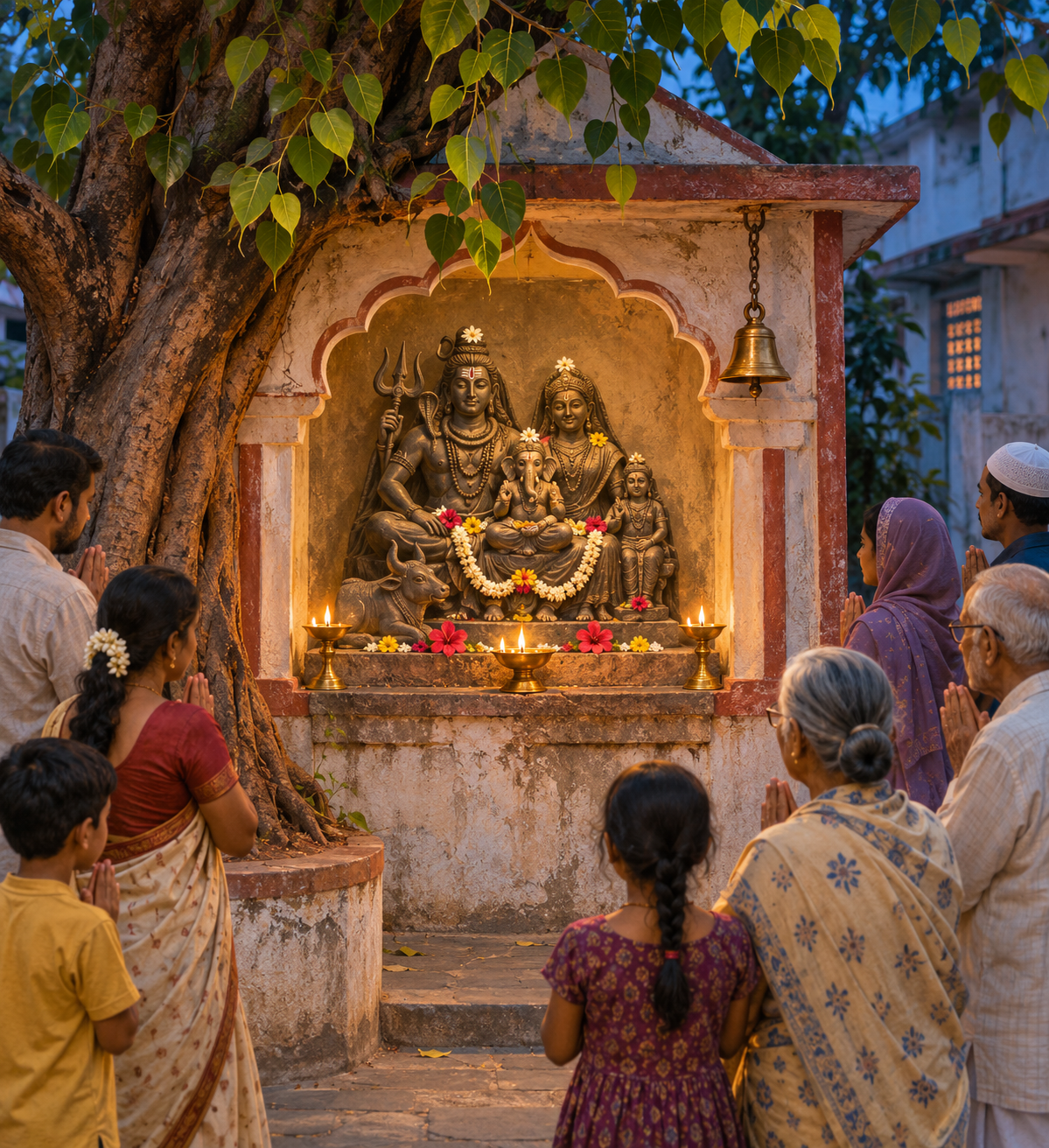
For devotees, a murti receiving regular worship is not a decorative object. It stands within a living relationship of darshan, puja, offering and communal memory. Damaging it interrupts worship and violates a place that people have approached with reverence. That is why the word murti is more precise here than treating the sacred form as an interchangeable statue.
The setting also matters. This was described as a small religious site beneath a peepal tree near a canal, not a monumental temple complex. Much of Hindu religious life is sustained in precisely such neighbourhood spaces: a tree, a platform, a shrine and a regular circle of devotees. Their modest physical scale does not make them culturally disposable.
Authorities and community representatives should therefore address three distinct harms. The first is the physical damage that must be documented as evidence. The second is the interruption of worship, which requires a decision by the site’s custodians and appropriate religious guides about repair, replacement and any observances required by local tradition. The third is the loss of security felt by devotees who regularly use the site.
Replacing the murti alone would answer only one part of the problem. If the investigation disappears from public view or the site remains unprotected, the community is left with a restored object but no confidence that the offence was taken seriously.
Turn the protest into five accountable demands
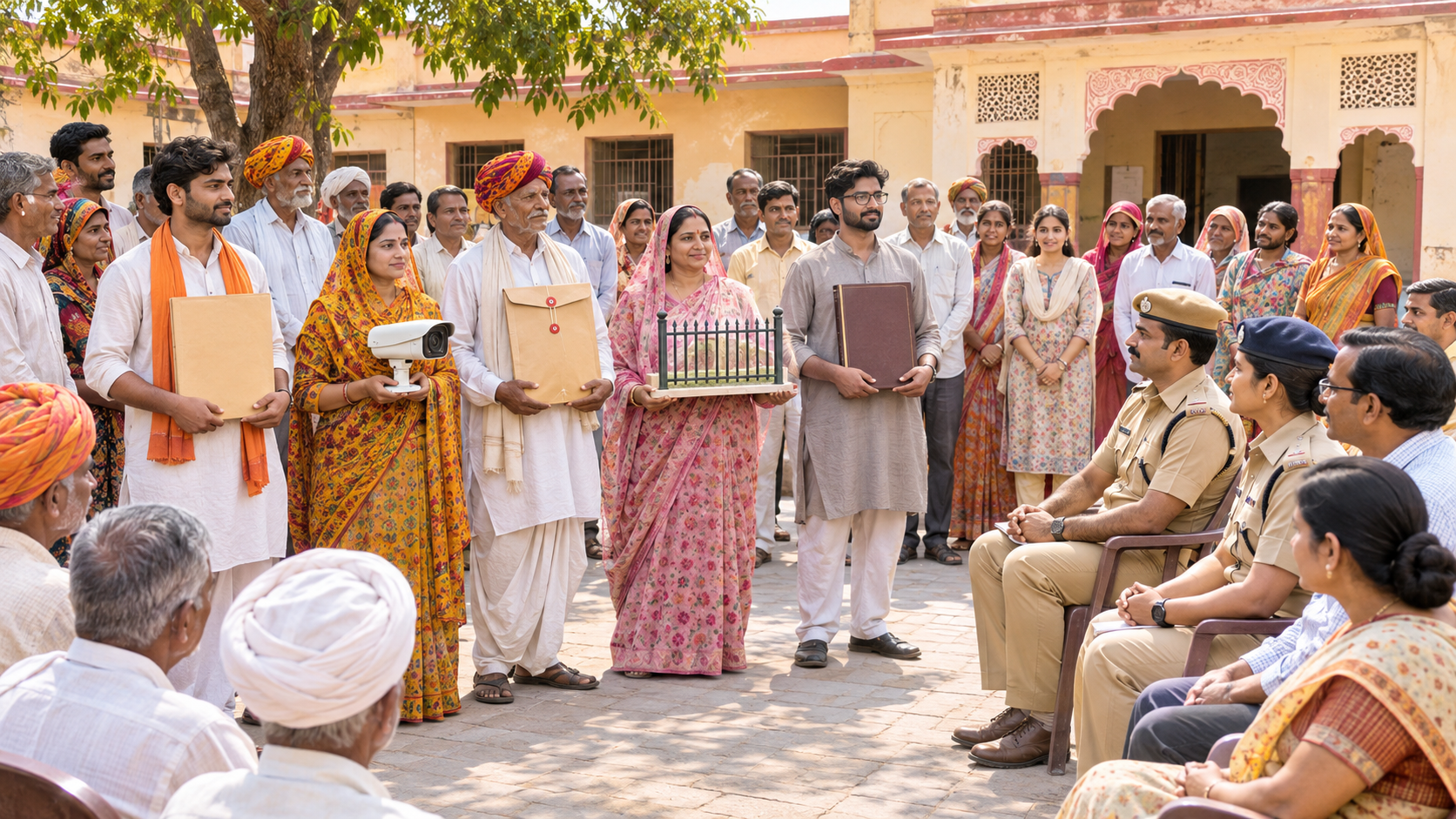
Public protest has the greatest effect when its demands can be checked later. A general call for action expresses anger, but a written list creates responsibility. Residents and participating organisations can unite around five concrete requests:
- Confirm the official record. Obtain the case identifier, the police contact responsible for receiving relevant information and written acknowledgement of any additional evidence submitted. Sensitive investigative details need not be made public, but the existence and status of the case should not depend on hearsay.
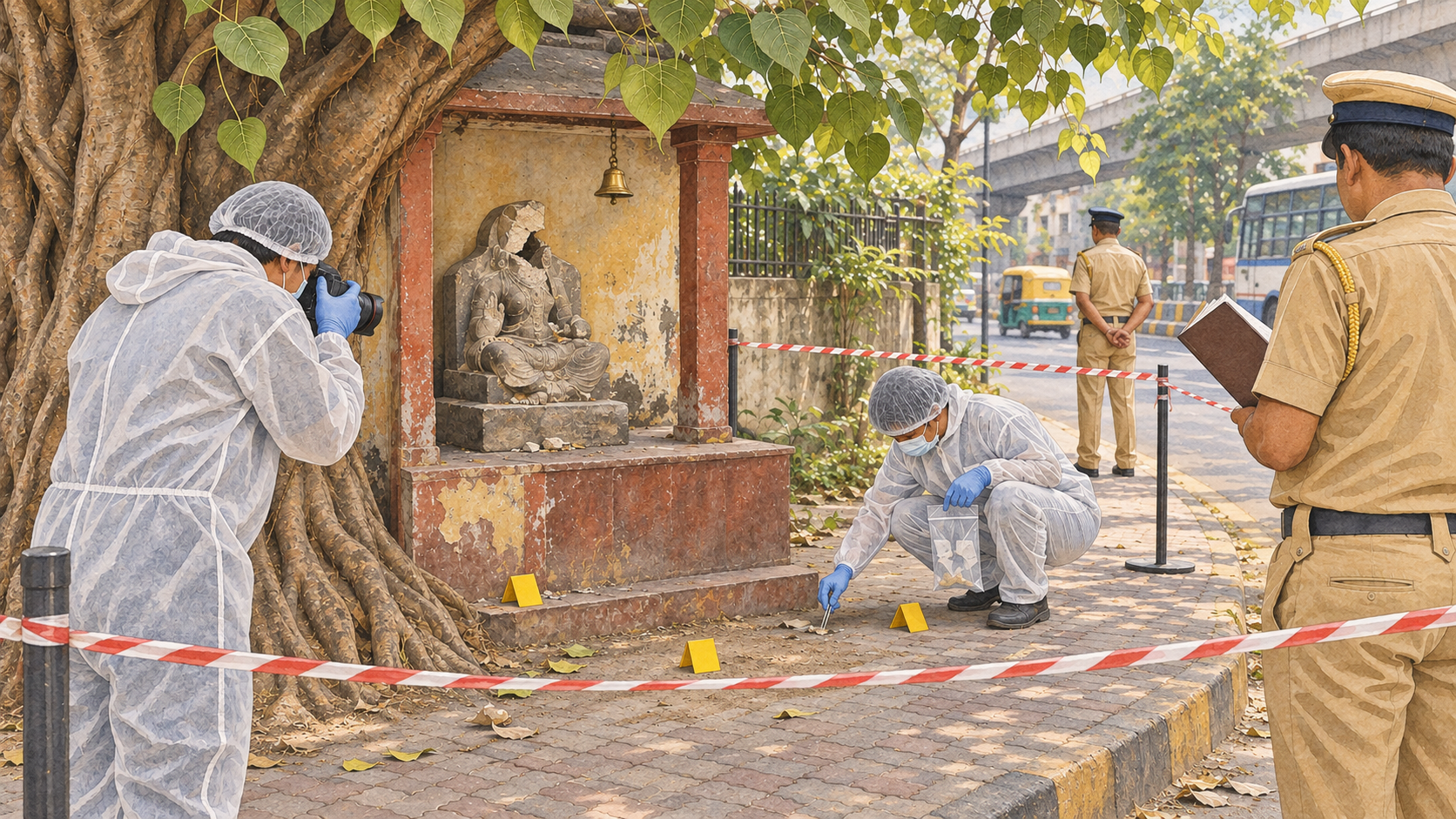
- Complete an evidence and property inventory. The damaged pieces, tools or marks at the location, photographs of the scene and any reportedly missing worship articles should be recorded before cleanup or restoration changes the site.
- Set a reasonable update process. Ask Udyog Nagar police to communicate through an authorised officer at defined stages, even when the only responsible update is that inquiries continue. This reduces the vacuum in which false arrest claims, invented motives and misidentified suspects spread.
- Create a site-protection plan. Police, the councillor, local residents and the site’s custodians should assess practical measures such as visibility, lighting, a reliable local contact and surveillance where lawful and workable. Nearby small shrines with similar exposure should also be reviewed rather than waiting for another incident.
- Separate evidence collection from religious restoration. The murti and site should be restored only after investigators have completed the necessary documentation. The religious decisions should then be made by the people responsible for worship, with guidance appropriate to their tradition.
The demand for a prompt arrest should always mean a prompt, evidence-led investigation followed by action against the person actually responsible. Pressuring police to announce a name before the evidence supports it can harm an innocent person, give the real offender an advantage and weaken the eventual prosecution.
Protest organisers can also appoint one liaison to communicate with police and one spokesperson to issue verified updates. Keep a simple claim log with three labels: directly observed, reported by an identified witness and unverified. That small discipline prevents forwarded messages from quietly turning into supposed facts.
Protect the evidence, the devotees and public trust
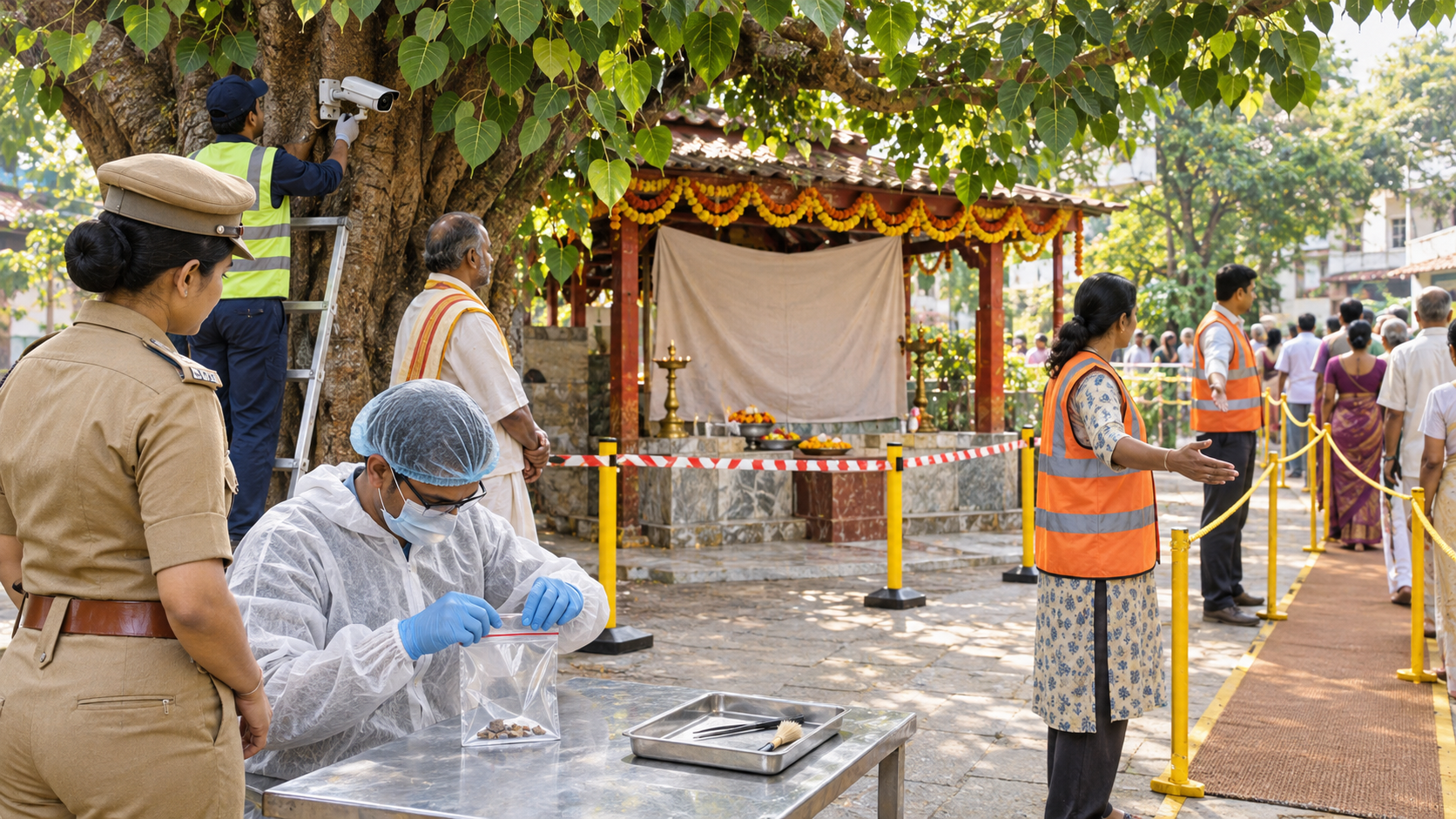
If you witnessed the discovery, photographed the site or help organise the local response, a few practical choices can materially strengthen the case:
- Do not move fragments or clean the area prematurely. Stay outside any police cordon and avoid touching surfaces that may retain useful evidence. Religious concern for the murti and investigative preservation should be coordinated, not placed in conflict.
- Keep original photographs and videos. Preserve the unedited files with their original timestamps and metadata. Note where you stood, when the recording was made and whether you personally saw the scene or received the file from someone else.
- Distinguish observation from inference. “I saw the damaged murti at this time” is evidence. “This group must have done it” is an allegation unless supported by verifiable information.
- Document reportedly missing items carefully. Record who last saw each item, when it was seen and who normally handled it. Do not enlarge the list merely because an object cannot immediately be located.
- Give witness details privately to police. Publishing names, phone numbers or unsupported accusations on social media can expose witnesses and uninvolved people to danger. Keep a copy of what was submitted and request acknowledgement.
- Reject confrontation and retaliation. Do not approach a suspected person, damage another place of worship or treat an entire community as responsible for an unidentified offender. Such acts endanger people, obstruct the original demand for justice and hand the investigation a new crisis.
Rumour control is not silence, and it is not surrender. It means communicating the strongest verified facts repeatedly: the location was a functioning Hindu religious site, the Shiv Parivar murti was damaged, a formal complaint led to a police case, an investigation began, and the offender had not yet been publicly identified in the latest report.
Peaceful assembly should follow the same discipline. Keep access routes clear, designate volunteers to prevent confrontation, record any communication with officials and end each gathering with a precise statement of the next expected action. The point is to make institutional inaction visible if it occurs, not to create disorder that overshadows the desecration.
Key takeaways for the next community meeting
- The damaged Shiv Parivar murti belonged to a regularly used religious site in Thekda under Udyog Nagar police station.
- A formal complaint was submitted and police registered a case against unidentified persons, but no arrest had been announced in the latest available account.
- The identity and motive of the offender remain unproven; reports of missing worship articles also require evidentiary confirmation.
- A strong protest should demand a documented investigation, scheduled status updates, site protection and a properly sequenced restoration process.
- Residents can help by preserving original files, protecting the scene, recording witness information and refusing to circulate unverified names or communal accusations.
At the next meeting, reduce these demands to a one-page record with five fields: case status, evidence submitted, responsible police contact, date of the next update and temporary protection for the site. Give the same document to the councillor, police and participating organisations so that everyone is working from one verifiable set of expectations.
The useful next milestone is not a louder rumour or a more inflammatory slogan. It is a defensible identification of the offender, lawful action based on evidence, a secure site and the dignified resumption of worship. That is the standard by which the response in Kota should now be judged.
References

Leave a Reply
You must be logged in to post a comment.