
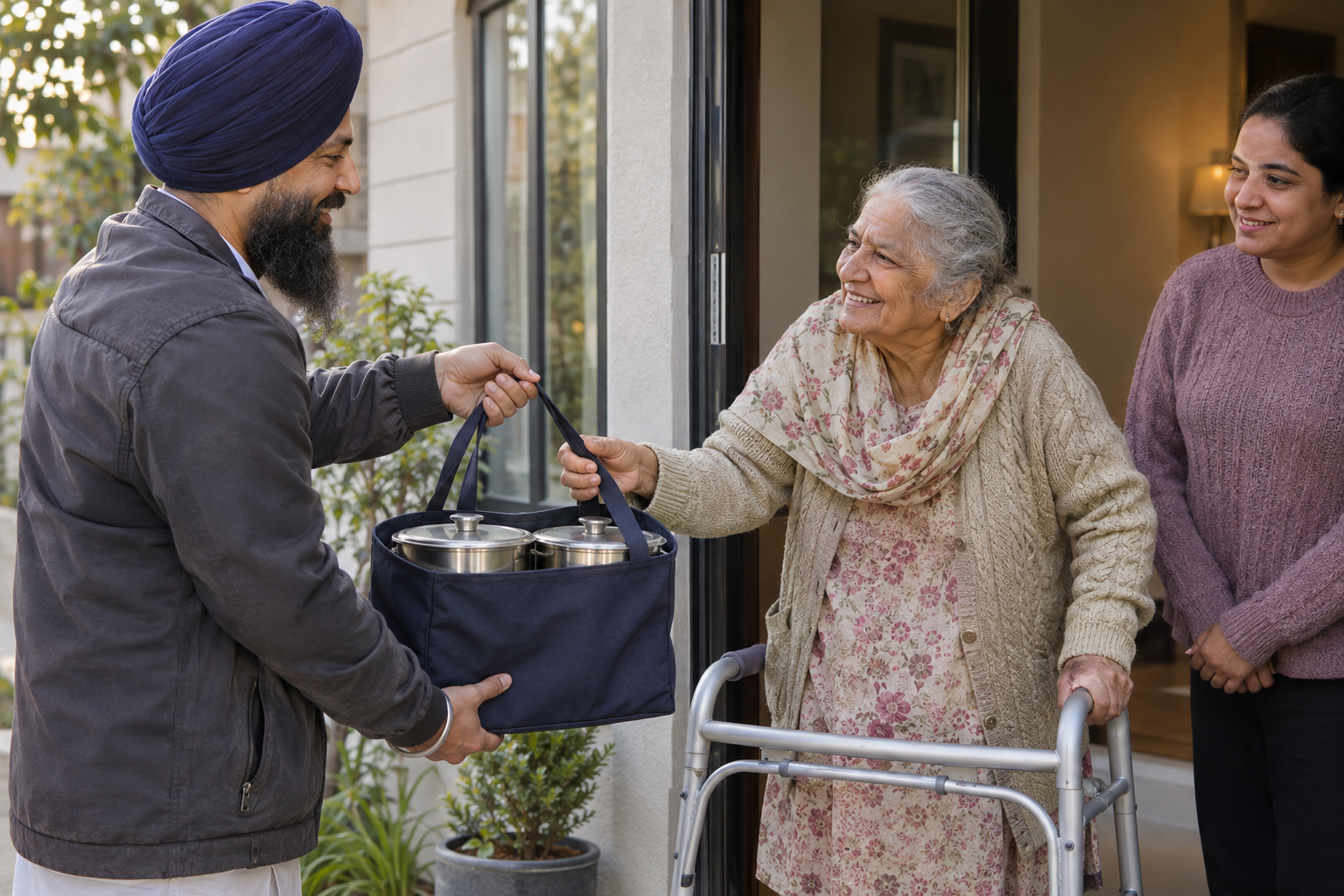
You may already have food, willing sevadars, and a family asking for help. The difficult part is not the generosity. It is turning one compassionate delivery into a service that remains safe, discreet, and dependable when more requests arrive.
If you are arranging a doorstep langar route, build it around three promises: the household will be treated with dignity, the kitchen will make only the commitments it can keep, and every meal will have a safe handoff from cooking pot to recipient.
Keep the Guru’s kitchen recognizable at the door
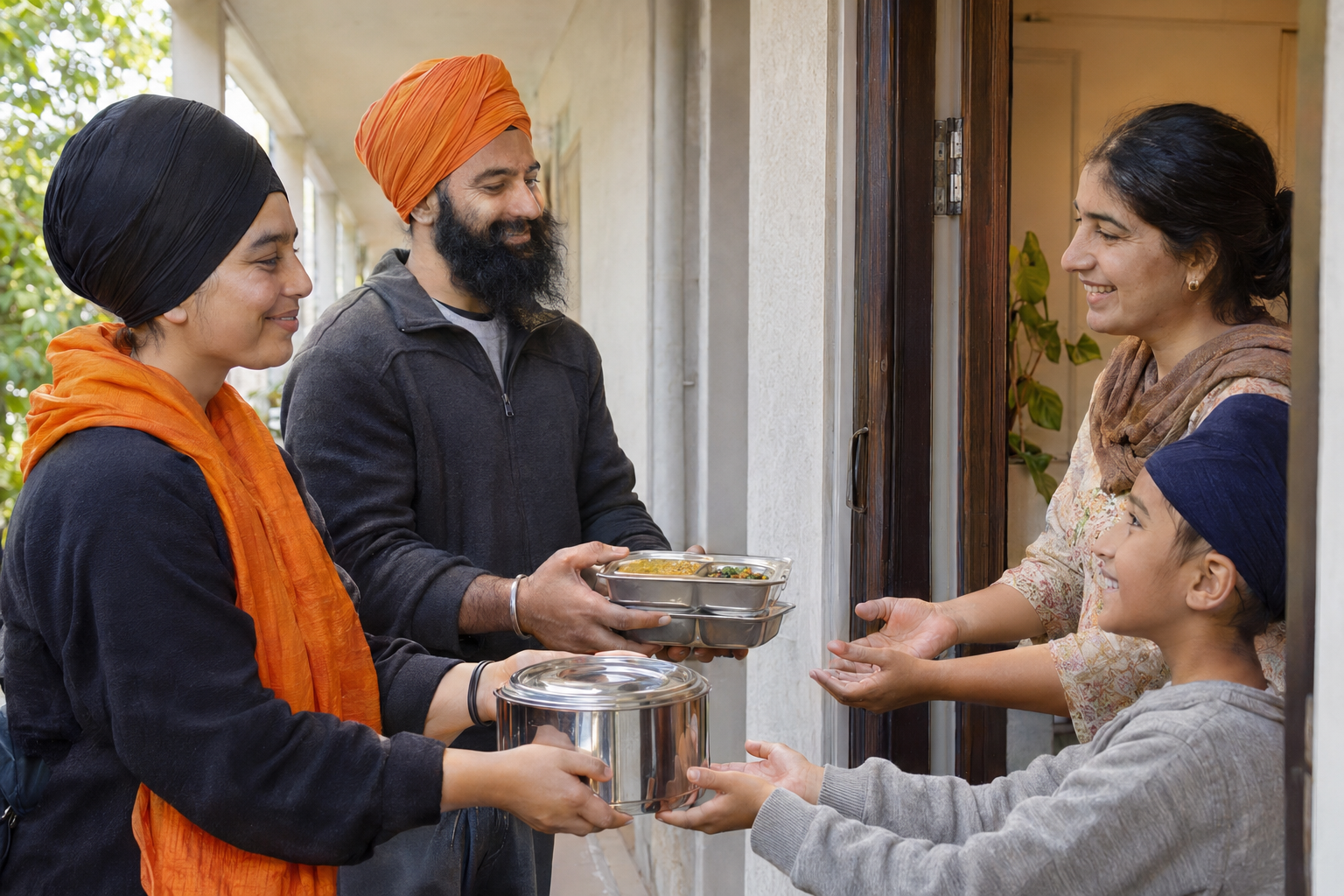
Doorstep langar is not merely takeaway food. It carries the relationship of the communal table into a home. When a household cannot travel to that table, langar can cross the final distance to the household. The logistics change, but the spirit of seva should not.
That distinction should shape the service. A recipient should not have to prove devotion, poverty, illness, or gratitude. Do not make prayer, publicity, a photograph, or participation in another activity a condition of receiving food. The delivery is not evidence for a campaign. It is a meal for a person.
Before accepting requests, write a short service promise that everyone in the kitchen and delivery team can understand. It should state who the service is meant to help, what the kitchen can reliably provide, where delivery is possible, when deliveries are normally made, and what happens if nobody answers the door. This prevents a well-meaning volunteer from making a promise that the kitchen cannot fulfil.
- Offer the same care in preparation and presentation that you would offer at the communal table.
- Ask only for information needed to prepare and deliver the meal.
- Give the recipient control over the contact method, the knock-or-call preference, and the handoff location.
- Do not publish names, addresses, photographs, or personal circumstances without explicit permission.
- Make clear that receiving langar does not create a debt to the gurdwara or the volunteers.
This is also where equality becomes practical. A homebound person should not receive whatever happens to remain after everyone else has eaten. Include doorstep portions in the kitchen plan from the beginning, pack them with care, and reserve them before the route leaves.
Ask about access without forcing an explanation
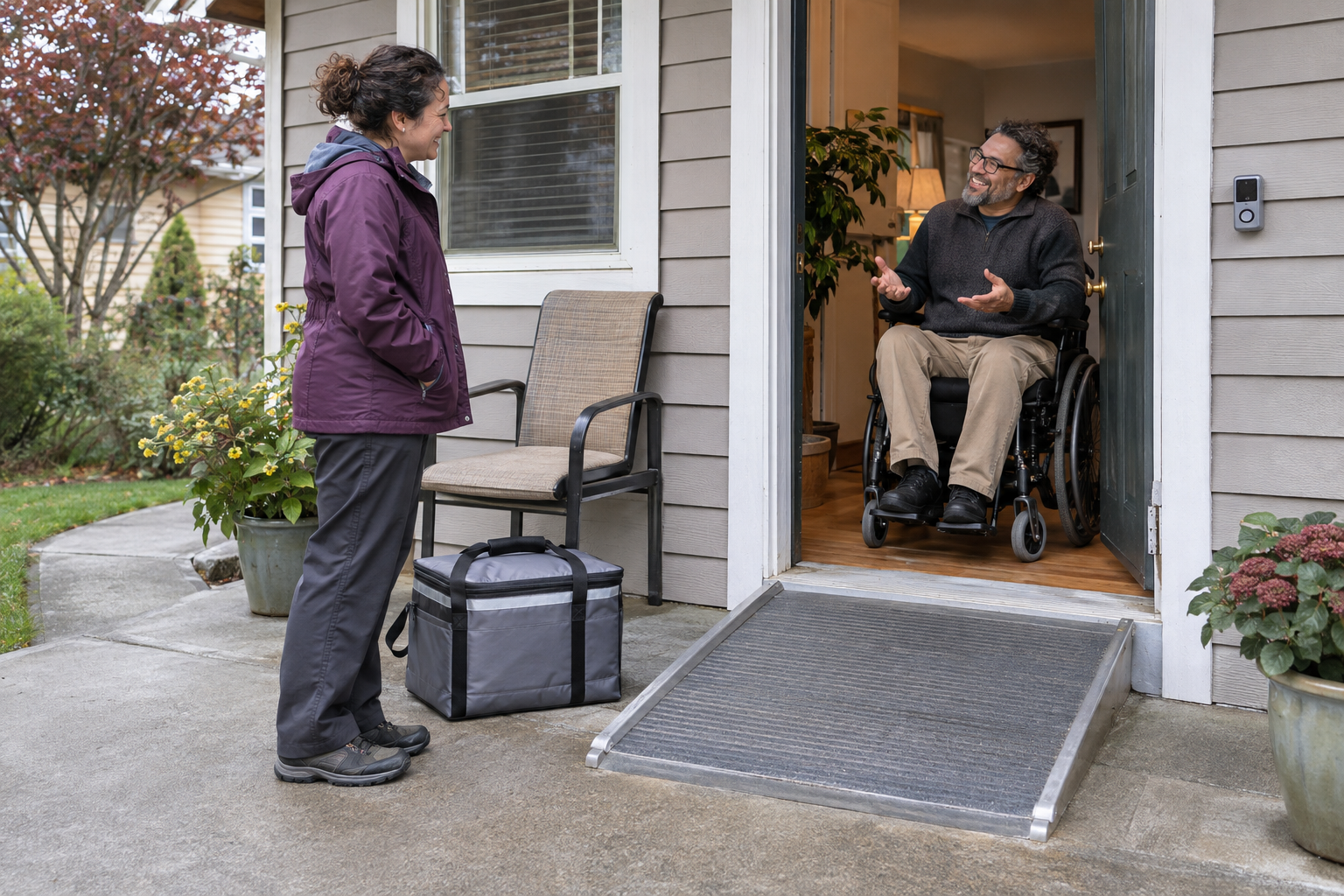
Homebound circumstances may be temporary, recurring, or long-term. A person may be recovering, living with limited mobility, caring for someone who cannot be left alone, or unable to travel safely. Your intake process does not need to judge which reason is worthy. It needs to establish whether delivery is useful and whether the team can complete it safely.
Accepting a referral from a neighbour or relative can help someone who cannot make the request alone. Treat the referral as a request to make contact, not as the recipient’s consent. Confirm directly with the household before storing personal details or beginning regular deliveries.
A minimum intake record should contain:
- The recipient’s preferred name and permission to receive the delivery.
- The full address, any useful landmark, and the safest accessible approach to the entrance.
- The number of portions needed for the household.
- The preferred contact method and whether the volunteer should knock, ring, call, or leave the meal at an agreed point.
- The delivery window the household can realistically receive.
- Food restrictions, with allergies and medically required diets clearly separated from preferences.
- A backup contact or missed-delivery instruction, if the recipient chooses to provide one.
- Whether the request is for a single delivery, a limited period, or continuing support that should be reviewed.
Do not collect a diagnosis merely because illness was mentioned. A route volunteer normally needs an address, contact preference, handoff instruction, and relevant food information. The volunteer does not need the recipient’s medical history.
Dietary information requires particular honesty. A preference is not the same as an allergy, and a familiar recipe is not automatically safe for a medically restricted diet. If the kitchen cannot verify ingredients or manage cross-contact, say so before the family relies on the meal. Do not describe food as allergen-free unless the preparation process can support that claim.
Langar can nourish and support a household, but it should not be presented as a substitute for medical care or prescribed nutrition. When a recipient has a clinical dietary requirement, the family and its healthcare professional must decide what is suitable. The kitchen’s responsibility is to describe what it knows accurately and avoid promises it cannot verify.
Make food safety and the handoff one system
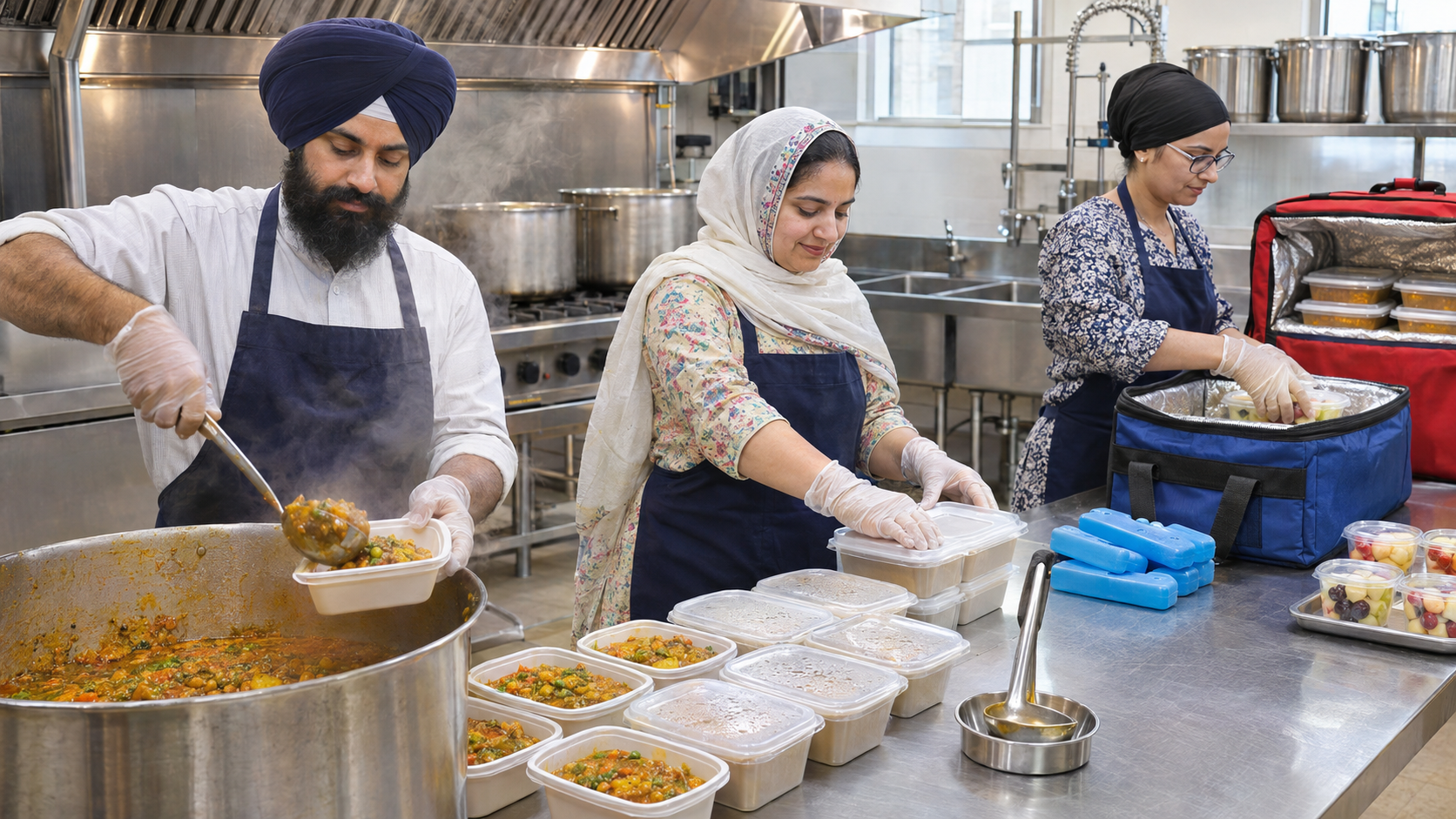
Food that is safe in the kitchen still has to travel, wait, and reach the intended person. That extra journey creates points of failure that do not exist when langar is served immediately on site. Safe delivery therefore begins before cooking and ends only when the handoff is confirmed.
- Choose a coordinator who has authority to pause a delivery when information is missing or safety is uncertain.
- Check the food-handling and transport requirements of your local public-health authority. Do not copy temperature or holding rules from another jurisdiction.
- Select dishes and containers that can tolerate the planned journey without leaking, spilling, or becoming difficult for the recipient to handle.
- Use clean, food-safe, closed containers. Identify the contents and communicate known ingredients consistently.
- Keep foods that require different handling conditions separate, using clean insulated carriers intended for the task.
- Pack in route order so volunteers do not repeatedly open carriers or handle every container at each stop.
- Confirm that the household expects the delivery before departure whenever that is practical.
- If a container leaks, opens, becomes contaminated, or is delayed beyond the kitchen’s safety procedure, contact the coordinator. Do not leave the decision to an improvised doorstep judgment.
An unattended doorstep is a weak handoff. Do not leave food outside merely because no one answered. Only use a leave-at-door arrangement when the recipient requested it, the arrival has been communicated, and the kitchen’s food-safety procedure permits it. Weather, animals, building access, and an unexpected delay can all turn a convenient arrangement into an unusable meal.
Create a missed-delivery rule before the first route. It should tell the volunteer whom to call, how long to remain available, whether another contact may be tried, and what happens to food that cannot be delivered safely. Volunteers should never be pressured to enter an unfamiliar property or leave food in an unsuitable place simply to mark the stop complete.
Give volunteers a route they can follow under pressure
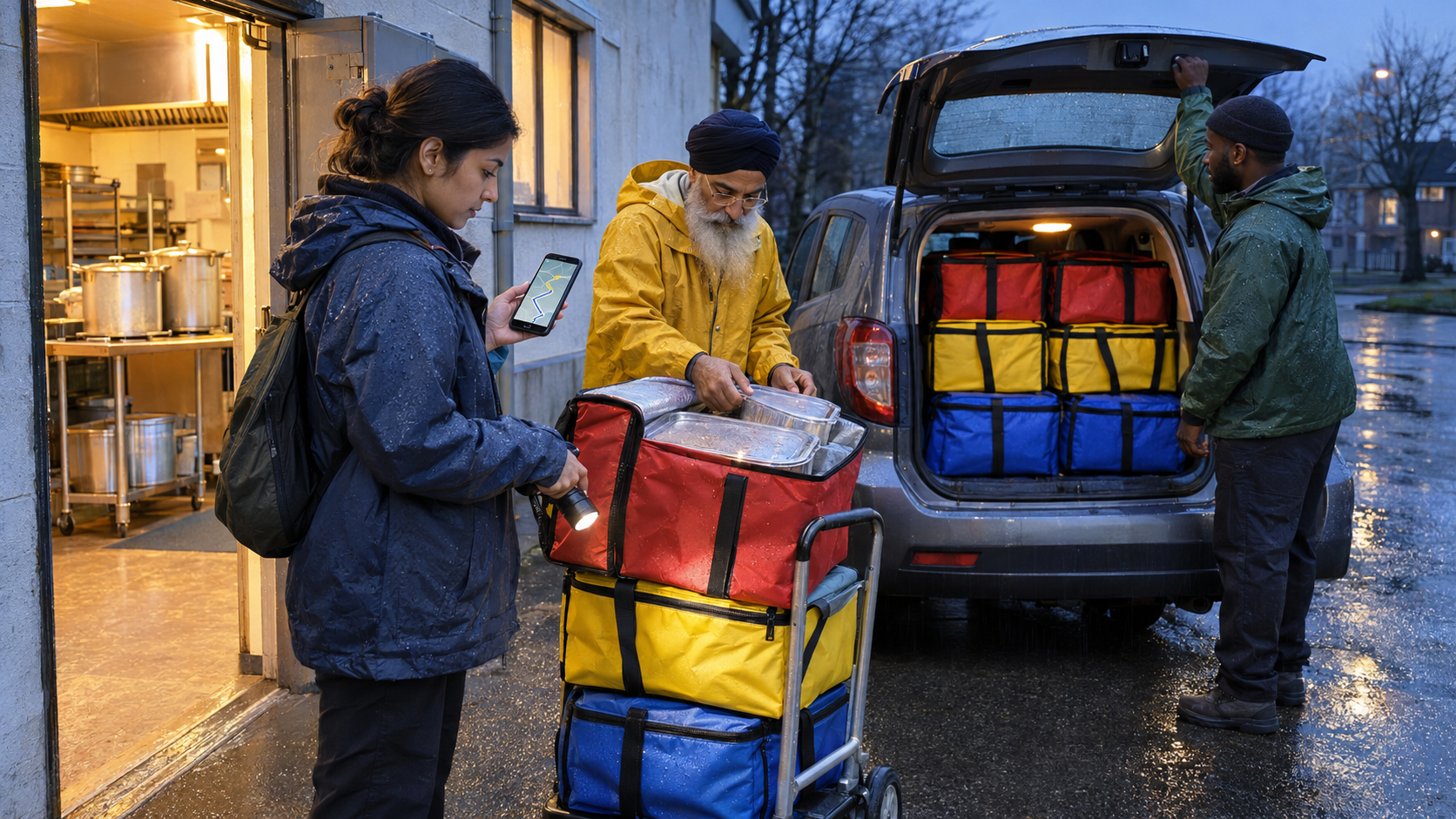
Goodwill does not compensate for an ambiguous route. A volunteer who is driving, watching the time, protecting the food, and trying to reach several households needs clear instructions and one person to contact when something changes.
Before departure
Give each volunteer a need-to-know route manifest. It should show the stops in order, the portion count, the agreed delivery window, the contact preference, the handoff instruction, and the coordinator’s contact details. Include an accessibility note only when it affects the delivery, such as an entrance without steps or a request to allow extra time at the door.
Do not put diagnoses or private family histories on the manifest. Keep the fuller intake record with the coordinator and restrict access to people who genuinely need it. If a volunteer loses a route sheet or phone, the loss should not expose more personal information than necessary.
- Count and match the labelled containers to the manifest before loading.
- Confirm that the vehicle and carriers can hold the route without crushing or tipping containers.
- Tell the coordinator promptly if departure is delayed; do not silently compress every household’s delivery window.
- Make sure the volunteer knows the missed-delivery and food-safety escalation rules.
- Provide a way to report an urgent concern without asking the volunteer to diagnose or investigate it.
At the door
Keep the exchange simple. Greet the person, identify the langar delivery, confirm that you have reached the correct household, and ask where the recipient would like the food placed. Do not ask the person to explain why they need help. Do not turn the handoff into fundraising, recruitment, or a photograph.
If a recipient needs the food placed inside, decide in advance whether volunteers may enter and what safeguarding procedure applies. The answer may depend on the recipient’s mobility, the volunteer’s safety, and the gurdwara’s policy. What matters is that neither party has to negotiate an uncertain boundary at the door.
Mark a stop delivered only after the agreed handoff has occurred. If there is no answer, follow the missed-delivery rule. A silent container left outside is not a confirmed delivery.
Expand only what the team can repeat
Begin with a route small enough for the coordinator to close every loop. After the deliveries, review the process while the details are still clear:
- Did the kitchen know the required portions before cooking?
- Did any dietary promise exceed what the kitchen could verify?
- Did the food remain secure and suitable through transport?
- Was each household ready for the handoff?
- Did a recipient receive contact, attention, or publicity that was not requested?
- Could every volunteer explain what to do after a delay, damaged container, or unanswered door?
- Were failed deliveries followed up rather than merely recorded?
Resolve recurring failures before adding another area or more households. Growth is useful only when the service remains trustworthy. A smaller route that arrives safely and respects privacy serves the household better than a wide route built on uncertain promises.
Key takeaways
- Treat doorstep langar as an extension of the communal table, not as a lesser parcel service.
- Use a short service promise so the kitchen, coordinator, volunteers, and recipients understand what can be provided.
- Collect only the information needed for preparation, access, and delivery; do not demand proof of hardship or unnecessary medical details.
- Separate food preferences from allergies and clinical dietary requirements, and never make a safety claim the kitchen cannot verify.
- Plan the missed handoff as carefully as the successful one. Do not improvise when nobody answers or a container is compromised.
- Protect dignity at the door: no interrogation, fundraising, photography, or publicity without explicit consent.
If a household needs langar now, start with the service promise, a minimum intake record, a safe transport procedure, and a missed-delivery rule. Then accept the first route at a scale your coordinator can personally follow from the kitchen to the final handoff. Dependability is what allows seva to keep reaching the door.
References

Leave a Reply
You must be logged in to post a comment.