

You may have seen footage of a Hindu couple being beaten and asked an urgent question: was this ordinary hooliganism, a religiously charged attack, or both? The distinction matters. A weak label can conceal targeted hostility, while an overconfident one can turn alleged crimes by identifiable people into a verdict against an entire community.
At a public garden in Kurla, a group described as eight to ten Muslim boys, reportedly minors, allegedly made lewd remarks toward a Hindu couple. When the couple objected, the boys allegedly struck them with sticks, kicked and punched them, and pursued them down a flight of stairs. Police reportedly arrested the accused after the couple complained. Those allegations are serious enough to require firm action. They do not require exaggeration to become serious.
Key takeaways
- Keep the victims and the alleged conduct at the centre: harassment, group assault, pursuit, intimidation and the woman’s allegation of molestation.
- Separate four questions that are often collapsed online: what happened, who participated, why they acted, and whether an institution or ideology caused the act.
- The accused persons’ reported religious identities matter if evidence shows religious targeting. Identity alone does not establish motive.
- The accused being minors changes how their identities and cases should be handled; it does not make the alleged violence trivial.
- If you are a victim or witness, reach safety first, preserve original evidence, record a factual chronology and report every form of harm without adding assumptions.
Read the case with two disciplines: seriousness and proof
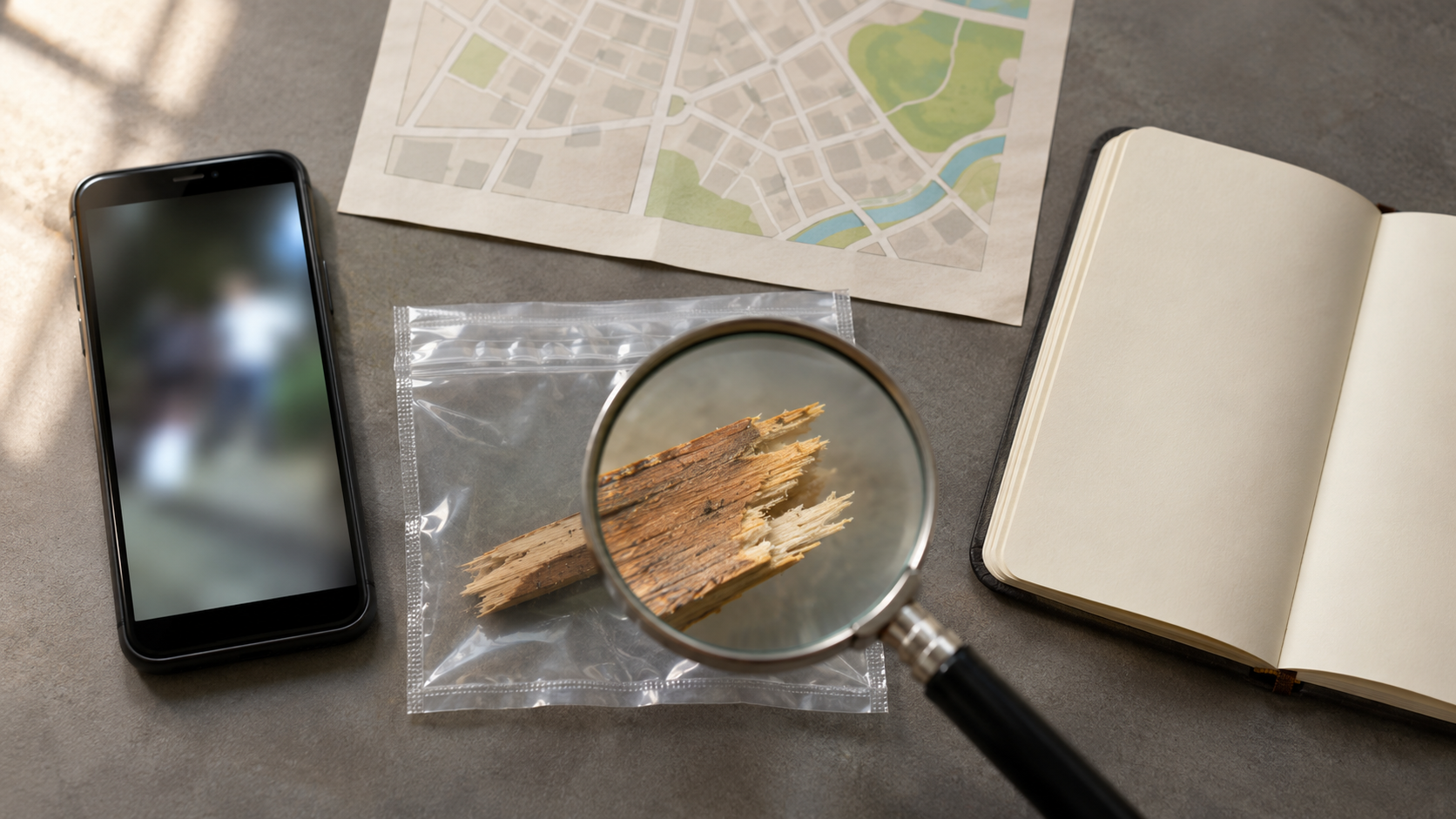
You do not have to choose between taking anti-Hindu hostility seriously and demanding evidence for a claim of religious motive. A sound public response does both.
Begin with the conduct. The reported sequence includes lewd comments, an objection by the couple, an assault by a larger group, the use of sticks and continued pursuit. The woman also reportedly said that members of the group molested her. These are concrete allegations involving bodily safety, sexual dignity and the use of group force. They should not be diluted into a vague description such as a disagreement between young people.
Next, distinguish identity from motive. The couple is described as Hindu and the accused as Muslim. That makes possible religious hostility a legitimate line of inquiry, particularly if religious words, symbols or conduct formed part of the confrontation. It does not prove that hostility was the cause. To establish religious targeting, investigators should look for evidence such as anti-Hindu abuse, demands directed at the couple’s religious identity, prior selection of Hindu victims, coordination around an ideological purpose, or statements explaining why the couple was attacked.
No attacker statement enforcing a religious rule is identified in the reported sequence. The immediate trigger described was the couple’s objection to lewd remarks. That could coexist with communal prejudice, but it does not establish it. Until stronger evidence emerges, the most accurate description is a serious alleged mob assault involving people from different religious communities, with motive still requiring investigation.
The same discipline applies to broader causal claims. Assertions that madrasas, clerics or Muslim families generally teach boys to molest women who do not wear a burqa would require evidence about particular teachers, curricula, instructions and their connection to the accused. The religious identity of alleged attackers cannot supply that missing chain. If a specific institution encouraged violence, name and investigate that institution. If no such evidence exists, do not manufacture collective guilt.
This standard protects Hindus as much as anyone else. Anti-Hindu incidents are frequently weakened when public discussion races ahead of verifiable facts, giving institutions an excuse to dismiss the entire concern as communal rhetoric. Precision makes a demand for justice harder to evade.
What the reported charges tell you, and what they do not
The accused were reportedly booked under several provisions of the Bharatiya Nyaya Sanhita: Sections 189(2), 189(4), 118(1), 352 and 351(2). The reported descriptions cover unlawful assembly, participation in an unlawful assembly while carrying a weapon or dangerous object, voluntarily causing hurt, intentional insult intended to provoke a breach of peace, and criminal intimidation.
That reported combination matters because it reflects allegations of coordinated group conduct, physical injury, weapons or dangerous objects, provocation and threats. It is not the legal profile of a harmless verbal quarrel. At the same time, being booked under a section is not the same as being found guilty. Evidence must still be tested through the applicable legal process.
The listed provisions also should not be treated as proof of a religious motive. None of the descriptions above establishes communal targeting by itself. Nor should readers assume that the published list exhausts the complaint, especially because the woman reportedly alleged molestation. Only the complaint, police record and subsequent legal proceedings can show how that allegation was recorded and handled.
The reported age of the accused requires equal care. Children are entitled to the legal protections that apply to minors, including protection from public identification. That is compatible with investigation, proportionate accountability, parental involvement and intervention intended to prevent further violence. Calling the accused minors should explain the required process, not erase the alleged harm.
If you are a victim or witness, act in this order
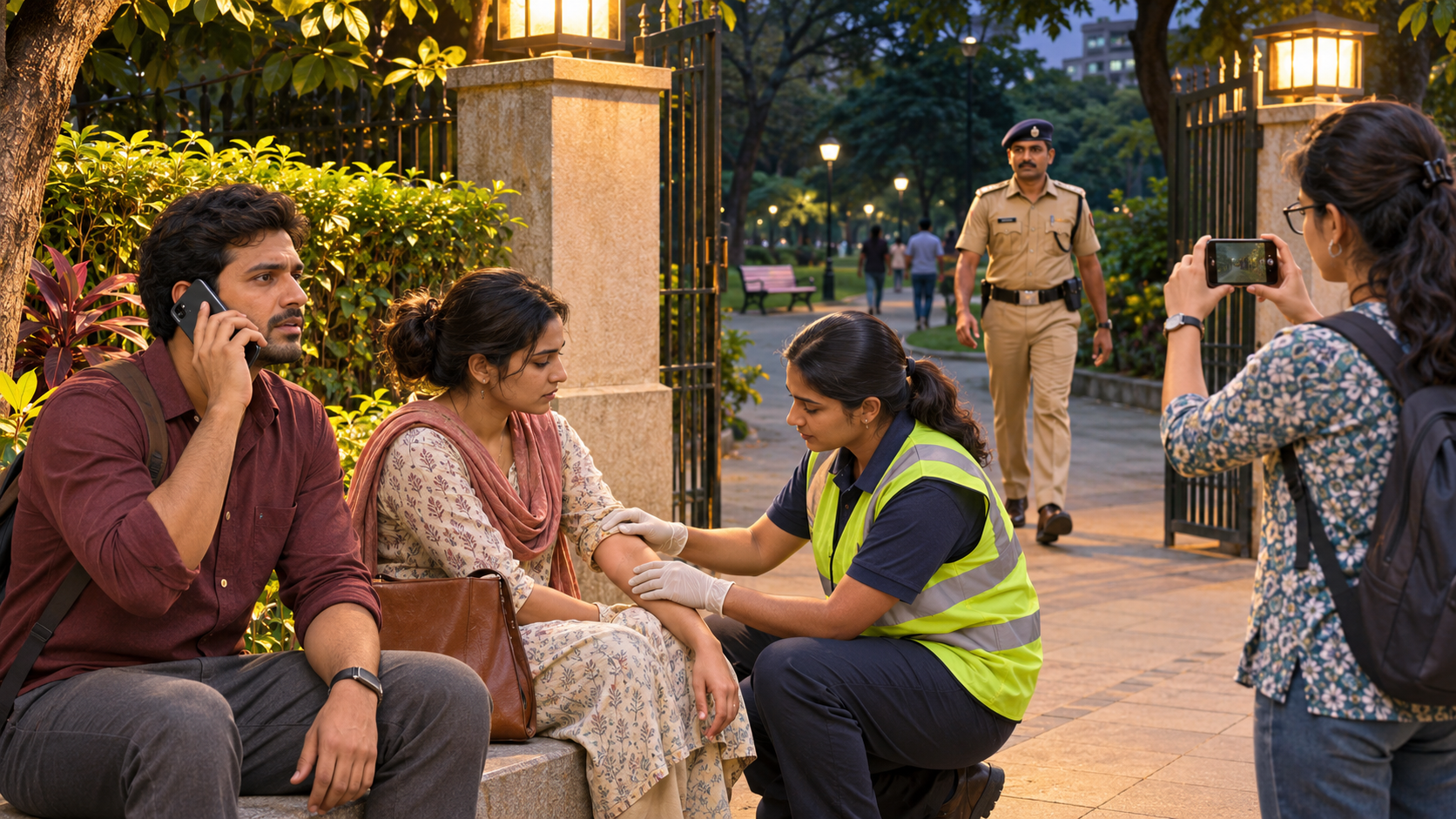
A group confrontation can change in seconds. Once several people begin surrounding, pursuing or striking someone, proving a point on the spot is less important than getting people out safely. If you are directly involved, use this order of action:
- Move toward a secure, populated place. Do not remain within reach to argue about motive or identity. If attackers have weapons, are pursuing someone or are blocking an exit, contact police or emergency services immediately.
- Get medical attention for injuries. When it is safe, retain medical records and clear photographs of visible injuries. Do not delay necessary care merely to create a better record.
- Preserve original video and photographs. Keep the unedited files, including their original metadata, before sending compressed copies through messaging platforms. Record who made each file and where that person was standing.
- Write a chronological account while memory is fresh. Note the location, sequence, exact words you personally heard, first physical act, objects used, direction of pursuit and names or contact details of witnesses. Mark separately anything you learned later.
- Report the full conduct. Lewd comments, unwanted sexual touching, threats, use of sticks, pursuit and injuries are distinct facts. Do not reduce the complaint to a generic fight. Ask how to retain an acknowledgment or reference for the report and whom to contact about follow-up.
- Give investigators the strongest material, not the most dramatic edit. A short viral clip may begin after the initial harassment or end before the pursuit. Preserve the longer recording even if only part of it is shared publicly.
- Protect vulnerable identities. Do not publish the names or identifying images of alleged minors. Treat details identifying a person who reports sexual assault with particular care. Evidence can be provided to police without turning social media into a public identification exercise.
- Seek qualified local legal help if threats continue, an important allegation is missing from the record, or you are uncertain about your rights. General online commentary cannot substitute for advice based on the actual complaint and case file.
If you are a bystander, do not create a counter-mob. Call for help, record from a safe position, identify exits and assist the victims after the attackers have moved away. Your value as a witness comes from what you actually observed, not from a caption you later encountered online.
A Dharmic public response demands protection without vengeance
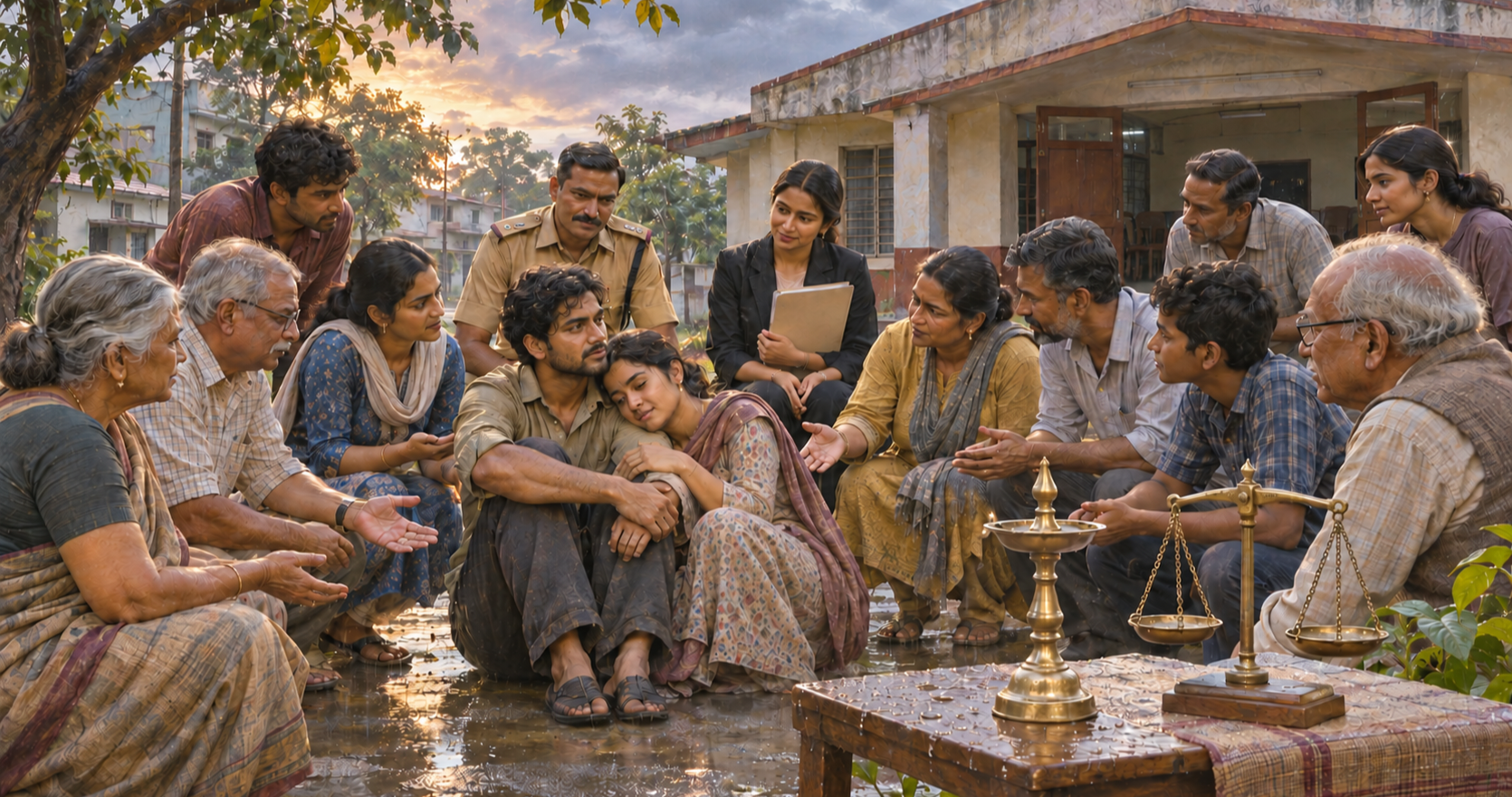
Ahimsa does not mean passivity while a couple is attacked. Satya does not permit filling gaps in the evidence with a preferred political explanation. A Dharmic response joins protection, truth and rightful accountability: defend the person in danger, describe the wrong plainly, and hold the responsible individuals to a fair legal standard.
That standard must remain the same when the religious identities are reversed. Condemn sexual harassment without asking which community gains politically from the condemnation. Treat an armed group assault as serious regardless of the accused persons’ names. Investigate a communal motive when facts support it, and correct the claim when they do not. Equal treatment is not silence about anti-Hindu hostility; it is what makes that concern principled rather than selective.
Authorities should answer operational questions. Were all participants identified? Were complete recordings and nearby surveillance preserved? Were the alleged sticks recovered or documented? Were independent witnesses interviewed? Was the molestation allegation recorded and investigated? What measures now protect visitors to the garden?
A political claim also placed the group’s entry through a broken section of the garden boundary. Because that detail came through a politician’s public statement, it should be verified rather than repeated as settled fact. If confirmed, the municipality should repair the breach, review access control and determine whether inadequate maintenance created a predictable safety risk.
Community and religious leaders have a different responsibility. They should condemn group violence, sexual harassment and intimidation without inserting a defensive “but.” They should also reject collective blame. Where named young people are involved, parents, schools and local institutions should address the behaviours actually at issue: harassment, group aggression, weapon carrying, pursuit and the belief that numbers grant permission to punish strangers.
You can make your own intervention more useful by asking for verifiable outcomes instead of circulating communal slogans. A concise message to local authorities can request confirmation that evidence was preserved, the park access problem was inspected, the victims received appropriate support, every material allegation was recorded, and future case updates will respect the privacy of minors and the woman involved.
Share the verified chronology and a precise demand: protect the couple, investigate motive, prosecute proven conduct fairly and secure the public space. That puts pressure where it belongs. Dharma is not served by euphemism, and truth is not strengthened by exaggeration.
References

Leave a Reply
You must be logged in to post a comment.