
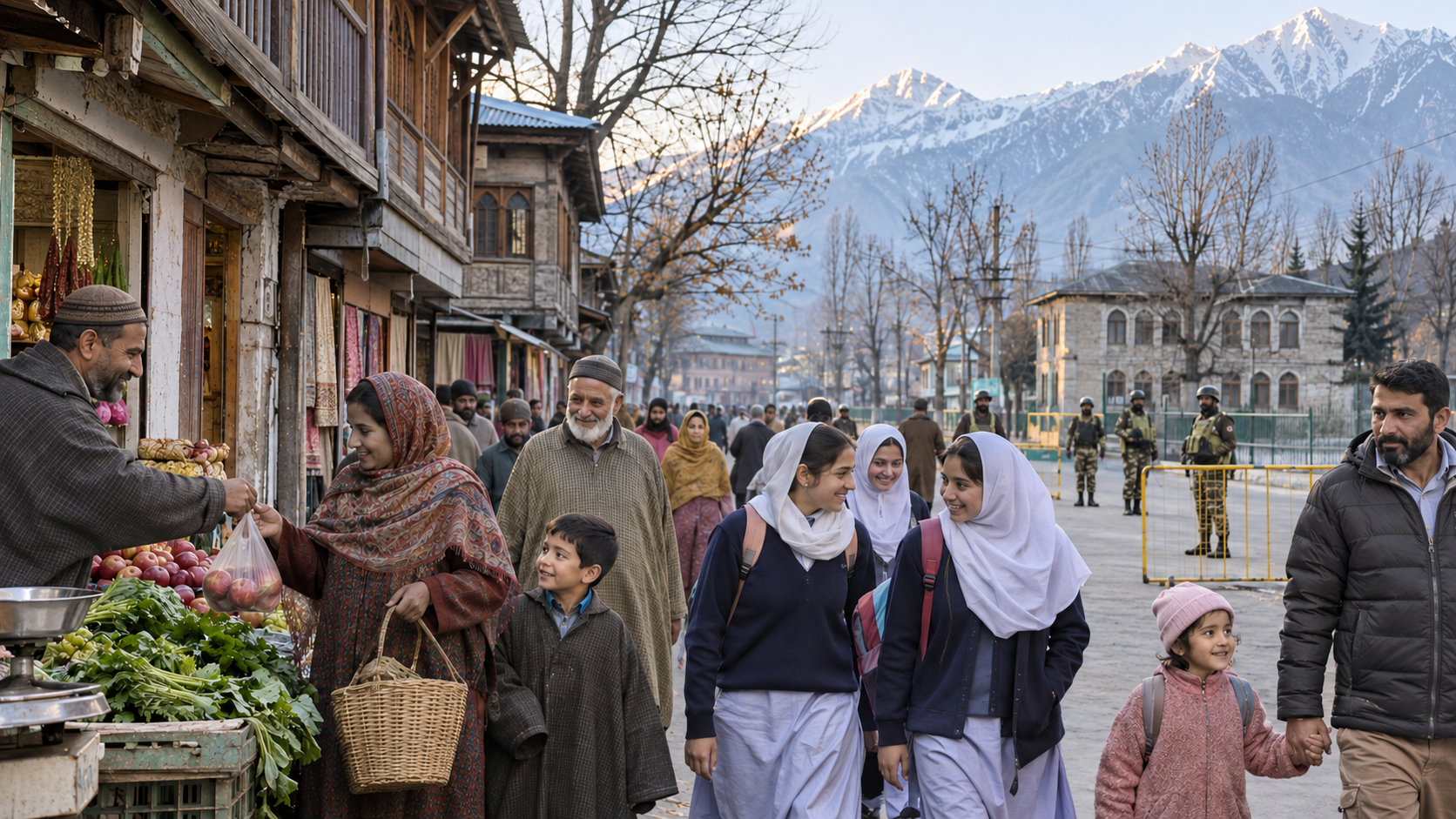
If you saw the death of Kashmir’s last listed local terrorist and wondered whether the long war is effectively over, the honest answer is no. The opposite conclusion—that nothing has changed—is just as mistaken.
You need a better way to read the situation. Public normalcy is a real Indian achievement, but it is not a security certificate. The task now is to protect ordinary life without allowing lower visibility to become shorter memory, weaker scrutiny or indifference to the people still carrying the cost.
Normal life is a victory, not proof that the war has ended
There was a period when terrorism repeatedly entered the daily life of Indian cities. Delhi’s markets were bombed shortly before Deepawali in 2005. Mumbai’s suburban trains were struck in 2006. Jaipur, Ahmedabad and Delhi were attacked in 2008 before 26/11 brought Mumbai to a standstill. Further attacks followed in Mumbai, at the Delhi High Court and in Hyderabad. Government figures released in 2016 counted 707 people killed and more than 3,200 injured in terror attacks since 2005.
That history matters because public normalcy did not appear by magic. The reduced fear in most Indian cities reflects fewer successful attacks, more aggressive disruption of networks and the ability of society to continue functioning. A generation for whom routine bombings are not an expected part of metropolitan life has inherited something valuable.
Yet normalcy measures the public’s freedom to live, not the enemy’s disappearance. On 10 November 2025, a car bomb near Delhi’s Red Fort killed 13 people. Investigators linked it to a Jaish-e-Mohammed module involving Kashmiri doctors. The professional profile of the alleged participants is important: social respectability, education and an ordinary outward life do not rule out clandestine involvement.
This is the distinction to keep in mind when an encounter receives only a brief mention in the national news. A society should not suspend elections, commerce, sport or family life every time terrorists attempt violence. Terrorism seeks precisely that psychological control. But resilience becomes complacency when an attack is forgotten before the network behind it is understood.
Your first test, therefore, is simple: do not ask only whether life looks normal. Ask whether the institutions responsible for security are still identifying recruiters, handlers, shelters, weapons routes, propaganda channels and operational failures. Normal streets and relentless investigation must exist together.
The visible gunman is only one layer of the threat
The identified local recruit
On 18 November 2026, security forces killed 22-year-old Lashkar-e-Taiba commander Mohammad Lateef Bhat after a standoff at a mosque in Zangalpora, Kulgam. Jammu and Kashmir’s Director General of Police described him as the last active local recruit remaining on the police list.
That was an operational milestone. It was not a declaration that every terrorist structure had vanished. A police roster answers a narrow and useful question: how many identified local people are known to have openly joined terrorist ranks and remain active? It cannot answer every question about covert support, occasional attackers or direction from outside India.
Bhat’s case also shows why the shrinking roster matters. He carried a ₹15 lakh bounty, was linked to the killing of a Jammu and Kashmir Police employee and two migrant workers from Chhattisgarh, and was believed to have received local logistical help. Bhat and his associate Umer Nisar Dar were also linked to an attack on a CRPF post near Mir Bazar that injured three jawans on 11 November.
The concealed operative and local support system
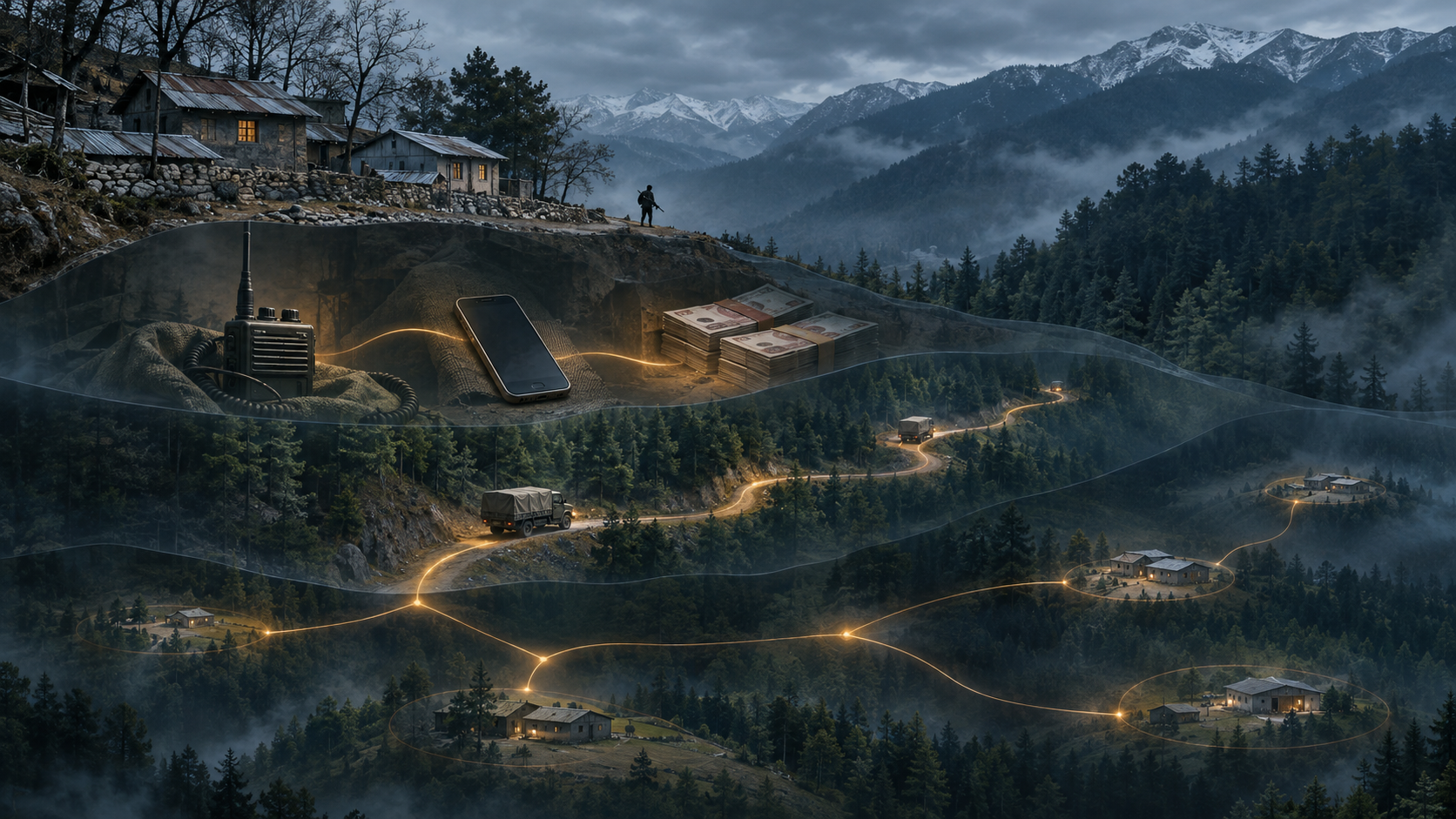
A hybrid operative does not necessarily live as a full-time underground gunman. He can retain an apparently ordinary routine, perform a task when activated and then recede into civilian life. Overground workers occupy another part of the system: accommodation, food, reconnaissance, transport, communications or concealment may be as operationally important as the person carrying the weapon.
This is why the number of listed gunmen must never be treated as the total size of the threat. The National Investigation Agency arrested Parvaiz and Bashir Ahmad Jothar over allegations that they sheltered Pakistani terrorists before the Pahalgam massacre. An arrest is not a conviction, but the allegation illustrates the security problem: a small armed cell can depend on a wider circle that never appears on a list of active terrorists.
For you as a reader, the practical rule is to identify what a number actually counts. If officials say there are no listed local recruits left, read that statement exactly as stated. Do not silently expand it into no sympathisers, no facilitators, no sleeper cells, no foreign terrorists and no remote handlers. Those are separate propositions requiring separate evidence.
The handler and propaganda network
The operational chain can continue beyond the Line of Control. Sheikh Sajjad Gul, a Srinagar-born chief of The Resistance Front who crossed into Pakistan in 2017, has been identified by Indian authorities as a designated terrorist and the recruiter of Bhat. Police have also tracked Kishtwar-origin terrorists operating from Pakistan and Pakistan-occupied Jammu and Kashmir.
Propaganda is part of that chain. When officers tried to persuade the cornered Bhat to surrender, he rejected their appeals, expressed eagerness for death and opened fire. The recording then circulated online, raising concern that it could inspire another recruit. The event did not end when the encounter ended; its propagandists tried to convert an operational defeat into recruitment material.
Do not help them. Do not forward last-message recordings, celebratory edits or heroic portraits merely to express outrage. Repetition supplies reach, strips away context and places the terrorist’s chosen image before a larger audience. If material appears to contain a threat or operational information, preserve the link and report it to the platform or appropriate authorities instead of amplifying it through public groups.
Read the security gains precisely, without discounting them
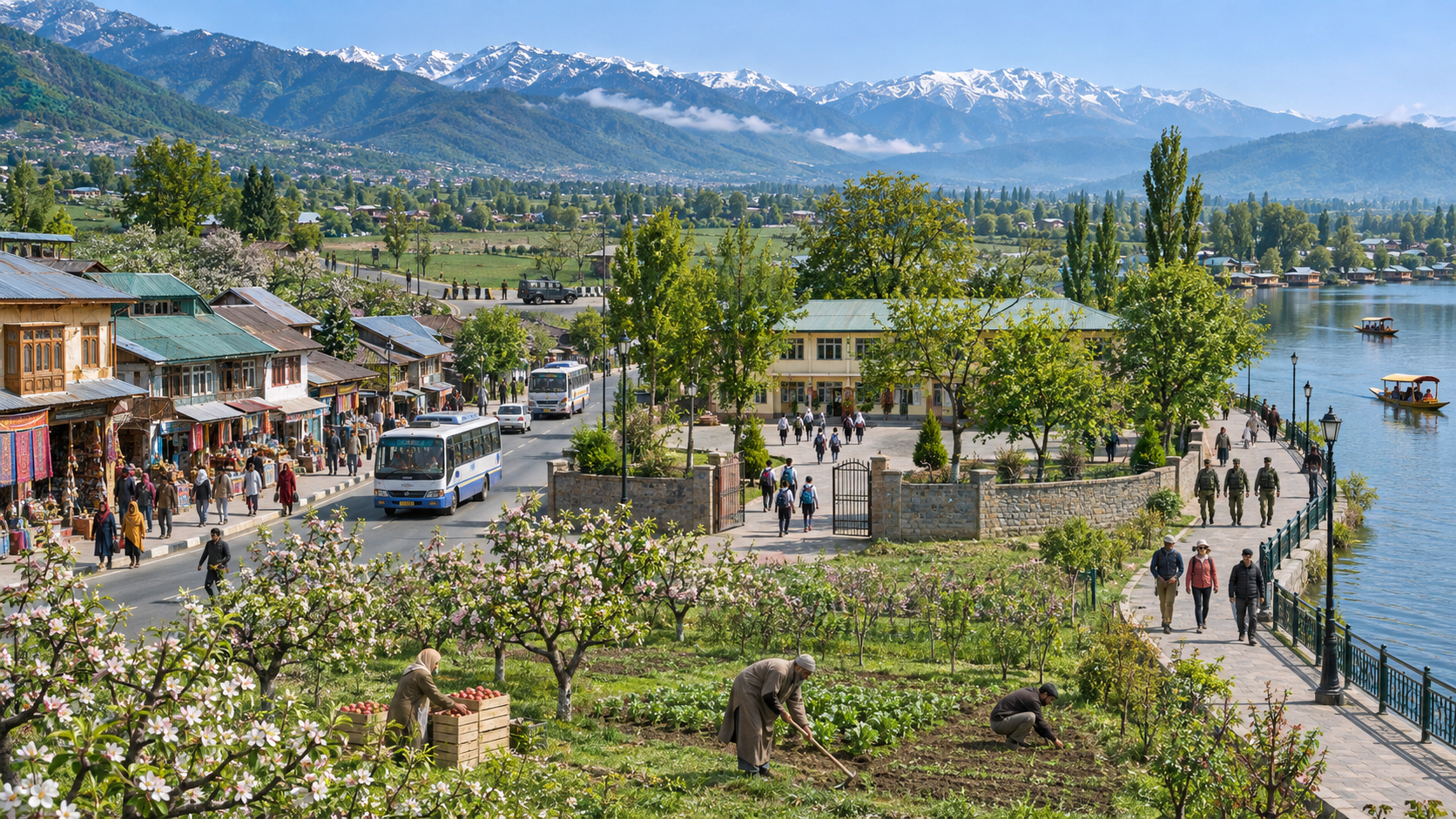
The decline in visible disorder after 2019 is substantial. In 2016, after Hizbul Mujahideen commander Burhan Wani was killed, Jammu and Kashmir recorded 2,653 stone-pelting incidents and more than 10,500 arrests. Such cycles of street violence had repeatedly consumed the Valley, particularly in 2008, 2010 and 2016.
After the abrogation of Article 370 in August 2019, stone-throwing fell by 87 per cent within a year and hartal calls eventually declined by 90 per cent. Official counts record 124 civilian deaths in protest clashes during the three years before the constitutional change and none during the following three years. Active local terrorists fell from about 160 in 2020 to only Bhat and Dar by October 2026; both were subsequently killed.
These are not cosmetic improvements. Fewer violent mobilisations mean fewer families pulled into street confrontation, less space for terrorist organisations to hide coercion inside mass unrest and more room for ordinary civil life. Refusing to acknowledge those gains would make analysis as unreliable as declaring total victory.
The correct reading uses two ledgers. The first records public outcomes: street violence, shutdowns, civilian deaths, recruitment and successful attacks. The second records network capacity: foreign handlers, hybrid operatives, shelters, weapons, financing, propaganda and institutional vulnerabilities. Improvement in the first ledger is success. Unresolved entries in the second explain why vigilance must continue.
This protects you from two common manipulations. One side can select every remaining incident to argue that policy achieved nothing. Another can select the strongest trend line and imply that the threat is finished. Ask whether the claim concerns frequency, severity, recruitment, territorial reach, public participation or hidden capacity. These measures are related, but they are not interchangeable.
The phrase last terrorist deserves the same discipline. Last on a defined police list is an important statement about identified local recruitment. Last person willing to assist, attack or recruit is a much larger claim. Whenever a headline drops the qualifier, put it back before drawing a conclusion.
Do not let disputed claims erase murdered Hindus

Public normalcy is also tested by how Bharat responds when a local killing becomes politically inconvenient. Special Police Officers Babi Chand, 57, and Rashpal Kumar, 45, disappeared in Kishtwar district on 11 November while travelling from their camp at Kiyar toward an Army post. Their bullet-riddled bodies were found in Dachhan forest the following day, and their rifles were missing. The police FIR named unidentified terrorists and invoked the UAPA.
Those are the baseline facts. Further claims require careful attribution. Kishtwar MLA Shagun Parihar said villagers and the victims’ families told her that mosque announcements had threatened the officers, that local informants passed their movements to the killers and that earlier warnings were not acted upon. She also alleged that the bodies reached home three days later in a dumper truck. Leader of Opposition Sunil Sharma separately said a long-standing Special Operations Group picket had been withdrawn.
Those allegations are serious, but they are still allegations requiring investigation and evidence. The responsible response is neither instant acceptance nor instant ridicule. It is to ask whether threats were documented, whether prior complaints exist, who authorised any picket withdrawal, how the officers’ route became known and what forensic or communications evidence supports the competing accounts.
Instead, the public argument was diverted. Jammu and Kashmir Congress president Tariq Karra suggested that the men may have gone hunting and been shot by the Army. Kishtwar’s Islami Markaz-e-Majlis Shura demanded an apology from Parihar. The centre of debate shifted from the murder of two Hindu police officers toward whether a Hindu legislator should have repeated what grieving families and villagers said.
You do not have to choose between due process and moral clarity. Keep the categories separate. The deaths, missing rifles and terrorism FIR are documented. The alleged announcements, local tip-offs, ignored warnings and picket withdrawal require proof. The hunting theory is a counterclaim, not an established explanation. Each proposition should rise or fall on evidence; none should be used to make the victims disappear.
Names matter here. Babi Chand and Rashpal Kumar were not abstract casualties. They were local officers serving in a district where terrorists can exploit terrain, information and fear. Remembering them is not communal retaliation. It is resistance to a familiar narrative inversion in which scrutiny moves away from murdered Hindus and toward those who ask how the murders were enabled.
That scrutiny must remain lawful. Do not turn an unproven allegation against an individual into collective blame against neighbours or an entire religious community. Collective accusation sacrifices accuracy, exposes innocent people to danger and makes it harder to isolate the specific facilitators a serious investigation must find. Demand names, evidence, timelines and institutional answers—not rumours or vigilantism.
Key takeaways: five questions for the next Kashmir headline
- What exactly has improved? Separate measurable declines in attacks, street violence, shutdowns or recruitment from broad claims that terrorism itself has ended.
- Which layer is being counted? An identified local gunman, a hybrid operative, an overground worker, a foreign terrorist and a handler across the border belong to different operational categories.
- What is the legal or evidentiary status? Killed, arrested, accused, linked by investigators and convicted do not mean the same thing. Preserve those distinctions even when you strongly suspect the underlying network.
- Whose claim is this? Mark the difference between an FIR, an official count, a family’s allegation, a political statement and a verified finding. Attribution lets you pursue truth without laundering conjecture into fact.
- What remains unanswered after the headline? Look for the recruiter, shelter, route, weapons, financing, propaganda channel and institutional lapse. Removing the gunman is necessary; mapping the enabling system is what prevents replacement.
Dharma does not ask you to live in permanent fear. It asks for discernment: to see progress without vanity, danger without panic and victims without selective memory. Keep living normally. But when the next encounter, arrest or disputed killing slips through a short news cycle, apply these five questions and keep the unresolved ones in view. That is how public normalcy becomes strategic strength rather than national forgetfulness.
References

Leave a Reply
You must be logged in to post a comment.