

If you are arranging puja, family meals, work commitments or a vrata in early January 2027, mark the first four observances now. They form a closely spaced sequence from Paush Dashami through Pradosh, so the practical decisions about fasting, supplies and local timings need to be made before the first date arrives.
The dates below follow Indian Standard Time (IST). Use them as a planning calendar, but let your local Panchang, temple or sampradaya determine the exact tithi boundaries, fasting rule, parana time and puja window that apply to you.
Early January 2027 dates at a glance
| Date | Observance | What to confirm in advance |
|---|---|---|
| January 2, 2027 | Paush Dashami | Whether your household or lineage follows a specific Dashami observance. |
| January 3, 2027 | Ekadashi fasting | Your permitted form of fasting and the local parana time on Dwadashi. |
| January 4, 2027 | Swaroopa Dwadashi | The local Dwadashi interval and, where applicable, the correct time to conclude the Ekadashi vrata. |
| January 5, 2027 | Bhauma Pradosh Vrat | The locally observed Pradosh worship window and your tradition’s vrata procedure. |
This verified list covers January 2 through January 5 only. Do not interpret the absence of later dates here as proof that the rest of January has no festivals or fasting days. Consult the Panchang used by your family or temple before completing a calendar for the entire month.
Read the dates as one lunar sequence

These are not four disconnected entries. Dashami, Ekadashi, Dwadashi and Trayodashi are successive lunar days: the tenth, eleventh, twelfth and thirteenth tithis. Pradosh is associated with Trayodashi and its twilight worship period. Seeing the sequence matters because preparation for one observance can affect the next.
January 2 is Paush Dashami. Use it as your preparation point even if your family does not perform a special Dashami vrata. Confirm what the next day’s Ekadashi fast requires, buy suitable food beforehand and move avoidable social meals away from the fasting period.
January 3 is the Ekadashi fasting day. A calendar date tells you when to reserve the observance; it does not by itself settle what you may eat, when the vrata formally begins or when it should be concluded. Those details vary by tradition and by the local tithi calculation.
January 4 is Swaroopa Dwadashi. For an Ekadashi observer, Dwadashi may also carry the practical question of parana, the disciplined conclusion of the fast. Obtain that timing before Ekadashi begins. Waiting until the morning of Dwadashi invites uncertainty precisely when timing matters.
January 5 is Bhauma Pradosh Vrat. Pradosh observance is connected to a time window around twilight, not merely to an all-day civil-date label. Your local Panchang should therefore supply the applicable interval rather than leaving you to choose an arbitrary evening hour.
Turn the calendar into an observance plan
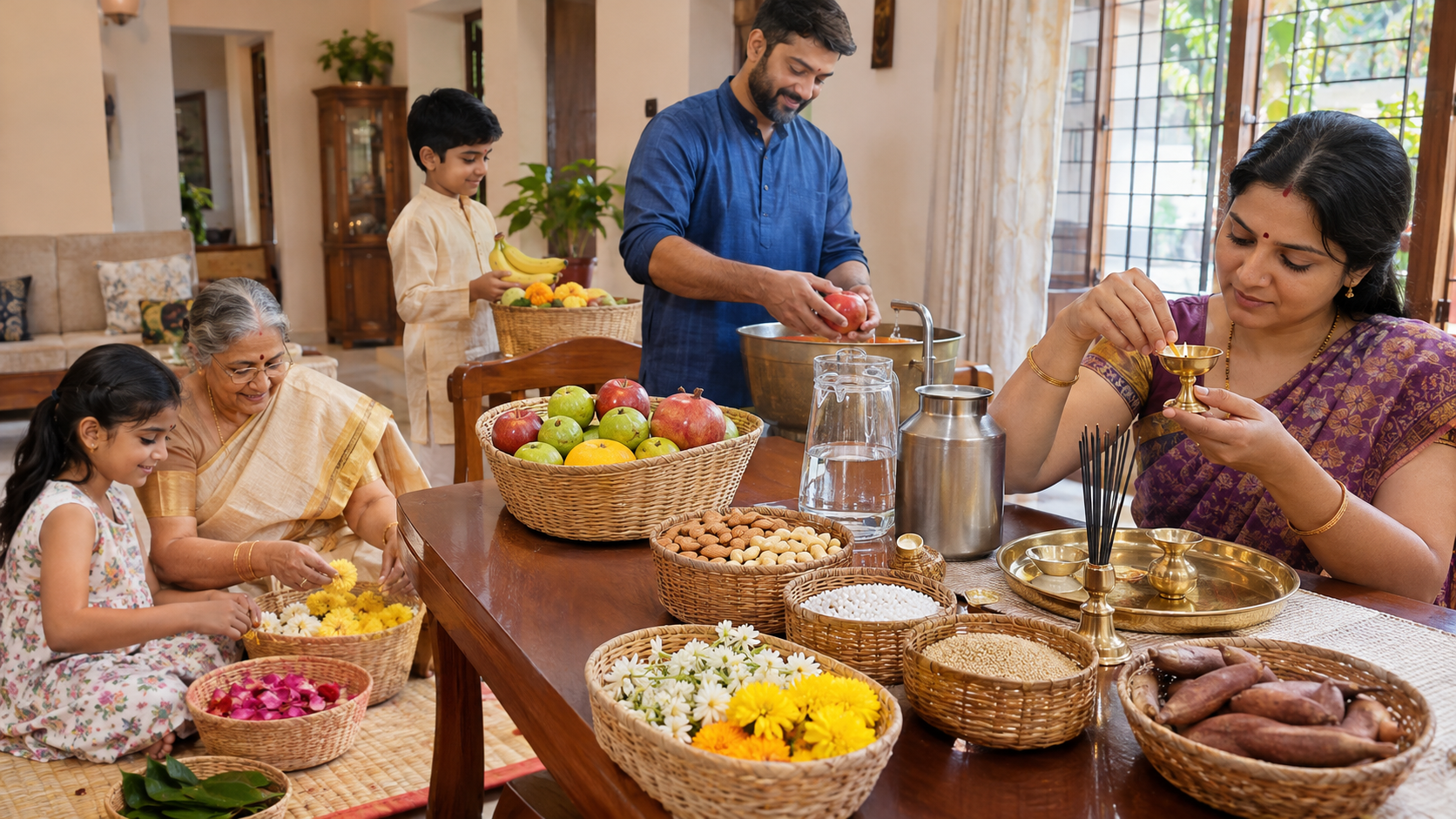
- Enter all four dates together. Add Paush Dashami on January 2, Ekadashi on January 3, Swaroopa Dwadashi on January 4 and Bhauma Pradosh on January 5. Recording the sequence reduces the chance that you remember the fast but overlook its preparation or conclusion.
- Label the calendar as IST-based. This is especially important if you live outside India, travel during the first week of January or coordinate an observance with relatives in another time zone.
- Choose one local Panchang. Use the calendar followed by your temple, family tradition or sampradaya. Mixing the fasting date from one calculation with the parana or puja time from another can produce an internally inconsistent plan.
- Ask precise questions. Do not ask only, “When is Ekadashi?” Ask which civil date applies in your location, what form of fasting your tradition follows and when parana should be performed. For Pradosh, ask for the local worship interval.
- Decide the fasting discipline before the day begins. The word “fast” does not establish a universal menu. Follow the rule received from your family, guru, temple or sampradaya rather than inventing a stricter practice at the last moment.
- Prepare the household schedule. Arrange ingredients, puja materials and work commitments before January 3. If several people are observing together, agree in advance about meals and the Dwadashi conclusion so that one person’s plan does not disrupt another’s vrata.
A vrata is a spiritual discipline, not a contest in deprivation. If fasting could conflict with medication, pregnancy, recovery from an eating disorder or another medical concern, do not improvise a severe restriction. Seek guidance from a qualified clinician and ask a trusted religious guide how the observance may be adapted safely. Religious planning should not replace medical care.
Why your local Panchang has the final word
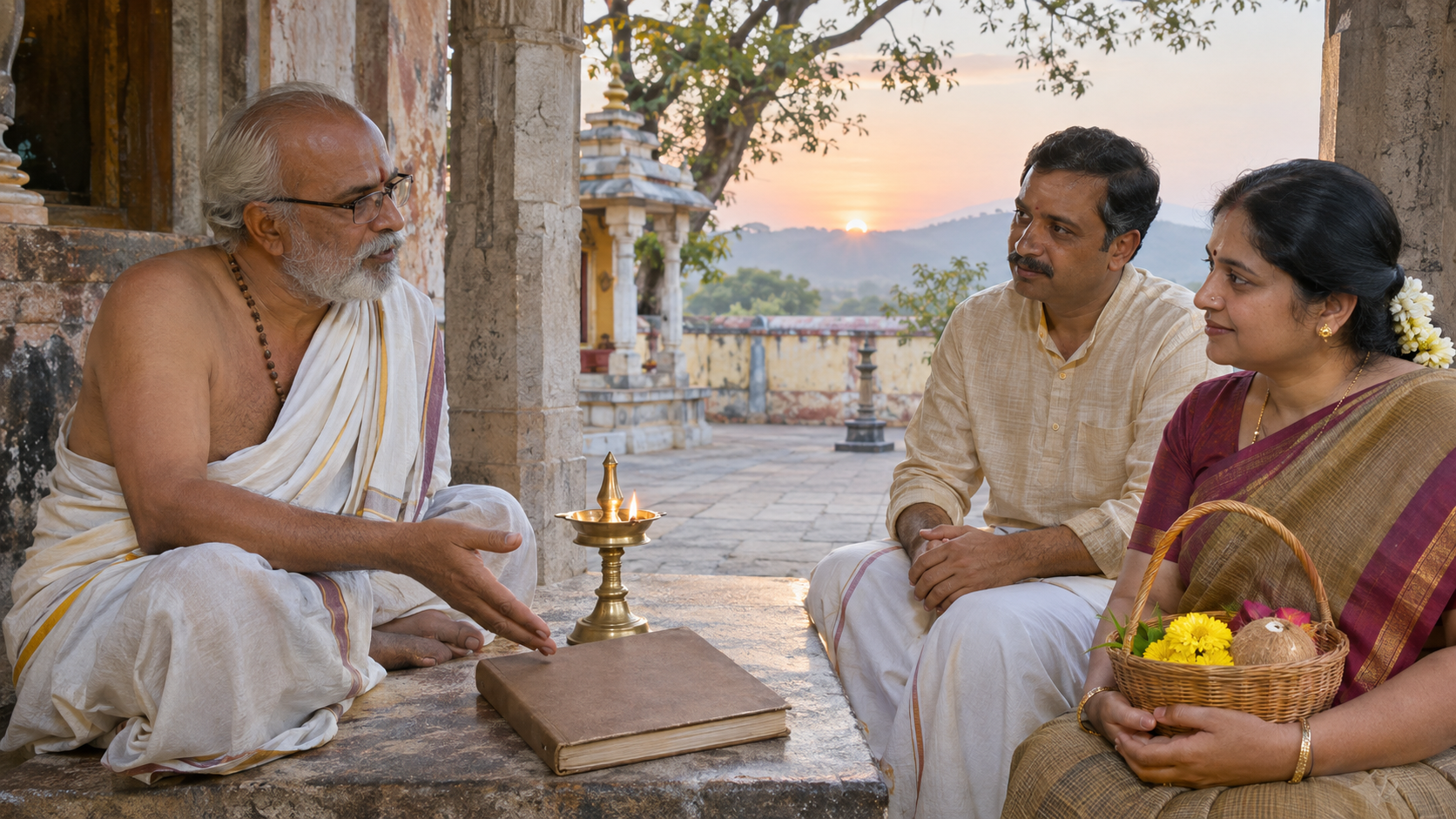
A Gregorian date begins at midnight, but a tithi is determined by the relationship of the Sun and Moon. Its beginning and end do not have to coincide with midnight. That is why the same vrata may require different civil-date handling in different locations, and why a date copied from an IST calendar should not automatically be treated as universal.
The practical distinction is simple: use the monthly list to reserve your time, and use the local Panchang to perform the observance. The list tells you that early January needs attention. The local calculation tells you when to fast, when to conclude and when to conduct a time-bound puja.
Tradition matters as well as location. Vaishnava, Shaiva and other Hindu lineages may apply their own rules to vrata eligibility and observance. A family following a particular sampradaya should not replace its established calendar merely because a generic date appears on a phone or social-media graphic.
Key takeaways
- Mark January 2 for Paush Dashami, January 3 for Ekadashi fasting, January 4 for Swaroopa Dwadashi and January 5 for Bhauma Pradosh Vrat.
- Treat these as IST-based planning dates, not universal local timings.
- Confirm the Ekadashi discipline and Dwadashi parana time before the fast begins.
- Confirm the local Pradosh worship window rather than choosing an arbitrary evening time.
- Use one Panchang aligned with your location, temple and sampradaya.
- Verify later January observances separately; the confirmed schedule here ends on January 5.
Put the four dates on your calendar now, then contact your temple or family priest for the local Ekadashi, parana and Pradosh timings. That small step turns a list of dates into a coherent vrata plan and leaves you free to approach the observances with attention rather than last-minute uncertainty.
References

Leave a Reply
You must be logged in to post a comment.