
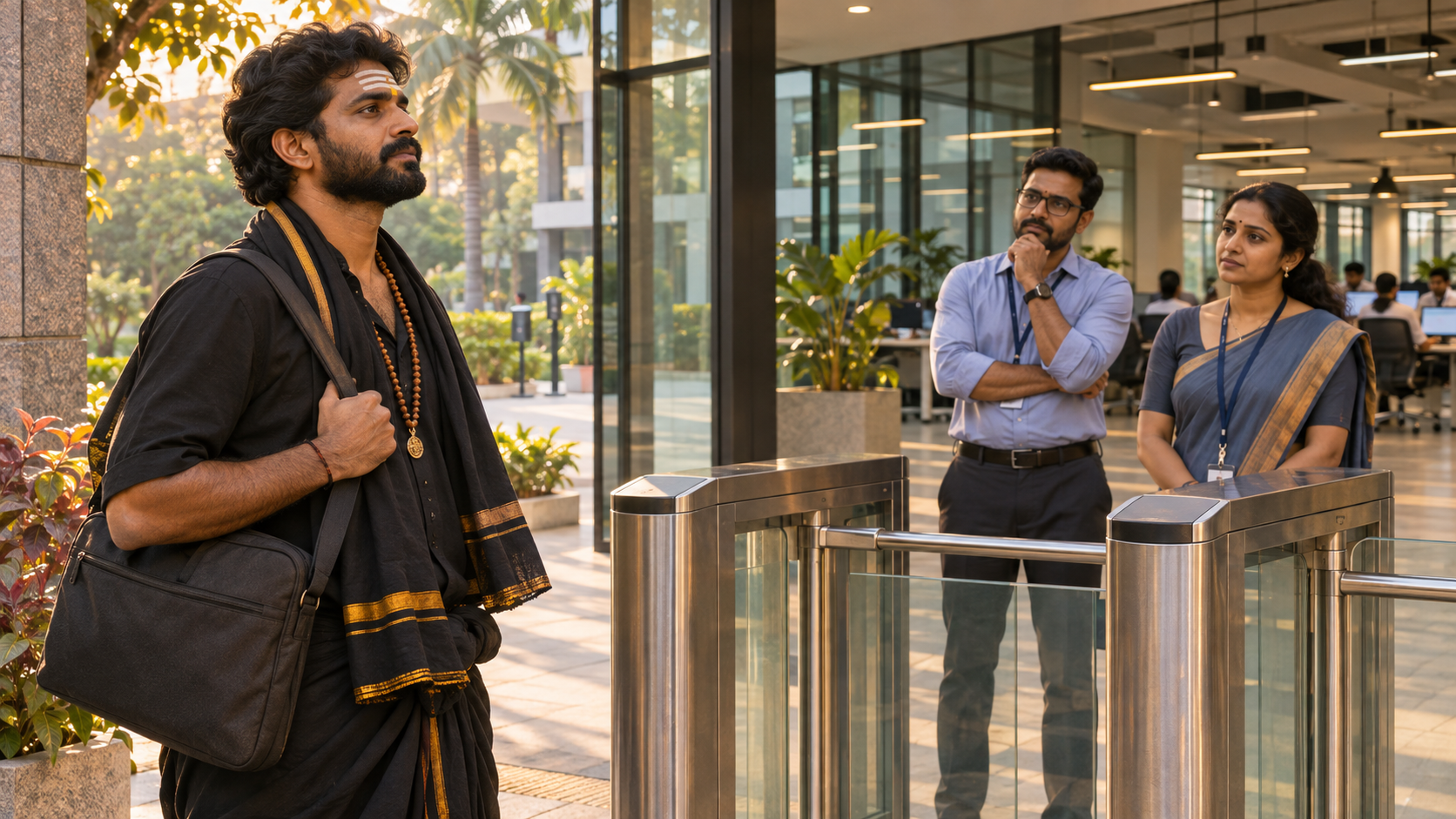
If you wear an Ayyappa Mala or traditional Deeksha clothing to work, the TCS Adibatla dispute raises an immediate question: can your employer make you choose between entering the office and keeping a religious vow that you disclosed in advance? The honest answer is not a slogan. A private company may regulate attire for genuine operational reasons, but an unexplained or selectively applied restriction deserves close scrutiny.
The incident also offers a practical lesson. Hindu employees need to describe a religious accommodation precisely, managers need to decide it before the employee reaches the security gate, and advocates need to distinguish verified facts from allegations. That discipline protects the devotee while keeping attention on the decision that must be justified.
The dispute turns on facts TCS has not publicly clarified
An employee identified as Manish alleged that he was denied entry to the TCS campus at Adibatla on 19 November while wearing a traditional mundu and an Ayyappa Mala. He also said he had informed his team leader and managers nearly two months before beginning the observance. If that timeline is accurate, management had ample opportunity to identify a problem and discuss an accommodation before the day of entry.
The allegation drew Ayyappa devotees, Hindu organisations and BJP workers to the campus. Police intervened as the protest grew, and the gathering ultimately ended peacefully. The Vishwa Hindu Parishad also warned companies against obstructing Ayyappa Deeksha observance.
Important facts remain unsettled. TCS had not publicly explained whether a written policy, client condition or individual manager’s instruction caused the alleged denial. Adibatla Police described the episode as a misunderstanding and initially said that no formal complaint had been received. A police-mediated calm does not, by itself, explain what happened inside the company’s decision-making process.
If you are assessing claims of religious discrimination, ask four factual questions before reaching a conclusion:
- What exact rule applied? Obtain the written dress policy and the version in force on the day of the incident.
- Who made the decision? Determine whether it came from HR, security, a business-unit leader, a client requirement or one supervisor.
- What happened after advance notice? Check when the request was received, who acknowledged it and whether management asked any follow-up questions.
- How are comparable cases handled? Review whether the same standard is applied to religious, cultural and traditional attire worn by other employees.
Until those questions are answered, the denial of entry and selective treatment remain allegations rather than adjudicated facts. Saying that clearly is not a retreat from Hindu advocacy. It prevents an employer from escaping the substantive questions by arguing that critics exaggerated what is known.
Ayyappa Deeksha attire is part of a vow, not a fashion preference
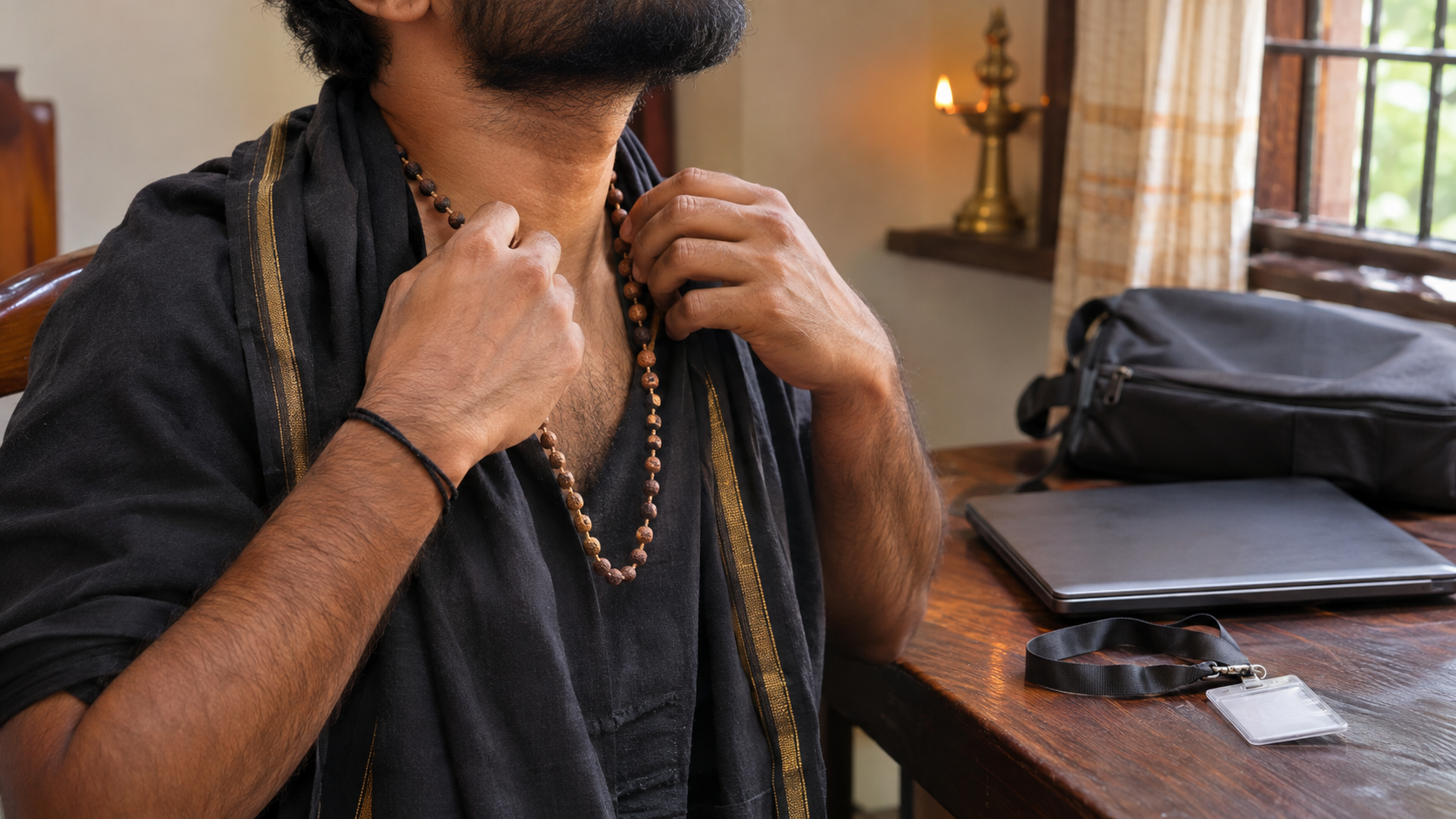
Ayyappa Deeksha is traditionally a 41-day discipline associated with devotion to Bhagwan Ayyappa and preparation for the Sabarimala pilgrimage. It commonly includes prayer, vegetarian food, abstinence, personal restraint and simple living. Devotees frequently wear black, blue or saffron clothing together with a tulsi or rudraksha mala.
That context matters because the mala and simple clothing are outward signs of an undertaking, not accessories selected for novelty. Asking a devotee to remove them can therefore mean asking him to interrupt or conceal a religious commitment. A serious workplace review must begin with that distinction.
If you are requesting an accommodation, do not assume that your manager understands the observance. Give HR the operational information it needs without turning your request into a theological essay. State the beginning and end dates, identify the mala and garments you will wear, confirm whether your ordinary duties will change, and invite the company to identify any specific safety, hygiene, access or client-facing concern.
Suggested wording: “I will observe Ayyappa Deeksha from [start date] through [end date]. During this period I will wear an Ayyappa Mala and traditional Deeksha attire. I expect to perform my normal duties. Please identify any specific safety, hygiene, security or client requirement that needs to be addressed so that we can agree on an arrangement before the observance begins.”
This wording does three useful things. It creates a dated record, makes the religious nature of the request unmistakable and requires management to name an actual workplace concern. It also leaves room to solve a legitimate operational problem without conceding that visible Hindu observance is inherently unprofessional.
Keep the mala and the garment questions separate. A concern about loose fabric near machinery, for example, would not automatically explain why a mala must be removed in an ordinary office setting. Each restriction should have its own reason, and any proposed adjustment should address that reason rather than erase the entire observance.
Use a six-question test for any corporate dress restriction
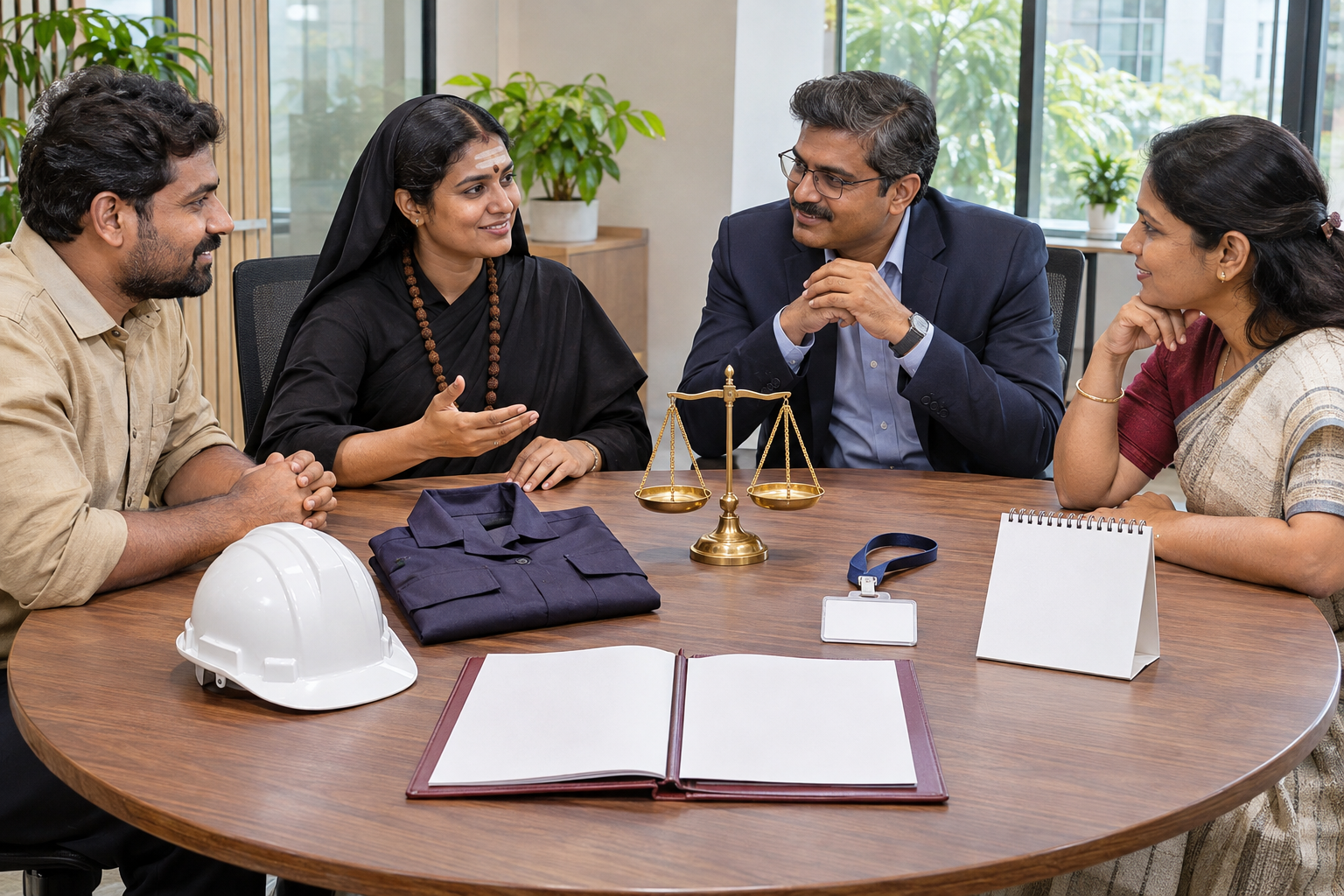
The constitutional position needs care. Article 25 protects freedom of religion subject to restrictions concerning public order, morality and health. Articles 14, 15 and 16 address equality and non-discrimination in State action and public employment; they do not automatically impose identical duties on every private employer. Quoting a constitutional provision online is therefore not a complete legal assessment of a private workplace dispute.
That distinction does not give a private company unlimited discretion. Written employment terms, applicable labour law, company policies and the facts of the particular decision may still matter. For practical evaluation, put the restriction through these six questions:
- Is the rule written and accessible? An employee should be able to see the policy, its scope and any process for exceptions. “Management decided” is not a substitute for identifying the rule.
- What concrete purpose does the rule serve? Safety, hygiene, security and a defined client-facing requirement can be legitimate concerns. A vague appeal to “professional appearance” needs further explanation when it burdens a religious observance.
- Is there a direct connection between the attire and the concern? Management should explain what feature of the mundu or mala interferes with which duty. A general discomfort with visible religiosity is not an operational analysis.
- Is the rule applied consistently? If comparable religious or cultural clothing is permitted, HR should explain why the Ayyappa devotee’s case is materially different. Consistency should be demonstrated through practice, not merely asserted.
- Was the request handled in time? Advance notice should trigger questions, review and a written decision before the observance begins. Waiting until the employee reaches the entrance turns an administrative question into a confrontation.
- Is there a narrower workable adjustment? If a real conflict exists, the employer should consider whether it can be solved without requiring removal of the mala or abandonment of the vow. The adjustment should target the identified problem and no more.
A manager does not have to accept every request without examination, and an employee does not have to accept an unexplained refusal. Both sides should move from personal preference to a recorded reason. That is the difference between a genuine dress policy and an ad hoc gatekeeping decision.
If discipline, loss of pay, suspension, retaliation or termination becomes possible, obtain advice from a qualified employment lawyer in the relevant jurisdiction. Do that before resigning or signing a disciplinary admission, because those actions can have lasting legal consequences. General constitutional arguments cannot replace advice based on your employment documents and the applicable law.
What to do before and after an access dispute

If you plan to observe Deeksha while working, the most useful record is created before the first day of religious attire. If you have already been stopped at the gate, your immediate task is to establish a calm, exact chronology.
- Notify both your manager and the designated HR channel in writing. Include the observance dates, the attire involved and your request to continue ordinary duties. Use an official email address or case-management system where possible.
- Ask for acknowledgement and a decision date. Do not treat silence as approval. A short follow-up should ask whether any additional information is required and when you can expect a written response.
- Confirm verbal conversations the same day. Send a neutral note stating who attended, what concern was raised and what next step was promised. Invite corrections so the record remains fair.
- Ask for the exact policy and reason. Request the relevant clause rather than debating an unwritten idea of corporate appearance. If a client requirement is cited, ask how it applies to your role and whether non-client-facing work is available during the observance.
- At the gate, do not force entry. Ask security to contact HR, note the time, identify the person giving the instruction and request a written reason. Preserve relevant messages, access notifications and the names of witnesses you already know.
- Clarify your employment status for the day. Ask whether management is directing you to take leave, work remotely, change attire or remain available while the matter is reviewed. Do not assume how the absence will be recorded or paid.
- Request a specific remedy. Ask for permission to enter and perform your role in Deeksha attire, or for a prompt meeting to address a named operational concern. A narrow request is easier to decide and harder to evade.
- Escalate when the consequences become formal. Use the company’s grievance or ethics mechanism and obtain professional legal advice if the dispute affects pay, discipline, continued employment or legal deadlines.
Useful escalation wording: “On [date] I notified [manager and HR] of my Ayyappa Deeksha and requested permission to work in the associated attire. At [time] on [date], I was instructed not to enter the workplace. Please confirm who made that decision, the written policy relied upon, how my work status will be recorded and when the accommodation request will receive a written determination.”
If you speak publicly, use the same chronology. Describe what you personally know, label allegations as allegations and keep the focus on the rule, the decision and the remedy. Publishing unverified motives or targeting individual employees can distract from the stronger demand: a transparent explanation and equal treatment.
Key takeaways: what a fair resolution should require
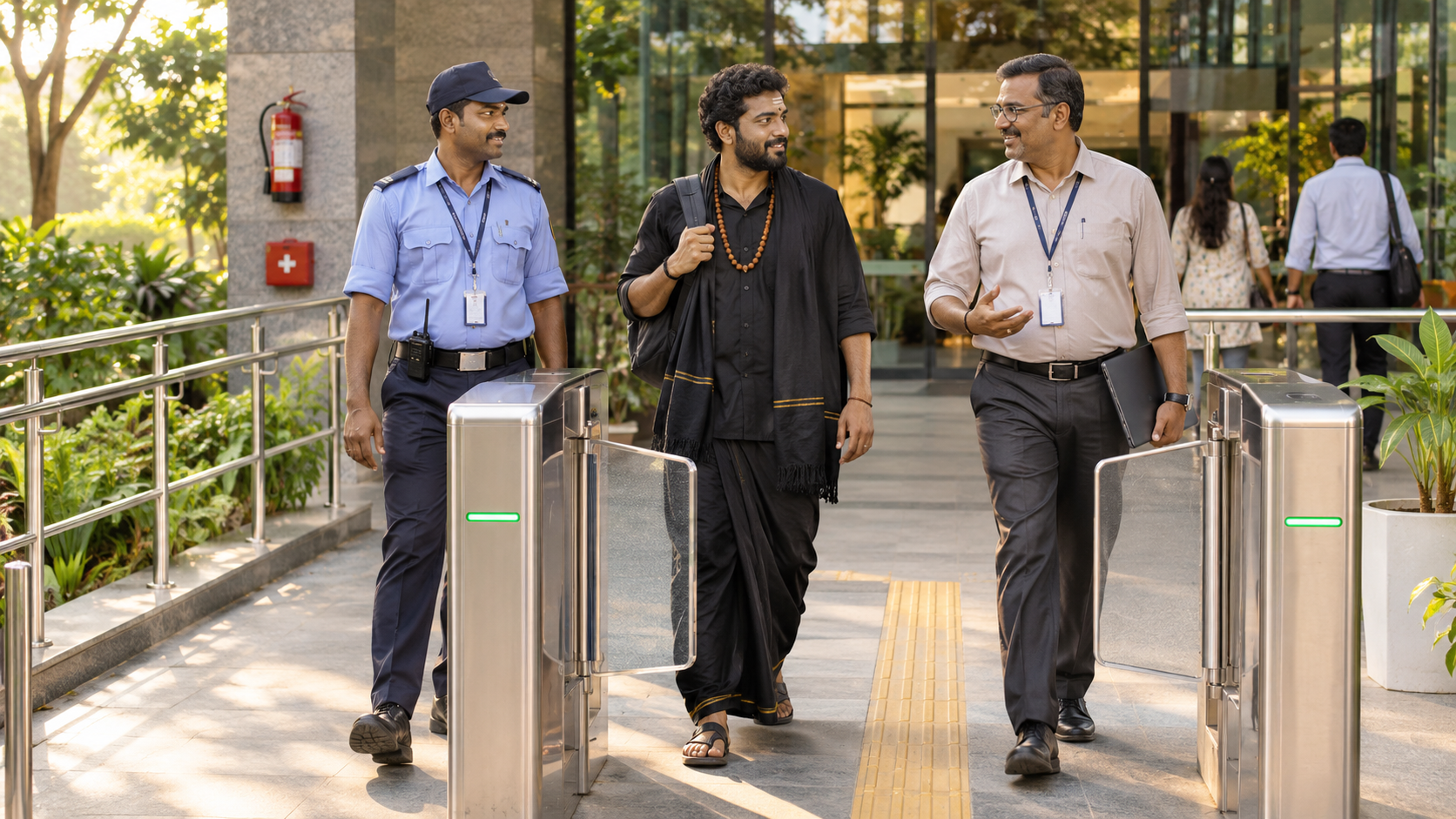
- An employee’s Ayyappa Mala and Deeksha clothing should be treated as elements of a religious vow, not dismissed as casual personal style.
- An employer that objects should identify the written rule, the decision-maker and the specific safety, hygiene, security or client requirement involved.
- Advance notice should produce an advance decision. The security gate is the wrong place to discover that management has not reviewed a request.
- The mala and each item of clothing should be assessed separately against the employer’s stated concern.
- A dress policy should be applied consistently across comparable religious, cultural and traditional forms of attire.
- When a genuine operational conflict exists, both sides should look for the narrowest adjustment that preserves the vow and allows the employee to perform the role.
- Discipline, lost pay or pressure to resign warrants prompt advice from a qualified employment lawyer, not reliance on social-media interpretations of constitutional law.
The immediate confrontation at Adibatla may have been calmed, but the institutional question remains unanswered until TCS explains what rule was applied and how it will handle comparable requests. A private resolution for one employee is useful; a clear accommodation process is what prevents the same dispute from returning at another office gate.
If you are an employee preparing for Deeksha, send the written notice now and ask for a decision before the observance begins. If you are a manager receiving that notice, resolve it before security has to improvise. A Bharatiya workplace should be capable of addressing a concrete operational concern without treating visible Hindu devotion as a problem in itself.
References

Leave a Reply
You must be logged in to post a comment.