

If you came to Sharmila Ford’s story wondering whether it is mainly about wealth, social standing or a vast temple, the useful answer lies elsewhere. Its centre is a more demanding question: what do you do with inherited culture, family responsibility and personal influence once devotion becomes serious?
Her path offers a practical pattern. Receive cultural inheritance without treating it as spiritual achievement. Make family life part of your dharma rather than an excuse to postpone it. Then place whatever resources you possess behind work that can carry a tradition beyond your own lifetime.
From inherited culture to chosen responsibility
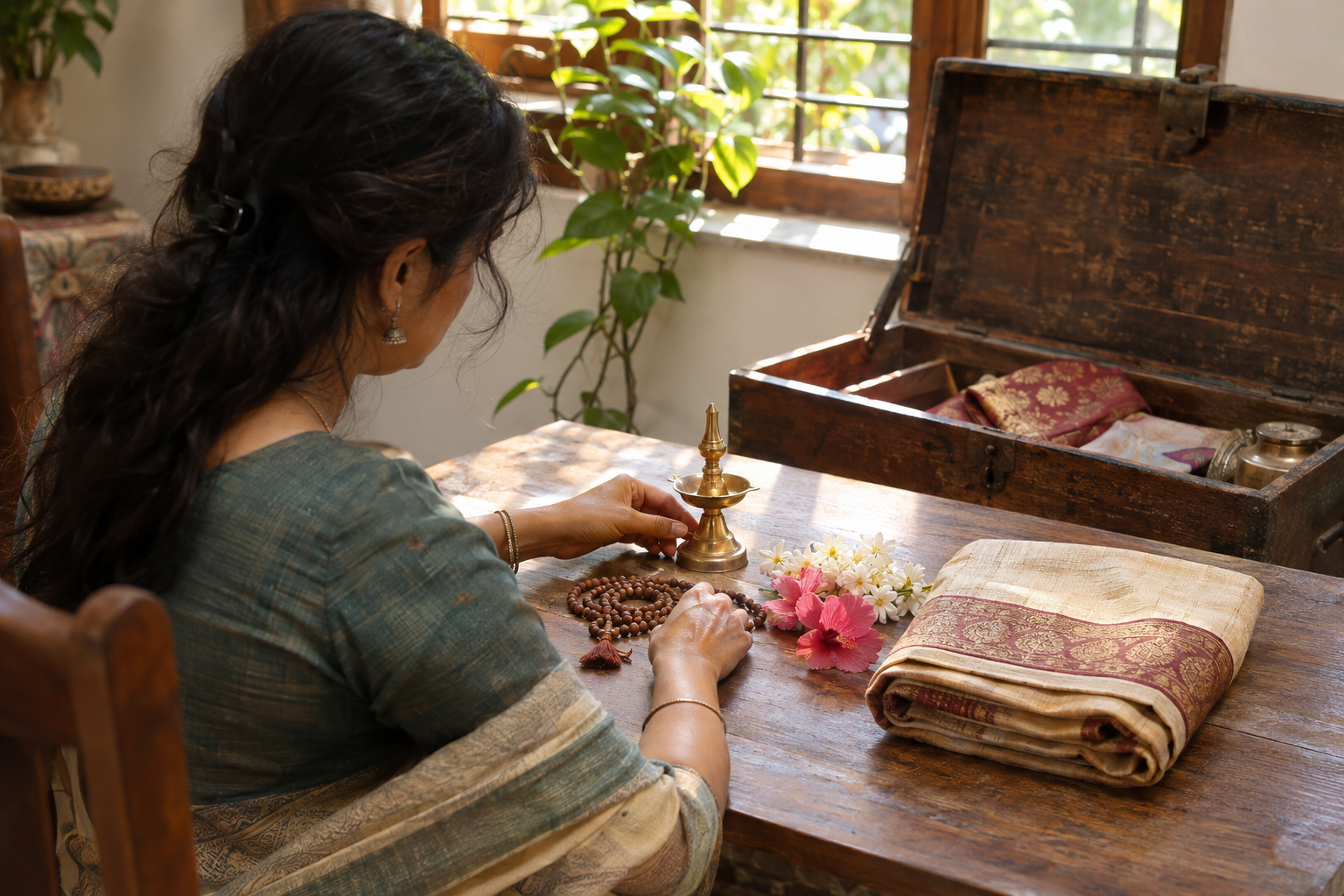
Sharmila Ford, known in devotional life as Svaha Devi Dasi, is an ISKCON devotee descended from statesmen and scholars. That heritage matters, but not because ancestry automatically confers spiritual depth. Lineage can provide language, memory and a sense of civilisational belonging. It cannot make the decisions that transform those gifts into seva.
This distinction is especially important for Hindus in the diaspora. It is possible to inherit festivals, family names, food, sacred images and affection for Bharat while leaving dharma at the level of identity. Cultural pride can protect memory, but spiritual life asks for more: practice, obligation, restraint and service. You move from inheritance to responsibility when you begin asking what your tradition requires from you, not merely what it gives you.
Sharmila’s public commitments connect Krishna consciousness, the preservation of India’s heritage and the creation of spaces where spirituality and culture meet. Those are related but distinct forms of work. Devotion supplies the centre. Cultural preservation gives memory a durable form. Institutions allow that memory to be encountered by people who were not present when the work began.
You can apply the same test to your own relationship with dharma. Identify one practice that shapes your conduct, one part of your inheritance that could disappear if nobody maintains it, and one community effort capable of carrying it forward. If you can name only symbols and sentiments, your cultural identity may still be waiting to become responsibility.
Family life can be a field of spiritual discipline
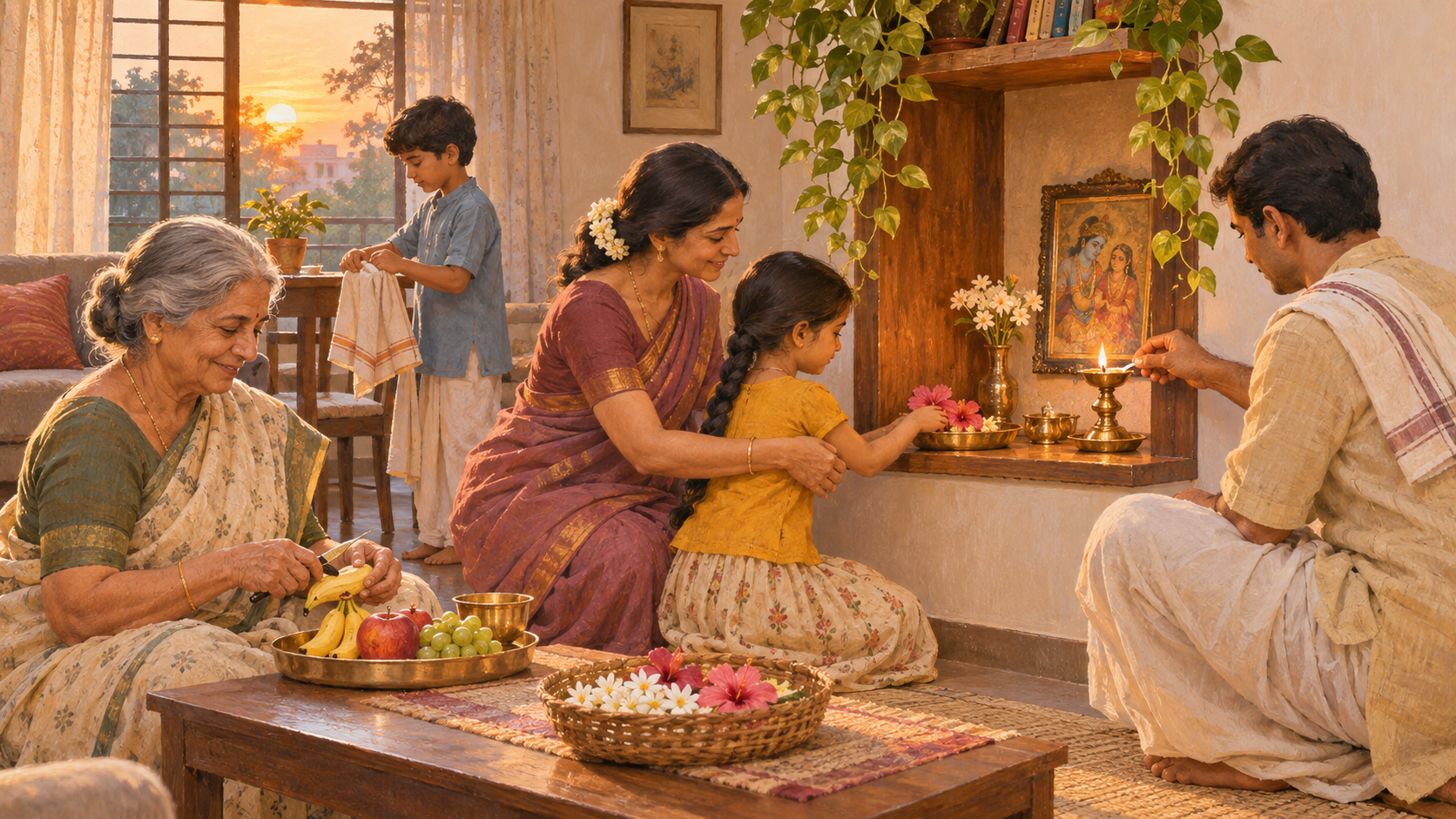
One of the most instructive elements in Sharmila’s journey is her decision to devote herself to family life. That choice resists a common modern misunderstanding: that serious spirituality begins only after ordinary responsibilities have been escaped, outsourced or completed.
In many Dharmic traditions, household life is not the opposite of spiritual life. It is one of the places where spiritual claims are tested. Patience is tested by repetition. Detachment is tested while handling possessions. Truthfulness is tested when honesty carries a personal cost. Service is tested when the person in need is familiar rather than impressive.
This does not mean turning every domestic preference into a sacred duty. It means giving your spiritual commitments a repeatable place inside real life. A fixed devotional practice, a family obligation discharged conscientiously, and a sustainable commitment to community service will usually reveal more than occasional intensity. The important measure is whether the practice survives busy days, competing demands and the absence of public recognition.
Sharmila’s work with her husband, Alfred Ford, in support of the Temple of the Vedic Planetarium also shows that shared household purpose need not stop at the household door. A family can become a unit of cultural transmission and public service. The practical question for you is not whether your contribution resembles theirs in scale. It is whether the people closest to you understand what you are trying to preserve and why it deserves a place in your common life.
Why support for TOVP is long-horizon seva
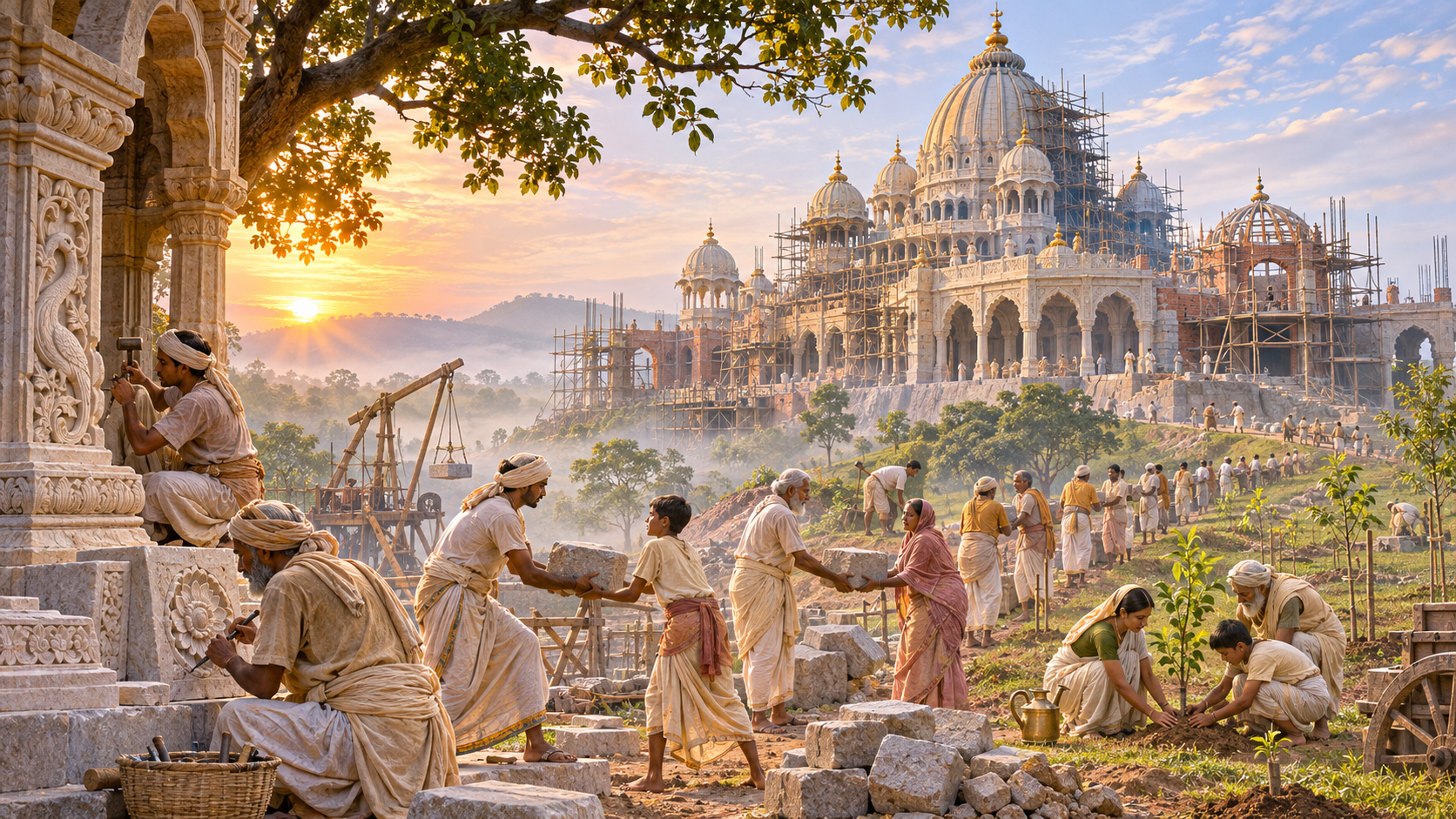
The Temple of the Vedic Planetarium, or TOVP, is being raised in Mayapur, the West Bengal pilgrimage town that serves as ISKCON’s international headquarters. It is promoted as the world’s largest Vedic temple. That description conveys the project’s physical ambition, but size alone does not explain why devotees such as Sharmila and Alfred Ford have made it a major commitment.
A temple project of this kind is a form of institutional memory. Personal teaching can reach the people present in a room. A durable sacred institution can continue receiving pilgrims, supporting worship and making a tradition visible after its original patrons are gone. The combination of temple and planetarium also signals an ambition to place devotion and the communication of a Vedic worldview within the same public space.
Sharmila’s support is tied to fulfilling the ISKCON founder’s vision. That makes TOVP more than a freestanding monument or an exercise in architectural grandeur. Within ISKCON, it belongs to the continuing institutional legacy of A.C. Bhaktivedanta Swami Prabhupada. The relevant measure is therefore not simply how impressive the structure appears. It is whether the project serves the devotional and cultural purpose for which it is being built.
If Sharmila’s example moves you to support TOVP or another temple, begin by defining what support means within your actual circumstances. It might take the form of financial giving, skilled work, responsible public awareness, pilgrimage or sustained devotional participation. A modest commitment you can honour is better than an emotional pledge you cannot maintain. Institutional seva needs continuity as much as enthusiasm.
Financial support also requires ordinary prudence. Verify the project’s official legal identity, payment channel, stated use of funds and receipt process before transferring money. Do not send funds through an unsolicited private message or an unverified repost; a misdirected transfer may be difficult to recover. Due diligence does not weaken shraddha. It protects the offering and the purpose for which you intended it.
Read public recognition as evidence of reach, not sanctity

Sharmila has received India’s Pravasi Bharatiya Samman Award, the country’s highest national honour for overseas Indians. Her public service has also included membership on the Board of Governors of the Oxford Centre for Hindu Studies. These distinctions show that her cultural work has reached prominent public and academic institutions.
They do not, by themselves, prove spiritual attainment. Dharmic communities should be able to honour effective patrons without turning wealth, ancestry or awards into substitutes for discernment. Public recognition tells you something about reach and credibility in the public sphere. Spiritual seriousness is better judged through sustained service, fidelity to purpose and the willingness to place the mission above personal display.
This distinction protects both the devotee and the institution. It allows you to appreciate what a recognised person has helped accomplish without making the entire undertaking dependent on that person’s image. Healthy cultural institutions welcome capable patrons, but their meaning must remain intelligible even when no famous name is attached.
Key takeaways: turn admiration into disciplined seva
- Treat ancestry as a responsibility. Ask which practice, language, memory or institution will weaken if your generation does not carry it.
- Put devotion inside ordinary life. Choose a repeatable practice and a realistic service commitment that can survive family and professional demands.
- Judge temple support by purpose. Scale and beauty matter only insofar as they serve worship, teaching, pilgrimage and cultural continuity.
- Match your commitment to your means. You do not need a prominent name or a large fortune to offer useful, sustained seva.
- Protect financial offerings with verification. Use an official channel, understand the intended use and retain documentation of the contribution.
- Respect honours without confusing them with holiness. Awards indicate public reach; character and consistent service remain the more relevant spiritual tests.
Choose one concrete inheritance you want to preserve, one household duty through which you can practise dharma, and one trustworthy institution you are prepared to support consistently. Then begin at a scale you can sustain. Sharmila Ford’s journey is useful because it directs attention away from admiration alone and toward the patient conversion of culture, family life and resources into seva.
References

Leave a Reply
You must be logged in to post a comment.