
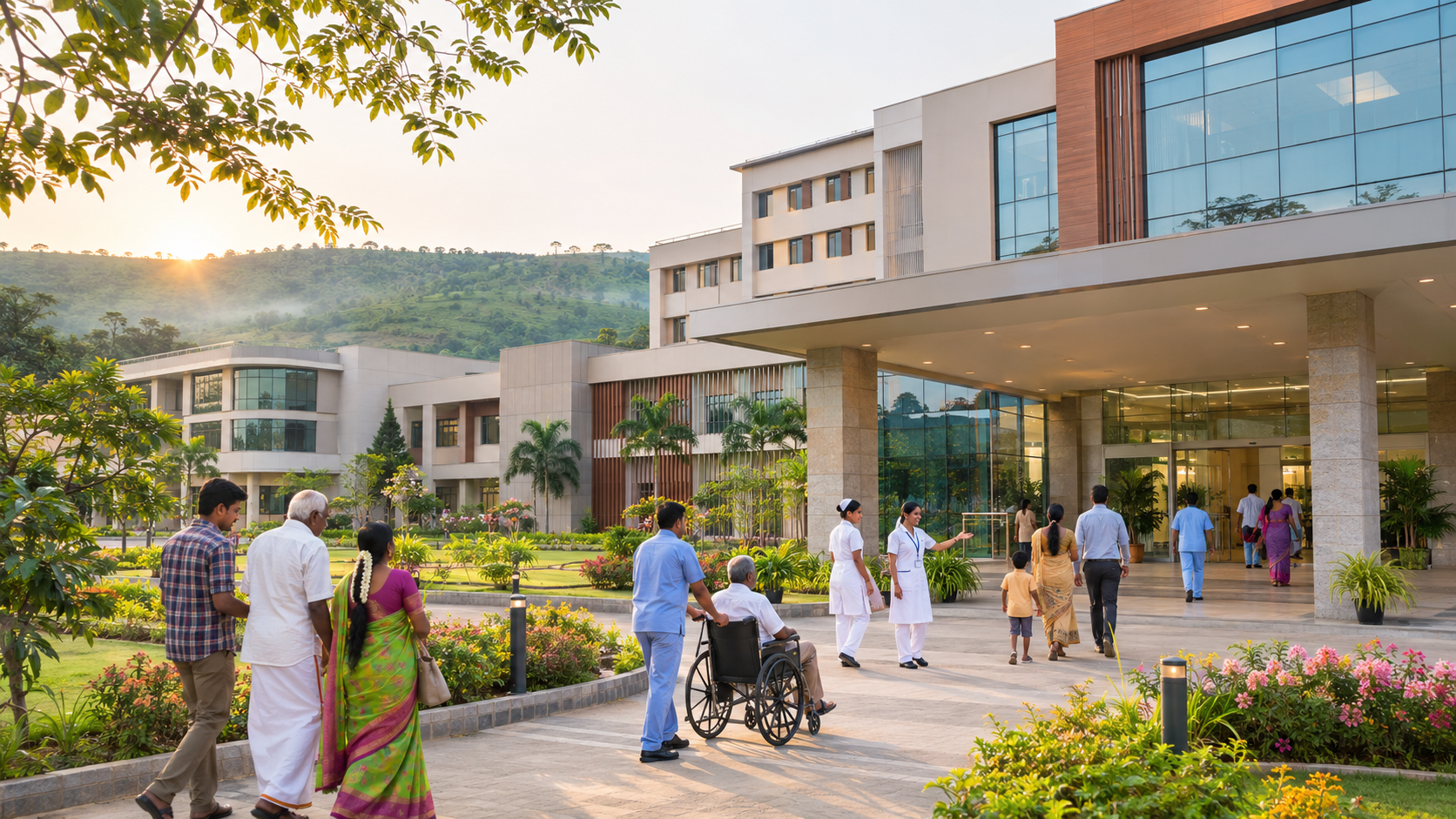
If you have heard that Sathya Sai Grama has a large hospital where patients receive treatment without a bill, you probably want to know two things: whether the claim is genuine and whether the hospital can help with your particular medical need.
The documented model is substantial: a 600-bed multispeciality facility at Sathya Sai Grama, near Muddenahalli in Karnataka’s Chikkaballapur district, operates without billing counters or patient fees. That makes it worth investigating. It does not, however, mean that every condition is treated, every patient is immediately admitted, or every expense connected with a medical journey disappears. Confirm those details before you travel.
What the no-billing model actually promises
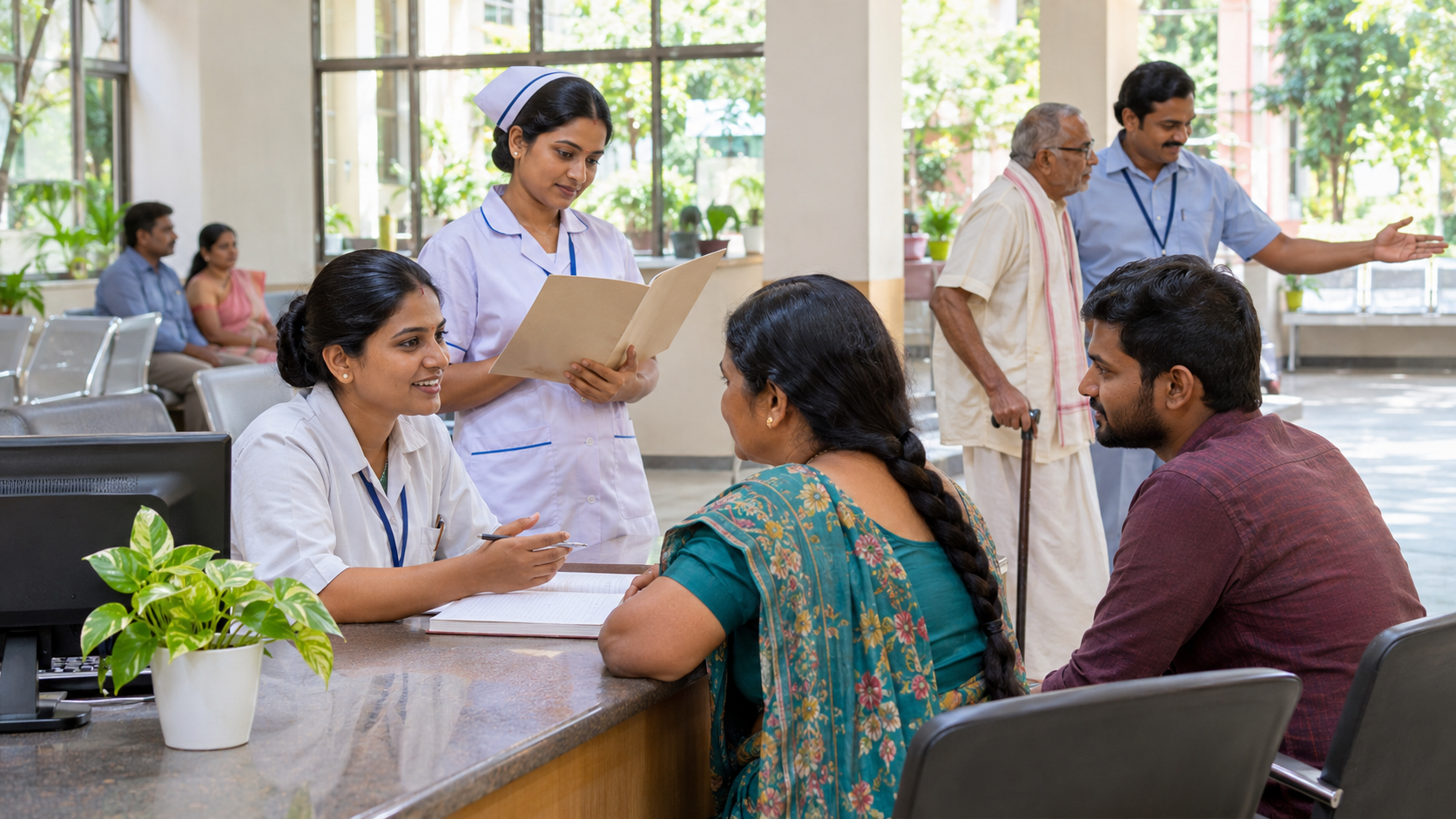
“Free hospital” can mean several different things. A charitable clinic may waive consultation fees but charge for tests or medicines. A subsidised hospital may reduce a bill according to income. Sathya Sai Grama is presented differently: patients encounter no billing counter and are charged no hospital fees, while philanthropic support finances the institution.
That distinction matters. The cost of doctors, nurses, operating theatres, intensive care, equipment and consumables has not vanished. The institution, rather than the patient at the point of care, carries that financial burden through donated support. In practical terms, the model tries to prevent ability to pay from becoming the gate through which a patient must pass.
Do not stretch that promise beyond what has been established. The available description does not specify whether the hospital pays for your journey, accommodation near the campus, a companion’s expenses, rehabilitation elsewhere, or medicines obtained after discharge. It also does not establish universal eligibility for every age group, diagnosis, place of residence or nationality. Ask about each expense and eligibility condition that could affect your family.
The facility has also been called the world’s largest entirely free hospital. Its 600-bed capacity gives that claim a serious basis, but the superlative is not accompanied here by an independent international ranking or a stated comparison method. If you repeat it publicly, describe the hospital as being presented that way rather than treating the ranking as independently settled. For a patient, the more important questions are simpler: does the relevant department handle your condition, is it accepting patients, and what must you do to be evaluated?
Before you travel, confirm that the hospital fits your case
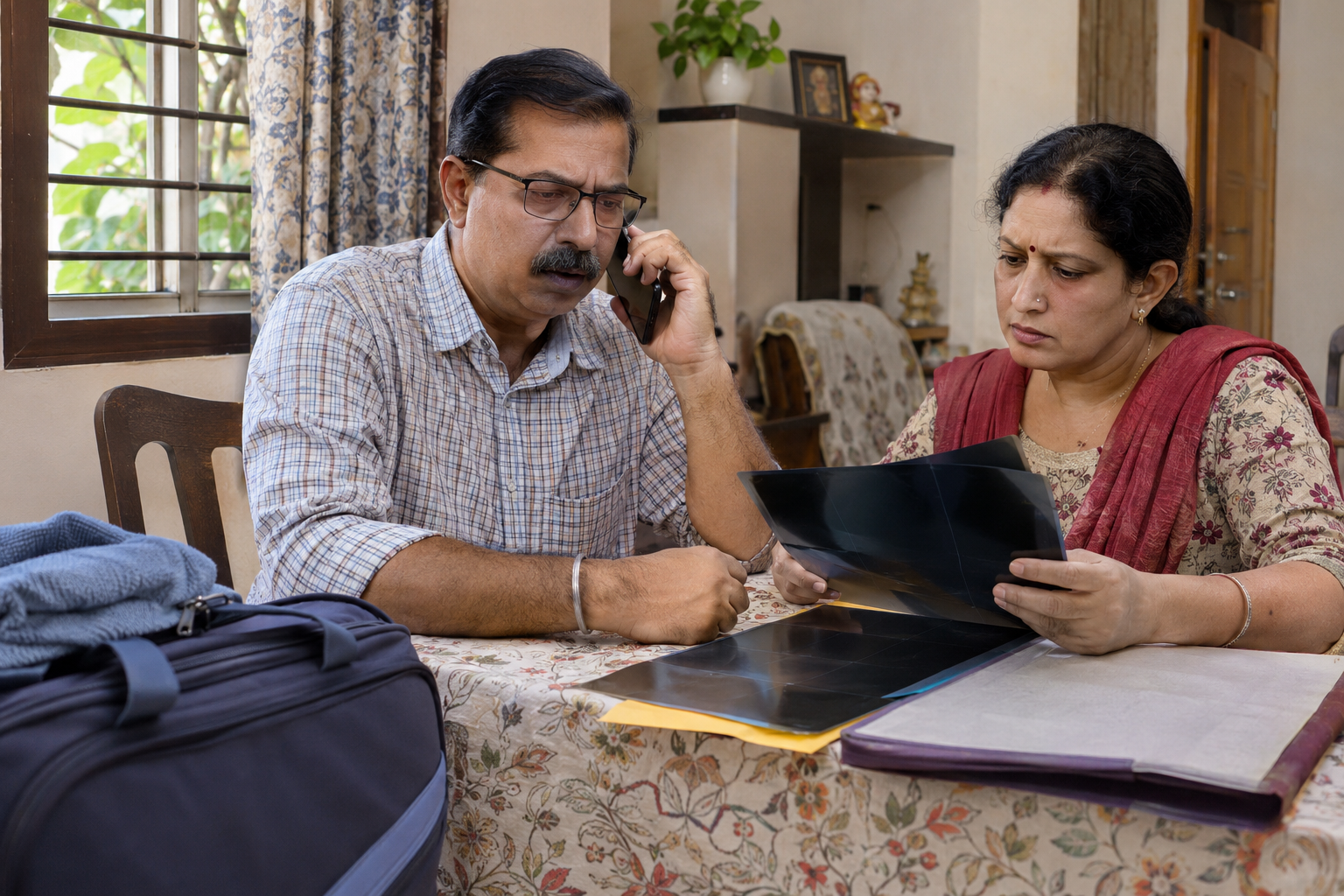
A 600-bed institution can still have different pathways for outpatient consultations, planned operations, intensive care and urgent cases. Do not make a long journey on the strength of a forwarded video or social-media message. Use the institute’s official channel to obtain current instructions.
- Name the exact medical need. Give the diagnosis if one has been made, the patient’s age, the relevant symptoms and the specialty recommended by the current doctor. “We need treatment” is too broad for a hospital to route correctly.
- Ask whether the appropriate department is currently accepting patients. The reported total of 28 specialised departments does not tell you whether your required service is available on a particular date or suitable for your case.
- Confirm the entry process. Ask whether you need an appointment, referral, preliminary record review or in-person assessment. Also ask where records should be sent. Use an official channel because medical files contain sensitive personal information.
- Request a precise document list. Prepare the clinical summary, test reports, scan images where available, current medicines with doses, known allergies and previous procedure notes. Bring identification and the contact details of the doctor already managing the case, but verify what the hospital itself requires.
- Separate hospital charges from journey costs. Ask explicitly about investigations, procedures, implants or devices, inpatient medicines, discharge medicines and follow-up. Then budget separately for transport, lodging, food and a caregiver unless the hospital confirms that any of these are provided.
- Plan the return journey and follow-up. Find out how many visits may be required, what warning signs after discharge need urgent attention, and whether follow-up can be coordinated with a doctor closer to home.
If the patient has severe or rapidly worsening symptoms, do not postpone local emergency care while waiting for an appointment or travelling to Sathya Sai Grama. Go to the nearest appropriate emergency facility or contact local emergency services. Likewise, do not stop medicines, delay an existing procedure or alter treatment merely because you have submitted an enquiry; make those decisions with the clinician responsible for the patient’s care.
Read the impressive facilities without overreading them
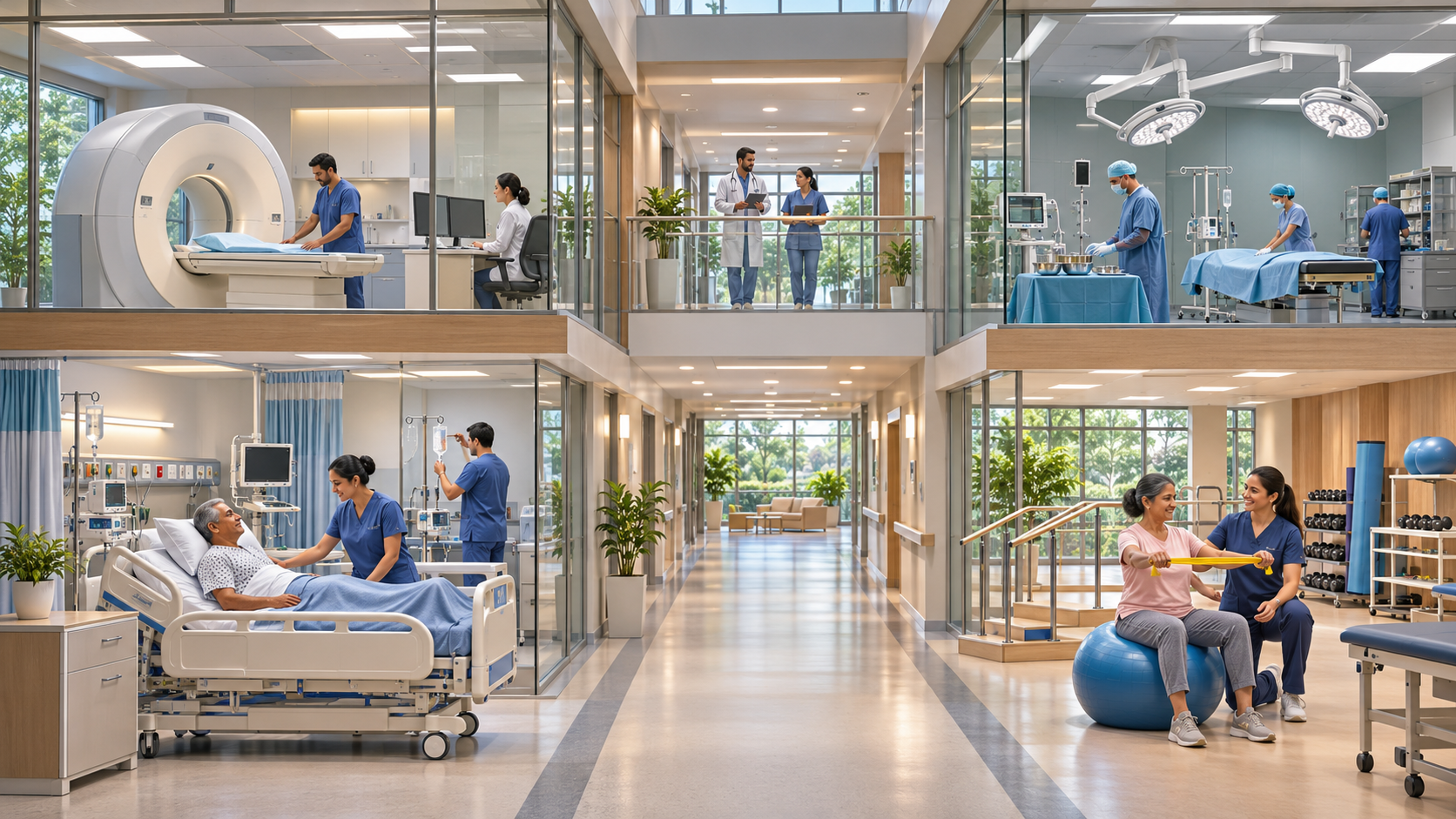
The hospital’s scale distinguishes it from a temporary medical camp or a small outpatient charity. Its reported infrastructure includes 600 beds distributed among general wards, intensive-care beds and private-ward beds, together with 11 operating theatres and 28 specialised departments. Robotic surgery, artificial-intelligence-assisted care, and an organ and heart-valve bank are also listed among its capabilities.
| Reported feature | What you can reasonably conclude | What you should still confirm |
|---|---|---|
| 600 beds | This is a large inpatient institution, not merely a consultation centre. | Bed availability, admission criteria and the ward appropriate to the individual patient. |
| 11 operating theatres | The campus has significant surgical capacity. | Whether the required procedure is performed and whether the patient is clinically eligible. |
| 28 specialised departments | Care extends across multiple branches of medicine. | The exact department, services, age groups and current patient-intake process. |
| Robotic surgery and AI-assisted care | Advanced medical technology forms part of the infrastructure. | Whether either technology applies to the diagnosis; its presence alone does not make it the right option for every patient. |
| Organ and heart-valve bank | The institution reports specialised storage or banking capability. | Availability, clinical suitability and the allocation process in an individual case; a bank is not a promise of a matching organ or valve. |
This is the right way to read hospital specifications: capability first, individual suitability second. Equipment does not choose a treatment, and institutional capacity does not replace a clinical assessment. Ask what the medical team recommends for the patient in front of them, not merely which headline technology the campus possesses.
Why this is more than a charitable hospital
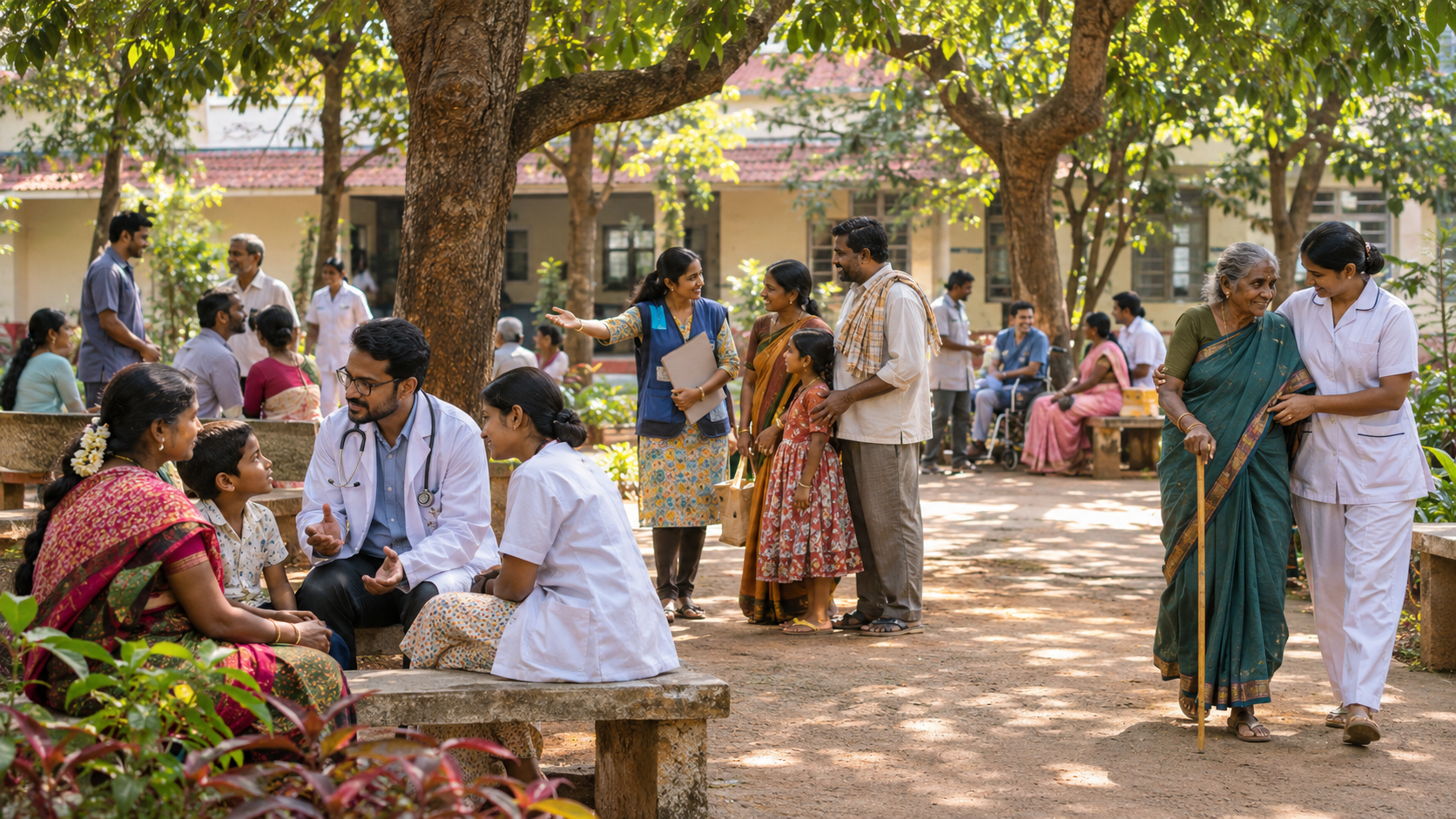
The hospital is integrated with a medical-education project described as India’s first free medical college, including tuition-free postgraduate positions. This matters because free treatment is sustainable only when an institution can support trained people as well as buildings and machines. Connecting patient care with medical education attempts to address both immediate access and the longer-term supply of clinicians.
Tuition-free education and free patient care are related commitments, but they should not be confused. A prospective student must still verify the current admissions route, qualifications, programme conditions and official requirements. A patient must still establish clinical eligibility. “Free” removes a financial charge; it does not remove professional standards, selection processes or limits on capacity.
For a Dharmic audience, the deeper significance lies in the institutional form of seva. Compassion is not left as a sentiment. It is translated into beds, operating theatres, specialised departments, medical training and a financing structure intended to keep the billing transaction away from the patient. The wider healthcare mission places this work within a continuing service commitment rather than a single ceremonial act.
That is also why the hospital should not be reduced to a slogan in an argument about Bharat. Uncritical praise can obscure the information a patient actually needs. A confident Dharmic response can celebrate service while still asking about access, clinical scope, follow-up, governance and continuity. Those questions strengthen a seva institution because they direct attention to whether compassion reaches the person who needs it.
If you want to support the mission, begin with practical help. Direct a patient to official contact information rather than an unverified number. Help the family organise records into a short, readable medical file. Clarify travel and follow-up arrangements before collecting money. If you donate, use an official channel and confirm the destination of the contribution. The useful act is the one that removes a real obstacle between a patient and appropriate care.
Key takeaways
- Sathya Sai Grama is described as a 600-bed multispeciality hospital with no billing counters or patient fees, supported through philanthropy.
- Its reported infrastructure includes 11 operating theatres, 28 specialised departments, robotic surgery, AI-assisted care, and an organ and heart-valve bank.
- “Free” refers to the hospital’s no-billing model; do not assume that travel, accommodation, post-discharge medicines or every related expense is covered without confirmation.
- Capacity does not guarantee immediate admission or suitability for a particular condition. Confirm the department, eligibility, record-review process and current intake before travelling.
- The hospital is integrated with a tuition-free medical-education model, joining patient seva with the training of medical professionals.
- Urgent or worsening symptoms require prompt local emergency care; do not wait for a distant hospital to respond before seeking immediate help.
Your next step is not to debate the size claim or forward another video. Write down the diagnosis, patient age, present treatment and required specialty; gather the medical records; and contact the institute through its official channel. A confirmed clinical pathway is what turns an inspiring Dharmic institution into care a patient can actually reach.
References
- Hindu Human Rights Blog — Video: The World’s Largest Free Hospital in ‘Pagan Heathen Thuggee’ India
- Sri Madhusudan Sai Institute of Medical Sciences and Research — The Institute
- Sri Madhusudan Sai — Healthcare Mission

Leave a Reply
You must be logged in to post a comment.