
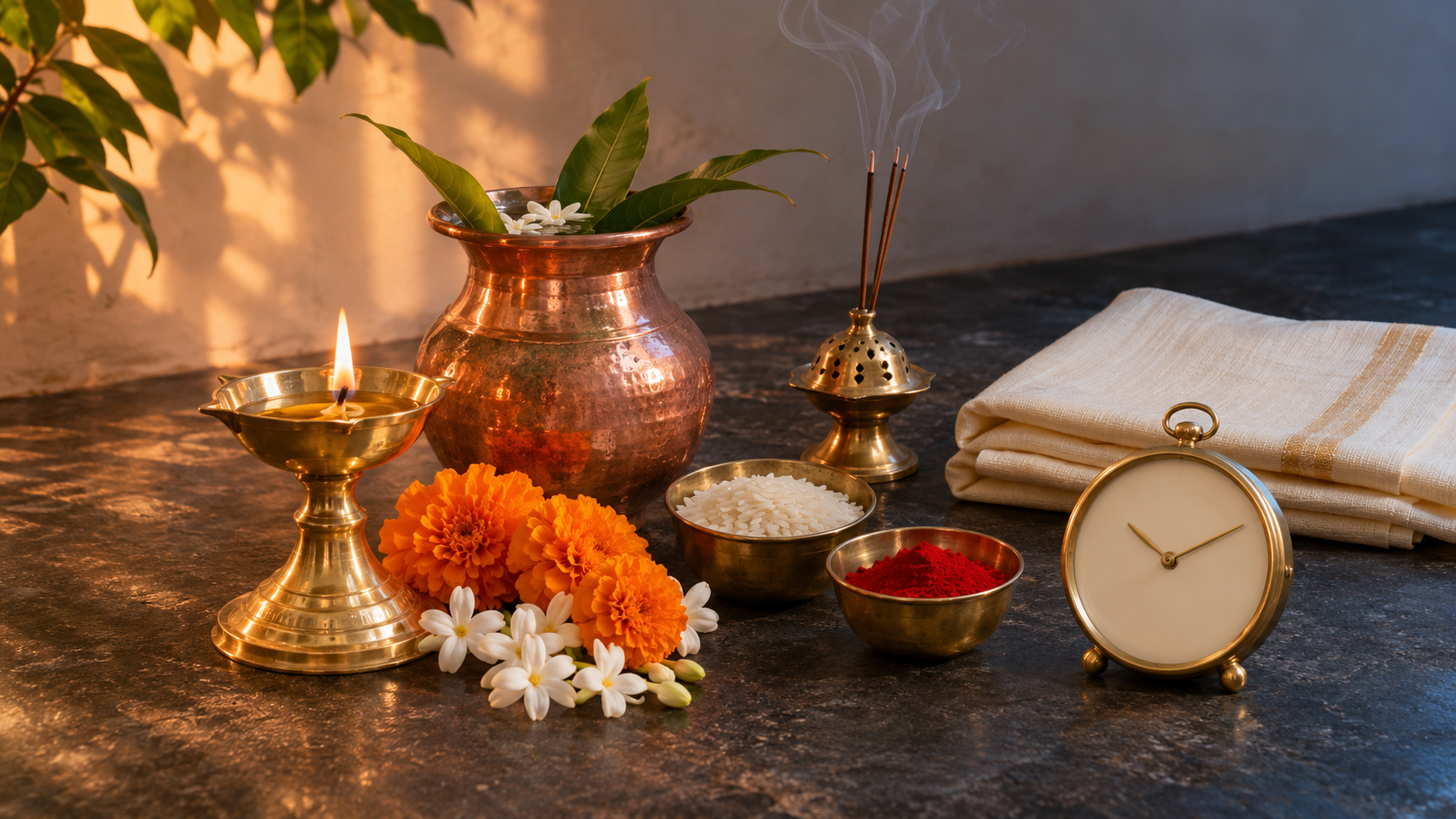
If you are planning a puja, vrata, temple visit, sankalpa, or family ceremony for November 26, the date alone is not enough. The governing tithi changes during the afternoon, so the time of your observance may determine which lunar day applies.
In most regions, Thursday, November 26, 2026 is Krishna Paksha Dwitiya until 4:47 PM and Krishna Paksha Tritiya afterward. Because Panchang calculations are location-sensitive, use 4:47 PM as the published reference and confirm the transition in a Panchang calculated for your city before fixing a muhurta.
November 26 Panchang reading at a glance
| Calendar element | Reading | How to use it |
|---|---|---|
| Civil date | Thursday, November 26, 2026 | Use this date when locating the entry in your local calendar. |
| Paksha | Krishna Paksha | This is the waning, or dark, half of the lunar month. |
| Tithi before 4:47 PM | Dwitiya | The second lunar day is current under the published timing. |
| Tithi from 4:47 PM onward | Tritiya | The third lunar day begins under the published timing. |
The practical point is simple: do not label the entire civil day as Dwitiya. The tithi changes before the evening, and an observance held after the transition may need to be treated as a Tritiya observance.
Why the tithi changes before the date ends
A tithi is a lunar day determined by the changing relationship between the Sun and Moon. It is not a fixed twenty-four-hour unit beginning at midnight. A tithi can therefore start or finish in the morning, afternoon, evening, or night.
That distinction matters whenever a religious instruction names a tithi rather than a civil date. If a practice is to be performed while Dwitiya is prevailing, its relevant window ends at the local Dwitiya-to-Tritiya transition. If the instruction instead requires the tithi present at sunrise, during a specific part of the day, or at the time of a prescribed puja, a different rule may decide the observance date.
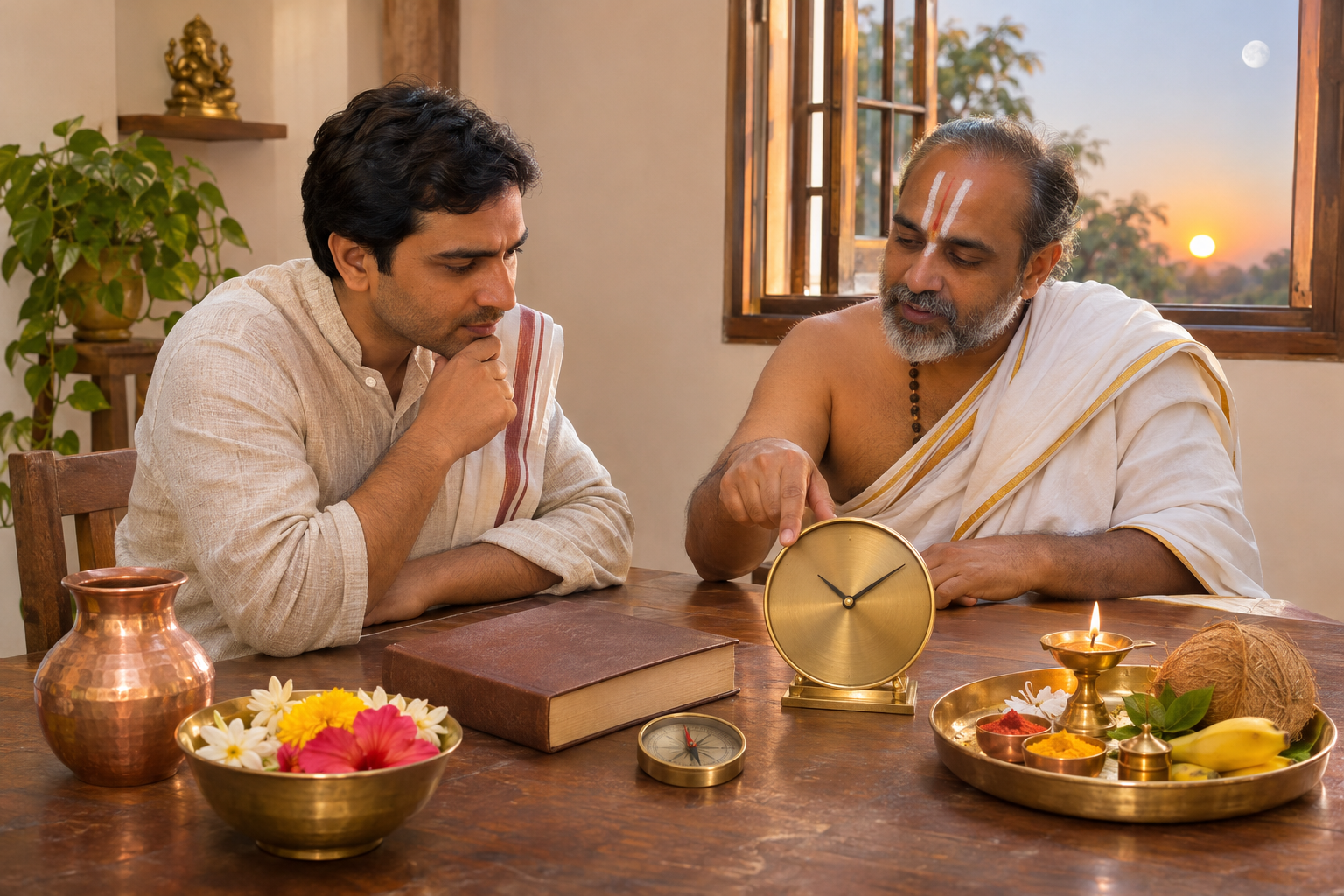
Do not choose among those rules by convenience. Follow the convention used by your sampradaya, temple, family tradition, or vrata instructions. When the instructions are unclear, ask the priest or acharya who will conduct the rite which moment controls the decision.
How to plan an observance around 4:47 PM
- Set your location first. Select the city where the observance will actually take place, not the city where the host, priest, or family normally lives.
- Confirm the local transition. Check whether your city-specific Panchang also places the change from Dwitiya to Tritiya at 4:47 PM. A different local time should replace the published reference in your planning.
- Identify the ritual rule. Determine whether the occasion requires Dwitiya or Tritiya at sunrise, throughout a stated interval, or at the moment the main rite begins.
- Compare the main rite with the transition. If the prevailing tithi at the time of performance is what matters, schedule the essential sankalpa and prescribed action on the correct side of the local transition. Do not judge only by when guests arrive or when preparations begin.
- Check the complete muhurta. Tithi is only one part of a Panchang decision. Verify the other required calendar factors before announcing a ceremony time.
This sequence prevents a common planning error: selecting a date because it is described as Dwitiya, then placing the actual ritual after Tritiya has begun.
What not to infer from the tithi alone
The Dwitiya-to-Tritiya transition does not, by itself, establish that every hour before or after 4:47 PM is auspicious. A traditional Panchang is fivefold: vara, tithi, nakshatra, yoga, and karana. Local sunrise and sunset, the purpose of the ceremony, and any avoided or preferred intervals may also affect a muhurta.
- Do not assume a universal “good time.” A suitable interval must be calculated for the location and the kind of activity being undertaken.
- Do not infer the nakshatra or rashi from the tithi. These are separate calendar or astronomical indicators and require their own readings.
- Do not transfer 4:47 PM blindly across time zones. Confirm the transition for the place of performance.
- Do not treat a general daily Panchang as a complete ceremonial ruling. Weddings, major samskaras, temple rites, and vrata observances can have additional requirements drawn from the relevant tradition.
If you only need the lunar-day identity, the useful division is Dwitiya before the stated transition and Tritiya afterward. If you need a muhurta, obtain the full local Panchang rather than turning this single tithi boundary into a broader auspiciousness claim.
Key takeaways
- November 26, 2026 falls in Krishna Paksha.
- Dwitiya continues until 4:47 PM under the published timing.
- Tritiya begins after 4:47 PM under that timing.
- The tithi at the relevant ritual moment may matter more than the civil date printed on an invitation.
- Confirm the transition and the remaining Panchang factors for your city before fixing a muhurta.
Before committing to a time, write down three things: the ceremony location, the rule your tradition uses, and the locally calculated tithi transition. That small check will tell you whether your observance belongs on Dwitiya or Tritiya and whether a fuller muhurta consultation is still needed.
References

Leave a Reply
You must be logged in to post a comment.