
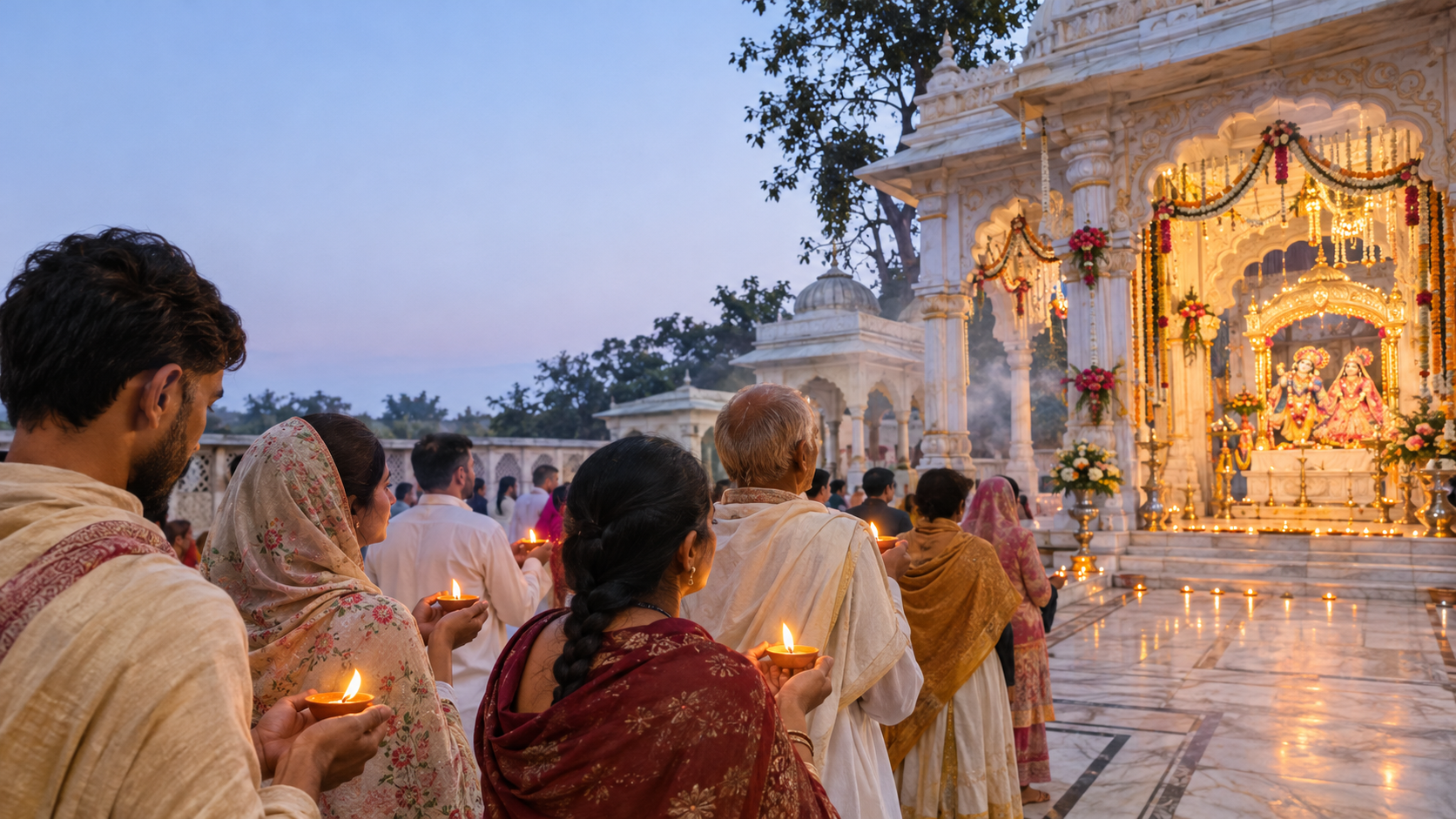
If you are planning to attend Kartika Deep Daan at ISKCON Vrindavan, your real question is probably not what a lamp looks like. It is how to take part without losing the devotion in the crowd, the queue, or the urge to record the moment.
The practical answer is simple: prepare the logistics before you arrive, follow the temple’s local instructions, and treat the lighting of the lamp as an offering rather than a performance. If you cannot travel to Vrindavan, you can still keep a modest and honest Kartika practice at home.
Key takeaways
- Deep daan is an offering of light. The inward intention matters more than arranging an elaborate display.
- At ISKCON Vrindavan, follow the designated queue, use only permitted materials, and ask a volunteer before improvising any part of the ritual.
- Prepare your prayer before your turn so that the offering does not become a hurried search for the right words.
- If you observe at home, use a stable, heat-resistant surface and never leave a flame unattended.
- Do not let photography displace darshan. Check the temple’s rules, take a photograph only where permitted, and put the phone away before offering the lamp.
The offering begins before the lamp is lit
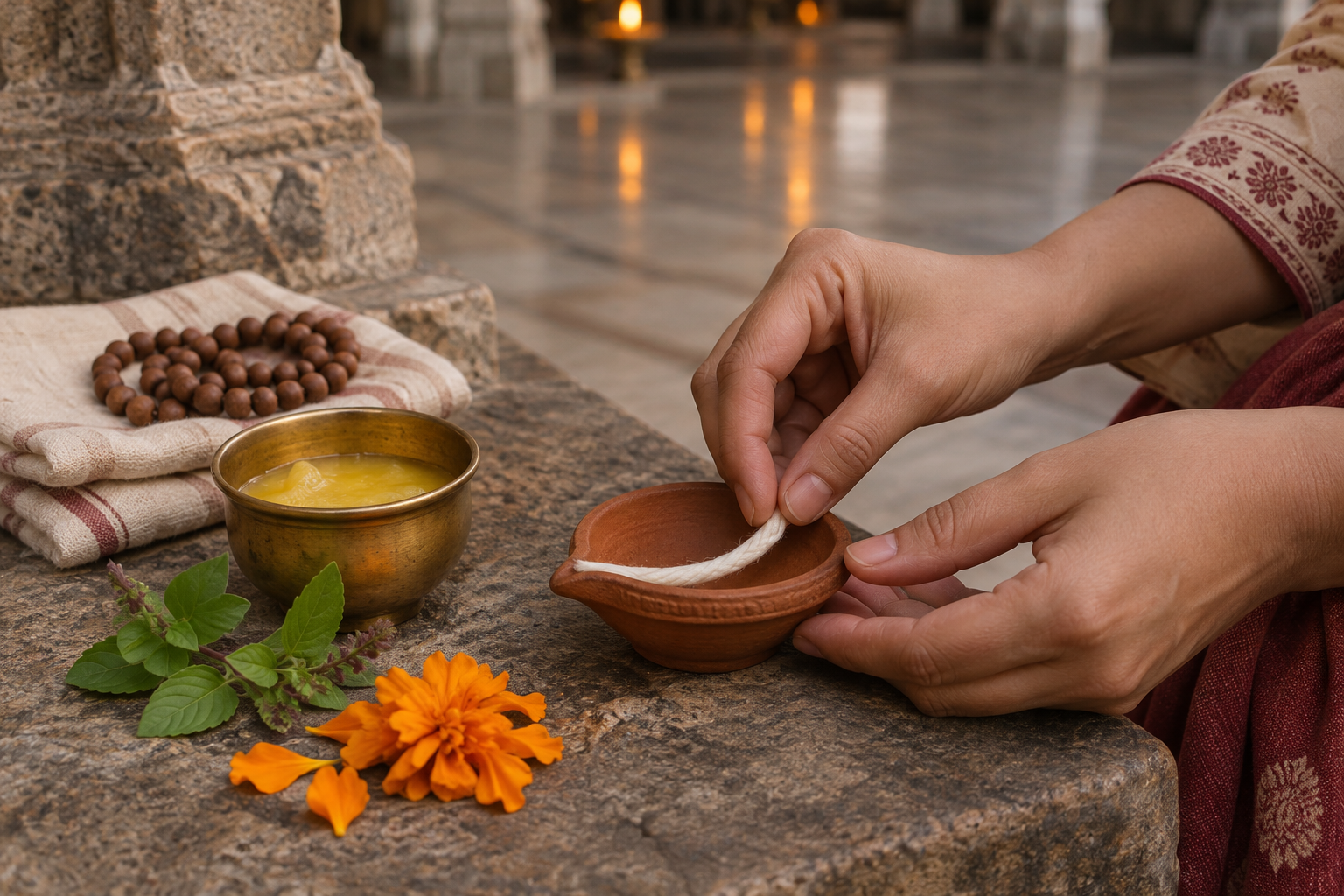
Deep daan literally means the offering of a lamp. That distinction matters. Lighting produces a flame; offering gives the act its devotional direction. You are not merely placing another point of light in a temple. You are bringing your attention, gratitude, prayer, and willingness to serve into a physical action.
The observance at ISKCON Vrindavan was still being marked on Day 22 of Kartika Deep Daan. Its continuity is part of the lesson. Kartika devotion need not depend on a single spectacular evening. A repeated, attentive offering can train the mind differently from a one-time religious outing.
Before joining the line, decide what you are offering inwardly. It may be gratitude, repentance, remembrance of Krishna, a prayer for steadiness, or a resolve to leave one harmful habit behind. Keep it to one clear intention. When your turn arrives, you will then be able to offer the lamp instead of mentally composing a speech.
Do not measure the sincerity of deep daan by the size, number, or appearance of the lamps around you. Comparison turns worship into display. The useful question is whether your mind became more attentive and your conduct more dharmic because you participated.
How to participate at ISKCON Vrindavan respectfully
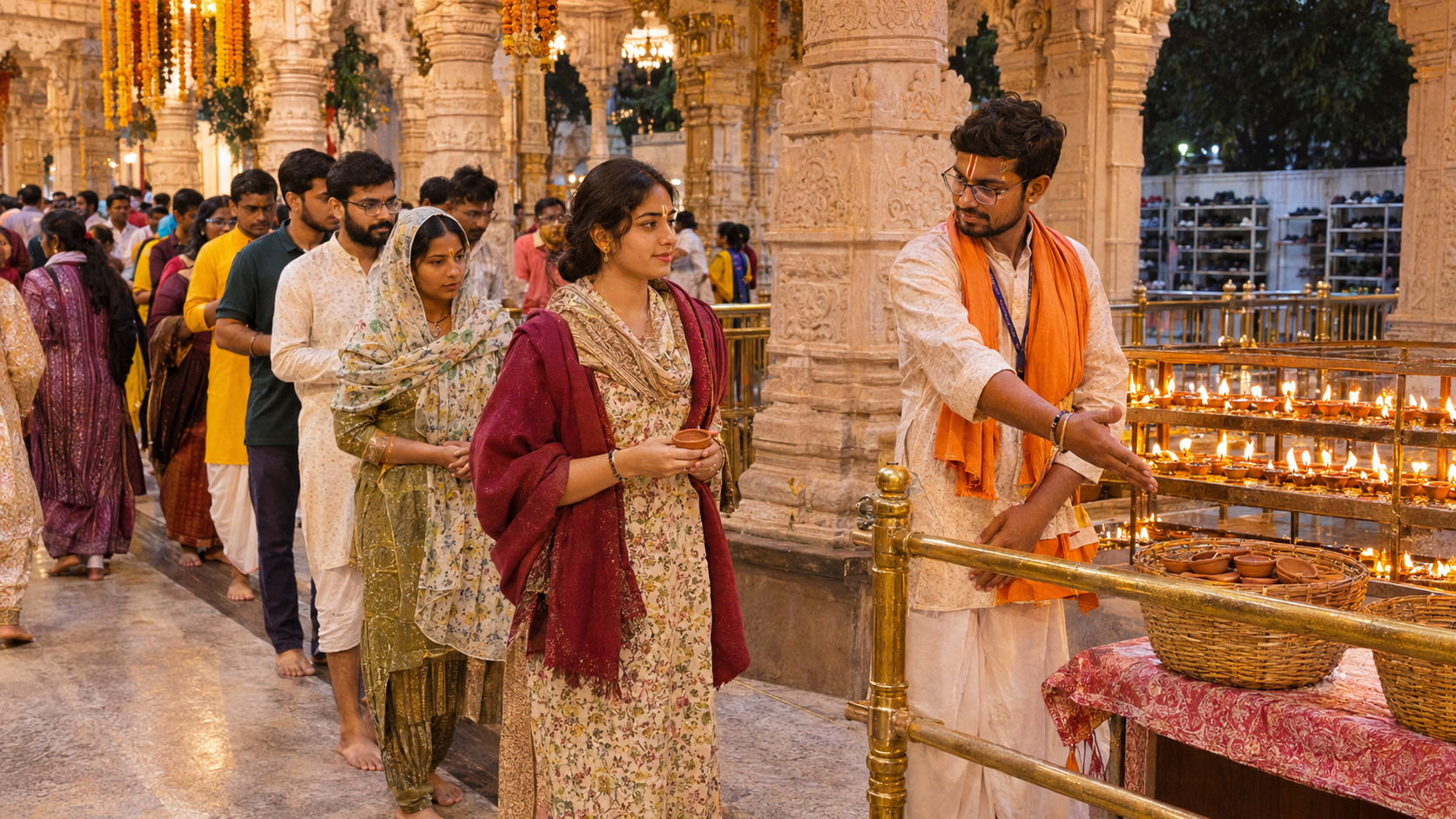
A large temple has to coordinate devotion, movement, cleanliness, and fire safety at the same time. Procedures can therefore differ from what you follow at home or at another mandir. Local instructions are not an interruption to seva; cooperating with them is part of your seva.
- Arrive with time in hand. Do not schedule the visit so tightly that every delay becomes an irritation. A small margin gives you time to find the correct entrance, understand the flow, and settle your mind.
- Find the designated deep-daan area. Look for the official queue or ask a temple volunteer where participants should go. Do not light a lamp in an unapproved corner simply because it appears quiet.
- Use the materials accepted there. If lamps or offering materials are provided through the temple arrangement, follow that system. Before bringing your own lamp, oil, wick, or container, ask whether it is permitted.
- Prepare before reaching the front. Secure loose clothing, keep bags from obstructing others, and decide who will supervise children. An open flame and a distracted crowd are a poor combination.
- Offer without prolonging the queue. Hold your devotional intention, make the offering as directed, and avoid turning your place at the front into a private photo session.
- Step aside for contemplation. Once the offering is complete, move out of the working area. Find an appropriate place to pray, chant, or quietly absorb the darshan without blocking the next devotee.
If you do not understand an instruction, ask one direct question: “Where should I offer the lamp?” That is usually more useful than copying the person ahead of you, whose role or arrangement may be different from yours.
You may also arrive when direct participation is limited or organized differently than you expected. Do not force the ritual. Receive darshan, observe respectfully, and follow the seva that is actually available. Devotion does not become more authentic by disregarding the people responsible for the temple space.
If you are observing Kartika from home
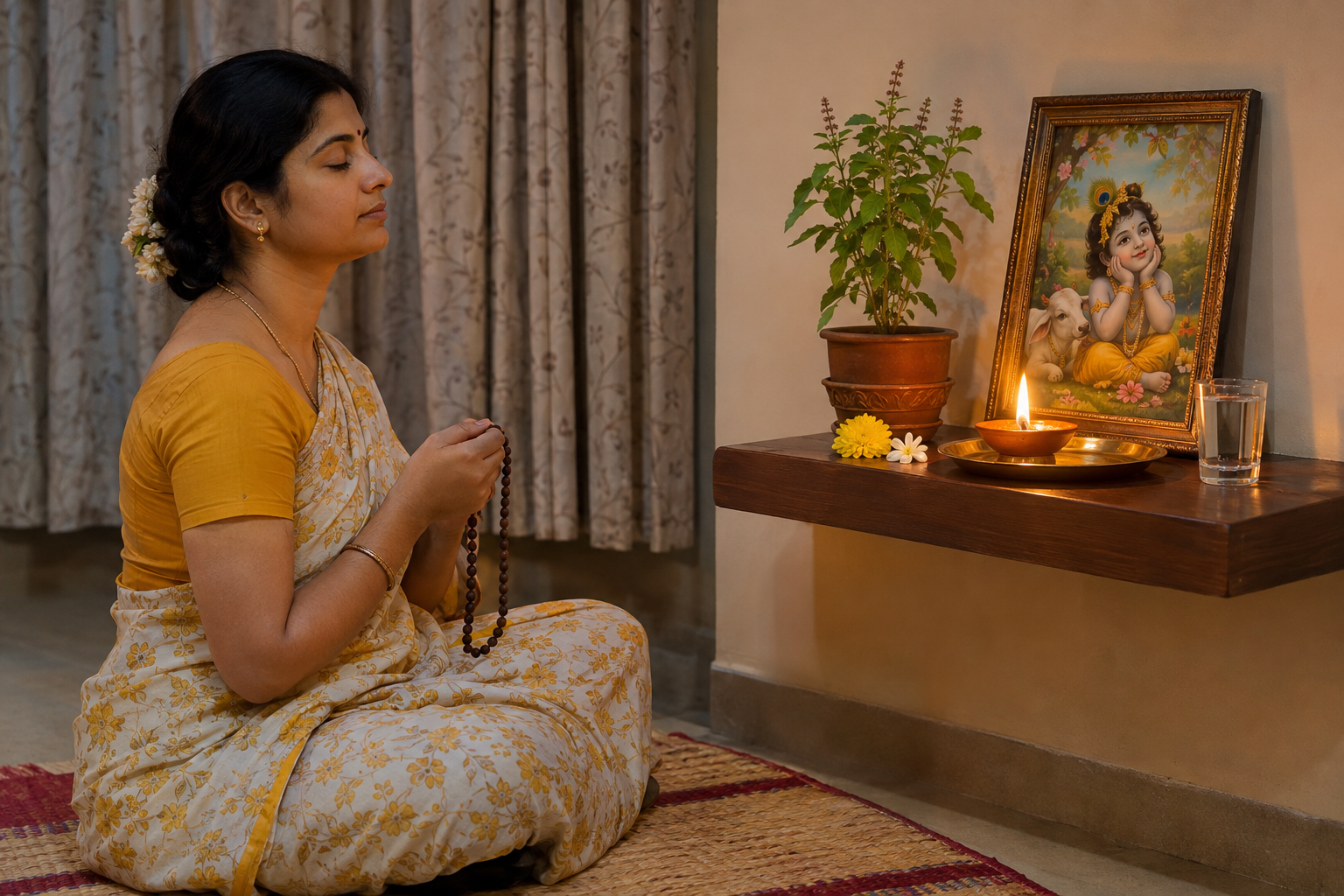
Being unable to travel to Vrindavan does not require you to turn Kartika into a passive online experience. You can make a personal offering at home. Keep the claim proportionate, however: a home lamp is your devotional observance, not proof that you completed a formal temple procedure or participated remotely in a specific seva.
- Choose a safe place. Use a level, heat-resistant surface away from curtains, paper, loose cloth, children, and pets.
- Make the space orderly. Clean the immediate area and remove unrelated clutter. The preparation helps mark a transition from ordinary activity to worship.
- Set one intention. Decide what the offering means before you light the lamp. Use a prayer or devotional practice you already understand rather than collecting unfamiliar words for the occasion.
- Light the lamp attentively. Stay present instead of lighting it while answering messages, filming yourself, or moving between household tasks.
- Remain for a short period of prayer. Chant, remember Krishna, offer gratitude, or sit quietly according to your established practice.
- Close safely. Never leave the flame unattended. Make certain it is fully extinguished before leaving the room or going to sleep.
If an open flame is unsafe in your home, use an electric lamp as a visual focus rather than taking a preventable risk. The symbol should support devotion, not endanger the household.
Consistency is more useful than unnecessary complexity. Prepare one place, use a sequence you can repeat, and keep your phone outside the practice. You should not have to renegotiate the entire ritual with yourself each evening.
Keep darshan from becoming content
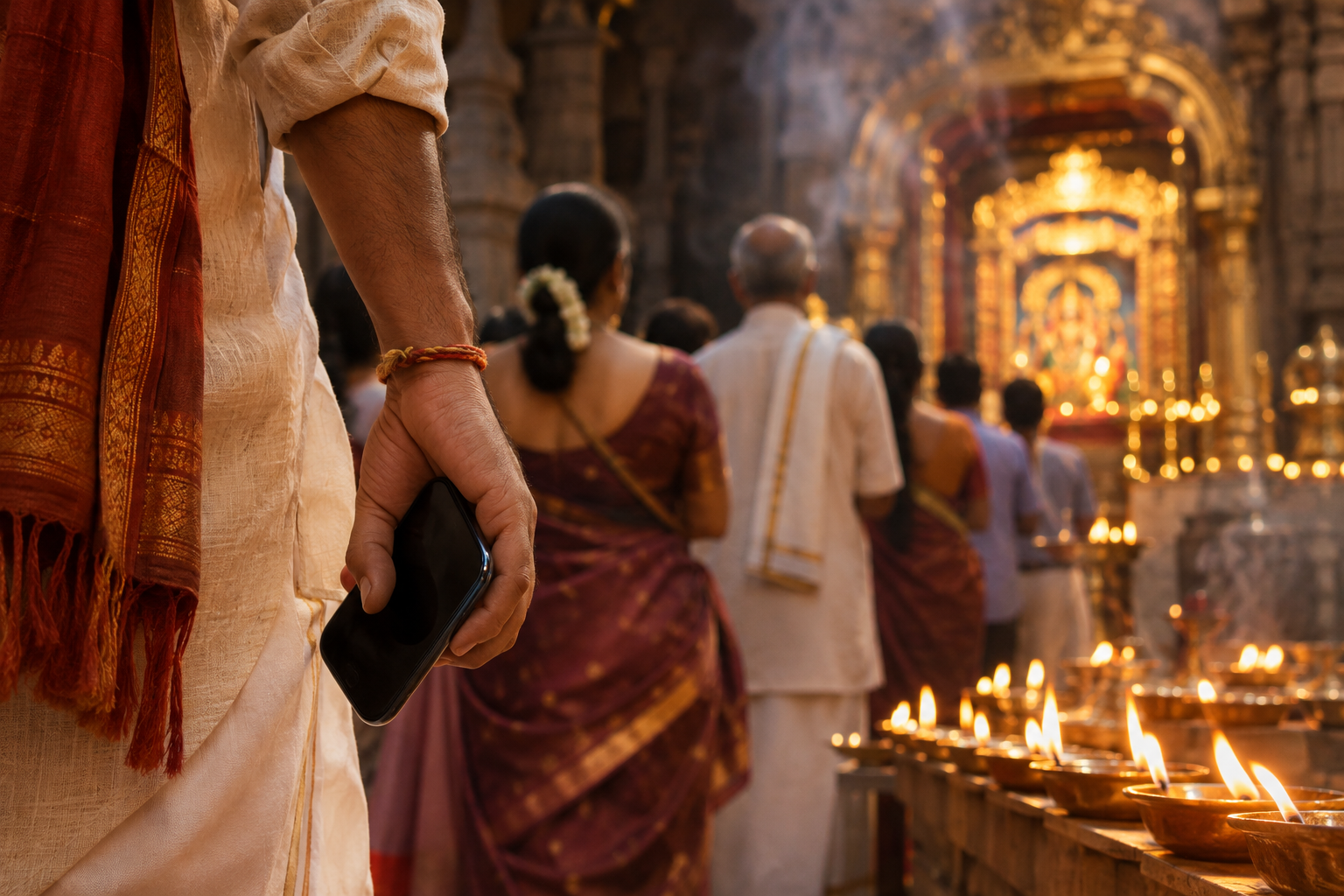
Vrindavan is visually compelling, and rows of lamps naturally draw the camera. Yet a photograph and darshan ask for different kinds of attention. The camera makes you arrange the scene from outside it; darshan asks you to become present within a sacred encounter.
Before taking any image, check whether photography is allowed in that area. Do not use a flash near worshippers, lean across the offering space, move lamps for a composition, or photograph people at close range without consent. If photography is permitted and you want a remembrance, take it before or after your own offering. Put the device away while you pray.
The same discipline applies at home. Recording an offering is not automatically wrong, but ask what the recording is for. If arranging the video absorbs more attention than the prayer, the tool has taken control of the practice.
Give the lamp a consequence beyond the evening. Choose one small action that carries its meaning forward: speak more gently in one difficult relationship, complete a neglected duty, offer food or help to someone, or keep a regular period for nama-japa or prayer. Make the action definite enough to perform, not merely admire.
Decide your form of participation now. If you are going to ISKCON Vrindavan, arrive prepared to follow the temple’s seva arrangement. If you are staying home, prepare a safe place and a simple devotional sequence. When the Kartika evening comes, let your attention be available for the offering rather than still occupied with logistics.
References

Leave a Reply
You must be logged in to post a comment.