
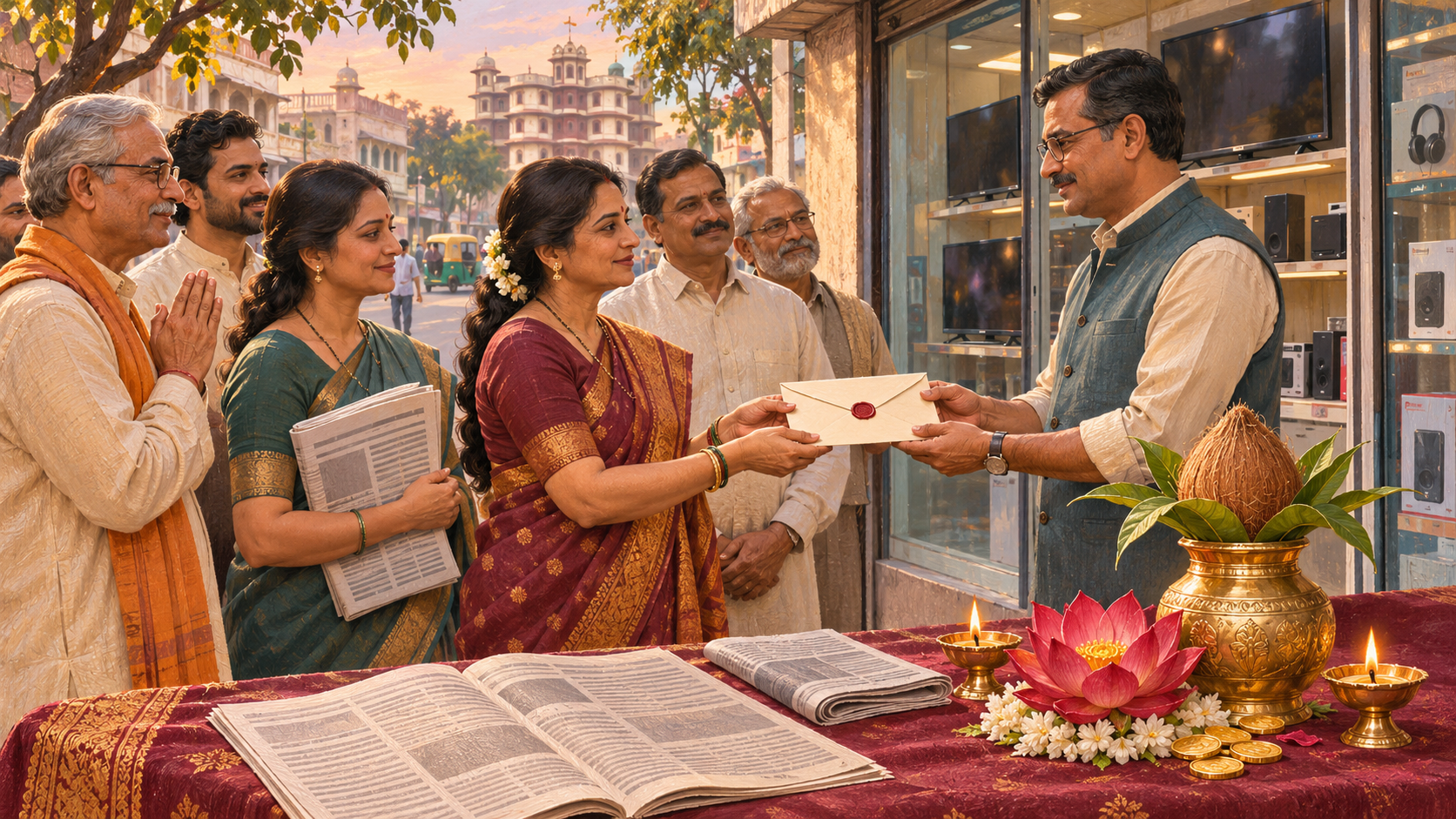
If you came to the Indore controversy wondering what actually happened, whether the protest produced a meaningful result, or how you should respond when an advertisement crosses a Dharmic boundary, keep the outcome in focus. Anger may begin a campaign, but a verifiable correction is what gives it value.
In this case, a newspaper advertisement by Lotus Electronics drew an objection from the Hindu Janajagruti Samiti over its treatment of Shri Mahalakshmi Devi. The protest produced a written apology from the company and a commitment to make the apology public in Dainik Bhaskar. That narrow but concrete result offers a practical model for cultural advocacy.
What is established in the Indore case

The central facts are straightforward. Hindu Janajagruti Samiti protested an advertisement it regarded as denigrating Shri Mahalakshmi Devi. Lotus Electronics then gave a written apology and agreed to publish a public apology in Dainik Bhaskar.
Those are two distinct concessions. A written apology creates a durable acknowledgement that can be checked later. A public apology addresses the fact that the disputed material appeared in a public medium rather than in a private conversation. The second remedy matters because a private letter alone does not reach the audience that encountered the advertisement.
One distinction must be preserved: agreeing to publish an apology is not the same as having published it. Unless you have a copy of the relevant newspaper page or another verifiable publication record, describe that part of the outcome as a commitment. Precision strengthens a legitimate campaign; exaggeration gives its critics an avoidable opening.
The exact image, wording, placement and creative context of the advertisement are not available here. You therefore should not repeat speculative descriptions of what it contained or assign a motive to the company. The responsible claim is that a Hindu organisation objected to the treatment of Mahalakshmi Devi and obtained the stated response.
Why the remedy should match the original harm
Mahalakshmi is not a decorative cultural motif detached from worship. Hindu traditions revere her as the Devi associated with Shri, auspiciousness, prosperity and well-being. When a business places her image or name in an advertisement, devotees will read that use through a living sacred tradition, not merely through the intentions of a marketing department.
That does not mean every commercial use is automatically disrespectful. Context decides the issue: the words paired with the image, the visual treatment, the product being promoted, the joke or comparison being attempted, and the overall message. A strong objection identifies the precise element that crosses the boundary. It does not rely on a general declaration that people are offended.
Intent and impact should also be kept separate. A company may deny hostile intent, but that does not settle how a sacred image was used or received. Conversely, an objection to the advertisement does not prove that everyone involved acted with deliberate malice. If you focus on the visible creative decision and the correction required, you can seek accountability without claiming access to anyone’s private motives.
The Indore outcome illustrates proportionality. The dispute concerned a public advertisement, so the response included both a written acknowledgement and a promised public apology. The practical principle is simple: ask for a remedy capable of reaching roughly the same public sphere as the disputed material.
How to raise a disciplined objection to a religious advertisement
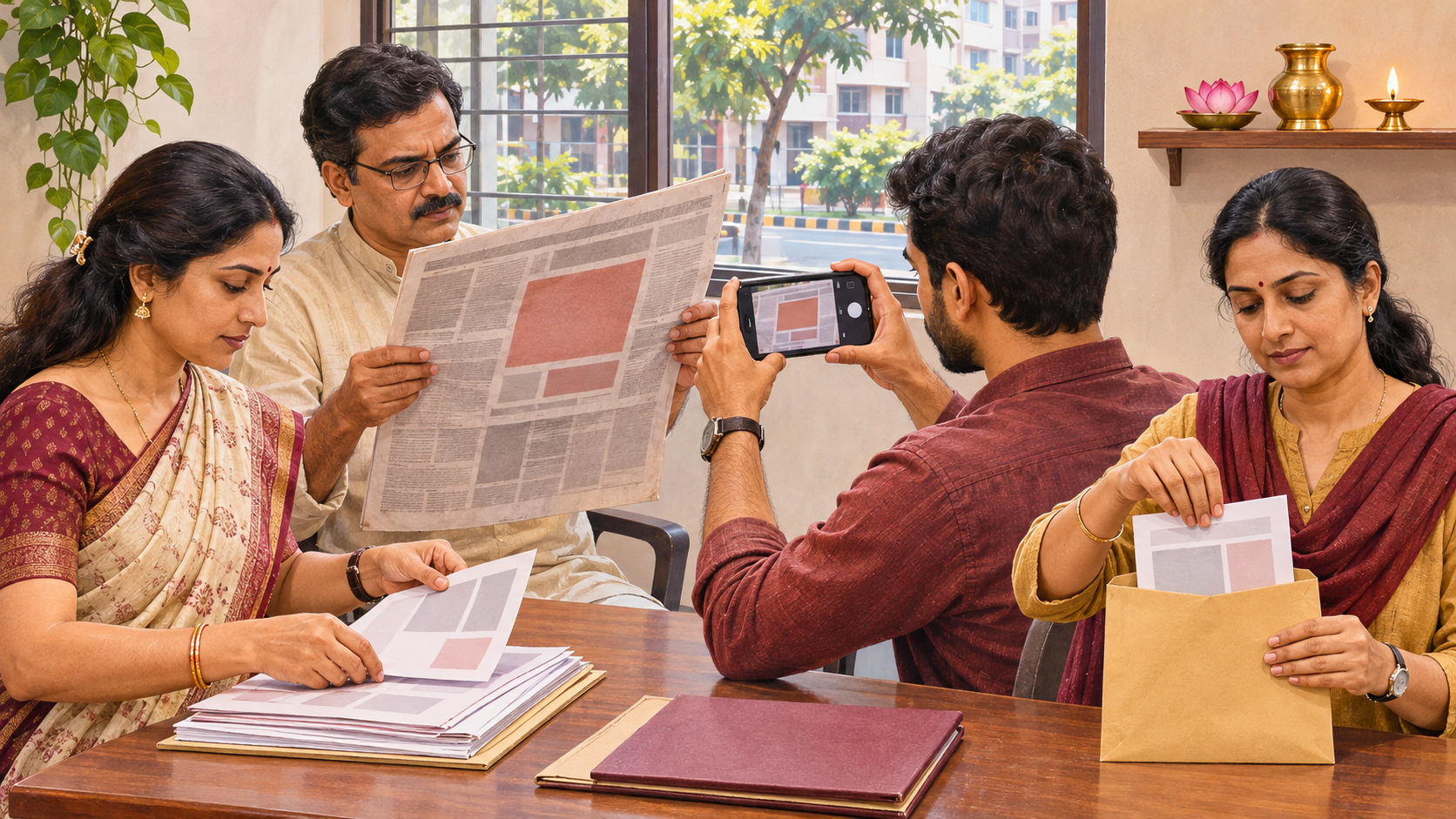
If you encounter a similar advertisement, do not begin by forwarding a cropped image with an angry caption. Begin by building a record that the advertiser, publisher and public can verify.
- Preserve the complete advertisement. Save the full newspaper page, photograph or screen rather than an isolated fragment. Record the publication, edition or platform and any visible date. A complete copy prevents later disagreement about context.
- Describe before judging. Write one or two sentences identifying exactly what appears in the advertisement. Then explain why the particular wording, juxtaposition or treatment is inconsistent with the dignity owed to the deity. Keeping observation and interpretation separate makes the complaint easier to assess.
- Contact the actual decision-maker. Use an official customer-service, corporate or publisher channel. Confirm that you have the correct business before naming it publicly. State what you want changed instead of sending only a denunciation.
- Request specific and proportionate remedies. Depending on where the advertisement appeared, these may include stopping further circulation, correcting the creative, issuing a written acknowledgement and publishing an apology through a channel capable of reaching the original audience.
- Keep collective action disciplined. Peaceful representation, signed correspondence and clearly stated demands are easier to defend than threats, personal abuse or harassment. Do not publish private addresses or target employees who had no demonstrated role in the decision.
- Verify each claimed result. Retain the written response. If a public apology is promised, note the outlet and obtain a copy when it appears. Update supporters with the exact status: requested, agreed, published or still outstanding.
Share only as much of the objectionable creative as is needed to establish the problem. Constant recirculation can amplify the very material you want withdrawn. A full copy should be preserved for verification, but public repetition is not a substitute for a focused demand.
How to tell whether an apology is meaningful
The word “apology” can describe anything from a private message to a public correction. Before declaring victory, examine what the response actually accomplishes.
- Authority: Did the response come through an official company channel or from someone authorised to speak for the advertiser?
- Specificity: Does it identify the advertisement and acknowledge the disputed treatment, or does it merely express regret that some people reacted negatively?
- Reach: Will the correction be visible to people who could have encountered the original advertisement?
- Completion: Has the promised public step occurred? A commitment should be welcomed as progress, but it remains a commitment until it can be verified.
- Prevention: Has the advertiser indicated how similar religious imagery will be reviewed in future? An apology repairs the immediate dispute; a review process reduces the chance of repetition.
A campaign need not demand humiliation or an unrelated punishment to demonstrate seriousness. The strongest resolution corrects the public record, respects devotees and gives the business a practical reason to exercise greater care. Once those aims are met, acknowledging compliance is part of fair advocacy.
Key takeaways
- The Indore protest resulted in a written apology from Lotus Electronics and an agreement to publish a public apology in Dainik Bhaskar.
- A promised publication should not be described as completed until the published apology can be verified.
- The most credible religious objection identifies the exact image, words or context at issue without speculating about motive.
- A public advertisement generally calls for a public-facing remedy, not only a private exchange.
- Evidence, precise demands and peaceful conduct make cultural advocacy harder to dismiss and easier to bring to a clear conclusion.
If you face a similar advertisement, preserve the original, state the objection precisely and ask for a remedy that matches its public reach. Then follow the commitment through to completion. Dharmic dignity is served best when the facts remain clear, the demand remains proportionate and the correction becomes visible.
References

Leave a Reply
You must be logged in to post a comment.