

If Punarvasu is your janma nakshatra and you have been told to undertake Tara Mahavidya upasana, pause before treating that pairing as a command. A nakshatra correspondence can point you toward a meaningful devotional focus, but it cannot tell you which mantra, ritual, or tantric discipline you are qualified to perform.
The useful path is to understand why Tara is associated with Punarvasu, separate that symbolism from lineage-dependent practice, and begin at a level appropriate to your preparation. That gives you something more valuable than an elaborate ritual assembled from fragments: a practice you can sustain with clarity and reverence.
What the Punarvasu-Tara correspondence actually means

Within this astrological correspondence, Punarvasu extends from 20° Gemini to 3°20′ Cancer, is ruled by Jupiter, and has Aditi as its presiding deity. Its central qualities are renewal, optimism, protection, spiritual wisdom, and adaptability. Tara is identified as the Mahavidya most closely aligned with that pattern.
That alignment is best understood as symbolic resonance. Punarvasu emphasizes restoration: returning to what is true after distraction, disruption, or error. Tara upasana can therefore become a spiritual focus for the person who wants wisdom and protection while making that return. This is an interpretive bridge, not an astrological decree.
Keep three identities distinct. Aditi is the deity of the nakshatra. Jupiter, or Guru, is its planetary ruler. Tara is the Mahavidya recommended for upasana. They are not interchangeable names for the same deity, and the correspondence does not erase their different theological roles.
Punarvasu in your chart also does not prove that Tara must replace your ishta-devata, family deity, established sampradaya, or a practice already given by your guru. If you already have a stable spiritual discipline, let the nakshatra association deepen your understanding of it before you consider changing direction.
Check your chart, motive, and level of practice
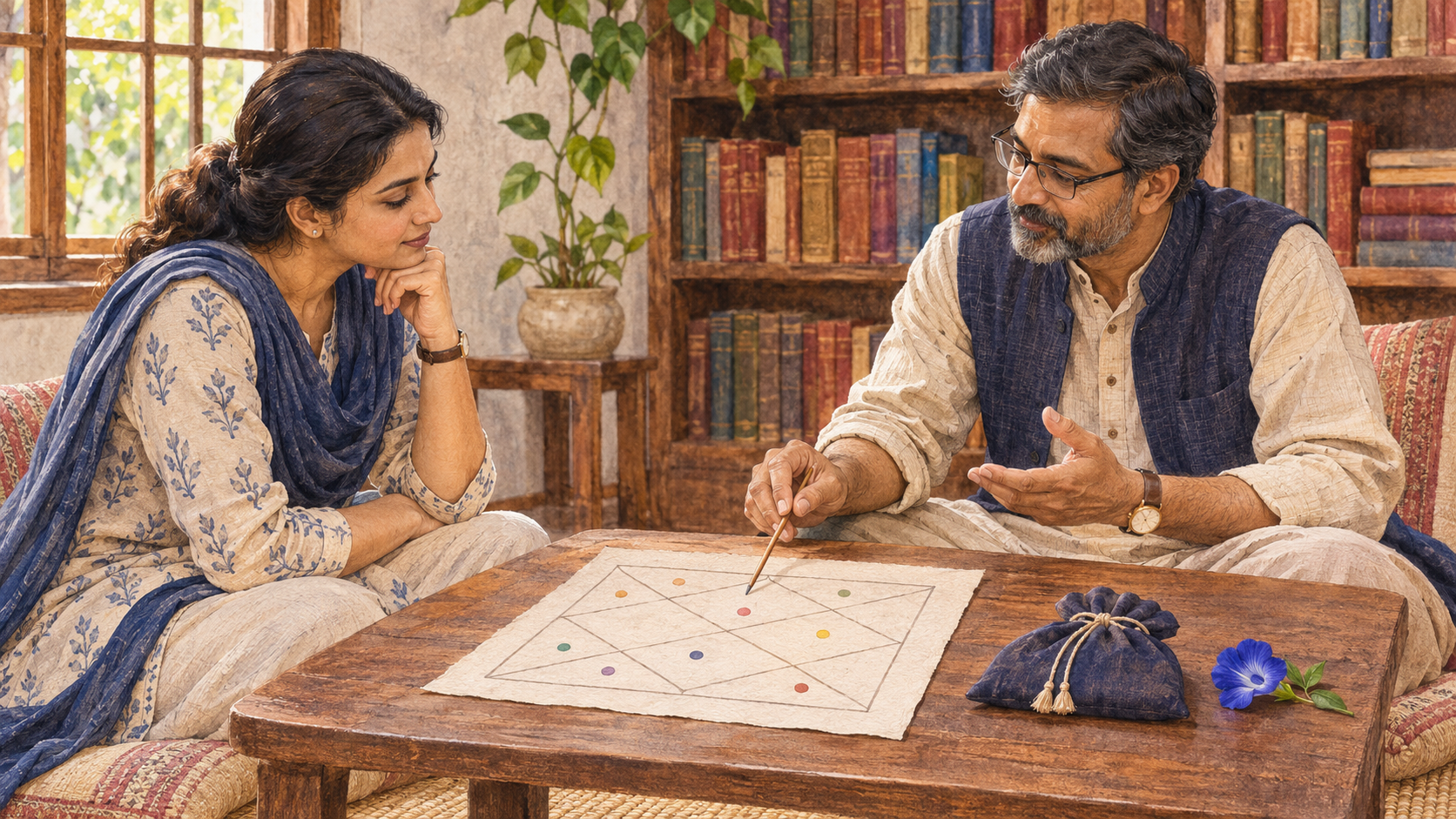
Before beginning, make three checks. They prevent the most common confusion: taking a broad astrological suggestion as a complete sadhana instruction.
Verify that Punarvasu is your janma nakshatra
Janma nakshatra normally refers to the nakshatra occupied by the Moon at birth. It is not the same as having Punarvasu rising, having another planet there, or noticing that the Moon is currently transiting Punarvasu. Those placements may have interpretive importance, but they do not answer the same question.
Check that your birth date, time, and place were entered correctly. If the Moon falls near either end of Punarvasu’s range, or if your recorded birth details are uncertain, ask a competent Jyotishi to verify the placement before organizing a long-term practice around it.
Name the purpose without demanding a result
Write your intention in one plain sentence. A Punarvasu-aligned intention might be, “May this practice help me return to clarity, right conduct, and compassionate courage.” That is more spiritually workable than asking Tara to guarantee a particular relationship, promotion, victory, or prediction.
Your sankalpa should tell you how to live, not attempt to bind the Devi to an outcome. If you cannot connect the practice to a change in conduct, your intention is probably still too vague.
Distinguish devotion from initiated tantra
- Devotional remembrance: pranam, a simple offering, contemplation of Tara, repetition of her name, or a public prayer accepted in your tradition.
- Guided observance: a teacher gives you a particular routine, discipline, sequence, or rule and remains available to correct it.
- Initiated sadhana: practice involving a transmitted mantra or lineage-specific ritual method that should be learned from the person authorized to teach it.
Do not jump to the initiated level because ordinary devotion appears too simple. The name “Tara” does not, by itself, specify one complete ritual. Mantra, visualization, ritual sequence, and theological interpretation can depend on lineage. Practices bearing Tara’s name in different Dharmic settings should not be treated as interchangeable merely because they share that name.
A conservative Tara practice you can begin responsibly
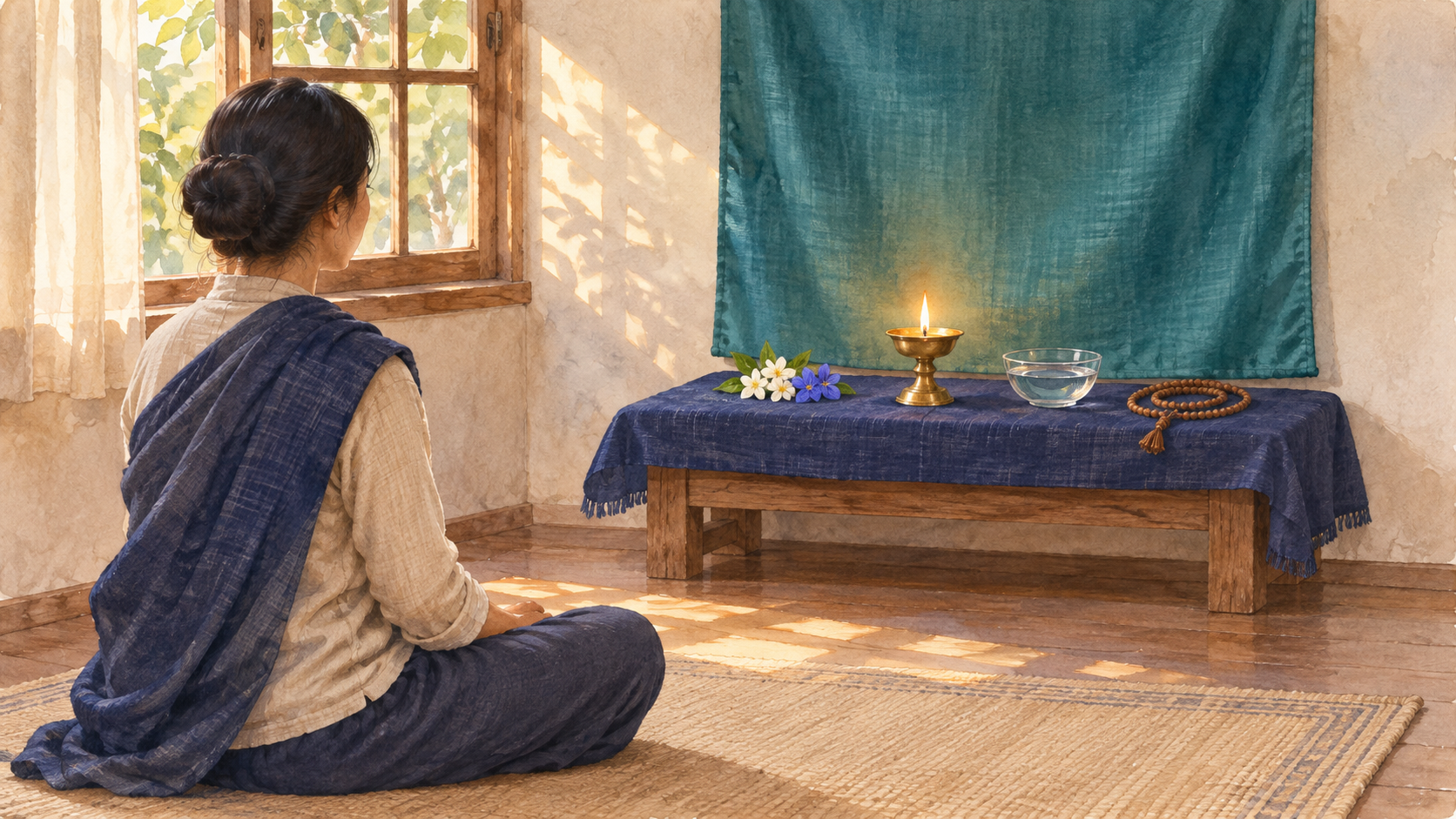
If you have not received initiation or detailed instruction, stay with a transparent devotional form. You do not need to imitate a tantric procedure to honour the Punarvasu-Tara connection.
- Prepare a clean place. Use your existing altar if you have one. Place a respectful image of the Devi only if doing so is customary in your home or tradition. Do not draw or install a yantra from memory.
- State your sankalpa. Connect it to renewal, wisdom, protection, or a return to dharmic conduct. Keep it specific enough to guide an action.
- Make a simple offering. A lamp, water, or flower is sufficient when such offerings belong to your household practice. Simplicity is not a lesser form of reverence.
- Remember Tara by name. Use a public prayer recognized by your tradition or repeat her name with attention. If a guru has given you a mantra, follow that instruction exactly. If not, do not substitute a bija mantra copied from an unverified page or video.
- Sit quietly with the meaning of return. Identify one thing that should be restored: an abandoned discipline, an apology left unsaid, neglected seva, a promise you have stopped keeping, or a habit that once supported clarity.
- Close with gratitude and act. Complete one concrete act arising from the sankalpa before the next worship. This is where Punarvasu’s theme of renewal enters life rather than remaining an attractive idea.
A small practice journal can keep the connection honest. Record your intention, what you actually did, the corresponding action in daily life, and whether your conduct became steadier. Look for greater truthfulness, responsibility, patience, and consistency. Do not make visions, unusual dreams, coincidences, or emotional intensity the test of spiritual progress.
If the practice produces fascination but no restoration of conduct, return to the sankalpa. Punarvasu becomes useful when “renewal” names something you are genuinely willing to renew.
Know when lineage-based guidance is necessary

Seek a qualified teacher before adding elements whose meaning and correctness depend on transmission. These can include bija mantras, nyasa, complex visualizations, yantra installation, homa, extensive vows, prescribed repetition counts, or a formal sequence of preparatory and concluding rites. The point is not to fear these practices. It is to respect the framework that makes them intelligible.
An astrologer may be able to explain why Tara corresponds with Punarvasu. A lineage teacher determines whether a particular Tara practice is appropriate for you and how it should be performed. One person may be qualified in both areas, but you should not assume astrological knowledge automatically confers authority to initiate a Mahavidya practice.
When evaluating guidance, notice whether the teacher:
- can identify the lineage or tradition behind the instruction;
- clearly separates public devotion from practices requiring initiation;
- asks about your existing guru, ishta-devata, family observances, and spiritual commitments;
- explains what to do when you make a procedural mistake or cannot maintain the discipline;
- avoids guaranteed worldly results and fear-based claims;
- does not tell you to discard an established practice solely because of one nakshatra placement.
Be especially cautious when someone creates urgency by claiming that failure to begin a paid or secret ritual will bring misfortune. Punarvasu’s association with protection should not be turned into a sales mechanism based on fear.
Avoid the shortcuts that distort this practice
The first shortcut is collapsing Aditi, Jupiter, and Tara into one figure. Their relationship in this context is one of astrological and devotional correspondence, not simple identity. Preserve the distinction when you pray, study, or speak about the practice.
The second is letting the chart override living dharma. If Tara worship becomes an excuse to neglect obligations, chase signs, or keep changing practices, the correspondence is no longer serving its purpose. Renewal begins with what needs repair in the life you already have.
The third is collecting techniques from unrelated teachers and combining them into a private system. Similar vocabulary does not guarantee compatible ritual assumptions. Follow one coherent instruction at a time, and ask before adding anything to a received practice.
The fourth is treating intensity as depth. A complicated altar, a secret syllable, or a demanding vow can feel significant while leaving character untouched. A modest devotional discipline that repeatedly brings you back to truthful action is closer to Punarvasu’s central movement of renewal.
Key takeaways
- Punarvasu’s association with Tara is a meaningful correspondence, not a compulsory prescription for every person born under the nakshatra.
- Aditi remains the nakshatra deity, Jupiter its planetary ruler, and Tara the aligned Mahavidya; do not treat them as interchangeable.
- Verify that Punarvasu is actually your janma nakshatra before using the recommendation.
- Without initiation, choose simple devotion, a clear sankalpa, remembrance of Tara, and one concrete act of renewal.
- Learn lineage-dependent mantra and ritual elements from a qualified teacher rather than reconstructing them from scattered instructions.
- Judge the practice by its effect on conduct: steadiness, truthfulness, responsibility, and the restoration of neglected dharma.
Begin with the smallest honest form of practice you can maintain. Name what needs to be restored, remember Tara reverently, and make one repair in daily life. If that devotion later draws you toward formal Mahavidya sadhana, approach a qualified lineage teacher with a stable foundation already beneath you.
References
- HinduPad — Punarvasu Nakshatra ~ Mahavidya Upasana | Punarvasu Nakshatra Natives & Mahavidya Sadhana

Leave a Reply
You must be logged in to post a comment.