

Your chart says Ardra, and you want to know which Mahavidya to worship. The most useful answer begins with a limit: a nakshatra can illuminate the kind of inner work that may matter to you, but it does not grant initiation or determine an entire practice.
For an Ardra native, the better question is not simply, “Which Devi matches my star?” Ask how Ardra’s intensity can be placed in the service of dharma. That shift keeps astrology in its proper role, protects the integrity of Mahavidya upasana, and gives you a practice you can actually sustain.
Key takeaways
- Confirm which placement in your chart is in Ardra; do not turn a single placement into your whole identity.
- Use Ardra’s symbolism to identify work around upheaval, inquiry, relinquishment and renewal, not to justify emotional chaos.
- Let your guru, sampradaya and initiation determine the mantra and ritual method. A nakshatra association is not permission to improvise Tantra.
- If you have no initiation, keep the practice devotional: offer a plain prayer to Devi, use a familiar practice from your tradition, reflect honestly and complete a concrete dharmic action.
- Judge the practice by its fruit in ordinary life: steadiness, restraint, clarity, compassion and greater responsibility.
- Slow down if the practice begins to produce obsession, persistent fear, loss of sleep or neglect of duties. Intensity is not proof of spiritual progress.
Read Ardra as a pattern, not a command

Ardra is associated with Rahu as its ruling planet, Rudra as its presiding deity, and themes of storm, emotional upheaval, destruction, inquiry and renewal. Rudra is a fierce form of Shiva. These associations give Ardra a vocabulary for transformation, but a symbolic storm is not an instruction to create a storm in your relationships, work or mind.
Read the pattern in sequence. Something becomes difficult to ignore. A structure, attachment or assumption breaks down. Honest inquiry reveals what cannot continue. Renewal then becomes possible. If you focus only on destruction, you have stopped halfway through Ardra’s lesson. The spiritual task is to carry disruption toward purification and reconstruction.
Begin by confirming what “Ardra native” means in your case. In ordinary Jyotisha usage, a person’s birth nakshatra usually refers to the lunar mansion occupied by the Moon at birth. An astrologer may also be discussing Ardra in relation to another planet or the ascendant. Ask for the exact placement and the reasoning attached to it. Do not assume that every Ardra placement carries the same weight.
Then examine experience instead of collecting labels. When agitation arises, ask:
- What fact am I resisting because it would require change?
- What has genuinely reached its end, and what am I merely tempted to destroy?
- What must be preserved while the unnecessary part is released?
- What disciplined act would turn this disturbance into renewal?
This is a more responsible use of Ardra than calling every conflict a Rahu event or excusing harshness as Rudra energy. Jyotisha symbolism can help you notice a tendency. It does not remove agency, erase consequences or replace discernment.
Let lineage decide the form of Mahavidya practice
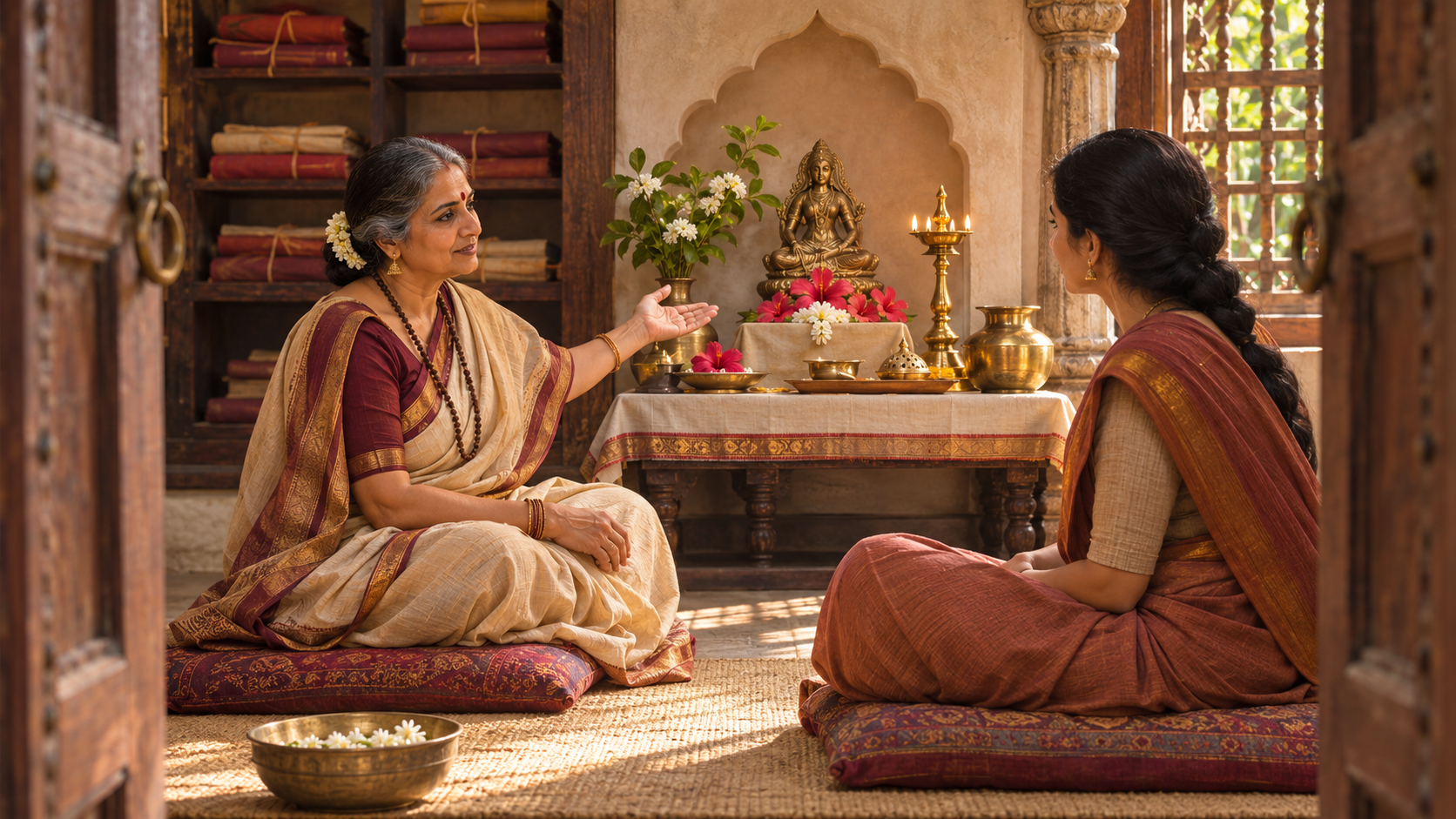
Mahavidya upasana approaches Devi through a particular form of divine wisdom. Its methods can range from open devotional worship to mantra and ritual disciplines governed by initiation and lineage. Those are not interchangeable levels of the same do-it-yourself routine.
A nakshatra association may help explain why a form of Devi attracts you. It does not tell you whether a mantra is open, whether initiation is required, how a ritual is sequenced, which restrictions apply or whether the practice suits your present obligations. Those questions belong to a competent teacher within a living tradition.
Use this order when deciding how to proceed:
- Honor an existing sampradaya. If you already have a guru, family practice or accepted lineage, begin there. Do not abandon an established relationship because an online correspondence appears more dramatic.
- Clarify your relationship with the deity. Attraction, fear, aesthetic fascination and a stable devotional bond are different things. Give that distinction time to become clear.
- Name the dharmic purpose. Seek clarity, disciplined transformation or deeper devotion rather than power, spectacle, revenge or a spiritual identity.
- Assess your capacity. A practice that repeatedly displaces sleep, livelihood, family responsibility or existing worship is not well integrated, however impressive it sounds.
- Use Ardra as a supporting lens. Let it shape the questions you bring to practice, not override instruction, conscience or duty.
Questions to ask before accepting a method
- Is this practice open to everyone, or does it require initiation?
- Which exact form of Devi does the practice invoke, and within which lineage?
- What preparation and ongoing observance does the teacher expect?
- What should you do if illness, travel or family duty interrupts the routine?
- Which experiences are ordinary, and which indicate that you should pause?
- How does the practice support your existing dharma rather than compete with it?
A responsible teacher should be able to discuss scope, obligations and limits without pressuring you to manufacture certainty. If you cannot verify the lineage or obtain clear instruction, do not experiment with a mantra presented as restricted or initiatory. Remain with simple devotion until proper guidance is available.
Build a practice that can hold Ardra’s intensity

If you have received initiation, follow the method as it was given. Do not add repetitions, combine mantras or import procedures from unrelated traditions merely because the experience feels quiet. Quiet practice is not failed practice.
If you have not received initiation, you can still work with Ardra’s spiritual themes without pretending to perform an initiatory Tantra. Use a restrained devotional frame:
- Prepare an ordinary, clean place. Put away the device from which you were collecting techniques. The aim is attention, not accumulation.
- State one honest intention. Name the quality you seek, such as clarity during change, restraint in conflict or courage to release an unhealthy attachment. Avoid vows you have not been instructed to take.
- Invoke Devi simply. Use a familiar prayer, name or devotional form already accepted in your household or tradition. If you have no such practice, speak to Devi respectfully in plain language.
- Perform only what you are authorized to perform. Do not assemble a restricted mantra from fragments found in videos, comments or decontextualized lists.
- Reflect on the storm without feeding it. Notice the strongest disturbance present. Separate the fact of the situation from the story, fear or anger surrounding it.
- Convert insight into duty. Complete a repair that the reflection revealed: make the overdue apology, finish the neglected task, correct the avoidable disorder or set a necessary boundary without cruelty.
- Close deliberately. Offer the fruit of the practice to dharma, return to normal activity and resist the urge to hunt immediately for signs.
A plain prayer is enough to hold the intention: “Devi, let me see clearly what must be released, what must be protected and what must be rebuilt. May this practice serve dharma rather than agitation.” This is not a substitute for a lineage mantra. Its value is precisely that it does not pretend to be one.
Review the fruit in daily life
Keep a modest record of what you actually did, your condition before practice, your condition afterward and the dharmic action that followed. The record is not a catalogue of omens. It helps you detect whether the practice is producing integration or merely intensifying a story about yourself.
- Are you becoming less reactive when circumstances change?
- Can you examine painful facts without immediately blaming someone?
- Are your speech and decisions more restrained?
- Do you complete responsibilities with greater steadiness?
- Has devotion deepened, or has fascination with secrecy and power taken its place?
- Does the practice leave room for humility, correction and advice?
Unusual sensations, vivid dreams or emotional surges do not answer these questions. The durable measure is conduct. Ardra-informed Mahavidya practice should help you pass through upheaval without worshipping upheaval itself.
Know when to slow down and seek help

Intensity can be mistaken for authenticity, especially when Ardra is already being interpreted through storm imagery. A crisis is not evidence that a sadhana is working. Watch for changes that call for a pause rather than another escalation:
- You compulsively increase the practice or add techniques despite having no instruction to do so.
- You become persistently frightened by dreams, coincidences or ordinary setbacks.
- You lose sleep, cannot settle after practice or feel driven to interpret everything as a command.
- You neglect work, study, family care, health care or an established religious commitment.
- You use Rudra, Rahu or Devi to justify aggression, suspicion or contempt for others.
- You isolate yourself because anyone who questions the practice is treated as spiritually hostile.
If these patterns appear, stop the optional additions and return to ordinary routine and simple prayer. Speak with the teacher who gave the practice. If persistent fear, sleeplessness, impaired functioning or other mental or physical symptoms are present, seek appropriate clinical care as well. Spiritual interpretation should not replace medical or psychological help.
Your next step can be very small. Write down which placement makes you Ardra, who has authority to guide your chosen practice, and which visible dharmic quality you want the practice to strengthen. If you cannot answer the question about authority, keep your worship simple and devotional. Ardra’s deepest promise is not endless turbulence; it is the possibility of truthful renewal after what is false has been cleared away.
References

Leave a Reply
You must be logged in to post a comment.