

If you see water being carried deliberately into the ritual area before the fire offerings begin, do not assume that you are watching mere setup. The yajna is already under way, and the movement of the water belongs to its ordered sacred work.
Pranita Pranayana is the preliminary rite of fetching and bringing sacred water before offerings are made to the fire. Understanding that limited but important definition helps you avoid two common errors: dismissing the action as logistics or treating every use of water in a yajna as Pranita Pranayana.
Recognise the rite by its action and its place
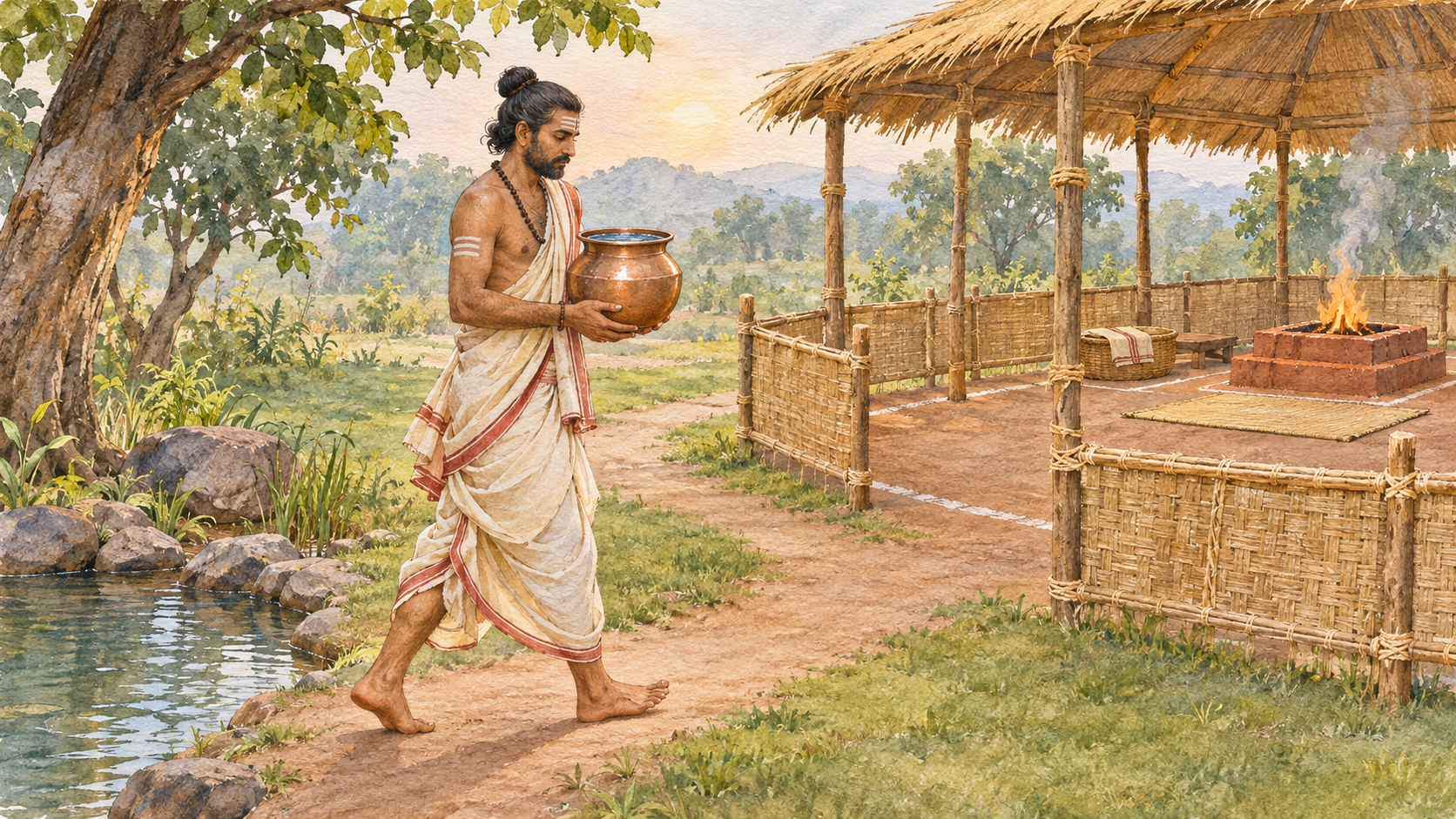
The clearest way to understand Pranita Pranayana is to look at both what happens and when it happens. Water is fetched or conveyed as a formal part of the ceremony, and this occurs before the offerings to the sacred fire. The sequence is not incidental. It distinguishes the rite from later actions that may also involve water.
When you encounter an unfamiliar yajna, use three markers:
- Timing: The action belongs to the preliminary phase, before the fire offerings.
- Material: Water is the substance being deliberately fetched or brought into the ritual setting.
- Manner: The movement is treated as prescribed ceremony, not as an attendant casually replenishing a supply.
These markers help you recognise the likely rite, but they do not make every formal-looking water action Pranita Pranayana. Water may appear at several points in a Hindu ceremony for distinct purposes. Identify a rite through its name, action and sequence together. If you are unsure, ask the officiant or organiser after the relevant portion of the yajna has ended.
This distinction is especially useful when you are reading a programme, watching a recording or explaining a yajna to a child. A still photograph of a water vessel cannot establish which rite is taking place. The moment before and the action after it provide the context needed to interpret the scene.
Why fetching water is part of the yajna
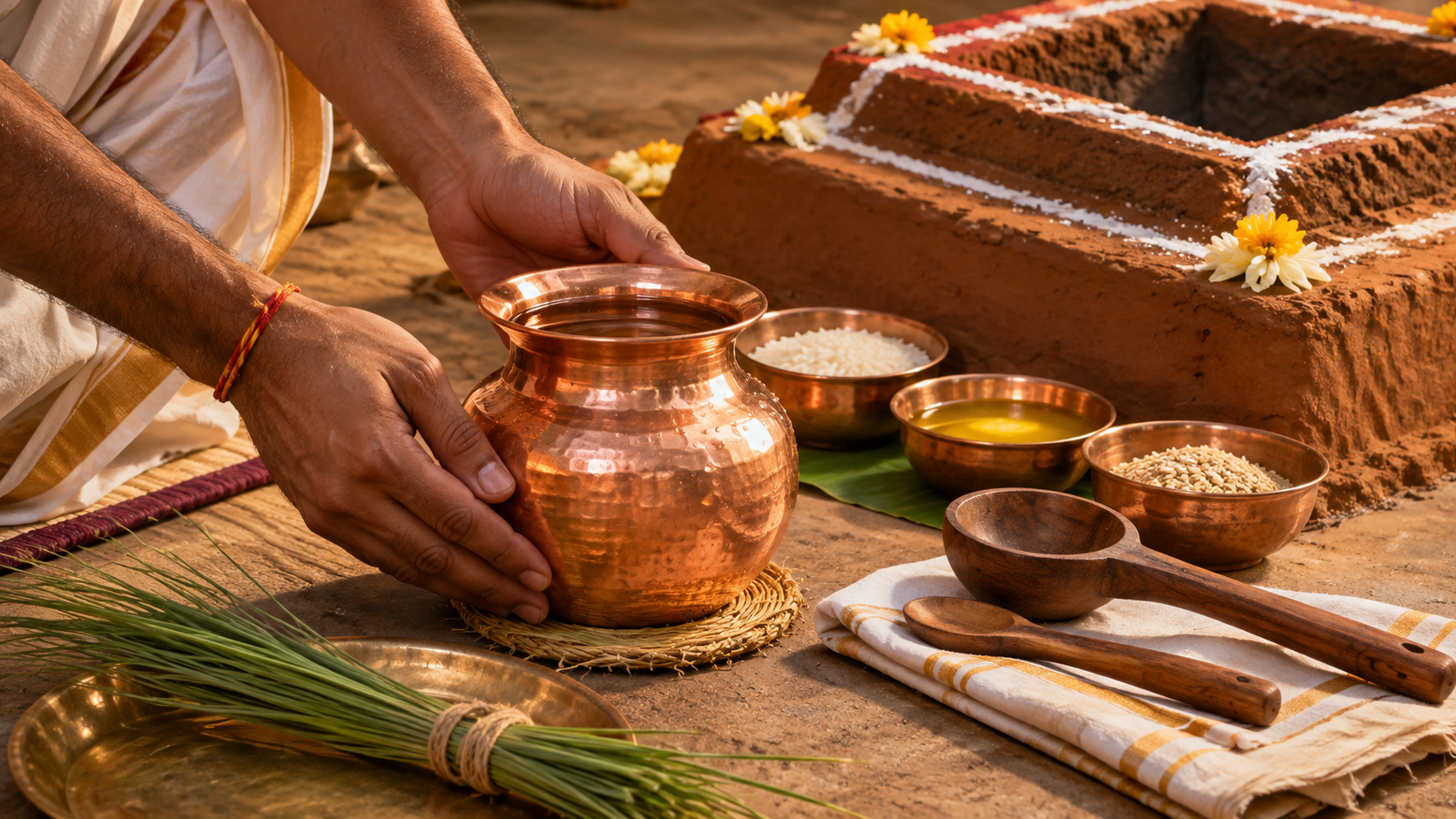
A yajna is not simply a fire followed by a succession of offerings. It is an ordered body of actions in which materials, participants and movements are brought into a prescribed relationship. Pranita Pranayana makes that principle unusually easy to see. An ordinary practical task – obtaining water – is performed with ritual intention and placed within a sacred sequence.
The water should therefore not be treated as background equipment that happens to be near the altar. Its formal conveyance indicates that preparation itself has religious weight. The rite asks you to notice that sacred action begins before the visually dramatic moment when an offering reaches the flame.
This also corrects a fire-only understanding of yajna. Agni is central to the offering, but the surrounding discipline matters: the materials must be ready, the actions must occur in order, and apparently simple movements must serve the ceremony as a whole. Water and fire do not need to be turned into invented opposites for the water rite to be meaningful. The important fact is that water is deliberately incorporated into a sacrifice centred on the sacred fire.
You also do not need to make speculative claims about the water’s physical properties. Its ritual significance lies in how it is selected, handled and brought into sacred use. That is a practical lesson beyond this one rite: in Vedic ritual, attention is not reserved for the final offering. Preparation, sequence and disciplined handling are themselves carriers of meaning.
How to observe Pranita Pranayana attentively
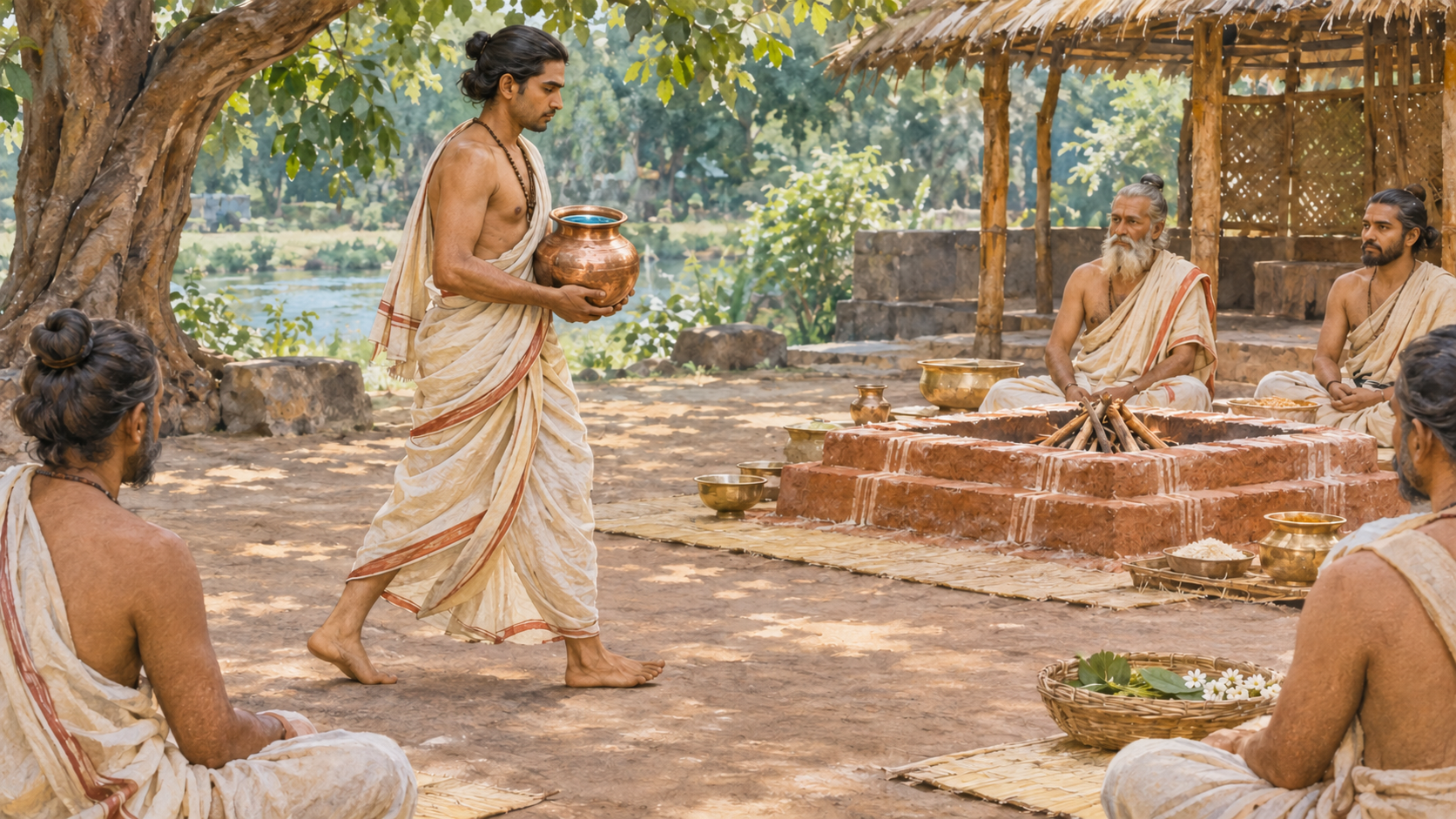
If you are attending a yajna, your best approach is attentive observation rather than trying to assign a symbolic meaning to every gesture. The following method will help you understand what you are seeing without interrupting the ceremony or pretending that a general description supplies its full technical procedure.
- Be present before the offerings begin. Arriving only for the main oblations can cause you to miss the preliminary actions that establish the ritual order. If an organiser publishes a starting time, treat it as the beginning of the ceremony rather than the beginning of the most visible part.
- Watch the water, not only the flame. Notice when it enters the ritual area, how deliberately it is carried and where it is placed. You are observing relationships and sequence, not collecting isolated gestures.
- Keep the path clear. Do not step across the ritual space, approach for a photograph, touch the vessel or offer to help unless an authorised person explicitly directs you. A movement that looks simple may have a defined place within the rite.
- Notice what immediately follows. The next action helps establish why the water was brought at that point. This is more reliable than interpreting a photograph or a short clip detached from the larger yajna.
- Ask a precise question afterward. Instead of asking, “What did the water mean?”, ask, “Was the preliminary bringing of water Pranita Pranayana in the procedure followed here?” That gives the officiant room to explain the particular tradition without forcing every use of water under one label.
If you join the yajna as a sponsor or participant, follow the directions given for that ceremony. Do not assume that observing the rite once authorises you to repeat it independently. Participation in a transmitted ritual and personal appreciation of its meaning are related, but they are not the same thing.
Keep the overview separate from the exact procedure
A reliable overview can tell you that Pranita Pranayana concerns the ceremonial fetching or conveyance of water before the fire offerings. It cannot, by itself, tell you the complete procedure for every yajna. The precise vessel, mantra, performer, route, placement and accompanying actions belong to the ritual tradition actually being followed.
That boundary matters if you want to perform rather than merely understand the rite. Do not construct a procedure by combining fragments from unrelated ceremonies, short videos or general explanations. Similar-looking movements may occupy different places in different ritual contexts. Ask a qualified officiant which yajna, Vedic tradition and procedural authority govern the ceremony in front of you.
Four questions will usually produce a clearer answer than a request for a generic demonstration:
- Is this action called Pranita Pranayana in the tradition being followed here?
- At what point in this yajna does it occur?
- Which parts are performed only by the officiating priests, and what may a yajamana or other participant do?
- Which ritual manual or transmitted procedure supplies the exact form?
If you are preparing an event programme, caption or educational note, use a restrained description: Pranita Pranayana is a preliminary rite in which sacred water is ceremonially fetched or brought before offerings are made to the fire. Avoid calling it simply a “water offering”. Bringing water into the ordered ritual setting is not the same description as offering water into the flame.
Use the same restraint in a household setting. You may honour water, maintain cleanliness and approach a home worship practice with reverence without claiming to have reproduced a named Vedic rite. If Pranita Pranayana is to form part of a formal yajna, learn its procedure from someone competent in the tradition being observed.
Key takeaways
- Pranita Pranayana is a preliminary water-fetching or water-conveying rite performed before offerings to the sacred fire.
- Recognise it through action and sequence together; the mere presence of a water vessel is not enough.
- The rite shows that preparation is part of yajna, not an unimportant interval before the “real” ceremony.
- Its significance does not require invented symbolism. The deliberate incorporation of water into prescribed sacred action is already meaningful.
- A general definition is not a performance manual. Exact mantras, roles and movements must come from the ritual tradition followed in that yajna.
- As an observer, arrive early, keep the ritual path clear, watch what follows and ask the officiant a precise question afterward.
At your next yajna, begin observing before the first offering reaches Agni. Watch how the water is brought, where the act sits in the sequence and how the ceremony moves onward from it. That small shift in attention will let you see Pranita Pranayana as the rite intends: not as a pause before worship, but as part of worship’s ordered beginning.
References

Leave a Reply
You must be logged in to post a comment.