
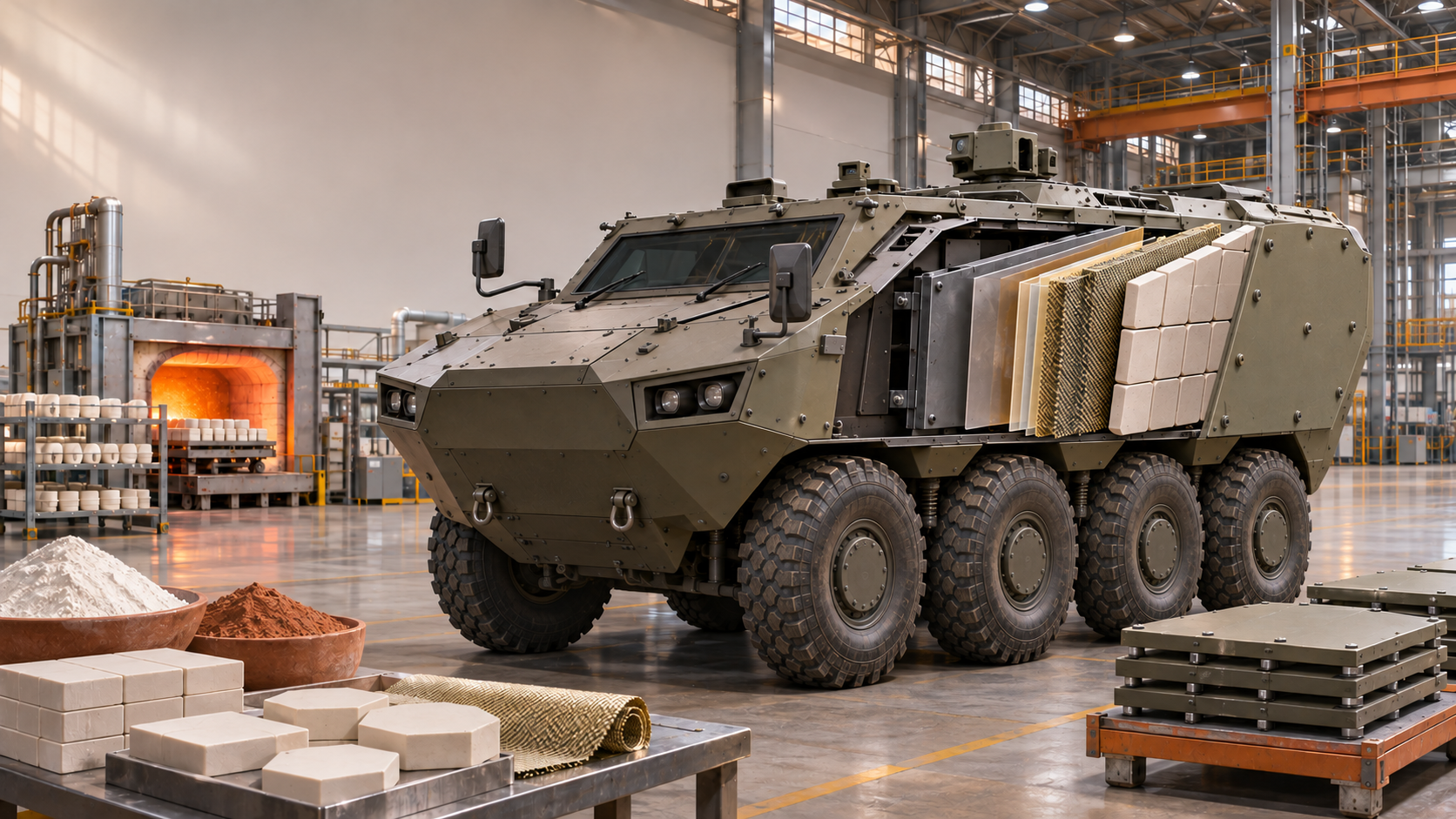
If you are trying to decide whether an “indigenous defence” announcement represents real capability, the nationality of the supplier is only your first question. You also need to know exactly what was tested, which parts of the manufacturing chain Bharat controls, and whether the qualified armour can be produced, fitted and sustained without quietly returning to imports.
CUMI’s achievement gives you something concrete to examine. The Bharatiya materials company says its ceramic-based, end-to-end powder-to-panel vehicle armour achieved STANAG 4569 Level 4 qualification following tests at DRDO’s Terminal Ballistics Research Laboratory and IABG in Germany. That is a serious industrial milestone. It is also the beginning of the import-substitution test, not the end.
Why Level 4 qualification matters, and what it cannot prove alone
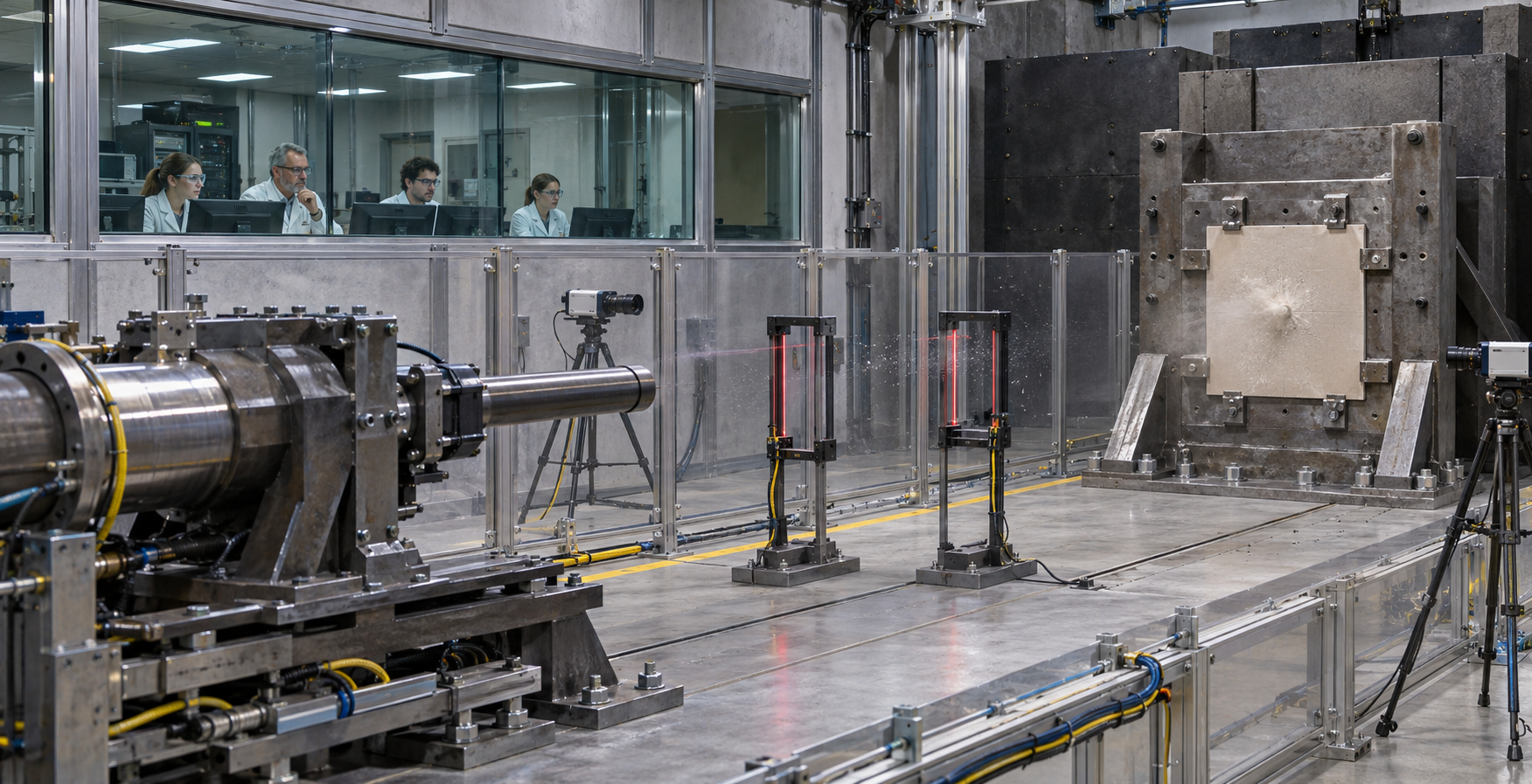
STANAG 4569 is a NATO standardisation benchmark for the protection of armoured vehicles. A recognised qualification gives a military customer a defined basis for evaluating protection instead of relying on a manufacturer’s general assurance that a panel is “ballistic” or “blast resistant.” CUMI’s Level 4 result concerns an advanced ceramic armour solution intended to resist high-velocity projectiles and fragmentation while controlling weight for vehicle integration.
The number must still be read correctly. A protection level is not a universal score for every product made by the company, every part of a vehicle or every battlefield threat. Qualification belongs to the tested armour construction and test conditions. Change the ceramic, backing, thickness, panel shape, joints, mounting method or vehicle location, and you may no longer be looking at the same qualified configuration.
The same discipline applies to blast claims. CUMI also says it is among the few Bharatiya firms certified at Levels 3 and 4 for IED side-blast protection. That claim should be evaluated within its stated scope. Ballistic attack, fragmentation and an IED side blast are different threat mechanisms; success against one should never be casually extended to the others.
If you are reviewing a protection claim, ask for the qualification record behind the headline. The useful questions are specific:
- Which threat category and protection level were tested?
- What exact panel construction, backing and mounting arrangement formed the test article?
- Did the qualification cover a flat sample, a shaped vehicle component or an installed system?
- How were seams, edges, fasteners and adjoining components represented?
- Which laboratory performed each test, and which certificate or report records the result?
- What changes to the qualified design would require revalidation?
Testing at TBRL and IABG gives the disclosed evaluation path institutional weight. The names of the laboratories, however, do not eliminate the need to inspect the scope. In armour procurement, the precise meaning of the pass matters as much as the prestige of the facility.
Powder-to-panel is the strategically important claim
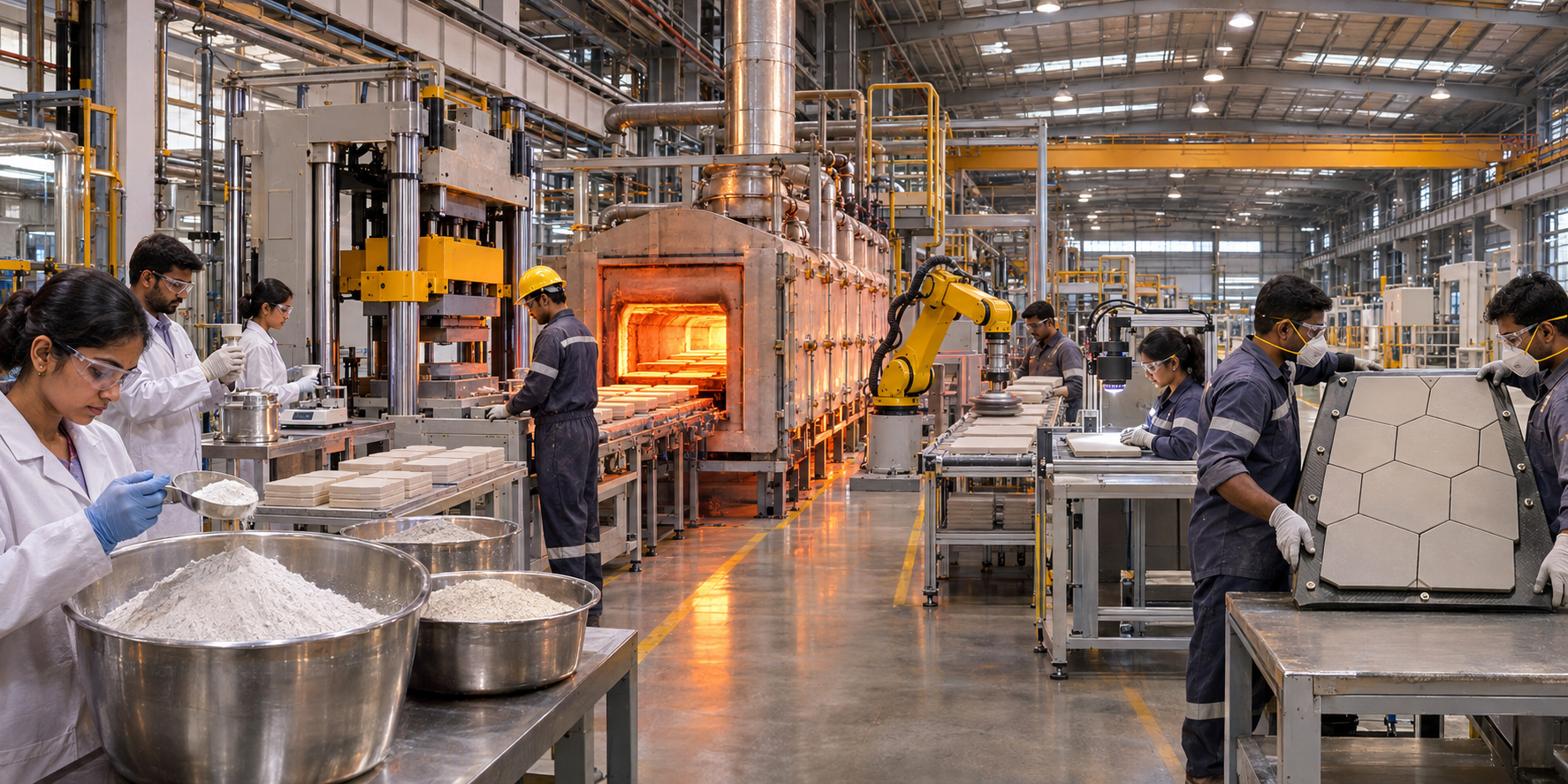
A finished armour panel can be assembled in Bharat while its most critical material, processing knowledge or production equipment remains foreign. That may still create useful employment and assembly capacity, but it is a shallow form of import substitution. It leaves readiness exposed to overseas lead times, export restrictions, currency movements and disruptions in the supply chain.
“Powder-to-panel” points toward a deeper capability: turning armour material into a qualified protective component through an integrated manufacturing chain. For ceramic armour, control of material preparation, ceramic processing, panel design, backing, bonding, finishing and quality assurance can be more strategically valuable than ownership of the final assembly line alone.
But the phrase should start an audit, not end one. It does not, by itself, establish that every precursor, machine, consumable or item of intellectual property is Bharatiya. To judge the depth of localisation, trace the actual chain:
- Critical inputs: Identify which powders, backing materials, adhesives and specialised consumables are domestic, imported or available from more than one supplier.
- Process control: Establish where the material is formed, treated, bonded and finished, and who owns the process knowledge needed to reproduce it.
- Design authority: Confirm whether the Bharatiya supplier can alter the armour package for a new vehicle without waiting for foreign permission, data or engineering support.
- Production equipment: Separate dependence on imported machinery from dependence on an imported service contract, proprietary tool or irreplaceable spare.
- Quality consistency: Require evidence that routine production panels match the qualified construction, rather than assuming one successful test specimen proves every future batch.
- Surge and replenishment: Check whether the chain can increase output and replace damaged panels when operational demand rises.
This is where indigenous materials science changes the strategic equation. A country that can design and manufacture the protective material has more freedom to adapt armour to its vehicles and threats. A country that can only install imported armour remains dependent at the point where protection is actually created.
The qualified panel must become a qualified vehicle system
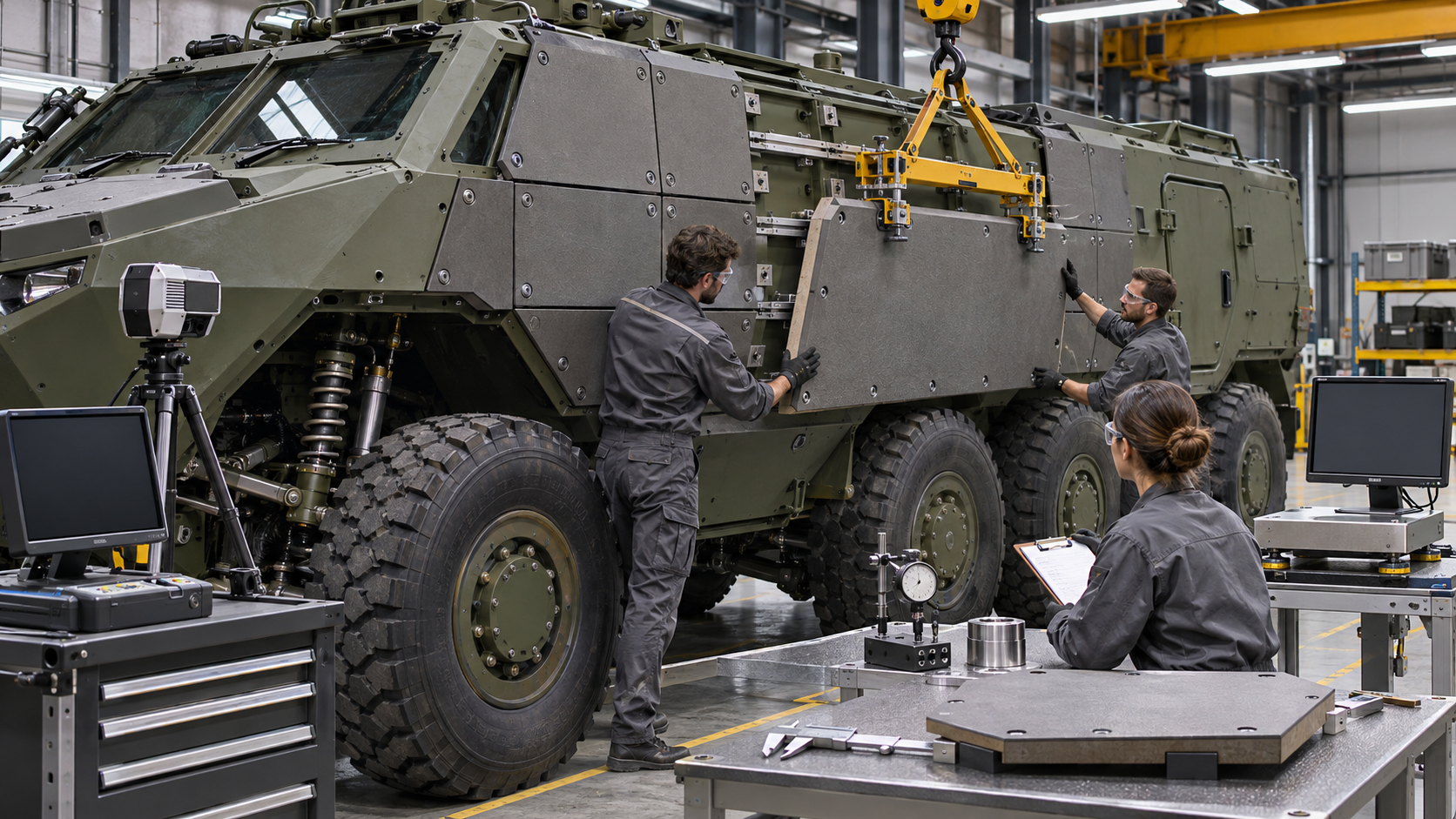
An armour panel can perform as intended in a test and still be integrated poorly on a vehicle. Protection is shaped by the whole installation: doors, windows, joints, roof and floor sections, fasteners, wheel arches, access points and the transitions between different materials. A strong panel cannot compensate for an unexamined gap beside it.
Weight is equally consequential. Ceramic armour is attractive partly because protection must be balanced against mobility, but a vehicle does not experience weight as an abstract total. Its location affects payload, suspension, handling, braking and the space available for personnel and equipment. CUMI describes its Level 4 solution as optimised for weight, mobility and platform integration; the procurement question is how that optimisation performs on each intended platform.
A serious integration review therefore needs three linked dossiers:
- Protection map: Show which threat is covered in each vehicle zone, where interfaces occur and which areas have a different protection level.
- Integration budget: Record the armour mass and its distribution, the structural changes required, and the effects on the platform’s operating constraints.
- Inspection and repair plan: Define how a damaged panel is identified, removed, replaced and returned to service, including the availability of replacement parts.
This distinction prevents a common procurement mistake: treating a material qualification as if it automatically qualified every vehicle fitted with that material. The panel test establishes a protection capability. Platform validation must establish that the installed system preserves it.
Five gates separate certification from import substitution
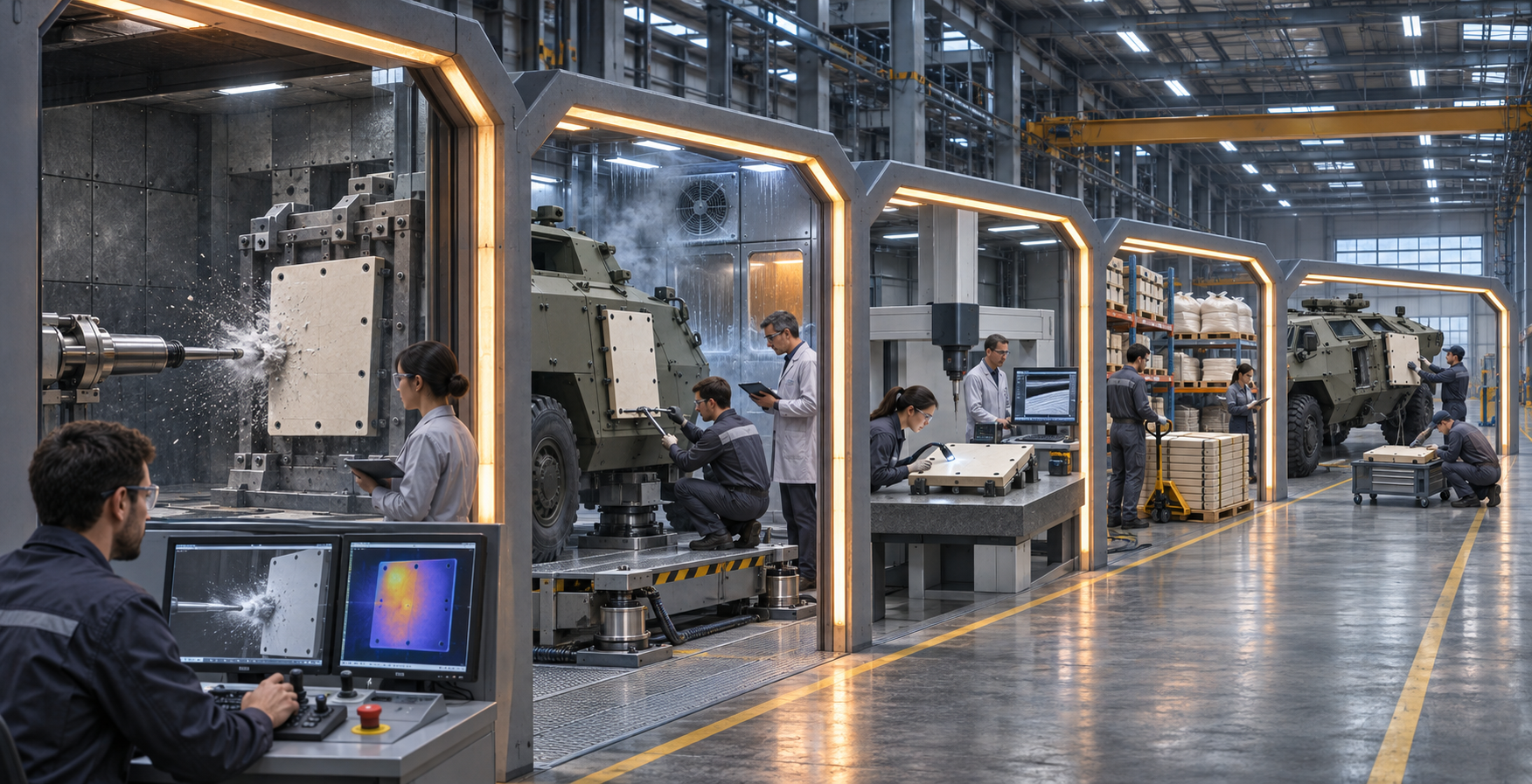
If you assess defence-industrial claims as a citizen, policymaker, investor or procurement professional, score the programme against five gates. Mark each one “passed,” “in progress” or “not shown.” This prevents a promising technical result from being mistaken for a completed national capability.
- Evidence gate: The certificate and test record identify the exact threat, level, construction and configuration that passed. Broad marketing language is not a substitute.
- Platform gate: The qualified armour has been integrated and validated on the intended vehicle. Interfaces, vulnerable zones and mobility effects have been addressed rather than inferred from a standalone panel.
- Production gate: The manufacturer can reproduce the qualified design under controlled quality procedures. Batch acceptance and traceability catch changes that could weaken protection.
- Supply-chain gate: Critical foreign dependencies are mapped honestly. Domestic control covers the processes and inputs that would otherwise stop production, not merely final assembly.
- Sustainment gate: Users can obtain replacement panels, inspect damage, train maintainers and support the system through its operational life. Local manufacture only shortens deployment and replenishment timelines when capacity, inputs and procurement arrangements are already in place.
Certification clears the evidence gate for a defined design. It can also reduce technical risk at later gates. It cannot place the product into service, establish production scale or prove supply-chain independence on its own. Those outcomes require platform-specific work and procurement follow-through.
This is also why government demand matters. A domestic manufacturer cannot preserve specialised production knowledge indefinitely through ceremonial recognition alone. Predictable qualification pathways, transparent orders and disciplined quality requirements turn a laboratory success into an industrial base. The goal is not to shield a Bharatiya supplier from scrutiny; it is to apply scrutiny that helps a capable supplier become dependable.
Key takeaways
- CUMI’s STANAG 4569 Level 4 qualification is meaningful because it places a Bharatiya ceramic armour solution against a recognised vehicle-protection benchmark.
- A protection level applies to a tested threat and configuration. It should not be extended automatically to every panel, platform or kind of attack.
- Powder-to-panel manufacturing can represent deeper self-reliance than domestic assembly, but the origin of critical inputs, equipment, design authority and process knowledge still needs to be verified.
- Vehicle integration is a separate engineering task. Joints, doors, mounting arrangements, vulnerable zones and weight distribution can determine whether panel performance survives installation.
- Real import substitution is demonstrated by repeatable production, controlled dependencies, platform validation and reliable support in service, not by certification alone.
The next time you encounter an indigenous armour announcement, do not stop at “made in Bharat.” Ask which configuration passed, what the country controls from material to finished panel, which vehicle has been validated, and how production will continue when imports are disrupted. Applied consistently, those questions turn Aatmanirbhar Bharat from a label into a measurable defence capability—and give achievements such as CUMI’s the rigorous path they need to reach the jawan.
References

Leave a Reply
You must be logged in to post a comment.