
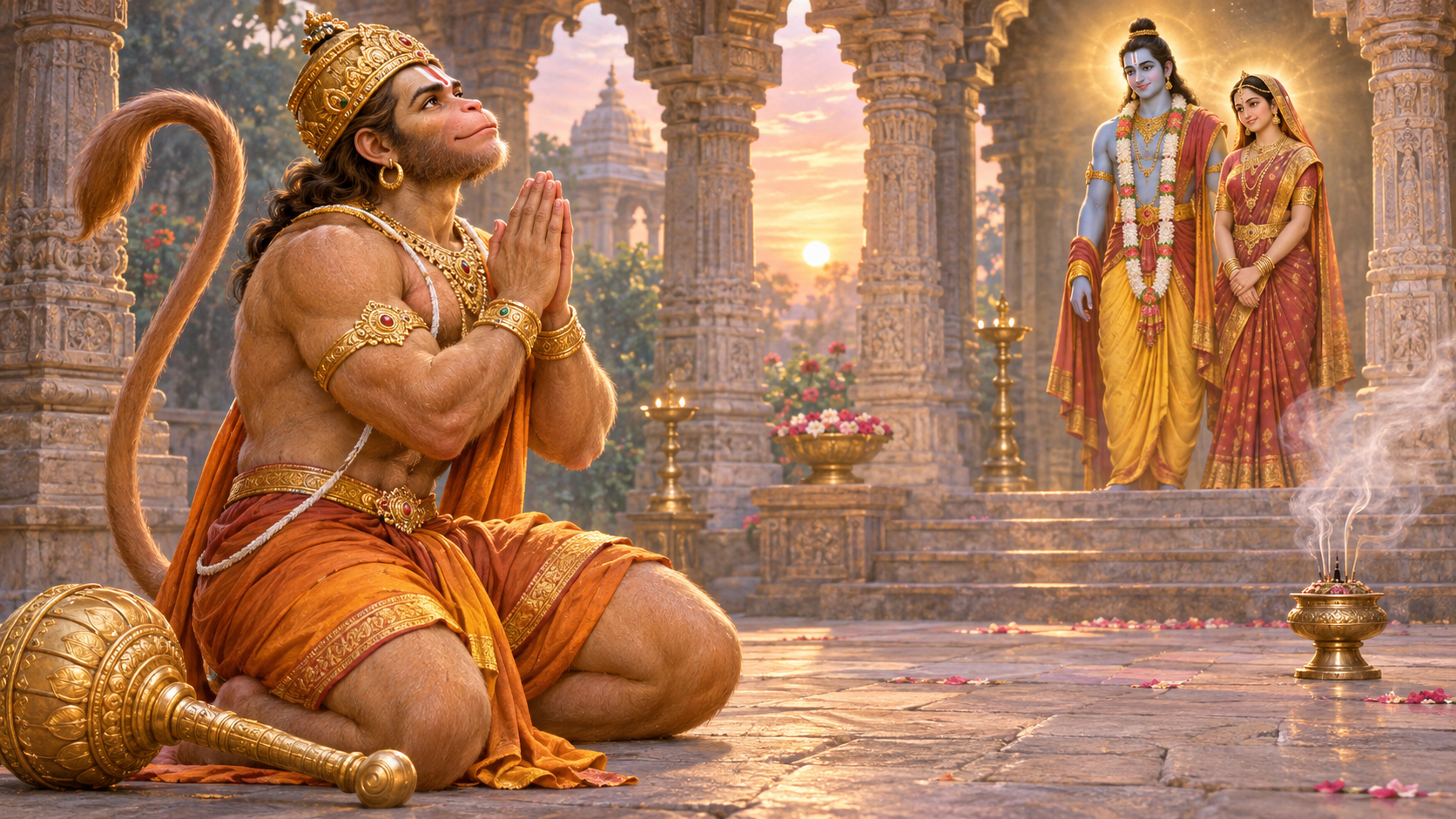
You may approach Hanuman for courage, protection or the strength to meet a difficult duty. Yet Bhakta Hanuman does not confront you with a raised weapon or a dramatic feat. He meets you with joined hands, an attentive face and immense power held in reserve. If you have wondered why the mighty Hanuman is shown bowing, that contrast is the heart of the form.
Bhakta Hanuman is not a weaker version of the heroic Hanuman. He is the same powerful being seen through his defining relationship with Sri Rama. His strength has not disappeared; it has found its purpose. Once you learn to read that visual grammar, the murti becomes a practical question addressed to you: What is your own strength serving?
How to recognize the Bhakta Hanuman form
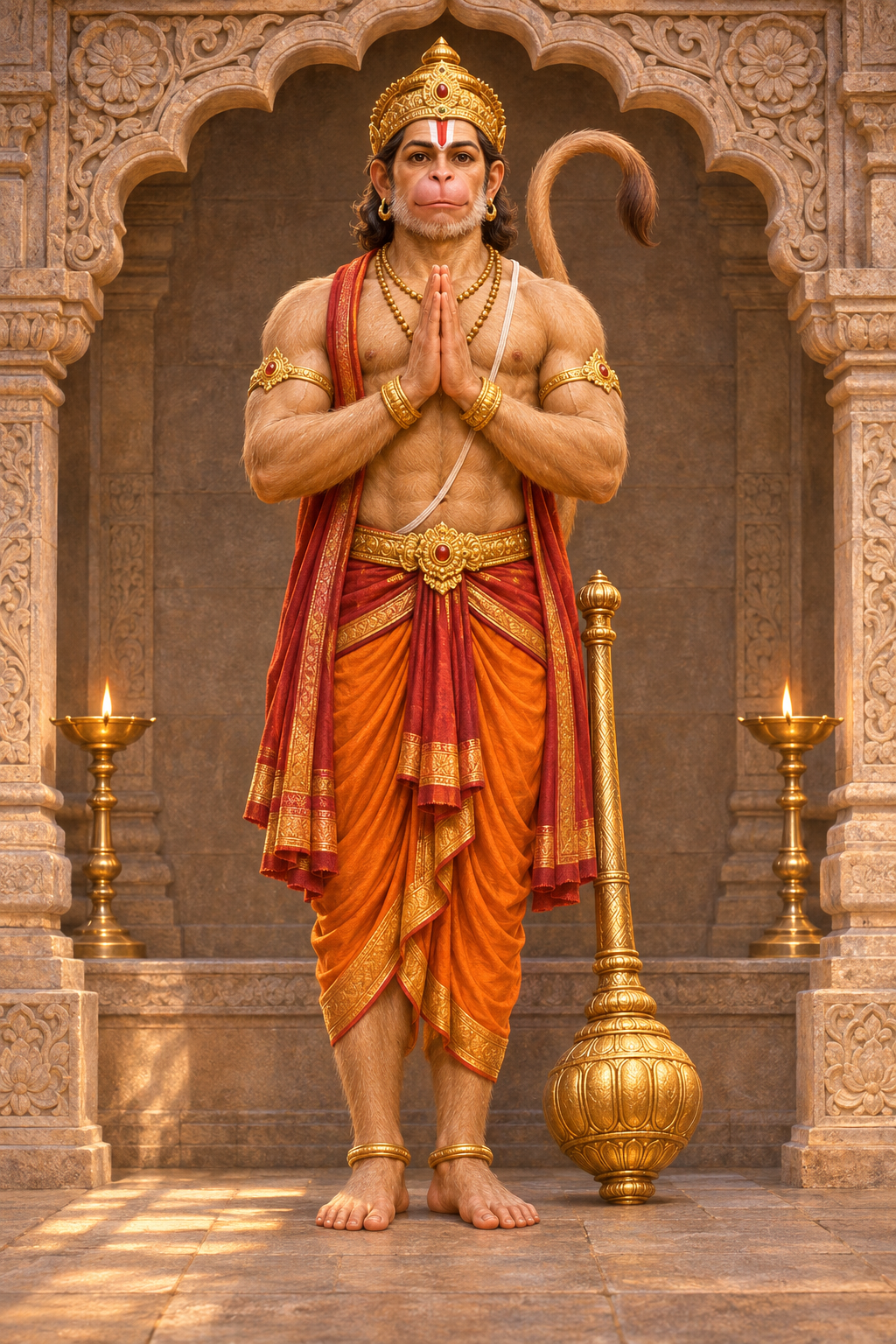
The clearest initial cue is anjali mudra: the palms are brought together before the chest in a gesture of reverence. The body may still communicate great physical capacity, but the dominant action is neither attack nor display. It is devotion.
Do not identify the form from one accessory alone. Temple images differ in stance, ornamentation and regional treatment. Read the whole composition through a cluster of cues:
- The joined hands are more important than any weapon or ornament.
- The body appears ready and capable, but its energy is gathered rather than projected outward.
- The face conveys attention, reverence or serenity instead of the intensity of combat.
- When Sri Rama or Sita-Rama are represented in the same composition, Hanuman’s posture or gaze makes the devotional relationship explicit.
- If a gada is present, it is normally subordinate to the act of reverence rather than the centre of the scene.
This combination separates Bhakta Hanuman from images organized around heroic action. While warrior forms foreground valour and readiness, the Bhakta form places humility, strength and enduring bhakti at the centre. The distinction is not between two different Hanumans. It is between two ways of contemplating the same sacred personality.
If you are choosing a murti for a home shrine, let the actual visual emphasis guide you more than the name printed beside it. Ask what the form immediately directs your mind toward. A dynamic pose may call attention to courageous action. Bhakta Hanuman should draw the eye first to reverence, disciplined strength and service to Sri Rama.
The central symbolism: power that willingly bows
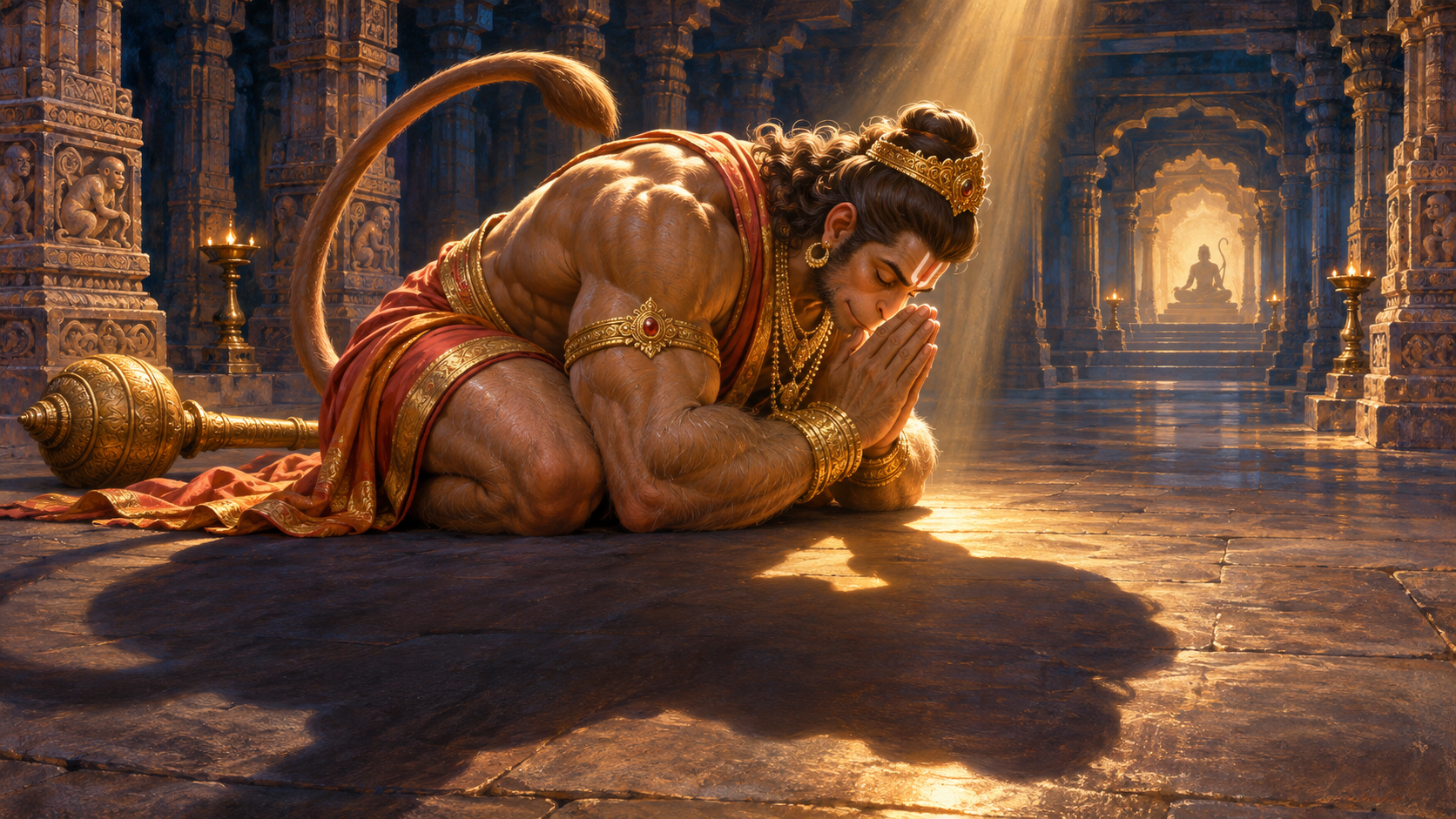
Humility is often confused with thinking poorly of yourself. Bhakta Hanuman teaches something more demanding. His power remains evident, yet he does not make power the object of worship. The body communicates capacity; the joined hands communicate consecration.
That distinction matters in ordinary life. You cannot offer a capacity that you refuse to acknowledge. Skill, authority, physical strength, learning, wealth and persuasive speech can all become forms of service. They can also become ways of demanding attention, control or superiority. Bhakta Hanuman does not ask you to pretend that strength is absent. He asks you to place it under dharma.
The form therefore holds together three movements that are easy to separate:
- Recognize your capacity honestly, without false modesty.
- Refuse to treat that capacity as the measure of your worth or as permission to dominate.
- Direct it toward a duty, relationship or act of seva larger than personal recognition.
Strength without humility easily becomes domination. Humility without the willingness to act can become helplessness disguised as virtue. Bhakta Hanuman joins both under bhakti. His humility is powerful because it is chosen, and his power is trustworthy because it is offered.
This also clarifies what bhakti means in the image. It is not merely an intense feeling toward the divine. It is the reorientation of agency. Hanuman can act, but he does not imagine himself to be the ultimate centre or beneficiary of action. Devotion gives ability a direction.
Read the murti from gesture to relationship
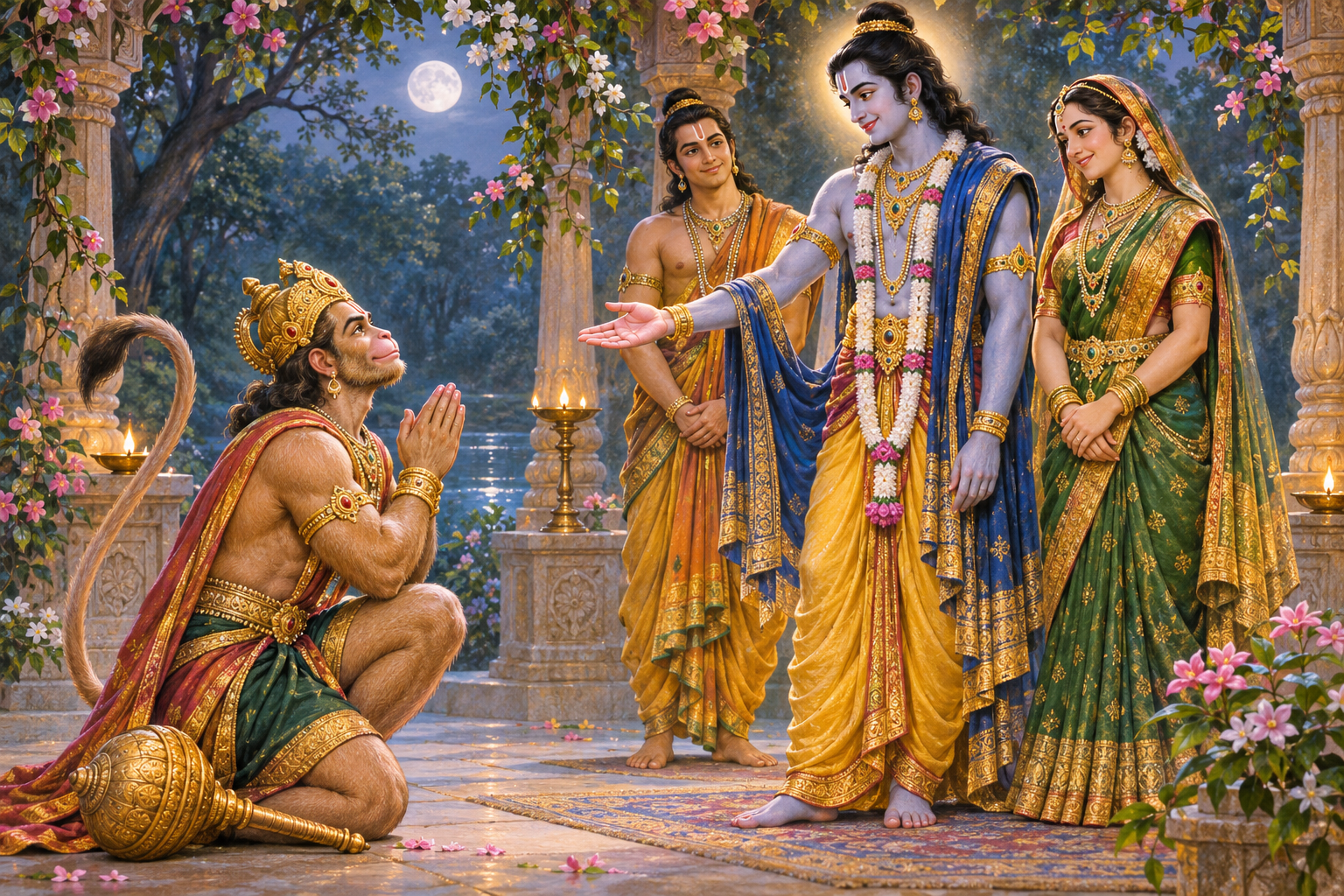
Iconography is most useful when it changes how carefully you look. Begin with the dominant gesture, then consider the body, face, attributes and devotional relationship as one composition. The following questions can turn visual observation into self-examination.
| Visual cue | What to notice | Question for your practice |
|---|---|---|
| Joined palms | Reverence governs the entire image. | What currently commands my deepest loyalty? |
| Powerful body | Capacity is present rather than denied. | Which ability am I using for service, and which one am I using for status? |
| Composed stance | Devotion appears as alert availability, not collapse. | Can I remain ready without becoming restless or aggressive? |
| Attentive face or gaze | The mind is directed rather than scattered. | Where is my attention divided when duty requires steadiness? |
| Gada, when present | Power is carried, but it does not replace reverence. | Is a useful tool becoming an identity or a source of pride? |
| Orientation toward Sri Rama | Hanuman’s identity is understood through relationship and service. | What larger dharmic purpose gives my work its direction? |
Do not turn this into an occult dictionary in which every minor detail carries one fixed secret meaning. Crowns, clothing, colours, the treatment of the tail and other features can vary. Begin with what governs the whole image: its action, emotional register and relationship. A variable decorative feature should not outweigh the unmistakable act of devotion.
Nor is a murti exhausted by symbolism. For a worshipper, darshan is a sacred relationship, not an art-history puzzle. Iconographic understanding has a supporting role: it steadies the mind, corrects a hurried glance and helps you receive the teaching embodied in the form.
Turn darshan into a discipline of service
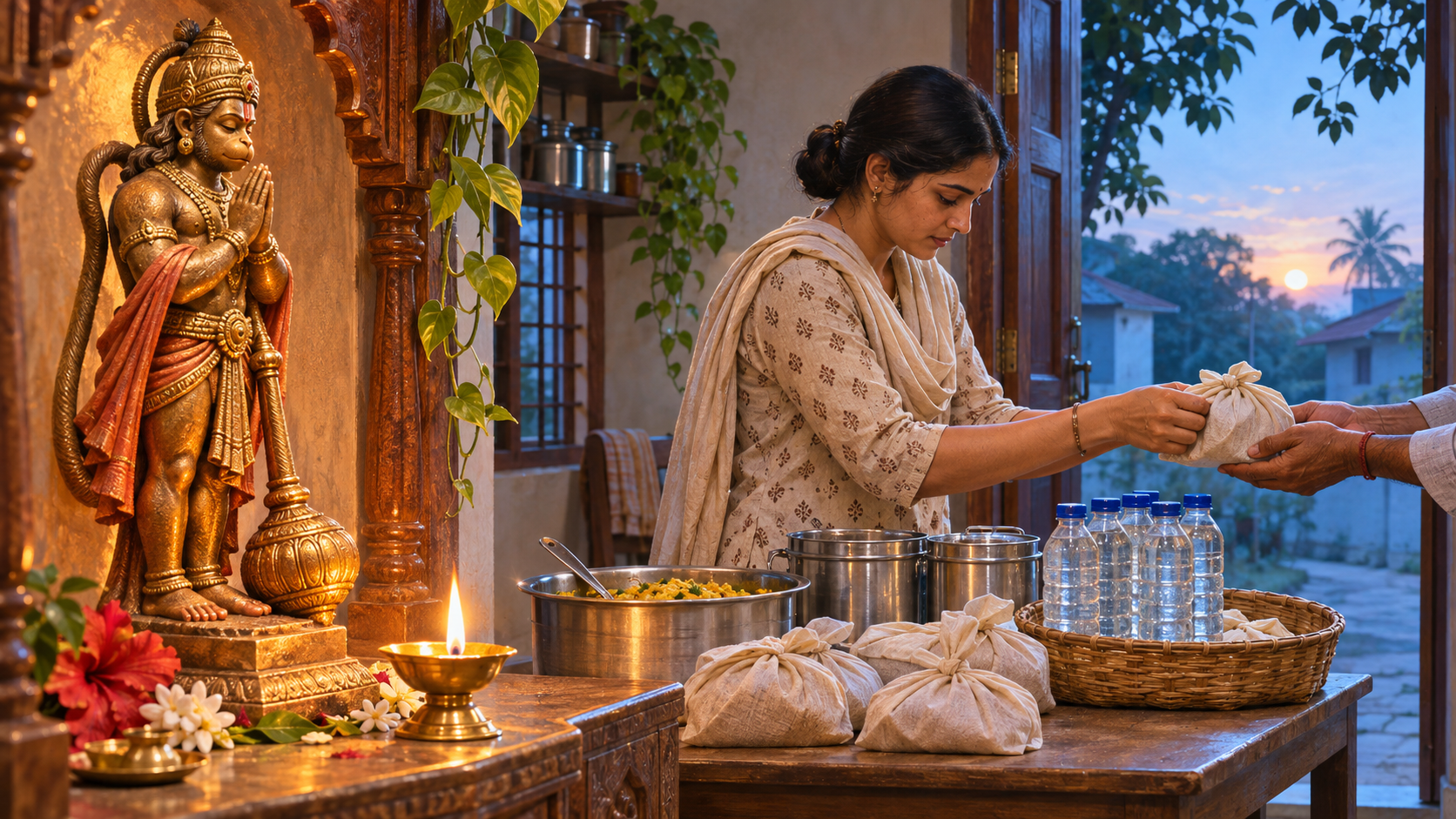
You do not need an elaborate exercise to carry Bhakta Hanuman’s teaching into daily life. Use the form as a sequence: observe, discern, offer and act.
- Pause before making a request. Look first at the hands, stance and face. Let the form establish the mood of the encounter.
- Name one real capacity you possess. Be concrete: your time, physical effort, professional skill, authority, patience, money or ability to speak for someone else.
- Notice where ego enters. Are you seeking credit, control, vindication or the feeling of being indispensable? The purpose is honest recognition, not self-condemnation.
- Choose one act of seva that uses the capacity well. Make it small enough to complete before the day ends: finish a neglected duty, help without announcing it, keep a difficult promise or use your influence fairly.
- Return to the same question at your next darshan. Did the capacity actually serve, or did the desire for recognition take control again?
This prevents devotion from becoming only transactional. Asking Hanuman for strength is natural, but Bhakta Hanuman adds a second question: What will you do with the strength you receive? A petition without a corresponding readiness to serve leaves half the iconography unread.
Common misreadings to avoid
- Folded hands do not mean weakness. They show that strength has accepted a sacred direction.
- A powerful body does not by itself signify aggression. Capacity and moral purpose are separate questions; the devotional posture tells you how the capacity is governed.
- Humility does not require hiding your gifts. An ability denied cannot be consciously offered.
- Not every Hanuman image places the same lesson in the foreground. Heroism, protection, movement and devotion may all belong to Hanuman, but the posture tells you which aspect the composition asks you to contemplate.
- Reverence is not automatic approval of whatever you already intend to do. The joined hands should test your motive, not merely bless it.
Key takeaways
- Bhakta Hanuman is recognized primarily through reverence: joined palms, composed energy and attentive orientation toward Sri Rama.
- His strength remains fully present. The spiritual lesson is not the removal of power but its placement in the service of dharma.
- Read the complete composition rather than building an interpretation around one ornament or variable regional detail.
- Use the form to examine your own abilities: acknowledge them, notice the ego’s claim on them and direct them toward a specific act of seva.
- When selecting a murti, choose the visual emphasis that supports the discipline you intend to cultivate.
At your next darshan of Bhakta Hanuman, do not hurry past the joined hands. Let them ask what your strength is for. Then choose one answer you can put into action before the day is over. That is how sacred iconography moves from something you see to a discipline you live.
References

Leave a Reply
You must be logged in to post a comment.