
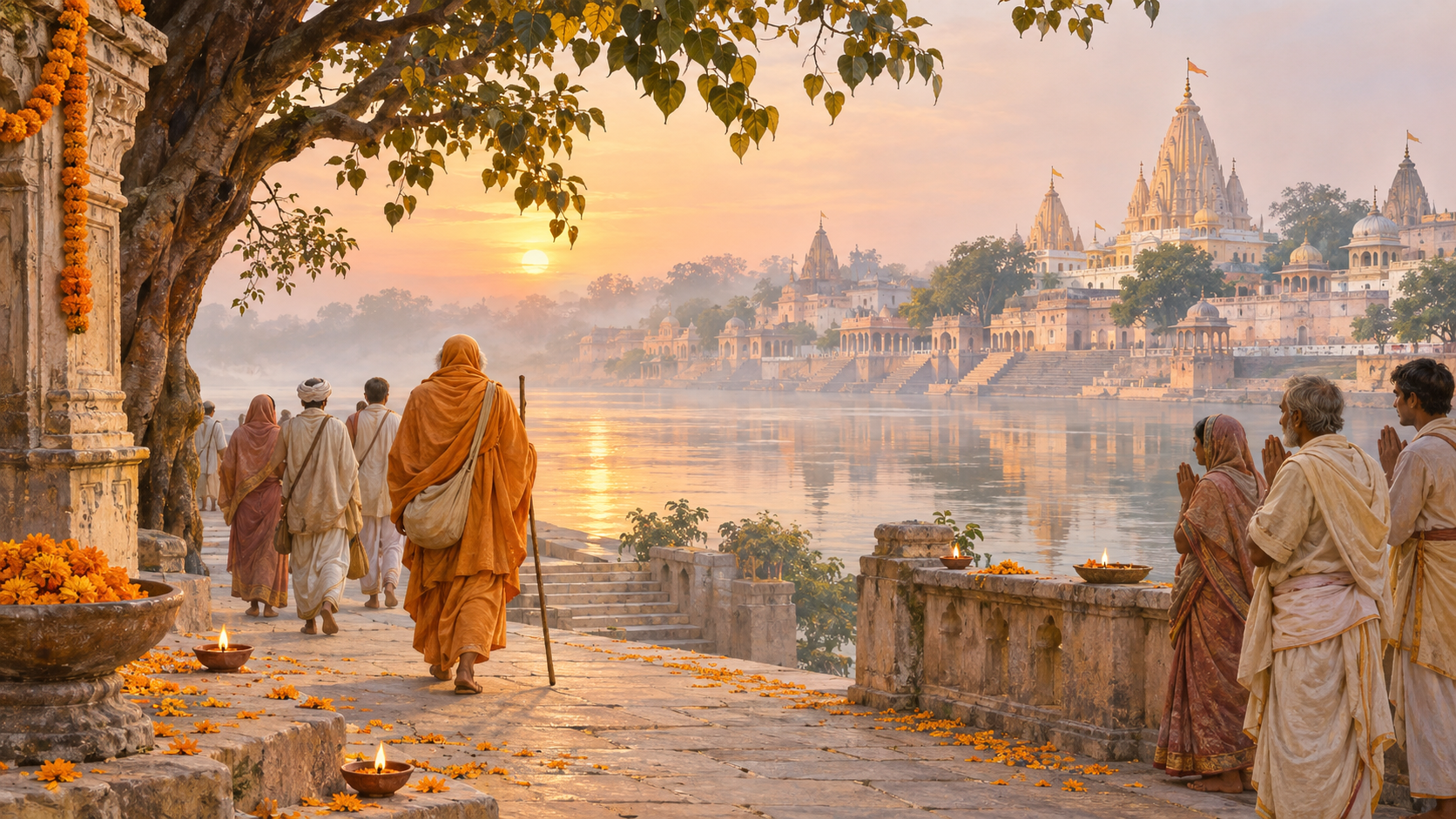
You may have come looking for a fuller account of Radhanath Swami’s route through Ayodhya, the temples he visited, or a message he delivered there. The reliable answer begins with restraint. The confirmed event is simple: Radhanath Swami arrived in Ayodhya during Kartik Yatra 2026. Details beyond that should not be treated as fact unless they are separately verified.
That restraint does not make the visit insignificant. It helps you see its significance without turning a sacred journey into speculation or personality-driven spectacle. Ayodhya, Kartik, and yatra each carry a devotional demand: remember Sri Rama, examine your conduct, and turn remembrance into practice.
What you can safely say about the visit
You can safely repeat three points: Radhanath Swami arrived in Ayodhya; the arrival was connected with Kartik Yatra; and the year was 2026. That is enough to identify the event, but not enough to reconstruct an itinerary.
An arrival does not by itself confirm which temples were visited, who accompanied the swami, whether a public discourse occurred, what was said, or how long the stay lasted. Even details that sound likely must remain unconfirmed until there is direct evidence for them. Familiar pilgrimage customs cannot be converted into claims about this particular visit.
If you plan to share a photograph, video, or caption connected with the visit, apply this test first:
- Identity: Does the material clearly identify Radhanath Swami, or are you relying on someone else’s assumption?
- Place: Does the accompanying information establish Ayodhya, rather than merely showing a temple or a crowd?
- Scope: Does the evidence support only an arrival, or does it actually support the additional activity being claimed?
- Wording: Can you state the claim precisely without adding motives, quotations, attendance figures, or itinerary details?
Devotional enthusiasm does not excuse factual looseness. A claim does not become harmless merely because it portrays a respected spiritual figure positively. If a detail cannot be verified, leave it out or clearly identify it as unconfirmed.
Why Ayodhya gives the visit its spiritual meaning

Ayodhya belongs to the sacred geography of Sri Rama. For a Hindu pilgrim, it is not simply an old city, a political symbol, or an attractive setting for photographs. It calls the visitor back to Rama’s maryada: disciplined conduct, fidelity to dharma, service, courage, and the willingness to place duty above personal convenience.
Kartik adds another layer. Many Hindu and Vaishnava traditions receive Kartik as a period for intensified remembrance, worship, restraint, and pilgrimage. Particular observances differ among sampradayas, so you do not need to imitate a practice taken from a different lineage. Follow the discipline given by your own guru, family tradition, or temple community.
Yatra completes the frame. A yatra is purposeful movement toward a sacred place, but its inner test is what happens to the pilgrim’s attention and conduct. Physical travel may end at the dhama; spiritual travel continues when remembrance changes how you fulfil a duty, speak to another person, or respond to difficulty.
These three lenses keep the visit in proportion:
- Ayodhya: Receive the place through remembrance of Sri Rama, not merely through its public visibility.
- Kartik: Treat the occasion as a call to deepen an existing discipline, not as an event label.
- Yatra: Look for the movement from darshan to conduct. A sacred impression should eventually produce a lived response.
When you encounter an image from the visit, ask a better question than how large the gathering was: what quality associated with Sri Rama are you being called to practise? That question moves Ayodhya from the screen into your life.
How to receive the yatra when you are not in Ayodhya
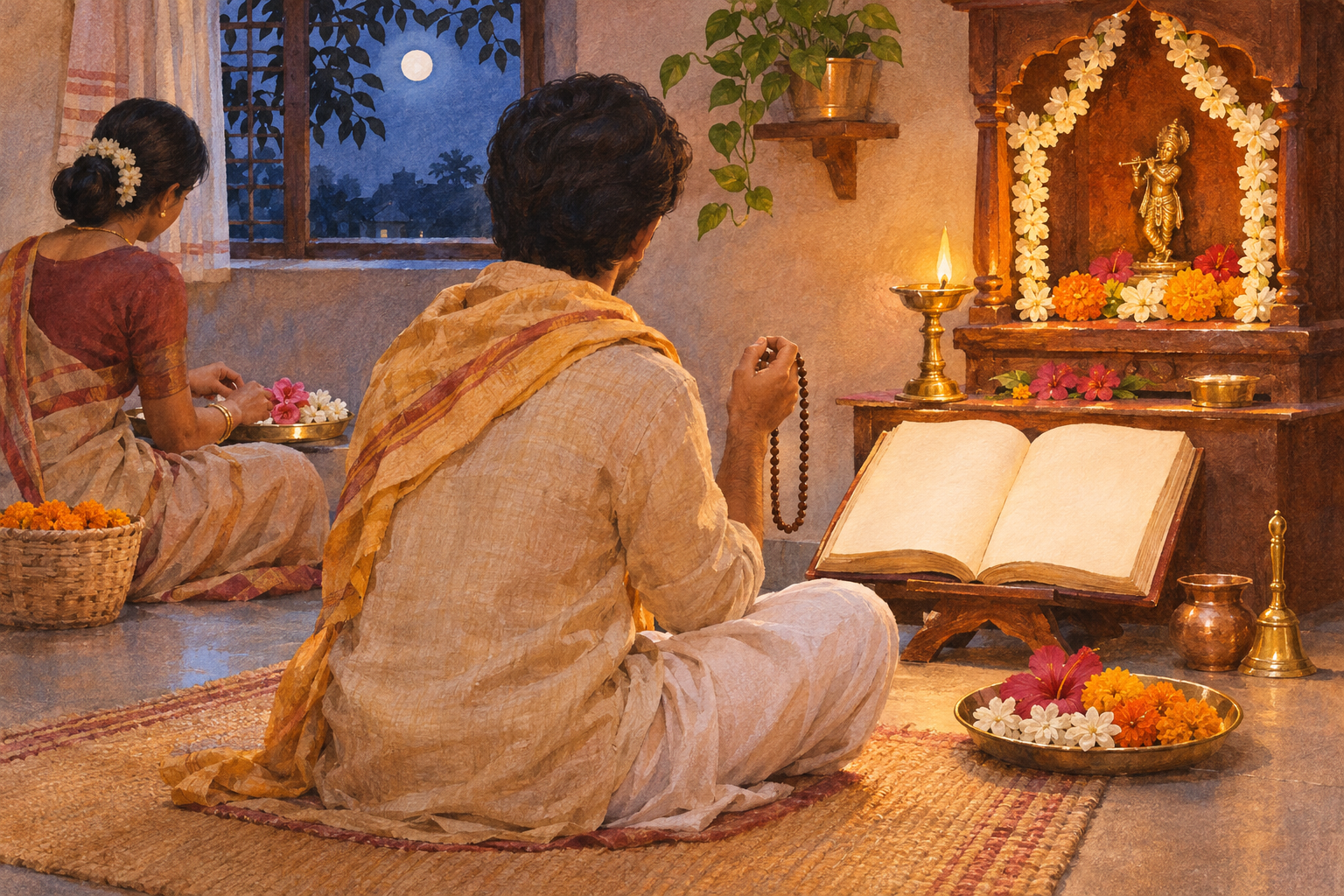
You do not need to pretend that watching from afar is the same as undertaking a physical pilgrimage. It is not. You can still let the occasion prompt a sincere act of remembrance where you are.
- Begin with the exact fact. Hold to the confirmed statement that Radhanath Swami arrived in Ayodhya during Kartik Yatra 2026. Do not build a devotional reflection on invented details.
- Create a sacred pause before consuming more media. If it accords with your practice, offer pranam to Sri Rama, sit briefly before your shrine, or repeat Rama-nama. This changes your posture from passive viewing to remembrance.
- Choose one Rama-centred practice. Read a passage from the Ramayana, chant the name of Rama, listen attentively to katha from a trusted teacher, or offer practical service in your home or temple community. Choose something you can complete with care.
- Identify one neglected duty. Rama-bhakti cannot remain separate from conduct. Complete a promise, speak truth without needless harshness, attend to a family responsibility, or correct an avoidable act of carelessness.
- Share only what the evidence carries. Link to the direct record of the arrival. Keep your spiritual interpretation distinct from claims about what Radhanath Swami did or said.
This approach prevents two common losses. The first is reducing yatra to content that is quickly viewed and forgotten. The second is treating emotion as though it were already transformation. A small completed act of dharma is more useful than a large devotional reaction that leaves your conduct untouched.
Keep reverence for the swami and reverence for the dhama aligned
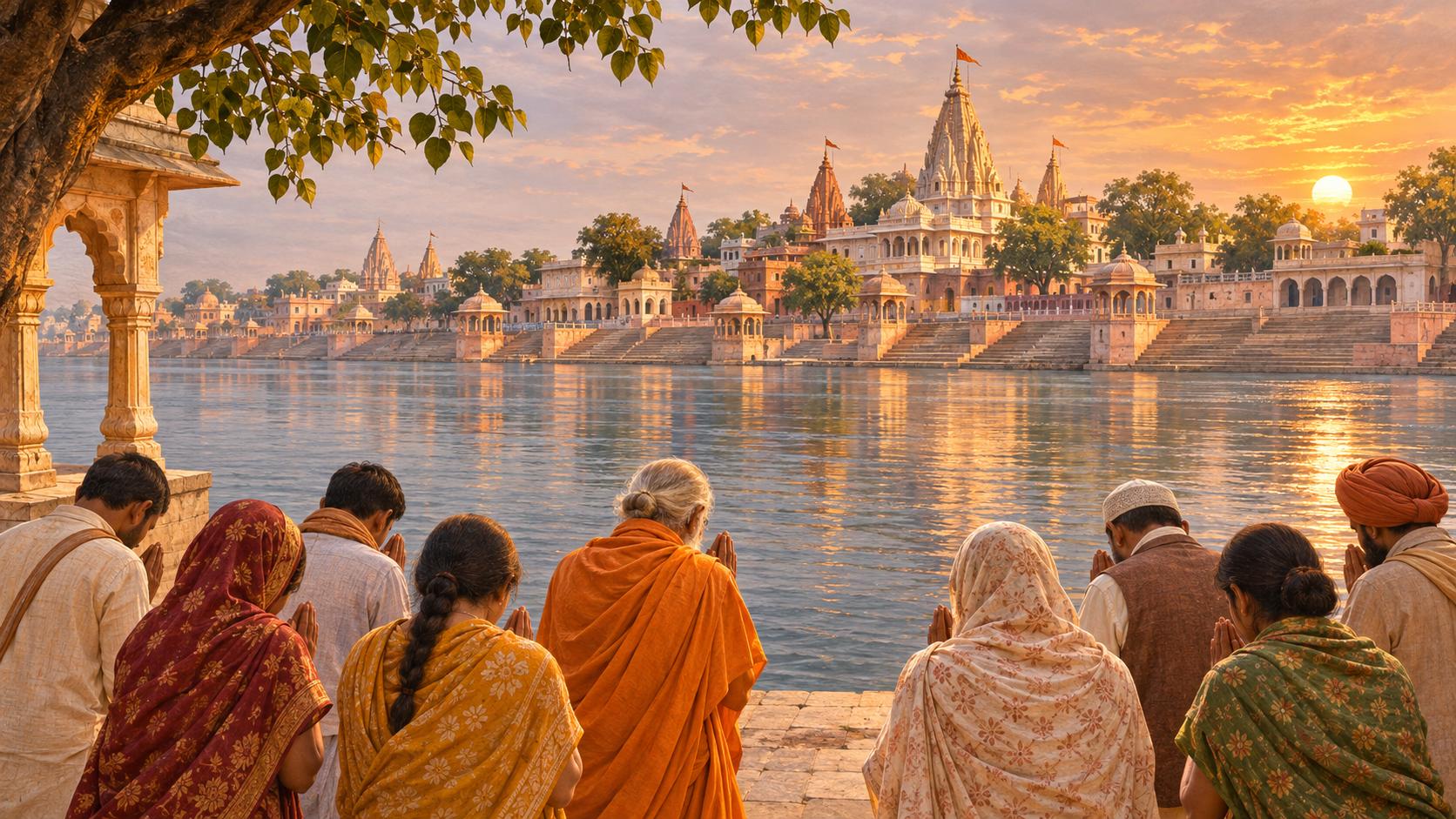
When a respected swami visits a sacred place, attention can shift almost entirely to the visitor. The photographs, reception, and visible gathering then become the whole story. A sound devotional reading restores the proper order: the sadhu awakens remembrance, the dhama deepens it, and Bhagavan remains at the centre.
You can notice when that order has slipped. The warning signs are practical:
- You know who arrived but have not reflected on why Ayodhya is sacred.
- You want more photographs but have not made time for remembrance or seva.
- You repeat an unverified quotation because it sounds spiritually suitable.
- You measure the importance of the visit by visibility, access, or crowd response.
- You discuss the swami’s movements while leaving Sri Rama’s example outside your own decisions.
The correction is equally practical. Name the sacred place, identify the virtue it calls forth, and perform an act that embodies that virtue. If Ayodhya brings maryada to mind, become more dependable in a duty you have accepted. If it brings seva to mind, serve without making yourself the centre. If it brings Rama-nama to mind, chant with attention rather than using the visit merely as a conversational topic.
This does not diminish respect for Radhanath Swami. It receives the visit through a recognisably Dharmic principle: the worth of holy association is shown by the direction in which it turns your consciousness.
Key takeaways
- The confirmed fact is Radhanath Swami’s arrival in Ayodhya during Kartik Yatra 2026; a detailed itinerary or message should not be inferred from that fact.
- Ayodhya should direct your attention toward Sri Rama, maryada, dharma, and service rather than toward spectacle.
- Kartik observances vary, so deepen the practice of your own sampradaya instead of borrowing rituals without context.
- If you are following remotely, pair the occasion with a concrete act such as Rama-nama, Ramayana reading, seva, or the fulfilment of a neglected duty.
- When sharing the event, separate confirmed facts from devotional interpretation and leave unsupported details out.
If you share the news, use the precise sentence the evidence permits. If you receive it spiritually, choose one practice you can carry out now. Let Radhanath Swami’s arrival turn your attention toward Ayodhya, and let Ayodhya turn your attention toward Sri Rama.
The next step does not require a grand declaration. Offer remembrance, complete a duty, or perform an unnoticed service. That is how a yatra witnessed from afar can begin to shape the road beneath your own feet.
References

Leave a Reply
You must be logged in to post a comment.