
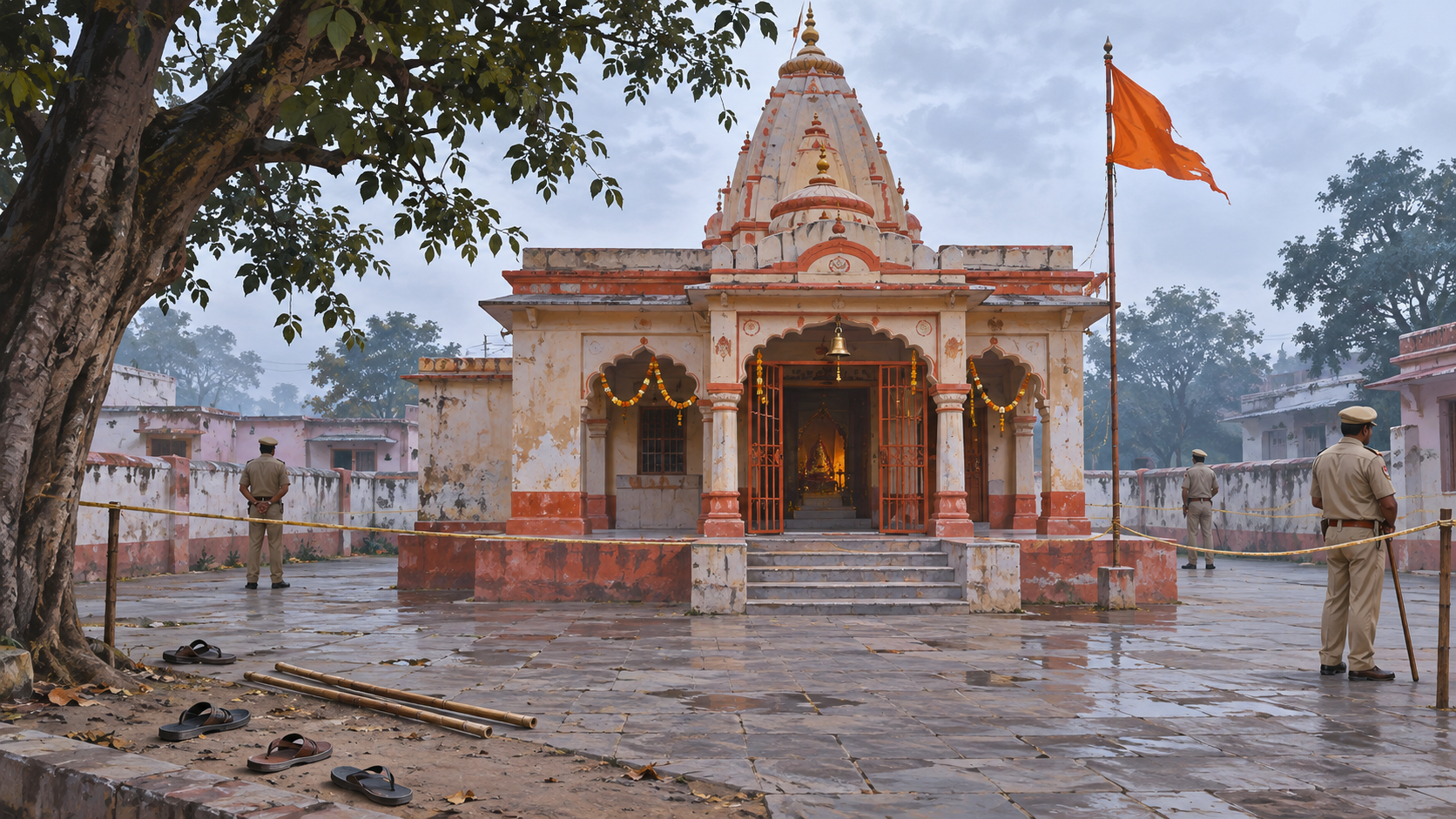
If you encountered the footage or communal claims surrounding the Raebareli temple clash, the first task is to separate legitimate concern for a sacred place from conclusions the investigation has not yet established. The case is serious: a pujari was allegedly attacked, 11 people were injured, six men were arrested, and police recovered a sharp agricultural implement and four bamboo sticks. It is also a contested case in which the two sides give sharply different accounts.
For a Hindu reader, factual discipline does not weaken the defence of a temple. It makes that defence harder to dismiss. You can insist on the dignity of the Bhuiyaraani shrine, accountability for violence and scrutiny of the police response without treating an allegation, an arrest or a circulating video as a final verdict.
Key takeaways
- The violence occurred near the Bhuiyaraani temple in Alamapur village at about 1:50 p.m. on November 6, 2026.
- The immediate dispute involved a buffalo drinking from a nearby pond, objections to grazing and possible damage around the shrine, and allegations that animal remains and household waste were being dumped nearby.
- Eleven people, including four women, were reported injured. Five injured people were identified with one side and six with the other.
- Six men were arrested on November 8 in case number 149/2026. Police say one banka and four bamboo sticks were recovered.
- The central questions remain unresolved: who initiated the violence, whether the recovered implements were used, what each accused person did and how police handled the opposing side’s complaint.
The established timeline is narrower than the online narrative
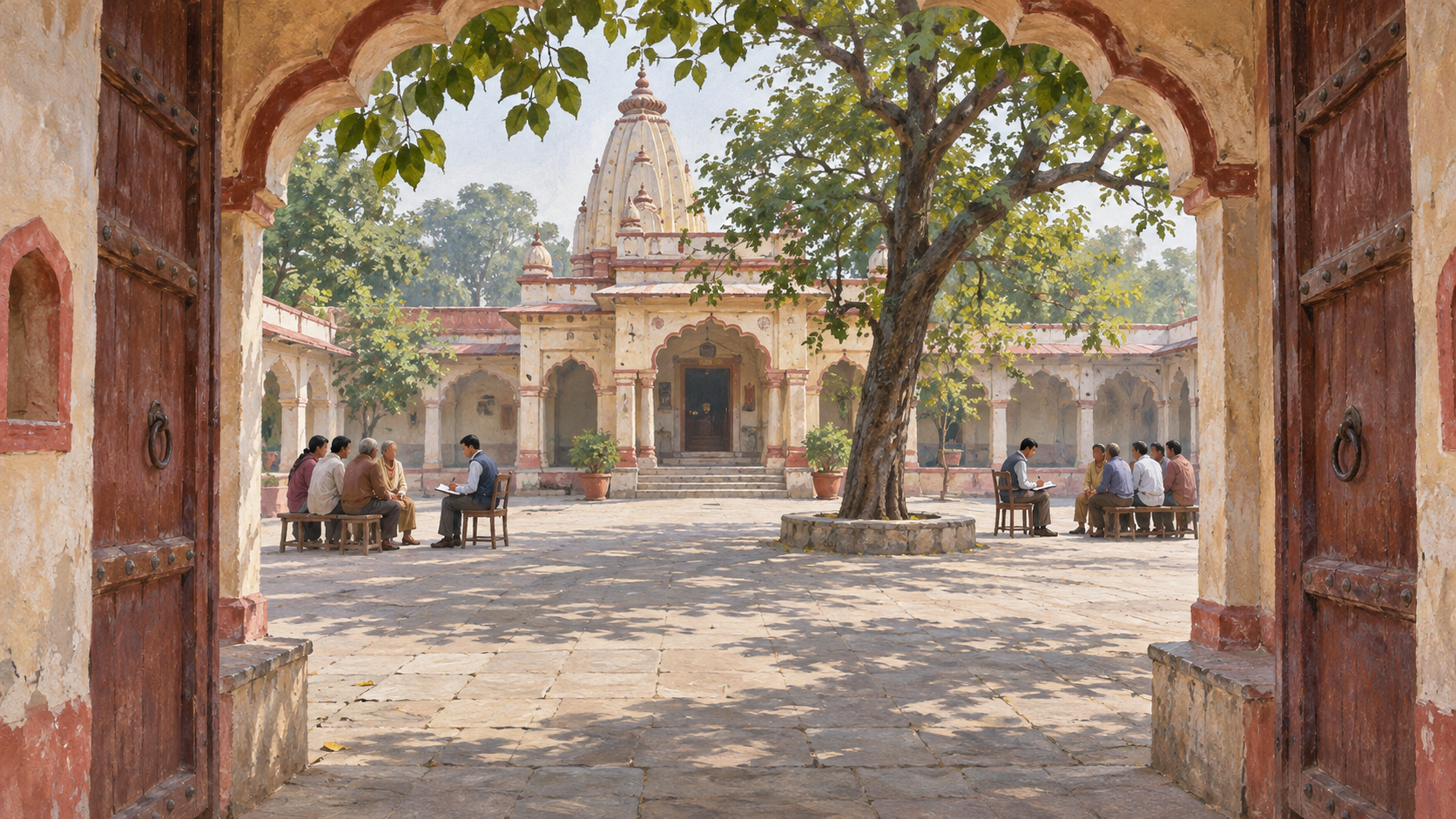
The confrontation began near the temple and pond in Alamapur, within the Nasirabad police station area. In one account, a buffalo belonging to Shahrukh, son of Anwar, went to the pond for water. Pujari Kamlesh Das objected because of the risk of damage to trees and the temple surroundings. A broader complaint concerned animals grazing near the shrine and the alleged dumping of meat, poultry and goat remains along with household refuse.
The complainant’s side alleges that the argument escalated when members of the opposing group attacked Kamlesh Das with sticks and a sharp implement. Sharda Baksh Singh and other villagers who intervened were allegedly beaten as well. The other side says people entered a house and attacked its occupants, after which its members were surrounded and beaten on the road.
The injury count confirms the severity of the violence, but it does not identify the aggressor. Five people were reported injured on the complainant’s side and six on the opposing side, with four women among the 11 injured. No fair reading can turn those numbers into an assumption that both sides were equally responsible. Nor can it use them to erase the injuries claimed by either side. Initiation, intent and individual conduct have to be established separately.
The Hindu-Muslim identities of the groups explain why the incident has attracted communal attention, but religious identity cannot substitute for evidence. At this stage, it is reasonable to say that serious violence occurred around a Hindu sacred space and that the pujari was allegedly targeted. It is premature to declare that investigators have proved a coordinated anti-Hindu motive or established the complete sequence of events.
Why the temple setting cannot be treated as incidental
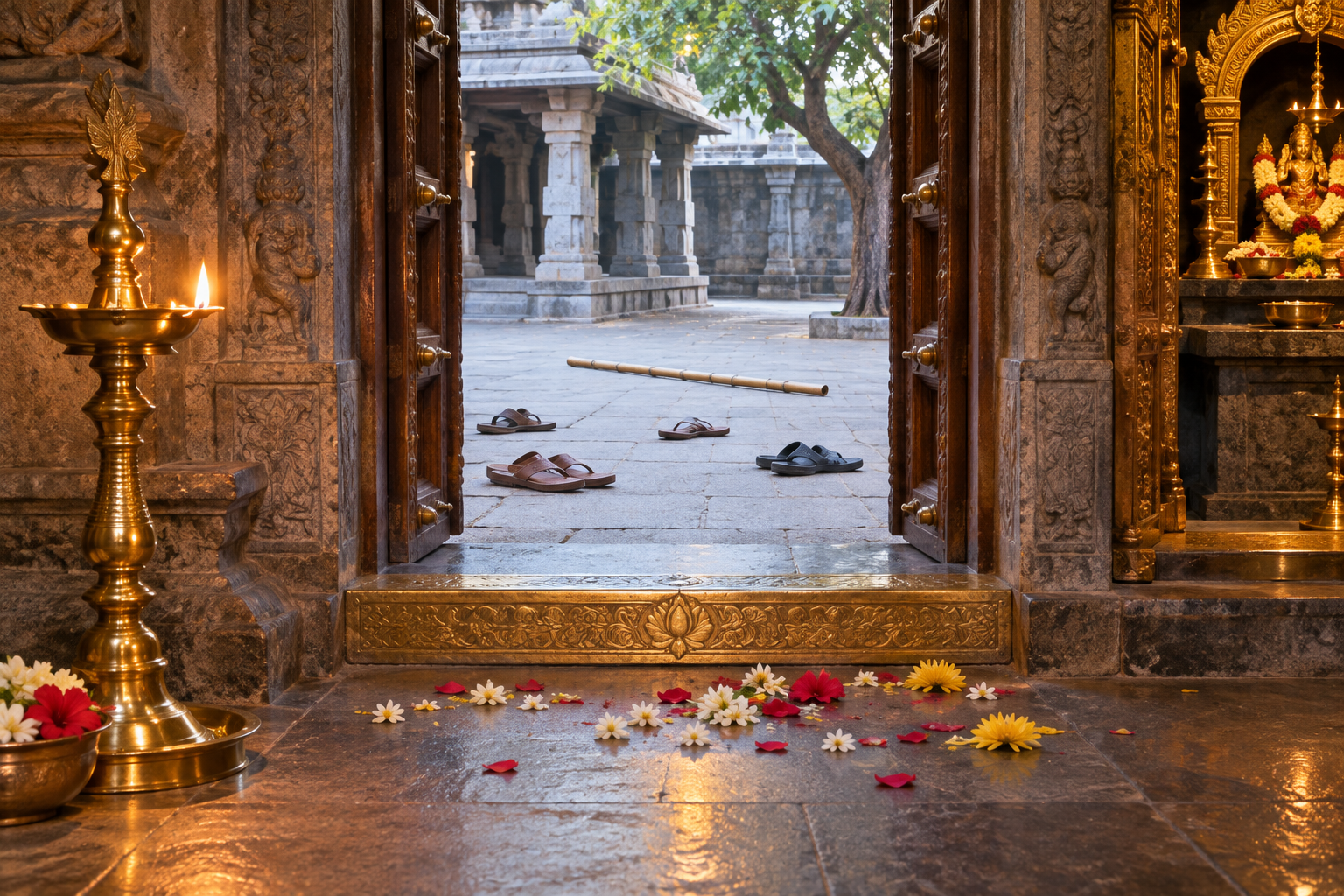
A dispute about a buffalo, a pond or waste disposal may sound like an ordinary village quarrel. Its location changes the public interest. For devotees, the ground around a temple is part of the conditions under which worship occurs. Animal remains and household refuse near a shrine, if the allegation is substantiated, raise questions of sanitation, access and respect for sacred space. A pujari must also be able to raise such concerns without facing violence.
That does not prove that every disputed act was deliberately intended as desecration. The purpose of an investigation is to distinguish carelessness, an unresolved land-use conflict, provocation and targeted hostility. Collapsing those possibilities into one conclusion may produce a compelling social-media message, but it can weaken the demand for accountability by attaching claims that the available evidence cannot yet support.
Temple protection therefore has two parts. The first is an immediate security response when a pujari or devotee is threatened. The second is unglamorous preventive work: obtaining written clarification about access to shared ponds and paths, identifying where grazing is permitted, establishing where waste may be deposited and recording repeated violations through lawful channels. Local administration and police mediation should begin while a dispute is still about boundaries or sanitation, not after groups have assembled with sticks.
If you serve on a temple committee, do not let recurring objections remain only verbal. Record the date, location and nature of each incident; preserve photographs or video captured safely and lawfully; note the names of direct witnesses; submit a written representation to the relevant local authority; and retain its acknowledgment. Do not gather a counter-crowd to enforce the boundary. That creates a new risk to devotees and can make the eventual sequence of events harder to establish.
What the arrests and Section 118(1) establish
Nasirabad police registered case number 149/2026 on the complaint of Sharda Baksh Singh. On November 8, officers arrested Sarvar alias Irfan, Rihan, Aslam alias Baba, Mahfuz alias Rohit, Rahis and Altaf near the Hanuman temple crossing. Police identified all six as residents of the Pure Moti Singh hamlet in Alamapur.
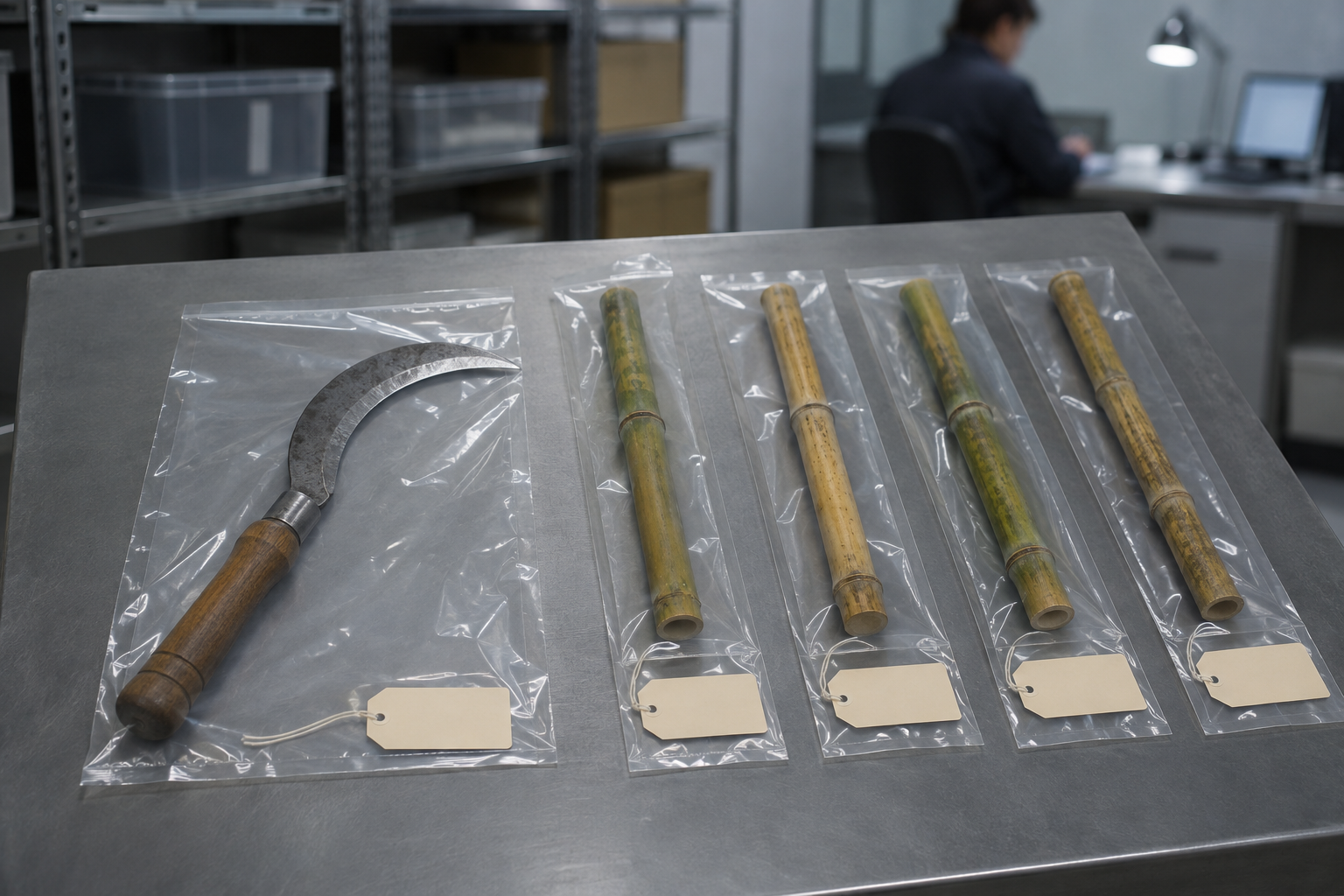
Police say the accused led officers to one banka, a sharp agricultural implement, and four bamboo sticks. Investigators also added Section 118(1) of the Bharatiya Nyaya Sanhita, which concerns voluntarily causing hurt or grievous hurt through dangerous weapons or means.
These steps establish that police are treating the allegations as more serious than an unarmed scuffle. They do not establish that every arrested person struck someone, that the seized objects were used in the clash or that any accused person is guilty. Those conclusions depend on medical findings, witness accounts, original video, forensic examination where applicable and the final police report tested through the judicial process.
The police response itself requires scrutiny. Superintendent of Police Ravi Kumar reportedly expressed displeasure with the station in-charge, while constable Pramod Mishra was made line hazir, requiring him to remain at police lines pending inquiry. That action signals concern about the initial handling; it is not by itself a finding that the officer committed misconduct.
The opposing side alleges that its complaint was not registered even though its members were injured. That claim needs a clear, written response from the police. Examining a credible counter-complaint does not create artificial moral equivalence or diminish concern for the temple. It protects the case from the charge that evidence was selected according to community identity. Impartial procedure is how investigators produce an account capable of surviving public and judicial scrutiny.
What residents, temple committees and readers should watch next
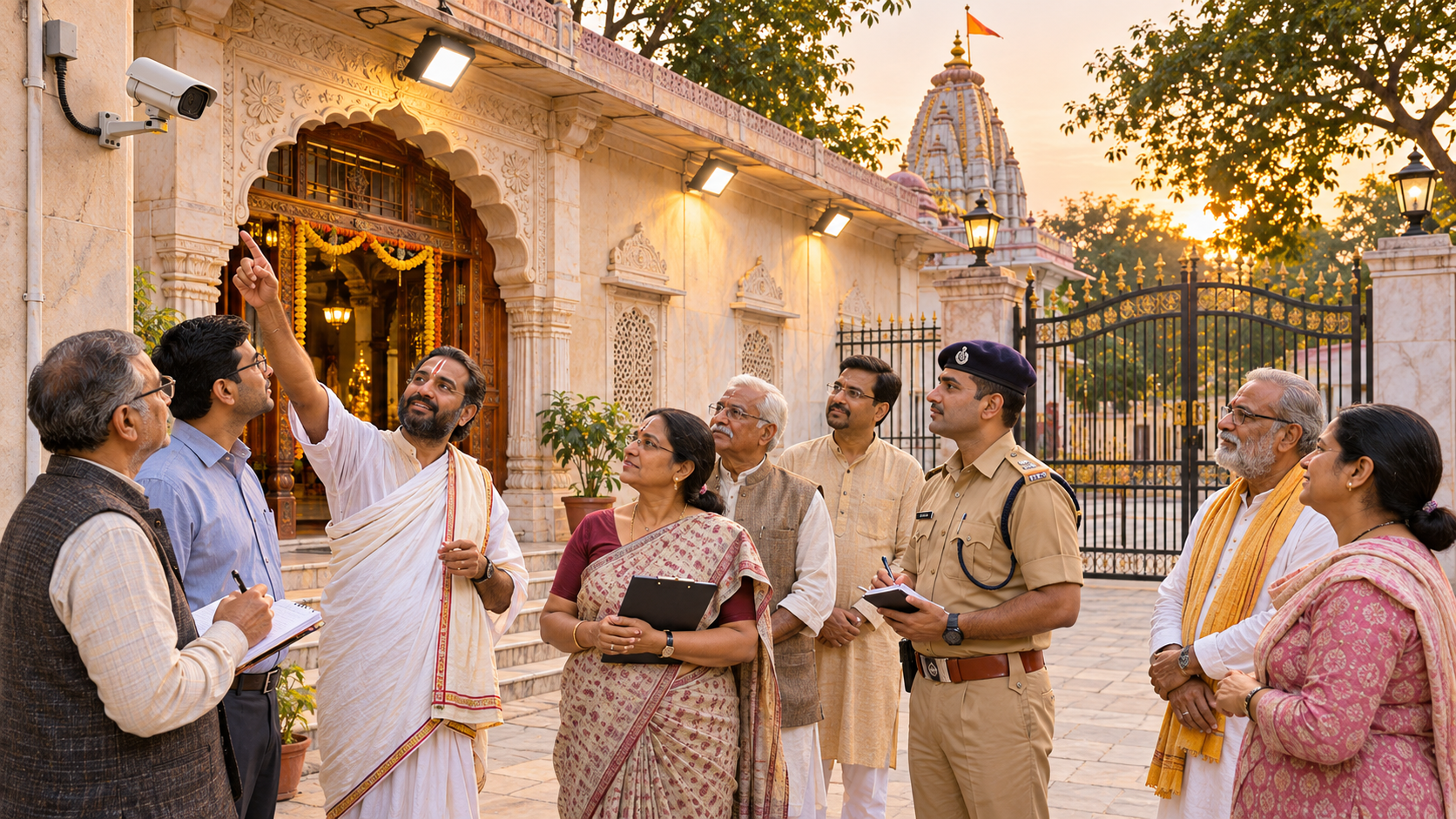
The first arrests are not the end of this case. If you want to judge its progress responsibly, watch for evidence-bearing developments rather than louder versions of the same communal argument.
- Look for a complete medical record of the 11 injured people. The nature and location of injuries may help investigators evaluate claims about weapons and the sequence of the confrontation.
- Distinguish original recordings from edited clips. A short video may show violence without showing what preceded it. The original file, timestamp, continuity and person who recorded it matter more than a viral caption.
- Watch whether investigators connect the recovered banka and sticks to particular injuries, witnesses or footage. Recovery alone is not proof of use.
- Seek clarity about the second side’s complaint. The public should be told whether it was received, whether a separate case or inquiry followed and, if not, what procedural reason was given.
- Track individual allegations. Being present, joining an assault, using a weapon and attempting to stop a fight are different forms of conduct. Community labels cannot replace proof of what each person did.
- Expect a preventive plan for the temple vicinity. Local authorities should address grazing, waste disposal, pond access and temple boundaries so that the same unresolved trigger does not produce another confrontation.
If you possess direct evidence, preserve the original rather than adding text, filters or edits to the only copy. If you witnessed the incident, separate what you personally saw from what someone later told you. Anyone directly involved should obtain advice from a qualified lawyer before making procedural decisions, because statements and evidence handling can affect a criminal case.
The most responsible defence of Bhuiyaraani temple now is sustained attention. Do not let arrests become a substitute for a completed investigation, and do not let uncertainty become an excuse for forgetting the alleged attack. Watch the handling of both complaints, the medical and weapon evidence, and the final police report. The sanctity of a Hindu temple and equal application of law are not competing demands; each is more secure when the other is upheld.
References

Leave a Reply
You must be logged in to post a comment.