
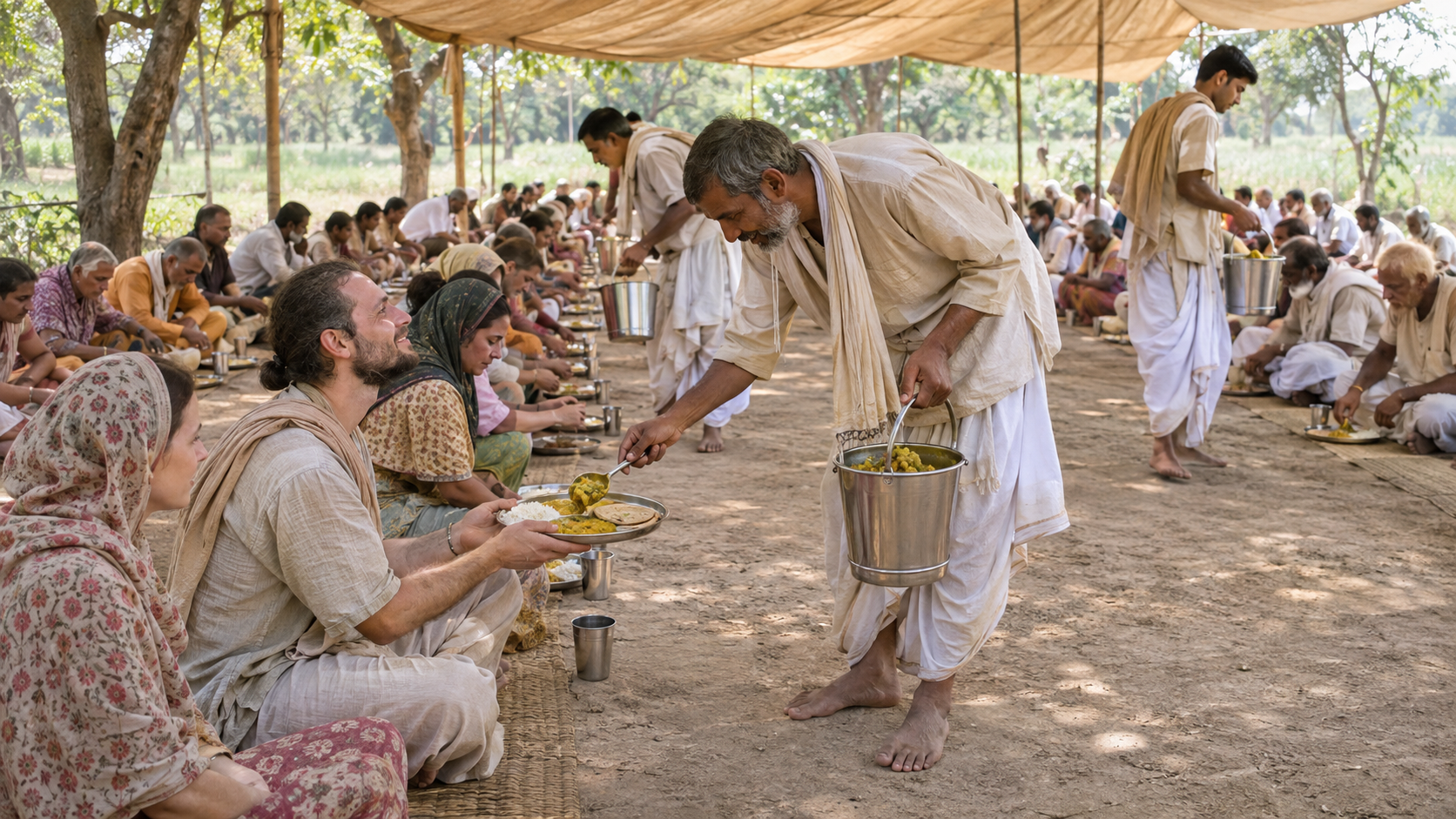
When you are walking a parikrama, hunger can make the next meal feel merely practical. You need nourishment, you see the serving area, and it is easy to treat the kitchen as a catering operation that happens somewhere behind the pilgrimage.
The better approach is to recognize the kitchen as part of the parikrama itself. In Vaishnava practice, prasadam is food prepared and offered to Krishna, then received as grace. That changes how you take a portion, how you respond to the people serving it, and how you volunteer without making their work harder.
What is known about the 2026 prasadam kitchen
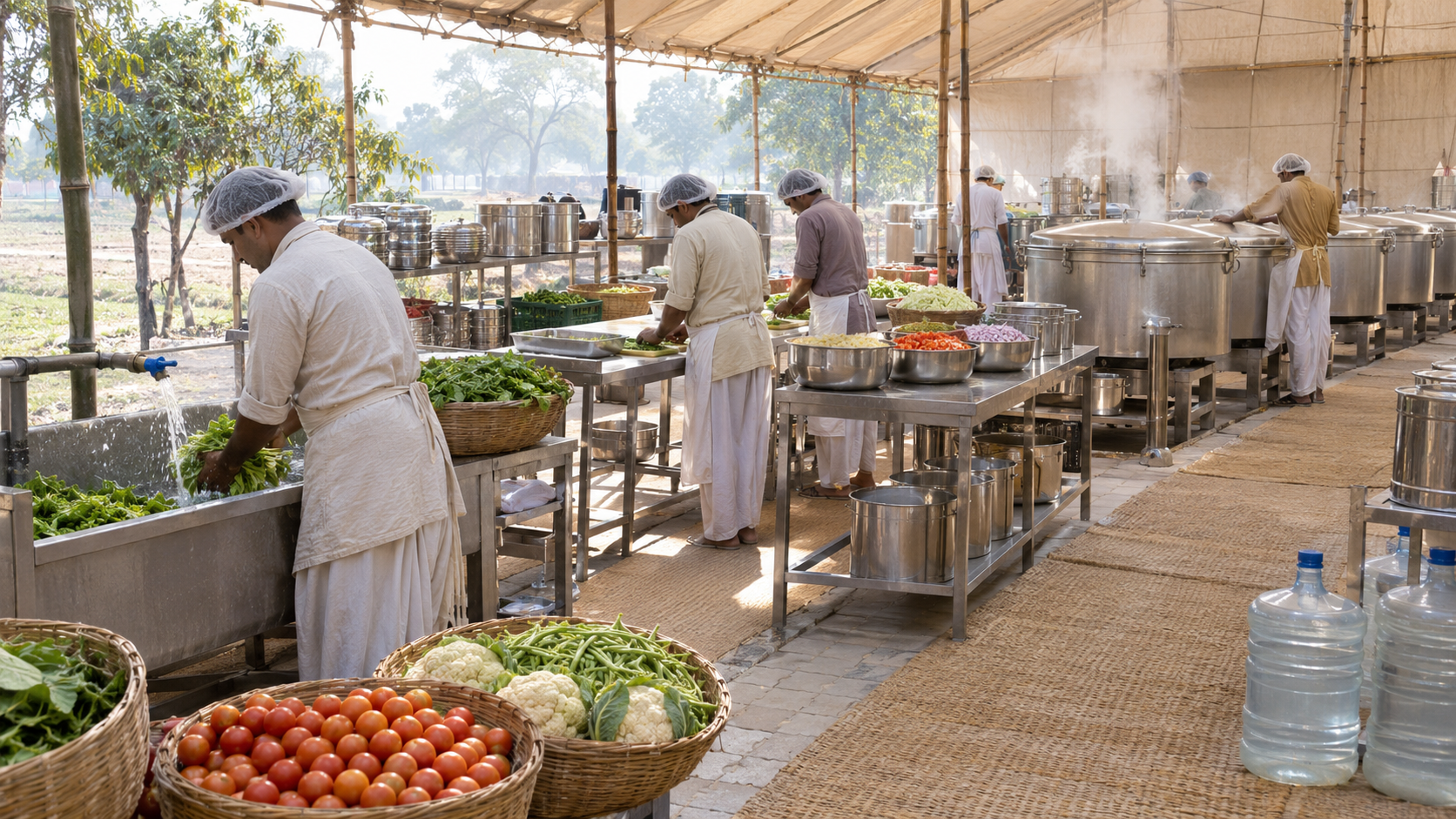
For the 2026 Vraja Mandala Parikrama, Mahadyuti Prabhu is responsible for cooking the prasadam with a large team of accomplished cooks from Mayapur. That gives the kitchen clear leadership and an experienced cooking team.
For you as a pilgrim, the practical implication is simple: treat the kitchen as coordinated seva with an established chain of responsibility. Do not approach it as an informal potluck, bypass the serving arrangement, or assume that an individual cook can accommodate a request on the spot. Meal timings, dietary accommodations, volunteer assignments, and serving procedures still need to come from the current parikrama organizers.
The team’s connection with Mayapur should not be used to guess the menu or the style of preparation. It tells you where the cooks come from, not what every meal will contain. If an ingredient matters to you for religious, medical, or dietary reasons, ask a person authorized to give a reliable answer.
Receive prasadam in a way that supports the seva
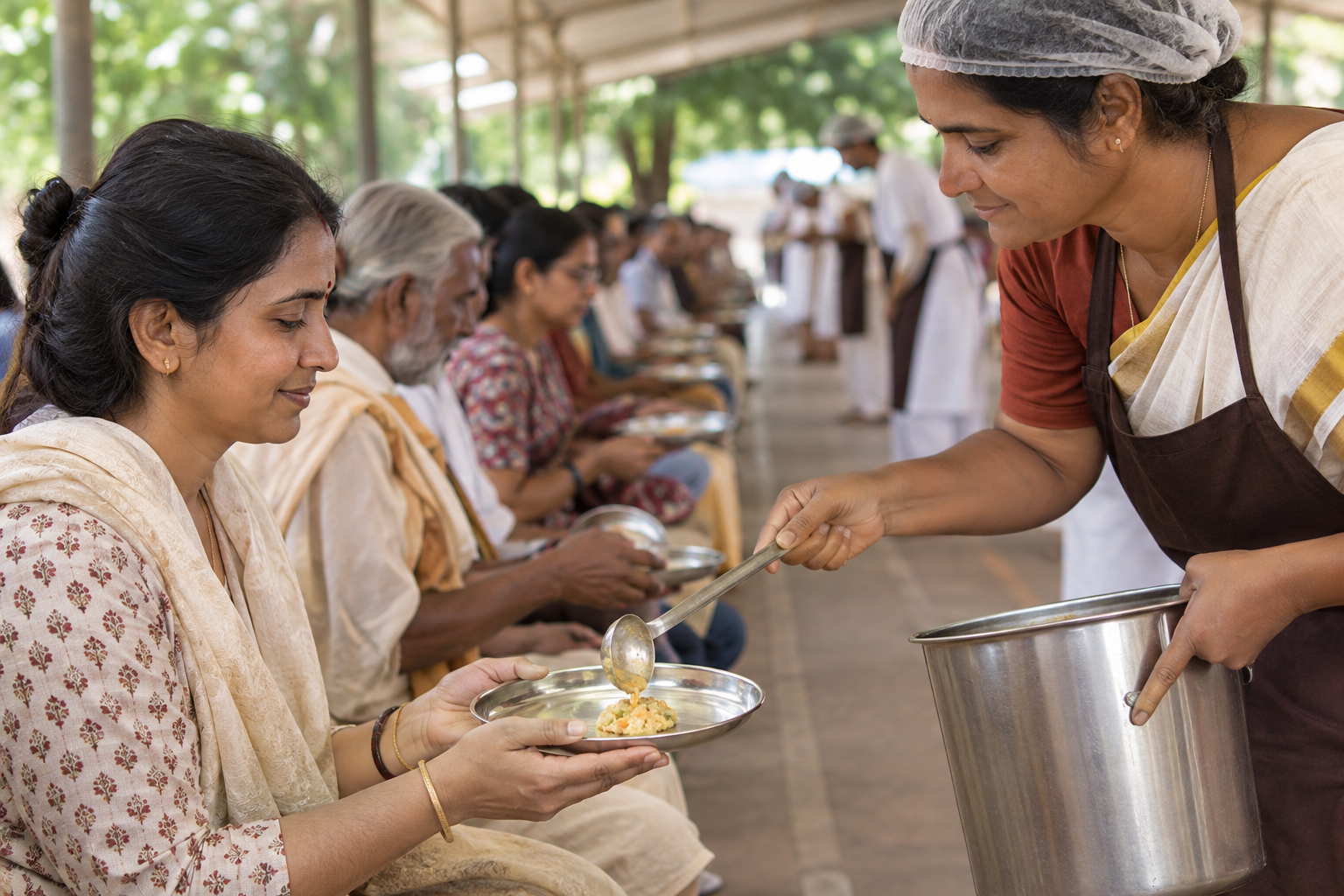
Reverence is expressed through ordinary conduct. A quiet prayer is meaningful, but so are restraint, cleanliness, patience, and attention to the serving system. These actions reduce waste and let the kitchen team concentrate on feeding the assembled pilgrims.
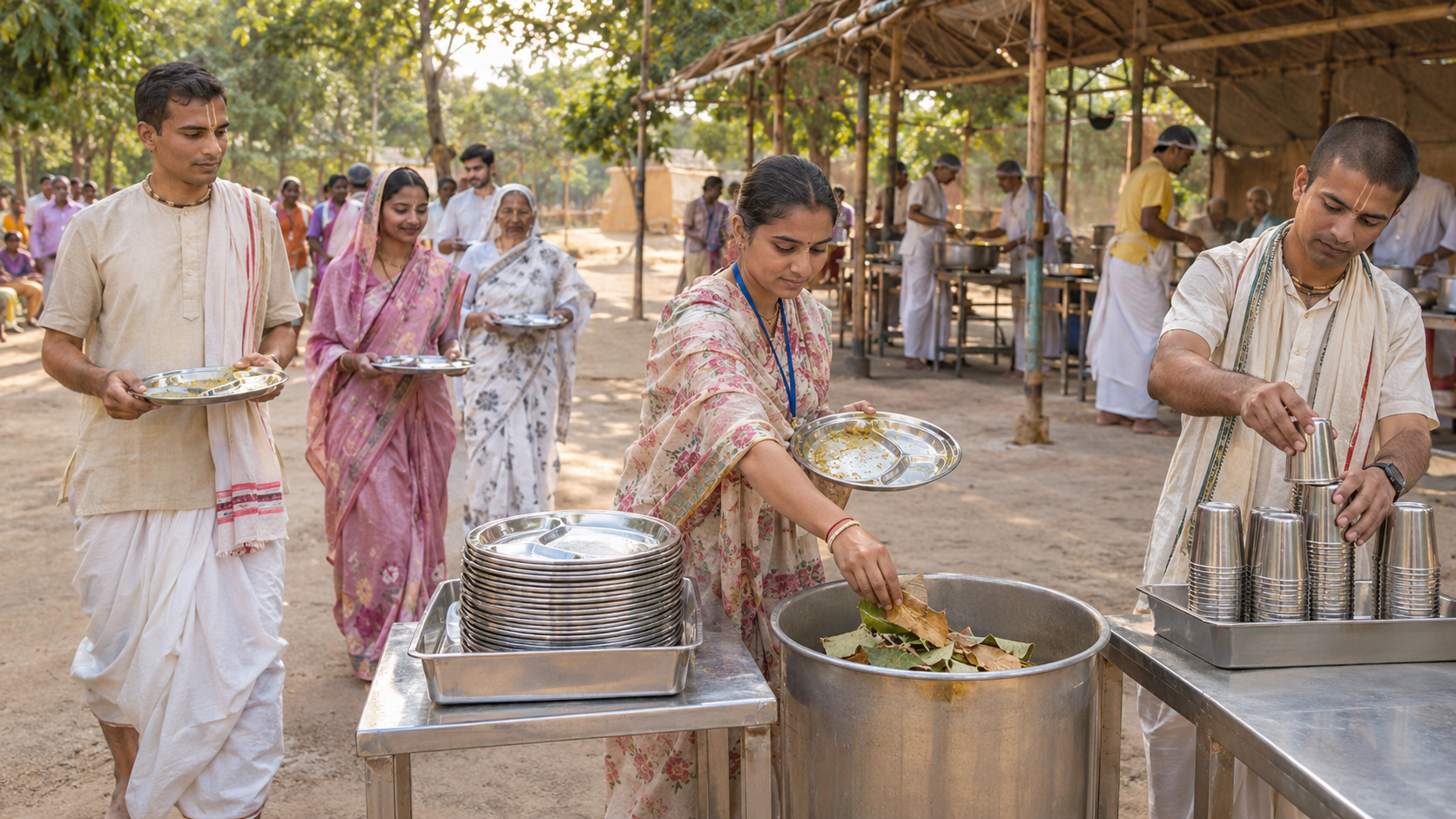
- Wait for the serving instruction. Use the queue, seating arrangement, vessels, and entry points designated by the organizers. Do not create a second line or reach across the serving area.
- Take an amount you are confident you can finish. If additional servings are permitted, you can ask for more afterward. A modest first portion is more respectful than accepting food that will be discarded.
- Keep service paths open. Collect what you need, move to the designated place, and avoid holding a conversation where servers or carriers must pass.
- Follow the local handwashing and vessel procedure. Do not improvise a place to wash, discard food, or leave a used plate when organizers have established a system.
- Offer thanks without stopping the work. A brief expression of gratitude is enough during active service. Longer conversations can wait until the team is free.
If you have a serious allergy or a medically necessary restriction, do not assume that a familiar-looking preparation is safe. Ask what ingredient and cross-contact information the organizers can reliably confirm. If they cannot confirm it, choose the medically safe course available to you. Receiving prasadam with respect does not require ignoring a health restriction.
Waste deserves the same attention. Prasadam should not become a test of appetite or politeness. You do not honour a serving by accepting more than you can eat; you honour it by receiving an appropriate amount and finishing it carefully.
Kitchen seva begins with an assignment, not an impulse
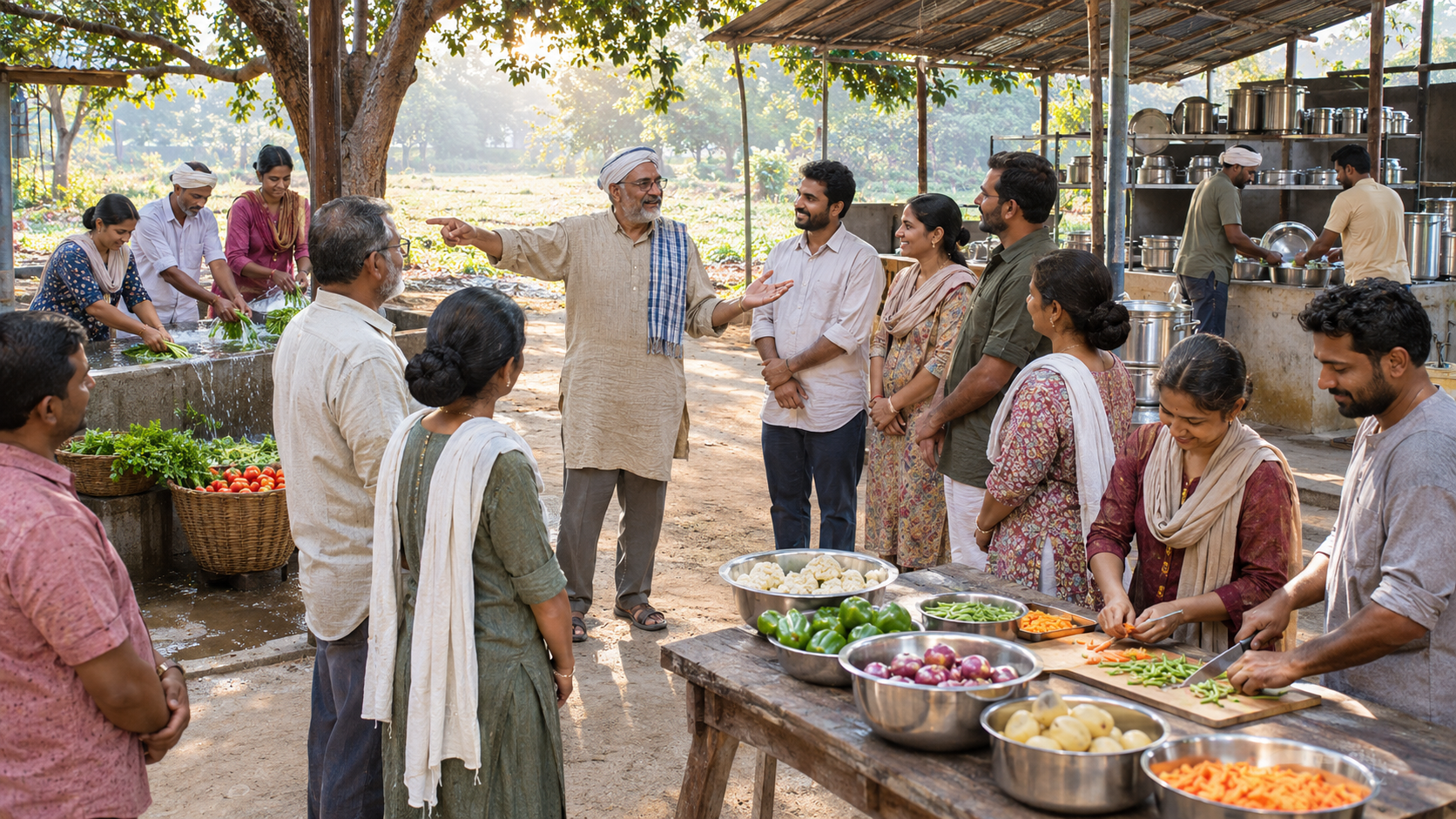
A busy kitchen can be disrupted by an eager person who enters without direction. The most useful volunteer is not necessarily the person with the strongest opinion about cooking. It is the person who can receive an assignment, follow the kitchen’s method, and complete the task without creating another decision for the team.
- Find the authorized coordinator. Ask who is assigning kitchen or serving seva rather than choosing a station for yourself.
- State your availability honestly. Mention how long you can remain, what work you can safely do, and any physical limitation that affects lifting, standing, heat, or repetitive work.
- Accept the task that is needed. Preparation, carrying supplies, serving, washing, cleaning, and waste handling can all support a meal. Do not insist on cooking if another task has been assigned.
- Ask before using tools or touching food. Learn the local rules for handwashing, utensils, food-contact surfaces, heat, water, and cleanup.
- Complete the handoff. Finish the assigned work, clean the station as directed, and tell the coordinator before leaving. An unexplained departure can leave a gap at precisely the wrong moment.
Do not sample preparations, alter seasoning, move vessels, invite another volunteer into the work area, or take photographs without permission. Even a well-meant interruption can break concentration. If you notice a possible safety problem, tell the person responsible instead of reorganizing the station yourself.
Kitchen areas also contain ordinary physical hazards: hot vessels, flames or heated equipment, sharp tools, heavy loads, and wet floors. Children and unassigned visitors should remain outside the working area unless the organizers explicitly permit entry. Devotional purpose does not remove the need for kitchen discipline.
Support the kitchen without transferring work to it
Unrequested help can become an extra burden. Ingredients require menu planning and storage. Equipment must suit the kitchen’s method. Money needs an authorized recipient and accountable channel. Before bringing supplies or making a contribution, ask what is currently needed, in what form, and through whom it should be given.
This distinction matters because generosity and usefulness are not automatically the same thing. A quantity of food that does not fit the planned preparations may require someone to sort, move, store, or protect it. A tool that is unfamiliar or unsuitable may never enter service. The safest contribution is one requested by the people responsible for the kitchen.
You can also support the seva without entering the kitchen. Arrive when instructed. Keep the serving area orderly. Take a sensible portion. Help a companion follow the same procedure. Return or clean your vessel exactly as directed. These small actions preserve the team’s time and allow the cooks and servers to focus on the collective meal.
If you want to appreciate the cooks personally, choose the right moment. Active preparation and service require attention. Gratitude offered after the rush, or conveyed through the coordinator, is less likely to interrupt the work you are trying to honour.
Key takeaways for pilgrims and volunteers
- The 2026 kitchen is led by Mahadyuti Prabhu and supported by a large team of cooks from Mayapur.
- Prasadam is part of the spiritual life of the parikrama, not merely fuel between stages of the journey.
- Follow the current organizers for meal times, dietary information, volunteer access, and serving procedures.
- Take a modest first portion, avoid waste, and keep service routes clear.
- Volunteer only through an authorized assignment, follow the kitchen’s safety and hygiene rules, and complete the cleanup or handoff.
- Offer ingredients, equipment, or money only after confirming what is needed and which channel is authorized.
Before you set out, ask the organizers four practical questions: when prasadam will be served, what vessel or plate procedure to follow, whom to approach about a necessary dietary restriction, and how kitchen seva is assigned. Once you arrive, let those answers guide you. The simplest way to honour the prasadam kitchen is to receive its grace without adding avoidable work to the service behind it.
References

Leave a Reply
You must be logged in to post a comment.