

If you are deciding how to describe the disruption at Seattle’s Diwali celebration, don’t get trapped in a false choice between racism and religious hatred. One placard used an anti-South Asian slur. Another portrayed Hindus as a threat to Christians. The incident carried racial, religious and xenophobic messages at the same time.
At Diwali: Lights of Bharat at the Seattle Center Armory, two men identified as Jake Lang and Thomas Allen displayed the placards while children were performing. Attendees challenged them, and they were escorted from the venue. That sequence leaves Hindu families and organizers with a practical question: how do you resist intimidation without sacrificing safety, accuracy or the celebration itself?
Key takeaways
- Describe the incident fully: it combined explicit anti-Hindu hostility, anti-South Asian racism and a demand for deportation.
- During a disruption, move children and vulnerable attendees away, notify trained security and avoid turning an unknown agitator into a crowd confrontation.
- Record signs and conduct from a safe distance, preserve original files and keep first-hand witness accounts separate from online claims.
- Before the next festival, give one organizer clear responsibility for the entire incident process, from the first alert through family follow-up.
- After safety is restored, resume the program. The purpose of security is to protect Diwali’s public presence, not to make the community disappear.
Name the Seattle incident precisely
The two placards performed different but connected functions. "Deport All Dot Heads" used a racial slur historically directed at people of Bharatiya and South Asian origin, particularly Hindus. It did not object to a policy or an individual action. It marked an ethnic population as unfit to belong.
The second message, "Stop Hindu Replacement of Christians," named Hindus directly and placed them inside the far-right "replacement" conspiracy narrative. That narrative treats the ordinary presence and civic participation of minority communities as the dispossession of a supposedly rightful majority.
This was therefore not criticism of Hindu philosophy, a government in Bharat, immigration policy or a particular organization. Criticism addresses an idea, decision or practice and leaves people free to participate as equals. These placards attacked people because of who they were and presented their presence as contamination or replacement.
A precise description for a public statement is: anti-Hindu religious hostility expressed through anti-South Asian racism and xenophobia. That wording prevents one dimension from being used to erase another. Hindu identity is not identical to Bharatiya ethnicity, and South Asian identity is not identical to Hindu identity, but the Seattle messages deliberately targeted both together.
Precision also means distinguishing prejudice from a criminal classification. The displayed words are enough to identify anti-Hindu and racial hostility. Whether particular conduct meets the legal definition of a hate crime depends on local law, accompanying behavior and evidence. Describe what happened and preserve the evidence; don’t announce a criminal conclusion that competent authorities have not made.
The response should not depend on proving that Hindu Americans are especially educated, prosperous or useful. Those contributions may be worth celebrating, but equal civic belonging is not a reward for economic performance. Nor is it conditional on voting the way an agitator prefers. Lang later blamed Hindus for supporting Democratic candidates and alleged that Bharatiya immigrants had become too influential. Political disagreement does not make a religious community foreign.
Protect people first, then protect the evidence

If you are present during a disruption
Seattle attendees refused to accept the placards silently, and the men were removed. That moral refusal matters. It should not, however, become an expectation that parents, performers or volunteers must physically approach unknown agitators. Someone seeking attention may also be seeking a confrontation that can be filmed, distorted and circulated.
- Create distance around children. Move performers, elders and anyone in visible distress away from the confrontation. Keep exits and security routes clear rather than forming a dense circle around the agitator.
- Notify the designated event lead and venue security. Give a location, description and concise account of the conduct. If there is a weapon, assault or immediate threat of violence, use emergency services instead of attempting to negotiate.
- Document from a safe position. Capture a wide view showing the location and signs, followed by closer evidence only if it is safe. Note the time, exact words, actions and sequence of warnings or removal. Do not chase someone who is leaving.
- Preserve originals. Keep unedited photographs and videos with their original metadata. Ask witnesses to write down what they personally saw before discussing the event as a group. Shared discussion can unintentionally blur independent recollections.
- Protect minors when sharing. Evidence useful to organizers or authorities does not have to be posted publicly. Avoid publishing identifiable images of children without parental permission, especially when the images connect them to a targeted religious event.
- Restore the program. Once security confirms that the immediate situation is under control, make a short factual announcement, identify a contact for affected families and return the stage to the scheduled performers.
Before the next Diwali event
The Coalition of Hindus of North America warned that the activists had threatened to disrupt additional Diwali celebrations. Treat that as a reason for proportionate preparation, not as proof that a particular event will be targeted.
- Name an incident lead and backup. Everyone staffing registration, the stage and children’s areas should know how to reach them immediately.
- Brief venue management during the final walk-through. Ask who has authority to remove a disruptive person, which venue rules apply to placards and harassment, who contacts emergency services and where families should move if an area must be cleared.
- Use consistent rules. Public venues may have legal and contractual limits on what organizers can exclude. Have venue management or qualified local counsel confirm the rules in advance; don’t force volunteers to improvise legal authority at the door.
- Create a child-safety plan. Designate a protected waiting area, a reunification point and adults responsible for accounting for young performers if the stage program is interrupted.
- Prepare an incident log. Include fields for time, location, conduct, exact language, witnesses, staff response, injuries or property damage, evidence files and follow-up ownership.
- Draft a holding message. It should say that a disruption occurred, that attendees are safe if confirmed, that organizers are documenting the event and that verified updates will come through one channel.
- Set a review deadline. Within 24 hours, gather the incident lead, venue representative and relevant community leaders to preserve evidence, check on affected families and decide what can responsibly be made public.
A plan this concrete does more than improve security. It allows teachers, parents and performers to continue their roles instead of making every attendee responsible for crisis management.
Turn justified outrage into an institutional response

Build a record that cannot be easily dismissed
A useful public account is narrower than an angry social-media thread. It establishes the event, location, displayed language, observable conduct, official response and confirmed outcome. It also says what remains unknown. Do not speculate about unseen accomplices, organizational membership, criminal charges or future plans.
Quote a slur only when its exact wording is necessary to establish the target and severity. Keep the complete image in the evidence archive, but don’t turn the slur into the largest visual in every social post. Repetition can make the agitator’s message travel further than the community’s response.
Organizers should also separate three things that often become muddled:
- Verified fact: what a witness, recording or venue record directly establishes.
- Reasoned assessment: why explicit references to Hindus, deportation and a racial slur constitute anti-Hindu, racist and xenophobic targeting.
- Requested action: what the venue, elected officials, civil-rights bodies or law enforcement are being asked to do next.
This separation strengthens the case. It lets people agree on observable facts even if they debate motive or legal terminology, and it makes institutional inaction easier to identify.
Ask allies for measurable follow-through
Representative Pramila Jayapal called the display "vile and racist" and said Hindus should be able to celebrate Diwali without fear or intimidation. Clear condemnation from a public official helps establish that Hindu families should not have to minimize what occurred. Condemnation, however, is the beginning of an institutional response rather than its completion.
When you contact a venue, elected representative, school, employer or civil-rights organization, ask for answers that can be checked:
- Will the institution publicly identify both the anti-Hindu and anti-South Asian dimensions instead of describing the episode only as an unspecified disturbance?
- Who is responsible for reviewing how the men entered, how staff were alerted and how removal was handled?
- What security contact and escalation process will organizers receive before the next Hindu event?
- Where can affected attendees submit first-hand accounts or evidence, and when should they expect acknowledgment?
- How will the institution protect future celebrations without burdening Hindu families with excessive restrictions or hiding the event from public view?
Suggested request: Please identify the targeting as anti-Hindu and anti-South Asian, provide the name of the official responsible for follow-up, explain what will change before the next event and give affected families a direct reporting contact.
Allies should use the same specificity. A generic appeal for unity can sound pleasant while leaving Hindus unnamed and the conduct unexamined. Solidarity means naming the community that was targeted, supporting its right to celebrate and staying involved when organizers ask institutions for an answer.
Keep Diwali visible, joyful and prepared
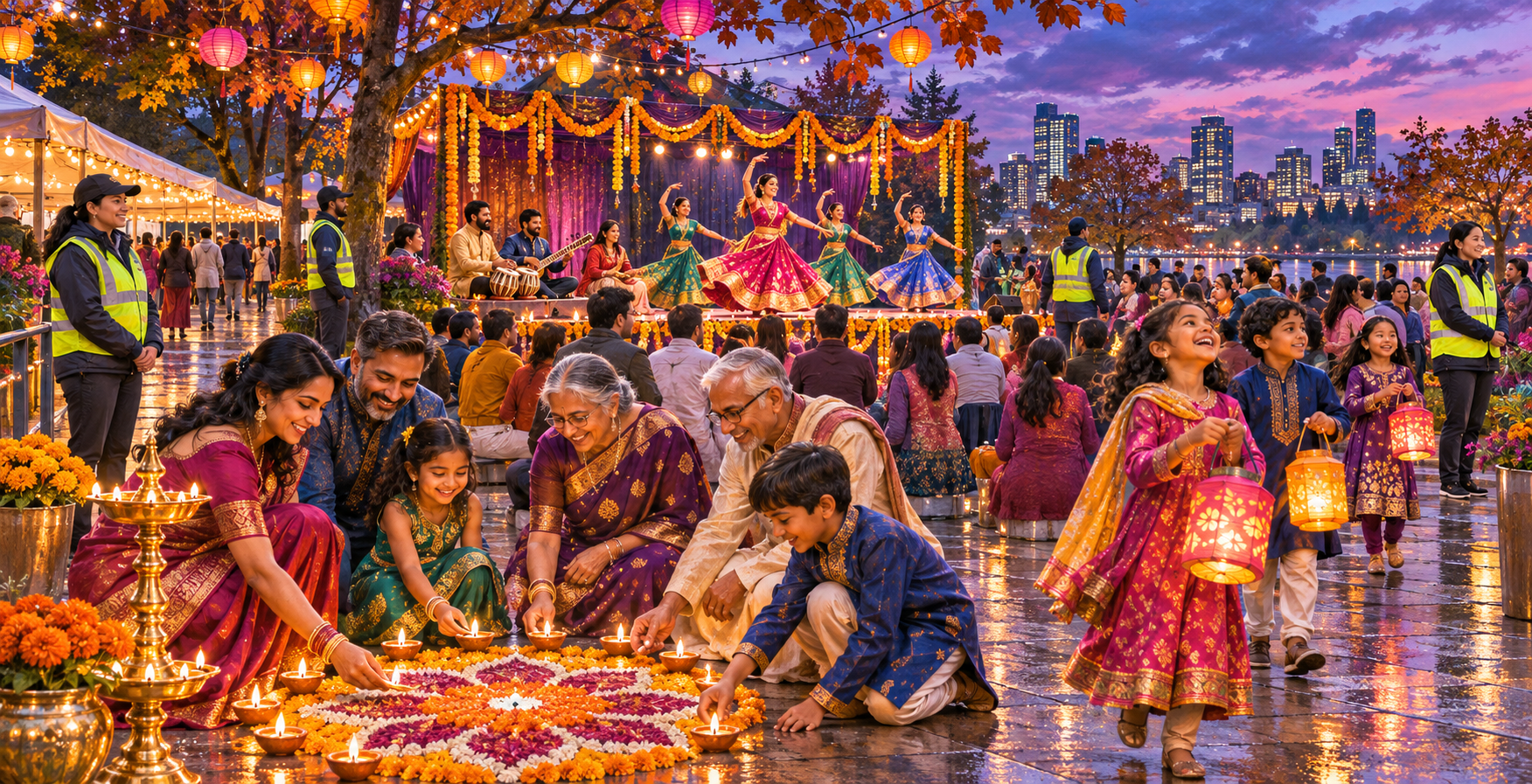
Diwali gives public form to the victory of light over darkness, truth over falsehood and Dharma over Adharma. A Dharmic response to intimidation is neither passive silence nor reckless escalation. It is disciplined steadiness: protect vulnerable people, speak accurately, insist on accountable rules and continue the celebration.
Before your next community event, ask one question at the planning meeting: who owns incident response from the first sighting through the follow-up with families? If nobody can name that person, help establish the role, the backup and the venue contact. Then attend the festival, support the performers and bring the next generation. Prepared public presence is how a community refuses to let intimidation define the boundaries of its life.
References
- Hindu Post — Anti-Hindu Hate Erupts at Seattle Diwali Festival: Rise of Hinduphobia in the United States Raises Alarm Across Hindu Communities
- Representative Pramila Jayapal — Statement condemning the racist display at Seattle’s Diwali celebration
- Coalition of Hindus of North America — Account of the Seattle Diwali disruption and warning concerning additional celebrations

Leave a Reply
You must be logged in to post a comment.