
If the phrase 40 illegal churches brought you here, the first thing to know is that no official finding has yet established that description. What exists is a serious, collective complaint. Dismissing it would disregard the villagers who raised it; repeating every allegation as a proven fact would outrun the available evidence.
You do not have to choose between protecting Baiga and other tribal traditions and demanding procedural fairness. Both require the same next step: a time-bound, site-by-site inquiry that distinguishes land questions, religious activity, alleged inducements and alleged misconduct by public employees.
What the Kawardha memorandum establishes, and what it does not
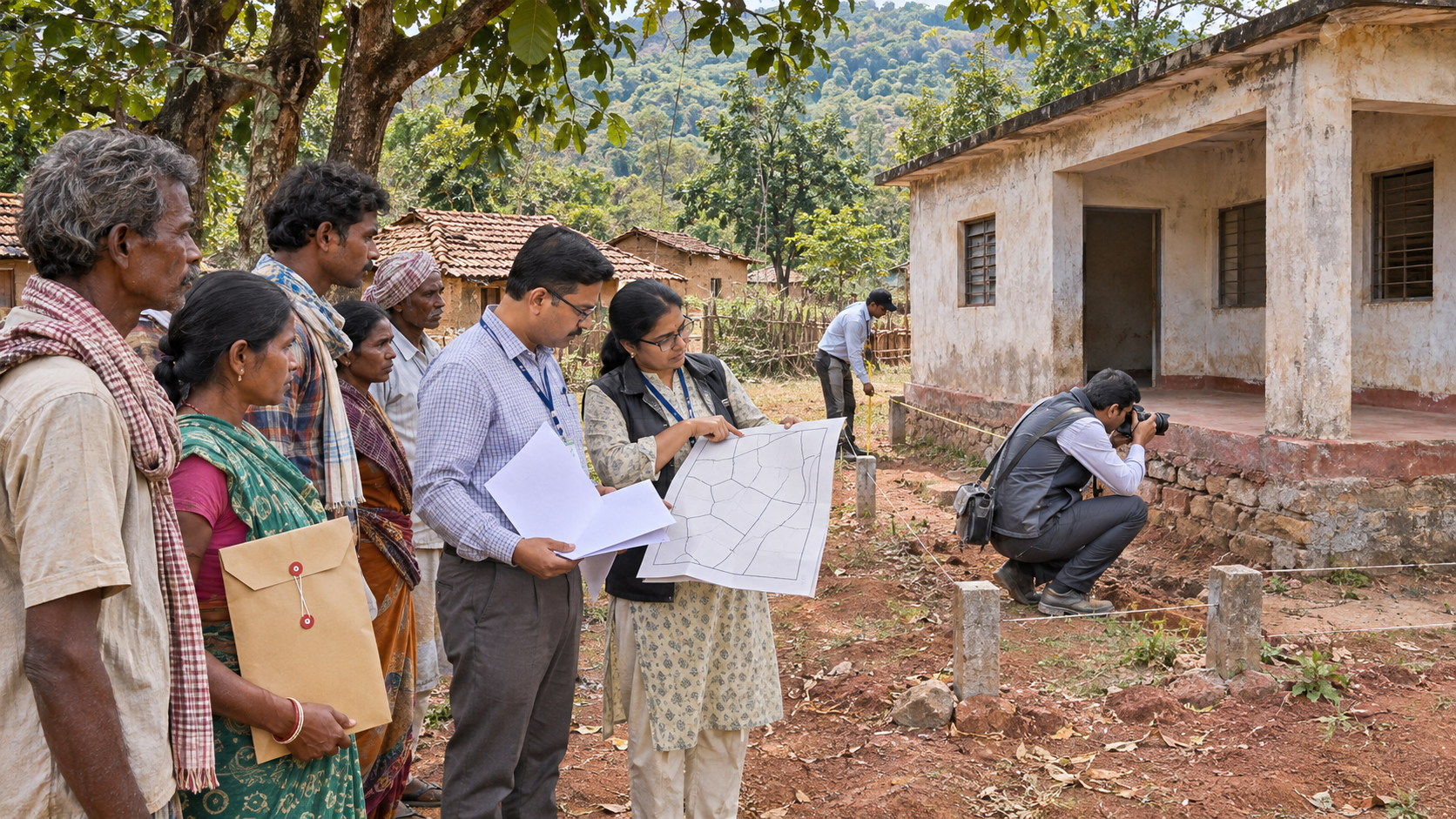
On 3 November 2026, residents of 18 villages in the Kui-Kukdur forest belt of Pandaria development block submitted a memorandum to Collector Tulika Prajapati for the chief minister. They alleged that churches or prayer meetings were operating at more than 40 locations, that government land was being occupied for church construction, and that economically vulnerable and poorly educated families were being drawn away from inherited traditions through persuasion or inducements.
The villagers also expressed concern about the traditional identity of Baiga and other tribal communities. They reportedly supplied names of government and non-government personnel, including teachers, anganwadi workers, health workers and kotwars, whose involvement they wanted investigated. They warned that they could begin an agitation if the administration did not act.
Those details establish the scale and seriousness of the complaint. They do not establish that 40 unlawful buildings exist, that every prayer gathering is unauthorized, that government land has been occupied at every disputed location, or that every named person committed misconduct. No site-wise schedule, land record, permission finding or completed administrative inquiry has yet been made available.
The distinction matters because church can mean a congregation, a purpose-built structure, a converted room or a gathering in a private home. Illegal can refer to land title, construction approval, use of a property or conduct alleged to have occurred there. Unless officials identify which meaning applies to each location, a large headline number cannot produce a defensible decision.
One complaint requires four separate lines of inquiry

The administration should turn the claim of more than 40 locations into a register with one entry for every place. Combining all the allegations into a single question would make the inquiry easier to politicize and harder to complete. Four different issues need four different evidence trails.
- The identity and use of each site. Investigators should record the village, exact location, type of premises, person or body controlling it, activities observed there and whether it is a permanent structure or an occasional gathering place. This prevents one recurring congregation from being counted as several buildings, or several distinct sites from being treated as one.
- The status of the land and construction. A government-land allegation should be checked against the relevant plot record, boundary verification and physical occupation. Officials should state who holds title or lawful possession, what has been built, and whether the disputed construction extends onto public land. Religious affiliation neither proves nor disproves encroachment.
- The alleged inducement or pressure. Investigators need statements from the people said to have been approached: what was offered or threatened, who allegedly did it, when it happened, who witnessed it and whether the person is willing to affirm the account independently. Poverty or limited schooling can increase vulnerability, but neither condition makes a person incapable of choosing a faith. The question is whether the choice was voluntary and informed.
- The conduct of named workers and officials. A name on a list is a lead, not a finding. For each teacher, anganwadi worker, health worker or kotwar, the inquiry should identify the specific alleged act, whether it occurred during official duty, whether public resources or institutional authority were used, and which department can examine it. A person’s private religious identity is not, by itself, evidence of official misconduct.
Each entry should end in a clear status: substantiated, not substantiated, or pending specified evidence. That simple discipline prevents a finding about one plot or one individual from being projected onto every congregation, every Christian resident or every complainant in the region.
How villagers can build a case the administration cannot blur
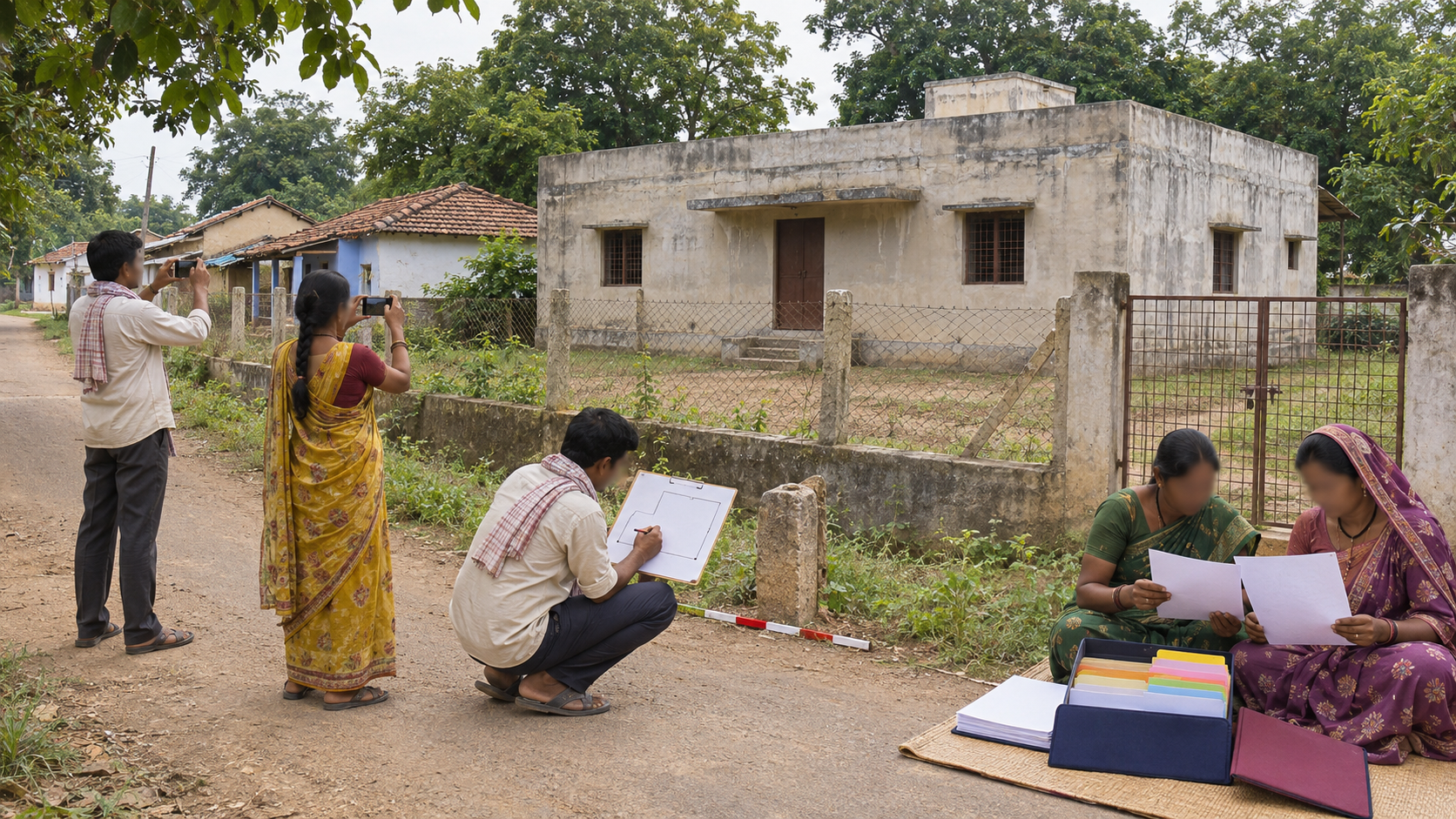
If you are a complainant or are helping the affected villages, the memorandum should be treated as the beginning of the record, not the end of it. A precise annexure makes delay and vague replies harder.
- Create one sheet for each disputed location. Record the village, landmark, map location if available, type of premises, current use and the date on which the activity or construction was personally observed. Separate firsthand observations from information received from someone else.
- Describe the land allegation precisely. Include a plot or khasra number when it is available from an accessible record. If it is not available, ask the revenue administration for an official field verification instead of guessing ownership from local reputation.
- Preserve individual accounts in the speaker’s own words. A person alleging an offer, benefit, deception, threat or pressure should identify the conduct as specifically as possible. Note the approximate date, place, alleged actor and witnesses. Do not convert many different experiences into a copied, identical statement.
- Specify the public-duty connection. For a named employee, record the designation, department, alleged act, location, timing and any official resource said to have been used. This is more probative than merely listing a person’s religious associations.
- Index every annexure. Submit copies, retain the originals, obtain a dated acknowledgement or receipt number, and request a written response identifying the department handling each category of complaint.
- Keep the evidence gathering peaceful. Do not trespass, enter private homes, threaten worshippers, photograph children, damage property, publish personal details or impose a social boycott. Such conduct can harm innocent people, contaminate testimony and turn a legitimate demand for scrutiny into a separate public-order problem.
The same care applies to language. Use alleged until a finding exists. Identify a disputed site rather than condemning an entire religious community. Cultural self-defence becomes stronger, not weaker, when the claim is narrow enough to test and the remedy is directed at the proved act.
What a credible administrative response should disclose

A generic assurance that the matter is under examination would not answer a complaint spanning 18 villages. The district administration should provide a written process that residents can follow without relying on rumours.
- A dated acknowledgement, a responsible department and a contact point for supplementary evidence.
- A site-wise register showing which of the alleged locations have been inspected and which remain pending.
- A revenue finding for every government-land allegation, including the land status and result of physical verification.
- A separate departmental referral for each allegation involving a teacher, health worker, anganwadi worker, kotwar or other public functionary.
- Confidential, independent statements from families said to have faced inducement or pressure, with protection against intimidation from any side.
- A reasoned final outcome that separates substantiated cases from unsubstantiated ones and identifies the lawful action, if any, taken in each case.
Baiga and other tribal representatives should be heard directly when the inquiry examines cultural impact. That consultation should include women and the households whose decisions are being discussed, not only competing organizational leaders. Their agency matters: preserving a living tradition cannot mean speaking over the people who inherit it.
The administration must also resist two shortcuts. Religious freedom cannot become a shield for proven encroachment, deception or misuse of public office. At the same time, cultural concern cannot make an accusation self-proving. Apply ordinary land rules to the land, employment standards to employees, and evidence-based scrutiny to claims of inducement.
Key takeaways
- Villagers from 18 villages have raised serious allegations concerning more than 40 locations, but those allegations are not yet administrative findings.
- The inquiry must separate premises and permissions, government-land claims, alleged inducements and alleged misuse of public positions.
- Every disputed location and every named person requires an individual evidence record; guilt cannot be inferred by association.
- Villagers can strengthen the complaint with site sheets, land identifiers, firsthand statements, indexed annexures and a dated submission receipt.
- Peaceful, precise documentation protects Baiga and tribal concerns more effectively than confrontation or collective blame.
- The administration should publish a site-wise, reasoned outcome rather than a single blanket conclusion.
If you want this matter resolved rather than merely amplified, ask for three things now: the receipt number for the memorandum, the site-wise annexure and a written timetable for verification. Insist just as firmly on peace and confidentiality. That is how a community can defend its land and inherited traditions while ensuring that an allegation does not become a punishment before the facts are established.
References

Leave a Reply
You must be logged in to post a comment.