
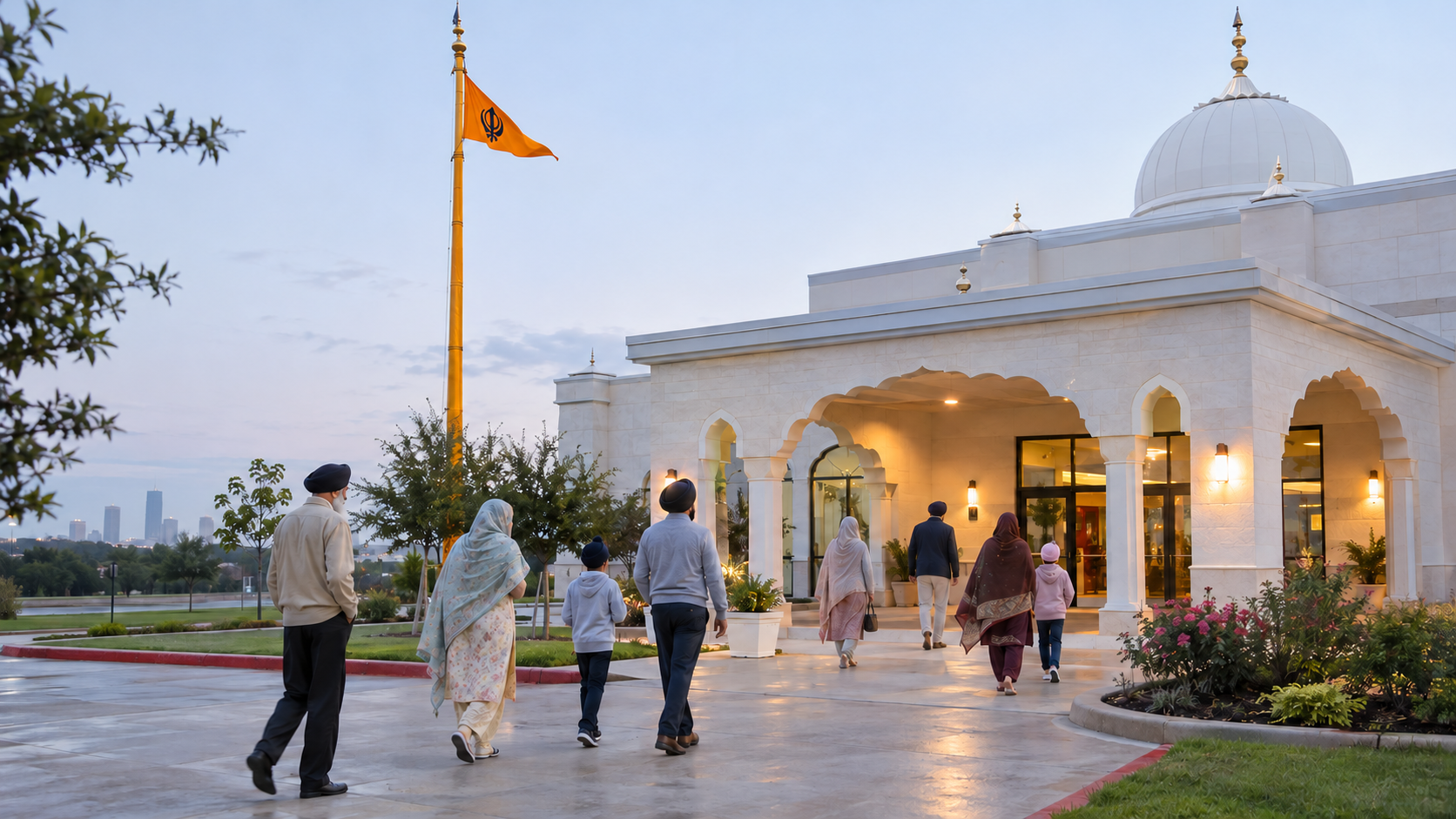
If you are considering Houston Simran Camp 2026, separate spiritual interest from travel planning. A camp can deepen your practice, but its name alone cannot tell you when to arrive, whether you must register, or what kind of participation the organizers expect.
Houston Simran Camp 2026 is identified as taking place at Gurudwara Sikh National Center. That is enough to begin your inquiry, but not enough to book non-refundable travel. First verify the practical details; then prepare to enter the camp as a participant rather than a spectator.
Key takeaways
- The event-specific facts you can rely on are its name, year, and venue: Houston Simran Camp 2026 at Gurudwara Sikh National Center.
- Confirm the exact dates, session times, registration requirements, program format, languages, accessibility, meals, and accommodation before making travel commitments.
- Approach simran as disciplined remembrance of the Divine, not merely as a relaxation technique or a search for an unusual experience.
- Bring a head covering, dress modestly, remove your shoes where directed, silence your phone, and follow the guidance of the gurdwara’s sevadars.
- Plan a sustainable practice for ordinary life before you attend. The camp will matter most if remembrance continues after you return home.
Confirm the event before you commit money or time

A year and venue name are not an itinerary. Do not infer the exact calendar dates, admission arrangements, age eligibility, daily schedule, or lodging from the event title. Use the event listing as your starting point, and obtain current instructions from the organizer or venue through an official contact channel.
Ask your questions in a single message so that you receive a usable answer rather than scattered fragments. This checklist covers the decisions that affect whether you can attend:
- Dates and hours: What are the exact calendar dates, check-in time, opening session, daily start and finish times, and final departure time?
- Registration: Is advance registration required? Is there a capacity limit, fee, suggested donation, confirmation email, cancellation rule, or deadline?
- Participation: Must attendees join the entire camp, or may local participants attend selected sessions? Is the program suitable for someone new to Sikh practice?
- Program format: Will the camp include guided Naam Simran, congregational repetition, kirtan, discourse, periods of silence, or another format? Which languages will be used, and will translation or transliteration be available?
- Practical needs: Are meals included? What arrangements exist for allergies, mobility needs, floor-seating limitations, children, parking, local transportation, and accommodation?
Keep the organizer’s confirmation with your travel information. If an important answer is still described as tentative, keep your transport and lodging changeable. A screenshot forwarded through a group chat may be useful as a prompt, but it should not replace current instructions from the people running the camp.
If you are bringing children, do not assume that a community event automatically includes supervision or a separate children’s program. Ask whether a parent must remain with the child throughout every session. Likewise, do not assume that langar or another meal arrangement can accommodate a serious allergy; confirm ingredients and procedures directly.
Prepare for the practice, not an imagined program

In Sikh practice, simran means remembrance, with Naam Simran directing attention toward the Divine Name. Calmness may accompany it, but calmness is not the whole purpose. The discipline lies in remembering, noticing when attention has wandered, and returning without turning the practice into a performance.
The word “camp” does not establish a single standard format. One gathering may emphasize vocal repetition; another may combine simran with kirtan, explanation, silence, or congregational practice. That is why you should confirm the program instead of arriving with a detailed picture built from another retreat or online recording.
You can still prepare without guessing what the teachers will ask you to do:
- Establish a regular cue. Choose a stable point in your day and sit for a brief period of remembrance. Consistency is more useful preparation than attempting an exhausting session just before the camp.
- Use the guidance you already trust. If you have received instruction from a Sikh teacher or community, remain with it. If you are new, avoid assembling an elaborate method from unrelated traditions; ask whether introductory guidance will be provided.
- Practise returning. When thoughts, sounds, or bodily sensations take your attention, notice the distraction and return to the Divine Name. Do not treat wandering as proof that you are incapable of simran.
- Find a sustainable posture. Learn what allows you to remain attentive without forcing your knees, back, or hips. If floor sitting is difficult, ask about a chair or another accessible arrangement before the event.
- Write one honest intention. “I want to establish a regular practice” is more useful than expecting a dramatic spiritual experience. Your intention should guide how you listen and what you carry home.
Do not rank your practice by whether you feel peaceful, emotionally moved, or free of thought. Those conditions change. A steadier measure is whether you can return to remembrance with humility and whether the practice begins to shape your speech, patience, honesty, and willingness to serve.
Arrive ready for gurdwara discipline
A simran camp at a gurdwara is not simply a meditation workshop held in a convenient room. You are entering a Sikh sacred and congregational space. Local arrangements vary, so follow the directions of the sevadars, the volunteers serving the congregation, even if another gurdwara handles a detail differently.
- Bring a suitable head covering. Cover your head before entering the prayer hall. A clean scarf, rumal, or another secure covering is practical; a fashion hat is not the usual substitute.
- Wear clean, modest clothing. Choose clothes that allow you to sit respectfully and move comfortably. Layers help when room temperatures change during long periods indoors.
- Remove shoes where directed. Use the designated shoe area, keep your feet clean, and follow the venue’s hand-washing arrangements before entering sacred spaces or assisting with food.
- Leave intoxicants outside the premises. Do not bring tobacco, alcohol, or recreational intoxicants onto gurdwara property.
- Protect the atmosphere. Silence your phone before a session begins. Do not record, livestream, or photograph worshippers unless the organizers have explicitly permitted it.
- Follow the room rather than guessing. Observe where participants sit and when the congregation stands. If you are uncertain, quietly ask a sevadar instead of copying a gesture you do not understand.
- Receive langar respectfully if it is served. Take only what you expect to finish, return utensils as directed, and ask before entering serving or kitchen areas. If you have a medically important dietary restriction, confirm what can be accommodated rather than relying on assumption.
If this will be your first visit to a gurdwara, say so to a volunteer when you arrive. You do not need to pretend that you already know every convention. A direct question asked respectfully is better than anxiety, imitation, or an avoidable disruption during worship.
Pack lightly. Your essentials are the organizer’s confirmation, a head covering, modest clothing, necessary medication, and any accessibility item already approved by the venue. Ask before bringing a large bag, personal cushion, food, or recording equipment. The goal is to reduce distractions, not to reproduce your home setup inside the prayer hall.
Carry one workable practice home from the camp

Before your ordinary routine absorbs the experience, choose one instruction from the camp that you can actually keep. Attach it to a dependable daily cue, make the practice modest enough to sustain, and decide in advance that a missed sitting will be followed by a simple return at the next opportunity rather than by guilt or abandonment.
Do not try to preserve the emotional atmosphere of the gathering. Preserve the discipline. Keep the form of simran you were taught, review only the notes that clarify that practice, and avoid immediately mixing it with several new methods found online.
Sangat also matters. If the camp helps you practise more steadily, identify a local gurdwara or Sikh congregation where you can participate respectfully, listen, and offer seva. Solitary enthusiasm often fades when it has no place in the rhythm of community life.
Your next step is concrete: verify the event’s exact logistics through an official channel before booking anything, then begin a brief and regular practice of remembrance. Arrive at Gurudwara Sikh National Center ready to listen, follow the discipline of the space, and leave with one commitment that can survive an ordinary day.
References

Leave a Reply
You must be logged in to post a comment.