
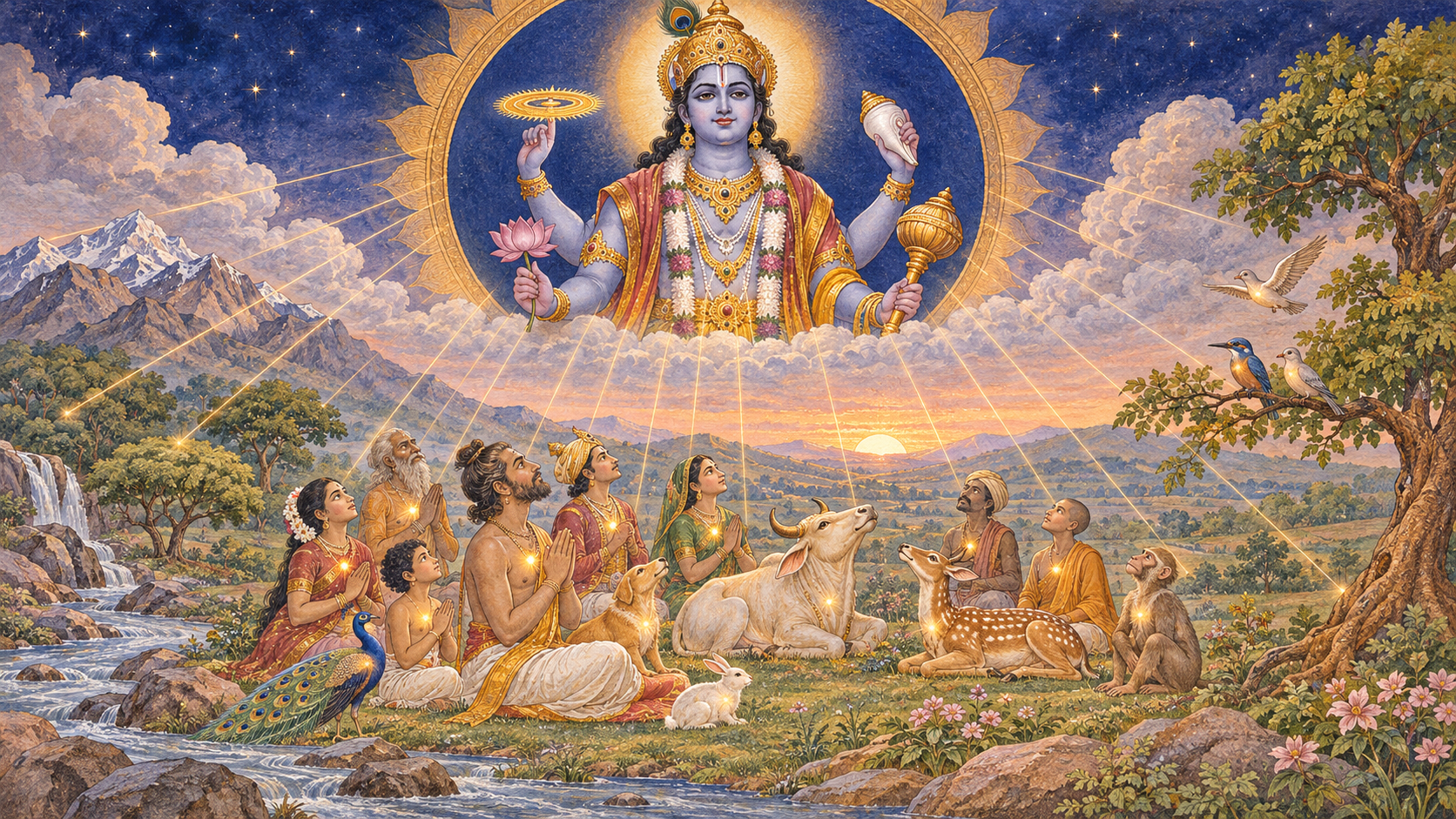
If you have learned that Prakriti means “nature” or “matter,” its conscious and unconscious forms can sound contradictory. Does Dvaita turn the soul into a material thing? Does calling Prakriti a divine energy make nature identical with God?
Neither conclusion follows. The useful way to read Prakriti in Dvaita Vedanta is to keep three realities distinct: Vishnu, conscious selves and insentient nature. That distinction will help you understand the doctrine without reducing spiritual life to matter or dissolving the world into an indistinct divinity.
Begin with the distinction Dvaita will not erase
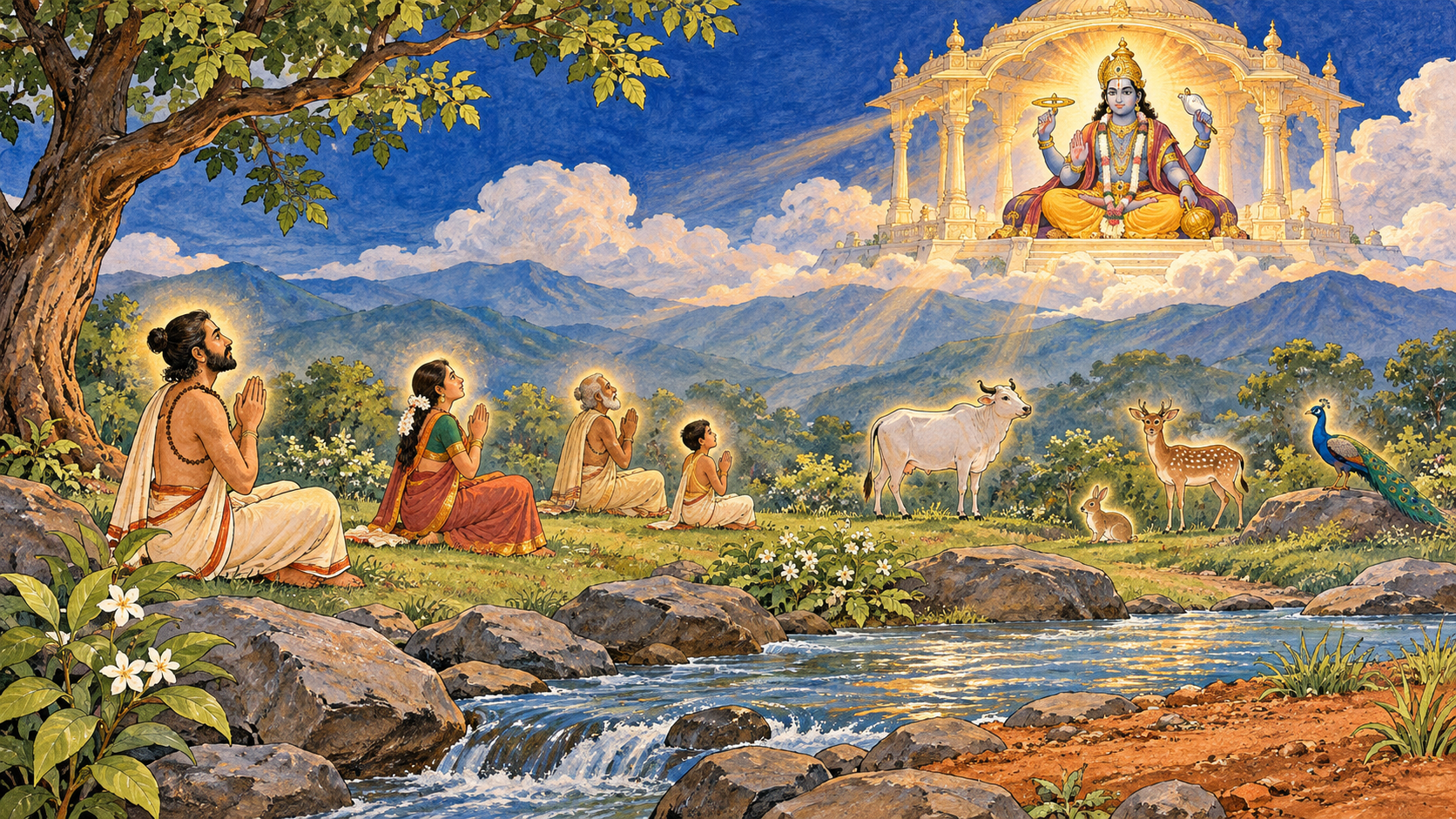
Before asking what Prakriti contains, establish the governing relationship. Vishnu alone is independent, or svatantra. Souls and material nature are dependent, or paratantra. They are real, but they do not exist or function as self-grounding realities.
- Vishnu is real and independent.
- Conscious selves are real and dependent.
- Insentient nature is real and dependent.
This map corrects two opposite errors. Something does not have to be independent in order to be real, and dependence does not make it imaginary. Dvaita therefore refuses the choice between a self-sufficient universe and an unreal universe. The cosmos is real precisely as a dependent order.
Dependence also does not mean identity. A soul depends on Vishnu without becoming Vishnu. Matter is governed by Vishnu without becoming the divine essence. Relationship is real because the related realities remain distinguishable.
The conscious and unconscious faces of Prakriti
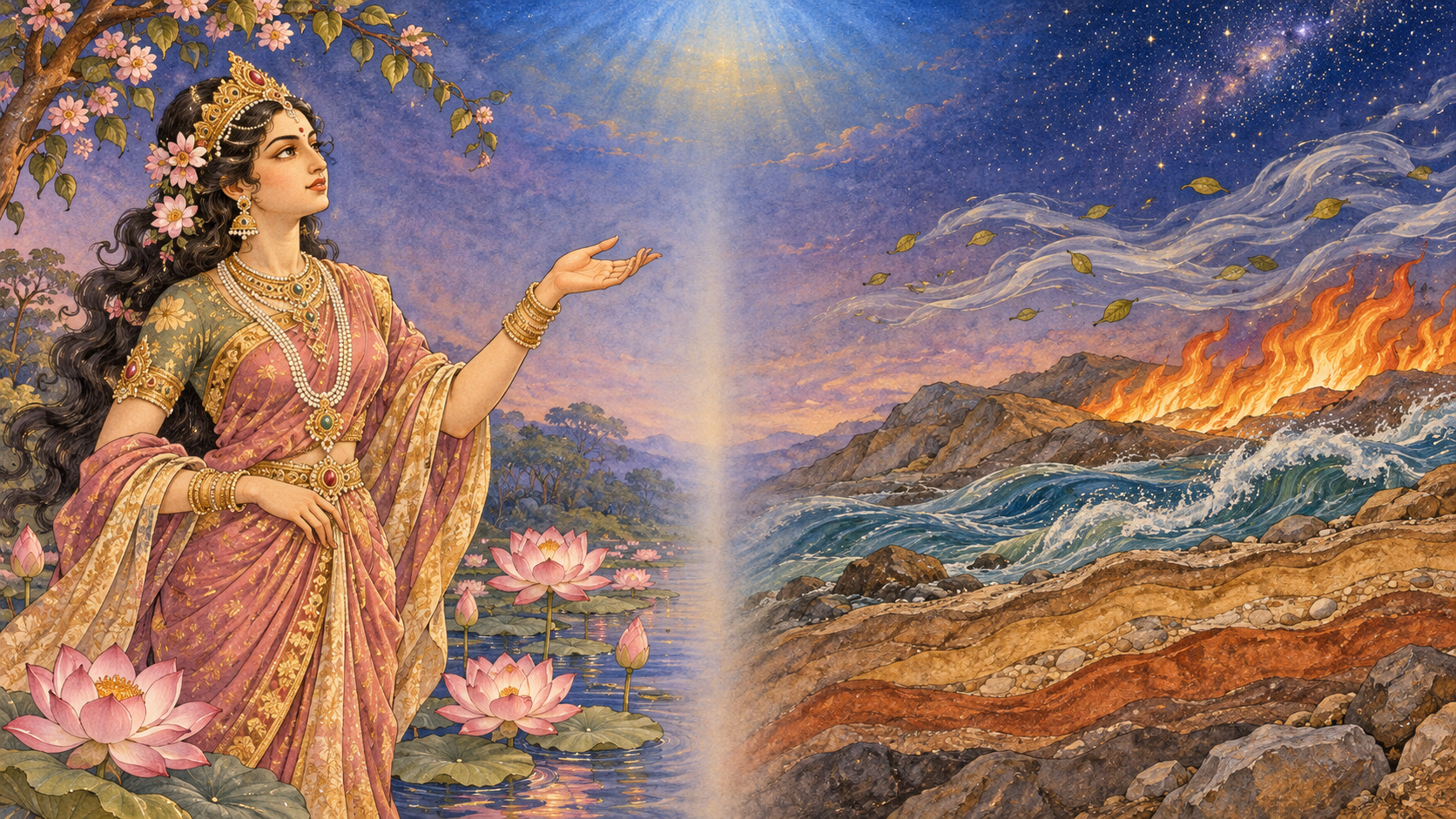
The twofold presentation of Prakriti distinguishes a conscious dimension from an unconscious one. The contrast is not between two grades of physical material. It is between beings that can know and choose and the material conditions that cannot know or choose.
| Question | Conscious dimension | Unconscious dimension |
|---|---|---|
| What kind of reality is it? | A knowing self | Insentient material nature |
| Can it be aware? | Yes, within the limits of a dependent self | No |
| Can it intend or choose? | Yes, with dependent and limited agency | No |
| Is it real? | Yes | Yes |
| Is it independent? | No | No |
| Is it Vishnu? | No | No |
A simple building-block analogy can introduce the difference, but it must not be pushed too far. A material block is wholly available for someone else to manipulate. A conscious self is a subject: it knows, experiences and exercises limited agency. Treating both as the same kind of object would erase the very distinction the analogy is meant to reveal.
Context matters when you meet the word Prakriti. In a narrow usage, it can point to insentient material nature. In a broader twofold explanation, it can bring both the conscious and unconscious sides of the dependent order into view. Before interpreting a passage, ask which usage is operating. Many apparent contradictions disappear at that point.
Do not turn “divine energy” into physics or identity
The expression “divine energy” is useful only if you know what it is not saying. It is not a claim about measurable physical energy. It does not mean that a stone, a body and a conscious self are interchangeable forms of one physical substance. Nor does it mean that everything dependent on God is therefore identical with God.
- Do not physicalise the term. Spiritual dependence is not a quantity that can be measured like heat or motion.
- Do not erase the soul. Consciousness marks a real difference between the knower and the material thing known.
- Do not deify matter. Divine governance does not turn every material object into the Supreme Being.
- Do not make nature autonomous. The reality of Prakriti does not give it independence from Vishnu.
The crucial formula is simple: real but dependent, distinct but governed. If you retain only “real,” you may begin to imagine an autonomous cosmos. If you retain only “dependent,” you may mistakenly treat the cosmos as unreal. If you retain only “divine,” you may collapse nature, soul and Lord into one undifferentiated identity.
This is also why the grammar of worship matters. There is a conscious worshipper, a material offering and Vishnu as the independent Lord to whom the offering is made. The act is meaningful because those roles are related without being identical.
Put the distinction to work in daily life
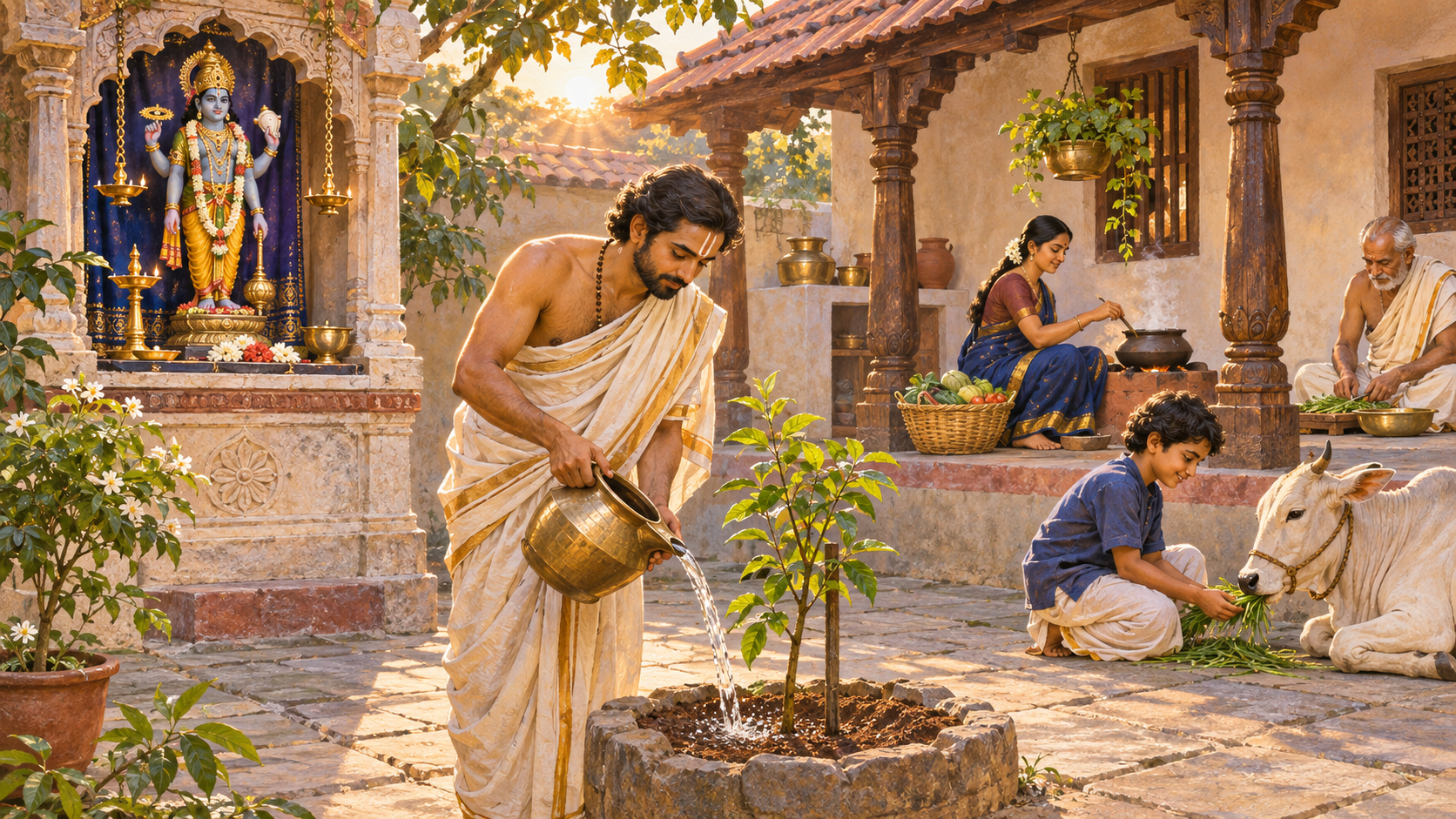
Prakriti is not merely a classification to memorise. It changes how you interpret your body, your choices, the material world and your worship.
- Separate the self from its material conditions. Your body and surroundings are real, so their needs and consequences should not be dismissed. But they do not exhaust what you are. The conscious knower cannot be reduced to the object it knows.
- Place responsibility where agency exists. An insentient instrument has no intention. A conscious person can intend and choose, even though that agency remains limited and dependent. Do not blame “nature” as though matter made a moral decision on your behalf.
- Care for matter without worshipping it as the Supreme. Insentient nature is not worthless merely because it lacks consciousness. It belongs to a real, divinely governed order. Use it carefully, neither despising it as illusion nor mistaking it for Vishnu.
- Preserve the roles within devotion. You are the dependent worshipper, the offering belongs to the dependent material order, and Vishnu is the independent recipient. Keeping those roles clear gives humility a metaphysical foundation.
- Read philosophical claims with three questions. Ask, “What knows? What is known? What is independent?” If a claim gives consciousness to matter, reduces the self to matter or grants independence to either, it has left the Dvaita framework.
You can make this concrete with a brief exercise. Hold an ordinary object and notice three facts: the object does not know you; you know the object; neither you nor the object is independent of Vishnu. That single observation places the conscious self, insentient nature and the Supreme in their proper relation without declaring any of them unreal.
The same framework prevents spiritual language from becoming an excuse to ignore material consequences. Hunger, illness, injury and environmental damage occur within a real material order. Recognising that the self is more than the body does not justify neglecting the body. Dvaita’s distinction calls for discernment, not denial.
Key takeaways
- Vishnu alone is independent; conscious selves and material nature are real but dependent.
- The twofold account of Prakriti distinguishes knowing, choosing beings from insentient material reality.
- Consciousness does not make a self supreme, and dependence does not turn a self into matter.
- Calling Prakriti a divine energy does not make it physical energy or identify nature with God’s essence.
- In practice, distinguish the worshipper, the material offering and the Lord while respecting the reality of each.
- When a text uses the word Prakriti, first determine whether it means material nature narrowly or the dependent order in a broader twofold sense.
The next time you encounter “Prakriti” or “divine energy,” do not rush past the vocabulary. Mark what is conscious, what is insentient and what is independent. If those three places remain clear, you can follow the Dvaita account without confusing reverence for creation with identity between creation and its Lord.
References

Leave a Reply
You must be logged in to post a comment.